Mechanical Back pain
Bipin Poudel
Defined as pain and discomfort
between the costal margin and
inferior gluteal folds with or without
leg pain
Mechanical pain is the general
term that refers to any type of
back pain caused by placing
abnormal stress and strain on
muscles of the vertebral column.
Introduction
• No clearly defined pathology
• No significant clinical or radiological findings
• Diagnosis of exclusion
• Aggravated with movement and relieved by rest
• Patients may complain of symptoms on standing
up from supine or seated positions, and pain on
turning over in bed.
Clinical features
• Dull Pain
• Aggravated by
• physical activity
• Stooping
• Lifting
• turning and coughing
• No neurological signs and symptoms
Mechanical Back Pain
Improves with rest,
Worse after exertion
Inflammatory Back Pain
Worse early morning
Improves with activity
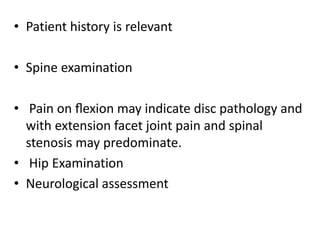
• Patient history is relevant
• Spine examination
• Pain on flexion may indicate disc pathology and
with extension facet joint pain and spinal
stenosis may predominate.
• Hip Examination
• Neurological assessment
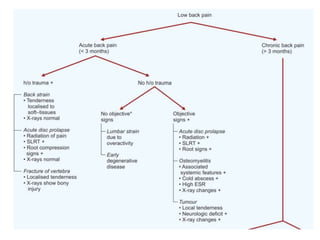
Approach to a patient with back pain
“Diagnosed when trauma,
inflammatory and other causes have
been ruled out”
Treatment
• Rest
• Analgesics
• Physiotherapy
• Education
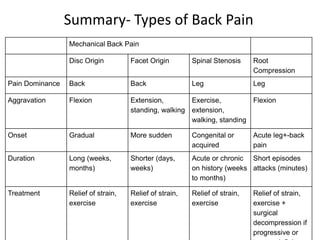
Mechanical Back Pain
Disc Origin Facet Origin Spinal Stenosis Root
Compression
Pain Dominance Back Back Leg Leg
Aggravation Flexion Extension,
standing, walking
Exercise,
extension,
walking, standing
Flexion
Onset Gradual More sudden Congenital or
acquired
Acute leg+-back
pain
Duration Long (weeks,
months)
Shorter (days,
weeks)
Acute or chronic
on history (weeks
to months)
Short episodes
attacks (minutes)
Treatment Relief of strain,
exercise
Relief of strain,
exercise
Relief of strain,
exercise
Relief of strain,
exercise +
surgical
decompression if
progressive or
Summary- Types of Back Pain
References
• Essential Orthopaedics, 6th Edition
• Apley’s and Solomon System of Orthopaedics and
Trauma, 10th Edition
• Toronto Notes, 12th Edition

Mechanical back pain

  • 1.
  • 2.
    Defined as painand discomfort between the costal margin and inferior gluteal folds with or without leg pain
  • 3.
    Mechanical pain isthe general term that refers to any type of back pain caused by placing abnormal stress and strain on muscles of the vertebral column.
  • 4.
    Introduction • No clearlydefined pathology • No significant clinical or radiological findings • Diagnosis of exclusion
  • 5.
    • Aggravated withmovement and relieved by rest • Patients may complain of symptoms on standing up from supine or seated positions, and pain on turning over in bed.
  • 6.
    Clinical features • DullPain • Aggravated by • physical activity • Stooping • Lifting • turning and coughing • No neurological signs and symptoms
  • 9.
    Mechanical Back Pain Improveswith rest, Worse after exertion Inflammatory Back Pain Worse early morning Improves with activity
  • 10.
    • Patient historyis relevant • Spine examination • Pain on flexion may indicate disc pathology and with extension facet joint pain and spinal stenosis may predominate. • Hip Examination • Neurological assessment
  • 11.
    Approach to apatient with back pain
  • 14.
    “Diagnosed when trauma, inflammatoryand other causes have been ruled out”
  • 15.
    Treatment • Rest • Analgesics •Physiotherapy • Education
  • 16.
    Mechanical Back Pain DiscOrigin Facet Origin Spinal Stenosis Root Compression Pain Dominance Back Back Leg Leg Aggravation Flexion Extension, standing, walking Exercise, extension, walking, standing Flexion Onset Gradual More sudden Congenital or acquired Acute leg+-back pain Duration Long (weeks, months) Shorter (days, weeks) Acute or chronic on history (weeks to months) Short episodes attacks (minutes) Treatment Relief of strain, exercise Relief of strain, exercise Relief of strain, exercise Relief of strain, exercise + surgical decompression if progressive or Summary- Types of Back Pain
  • 17.
    References • Essential Orthopaedics,6th Edition • Apley’s and Solomon System of Orthopaedics and Trauma, 10th Edition • Toronto Notes, 12th Edition