IT BUSINESS ANALYSTCAREER TRAININGMODULE 1
WELCOME
AGENDAINTRODUCTION TO BUSINESS ANALYSISINTRODUCTION TO RATIONAL UNIFIED PROCESSINTRODUCTION TO REQUIREMENTS MANAGEMENTINTRODUCTION TO RATIONAL REQUISITE PROINTRODUCTION TO J.A.D SESSIONSQ & A
CLASS RULES#1 Please be on Time#2 You MUST TALK in Class
IT BUSINESS ANALYSTAN INTRODUCTION
IT BUSINESS ANALYSTTHE TWO BIG QUESTIONS#1What does an IT BA do?#2What skills does an IT Business Analyst need?
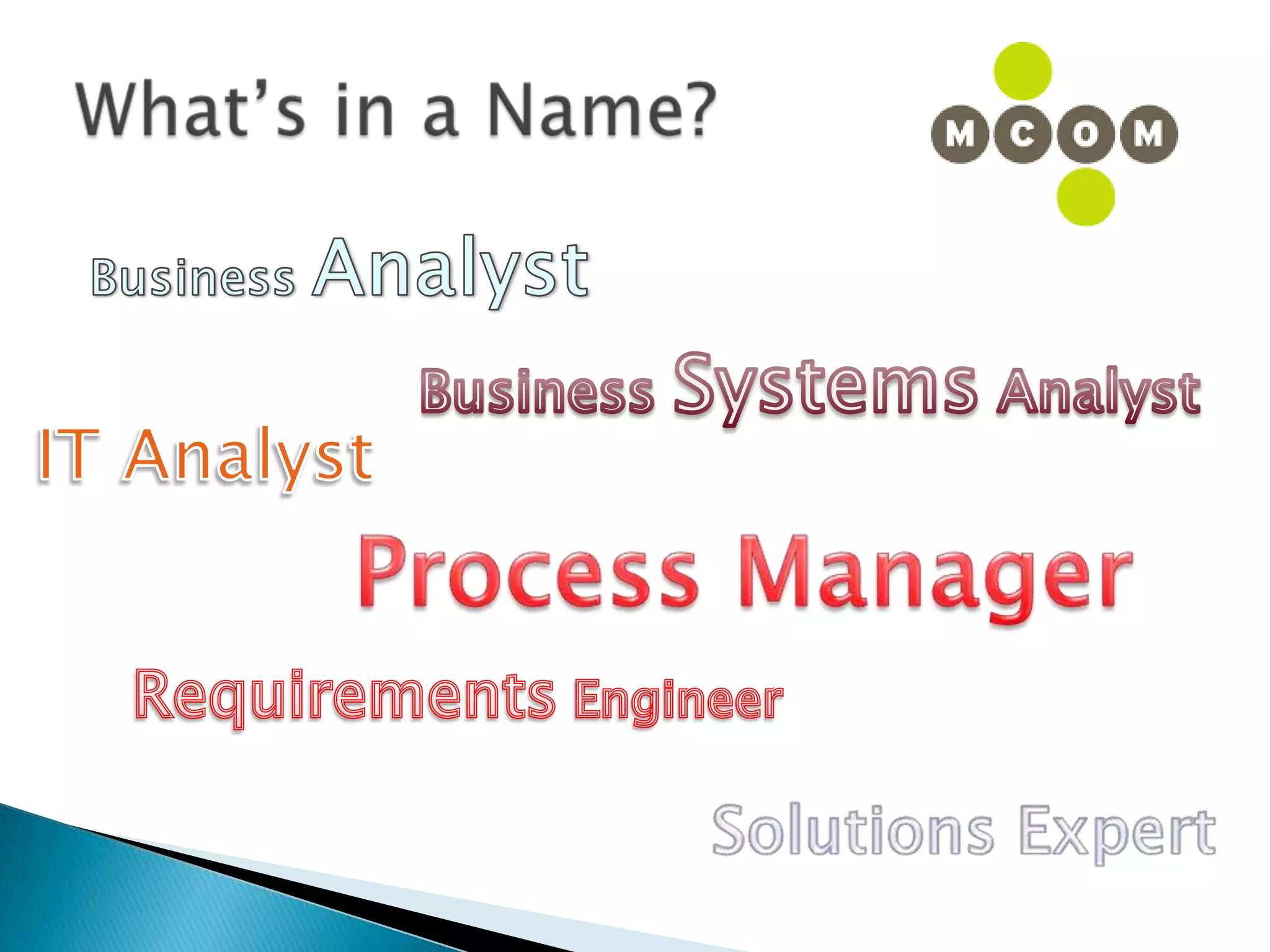
Business AnalystBusiness Systems AnalystIT AnalystProcess ManagerRequirements EngineerWhat’s in a Name?Solutions Expert
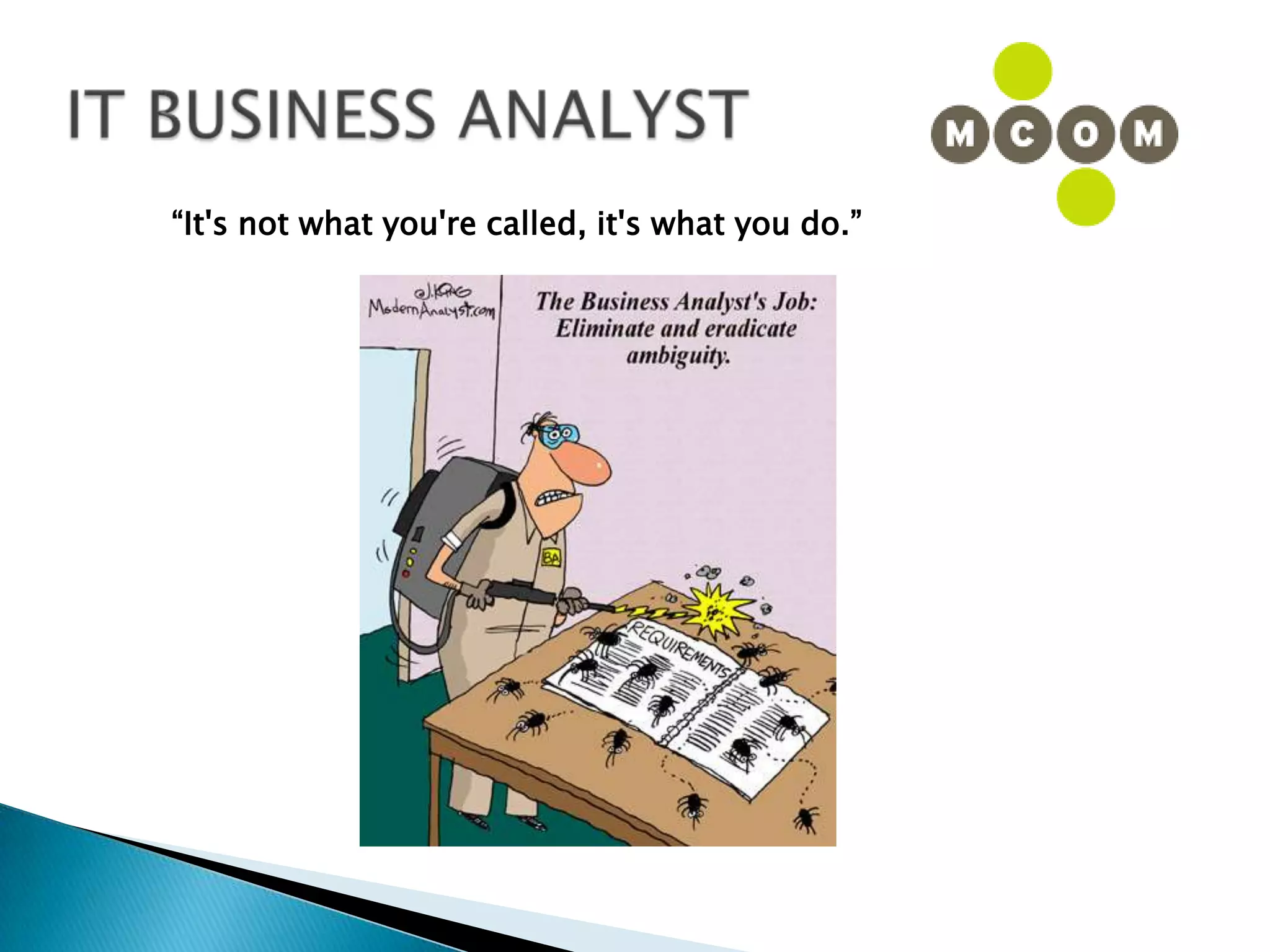
IT BUSINESS ANALYST“It's not what you're called, it's what you do.”
IT BUSINESS ANALYST
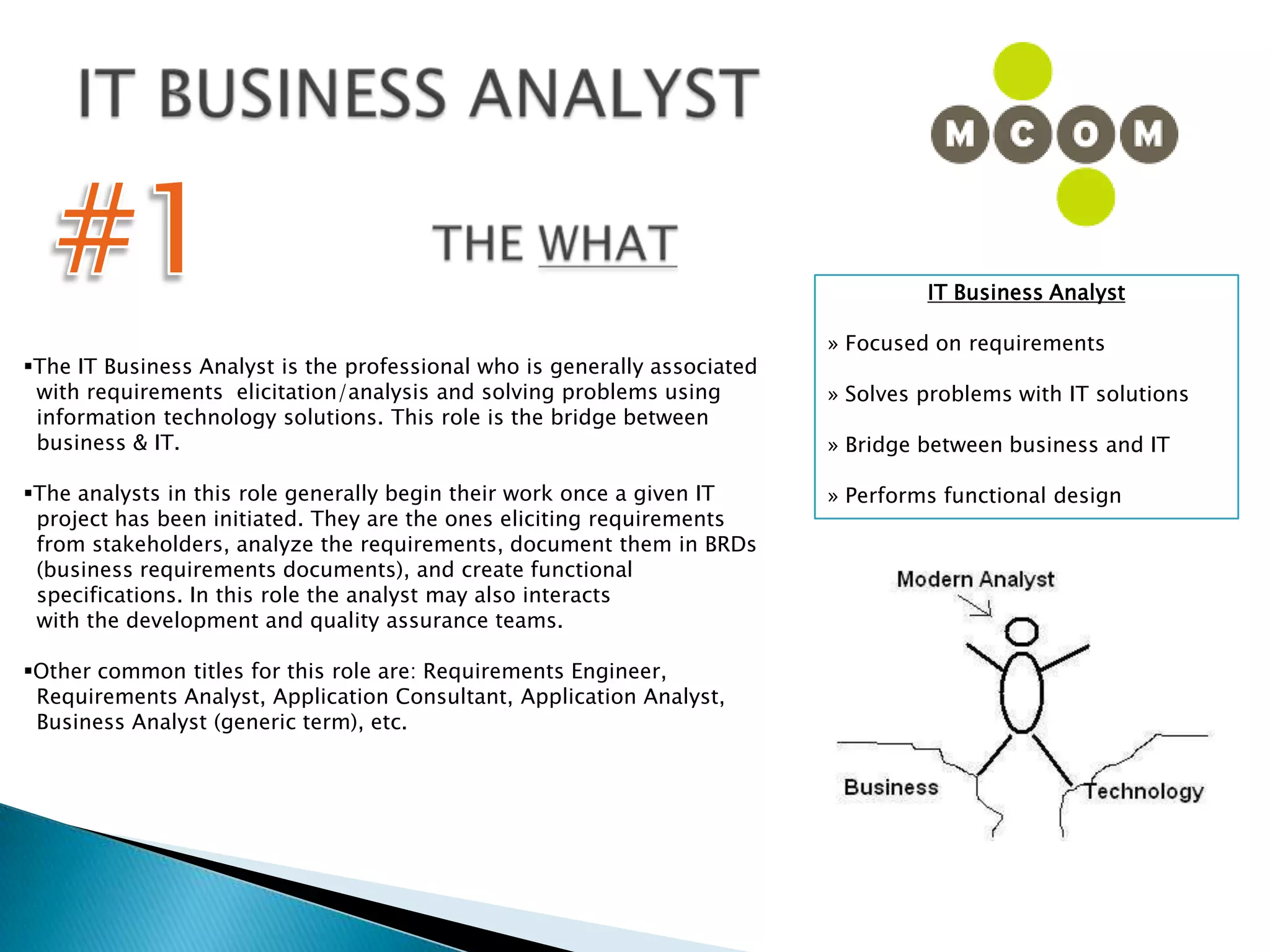
IT BUSINESS ANALYST#1THE WHATIT Business Analyst » Focused on requirements» Solves problems with IT solutions» Bridge between business and IT» Performs functional designThe IT Business Analyst is the professional who is generally associated   with requirements  elicitation/analysis and solving problems using   information technology solutions. This role is the bridge between   business & IT. The analysts in this role generally begin their work once a given IT   project has been initiated. They are the ones eliciting requirements   from stakeholders, analyze the requirements, document them in BRDs   (business requirements documents), and create functional   specifications. In this role the analyst may also interacts   with the development and quality assurance teams. Other common titles for this role are: Requirements Engineer,   Requirements Analyst, Application Consultant, Application Analyst,   Business Analyst (generic term), etc.
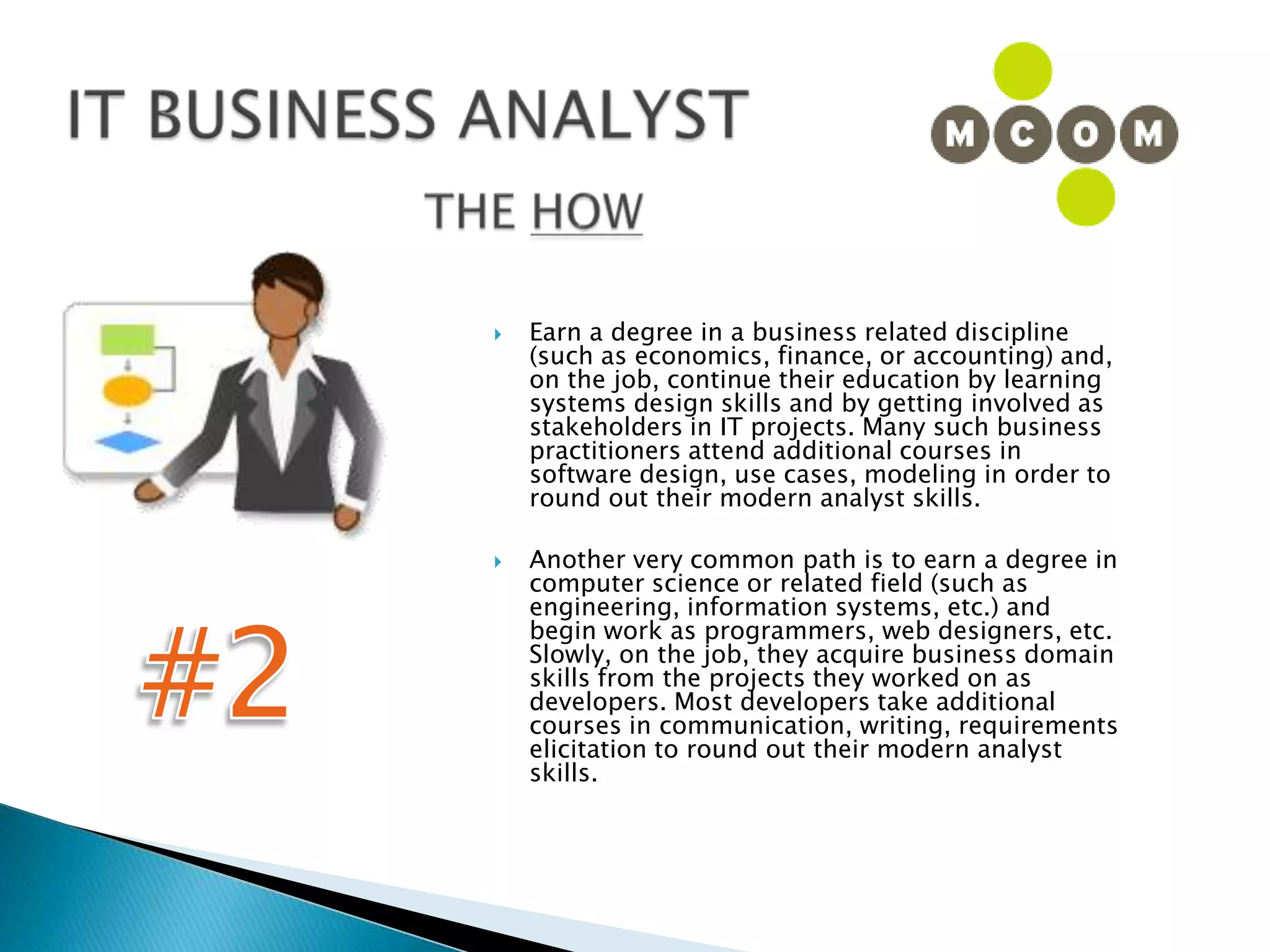
IT BUSINESS ANALYSTTHE HOWEarn a degree in a business related discipline (such as economics, finance, or accounting) and, on the job, continue their education by learning systems design skills and by getting involved as stakeholders in IT projects. Many such business practitioners attend additional courses in software design, use cases, modeling in order to round out their modern analyst skills.Another very common path is to earn a degree in computer science or related field (such as engineering, information systems, etc.) and begin work as programmers, web designers, etc. Slowly, on the job, they acquire business domain skills from the projects they worked on as developers. Most developers take additional courses in communication, writing, requirements elicitation to round out their modern analyst skills.#2
Rational Unified Process
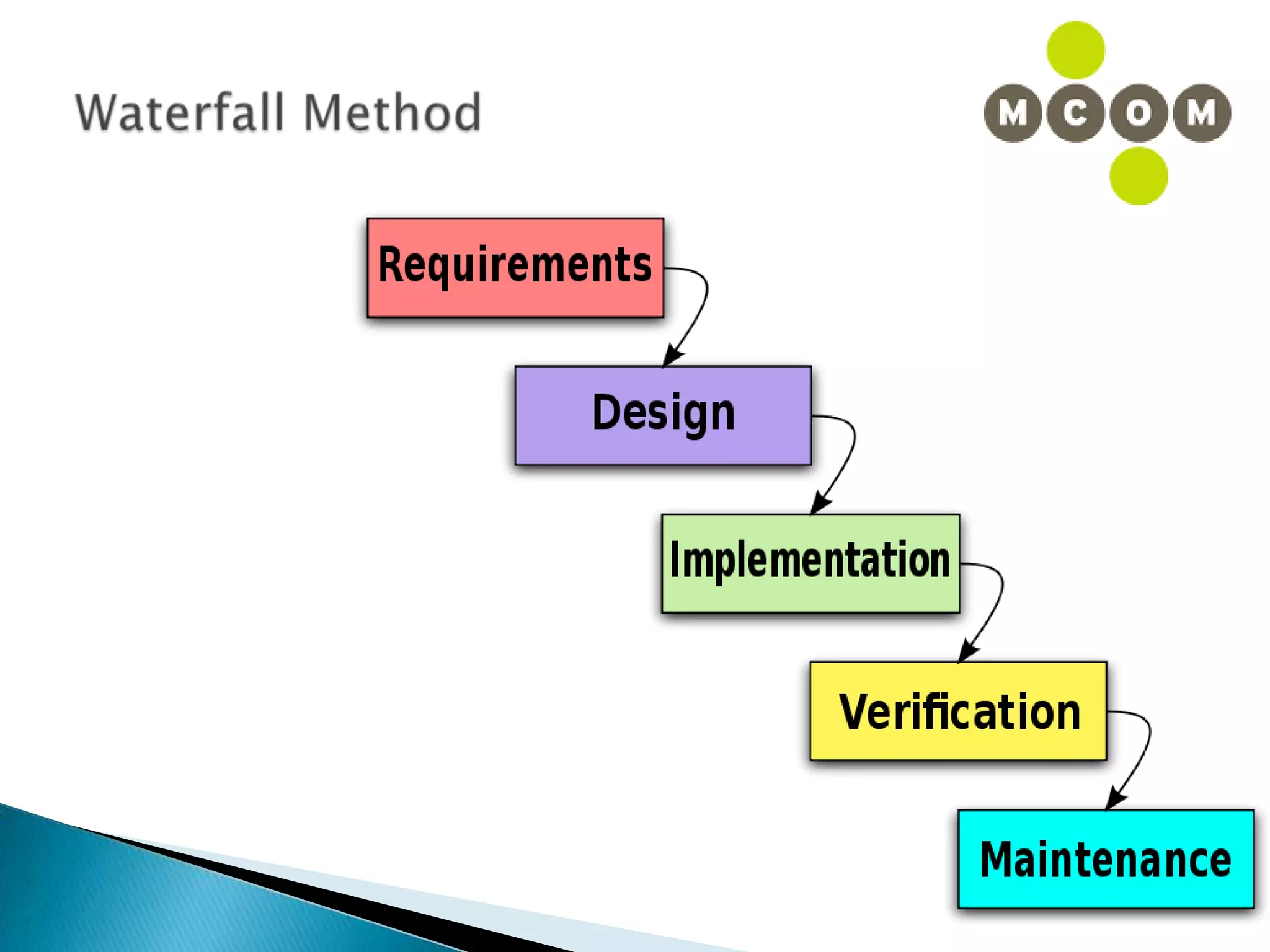
Waterfall Method
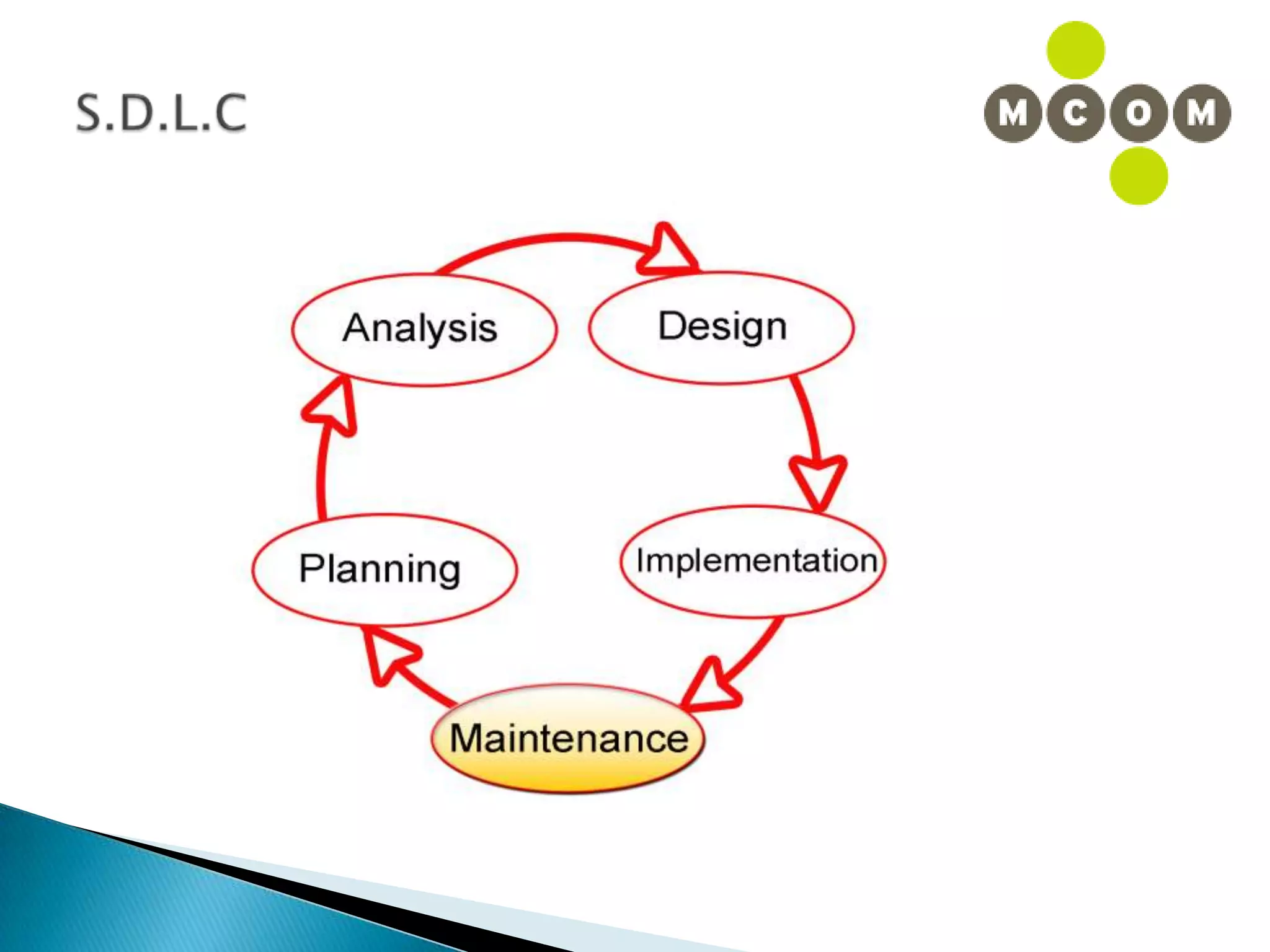
S.D.L.C
RUPRUP is a method of managing OO Software Development
It can be viewed as a Software Development Framework which is extensible and features:
Iterative Development
Requirements Management
Component-Based Architectural Vision
Visual Modeling of Systems
Quality Management
Change Control ManagementRUPOnline Repository of Process Information and Description in HTML format
Templates for all major artifacts, including:
RequisitePro templates (requirements tracking)
Word Templates for Use Cases
Project Templates for Project Management
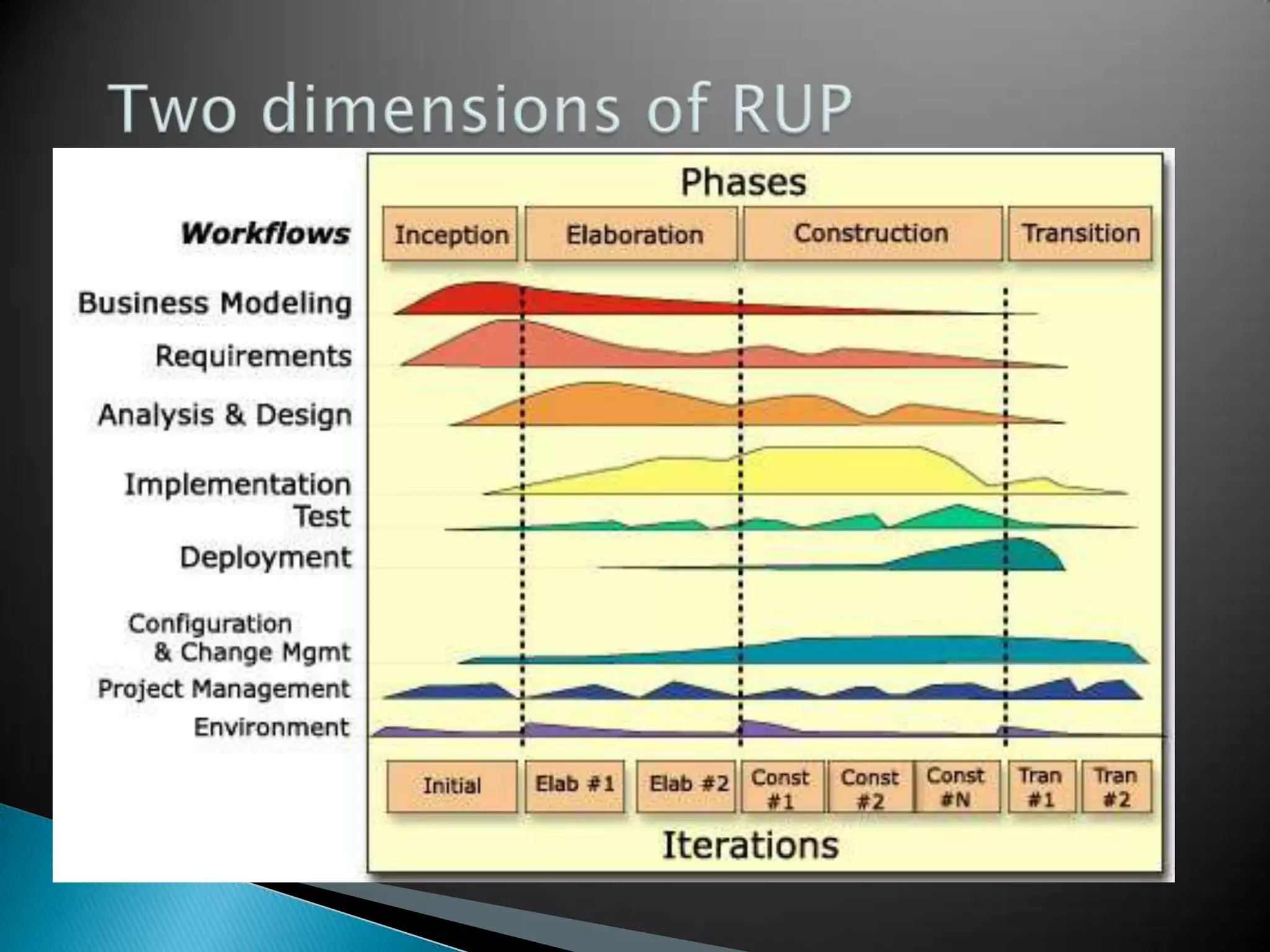
Process Manuals describing key processesProcess StructureTwo dimensions.Horizontal axis represents time and shows the lifecycle aspects of the process as it unfolds.Vertical axis represents core process workflows, which group activities logically by nature.
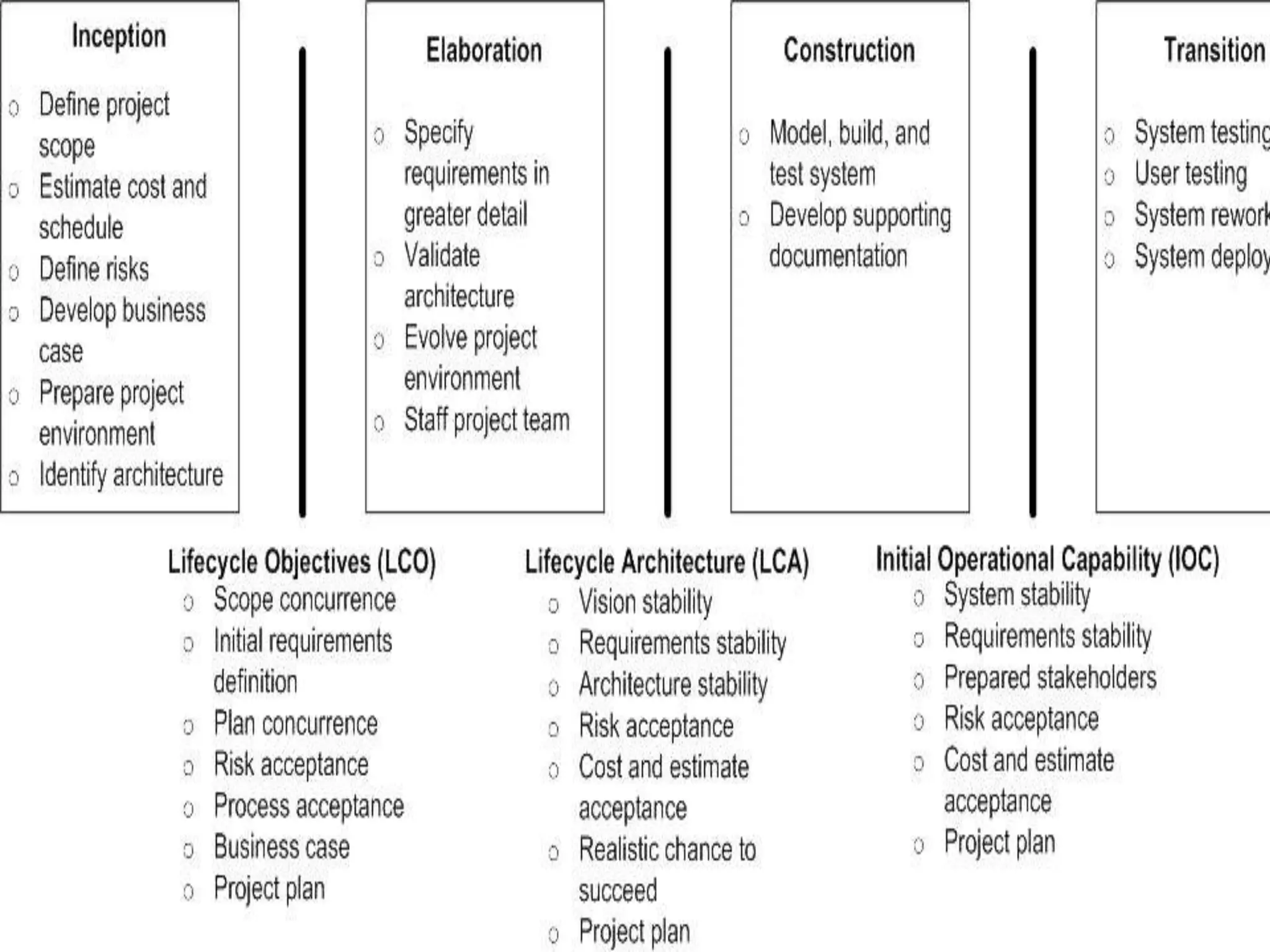
PhasesInceptionElaborationConstructionTransition
Two dimensions of RUP
J.A.D SESSIONSAN INTRODUCTION
J.A.D SESSIONS
J.A.D SESSIONS
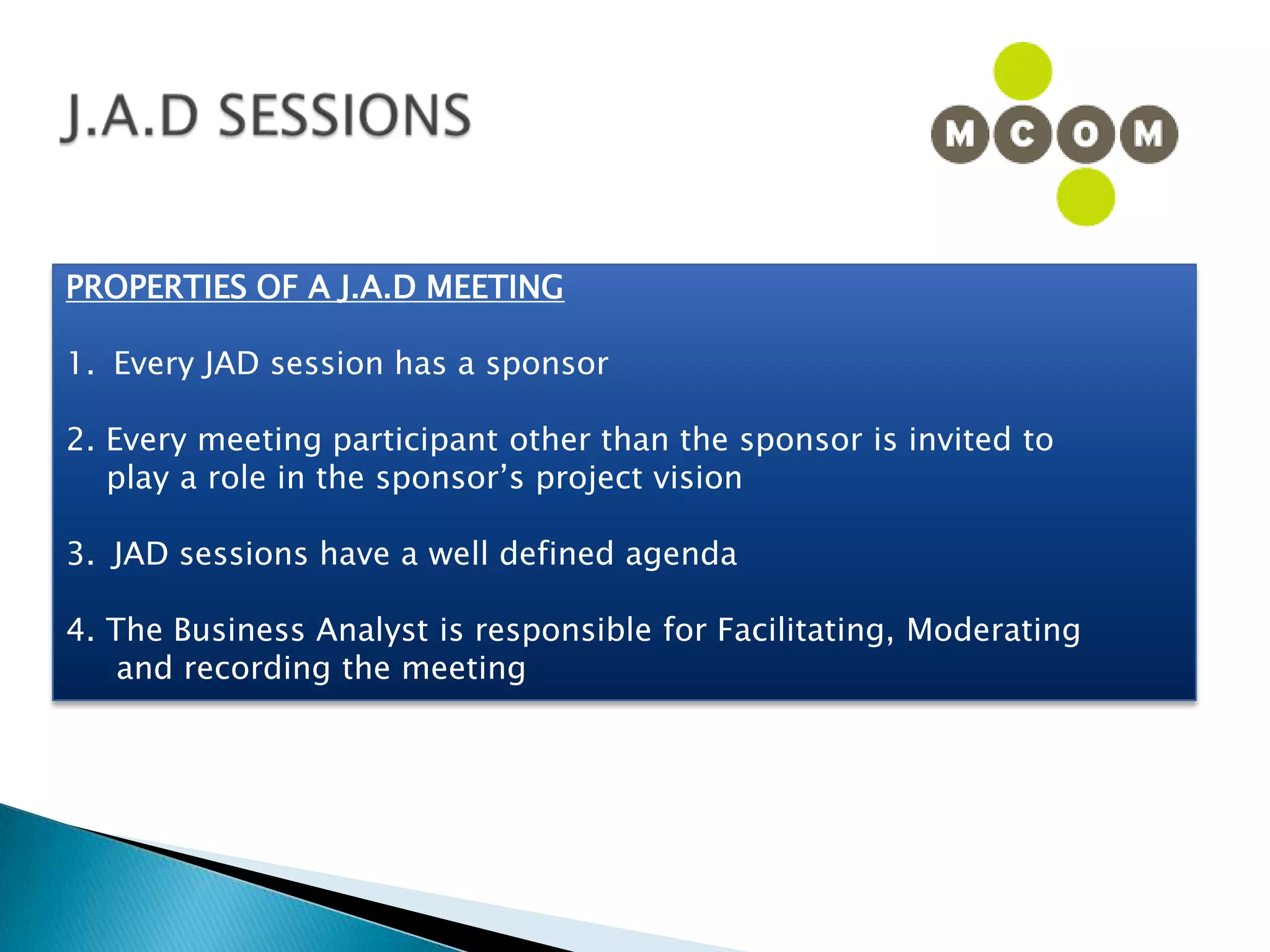
J.A.D SESSIONSPROPERTIES OF A J.A.D MEETINGEvery JAD session has a sponsor2. Every meeting participant other than the sponsor is invited to     play a role in the sponsor’s project visionJAD sessions have a well defined agenda4. The Business Analyst is responsible for Facilitating, Moderating      and recording the meeting
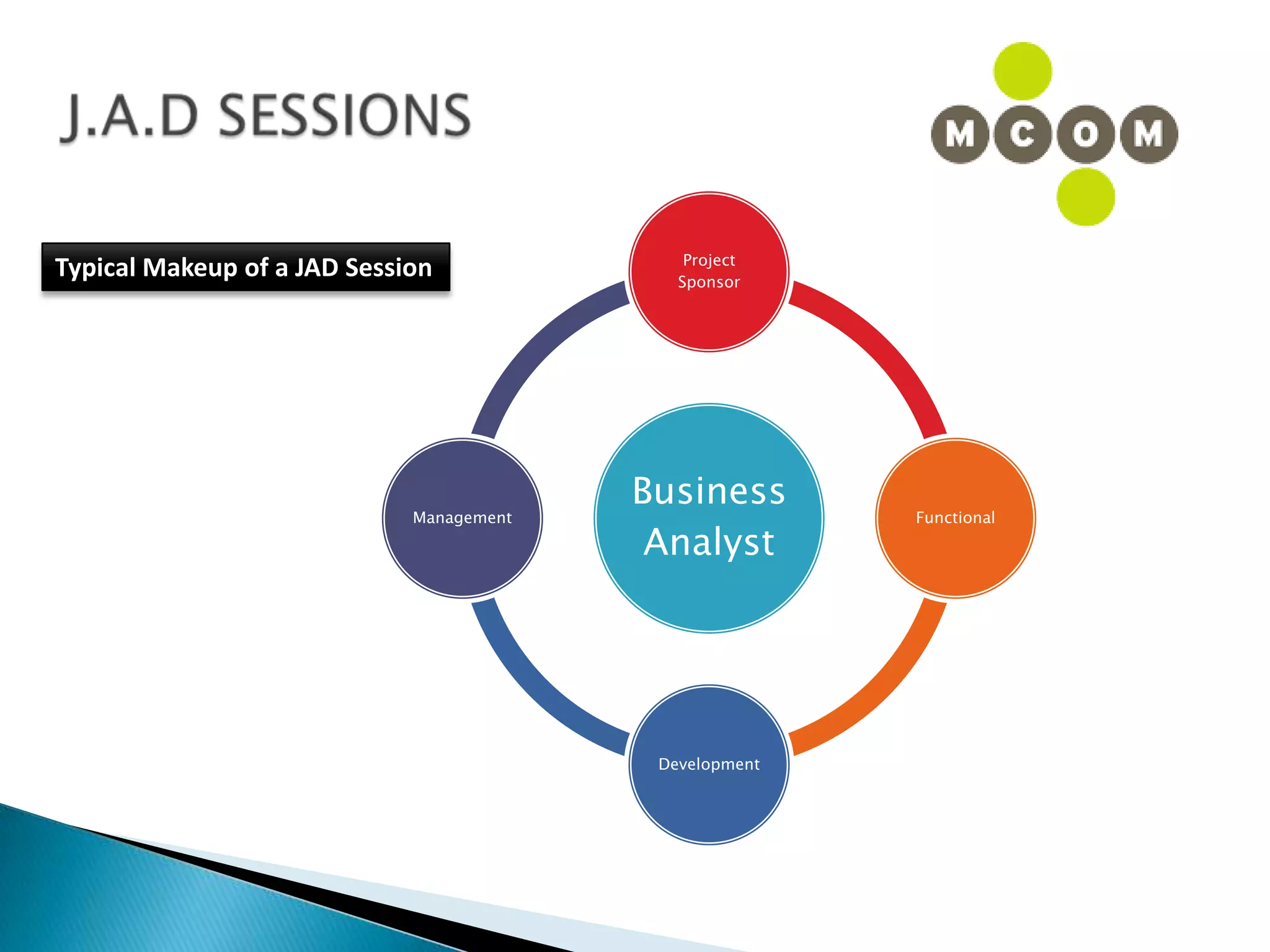
J.A.D SESSIONSTypical Makeup of a JAD Session
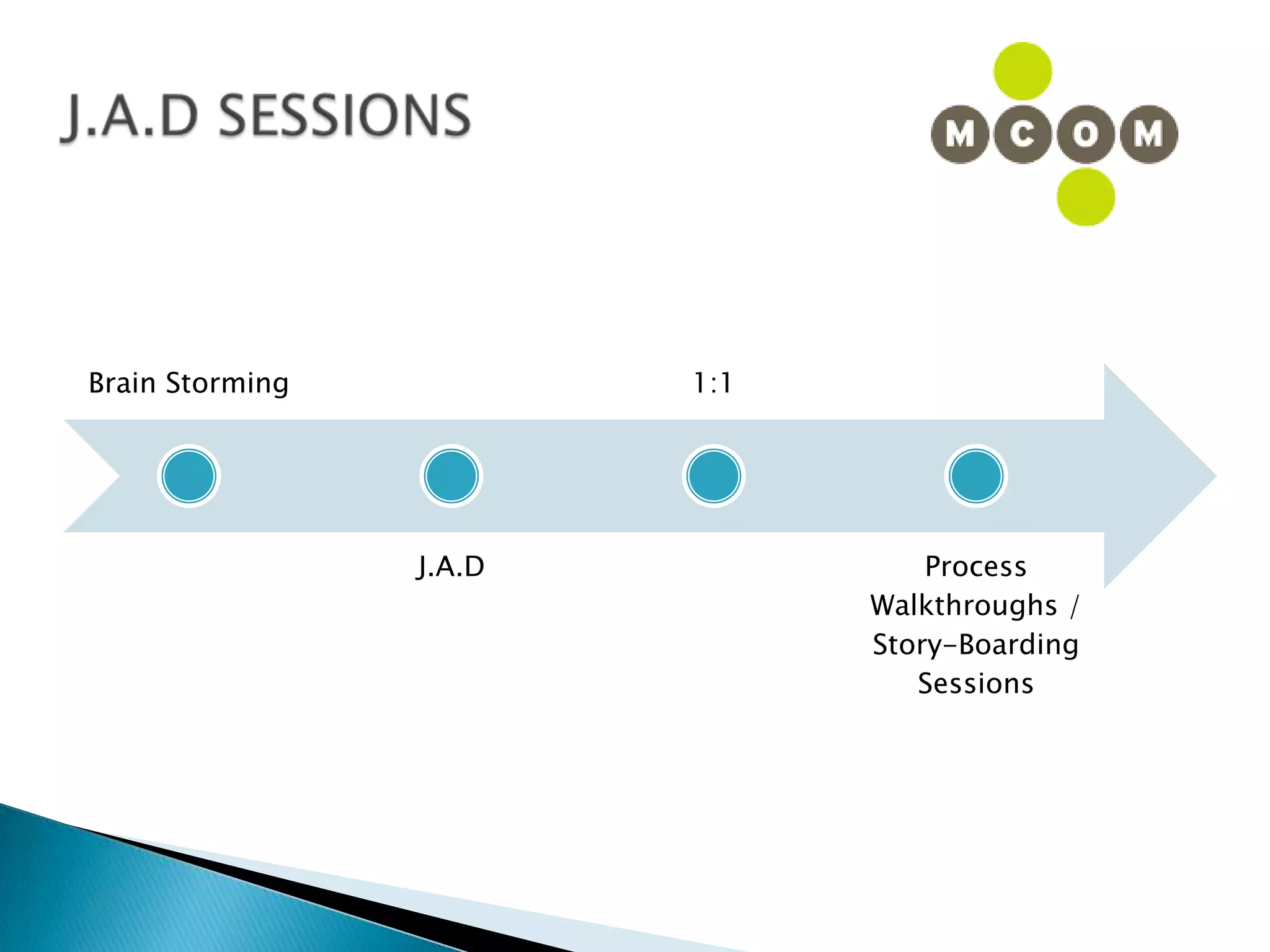
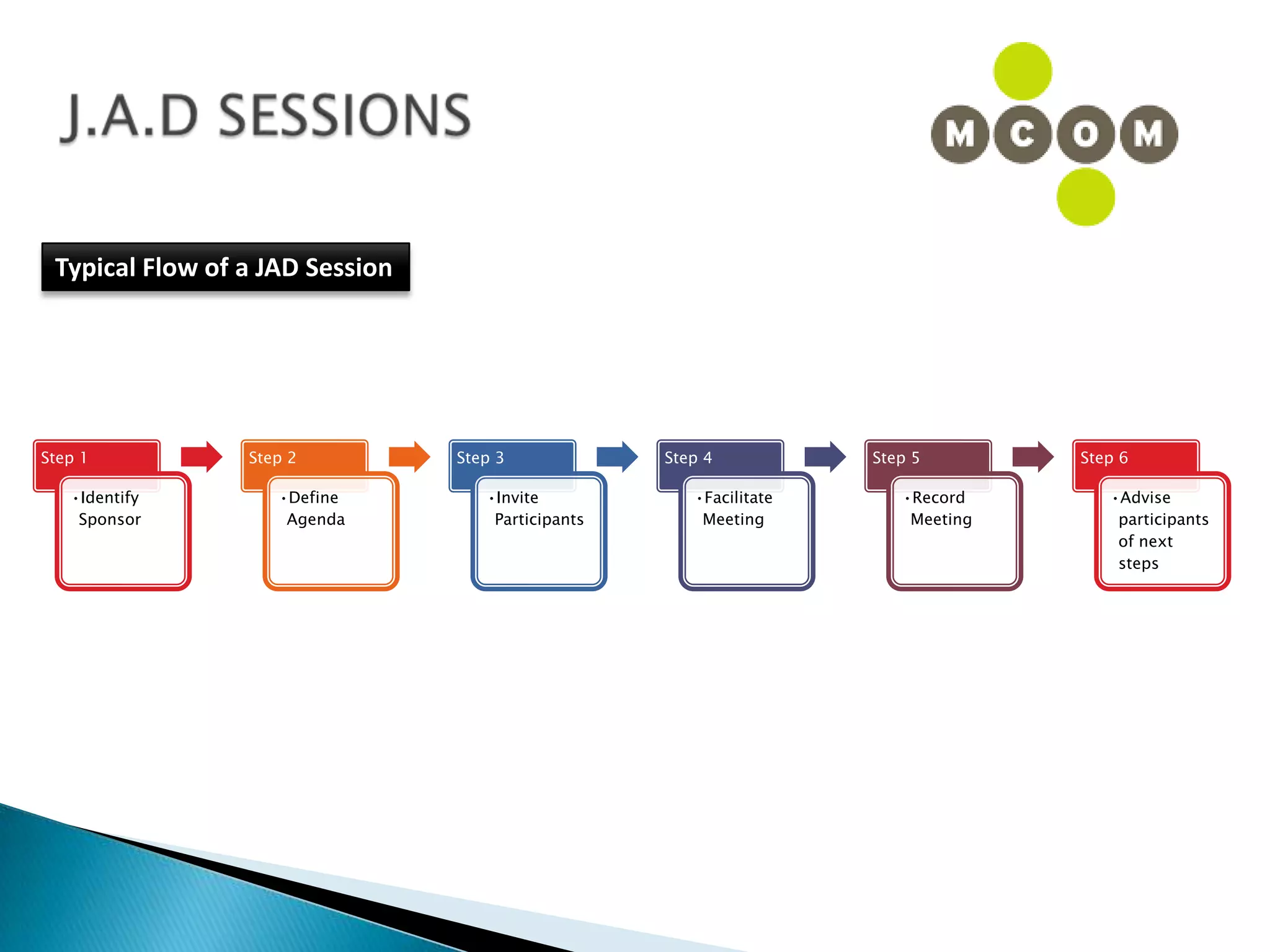
J.A.D SESSIONSTypical Flow of a JAD Session
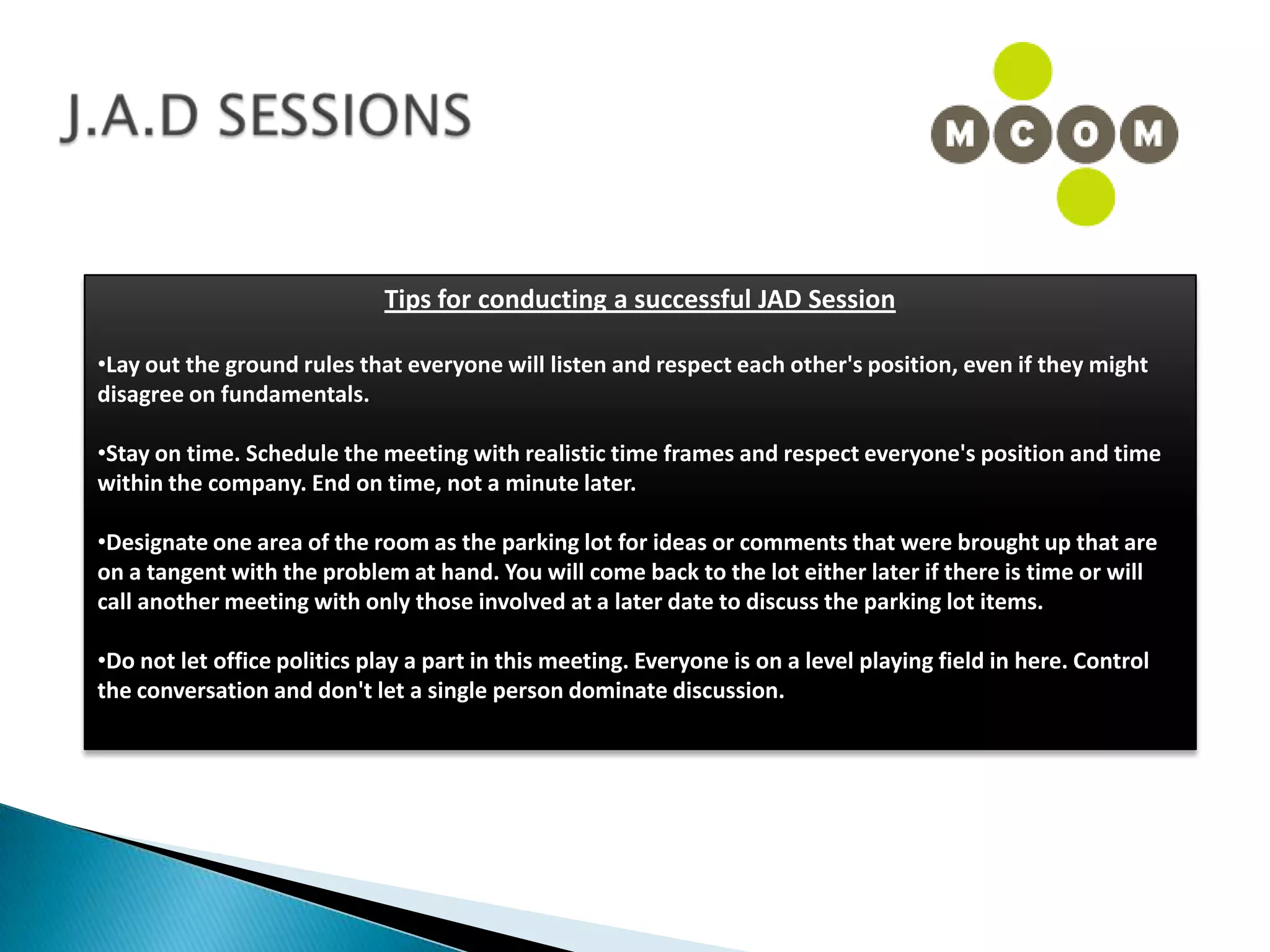
J.A.D SESSIONSTips for conducting a successful JAD SessionLay out the ground rules that everyone will listen and respect each other's position, even if they might disagree on fundamentals.
Stay on time. Schedule the meeting with realistic time frames and respect everyone's position and time within the company. End on time, not a minute later.
Designate one area of the room as the parking lot for ideas or comments that were brought up that are on a tangent with the problem at hand. You will come back to the lot either later if there is time or will call another meeting with only those involved at a later date to discuss the parking lot items.
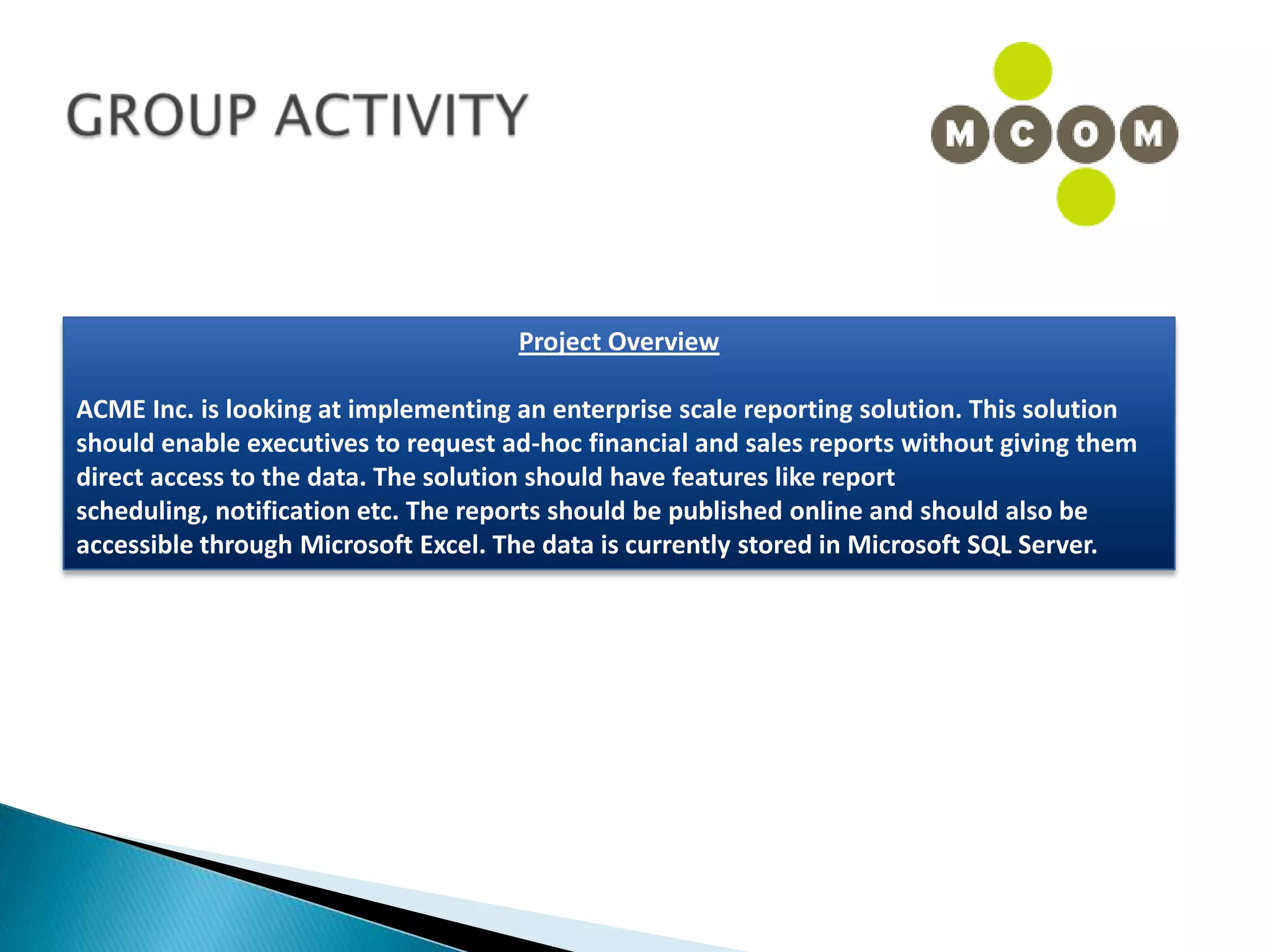
Do not let office politics play a part in this meeting. Everyone is on a level playing field in here. Control the conversation and don't let a single person dominate discussion.GROUP ACTIVITYProject OverviewACME Inc. is looking at implementing an enterprise scale reporting solution. This solution should enable executives to request ad-hoc financial and sales reports without giving them direct access to the data. The solution should have features like report scheduling, notification etc. The reports should be published online and should also be accessible through Microsoft Excel. The data is currently stored in Microsoft SQL Server.
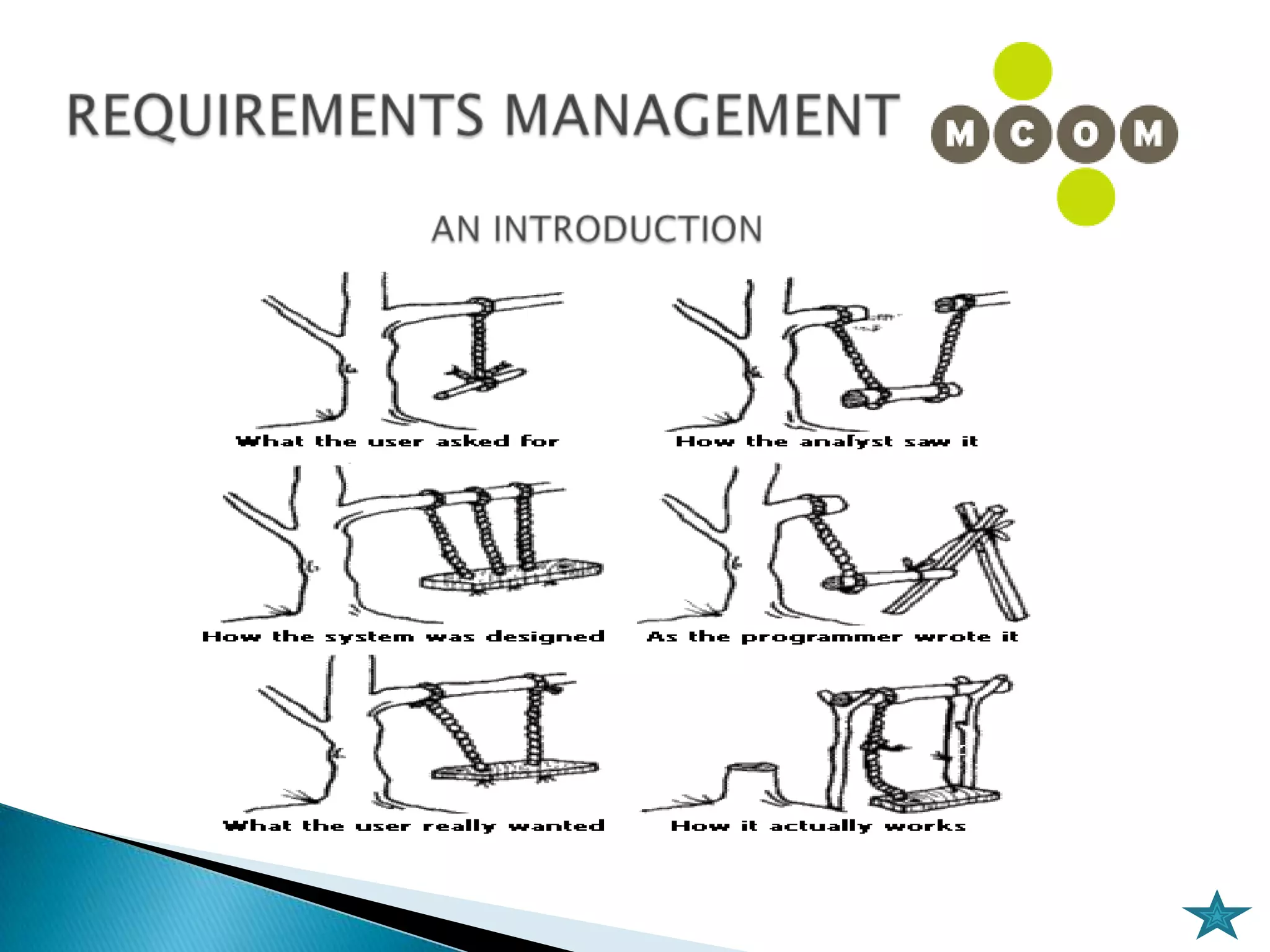
REQUIREMENTS MANAGEMENTAN INTRODUCTION

Mcom Ba Training Module 1

  • 1.
  • 2.
  • 3.
    AGENDAINTRODUCTION TO BUSINESSANALYSISINTRODUCTION TO RATIONAL UNIFIED PROCESSINTRODUCTION TO REQUIREMENTS MANAGEMENTINTRODUCTION TO RATIONAL REQUISITE PROINTRODUCTION TO J.A.D SESSIONSQ & A
  • 4.
    CLASS RULES#1 Pleasebe on Time#2 You MUST TALK in Class
  • 5.
  • 6.
    IT BUSINESS ANALYSTTHETWO BIG QUESTIONS#1What does an IT BA do?#2What skills does an IT Business Analyst need?
  • 7.
    Business AnalystBusiness SystemsAnalystIT AnalystProcess ManagerRequirements EngineerWhat’s in a Name?Solutions Expert
  • 8.
    IT BUSINESS ANALYST“It'snot what you're called, it's what you do.”
  • 9.
  • 10.
    IT BUSINESS ANALYST#1THEWHATIT Business Analyst » Focused on requirements» Solves problems with IT solutions» Bridge between business and IT» Performs functional designThe IT Business Analyst is the professional who is generally associated with requirements elicitation/analysis and solving problems using information technology solutions. This role is the bridge between business & IT. The analysts in this role generally begin their work once a given IT project has been initiated. They are the ones eliciting requirements from stakeholders, analyze the requirements, document them in BRDs (business requirements documents), and create functional specifications. In this role the analyst may also interacts with the development and quality assurance teams. Other common titles for this role are: Requirements Engineer, Requirements Analyst, Application Consultant, Application Analyst, Business Analyst (generic term), etc.
  • 11.
    IT BUSINESS ANALYSTTHEHOWEarn a degree in a business related discipline (such as economics, finance, or accounting) and, on the job, continue their education by learning systems design skills and by getting involved as stakeholders in IT projects. Many such business practitioners attend additional courses in software design, use cases, modeling in order to round out their modern analyst skills.Another very common path is to earn a degree in computer science or related field (such as engineering, information systems, etc.) and begin work as programmers, web designers, etc. Slowly, on the job, they acquire business domain skills from the projects they worked on as developers. Most developers take additional courses in communication, writing, requirements elicitation to round out their modern analyst skills.#2
  • 12.
  • 14.
  • 15.
  • 16.
    RUPRUP is amethod of managing OO Software Development
  • 17.
    It can beviewed as a Software Development Framework which is extensible and features:
  • 18.
  • 19.
  • 20.
  • 21.
  • 22.
  • 23.
    Change Control ManagementRUPOnlineRepository of Process Information and Description in HTML format
  • 24.
    Templates for allmajor artifacts, including:
  • 25.
  • 26.
  • 27.
    Project Templates forProject Management
  • 28.
    Process Manuals describingkey processesProcess StructureTwo dimensions.Horizontal axis represents time and shows the lifecycle aspects of the process as it unfolds.Vertical axis represents core process workflows, which group activities logically by nature.
  • 29.
  • 30.
  • 32.
  • 33.
  • 34.
  • 37.
    J.A.D SESSIONSPROPERTIES OFA J.A.D MEETINGEvery JAD session has a sponsor2. Every meeting participant other than the sponsor is invited to play a role in the sponsor’s project visionJAD sessions have a well defined agenda4. The Business Analyst is responsible for Facilitating, Moderating and recording the meeting
  • 38.
  • 39.
  • 40.
    J.A.D SESSIONSTips forconducting a successful JAD SessionLay out the ground rules that everyone will listen and respect each other's position, even if they might disagree on fundamentals.
  • 41.
    Stay on time.Schedule the meeting with realistic time frames and respect everyone's position and time within the company. End on time, not a minute later.
  • 42.
    Designate one areaof the room as the parking lot for ideas or comments that were brought up that are on a tangent with the problem at hand. You will come back to the lot either later if there is time or will call another meeting with only those involved at a later date to discuss the parking lot items.
  • 43.
    Do not letoffice politics play a part in this meeting. Everyone is on a level playing field in here. Control the conversation and don't let a single person dominate discussion.GROUP ACTIVITYProject OverviewACME Inc. is looking at implementing an enterprise scale reporting solution. This solution should enable executives to request ad-hoc financial and sales reports without giving them direct access to the data. The solution should have features like report scheduling, notification etc. The reports should be published online and should also be accessible through Microsoft Excel. The data is currently stored in Microsoft SQL Server.
  • 44.
  • 46.
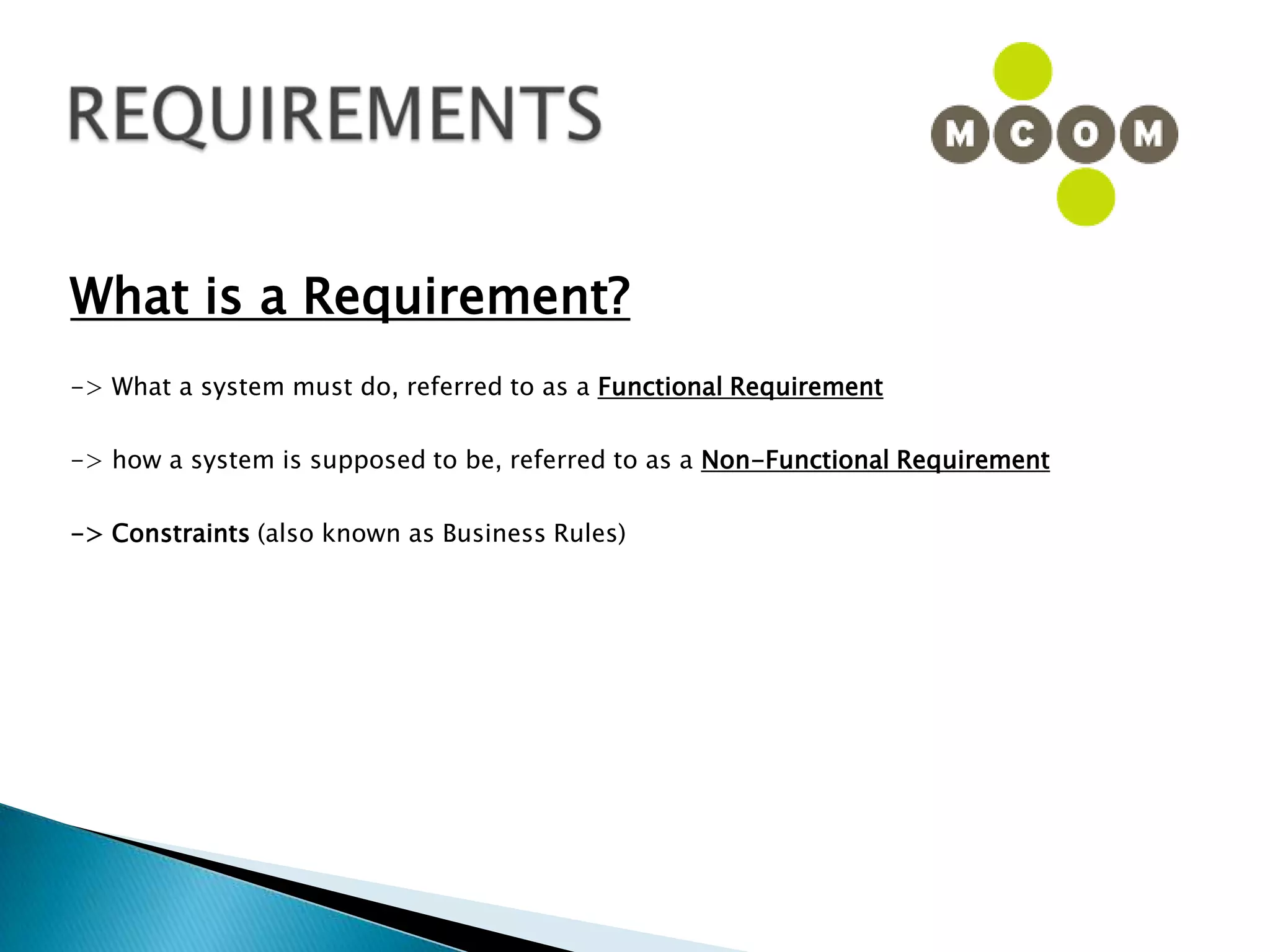
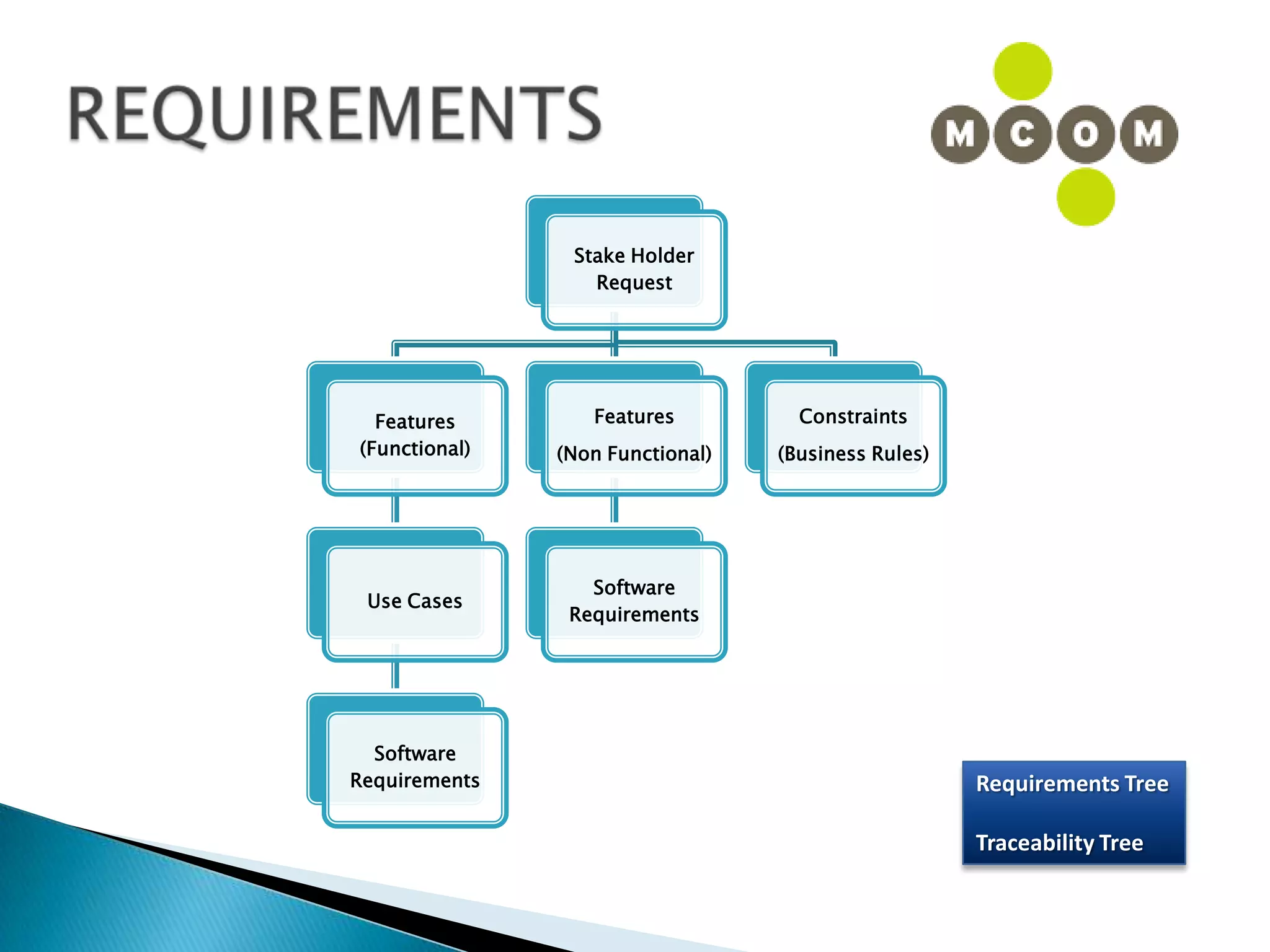
    REQUIREMENTSWhat is aRequirement?-> What a system must do, referred to as a Functional Requirement-> how a system is supposed to be, referred to as a Non-Functional Requirement-> Constraints (also known as Business Rules)
  • 47.
  • 48.
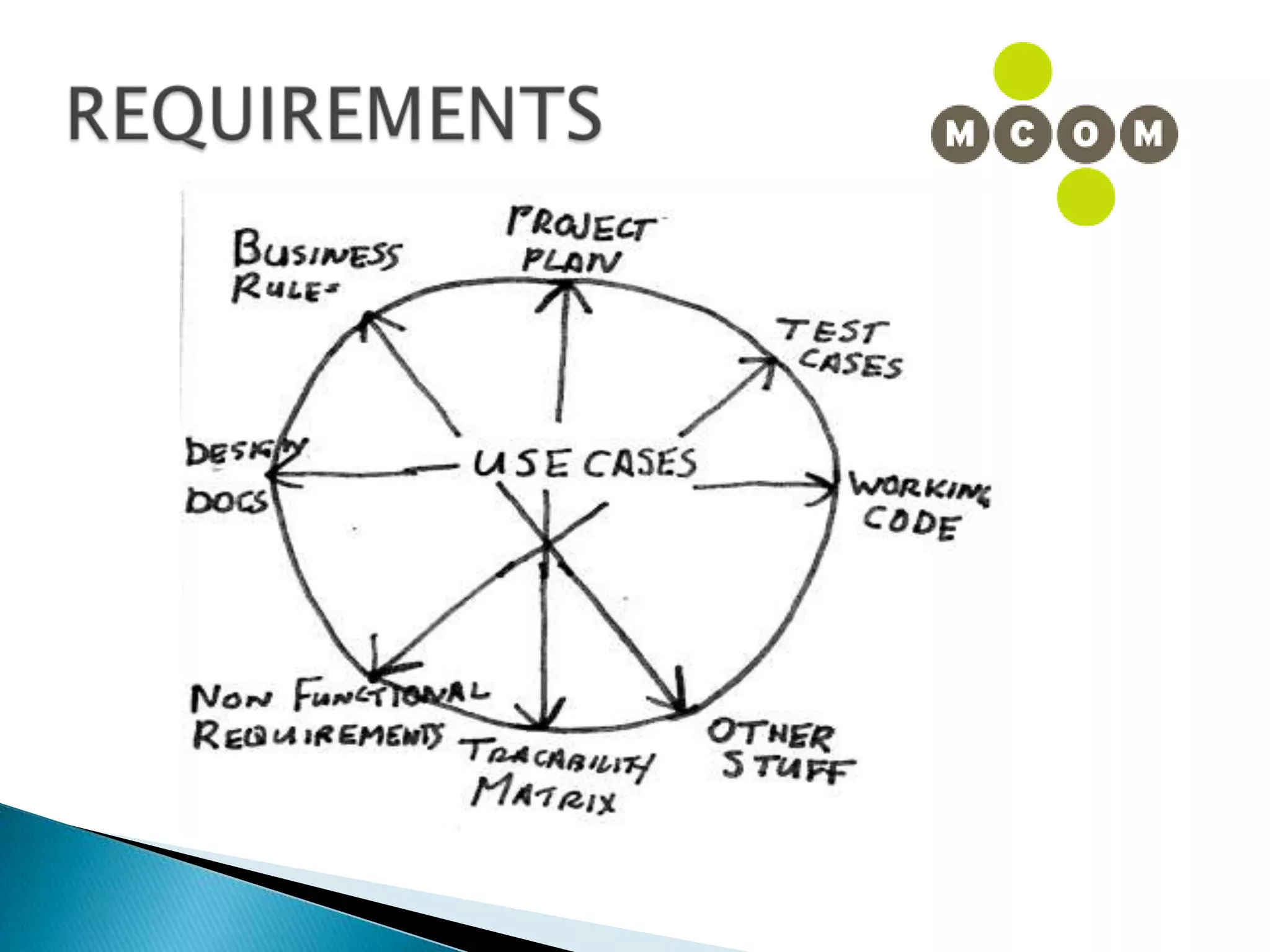
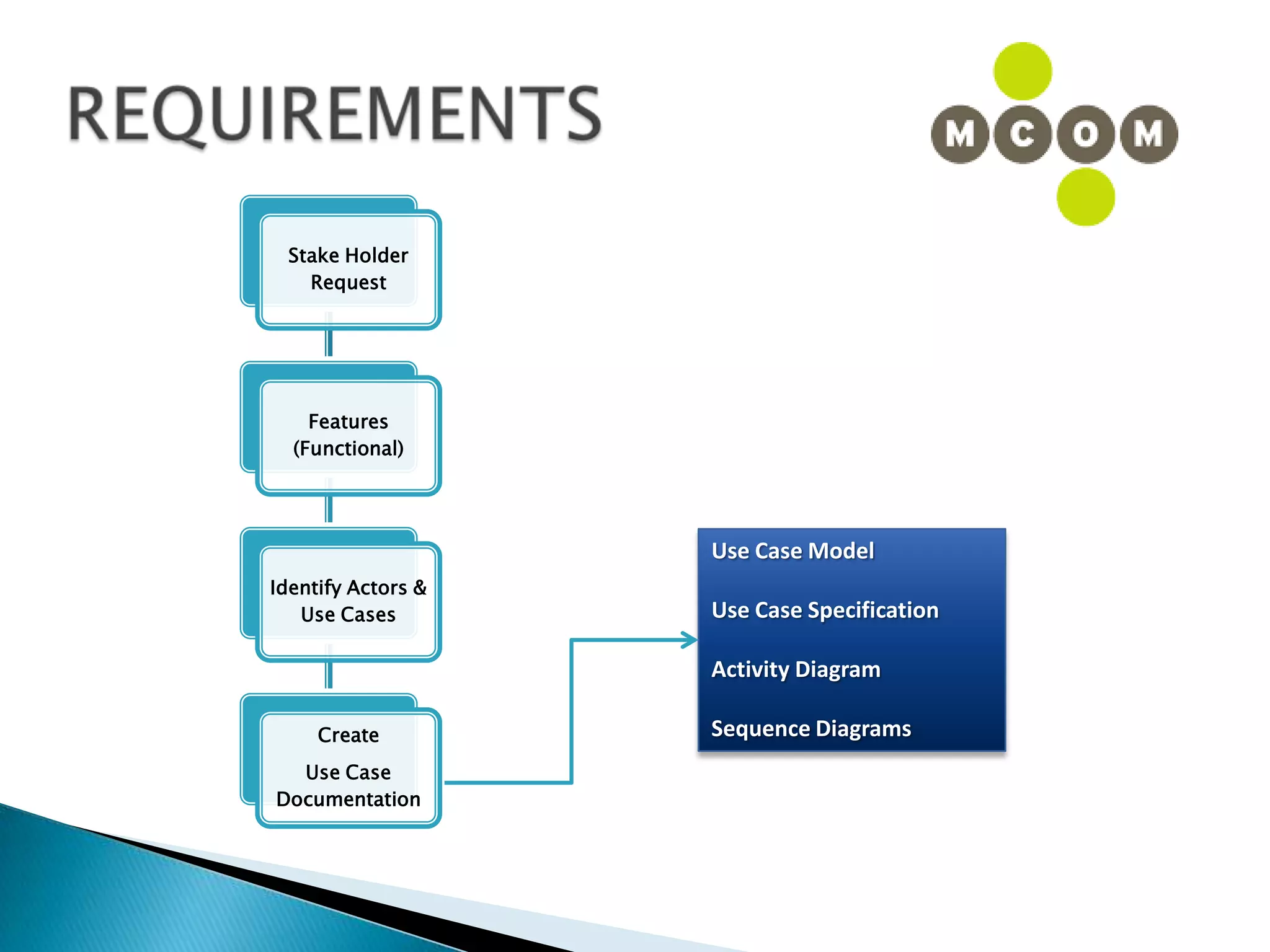
    REQUIREMENTSUse Case ModelUseCase SpecificationActivity DiagramSequence Diagrams
  • 49.
  • 50.
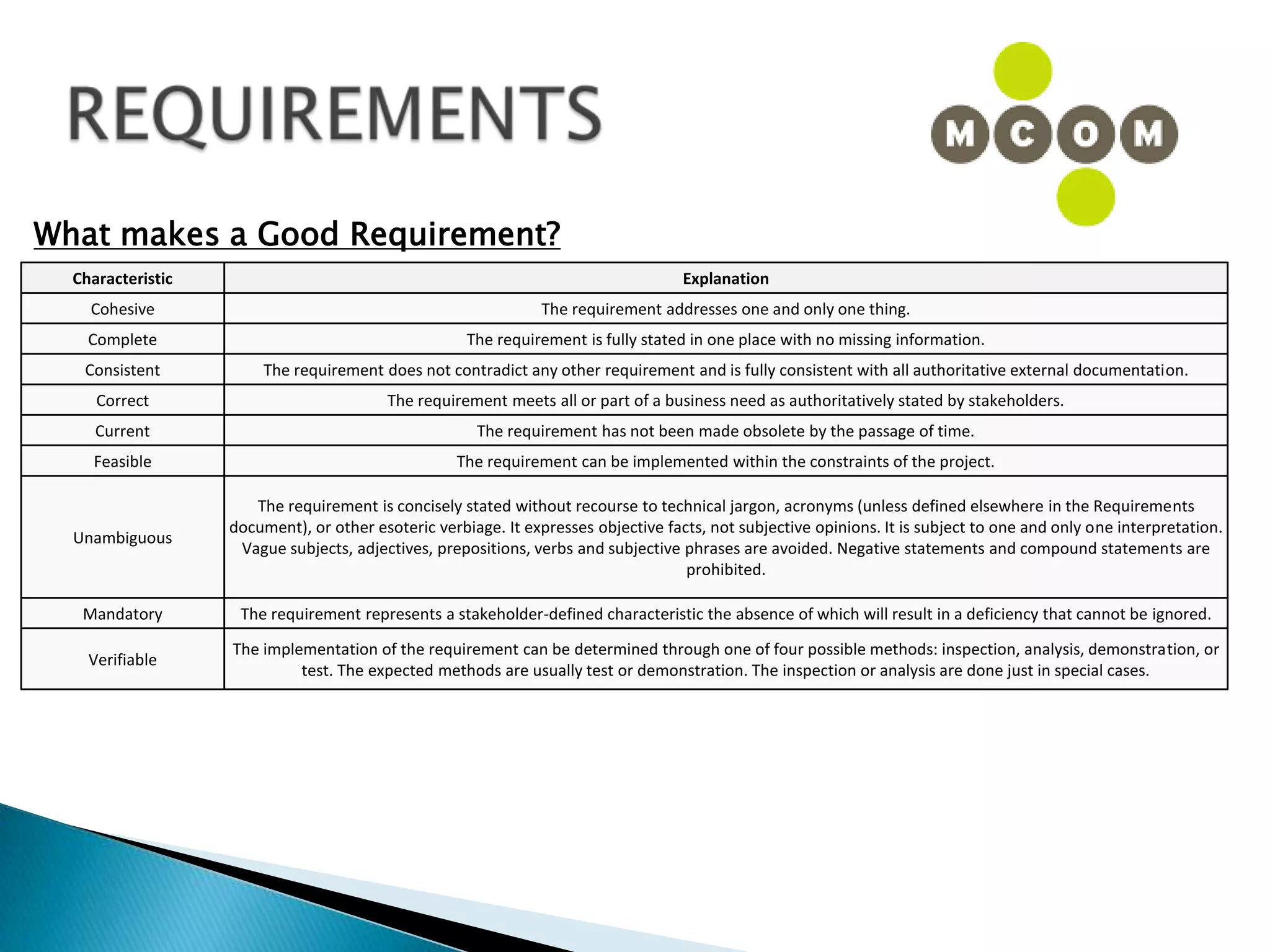
    REQUIREMENTSWhat makes aGood Requirement?
  • 51.
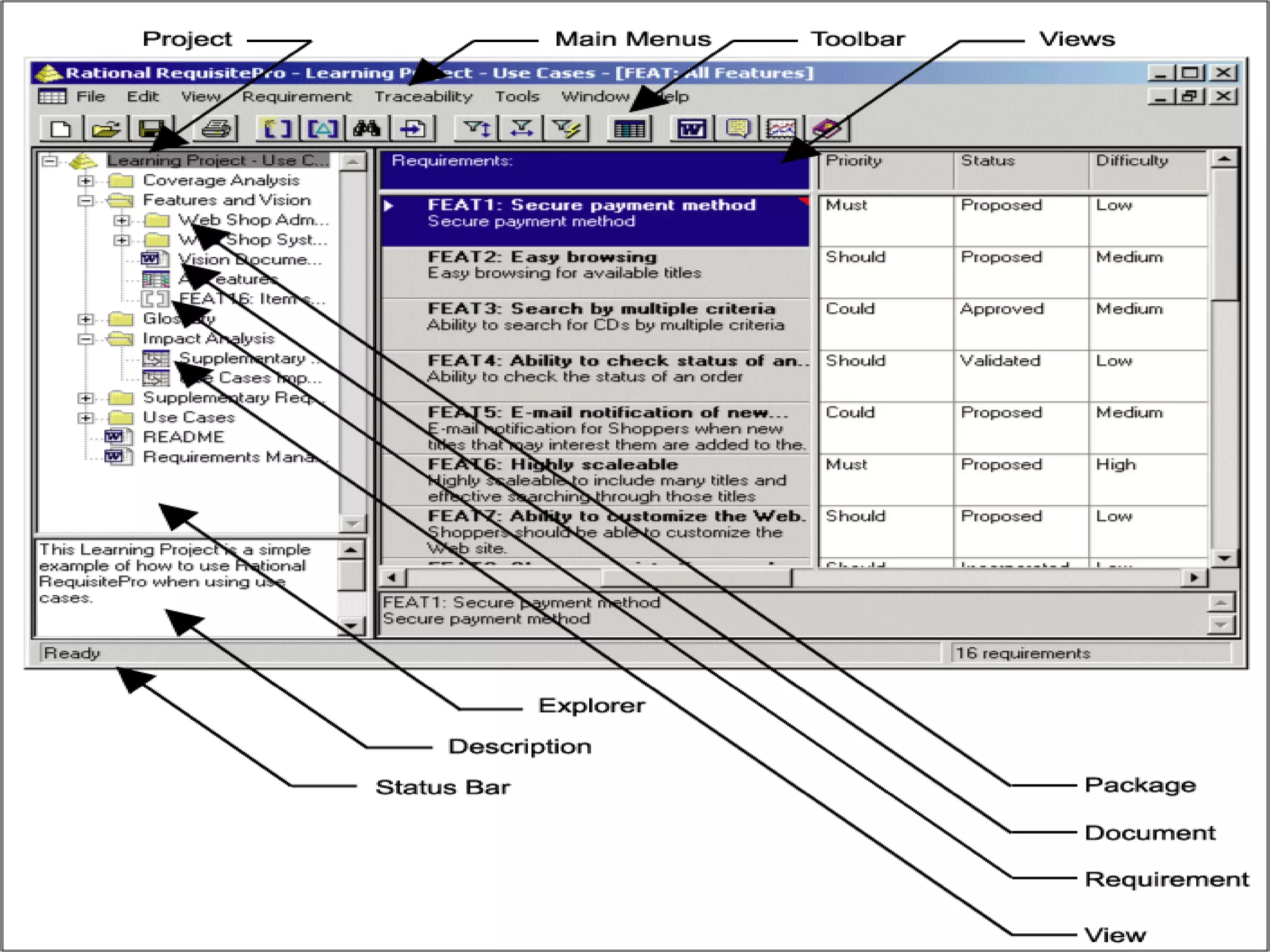
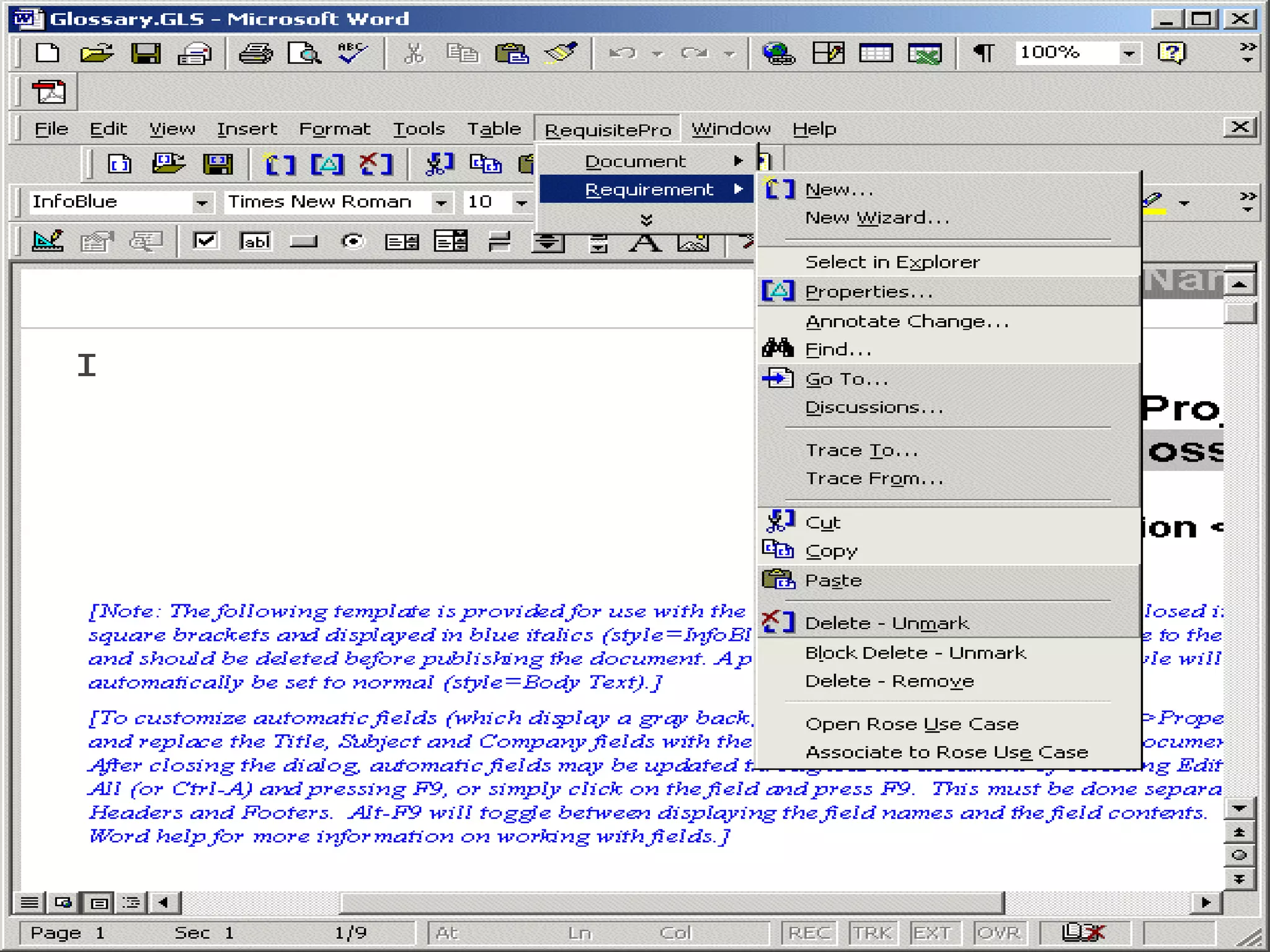
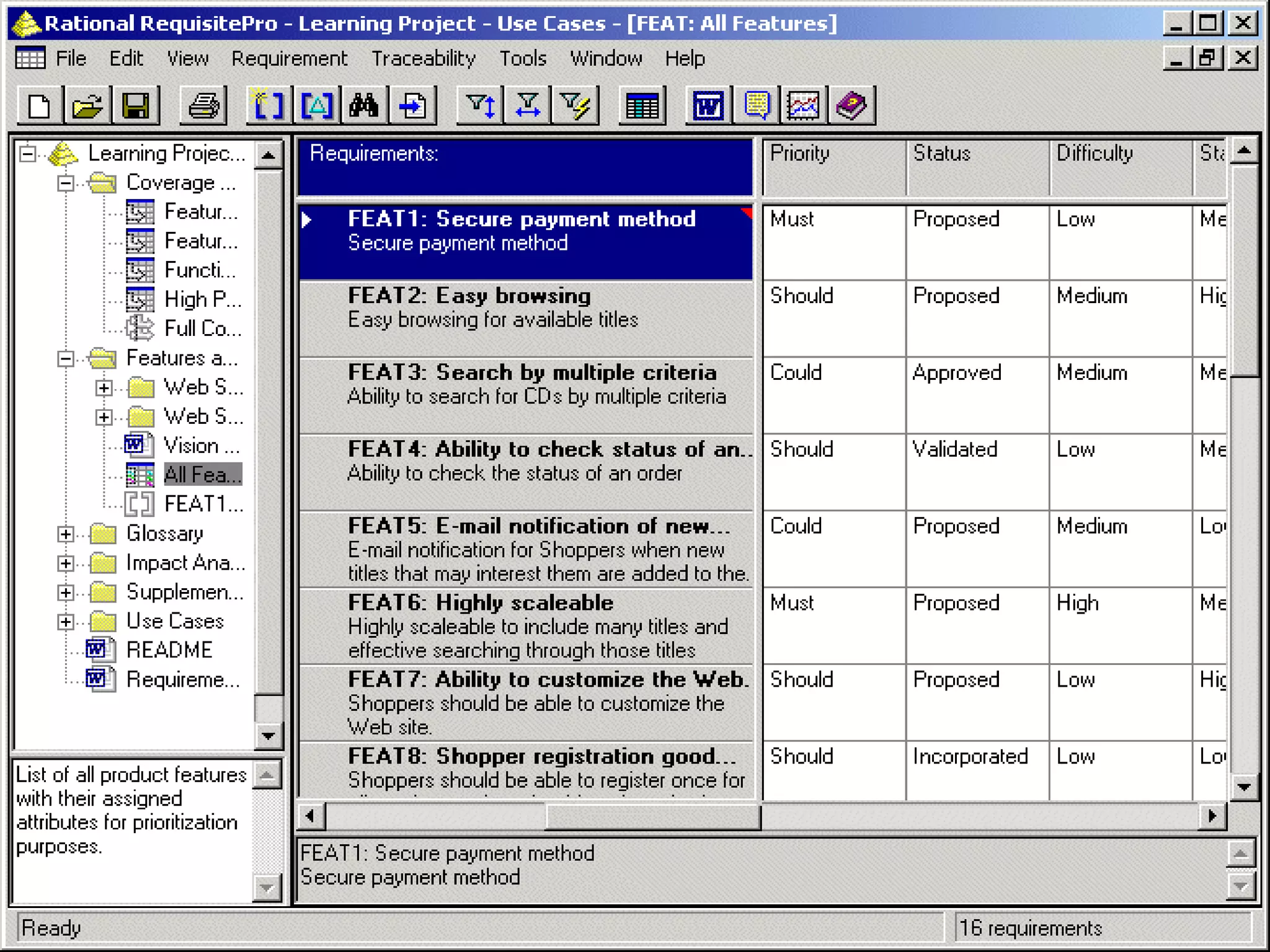
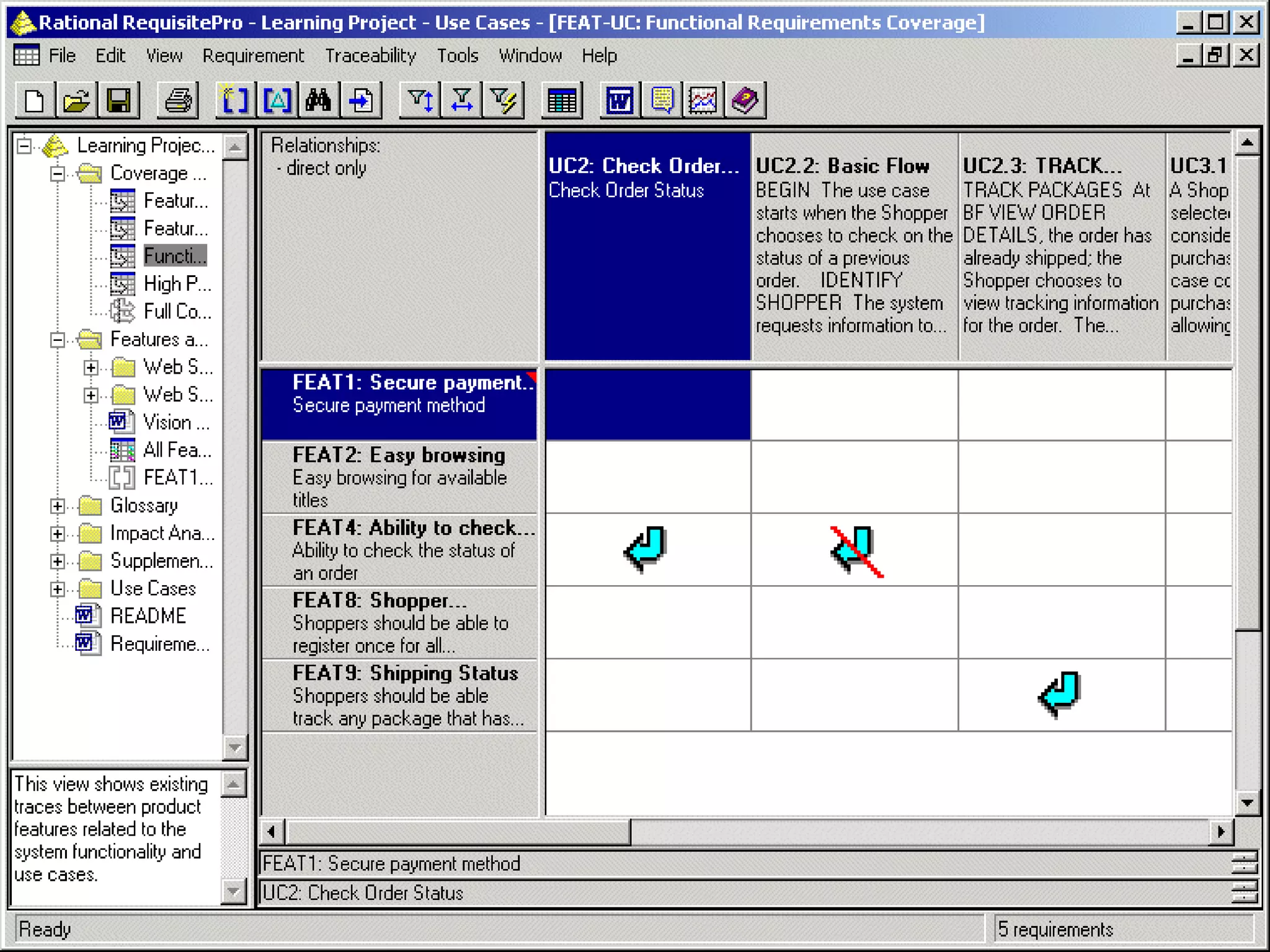
    REQUSITE PRORequisitePro isa powerful, easy-to-use requirements management tool that helps teams manage project requirements comprehensively, promotes communication and collaboration among team members, and reduces project risk.
  • 56.
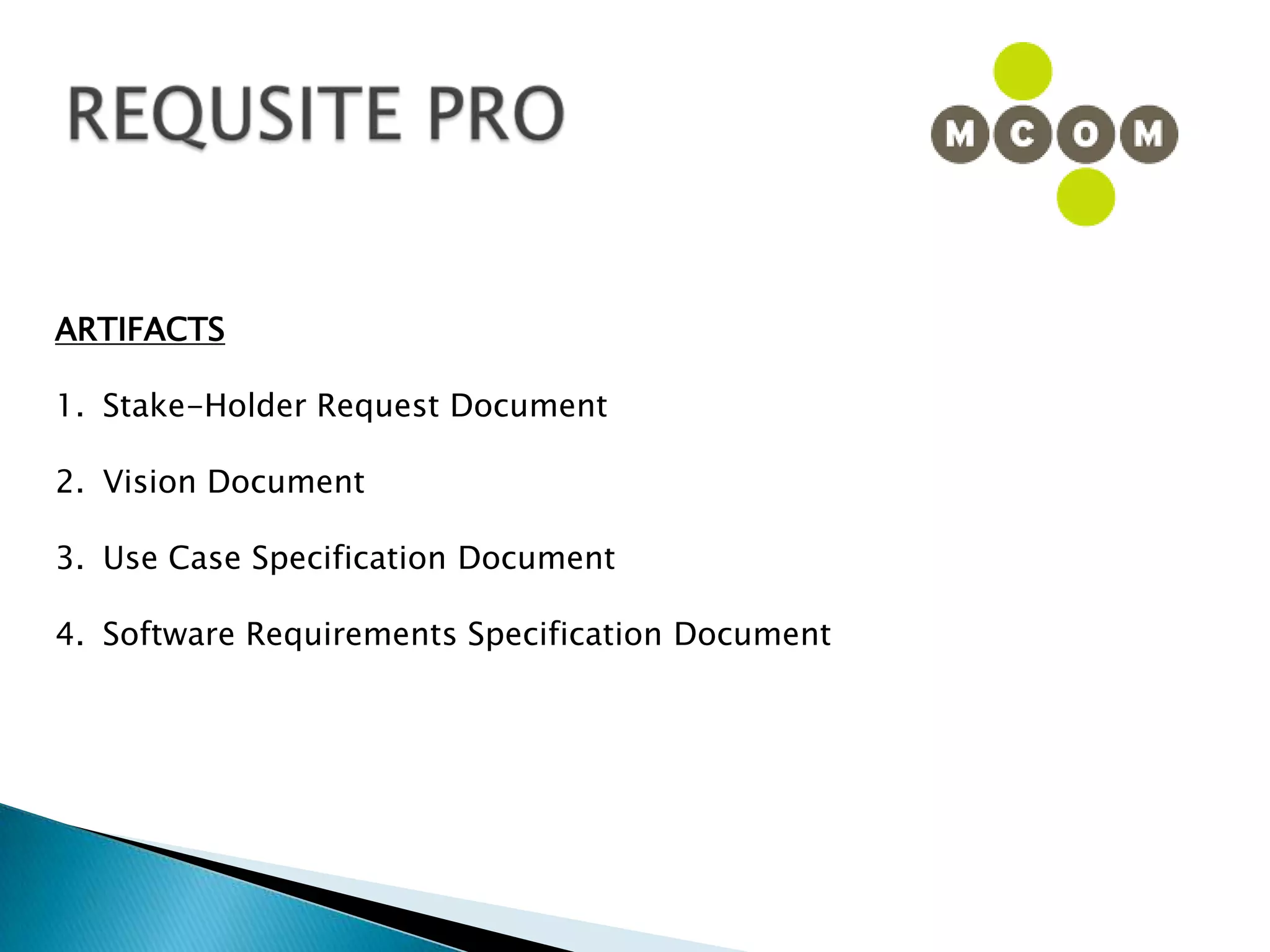
    REQUSITE PROARTIFACTSStake-Holder RequestDocumentVision DocumentUse Case Specification DocumentSoftware Requirements Specification Document
  • 57.