Market Segmentation in India
McDonald's
By
Pradeepa
&
Livin Graham
McDonald's Entry to India
McDonald's faced huge challenge while
entering into Indian Market
 1993
 The biggest problem
McDonald faced was during
the launch of its product in
India was the public image it
was carrying as an
International food chain and
not matching Indian
standards.
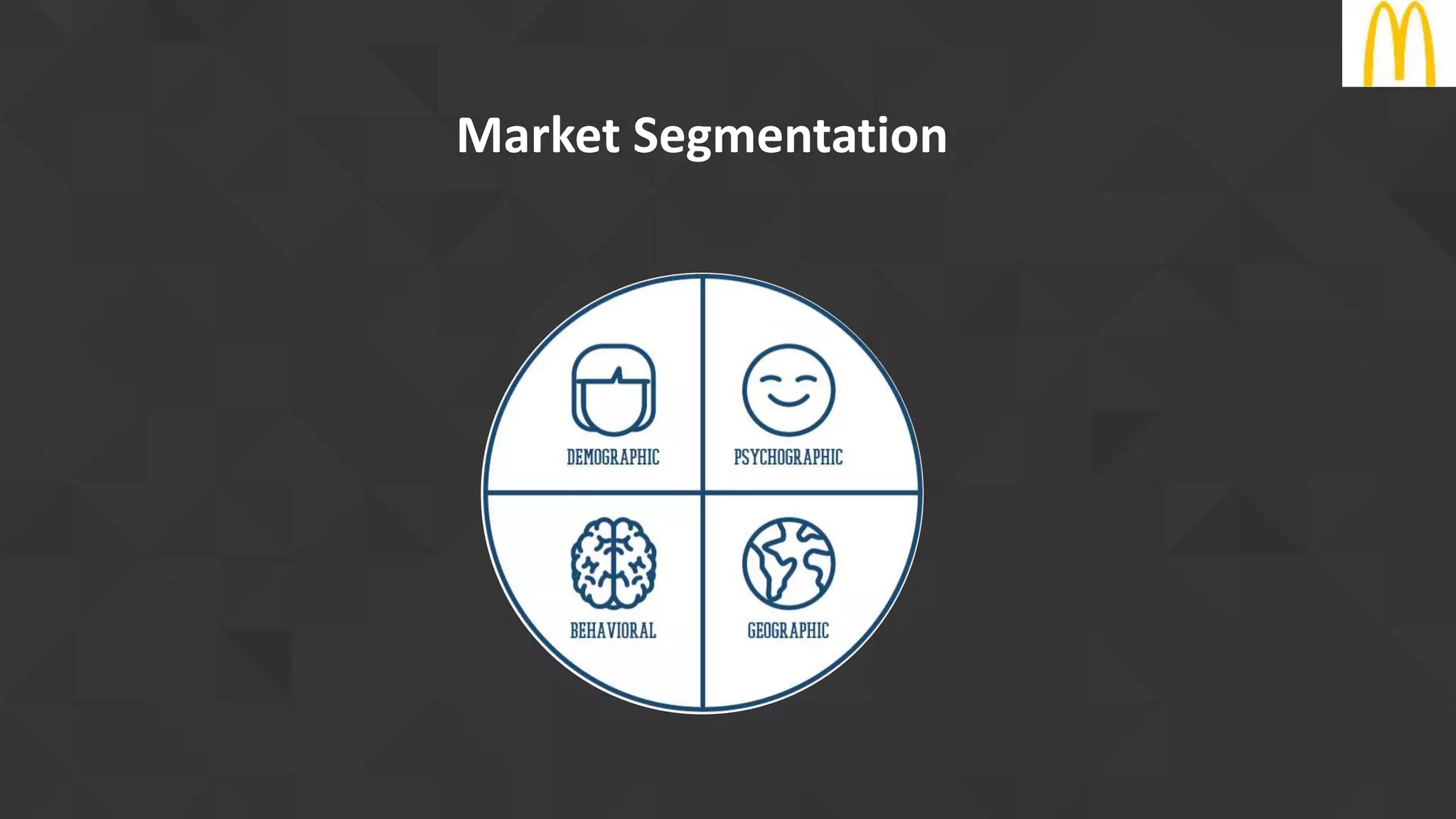
Market Segmentation
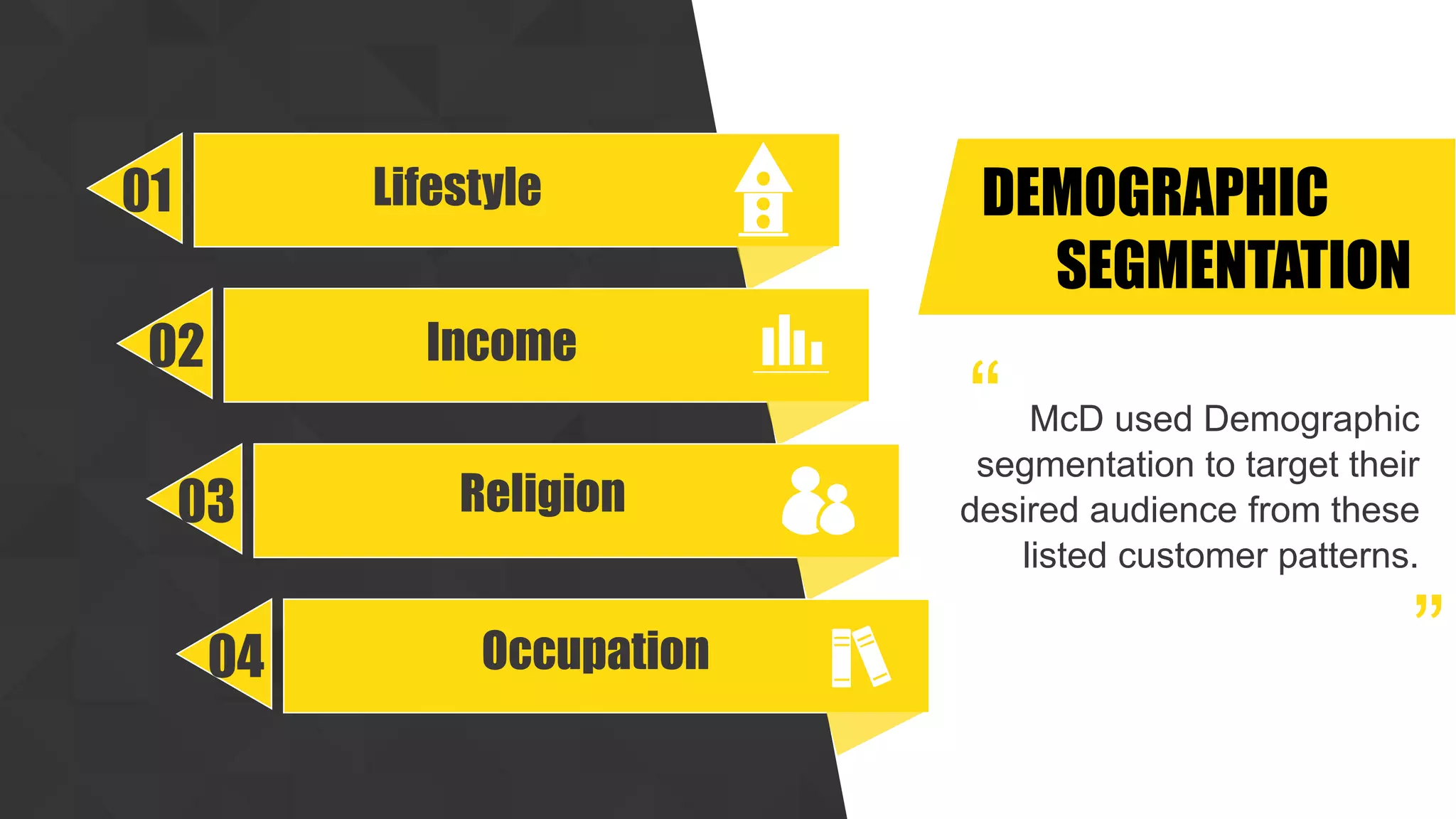
DEMOGRAPHIC
SEGMENTATION
01
02
03
04
McD used Demographic
segmentation to target their
desired audience from these
listed customer patterns.
“
“
Lifestyle
Income
Religion
Occupation
How well McD Mapped the
segmentation
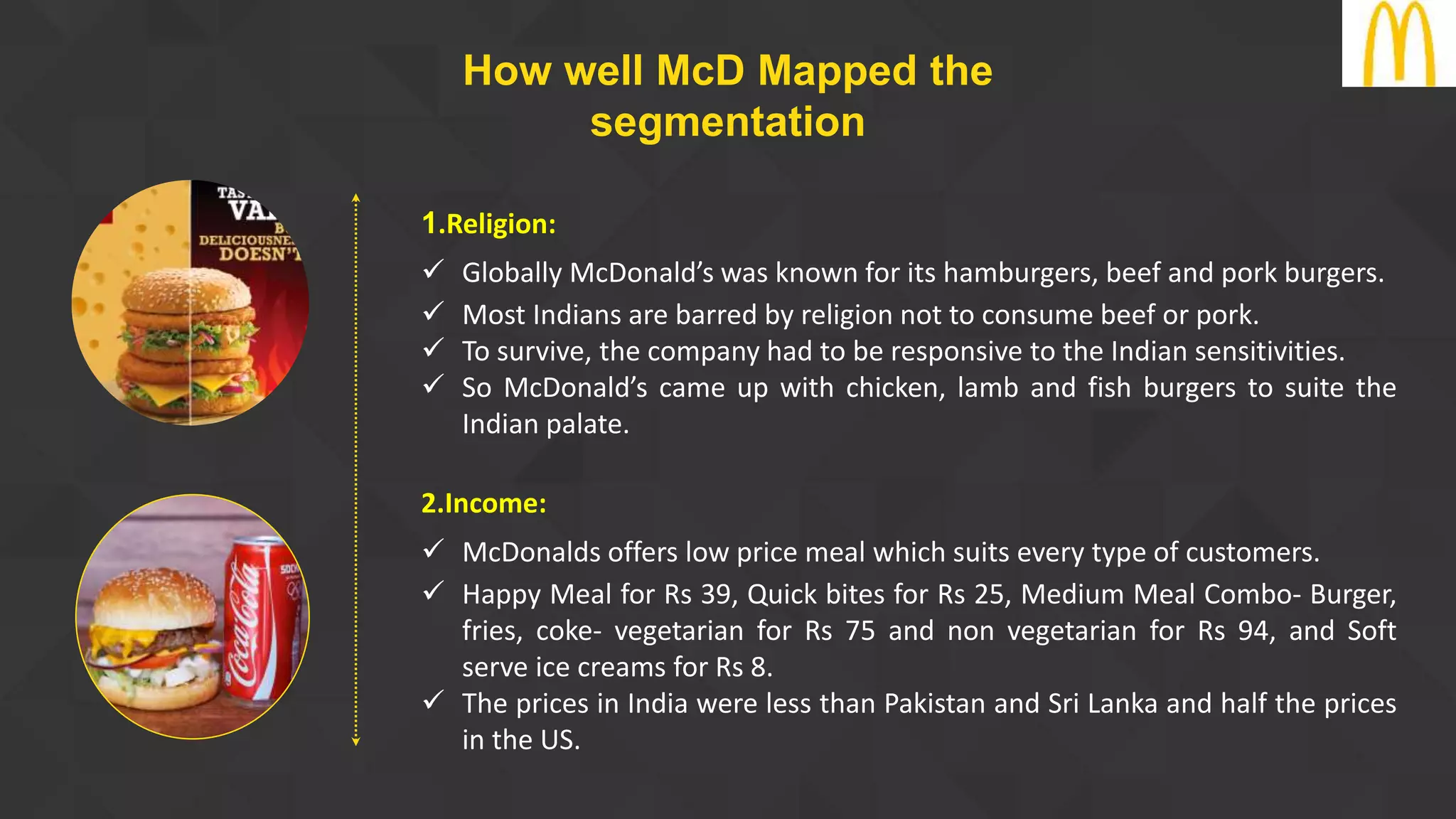
1.Religion:
 Globally McDonald’s was known for its hamburgers, beef and pork burgers.
 Most Indians are barred by religion not to consume beef or pork.
 To survive, the company had to be responsive to the Indian sensitivities.
 So McDonald’s came up with chicken, lamb and fish burgers to suite the
Indian palate.
2.Income:
 McDonalds offers low price meal which suits every type of customers.
 Happy Meal for Rs 39, Quick bites for Rs 25, Medium Meal Combo- Burger,
fries, coke- vegetarian for Rs 75 and non vegetarian for Rs 94, and Soft
serve ice creams for Rs 8.
 The prices in India were less than Pakistan and Sri Lanka and half the prices
in the US.
3.Occupation:
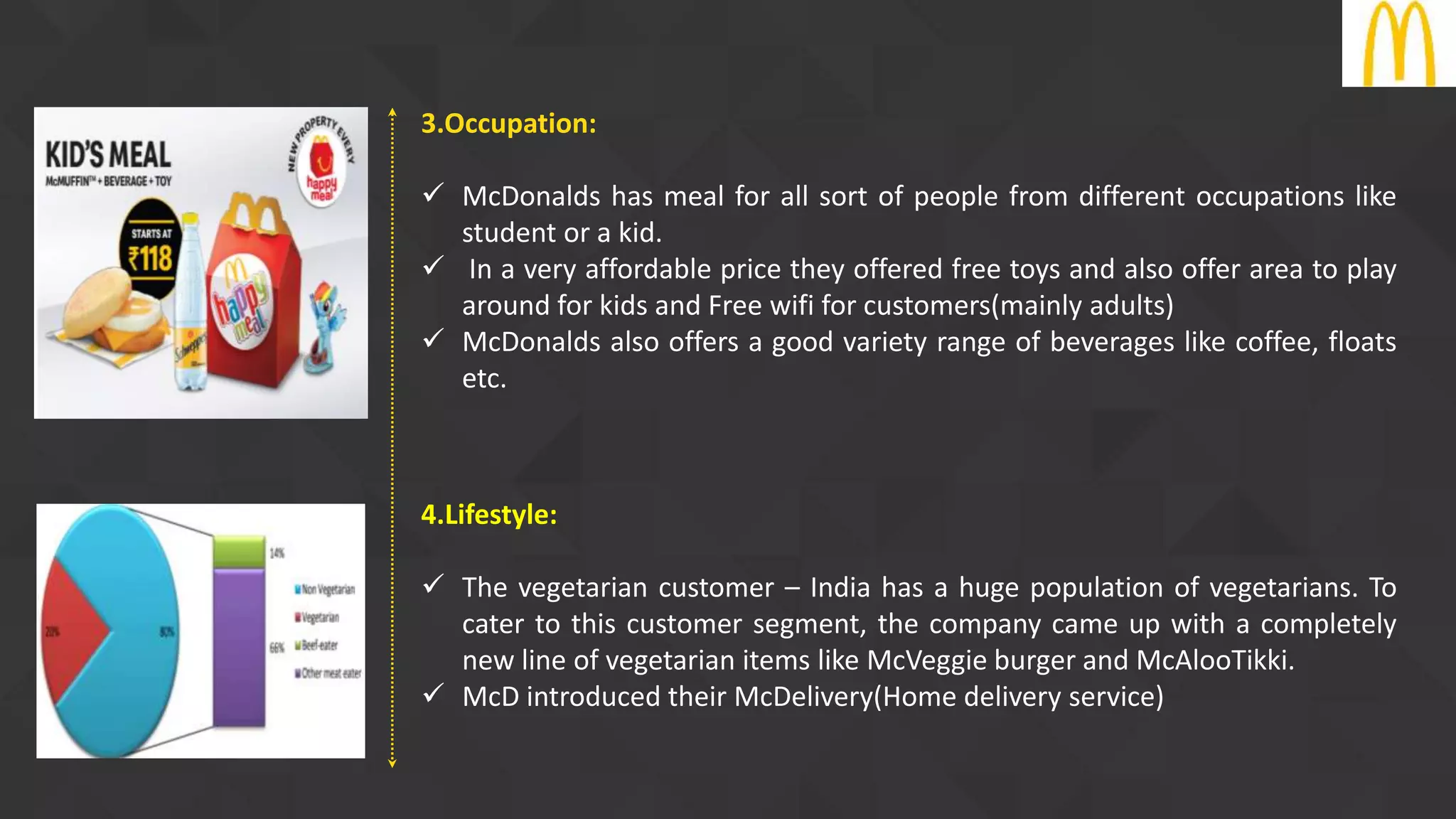
 McDonalds has meal for all sort of people from different occupations like
student or a kid.
 In a very affordable price they offered free toys and also offer area to play
around for kids and Free wifi for customers(mainly adults)
 McDonalds also offers a good variety range of beverages like coffee, floats
etc.
4.Lifestyle:
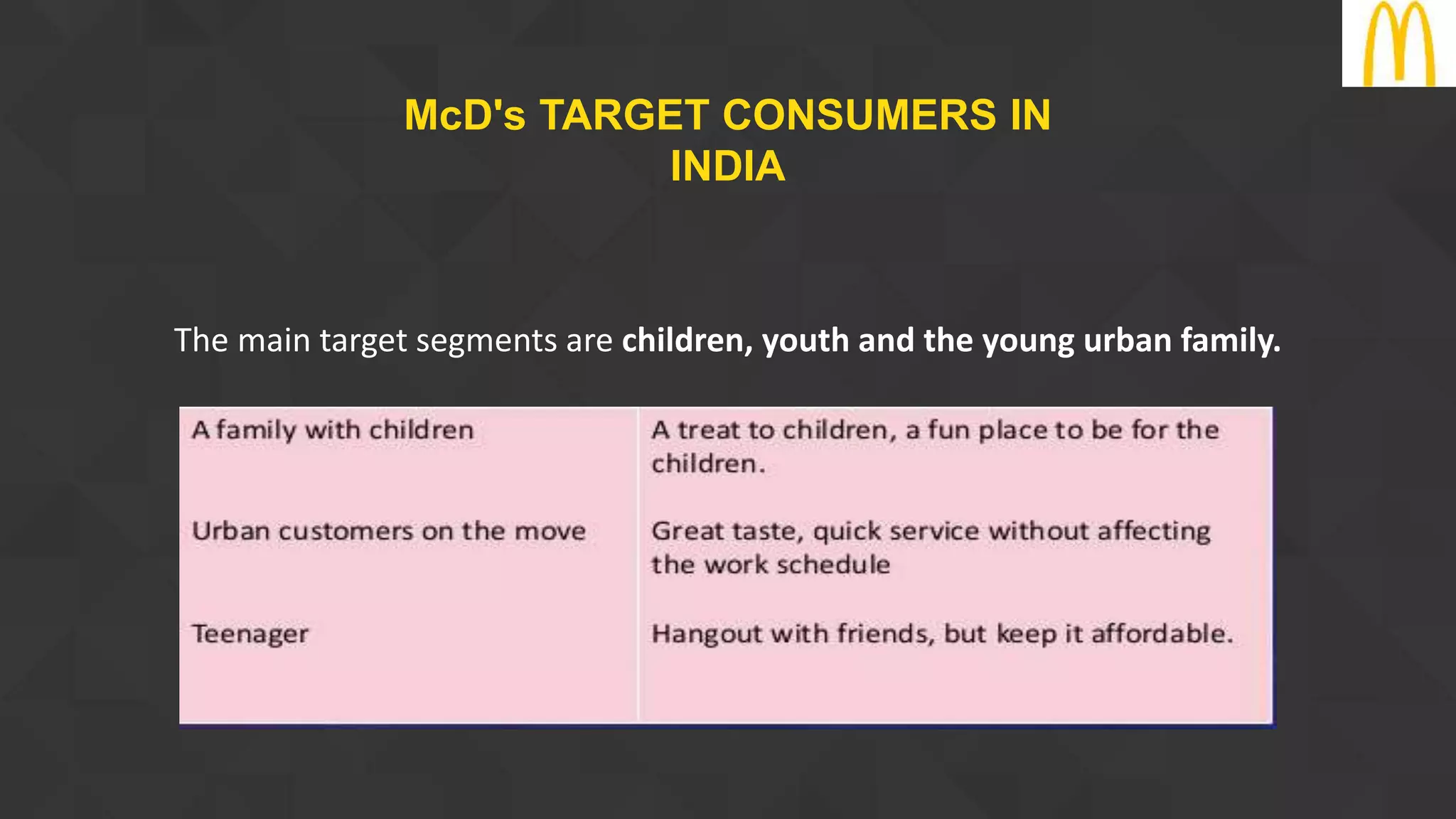
 The vegetarian customer – India has a huge population of vegetarians. To
cater to this customer segment, the company came up with a completely
new line of vegetarian items like McVeggie burger and McAlooTikki.
 McD introduced their McDelivery(Home delivery service)
McD's TARGET CONSUMERS IN
INDIA
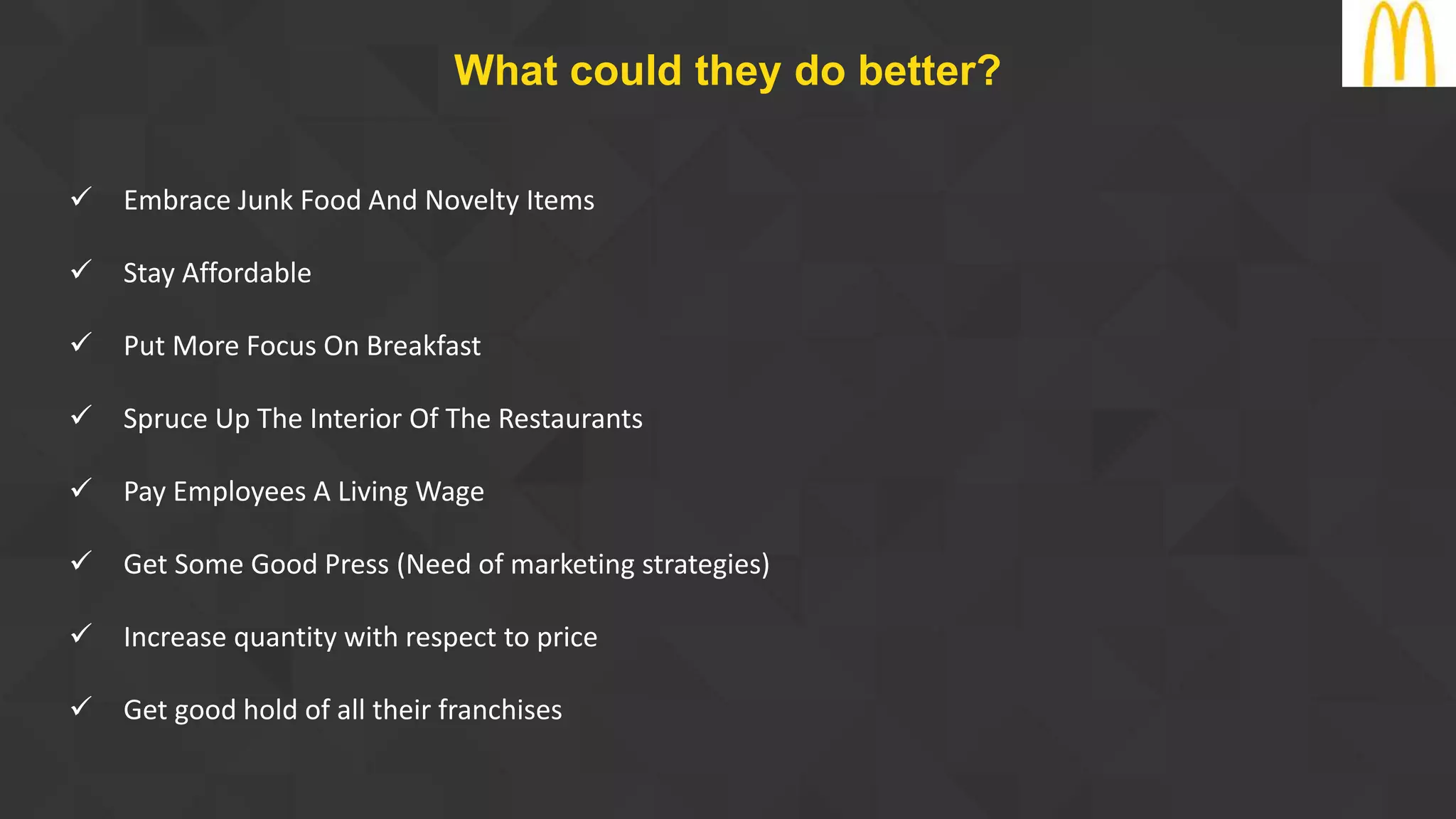
The main target segments are children, youth and the young urban family.
 Embrace Junk Food And Novelty Items
 Stay Affordable
 Put More Focus On Breakfast
 Spruce Up The Interior Of The Restaurants
 Pay Employees A Living Wage
 Get Some Good Press (Need of marketing strategies)
 Increase quantity with respect to price
 Get good hold of all their franchises
What could they do better?
 The company’s mobile ordering system will track data around customer habits, such as the kind of food
and drinks they prefer, frequency of their orders, drive in vs. in-store eating habits, and other similar
information.
 Millennials are generally not as concerned about privacy as older generations, and are happy to share
their preferences in return for better service. McDonald’s is looking to leverage this trend to drive sales
through the personalized ordering app.
 Personalization of services through customer data can make the ordering process more efficient, and
potentially increase the average order size of loyal customers.
What all data can they collect from
existing customers?
 In 2019, McDonalds acquired personalisation startup ‘Dynamic Yield’ for a reported $300m, making it
one of the largest acquisitions in their history.
 Dynamic Yield uses Machine Learning to provide retailers such as Ikea and Sephora with algorithmically
driven ‘decision logic’ technology. ‘Decision logic’ is the technology that powers online
recommendations, think of the ‘customers also bought’ nudge you recieve when you add something to
your basket.
 Harnessing this technology, McDonald’s ambition is to transform their millions of restaurants from static
franchises to localised businesses that dynamically flex around their customers changing needs and
tastes. The installation of hundreds of digital screen displays offer the most noticeable groundwork
being laid in restaurants.
 Digital screens have replaced printed menu boards and posters around their buildings. Large
touchscreen kiosks have landed on store floors allowing customers to self-serve and pay. Even the
McDonalds ‘Click and collect’ app has placed itself as a viable alternative touchpoint to order from.
How does McD restrategies insights
from the collected data?
THANK YOU
!
ITM B-School,Chennai.

McDonald's Market Segmentation in India

  • 1.
    Market Segmentation inIndia McDonald's By Pradeepa & Livin Graham
  • 2.
    McDonald's Entry toIndia McDonald's faced huge challenge while entering into Indian Market  1993  The biggest problem McDonald faced was during the launch of its product in India was the public image it was carrying as an International food chain and not matching Indian standards.
  • 3.
  • 4.
    DEMOGRAPHIC SEGMENTATION 01 02 03 04 McD used Demographic segmentationto target their desired audience from these listed customer patterns. “ “ Lifestyle Income Religion Occupation
  • 5.
    How well McDMapped the segmentation 1.Religion:  Globally McDonald’s was known for its hamburgers, beef and pork burgers.  Most Indians are barred by religion not to consume beef or pork.  To survive, the company had to be responsive to the Indian sensitivities.  So McDonald’s came up with chicken, lamb and fish burgers to suite the Indian palate. 2.Income:  McDonalds offers low price meal which suits every type of customers.  Happy Meal for Rs 39, Quick bites for Rs 25, Medium Meal Combo- Burger, fries, coke- vegetarian for Rs 75 and non vegetarian for Rs 94, and Soft serve ice creams for Rs 8.  The prices in India were less than Pakistan and Sri Lanka and half the prices in the US.
  • 6.
    3.Occupation:  McDonalds hasmeal for all sort of people from different occupations like student or a kid.  In a very affordable price they offered free toys and also offer area to play around for kids and Free wifi for customers(mainly adults)  McDonalds also offers a good variety range of beverages like coffee, floats etc. 4.Lifestyle:  The vegetarian customer – India has a huge population of vegetarians. To cater to this customer segment, the company came up with a completely new line of vegetarian items like McVeggie burger and McAlooTikki.  McD introduced their McDelivery(Home delivery service)
  • 7.
    McD's TARGET CONSUMERSIN INDIA The main target segments are children, youth and the young urban family.
  • 8.
     Embrace JunkFood And Novelty Items  Stay Affordable  Put More Focus On Breakfast  Spruce Up The Interior Of The Restaurants  Pay Employees A Living Wage  Get Some Good Press (Need of marketing strategies)  Increase quantity with respect to price  Get good hold of all their franchises What could they do better?
  • 9.
     The company’smobile ordering system will track data around customer habits, such as the kind of food and drinks they prefer, frequency of their orders, drive in vs. in-store eating habits, and other similar information.  Millennials are generally not as concerned about privacy as older generations, and are happy to share their preferences in return for better service. McDonald’s is looking to leverage this trend to drive sales through the personalized ordering app.  Personalization of services through customer data can make the ordering process more efficient, and potentially increase the average order size of loyal customers. What all data can they collect from existing customers?
  • 10.
     In 2019,McDonalds acquired personalisation startup ‘Dynamic Yield’ for a reported $300m, making it one of the largest acquisitions in their history.  Dynamic Yield uses Machine Learning to provide retailers such as Ikea and Sephora with algorithmically driven ‘decision logic’ technology. ‘Decision logic’ is the technology that powers online recommendations, think of the ‘customers also bought’ nudge you recieve when you add something to your basket.  Harnessing this technology, McDonald’s ambition is to transform their millions of restaurants from static franchises to localised businesses that dynamically flex around their customers changing needs and tastes. The installation of hundreds of digital screen displays offer the most noticeable groundwork being laid in restaurants.  Digital screens have replaced printed menu boards and posters around their buildings. Large touchscreen kiosks have landed on store floors allowing customers to self-serve and pay. Even the McDonalds ‘Click and collect’ app has placed itself as a viable alternative touchpoint to order from. How does McD restrategies insights from the collected data?
  • 11.