MBA vs Master of Public
Administration: Which Is
for You?
IR. Sugeng Endarsiwi, ST., EMBA.,CMA-HK
Student Postgraduate Univ. Esa Unggul, Jakarta Indonesia
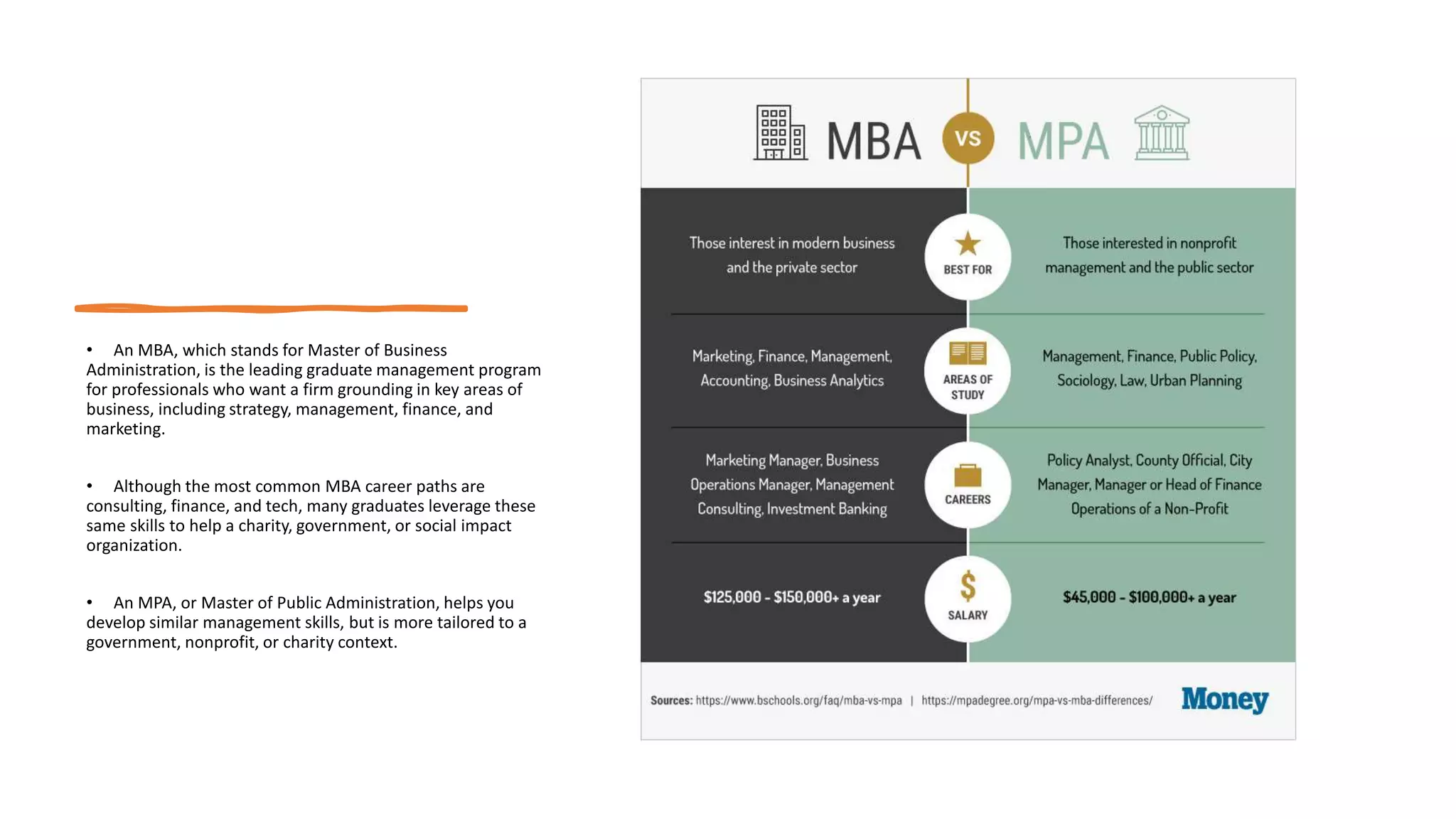
• An MBA, which stands for Master of Business
Administration, is the leading graduate management program
for professionals who want a firm grounding in key areas of
business, including strategy, management, finance, and
marketing.
• Although the most common MBA career paths are
consulting, finance, and tech, many graduates leverage these
same skills to help a charity, government, or social impact
organization.
• An MPA, or Master of Public Administration, helps you
develop similar management skills, but is more tailored to a
government, nonprofit, or charity context.
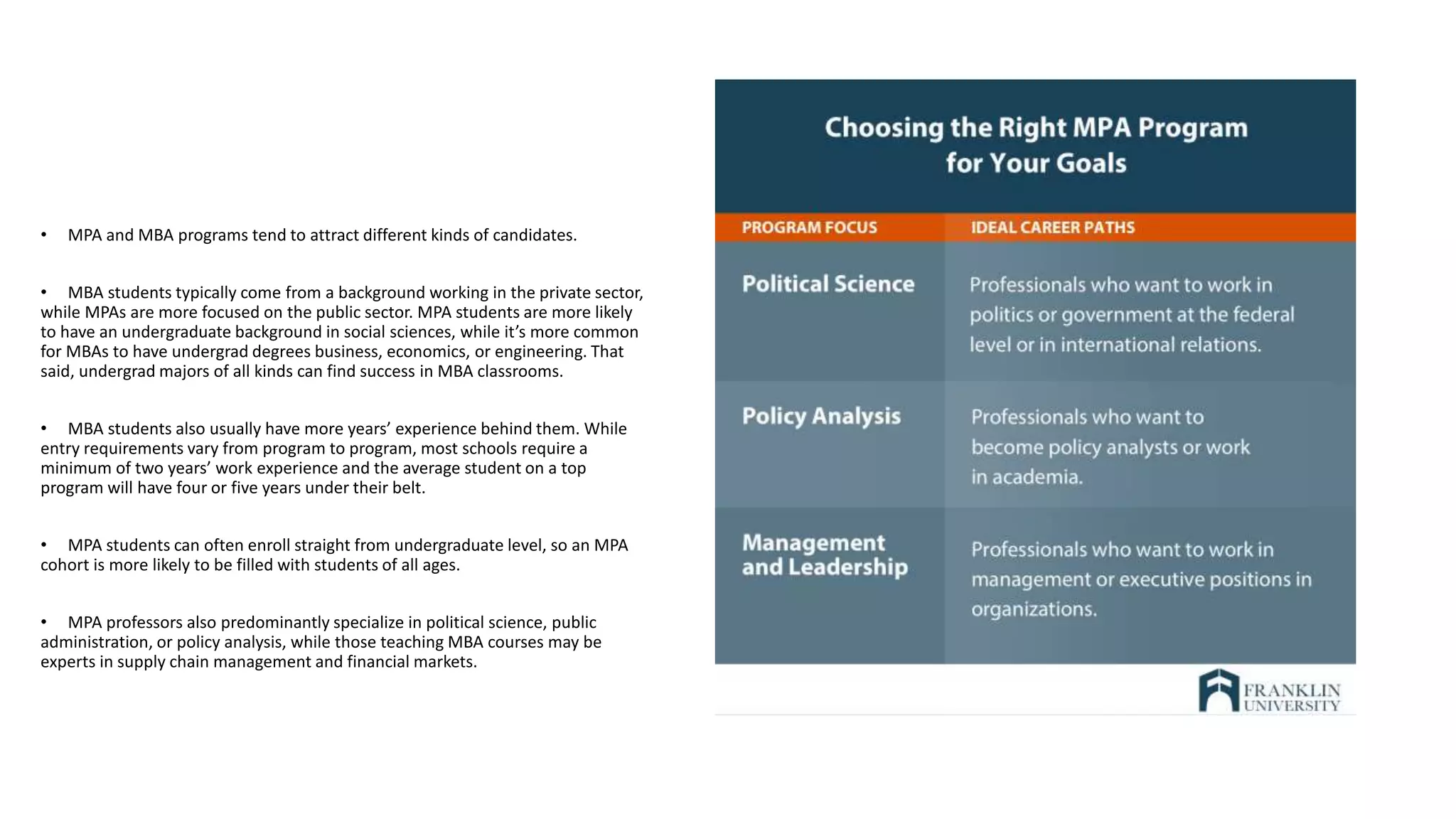
• MPA and MBA programs tend to attract different kinds of candidates.
• MBA students typically come from a background working in the private sector,
while MPAs are more focused on the public sector. MPA students are more likely
to have an undergraduate background in social sciences, while it’s more common
for MBAs to have undergrad degrees business, economics, or engineering. That
said, undergrad majors of all kinds can find success in MBA classrooms.
• MBA students also usually have more years’ experience behind them. While
entry requirements vary from program to program, most schools require a
minimum of two years’ work experience and the average student on a top
program will have four or five years under their belt.
• MPA students can often enroll straight from undergraduate level, so an MPA
cohort is more likely to be filled with students of all ages.
• MPA professors also predominantly specialize in political science, public
administration, or policy analysis, while those teaching MBA courses may be
experts in supply chain management and financial markets.
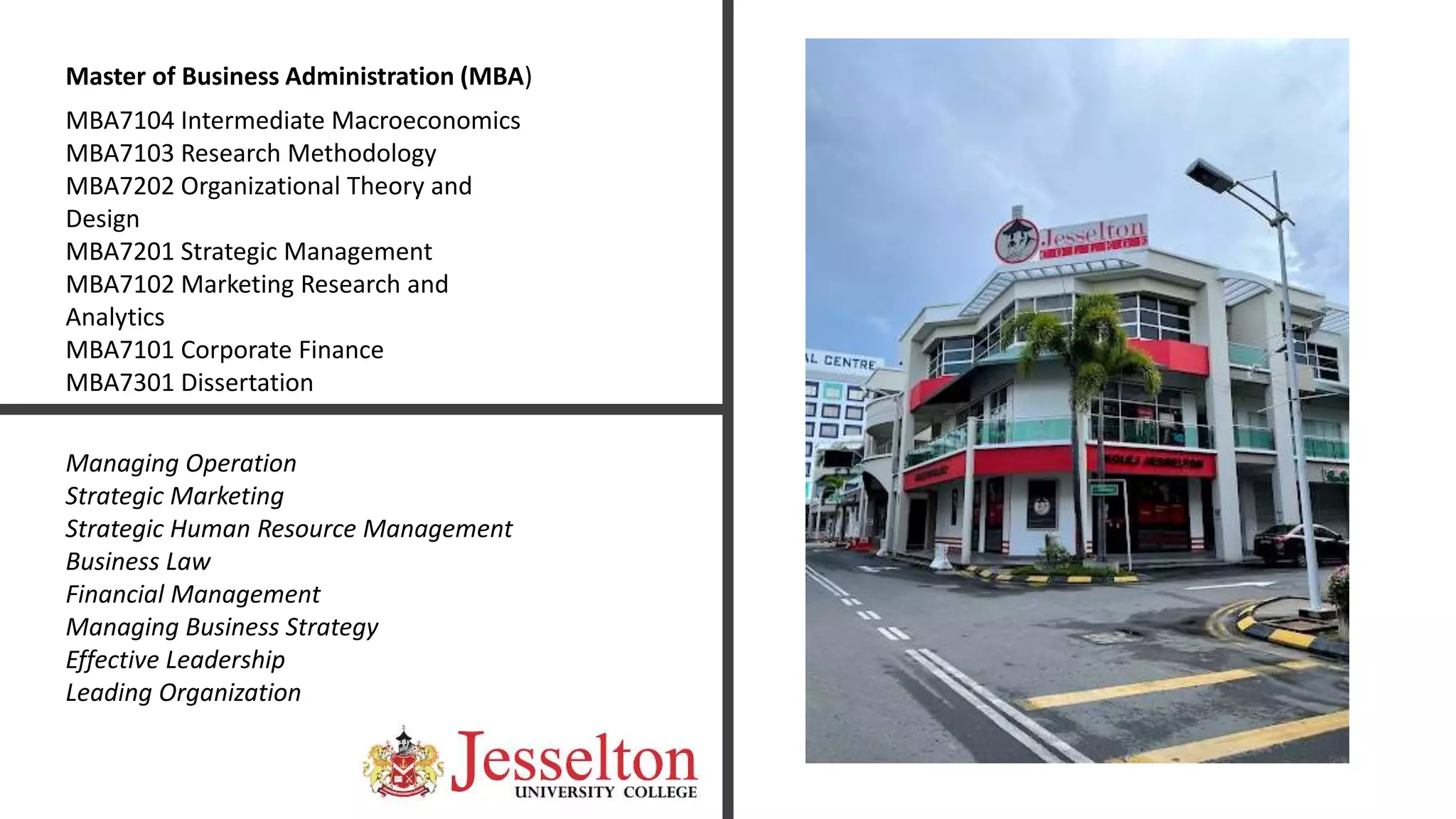
MBA7104 Intermediate Macroeconomics
MBA7103 Research Methodology
MBA7202 Organizational Theory and
Design
MBA7201 Strategic Management
MBA7102 Marketing Research and
Analytics
MBA7101 Corporate Finance
MBA7301 Dissertation
Master of Business Administration (MBA)
Managing Operation
Strategic Marketing
Strategic Human Resource Management
Business Law
Financial Management
Managing Business Strategy
Effective Leadership
Leading Organization
https://www.mba.com/
explore-
programs/choose-and-
compare-
programs/mba-vs-mpa

MBA and MPA: Which is for you?

  • 1.
    MBA vs Masterof Public Administration: Which Is for You? IR. Sugeng Endarsiwi, ST., EMBA.,CMA-HK Student Postgraduate Univ. Esa Unggul, Jakarta Indonesia
  • 2.
    • An MBA,which stands for Master of Business Administration, is the leading graduate management program for professionals who want a firm grounding in key areas of business, including strategy, management, finance, and marketing. • Although the most common MBA career paths are consulting, finance, and tech, many graduates leverage these same skills to help a charity, government, or social impact organization. • An MPA, or Master of Public Administration, helps you develop similar management skills, but is more tailored to a government, nonprofit, or charity context.
  • 3.
    • MPA andMBA programs tend to attract different kinds of candidates. • MBA students typically come from a background working in the private sector, while MPAs are more focused on the public sector. MPA students are more likely to have an undergraduate background in social sciences, while it’s more common for MBAs to have undergrad degrees business, economics, or engineering. That said, undergrad majors of all kinds can find success in MBA classrooms. • MBA students also usually have more years’ experience behind them. While entry requirements vary from program to program, most schools require a minimum of two years’ work experience and the average student on a top program will have four or five years under their belt. • MPA students can often enroll straight from undergraduate level, so an MPA cohort is more likely to be filled with students of all ages. • MPA professors also predominantly specialize in political science, public administration, or policy analysis, while those teaching MBA courses may be experts in supply chain management and financial markets.
  • 4.
    MBA7104 Intermediate Macroeconomics MBA7103Research Methodology MBA7202 Organizational Theory and Design MBA7201 Strategic Management MBA7102 Marketing Research and Analytics MBA7101 Corporate Finance MBA7301 Dissertation Master of Business Administration (MBA) Managing Operation Strategic Marketing Strategic Human Resource Management Business Law Financial Management Managing Business Strategy Effective Leadership Leading Organization
  • 5.