Download to read offline




![Canadian Charter of Rights
Charter…requires
communication of the right,
not a rote repetition of it.
Regina vs Evans
Supreme Court of Canada
[1991] 1 S.C.R. 869](https://image.slidesharecdn.com/may16clarityppt2012-crim-131107203314-phpapp01/85/May16-clarity-ppt2012-crim-18-320.jpg)
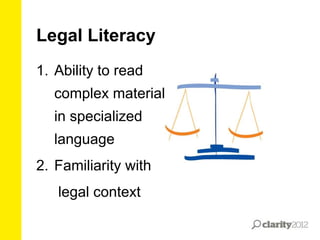
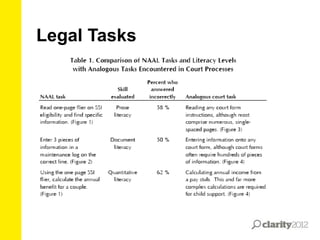

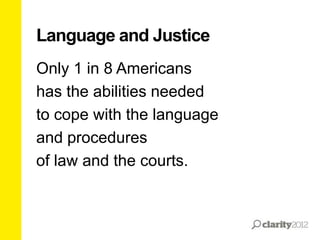
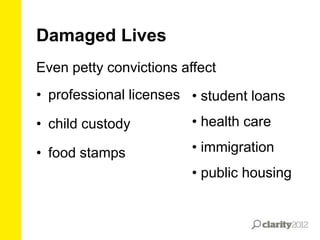
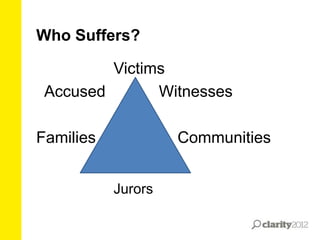
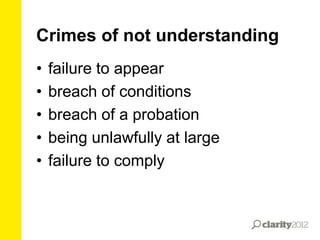
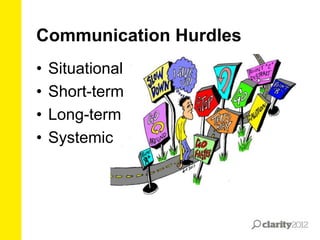
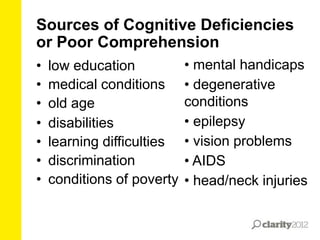
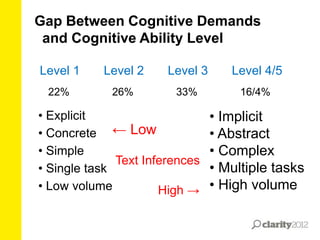
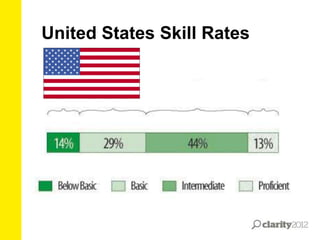
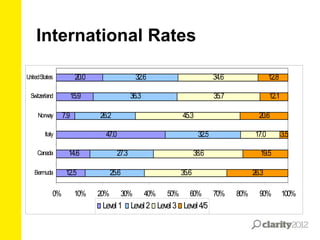
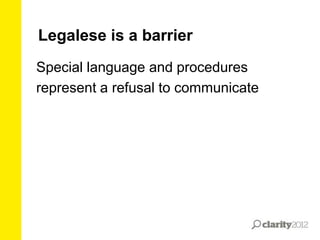
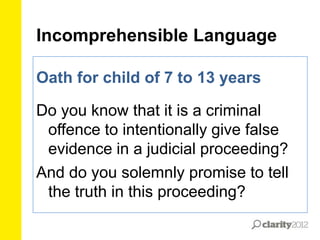
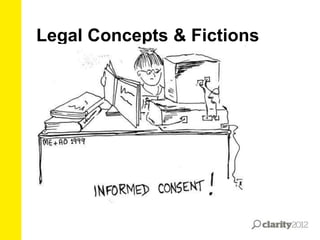
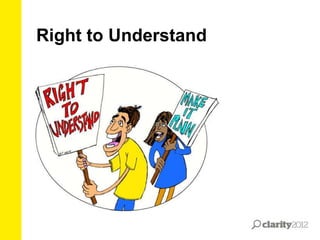
This document discusses the issue of language barriers in the criminal justice system. It notes that only 1 in 8 Americans has the level of language ability needed to understand legal procedures and processes. Even minor convictions can have major consequences on people's lives by affecting things like professional licenses, student loans, child custody, health care, food stamps, immigration status, public housing, and more. Many people suffer due to language barriers, including victims, the accused, witnesses, families, and communities. The document outlines some of the communication hurdles people face, including situational, short-term, and long-term barriers. It also discusses sources of cognitive deficiencies and gaps between people's cognitive ability levels and the demands of the legal system.


