Emanuel Delaveris
Manager of Outcomes and Community Engagement,
Maryhaven Addiction Stabilization Center®
1430 South High Street
Columbus, Ohio 43207
The Maryhaven Addiction
Stabilization Center
 Developed with ADAMH Board, City of Columbus
 57 bed facility
 Admission & Triage (7 beds)
 Detoxification (50 beds)
 100+ Maryhaven employees
 Interdisciplinary Teams
 Physician, Nurses, Nurse Practitioners, Counselors, Social
Workers, Patient Care Assistants, Admission Specialists, Peer
Recovery Supporters
 Contracting with CPD for Special Duty Security
Maryhaven – Alum Creek
 Inpatient Residential Services
 Inpatient Residential – AC Residential North
 30 beds
 LOS: 21-28 days
 Inpatient Residential – AC Residential South
 32 beds
 LOS: 21-28 days
 Admissions are scheduled
Maryhaven Outpatient Services
 Outpatient Services at Alum Creek
 Outpatient Ambulatory
 Outpatient Suboxone (MBAR)
 Outpatient Methadone
 Outpatient Vivitrol
 One More Chance (Gambling Addiction Treatment)
 Outpatient Services at South High Street
 Office-Based Opiate Treatment (OBOT)
 Adult Outpatient (ADOP)
Challenges
 Staffing
 Nursing
 Limited space
 Diversion Policy
 EMS and Full
 Referral-Out Process
 Housing
 Increased Drug Lethality
 Decreased Engagement Opportunities
Admissions to MASC
 Overdose Narcan EMS decides if person needs
hospitalization or direct transport to the Addiction
Stabilization Center
 SAFE Station
 RREACT Team
 Walk-Ins
 On Divert/Having Trouble?
 Emanuel Delaveris: 614-570-6739
10
www.compdrug.org
11
CompDrug, a nonprofit organization, is a
leader in developing, promoting and providing
services to assist in prevention, treatment,
recovery, and wellness of those affected by the
disease of addiction.
Proudly serving Central Ohio for more than 40 years.
12
• Focus on Opiate addiction
• Medication Assisted Treatment: The use of medications
in combination with counseling and behavioral
therapies to provide a whole patient approach to
treatment
• Individual and Group Counseling
OUTPATIENT TREATMENT SERVICES
13
• Intake Assessment
• Methadone
• Suboxone
• Vivitrol
• CompDrug accepts Medicaid, Medicare,
ADAMH, and some forms of Private
Insurance
OUTPATIENT TREATMENT SERVICES
14
• Patient does not require inpatient treatment at this
time in their recovery
• Allows patients to attend to their responsibilities such
as child rearing, family responsibilities and/or
employment
• Provides a balance of taking care of their
responsibilities while also affording them time to
focus on their recovery
WHY
OUTPATIENT?
15
• Counseling, both individual and group counseling
• Case Management
• Psychiatry
• Women’s Health Center
• Support for Pregnant Patients
• Peer Mentors to assist new patients in their recovery
• Childcare
• Intensive Outpatient Groups and Counseling
• Medication Management
• Specific programming for patients from the criminal justice
system
WHY
COMPDRUG?
16
Medication Assisted Treatment
• Replace a short acting drug with a long acting
medication
• Replace an illegal drug for a legal medication
• Replace illegal activity for a legal solution
• Replace a drug for a medication
• Reduces the cravings
17
Medication Assisted Treatment
• Pre-Admission screenings
• AlcoSensor Testing
• Urinalysis Testing
• Facilities monitored by Columbus Police Officers
18
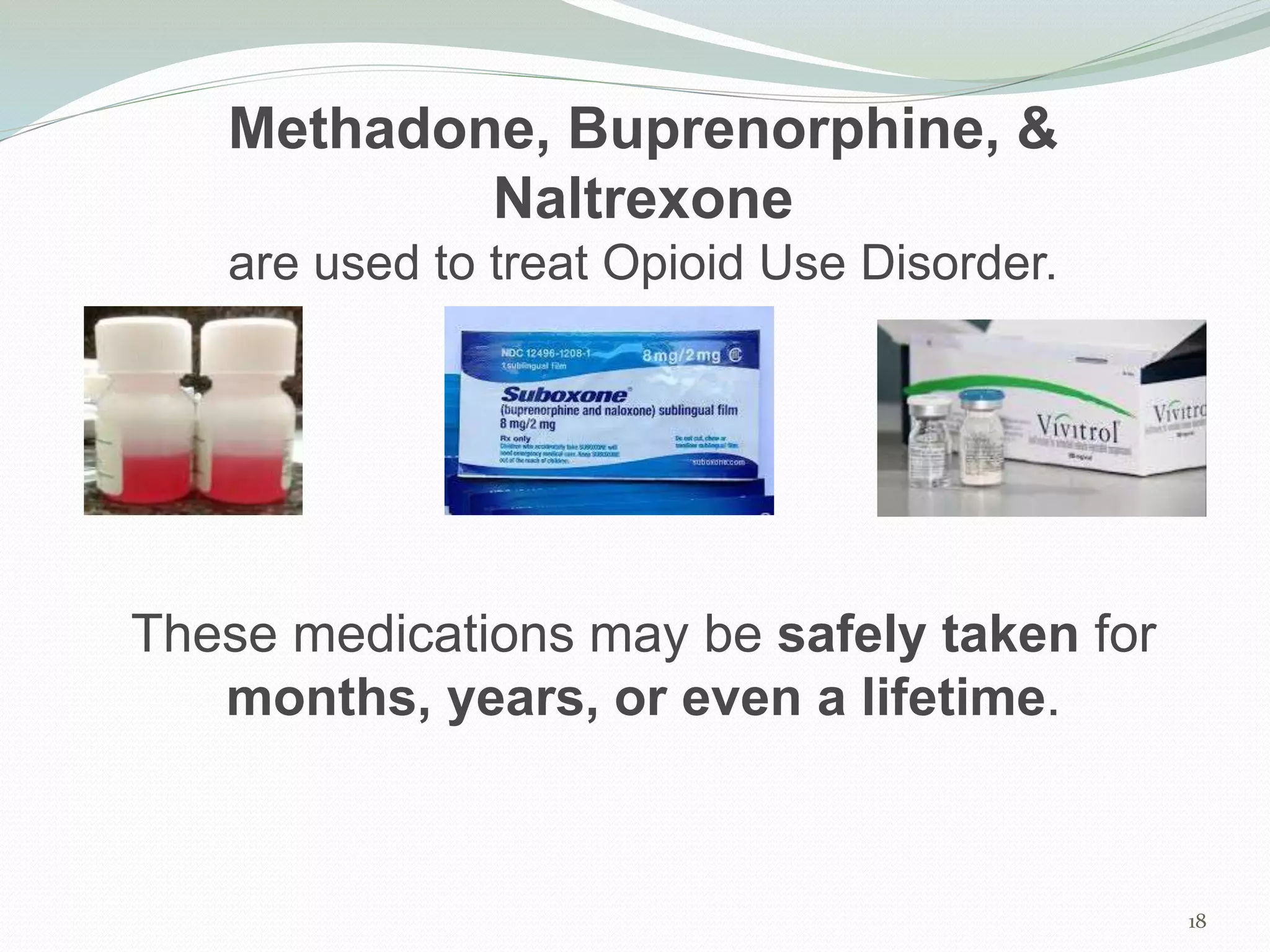
Methadone, Buprenorphine, &
Naltrexone
are used to treat Opioid Use Disorder.
These medications may be safely taken for
months, years, or even a lifetime.
19
METHADONE
• Liquid
• Ingest orally
• Staff observed application
• Daily dose
• Easier Transition to Treatment
• Decrease Mental Cravings
20
SUBOXONE
• Film
• Ingest orally
• Staff observed
• Daily dose
• Stronger bond making it harder to overdose
• Cravings less due to receptors being filled
21
VIVITROL
• Injection
• CompDrug Medical staff administered
• One injection every thirty (30) days
• Opioid blocker, will not accept opioids
• Reduced cravings
22
Myths & Facts
MYTH – Just trading one addiction or drug
for another
FACT – Medication Assisted Treatment
bridges the biological and behavioral
components of addiction.
23
Myths & Facts
MYTH – This system only works for a short
term treatment.
FACT – Research indicates that patients on
Medication Assisted Treatment for at least 1 to
2 years have the greatest rates on long-term
success.
24
Myths & Facts
MYTH – Many patients’ addictions are not
severe enough to require Medication Assisted
Treatment.
FACT – Medication Assisted Treatment
utilizes a multitude of different medication
options that can be tailored to fit the individual
needs of the patient.
25
Myths & Facts
MYTH – Medication Assisted Treatment
increases the risk for overdose in patients.
FACT – Medication Assisted Treatment
helps to prevent overdoses from occurring.
26
Myths & Facts
MYTH – Providing Medication Assisted
Treatment will only disrupt and hinder a
patient’s recovery process.
FACT – Medication Assisted Treatment has
been shown to assist patients in recovery by
improving quality of life, level of functioning
and the ability to handle stress.
27
Myths & Facts
MYTH – There is not any proof that
Medication Assisted Treatment is better than
abstinence.
FACT – Medication Assisted Treatment is evidence
based and is the recommended course of treatment
for opioid addiction. NIDA, SAMSHA, CDC and
others emphasize MAT as first line treatment.
28
Myths & Facts
MYTH – Most insurance programs do not
cover Medication Assisted Treatment.
FACT – Ohio Medicaid programs and many
private insurance companies cover
methadone maintenance treatment provided
in out patient programs.
Maryhaven SUD Services

Maryhaven SUD Services

  • 1.
    Emanuel Delaveris Manager ofOutcomes and Community Engagement, Maryhaven Addiction Stabilization Center®
  • 2.
    1430 South HighStreet Columbus, Ohio 43207
  • 3.
    The Maryhaven Addiction StabilizationCenter  Developed with ADAMH Board, City of Columbus  57 bed facility  Admission & Triage (7 beds)  Detoxification (50 beds)  100+ Maryhaven employees  Interdisciplinary Teams  Physician, Nurses, Nurse Practitioners, Counselors, Social Workers, Patient Care Assistants, Admission Specialists, Peer Recovery Supporters  Contracting with CPD for Special Duty Security
  • 5.
    Maryhaven – AlumCreek  Inpatient Residential Services  Inpatient Residential – AC Residential North  30 beds  LOS: 21-28 days  Inpatient Residential – AC Residential South  32 beds  LOS: 21-28 days  Admissions are scheduled
  • 6.
    Maryhaven Outpatient Services Outpatient Services at Alum Creek  Outpatient Ambulatory  Outpatient Suboxone (MBAR)  Outpatient Methadone  Outpatient Vivitrol  One More Chance (Gambling Addiction Treatment)  Outpatient Services at South High Street  Office-Based Opiate Treatment (OBOT)  Adult Outpatient (ADOP)
  • 8.
    Challenges  Staffing  Nursing Limited space  Diversion Policy  EMS and Full  Referral-Out Process  Housing  Increased Drug Lethality  Decreased Engagement Opportunities
  • 9.
    Admissions to MASC Overdose Narcan EMS decides if person needs hospitalization or direct transport to the Addiction Stabilization Center  SAFE Station  RREACT Team  Walk-Ins  On Divert/Having Trouble?  Emanuel Delaveris: 614-570-6739
  • 10.
  • 11.
    11 CompDrug, a nonprofitorganization, is a leader in developing, promoting and providing services to assist in prevention, treatment, recovery, and wellness of those affected by the disease of addiction. Proudly serving Central Ohio for more than 40 years.
  • 12.
    12 • Focus onOpiate addiction • Medication Assisted Treatment: The use of medications in combination with counseling and behavioral therapies to provide a whole patient approach to treatment • Individual and Group Counseling OUTPATIENT TREATMENT SERVICES
  • 13.
    13 • Intake Assessment •Methadone • Suboxone • Vivitrol • CompDrug accepts Medicaid, Medicare, ADAMH, and some forms of Private Insurance OUTPATIENT TREATMENT SERVICES
  • 14.
    14 • Patient doesnot require inpatient treatment at this time in their recovery • Allows patients to attend to their responsibilities such as child rearing, family responsibilities and/or employment • Provides a balance of taking care of their responsibilities while also affording them time to focus on their recovery WHY OUTPATIENT?
  • 15.
    15 • Counseling, bothindividual and group counseling • Case Management • Psychiatry • Women’s Health Center • Support for Pregnant Patients • Peer Mentors to assist new patients in their recovery • Childcare • Intensive Outpatient Groups and Counseling • Medication Management • Specific programming for patients from the criminal justice system WHY COMPDRUG?
  • 16.
    16 Medication Assisted Treatment •Replace a short acting drug with a long acting medication • Replace an illegal drug for a legal medication • Replace illegal activity for a legal solution • Replace a drug for a medication • Reduces the cravings
  • 17.
    17 Medication Assisted Treatment •Pre-Admission screenings • AlcoSensor Testing • Urinalysis Testing • Facilities monitored by Columbus Police Officers
  • 18.
    18 Methadone, Buprenorphine, & Naltrexone areused to treat Opioid Use Disorder. These medications may be safely taken for months, years, or even a lifetime.
  • 19.
    19 METHADONE • Liquid • Ingestorally • Staff observed application • Daily dose • Easier Transition to Treatment • Decrease Mental Cravings
  • 20.
    20 SUBOXONE • Film • Ingestorally • Staff observed • Daily dose • Stronger bond making it harder to overdose • Cravings less due to receptors being filled
  • 21.
    21 VIVITROL • Injection • CompDrugMedical staff administered • One injection every thirty (30) days • Opioid blocker, will not accept opioids • Reduced cravings
  • 22.
    22 Myths & Facts MYTH– Just trading one addiction or drug for another FACT – Medication Assisted Treatment bridges the biological and behavioral components of addiction.
  • 23.
    23 Myths & Facts MYTH– This system only works for a short term treatment. FACT – Research indicates that patients on Medication Assisted Treatment for at least 1 to 2 years have the greatest rates on long-term success.
  • 24.
    24 Myths & Facts MYTH– Many patients’ addictions are not severe enough to require Medication Assisted Treatment. FACT – Medication Assisted Treatment utilizes a multitude of different medication options that can be tailored to fit the individual needs of the patient.
  • 25.
    25 Myths & Facts MYTH– Medication Assisted Treatment increases the risk for overdose in patients. FACT – Medication Assisted Treatment helps to prevent overdoses from occurring.
  • 26.
    26 Myths & Facts MYTH– Providing Medication Assisted Treatment will only disrupt and hinder a patient’s recovery process. FACT – Medication Assisted Treatment has been shown to assist patients in recovery by improving quality of life, level of functioning and the ability to handle stress.
  • 27.
    27 Myths & Facts MYTH– There is not any proof that Medication Assisted Treatment is better than abstinence. FACT – Medication Assisted Treatment is evidence based and is the recommended course of treatment for opioid addiction. NIDA, SAMSHA, CDC and others emphasize MAT as first line treatment.
  • 28.
    28 Myths & Facts MYTH– Most insurance programs do not cover Medication Assisted Treatment. FACT – Ohio Medicaid programs and many private insurance companies cover methadone maintenance treatment provided in out patient programs.