What is Market Segmentation?
 Market segmentation is defined as the process of
defining and subdividing a large homogeneous
market into clearly identifiable segments having
similar needs, wants, or demand characteristics
 The process of breaking of buyers into groups that are
different from each other but internally similar
Market Segmentation Strategies
In addition to having different needs, for segments to be
practical they should be evaluated against the following
criteria:
• Identifiable
• Accessible
• Measurable
• Durable
• Responding differently
BENEFITS OF MARKET SEGMENTATION
1: Enhances the focus of the company
2: It boosts competitiveness
3: It helps in market expansion
4 : Organization gets to know its customers better. Provides
guidelines for resource allocation.
5 : It helps focus the strategy of the organization.
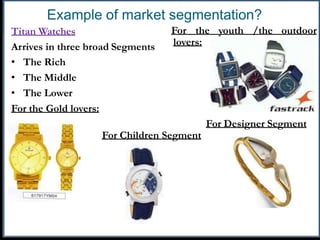
Example of market segmentation?
Titan Watches
Arrives in three broad Segments
For the youth /the outdoor
lovers:
• The Rich
• The Middle
• The Lower
For the Gold lovers:
For Designer Segment
For Children Segment
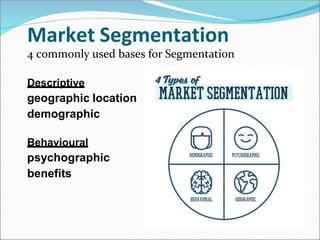
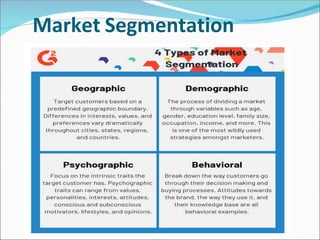
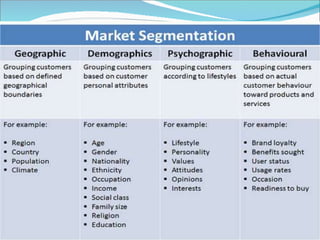
Market Segmentation
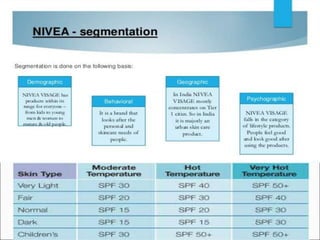
4 commonly used bases for Segmentation
Descriptive
geographic location
demographic
Behavioural
psychographic
benefits
Market Segmentation
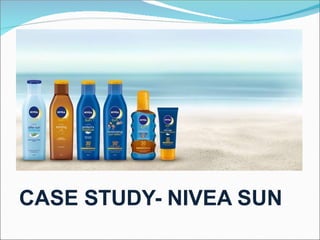
CASE STUDY- NIVEA SUN
NIVEA-SUN CARE
INTRODUCTION
PARENT COMPANY- Beiersdorf
The NIVEA range includes product types
ranging from female face and body
products to men's shaving gels, through
to deodorants and sun care products
NIVEA Sun is a major international sun
care brand, recognized worldwide as a
leader in sun care research and
development.
KEY ISSUE
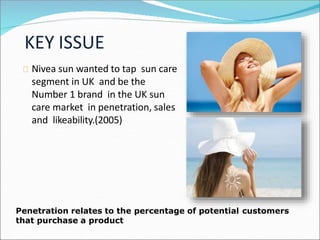
Nivea sun wanted to tap sun care
segment in UK and be the
Number 1 brand in the UK sun
care market in penetration, sales
and likeability.(2005)
Penetration relates to the percentage of potential customers
that purchase a product
What are the ways to achieve
their brand vision?
• One key way to achieve the vision is to provide
innovative solutions to market needs.
• As a brand it has achieved this through continually
segmenting its consumers in order to:
1. Effectively meet consumers’ needs
2. Identify new market opportunities.
WHAT NIVEA DID?
Segmentation has been vital
to the success of NIVEA Sun
and allowed the brand
portfolio to grow to over 40
products, all meeting clear
consumer needs.
Attitudinal – this is the most
important segmentation
variable.
Consumers’ attitudes towards
sun care influences their
purchases.
NIVEA Sun conducted
market research to
understand user attitudes.
This involved
questionnaires using a
nationally representative
sample, and more
intensive research with
small groups, to discuss
individual skin protection
habits and preferences.
Attitudinal based segmentation is what helped Nivea to grew in
UK
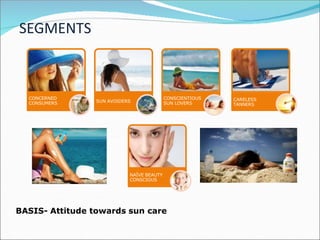
SEGMENTS
BASIS- Attitude towards sun care
CONCERNED
CONSUMERS SUN AVOIDERS
CONSCIENTIOUS
SUN LOVERS
CARELESS
TANNERS
NAÏVE BEAUTY
CONSCIOUS
Concerned Consumers 'a good tan is not important'. These consumers are conscious
of the harmful effects of the sun and purchase sun protection products that are most
likely to offer high sun protection factors
Sun Avoiders - avoid sunbathing and using sun protection when in the sun - it is
seen as a chore. These are unlikely to purchase a sun care product. Through
education, this segment may be convinced to protect using more easy-to apply
products such as sprays.
Conscientious Sun Lovers - adore sunshine and like to use a trustworthy brand
with suitable protection factors. They know about sun care and use this knowledge
to purchase suitable products for their skin.
Careless Tanners - adore the sun but don't protect against harmful dangers.
Tanning is important to this group, not protection. They don't worry about the
long-term damage to their skin and may purchase a low SPF product, if any at all.
Naive Beauty Conscious - like to have a good sun tan. They recognize that sun
protection is important but fail to understand about Sun Protection Factors (SPFs).
These consumers may still be interested in the core features of a sun protection
product (e.g. SPF) and be more inclined to purchase an added-value offering such
as a mousse.
BUSINESS REFLECTION
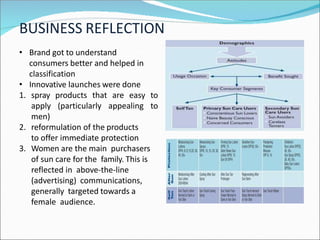
• Brand got to understand
consumers better and helped in
classification
• Innovative launches were done
1. spray products that are easy to
apply (particularly appealing to
men)
2. reformulation of the products
to offer immediate protection
3. Women are the main purchasers
of sun care for the family. This is
reflected in above-the-line
(advertising) communications,
generally targeted towards a
female audience.
CONCLUSION
• Segmentation is the tool that enables NIVEA Sun toidentify
different groups of customers, and provide the best possible
products to meet individual requirements.
• The sun care market consists of different consumers with
differing needs.
• The UK has the biggest sales of NIVEA Sun across Beiersdorf
within Europe. Understanding segmentation enables NIVEA
Sun to maintain a Number 1 value position in protection
and after sun in the UK.
Thank you

Marketsegmentationppt

  • 1.
    What is MarketSegmentation?  Market segmentation is defined as the process of defining and subdividing a large homogeneous market into clearly identifiable segments having similar needs, wants, or demand characteristics  The process of breaking of buyers into groups that are different from each other but internally similar
  • 2.
    Market Segmentation Strategies Inaddition to having different needs, for segments to be practical they should be evaluated against the following criteria: • Identifiable • Accessible • Measurable • Durable • Responding differently
  • 3.
    BENEFITS OF MARKETSEGMENTATION
  • 4.
    1: Enhances thefocus of the company 2: It boosts competitiveness 3: It helps in market expansion 4 : Organization gets to know its customers better. Provides guidelines for resource allocation. 5 : It helps focus the strategy of the organization.
  • 5.
    Example of marketsegmentation? Titan Watches Arrives in three broad Segments For the youth /the outdoor lovers: • The Rich • The Middle • The Lower For the Gold lovers: For Designer Segment For Children Segment
  • 6.
    Market Segmentation 4 commonlyused bases for Segmentation Descriptive geographic location demographic Behavioural psychographic benefits
  • 7.
  • 9.
  • 10.
    NIVEA-SUN CARE INTRODUCTION PARENT COMPANY-Beiersdorf The NIVEA range includes product types ranging from female face and body products to men's shaving gels, through to deodorants and sun care products NIVEA Sun is a major international sun care brand, recognized worldwide as a leader in sun care research and development.
  • 11.
    KEY ISSUE Nivea sunwanted to tap sun care segment in UK and be the Number 1 brand in the UK sun care market in penetration, sales and likeability.(2005) Penetration relates to the percentage of potential customers that purchase a product
  • 12.
    What are theways to achieve their brand vision? • One key way to achieve the vision is to provide innovative solutions to market needs. • As a brand it has achieved this through continually segmenting its consumers in order to: 1. Effectively meet consumers’ needs 2. Identify new market opportunities.
  • 13.
    WHAT NIVEA DID? Segmentationhas been vital to the success of NIVEA Sun and allowed the brand portfolio to grow to over 40 products, all meeting clear consumer needs. Attitudinal – this is the most important segmentation variable. Consumers’ attitudes towards sun care influences their purchases. NIVEA Sun conducted market research to understand user attitudes. This involved questionnaires using a nationally representative sample, and more intensive research with small groups, to discuss individual skin protection habits and preferences. Attitudinal based segmentation is what helped Nivea to grew in UK
  • 14.
    SEGMENTS BASIS- Attitude towardssun care CONCERNED CONSUMERS SUN AVOIDERS CONSCIENTIOUS SUN LOVERS CARELESS TANNERS NAÏVE BEAUTY CONSCIOUS
  • 16.
    Concerned Consumers 'agood tan is not important'. These consumers are conscious of the harmful effects of the sun and purchase sun protection products that are most likely to offer high sun protection factors Sun Avoiders - avoid sunbathing and using sun protection when in the sun - it is seen as a chore. These are unlikely to purchase a sun care product. Through education, this segment may be convinced to protect using more easy-to apply products such as sprays. Conscientious Sun Lovers - adore sunshine and like to use a trustworthy brand with suitable protection factors. They know about sun care and use this knowledge to purchase suitable products for their skin. Careless Tanners - adore the sun but don't protect against harmful dangers. Tanning is important to this group, not protection. They don't worry about the long-term damage to their skin and may purchase a low SPF product, if any at all. Naive Beauty Conscious - like to have a good sun tan. They recognize that sun protection is important but fail to understand about Sun Protection Factors (SPFs). These consumers may still be interested in the core features of a sun protection product (e.g. SPF) and be more inclined to purchase an added-value offering such as a mousse.
  • 17.
    BUSINESS REFLECTION • Brandgot to understand consumers better and helped in classification • Innovative launches were done 1. spray products that are easy to apply (particularly appealing to men) 2. reformulation of the products to offer immediate protection 3. Women are the main purchasers of sun care for the family. This is reflected in above-the-line (advertising) communications, generally targeted towards a female audience.
  • 18.
    CONCLUSION • Segmentation isthe tool that enables NIVEA Sun toidentify different groups of customers, and provide the best possible products to meet individual requirements. • The sun care market consists of different consumers with differing needs. • The UK has the biggest sales of NIVEA Sun across Beiersdorf within Europe. Understanding segmentation enables NIVEA Sun to maintain a Number 1 value position in protection and after sun in the UK.
  • 19.