Class
Mammalia
The larger the individual
organism the fewer the numbers
of each individual species.
Blue Whales vs. Ants
Taxonomy
 Kingdom Anamalia
 Phylum Chordata
 Subphylum Vertebrata
 Class Mammalia
 Mamma = breast
Orders
 Order Carnivora
– Polar Bears and Sea Otters
 Order Pinnipedia
– Seals, Sea Lions and Walruses
 Order Cetacea
– Whales, Dolphins
 Order Sirenia
– Manatees and Dugongs
General Information
 ~ 4600 species
 Contain a 4 chambered heart
 Endothermic
 Breath Air and require oxygen
 Viviparous
 Contain mammary glands
– feed offspring with milk
 Grow hair
4 Traits Shared by all
Mammals
 Streamlined bodies
 Generate internal body heat
 Respiratory system is modified
 Osmotic adaptations (Diffusion of
water)
 Heterodonts
– Odont = teeth
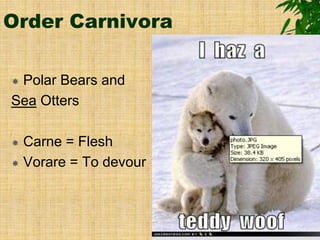
Order Carnivora
 Polar Bears and
Sea Otters
 Carne = Flesh
 Vorare = To devour
Sea Otters
– Family Mustelidae
– Genus Enhydra
– “Kelp Keepers”
– 3 types of otters
 Alaskan
 Russian (rt)
 California
 All sea otters today came from Big Sur
Colony (south of Monterey)
1
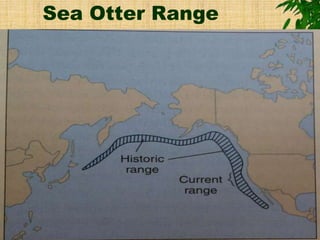
Sea Otter Range
Sea Otters
 Staying Warm
– ~ 2 hours of grooming per day
 Add air bubbles to hair for insulation
– Average body temp 100°F
– Oil causes body temp to drop
 Reproduction
– For groups called rafts
– Female tends to the offspring
– Mate for 3-5 days
– 1 pup per year
– Gestation ~ 6 months
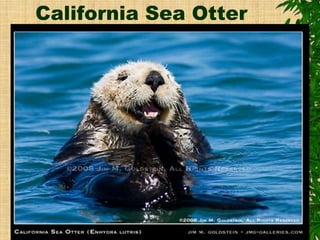
California Sea Otter
Sea Otters
 Diving
– Hold breath for ~1-2 minutes
 Up to 5 min.
– Depth is 30-60 feet
 Deepest known is 300feet
 Food
– Eat about 25% of their body weight each day
– Eat crabs and sea urchins…..
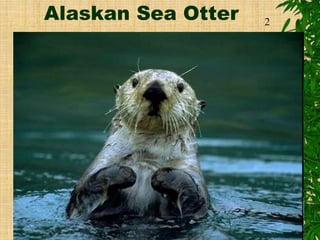
Alaskan Sea Otter 2
Sea Otters
 Size
– Weight = ~60-80lbs
– Length = ~4-5 feet
 Number of species
– 2,500 early 20th century
– 100,000 + are protected today (3)
 Life Span
– ~10 years but can live up to 25 years
4
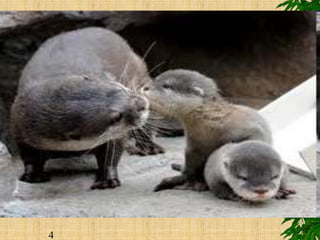
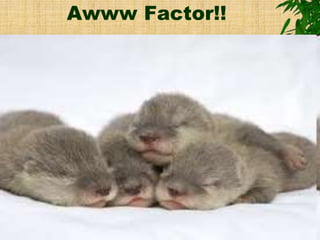
Awww Factor!!
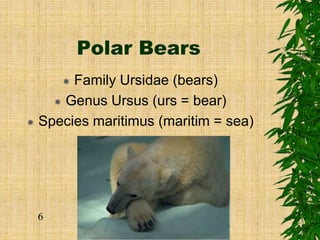
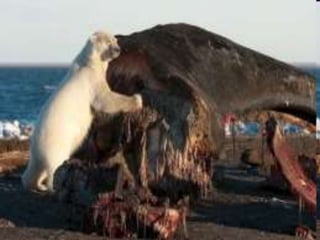
Polar Bears
 Family Ursidae (bears)
 Genus Ursus (urs = bear)
 Species maritimus (maritim = sea)
6
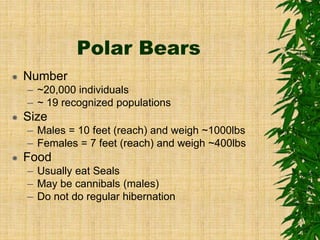
Polar Bears
 Number
– ~20,000 individuals
– ~ 19 recognized populations
 Size
– Males = 10 feet (reach) and weigh ~1000lbs
– Females = 7 feet (reach) and weigh ~400lbs
 Food
– Usually eat Seals
– May be cannibals (males)
– Do not do regular hibernation
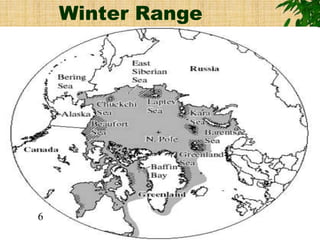
Winter Range
6
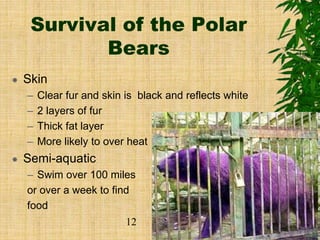
Survival of the Polar
Bears
 Skin
– Clear fur and skin is black and reflects white
– 2 layers of fur
– Thick fat layer
– More likely to over heat
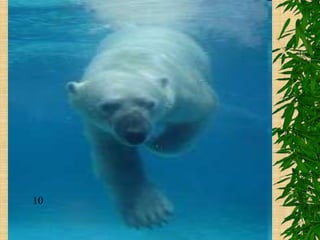
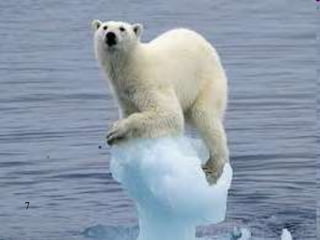
 Semi-aquatic
– Swim over 100 miles
or over a week to find
food
12
10
7
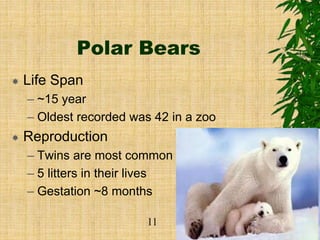
Polar Bears
 Life Span
– ~15 year
– Oldest recorded was 42 in a zoo
 Reproduction
– Twins are most common
– 5 litters in their lives
– Gestation ~8 months
11
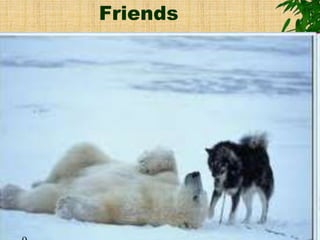
Friends
8
References
 Monterey Bay Aquarium
 http://library.thinkquest.org/CR0215242/sea_otters.htm
 http://www.seaworld.org/animal-info/info-books/otters/birth-&-care.htm
 http://www.seaotter-sealion.org/seaotter/factsseaotter.html
 http://www.seaworld.org/animal-info/info-books/polar-bear/birth-&-care.htm
 http://www.polarbearsinternational.org/polar-bears/faq
 1- www.2space.net
 2- www.alaska-in-pictures.com
 3- http://animals.nationalgeographic.com/animals/mammals/sea-otter/
 4- www.zooborns.com
 5-www.worldzootoday.com
 6- www.kidzone.ws/sg/polarbear/polar_bear.htm
 7- www.humanevents.com
 8- http://www.firstpeople.us/pictures/bear/Unexpected-Guests-Polar-Bears-1600x1200.html
 9- www.valdezlink.com
 10- www.blog.webosaurs.com
 11 – www.blog.ospreypacks.com
 12- www.betaroad.com

Marine Mammals.ppt

  • 1.
    Class Mammalia The larger theindividual organism the fewer the numbers of each individual species. Blue Whales vs. Ants
  • 2.
    Taxonomy  Kingdom Anamalia Phylum Chordata  Subphylum Vertebrata  Class Mammalia  Mamma = breast
  • 3.
    Orders  Order Carnivora –Polar Bears and Sea Otters  Order Pinnipedia – Seals, Sea Lions and Walruses  Order Cetacea – Whales, Dolphins  Order Sirenia – Manatees and Dugongs
  • 4.
    General Information  ~4600 species  Contain a 4 chambered heart  Endothermic  Breath Air and require oxygen  Viviparous  Contain mammary glands – feed offspring with milk  Grow hair
  • 5.
    4 Traits Sharedby all Mammals  Streamlined bodies  Generate internal body heat  Respiratory system is modified  Osmotic adaptations (Diffusion of water)  Heterodonts – Odont = teeth
  • 6.
    Order Carnivora  PolarBears and Sea Otters  Carne = Flesh  Vorare = To devour
  • 7.
    Sea Otters – FamilyMustelidae – Genus Enhydra – “Kelp Keepers” – 3 types of otters  Alaskan  Russian (rt)  California  All sea otters today came from Big Sur Colony (south of Monterey) 1
  • 8.
  • 9.
    Sea Otters  StayingWarm – ~ 2 hours of grooming per day  Add air bubbles to hair for insulation – Average body temp 100°F – Oil causes body temp to drop  Reproduction – For groups called rafts – Female tends to the offspring – Mate for 3-5 days – 1 pup per year – Gestation ~ 6 months
  • 10.
  • 11.
    Sea Otters  Diving –Hold breath for ~1-2 minutes  Up to 5 min. – Depth is 30-60 feet  Deepest known is 300feet  Food – Eat about 25% of their body weight each day – Eat crabs and sea urchins…..
  • 12.
  • 13.
    Sea Otters  Size –Weight = ~60-80lbs – Length = ~4-5 feet  Number of species – 2,500 early 20th century – 100,000 + are protected today (3)  Life Span – ~10 years but can live up to 25 years
  • 14.
  • 15.
  • 16.
    Polar Bears  FamilyUrsidae (bears)  Genus Ursus (urs = bear)  Species maritimus (maritim = sea) 6
  • 17.
    Polar Bears  Number –~20,000 individuals – ~ 19 recognized populations  Size – Males = 10 feet (reach) and weigh ~1000lbs – Females = 7 feet (reach) and weigh ~400lbs  Food – Usually eat Seals – May be cannibals (males) – Do not do regular hibernation
  • 19.
  • 20.
    Survival of thePolar Bears  Skin – Clear fur and skin is black and reflects white – 2 layers of fur – Thick fat layer – More likely to over heat  Semi-aquatic – Swim over 100 miles or over a week to find food 12
  • 21.
  • 22.
  • 23.
    Polar Bears  LifeSpan – ~15 year – Oldest recorded was 42 in a zoo  Reproduction – Twins are most common – 5 litters in their lives – Gestation ~8 months 11
  • 24.
  • 25.
  • 26.
    References  Monterey BayAquarium  http://library.thinkquest.org/CR0215242/sea_otters.htm  http://www.seaworld.org/animal-info/info-books/otters/birth-&-care.htm  http://www.seaotter-sealion.org/seaotter/factsseaotter.html  http://www.seaworld.org/animal-info/info-books/polar-bear/birth-&-care.htm  http://www.polarbearsinternational.org/polar-bears/faq  1- www.2space.net  2- www.alaska-in-pictures.com  3- http://animals.nationalgeographic.com/animals/mammals/sea-otter/  4- www.zooborns.com  5-www.worldzootoday.com  6- www.kidzone.ws/sg/polarbear/polar_bear.htm  7- www.humanevents.com  8- http://www.firstpeople.us/pictures/bear/Unexpected-Guests-Polar-Bears-1600x1200.html  9- www.valdezlink.com  10- www.blog.webosaurs.com  11 – www.blog.ospreypacks.com  12- www.betaroad.com