INCA Conference, Manchester 16-17 Oct 19
Mapping the Digital Infrastructure Future
Workshop Session 2
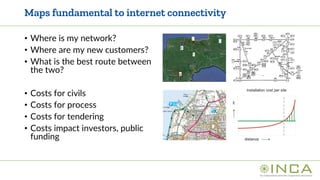
Maps fundamental to internet connectivity
• Where is my network?
• Where are my new customers?
• What is the best route between
the two?
• Costs for civils
• Costs for process
• Costs for tendering
• Costs impact investors, public
funding
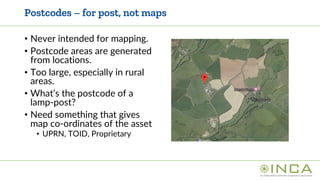
Postcodes – for post, not maps
• Never intended for mapping.
• Postcode areas are generated
from locations.
• Too large, especially in rural
areas.
• What’s the postcode of a
lamp-post?
• Need something that gives
map co-ordinates of the asset
• UPRN, TOID, Proprietary
Stakeholders and Projects
• Geospatial Commission.
• DCMS – BDUK Mapping publicly-
funded assets.
• Enabling Public infrastructure
sharing.
• National Underground Asset
Register.
• Network design systems.
• Network builders and contractors.
• Ordnance Survey.
• LFFN.
• Gigabit Connectivity Scheme.
• Crown Commercial Service –
Dynamic Purchasing System.
• Any Local Authority project
seeking to increase coverage.
• Local Authority Planning system
(UPRNs exist before Postcodes)
• A common approach benefits all –
faster and cheaper network build
means more coverage more quickly
at less cost.
Mapping - UPRN
• Unique Property Reference Number –
established ecosystem for allocations
• Local Authorities
• GeoPlace
• OS
• Existing premises already have (re-use)
• Allocated to new premises at planning
stage
• Historically included some telecoms
and post infrastructure
• Phone box, post box, poles, airwave
• Why not cabinets, masts, other assets?
• Above ground?
• access points, chambers, duct
endpoints?
• Available in OS AddressBase Products
• 38 million addressable objects
• ONS
• National Statistics Address NHS
locations
• GP Registrations
• Local Authorities
• Valuation Office
• Land Registry
• Look−up
• USO
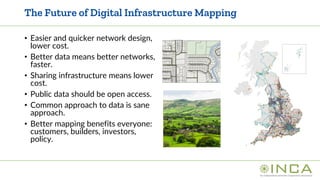
The Future of Digital Infrastructure Mapping
• Easier and quicker network design,
lower cost.
• Better data means better networks,
faster.
• Sharing infrastructure means lower
cost.
• Public data should be open access.
• Common approach to data is sane
approach.
• Better mapping benefits everyone:
customers, builders, investors,
policy.

Mapping the Digital Infrastructure Future

  • 1.
    INCA Conference, Manchester16-17 Oct 19 Mapping the Digital Infrastructure Future Workshop Session 2
  • 2.
    Maps fundamental tointernet connectivity • Where is my network? • Where are my new customers? • What is the best route between the two? • Costs for civils • Costs for process • Costs for tendering • Costs impact investors, public funding
  • 3.
    Postcodes – forpost, not maps • Never intended for mapping. • Postcode areas are generated from locations. • Too large, especially in rural areas. • What’s the postcode of a lamp-post? • Need something that gives map co-ordinates of the asset • UPRN, TOID, Proprietary
  • 4.
    Stakeholders and Projects •Geospatial Commission. • DCMS – BDUK Mapping publicly- funded assets. • Enabling Public infrastructure sharing. • National Underground Asset Register. • Network design systems. • Network builders and contractors. • Ordnance Survey. • LFFN. • Gigabit Connectivity Scheme. • Crown Commercial Service – Dynamic Purchasing System. • Any Local Authority project seeking to increase coverage. • Local Authority Planning system (UPRNs exist before Postcodes) • A common approach benefits all – faster and cheaper network build means more coverage more quickly at less cost.
  • 5.
    Mapping - UPRN •Unique Property Reference Number – established ecosystem for allocations • Local Authorities • GeoPlace • OS • Existing premises already have (re-use) • Allocated to new premises at planning stage • Historically included some telecoms and post infrastructure • Phone box, post box, poles, airwave • Why not cabinets, masts, other assets? • Above ground? • access points, chambers, duct endpoints? • Available in OS AddressBase Products • 38 million addressable objects • ONS • National Statistics Address NHS locations • GP Registrations • Local Authorities • Valuation Office • Land Registry • Look−up • USO
  • 6.
    The Future ofDigital Infrastructure Mapping • Easier and quicker network design, lower cost. • Better data means better networks, faster. • Sharing infrastructure means lower cost. • Public data should be open access. • Common approach to data is sane approach. • Better mapping benefits everyone: customers, builders, investors, policy.