Manufacturing
Processes
Project: Forging of a part
PROFESSOR: DE MADDIS M.
STUDENTS: MAZZARIELLO G.
MURATI R.
ZURABISHVILI N.
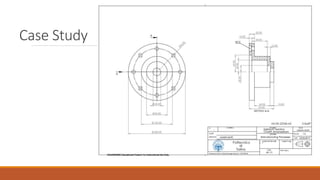
Case Study
Calculations
• Category of steel used: C45 (group M1)
• 𝑉𝑝𝑎𝑟𝑡 = 949963.66 𝑚𝑚3 (from Solidworks)
• 𝑉𝑜𝑙𝑢𝑚𝑒𝑓𝑜𝑟𝑔𝑒𝑑 𝑝𝑎𝑟𝑡 = 𝑉𝑝𝑎𝑟𝑡 ∗ 𝐾 𝑝 =
1424945.49 𝑚𝑚3
• 𝑉𝑜𝑙𝑢𝑚𝑒 𝑒𝑛𝑣𝑒𝑙𝑜𝑝𝑒 𝑠ℎ𝑎𝑝𝑒 = 4180485.73 𝑚𝑚3
• Shape complexity factor
𝑆 =
𝜌∗𝑉 𝑓𝑜𝑟𝑔𝑒𝑑 𝑝𝑎𝑟𝑡
𝜌∗𝑉 𝑒𝑛𝑣𝑒𝑙𝑜𝑝𝑒 𝑠ℎ𝑎𝑝𝑒
=0,34
(we are in class S2)
• 𝐾𝑝 = 1,5
• Check the complexity factor
𝑉𝑒𝑛𝑣𝑒𝑙𝑜𝑝𝑖𝑛𝑔 𝑠ℎ𝑎𝑝𝑒
′
= π ∗
𝐷 𝑚𝑎𝑥
2
4
∗ 𝐻 𝑚𝑎𝑥 =
4205298.227𝑚𝑚3
• 𝑠′
=
𝑉 𝑓𝑜𝑟𝑔𝑒𝑑 𝑝𝑎𝑟𝑡
𝑉𝑒𝑛𝑣𝑒𝑙𝑜𝑝𝑒 𝑠ℎ𝑎𝑝𝑒
′ = 0,46
Performing the check we are still in class S2.
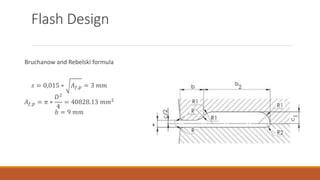
Flash Design
Bruchanow and Rebelski formula
𝑠 = 0,015 ∗ 𝐴 𝑓,𝑝 = 3 𝑚𝑚
𝐴 𝑓,𝑝 = 𝜋 ∗
𝐷2
4
= 40828.13 𝑚𝑚2
𝑏 = 9 𝑚𝑚
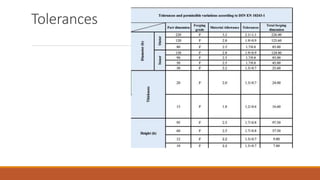
Tolerances
Design Of Dies
The tolerances were applied according to the European standard EN 10243-2. All the tolerances
were considered to be a feasible solution, but only the highest one suggested was applied all
over the case study in order to make the final process of machining easier.
•Machining clearance: 4 mm
•Tapered angles
• outer: 6 degrees
• Inner:9 degrees
•Fillets:
• Outer: 3 mm
• inner: 10 mm
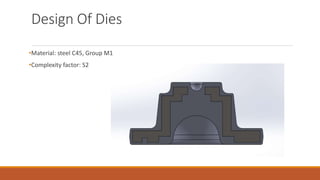
Design Of Dies
•Material: steel C45, Group M1
•Complexity factor: S2
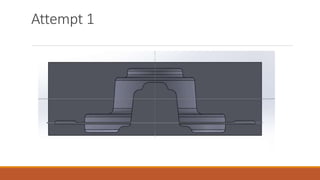
Attempt 1
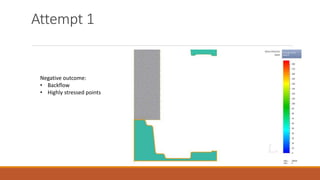
Attempt 1
Negative outcome:
• Backflow
• Highly stressed points
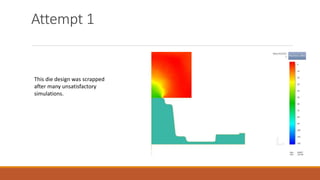
Attempt 1
This die design was scrapped
after many unsatisfactory
simulations.
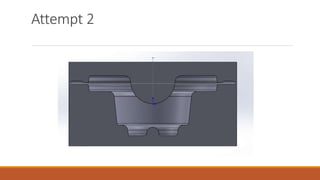
Attempt 2
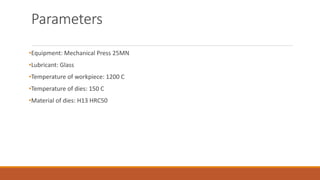
Parameters
•Equipment: Mechanical Press 25MN
•Lubricant: Glass
•Temperature of workpiece: 1200 C
•Temperature of dies: 150 C
•Material of dies: H13 HRC50
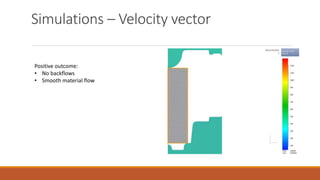
Simulations – Velocity vector
Positive outcome:
• No backflows
• Smooth material flow
Simulations – Effective stress
Positive outcome:
• Maximum stress observed is 130MPa
• The effective stress is evenly distributed at
the end of the process
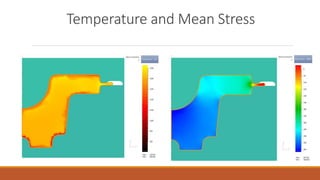
Temperature and Mean Stress
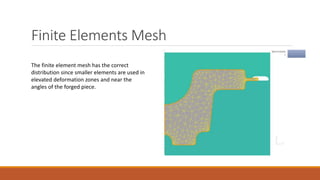
Finite Elements Mesh
The finite element mesh has the correct
distribution since smaller elements are used in
elevated deformation zones and near the
angles of the forged piece.
Load Graph
The maximum load needed does not exceed 21MN,
which is the best result among all configurations
already tried.
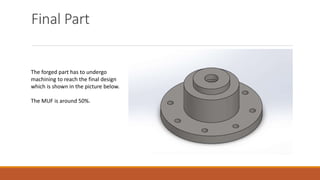
Final Part
The forged part has to undergo
machining to reach the final design
which is shown in the picture below.
The MUF is around 50%.

Manufacturing process project

  • 1.
    Manufacturing Processes Project: Forging ofa part PROFESSOR: DE MADDIS M. STUDENTS: MAZZARIELLO G. MURATI R. ZURABISHVILI N.
  • 2.
  • 3.
    Calculations • Category ofsteel used: C45 (group M1) • 𝑉𝑝𝑎𝑟𝑡 = 949963.66 𝑚𝑚3 (from Solidworks) • 𝑉𝑜𝑙𝑢𝑚𝑒𝑓𝑜𝑟𝑔𝑒𝑑 𝑝𝑎𝑟𝑡 = 𝑉𝑝𝑎𝑟𝑡 ∗ 𝐾 𝑝 = 1424945.49 𝑚𝑚3 • 𝑉𝑜𝑙𝑢𝑚𝑒 𝑒𝑛𝑣𝑒𝑙𝑜𝑝𝑒 𝑠ℎ𝑎𝑝𝑒 = 4180485.73 𝑚𝑚3 • Shape complexity factor 𝑆 = 𝜌∗𝑉 𝑓𝑜𝑟𝑔𝑒𝑑 𝑝𝑎𝑟𝑡 𝜌∗𝑉 𝑒𝑛𝑣𝑒𝑙𝑜𝑝𝑒 𝑠ℎ𝑎𝑝𝑒 =0,34 (we are in class S2) • 𝐾𝑝 = 1,5 • Check the complexity factor 𝑉𝑒𝑛𝑣𝑒𝑙𝑜𝑝𝑖𝑛𝑔 𝑠ℎ𝑎𝑝𝑒 ′ = π ∗ 𝐷 𝑚𝑎𝑥 2 4 ∗ 𝐻 𝑚𝑎𝑥 = 4205298.227𝑚𝑚3 • 𝑠′ = 𝑉 𝑓𝑜𝑟𝑔𝑒𝑑 𝑝𝑎𝑟𝑡 𝑉𝑒𝑛𝑣𝑒𝑙𝑜𝑝𝑒 𝑠ℎ𝑎𝑝𝑒 ′ = 0,46 Performing the check we are still in class S2.
  • 4.
    Flash Design Bruchanow andRebelski formula 𝑠 = 0,015 ∗ 𝐴 𝑓,𝑝 = 3 𝑚𝑚 𝐴 𝑓,𝑝 = 𝜋 ∗ 𝐷2 4 = 40828.13 𝑚𝑚2 𝑏 = 9 𝑚𝑚
  • 5.
  • 6.
    Design Of Dies Thetolerances were applied according to the European standard EN 10243-2. All the tolerances were considered to be a feasible solution, but only the highest one suggested was applied all over the case study in order to make the final process of machining easier. •Machining clearance: 4 mm •Tapered angles • outer: 6 degrees • Inner:9 degrees •Fillets: • Outer: 3 mm • inner: 10 mm
  • 7.
    Design Of Dies •Material:steel C45, Group M1 •Complexity factor: S2
  • 8.
  • 9.
    Attempt 1 Negative outcome: •Backflow • Highly stressed points
  • 10.
    Attempt 1 This diedesign was scrapped after many unsatisfactory simulations.
  • 11.
  • 12.
    Parameters •Equipment: Mechanical Press25MN •Lubricant: Glass •Temperature of workpiece: 1200 C •Temperature of dies: 150 C •Material of dies: H13 HRC50
  • 13.
    Simulations – Velocityvector Positive outcome: • No backflows • Smooth material flow
  • 14.
    Simulations – Effectivestress Positive outcome: • Maximum stress observed is 130MPa • The effective stress is evenly distributed at the end of the process
  • 15.
  • 16.
    Finite Elements Mesh Thefinite element mesh has the correct distribution since smaller elements are used in elevated deformation zones and near the angles of the forged piece.
  • 17.
    Load Graph The maximumload needed does not exceed 21MN, which is the best result among all configurations already tried.
  • 18.
    Final Part The forgedpart has to undergo machining to reach the final design which is shown in the picture below. The MUF is around 50%.