Manual Testing
Introduction to Manual Testing
Manual testing is a testing technique where tests are executed manually by a human
tester. It involves the tester performing various actions on the software application to find
defects or bugs. Manual testing is essential for ensuring the quality and functionality of
the software.
Manual testing is a traditional method of software testing where testers manually execute
test cases without using any automation tools. It involves a tester taking on the role of an
end user and testing the software to ensure it behaves as expected. Manual testing is an
essential part of the software development life cycle and is often performed alongside
automated testing.
Advantages of Manual Testing
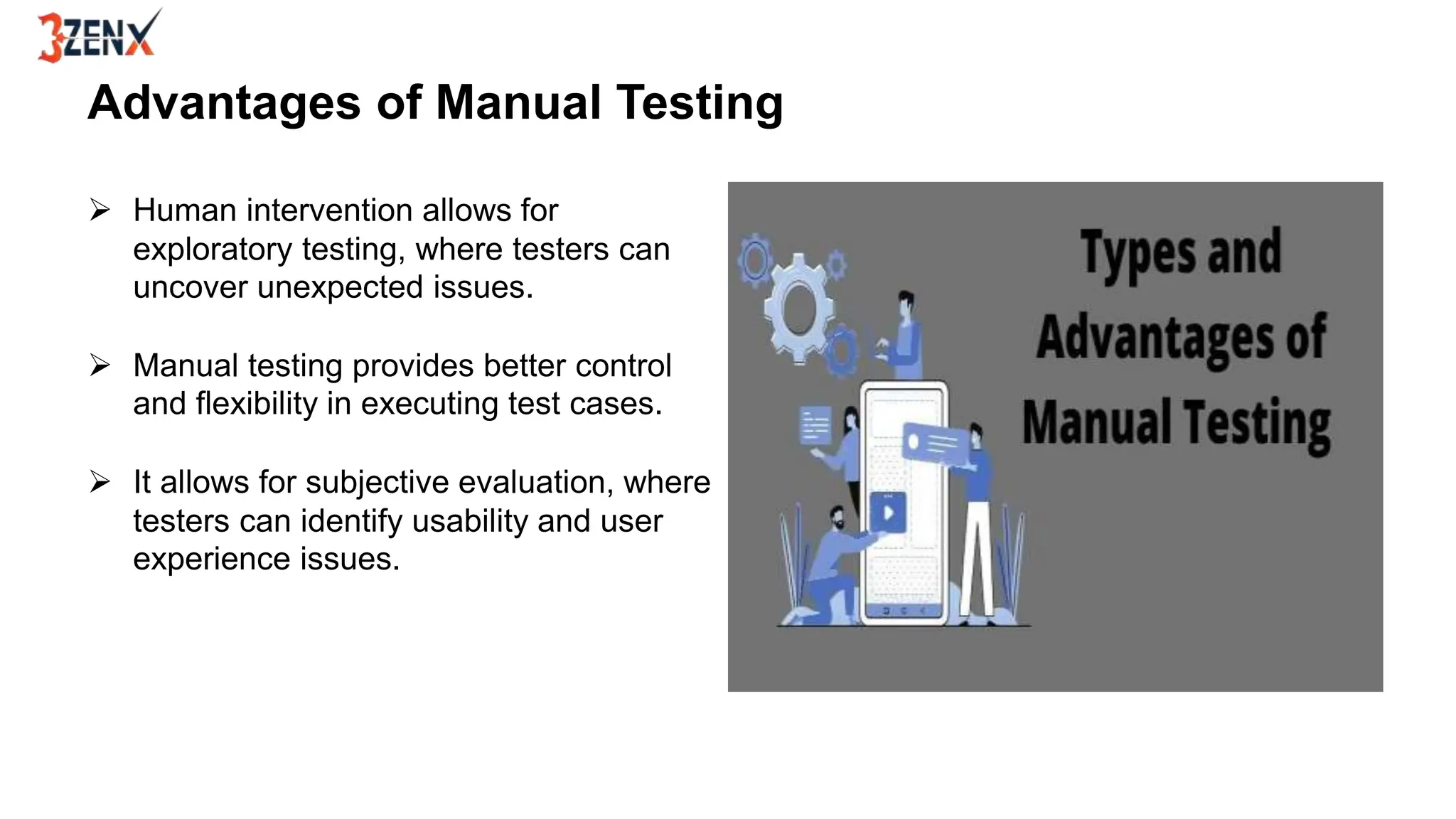
 Human intervention allows for
exploratory testing, where testers can
uncover unexpected issues.
 Manual testing provides better control
and flexibility in executing test cases.
 It allows for subjective evaluation, where
testers can identify usability and user
experience issues.
Types of Manual Testing
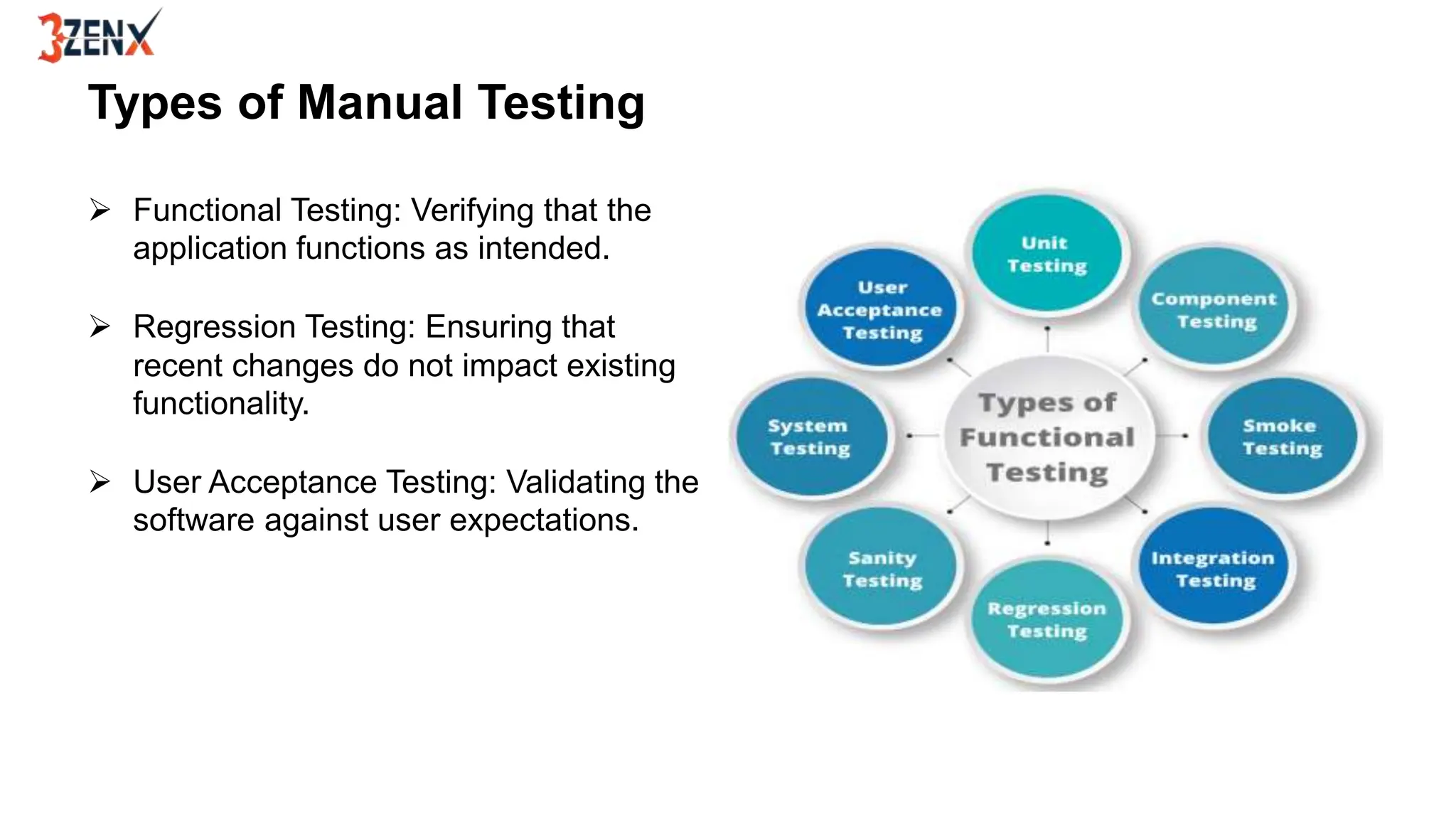
 Functional Testing: Verifying that the
application functions as intended.
 Regression Testing: Ensuring that
recent changes do not impact existing
functionality.
 User Acceptance Testing: Validating the
software against user expectations.
Manual Testing Techniques
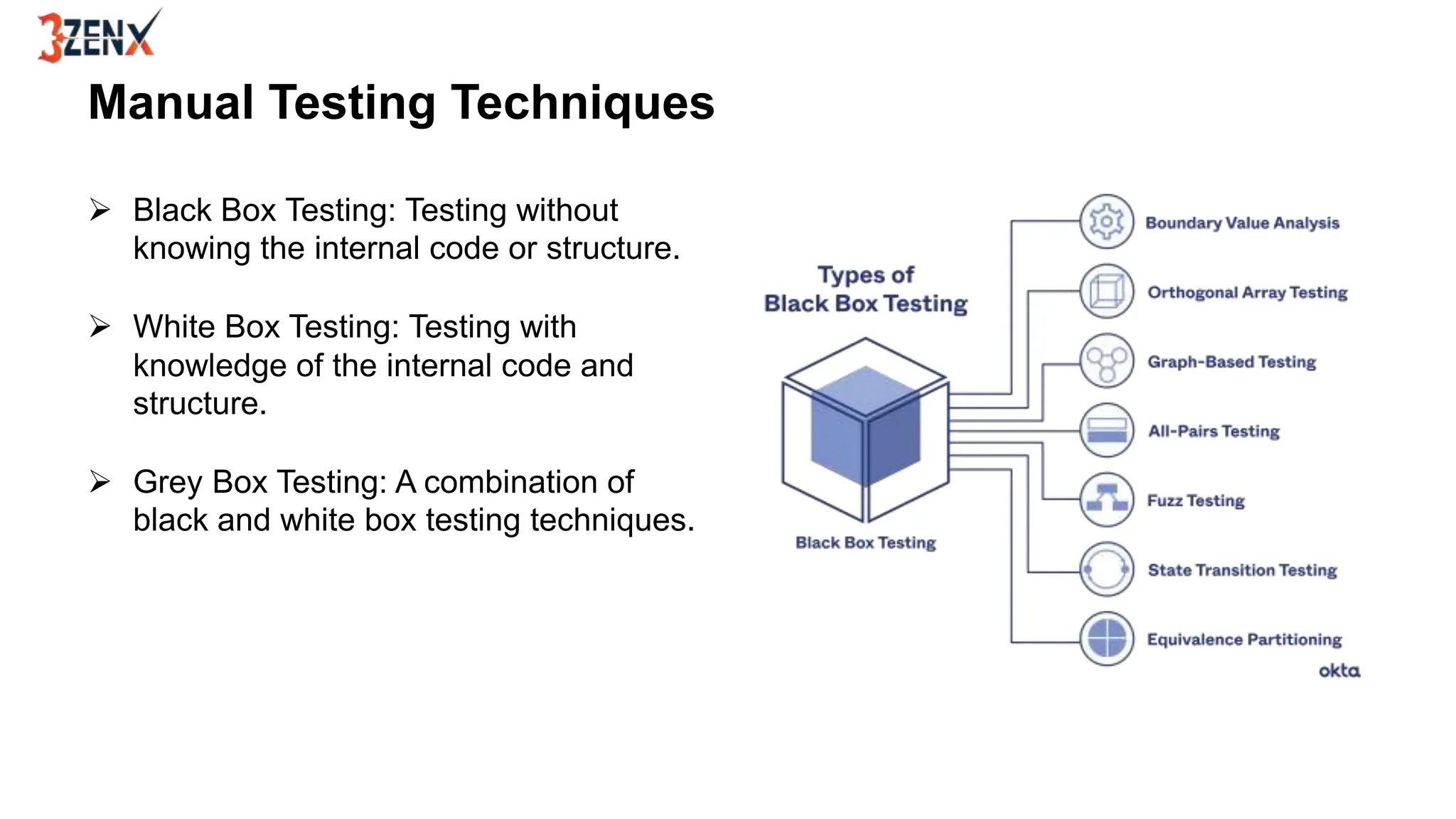
 Black Box Testing: Testing without
knowing the internal code or structure.
 White Box Testing: Testing with
knowledge of the internal code and
structure.
 Grey Box Testing: A combination of
black and white box testing techniques.
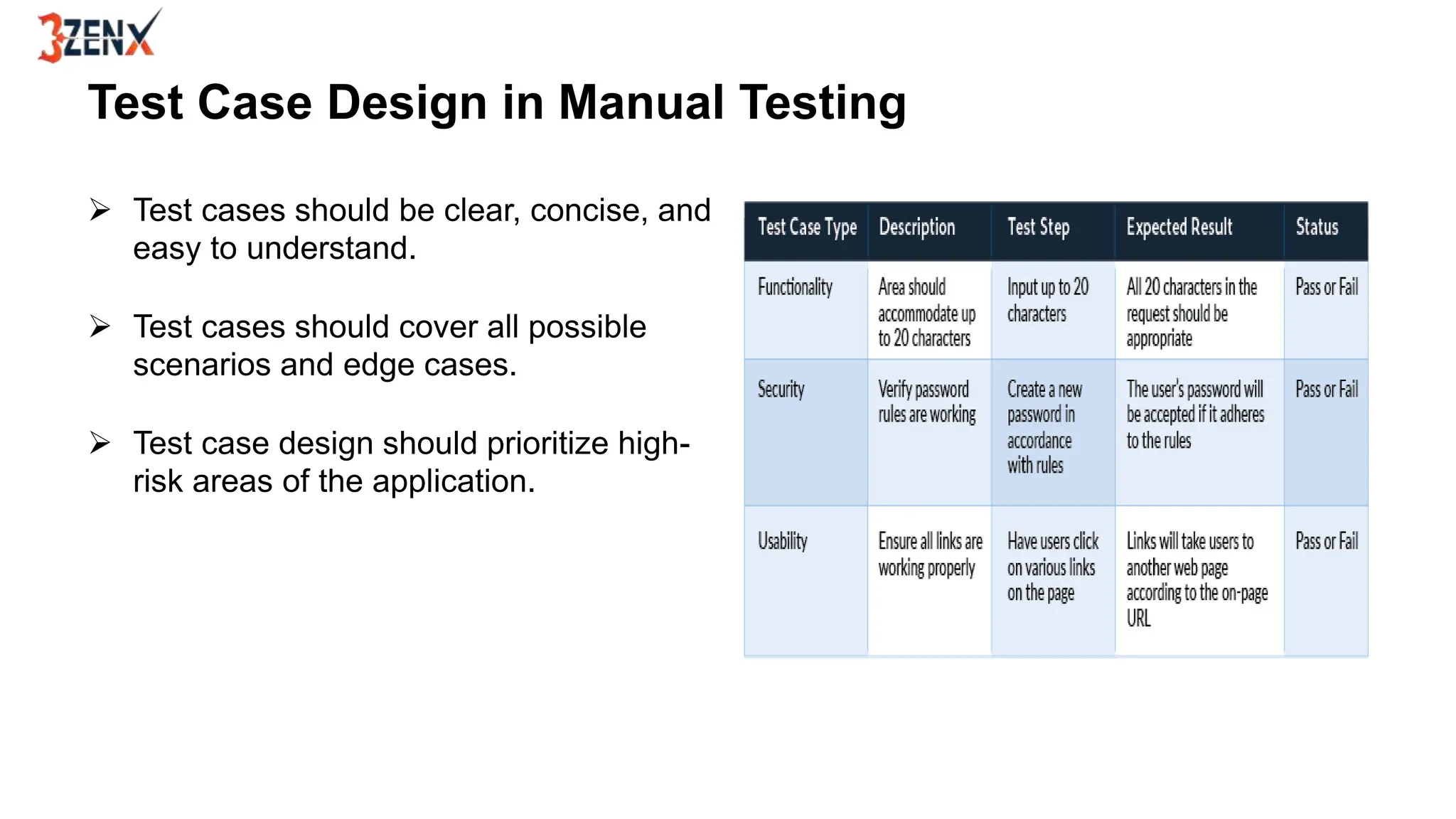
Test Case Design in Manual Testing
 Test cases should be clear, concise, and
easy to understand.
 Test cases should cover all possible
scenarios and edge cases.
 Test case design should prioritize high-
risk areas of the application.
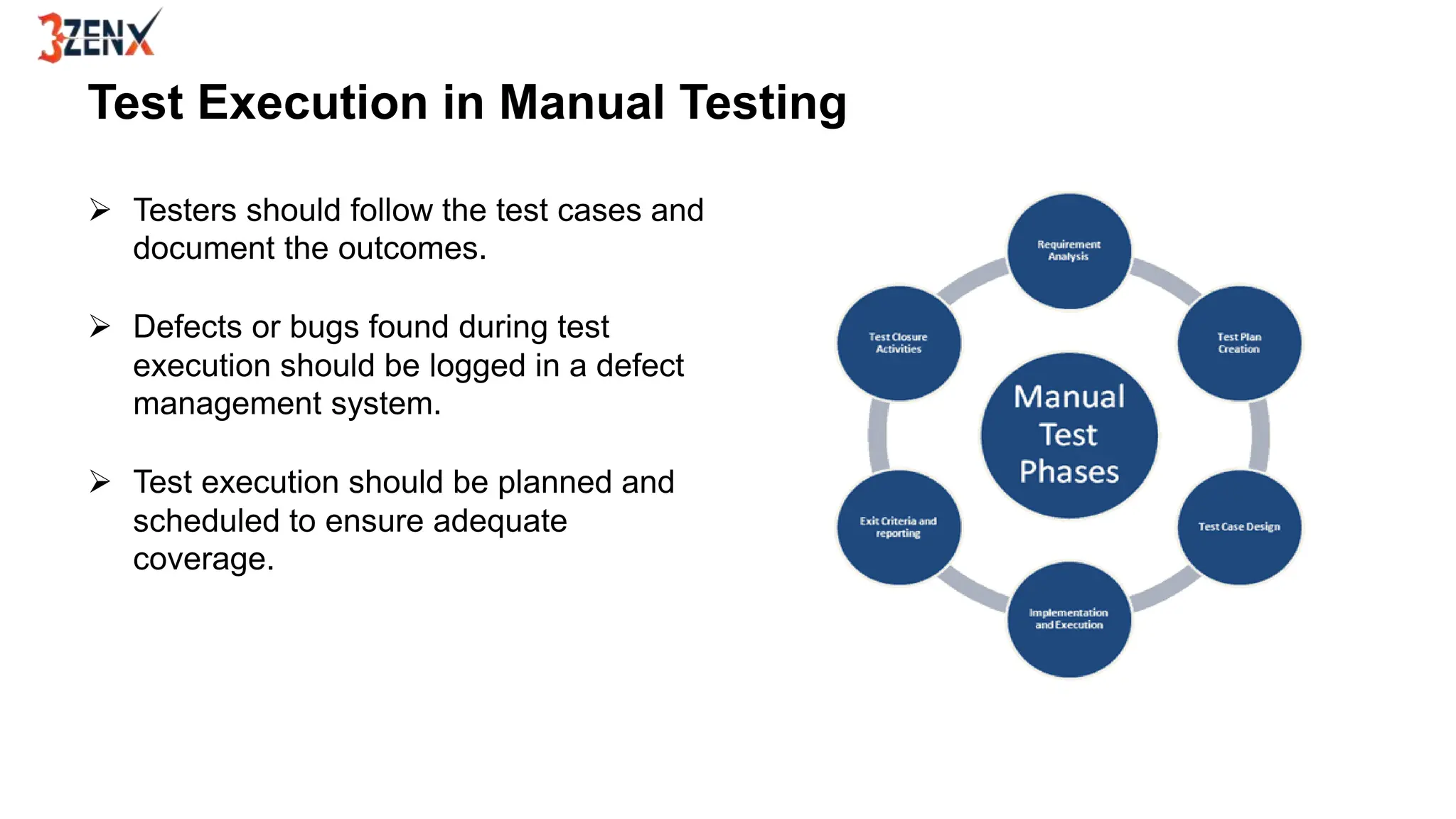
Test Execution in Manual Testing
 Testers should follow the test cases and
document the outcomes.
 Defects or bugs found during test
execution should be logged in a defect
management system.
 Test execution should be planned and
scheduled to ensure adequate
coverage.
Conclusion
 Manual testing remains a vital part of
the software testing process.
 It allows for human intuition and
creativity in uncovering defects.
 However, it should be complemented
with automated testing techniques for
efficiency and comprehensive coverage.
 Presenter name: kathika.kalyani
 Email address: info@3zenx.com
 Website address: http://www.3zenx.com

Manual Testing Course in Hyderabad .

  • 1.
  • 2.
    Introduction to ManualTesting Manual testing is a testing technique where tests are executed manually by a human tester. It involves the tester performing various actions on the software application to find defects or bugs. Manual testing is essential for ensuring the quality and functionality of the software. Manual testing is a traditional method of software testing where testers manually execute test cases without using any automation tools. It involves a tester taking on the role of an end user and testing the software to ensure it behaves as expected. Manual testing is an essential part of the software development life cycle and is often performed alongside automated testing.
  • 3.
    Advantages of ManualTesting  Human intervention allows for exploratory testing, where testers can uncover unexpected issues.  Manual testing provides better control and flexibility in executing test cases.  It allows for subjective evaluation, where testers can identify usability and user experience issues.
  • 4.
    Types of ManualTesting  Functional Testing: Verifying that the application functions as intended.  Regression Testing: Ensuring that recent changes do not impact existing functionality.  User Acceptance Testing: Validating the software against user expectations.
  • 5.
    Manual Testing Techniques Black Box Testing: Testing without knowing the internal code or structure.  White Box Testing: Testing with knowledge of the internal code and structure.  Grey Box Testing: A combination of black and white box testing techniques.
  • 6.
    Test Case Designin Manual Testing  Test cases should be clear, concise, and easy to understand.  Test cases should cover all possible scenarios and edge cases.  Test case design should prioritize high- risk areas of the application.
  • 7.
    Test Execution inManual Testing  Testers should follow the test cases and document the outcomes.  Defects or bugs found during test execution should be logged in a defect management system.  Test execution should be planned and scheduled to ensure adequate coverage.
  • 8.
    Conclusion  Manual testingremains a vital part of the software testing process.  It allows for human intuition and creativity in uncovering defects.  However, it should be complemented with automated testing techniques for efficiency and comprehensive coverage.
  • 9.
     Presenter name:kathika.kalyani  Email address: info@3zenx.com  Website address: http://www.3zenx.com

Editor's Notes

  • #3 Image source: https://www.pinterest.com/pin/831547518682409089/
  • #4 Image source: https://startupsdb.com/types-and-advantages-of-manual-testing/
  • #5 Image source: https://www.qatouch.com/blog/functional-testing-everything-you-need-to-know/
  • #6 Image source: https://www.okta.com/identity-101/black-box-testing/
  • #7 Image source: https://design.udlvirtual.edu.pe/en/what-are-test-case-design-considerations.html
  • #8 Image source: https://www.apsense.com/article/manual-testing-explained.html
  • #9 Image source: https://www.esds.co.in/blog/manual-testing-process-lifecycle/