Introduction to
Software Testing
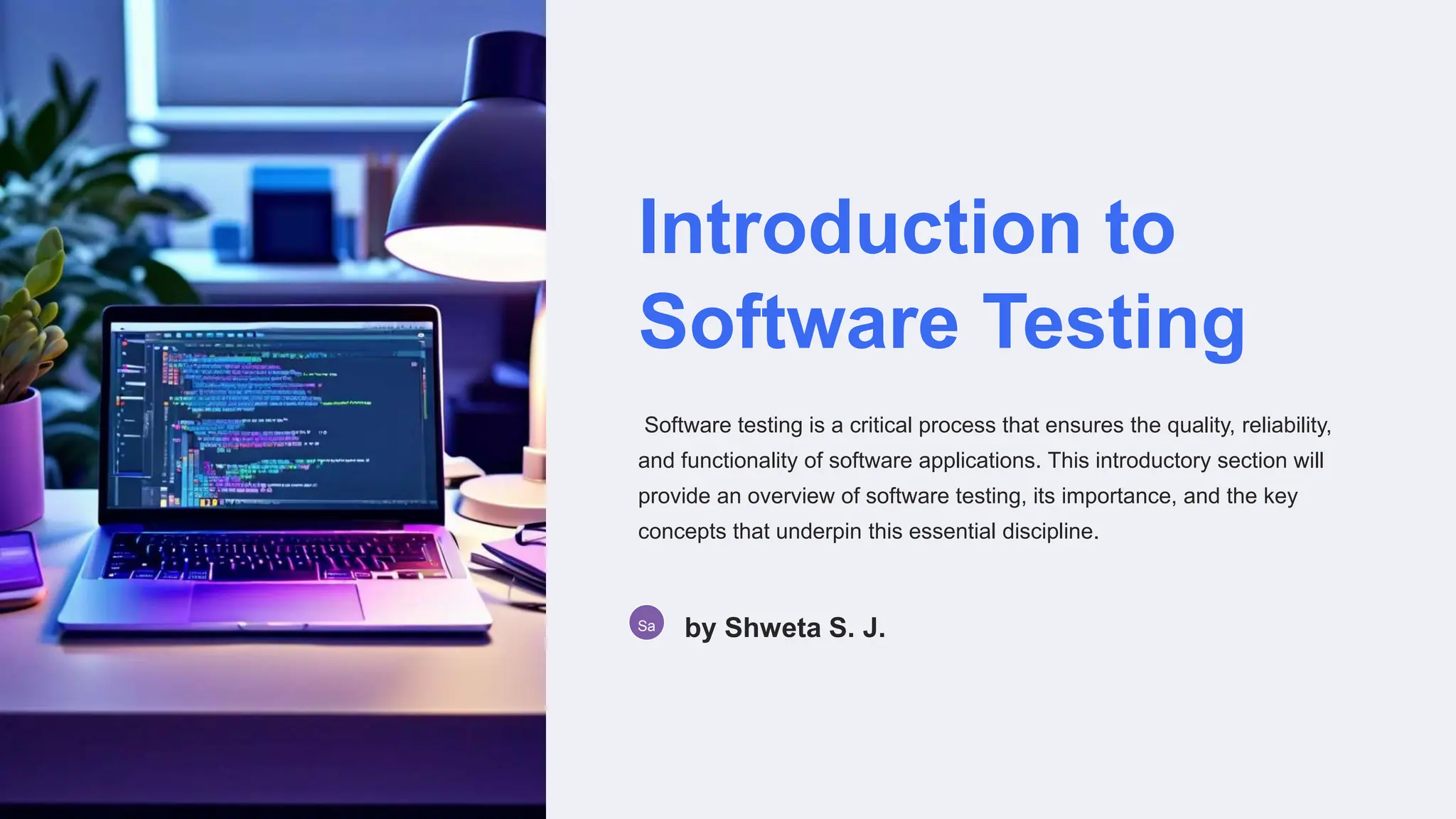
Software testing is a critical process that ensures the quality, reliability,
and functionality of software applications. This introductory section will
provide an overview of software testing, its importance, and the key
concepts that underpin this essential discipline.
Sa by Shweta S. J.
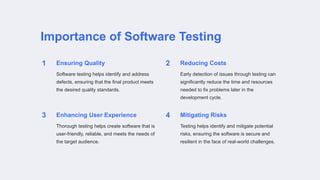
Importance of Software Testing
1 Ensuring Quality
Software testing helps identify and address
defects, ensuring that the final product meets
the desired quality standards.
2 Reducing Costs
Early detection of issues through testing can
significantly reduce the time and resources
needed to fix problems later in the
development cycle.
3 Enhancing User Experience
Thorough testing helps create software that is
user-friendly, reliable, and meets the needs of
the target audience.
4 Mitigating Risks
Testing helps identify and mitigate potential
risks, ensuring the software is secure and
resilient in the face of real-world challenges.
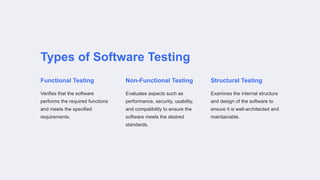
Types of Software Testing
Functional Testing
Verifies that the software
performs the required functions
and meets the specified
requirements.
Non-Functional Testing
Evaluates aspects such as
performance, security, usability,
and compatibility to ensure the
software meets the desired
standards.
Structural Testing
Examines the internal structure
and design of the software to
ensure it is well-architected and
maintainable.
Testing Methodologies
1
Waterfall
A traditional, sequential approach where
each phase of the development process
is completed before moving to the next. 2 Agile
An iterative and incremental approach
that emphasizes collaboration, flexibility,
and continuous improvement.
3
Behavior-Driven Development
A collaborative approach that focuses on
defining and validating the desired
behavior of the software.
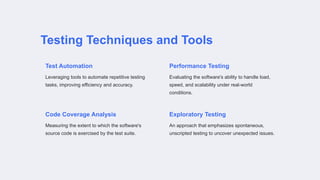
Testing Techniques and Tools
Test Automation
Leveraging tools to automate repetitive testing
tasks, improving efficiency and accuracy.
Performance Testing
Evaluating the software's ability to handle load,
speed, and scalability under real-world
conditions.
Code Coverage Analysis
Measuring the extent to which the software's
source code is exercised by the test suite.
Exploratory Testing
An approach that emphasizes spontaneous,
unscripted testing to uncover unexpected issues.
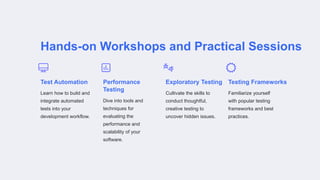
Hands-on Workshops and Practical Sessions
Test Automation
Learn how to build and
integrate automated
tests into your
development workflow.
Performance
Testing
Dive into tools and
techniques for
evaluating the
performance and
scalability of your
software.
Exploratory Testing
Cultivate the skills to
conduct thoughtful,
creative testing to
uncover hidden issues.
Testing Frameworks
Familiarize yourself
with popular testing
frameworks and best
practices.
Certification and Career
Opportunities
Certifications
Earn industry-recognized certifications to demonstrate your expertise and
commitment to the field.
Career Paths
Pursue diverse roles such as software tester, test engineer, quality assurance
analyst, and more.
Continuous Learning
Stay up-to-date with the latest tools, techniques, and best practices through
ongoing education and development.
Conclusion and Next Steps
Key Takeaways Next Steps
- Software testing is essential for ensuring quality,
reducing costs, and enhancing user experience -
Understanding the different types of testing and
methodologies is crucial - Leveraging testing
tools and techniques can improve efficiency and
effectiveness
- Participate in the hands-on workshops to gain
practical experience - Explore certification
opportunities to validate your skills - Continue
learning and staying up-to-date with the latest
trends and best practices in software testing

Software Testing Training In Pune..............

  • 1.
    Introduction to Software Testing Softwaretesting is a critical process that ensures the quality, reliability, and functionality of software applications. This introductory section will provide an overview of software testing, its importance, and the key concepts that underpin this essential discipline. Sa by Shweta S. J.
  • 2.
    Importance of SoftwareTesting 1 Ensuring Quality Software testing helps identify and address defects, ensuring that the final product meets the desired quality standards. 2 Reducing Costs Early detection of issues through testing can significantly reduce the time and resources needed to fix problems later in the development cycle. 3 Enhancing User Experience Thorough testing helps create software that is user-friendly, reliable, and meets the needs of the target audience. 4 Mitigating Risks Testing helps identify and mitigate potential risks, ensuring the software is secure and resilient in the face of real-world challenges.
  • 3.
    Types of SoftwareTesting Functional Testing Verifies that the software performs the required functions and meets the specified requirements. Non-Functional Testing Evaluates aspects such as performance, security, usability, and compatibility to ensure the software meets the desired standards. Structural Testing Examines the internal structure and design of the software to ensure it is well-architected and maintainable.
  • 4.
    Testing Methodologies 1 Waterfall A traditional,sequential approach where each phase of the development process is completed before moving to the next. 2 Agile An iterative and incremental approach that emphasizes collaboration, flexibility, and continuous improvement. 3 Behavior-Driven Development A collaborative approach that focuses on defining and validating the desired behavior of the software.
  • 5.
    Testing Techniques andTools Test Automation Leveraging tools to automate repetitive testing tasks, improving efficiency and accuracy. Performance Testing Evaluating the software's ability to handle load, speed, and scalability under real-world conditions. Code Coverage Analysis Measuring the extent to which the software's source code is exercised by the test suite. Exploratory Testing An approach that emphasizes spontaneous, unscripted testing to uncover unexpected issues.
  • 6.
    Hands-on Workshops andPractical Sessions Test Automation Learn how to build and integrate automated tests into your development workflow. Performance Testing Dive into tools and techniques for evaluating the performance and scalability of your software. Exploratory Testing Cultivate the skills to conduct thoughtful, creative testing to uncover hidden issues. Testing Frameworks Familiarize yourself with popular testing frameworks and best practices.
  • 7.
    Certification and Career Opportunities Certifications Earnindustry-recognized certifications to demonstrate your expertise and commitment to the field. Career Paths Pursue diverse roles such as software tester, test engineer, quality assurance analyst, and more. Continuous Learning Stay up-to-date with the latest tools, techniques, and best practices through ongoing education and development.
  • 8.
    Conclusion and NextSteps Key Takeaways Next Steps - Software testing is essential for ensuring quality, reducing costs, and enhancing user experience - Understanding the different types of testing and methodologies is crucial - Leveraging testing tools and techniques can improve efficiency and effectiveness - Participate in the hands-on workshops to gain practical experience - Explore certification opportunities to validate your skills - Continue learning and staying up-to-date with the latest trends and best practices in software testing