Mandato means command in Spanish. Commands are used
when someone is speaking directly to someone and telling
him or her what to do.

                 For example:

             Sarah clean your room.

             Sara arregla tu cuarto.
Un mandato en la forma de tú es informal
Usamos esta forma para hablar con:
 people who are younger or of equal status
 to us, such as our friends or siblings
Usamos mandatos en esta clase con los
 quehaceres. We will use commands to tell
 someone to complete different household
 chores.
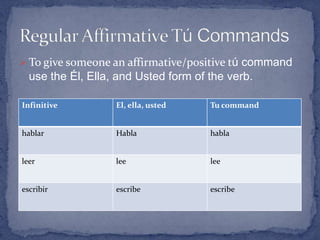
 To give someone an affirmative/positive tú command
  use the Él, Ella, and Usted form of the verb.

Infinitive         El, ella, usted    Tu command


hablar             Habla              habla


leer               lee                lee


escribir           escribe            escribe
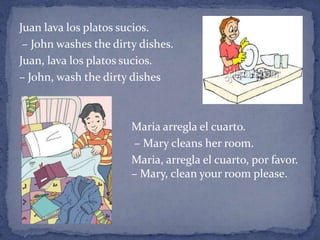
Juan lava los platos sucios.
 – John washes the dirty dishes.
Juan, lava los platos sucios.
– John, wash the dirty dishes


                      Maria arregla el cuarto.
                      – Mary cleans her room.
                       Maria, arregla el cuarto, por favor.
                       – Mary, clean your room please.
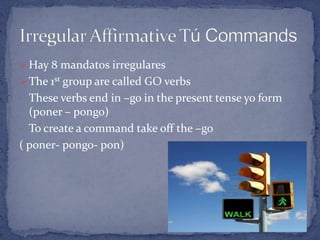
 Hay 8 mandatos irregulares
 The 1st group are called GO verbs
- These verbs end in –go in the present tense yo form
  (poner – pongo)
- To create a command take off the –go
( poner- pongo- pon)
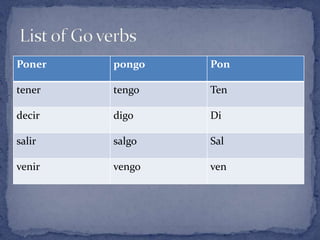
Poner   pongo   Pon

tener   tengo   Ten

decir   digo    Di

salir   salgo   Sal

venir   vengo   ven
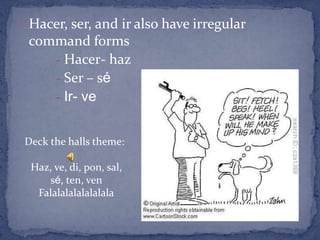
- Hacer, ser, and ir also have irregular
 command forms
    - Hacer- haz
    - Ser – sé
    - Ir- ve


Deck the halls theme:

  Haz, ve, di, pon, sal,
     sé, ten, ven
   Falalalalalalalala
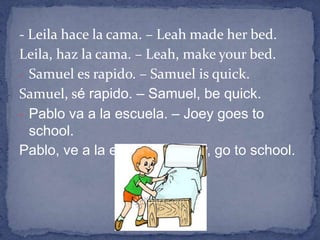
- Leila hace la cama. – Leah made her bed.
Leila, haz la cama. – Leah, make your bed.
- Samuel es rapido. – Samuel is quick.
Samuel, sé rapido. – Samuel, be quick.
- Pablo va a la escuela. – Joey goes to
  school.
Pablo, ve a la escuela. – Joey, go to school.
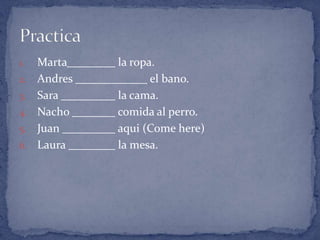
1.   Marta    la ropa.
2.   Andres          el bano.
3.   Sara     la cama.
4.   Nacho    comida al perro.
5.   Juan     aqui (Come here)
6.   Laura    la mesa.

Mandatos afirmativos de tú

  • 2.
    Mandato means commandin Spanish. Commands are used when someone is speaking directly to someone and telling him or her what to do. For example: Sarah clean your room. Sara arregla tu cuarto.
  • 3.
    Un mandato enla forma de tú es informal Usamos esta forma para hablar con: people who are younger or of equal status to us, such as our friends or siblings Usamos mandatos en esta clase con los quehaceres. We will use commands to tell someone to complete different household chores.
  • 4.
     To givesomeone an affirmative/positive tú command use the Él, Ella, and Usted form of the verb. Infinitive El, ella, usted Tu command hablar Habla habla leer lee lee escribir escribe escribe
  • 5.
    Juan lava losplatos sucios. – John washes the dirty dishes. Juan, lava los platos sucios. – John, wash the dirty dishes  Maria arregla el cuarto.  – Mary cleans her room. Maria, arregla el cuarto, por favor. – Mary, clean your room please.
  • 6.
     Hay 8mandatos irregulares  The 1st group are called GO verbs - These verbs end in –go in the present tense yo form (poner – pongo) - To create a command take off the –go ( poner- pongo- pon)
  • 7.
    Poner pongo Pon tener tengo Ten decir digo Di salir salgo Sal venir vengo ven
  • 8.
    - Hacer, ser,and ir also have irregular command forms - Hacer- haz - Ser – sé - Ir- ve Deck the halls theme: Haz, ve, di, pon, sal, sé, ten, ven Falalalalalalalala
  • 9.
    - Leila hacela cama. – Leah made her bed. Leila, haz la cama. – Leah, make your bed. - Samuel es rapido. – Samuel is quick. Samuel, sé rapido. – Samuel, be quick. - Pablo va a la escuela. – Joey goes to school. Pablo, ve a la escuela. – Joey, go to school.
  • 10.
    1. Marta la ropa. 2. Andres el bano. 3. Sara la cama. 4. Nacho comida al perro. 5. Juan aqui (Come here) 6. Laura la mesa.