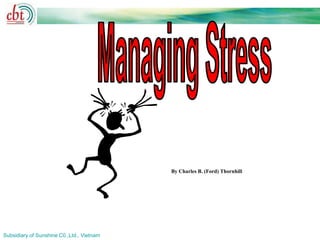
By Charles B. (Ford) Thornhill


Subsidiary of Sunshine C0.,Ltd., Vietnam
MANAGING STRESS

      • What is Stress?
             – Stress is the mental or physical tension that can
               result from any kind of demand on our body and
               systems.
             – Stress can be good for us. However, too much
               stress can be destructive, so it is important that we
               understand where we get stress from.


Subsidiary of Sunshine C0.,Ltd., Vietnam
Where does stress come from?
      • Stress can come from day-to-day hassles, people,
        money, work, body, mind, and leisure.
      • It can be developed from losing things, noise,
        demands from children (spouses) or from arguments.
      • It can develop over a long time or come on quickly
        because of situations that need immediate attention.
      • Sometimes activities we enjoy doing can cause as
        much stress as those we do not enjoy.


Subsidiary of Sunshine C0.,Ltd., Vietnam
When does stress become
                        dis-stress?
      • Stress becomes dis-stress when we feel
        an increase in tension, anxiety or
        increased feelings of anger or depression.
      • We may also experience many medical
        problems or physical ailments.


Subsidiary of Sunshine C0.,Ltd., Vietnam
The warning signs of stress overload are:

      1. concentration problems
      2. moodiness, irritability or pessimism
      3. increased arguments
      4. sleep problems
      5. appetite change and weight gain or loss
      6. change in activity levels - fidgeting, sluggish, indifferent
      7. increased dependency on drugs, alcohol, nicotine or sedatives
      8. susceptibility to colds and viruses
      9. pain, headaches, muscle tension, stiffness
      10. heart pounding, high pulse rate, change in breathing


Subsidiary of Sunshine C0.,Ltd., Vietnam
Personal Stressors

      Three things to remember:

      1. Stress affects different people in different
         ways.
      2. We can take stress home with us.
      3. We may have to make some personal
         changes to deal with stress.

Subsidiary of Sunshine C0.,Ltd., Vietnam
Some questions to ask about
                  personal stress:
      1.       Am I losing my temper too easily with my spouse or kids?
      2.       Am I looking for excuses to avoid spending time with my
               family?
      3.       Am I questioning my own or my spouses drinking habits?
      4.       Are drugs becoming a part of my life?
      5.       Do I feel as if I am losing control of my life?
      6.       Do I find it easier to watch TV, or to be alone rather than to
               be around people?
      7.       Do I feel overwhelmed by my problems and can't find a way
               out?

Subsidiary of Sunshine C0.,Ltd., Vietnam
Common Short Term or Early Stress
                             Symptoms
      Physical Symptoms                    •   Muscle aches and pains
                                           •   Skin rashes
      • Headaches (tension and             •   Teeth grinding
        migraines)                         •   Muscle tics
      • Stomach problems                   •   Chronic mild illnesses
      • Over and under eating              •   Sexual dysfunction
      • Sleep disturbances                 •   Diarrhoea
      • Chronic mild fatigue               •   Constipation


Subsidiary of Sunshine C0.,Ltd., Vietnam
Psychological Symptoms
      • Forgetfulness                      • More use of drugs or
      • Anger                                sleeping pills
      • Frustration                        • Depression
      • Anxiety                            • Feeling powerless
      • More irritability with             • More irritability with or
        family members                       isolation from co-
      • More use of alcohol, or              workers
        cigarettes                         • More problems at work


Subsidiary of Sunshine C0.,Ltd., Vietnam
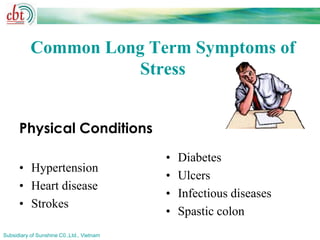
Common Long Term Symptoms of
                      Stress


      Physical Conditions
                                           •   Diabetes
      • Hypertension
                                           •   Ulcers
      • Heart disease
                                           •   Infectious diseases
      • Strokes
                                           •   Spastic colon
Subsidiary of Sunshine C0.,Ltd., Vietnam
Psychological Problems
    •    Serious depression
    •    Accidents
    •    Domestic violence
    •    Suicidal behaviour
    •    Alcoholism
    •    Serious substance abuse
    •    Other debilitating psychological disorders


Subsidiary of Sunshine C0.,Ltd., Vietnam
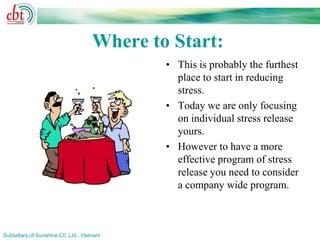
Where to Start:
                                            • This is probably the furthest
                                              place to start in reducing
                                              stress.
                                            • Today we are only focusing
                                              on individual stress release
                                              yours.
                                            • However to have a more
                                              effective program of stress
                                              release you need to consider
                                              a company wide program.


Subsidiary of Sunshine C0.,Ltd., Vietnam

Managing Stress Modified

  • 1.
    By Charles B.(Ford) Thornhill Subsidiary of Sunshine C0.,Ltd., Vietnam
  • 2.
    MANAGING STRESS • What is Stress? – Stress is the mental or physical tension that can result from any kind of demand on our body and systems. – Stress can be good for us. However, too much stress can be destructive, so it is important that we understand where we get stress from. Subsidiary of Sunshine C0.,Ltd., Vietnam
  • 3.
    Where does stresscome from? • Stress can come from day-to-day hassles, people, money, work, body, mind, and leisure. • It can be developed from losing things, noise, demands from children (spouses) or from arguments. • It can develop over a long time or come on quickly because of situations that need immediate attention. • Sometimes activities we enjoy doing can cause as much stress as those we do not enjoy. Subsidiary of Sunshine C0.,Ltd., Vietnam
  • 4.
    When does stressbecome dis-stress? • Stress becomes dis-stress when we feel an increase in tension, anxiety or increased feelings of anger or depression. • We may also experience many medical problems or physical ailments. Subsidiary of Sunshine C0.,Ltd., Vietnam
  • 5.
    The warning signsof stress overload are: 1. concentration problems 2. moodiness, irritability or pessimism 3. increased arguments 4. sleep problems 5. appetite change and weight gain or loss 6. change in activity levels - fidgeting, sluggish, indifferent 7. increased dependency on drugs, alcohol, nicotine or sedatives 8. susceptibility to colds and viruses 9. pain, headaches, muscle tension, stiffness 10. heart pounding, high pulse rate, change in breathing Subsidiary of Sunshine C0.,Ltd., Vietnam
  • 6.
    Personal Stressors Three things to remember: 1. Stress affects different people in different ways. 2. We can take stress home with us. 3. We may have to make some personal changes to deal with stress. Subsidiary of Sunshine C0.,Ltd., Vietnam
  • 7.
    Some questions toask about personal stress: 1. Am I losing my temper too easily with my spouse or kids? 2. Am I looking for excuses to avoid spending time with my family? 3. Am I questioning my own or my spouses drinking habits? 4. Are drugs becoming a part of my life? 5. Do I feel as if I am losing control of my life? 6. Do I find it easier to watch TV, or to be alone rather than to be around people? 7. Do I feel overwhelmed by my problems and can't find a way out? Subsidiary of Sunshine C0.,Ltd., Vietnam
  • 8.
    Common Short Termor Early Stress Symptoms Physical Symptoms • Muscle aches and pains • Skin rashes • Headaches (tension and • Teeth grinding migraines) • Muscle tics • Stomach problems • Chronic mild illnesses • Over and under eating • Sexual dysfunction • Sleep disturbances • Diarrhoea • Chronic mild fatigue • Constipation Subsidiary of Sunshine C0.,Ltd., Vietnam
  • 9.
    Psychological Symptoms • Forgetfulness • More use of drugs or • Anger sleeping pills • Frustration • Depression • Anxiety • Feeling powerless • More irritability with • More irritability with or family members isolation from co- • More use of alcohol, or workers cigarettes • More problems at work Subsidiary of Sunshine C0.,Ltd., Vietnam
  • 10.
    Common Long TermSymptoms of Stress Physical Conditions • Diabetes • Hypertension • Ulcers • Heart disease • Infectious diseases • Strokes • Spastic colon Subsidiary of Sunshine C0.,Ltd., Vietnam
  • 11.
    Psychological Problems • Serious depression • Accidents • Domestic violence • Suicidal behaviour • Alcoholism • Serious substance abuse • Other debilitating psychological disorders Subsidiary of Sunshine C0.,Ltd., Vietnam
  • 12.
    Where to Start: • This is probably the furthest place to start in reducing stress. • Today we are only focusing on individual stress release yours. • However to have a more effective program of stress release you need to consider a company wide program. Subsidiary of Sunshine C0.,Ltd., Vietnam