nirmata
Managing add-ons across clusters
CNCF Webinar – April 2021
nirmata
2
About Us
Damien Toledo
Co-founder and VP of Engineering
Nirmata, @damien_toledo
Ritesh Patel
Co-founder and VP of Products
Nirmata, @riteshdp
About Nirmata
🗹 Creators of Kyverno (now a CNCF project)
🗹 Delivering Day 2 management for Kubernetes
clusters and workloads
🗹 Active member of the CNCF and Kubernetes
community
🗹 Global production deployments at multiple
Fortune 1000 enterprises
3
4
Agenda
• Inside a Kubernetes Cluster
• What are Add-ons
• GitOps
• Automating Add-on Management
• Demo
5
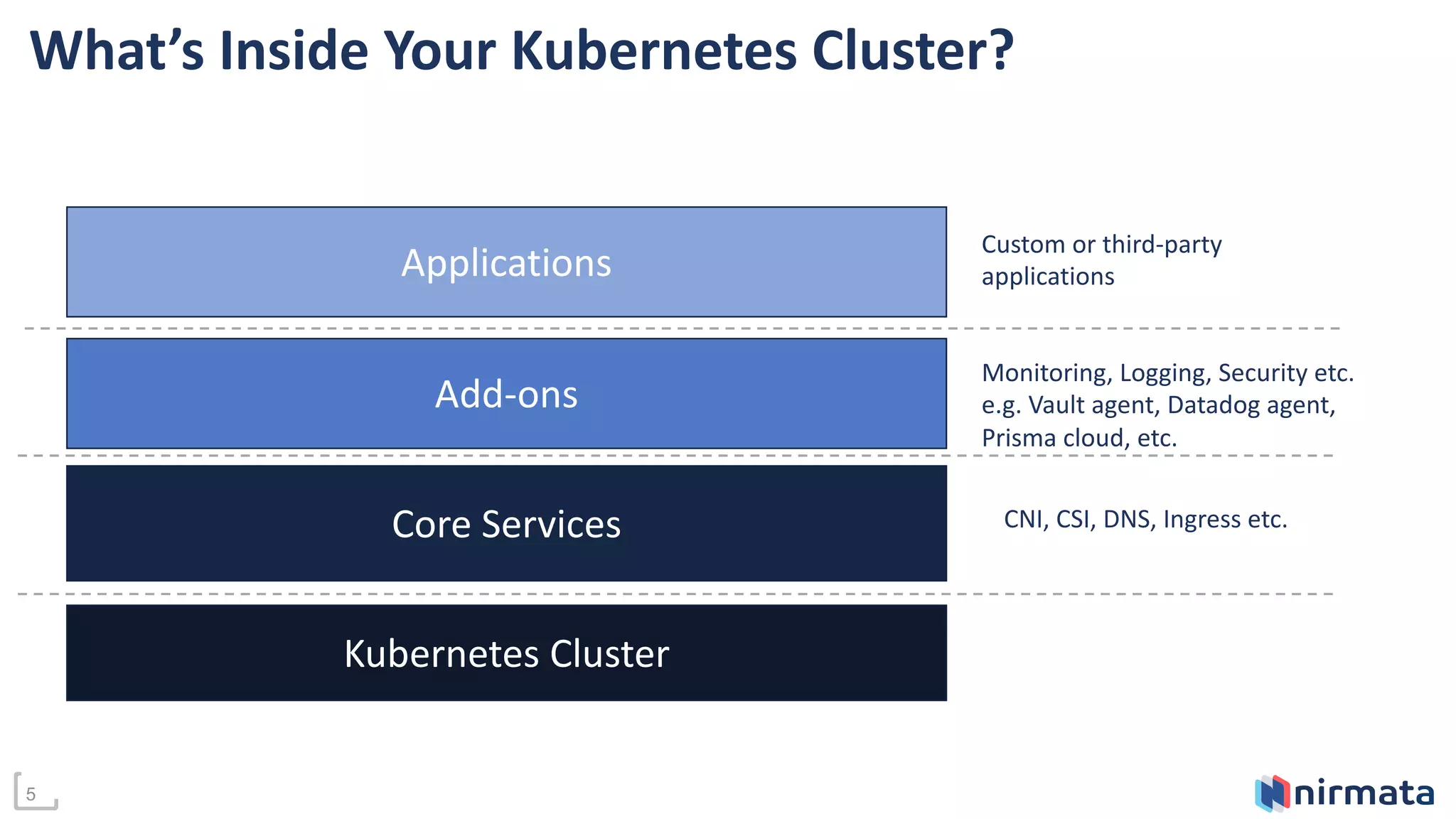
What’s Inside Your Kubernetes Cluster?
Kubernetes Cluster
Core Services
Add-ons
Applications
Custom or third-party
applications
CNI, CSI, DNS, Ingress etc.
Monitoring, Logging, Security etc.
e.g. Vault agent, Datadog agent,
Prisma cloud, etc.
6
What are Add-ons?
• Set of standardize services that need to be available in every cluster
e.g. Security, Monitoring, Logging, Backup, Secrets Management etc.
• Different teams may own these services
• Used by developers or central teams
• Operations and compliance requirements
• Require on-going managent to ensure availability (monitoring,
upgrades, updates etc.)
7
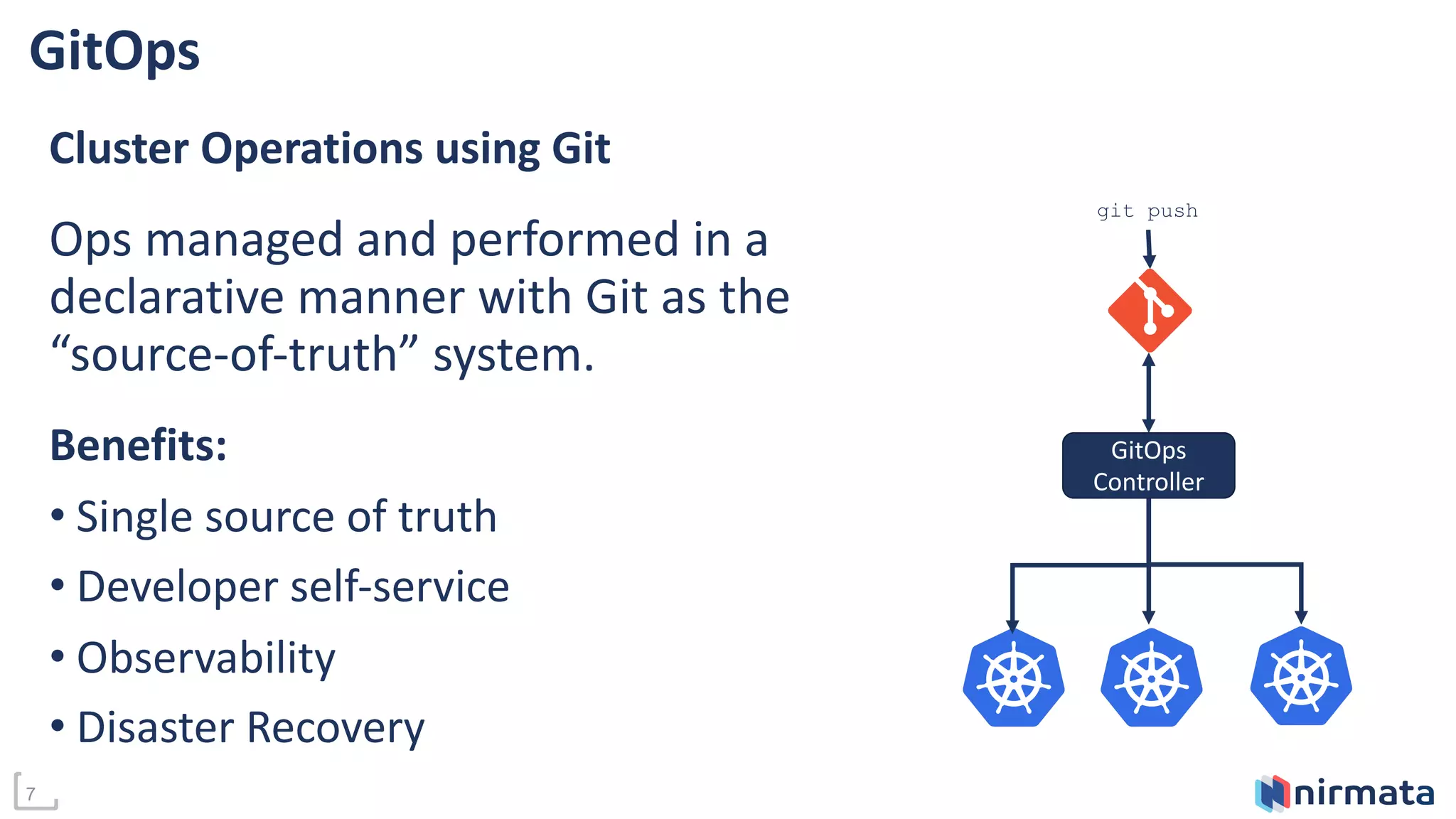
GitOps
Cluster Operations using Git
Ops managed and performed in a
declarative manner with Git as the
“source-of-truth” system.
Benefits:
• Single source of truth
• Developer self-service
• Observability
• Disaster Recovery
GitOps
Controller
git push
8
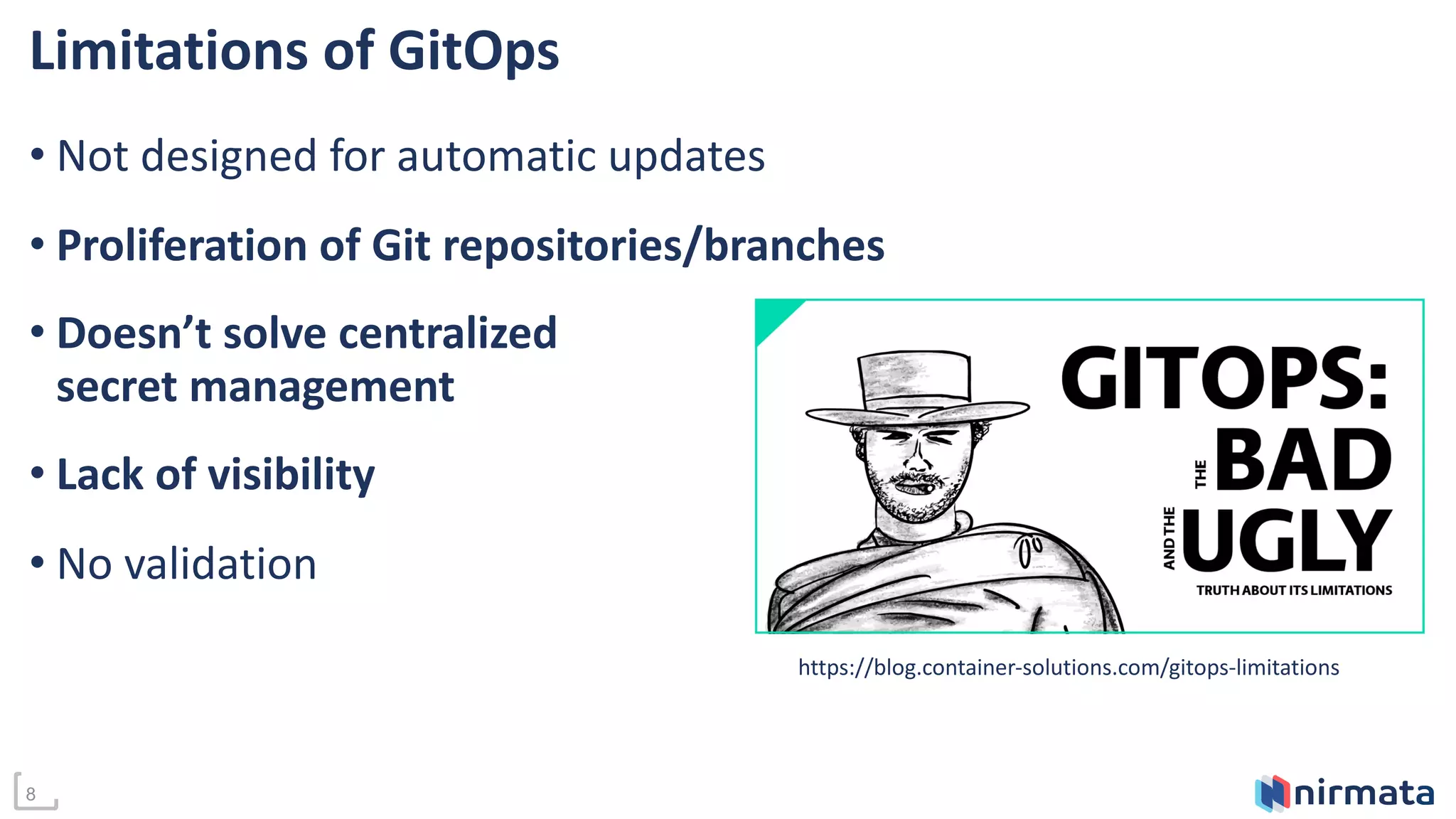
Limitations of GitOps
• Not designed for automatic updates
• Proliferation of Git repositories/branches
• Doesn’t solve centralized
secret management
• Lack of visibility
• No validation
https://blog.container-solutions.com/gitops-limitations
9
GitOps Controller
• Responsible to applying Git changes to the cluster
• Can address multi-cluster deployments by applying Kustomizations
per target
• Provides visibility and state
• Enables advanced progressive delivery workflows
o Approvals
o Rollbacks
o Etc…
10
Automating Add-On Management
• Reducing the number of Git repositories/branches
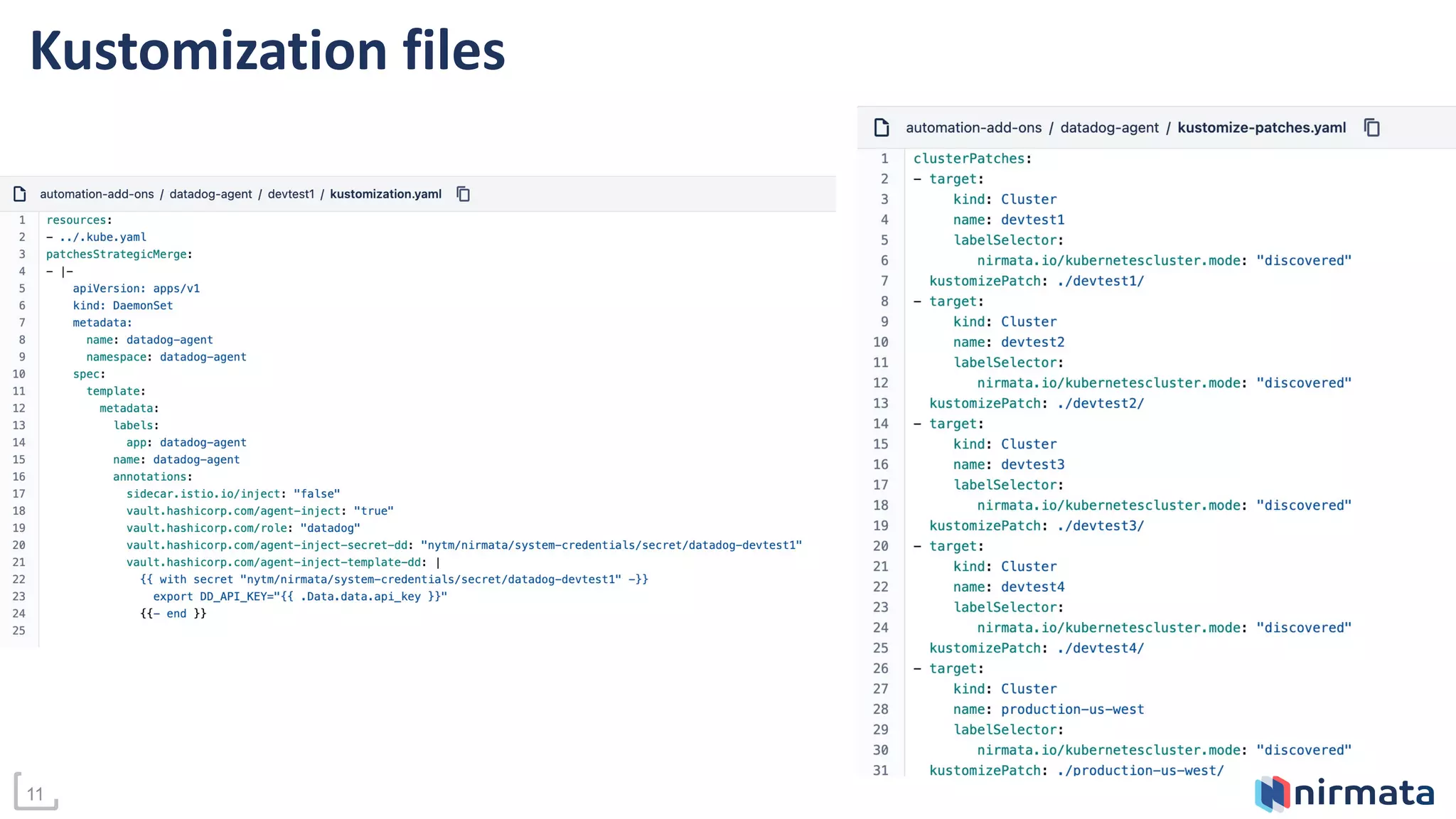
o Using `kustomize`
o Selecting target-based kustomization
• Centralized secret management for ids, tokens, certificates, licenses
etc.
o Using Vault as central secrets store
o Using Vault agent injector to dynamically inject secrets
o Using target-based Kustomization to configure specific labels/annotations
• Easy to reproduce final YAMLs for any target using Kustomize
11
Kustomization files
Demo
13
Summary
• GitOps has become a preferred approach for continuous delivery of
Kubernetes workloads and add-ons
• GitOps has limitations especially when using it to deploy across
multiple clusters (e.g. deploying add-ons)
• Kustomize along with a central secret management solution can be
used to fully automate add-on management
• GitOps controllers like Nirmata, Fleet, etc. streamline add-on
management enabling Clusters-as-a-Service for enterprises
Thank you!

Managing add-ons across clusters

  • 1.
    nirmata Managing add-ons acrossclusters CNCF Webinar – April 2021
  • 2.
    nirmata 2 About Us Damien Toledo Co-founderand VP of Engineering Nirmata, @damien_toledo Ritesh Patel Co-founder and VP of Products Nirmata, @riteshdp
  • 3.
    About Nirmata 🗹 Creatorsof Kyverno (now a CNCF project) 🗹 Delivering Day 2 management for Kubernetes clusters and workloads 🗹 Active member of the CNCF and Kubernetes community 🗹 Global production deployments at multiple Fortune 1000 enterprises 3
  • 4.
    4 Agenda • Inside aKubernetes Cluster • What are Add-ons • GitOps • Automating Add-on Management • Demo
  • 5.
    5 What’s Inside YourKubernetes Cluster? Kubernetes Cluster Core Services Add-ons Applications Custom or third-party applications CNI, CSI, DNS, Ingress etc. Monitoring, Logging, Security etc. e.g. Vault agent, Datadog agent, Prisma cloud, etc.
  • 6.
    6 What are Add-ons? •Set of standardize services that need to be available in every cluster e.g. Security, Monitoring, Logging, Backup, Secrets Management etc. • Different teams may own these services • Used by developers or central teams • Operations and compliance requirements • Require on-going managent to ensure availability (monitoring, upgrades, updates etc.)
  • 7.
    7 GitOps Cluster Operations usingGit Ops managed and performed in a declarative manner with Git as the “source-of-truth” system. Benefits: • Single source of truth • Developer self-service • Observability • Disaster Recovery GitOps Controller git push
  • 8.
    8 Limitations of GitOps •Not designed for automatic updates • Proliferation of Git repositories/branches • Doesn’t solve centralized secret management • Lack of visibility • No validation https://blog.container-solutions.com/gitops-limitations
  • 9.
    9 GitOps Controller • Responsibleto applying Git changes to the cluster • Can address multi-cluster deployments by applying Kustomizations per target • Provides visibility and state • Enables advanced progressive delivery workflows o Approvals o Rollbacks o Etc…
  • 10.
    10 Automating Add-On Management •Reducing the number of Git repositories/branches o Using `kustomize` o Selecting target-based kustomization • Centralized secret management for ids, tokens, certificates, licenses etc. o Using Vault as central secrets store o Using Vault agent injector to dynamically inject secrets o Using target-based Kustomization to configure specific labels/annotations • Easy to reproduce final YAMLs for any target using Kustomize
  • 11.
  • 12.
  • 13.
    13 Summary • GitOps hasbecome a preferred approach for continuous delivery of Kubernetes workloads and add-ons • GitOps has limitations especially when using it to deploy across multiple clusters (e.g. deploying add-ons) • Kustomize along with a central secret management solution can be used to fully automate add-on management • GitOps controllers like Nirmata, Fleet, etc. streamline add-on management enabling Clusters-as-a-Service for enterprises
  • 14.