MANAGEMENT
FUNCTIONS
2023
JANUARY
KEY TERMS
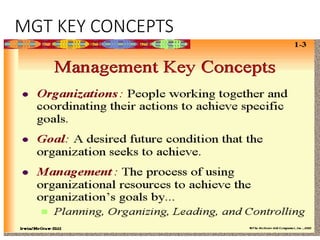
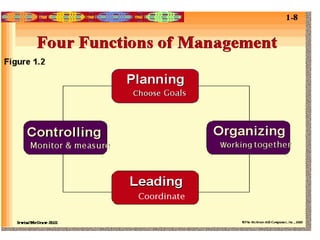
Management:- the process or functions of planning,
organizing, leading, and controlling.
Planning:- the act or process of creating goals and
objectives as well as the strategies to meet them.
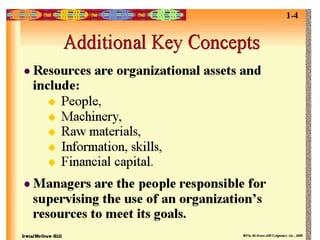
Organizing:- getting the resources arranged in an
orderly and functional way to accomplish goals and
objectives
organizational chart:- a chart that shows how the firm
is structured and who is in charge of whom
KEY TERMS
Leading:- providing direction and vision.
Controlling:- keeping the company on track and
making sure goals are met
MGT KEY CONCEPTS
PLANNING
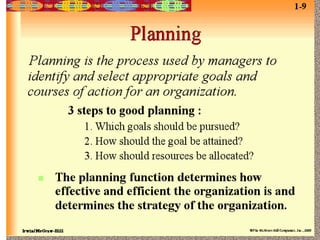
• It is the basic function of management. It deals with chalking out a future
course of action & deciding in advance the most appropriate course of
actions for achievement of pre-determined goals.
• Planning is deciding in advance - what to do, when to do & how to do. It
bridges the gap from where we are & where we want to be.
• A plan is a future course of actions. It is an exercise in problem solving &
decision making.
• Planning is determination of courses of action to achieve desired goals. Thus,
planning is a systematic thinking about ways & means for accomplishment
of pre-determined goals.
• Planning is necessary to ensure proper utilization of human & non-human
resources. It is all pervasive, it is an intellectual activity and it also helps in
avoiding confusion, uncertainties, risks, wastages etc.
PLANNING
• A key activity of all managers is planning the work
under their direction.
• Working with each other and with the people who
will carryout the plans, managers clarify objectives
and set goals for each department or sub-division.
• They establish policies and standard procedure to
guide those who do the work.
• Managers must develop programs, strategy and
schedules. This development can only keep the
work moving towards objectives.
• Planning is the core area of all the functions
of management. It is the foundation upon
which the other three areas should be build
.
• The planning process is ongoing.
• The plans have to be changed or readjusted
periodically if required based on new
information and changes.
ORGANIZING
• It is the process of bringing together physical, financial
and human resources and developing productive
relationship amongst them for achievement of
organizational goals.
• According to Henry Fayol, “To organize a business is to
provide it with everything useful or its functioning i.e.
raw material, tools, capital and personnel’s”.
• To organize a business involves determining &
providing human and non-human resources to the
organizational structure.
• Organizing as a process involves:
 Identification of activities.
 Classification of grouping of activities.
 Assignment of duties.
 Delegation of authority and creation of
responsibility.
 Coordinating authority and responsibility
relationships.
• Getting organized is the second function of
management. Management must organize all its
resources in order to implement the course of
action it determined in the planning process.
• Through the process of getting organized,
management will determine the internal
organizational structure; establish and maintain
relationships, as well as allocate necessary
resources.
DIRECTING
• It is that part of managerial function which actuates the
organizational methods to work efficiently for
achievement of organizational purposes.
• It is considered life-spark of the enterprise which sets it
in motion the action of people because planning,
organizing and staffing are the mere preparations for
doing the work.
• Direction is that inert-personnel aspect of management
which deals directly with influencing, guiding,
supervising, motivating sub-ordinate for the achievement
of organizational goals.
.
Direction has following elements:
• Supervision- implies overseeing the work of subordinates by
their superiors. It is the act of watching & directing work &
workers.
• Motivation- means inspiring, stimulating or encouraging the
sub-ordinates with zeal to work. Positive, negative, monetary,
non-monetary incentives may be used for this purpose.
• Leadership- may be defined as a process by which manager
guides and influences the work of subordinates in desired
direction.
• Communications- is the process of passing information,
experience, opinion etc. from one person to another. It is a bridge
of understand
DIRECTING
• Directing (Leading): A manager must also provide
leadership if the team working with him in the
organization are to work together and achieve the
desired results.
• A Manager must keep good relation with every
member of his team .In leading a manager strives to
integrate the needs of his subordinates with the
welfare of the company.
• A leader (Manager) must try to maintain a good
balance between individual motivation and
efficiency.
Controlling
• It implies measurement of accomplishment against the standards and
correction of deviation if any to ensure achievement of organizational
goals.
• The purpose of controlling is to ensure that everything occurs in
conformities with the standards. An efficient system of control helps to
predict deviations before they actually occur.
• Controlling is the process of checking whether or not proper progress is
being made towards the objectives and goals and acting if necessary, to
correct any deviation.
• Controlling is the measurement & correction of performance activities
of subordinates in order to make sure that the enterprise objectives and
plans desired to obtain them as being accomplished”.
CONTROLLING
• Therefore controlling has following steps:
 Establishment of standard performance.
 Measurement of actual performance.
 Comparison of actual performance with the
standards and finding out deviation if any.
 Corrective action
END OF PRESENTION

MANAGEMENT FUNCTIONS hgvbbffvhggvbbhhhhhhb

  • 1.
  • 2.
    KEY TERMS Management:- theprocess or functions of planning, organizing, leading, and controlling. Planning:- the act or process of creating goals and objectives as well as the strategies to meet them. Organizing:- getting the resources arranged in an orderly and functional way to accomplish goals and objectives organizational chart:- a chart that shows how the firm is structured and who is in charge of whom
  • 3.
    KEY TERMS Leading:- providingdirection and vision. Controlling:- keeping the company on track and making sure goals are met
  • 4.
  • 7.
    PLANNING • It isthe basic function of management. It deals with chalking out a future course of action & deciding in advance the most appropriate course of actions for achievement of pre-determined goals. • Planning is deciding in advance - what to do, when to do & how to do. It bridges the gap from where we are & where we want to be. • A plan is a future course of actions. It is an exercise in problem solving & decision making. • Planning is determination of courses of action to achieve desired goals. Thus, planning is a systematic thinking about ways & means for accomplishment of pre-determined goals. • Planning is necessary to ensure proper utilization of human & non-human resources. It is all pervasive, it is an intellectual activity and it also helps in avoiding confusion, uncertainties, risks, wastages etc.
  • 8.
    PLANNING • A keyactivity of all managers is planning the work under their direction. • Working with each other and with the people who will carryout the plans, managers clarify objectives and set goals for each department or sub-division. • They establish policies and standard procedure to guide those who do the work. • Managers must develop programs, strategy and schedules. This development can only keep the work moving towards objectives.
  • 9.
    • Planning isthe core area of all the functions of management. It is the foundation upon which the other three areas should be build . • The planning process is ongoing. • The plans have to be changed or readjusted periodically if required based on new information and changes.
  • 12.
    ORGANIZING • It isthe process of bringing together physical, financial and human resources and developing productive relationship amongst them for achievement of organizational goals. • According to Henry Fayol, “To organize a business is to provide it with everything useful or its functioning i.e. raw material, tools, capital and personnel’s”. • To organize a business involves determining & providing human and non-human resources to the organizational structure.
  • 13.
    • Organizing asa process involves:  Identification of activities.  Classification of grouping of activities.  Assignment of duties.  Delegation of authority and creation of responsibility.  Coordinating authority and responsibility relationships.
  • 14.
    • Getting organizedis the second function of management. Management must organize all its resources in order to implement the course of action it determined in the planning process. • Through the process of getting organized, management will determine the internal organizational structure; establish and maintain relationships, as well as allocate necessary resources.
  • 16.
    DIRECTING • It isthat part of managerial function which actuates the organizational methods to work efficiently for achievement of organizational purposes. • It is considered life-spark of the enterprise which sets it in motion the action of people because planning, organizing and staffing are the mere preparations for doing the work. • Direction is that inert-personnel aspect of management which deals directly with influencing, guiding, supervising, motivating sub-ordinate for the achievement of organizational goals.
  • 17.
    . Direction has followingelements: • Supervision- implies overseeing the work of subordinates by their superiors. It is the act of watching & directing work & workers. • Motivation- means inspiring, stimulating or encouraging the sub-ordinates with zeal to work. Positive, negative, monetary, non-monetary incentives may be used for this purpose. • Leadership- may be defined as a process by which manager guides and influences the work of subordinates in desired direction. • Communications- is the process of passing information, experience, opinion etc. from one person to another. It is a bridge of understand
  • 18.
    DIRECTING • Directing (Leading):A manager must also provide leadership if the team working with him in the organization are to work together and achieve the desired results. • A Manager must keep good relation with every member of his team .In leading a manager strives to integrate the needs of his subordinates with the welfare of the company. • A leader (Manager) must try to maintain a good balance between individual motivation and efficiency.
  • 20.
    Controlling • It impliesmeasurement of accomplishment against the standards and correction of deviation if any to ensure achievement of organizational goals. • The purpose of controlling is to ensure that everything occurs in conformities with the standards. An efficient system of control helps to predict deviations before they actually occur. • Controlling is the process of checking whether or not proper progress is being made towards the objectives and goals and acting if necessary, to correct any deviation. • Controlling is the measurement & correction of performance activities of subordinates in order to make sure that the enterprise objectives and plans desired to obtain them as being accomplished”.
  • 21.
    CONTROLLING • Therefore controllinghas following steps:  Establishment of standard performance.  Measurement of actual performance.  Comparison of actual performance with the standards and finding out deviation if any.  Corrective action
  • 25.