
PERFORMANCE BASED
CORPORATIZATION OF
PUBLIC SECTOR
Business Professional Conference
Corporate Pakistan 2013
Institute of Cost and Management Accountants of Pakistan

Mohammad Iqbal Ghori FCMA
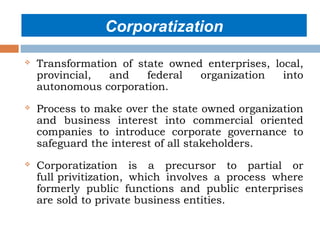
Corporatization


Transformation of state owned enterprises, local,
provincial,
and
federal
organization
into
autonomous corporation.



Process to make over the state owned organization
and business interest into commercial oriented
companies to introduce corporate governance to
safeguard the interest of all stakeholders.  



Corporatization is a precursor to partial or
full privitization, which involves a process where
formerly public functions and public enterprises
are sold to private business entities.
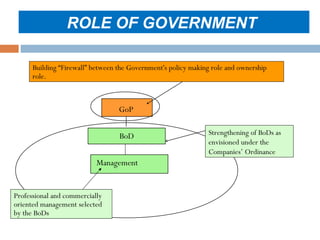
ROLE OF GOVERNMENT
Building “Firewall” between the Government's policy making role and ownership
role.

GoP
BoD
Management

Professional and commercially
oriented management selected
by the BoDs

Strengthening of BoDs as
envisioned under the
Companies’ Ordinance
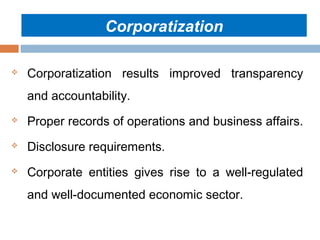
Corporatization


Corporatization results improved transparency
and accountability.



Proper records of operations and business affairs.



Disclosure requirements.



Corporate entities gives rise to a well-regulated
and well-documented economic sector.
Corporatization in Pakistan


Corporatization was started on 8 October 1984 in
a vision to promote corporate sector.



The program was integrated in Privatization
program of Prime minister Nawaz Shairf.
DIFFICULTIES IN
CORPORATIZATION
Political intervention.
 Powerful Trade unions.
 Political CEOs.
 Uninformed Boards lacking competencies
and required experties.
 Personal or political interest of BoD.
 Immature and stubborn regulators.

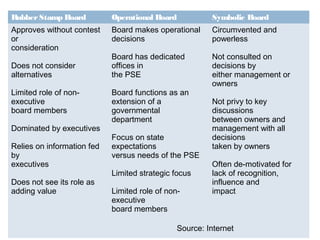
Rubber Stamp Board

Operational Board

Symbolic Board

Approves without contest
or
consideration

Board makes operational
decisions

Circumvented and
powerless

Board has dedicated
offices in
the PSE

Not consulted on
decisions by
either management or
owners

Does not consider
alternatives
Limited role of nonexecutive
board members
Dominated by executives
Relies on information fed
by
executives
Does not see its role as
adding value

Board functions as an
extension of a
governmental
department
Focus on state
expectations
versus needs of the PSE
Limited strategic focus
Limited role of nonexecutive
board members

Not privy to key
discussions
between owners and
management with all
decisions
taken by owners
Often de-motivated for
lack of recognition,
influence and
impact

Source: Internet
DIFFICULTIES IN
CORPORATIZATION
BOD is devastating organizational hierarchy
 BoD is unaccustomed with PSE’s rules of
business
 Unwarranted discussion in BoD meeting
 Short term view
 Conflict of interest
 BoD compromises the opinion of professionals
 Undue dependency on consultants
 Uninformed BoD even ignorant of good
practice of Board room.

Expected Role of PSE’s Board













Responsibility for the organizational
performance.
Elimination of lethargic and bureaucratic
behavior in the organization.
Regulatory Compliance
Articulation of Business plan
Performance monitoring system
Performance based compensation in lieu of
national BPS.
Hunting and retention of Professionals
Succession Planning
Inculcation of transparency and accountability
Role of PSE’s Board
Cont…..










Finalization of Vision and Mission statement.
Manages potential conflicts of interest.
Avoid involvement in operational activities.
Formulation of policies.
Preparation of Financial Statement as IFRS.
Ensures financial statements are prepared.
Commercial oriented decision making process.
Corporate Social Responsibility.
Engagement of Stakeholders.
RECOMMENDATIONS









Political orientation toward the role of board and its
best practice.
Training of line Ministries officers i.e. Secretaries,
Additional Secretaries.
Orientation session by SECP before nomination.
Excellent communication between bureaucracy and
Politician.
Recruitment of effective boards to attracts
leadership.
RECOMENDATIONS


Performance Contract between BoD and GoP.



Implementation of Integrated Reporting in Public Sector
Entities.



Mandatory Third Party Corporate Governance Audit.



Establishment of Holding Company to formulate Policy and
monitor Performance.


Help construct talent pool for all sector



Public Transparency thru disclosure of results.



Articulation of Business plan and approval after negotiation
RECOMENDATIONS


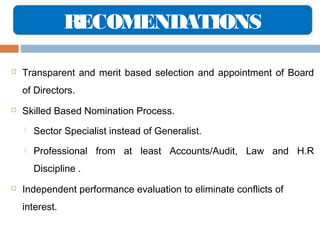
Transparent and merit based selection and appointment of Board
of Directors.



Skilled Based Nomination Process.


Sector Specialist instead of Generalist.



Professional from at least Accounts/Audit, Law and H.R
Discipline .



Independent performance evaluation to eliminate conflicts of
interest.
Great governance is a journey,
Not a destination.
Past performance is, as the saying goes,
No guarantee of future success.
The board that becomes self‐ satisfied
Is a board that may underperform
Its full potential
And the organization’s needs.

Barry S. Bader
Thank You

Maj

  • 1.
    PERFORMANCE BASED CORPORATIZATION OF PUBLICSECTOR Business Professional Conference Corporate Pakistan 2013 Institute of Cost and Management Accountants of Pakistan Mohammad Iqbal Ghori FCMA
  • 2.
    Corporatization  Transformation of stateowned enterprises, local, provincial, and federal organization into autonomous corporation.  Process to make over the state owned organization and business interest into commercial oriented companies to introduce corporate governance to safeguard the interest of all stakeholders.    Corporatization is a precursor to partial or full privitization, which involves a process where formerly public functions and public enterprises are sold to private business entities.
  • 3.
    ROLE OF GOVERNMENT Building“Firewall” between the Government's policy making role and ownership role. GoP BoD Management Professional and commercially oriented management selected by the BoDs Strengthening of BoDs as envisioned under the Companies’ Ordinance
  • 4.
    Corporatization  Corporatization results improvedtransparency and accountability.  Proper records of operations and business affairs.  Disclosure requirements.  Corporate entities gives rise to a well-regulated and well-documented economic sector.
  • 5.
    Corporatization in Pakistan  Corporatizationwas started on 8 October 1984 in a vision to promote corporate sector.  The program was integrated in Privatization program of Prime minister Nawaz Shairf.
  • 6.
    DIFFICULTIES IN CORPORATIZATION Political intervention. Powerful Trade unions.  Political CEOs.  Uninformed Boards lacking competencies and required experties.  Personal or political interest of BoD.  Immature and stubborn regulators. 
  • 7.
    Rubber Stamp Board OperationalBoard Symbolic Board Approves without contest or consideration Board makes operational decisions Circumvented and powerless Board has dedicated offices in the PSE Not consulted on decisions by either management or owners Does not consider alternatives Limited role of nonexecutive board members Dominated by executives Relies on information fed by executives Does not see its role as adding value Board functions as an extension of a governmental department Focus on state expectations versus needs of the PSE Limited strategic focus Limited role of nonexecutive board members Not privy to key discussions between owners and management with all decisions taken by owners Often de-motivated for lack of recognition, influence and impact Source: Internet
  • 8.
    DIFFICULTIES IN CORPORATIZATION BOD isdevastating organizational hierarchy  BoD is unaccustomed with PSE’s rules of business  Unwarranted discussion in BoD meeting  Short term view  Conflict of interest  BoD compromises the opinion of professionals  Undue dependency on consultants  Uninformed BoD even ignorant of good practice of Board room. 
  • 9.
    Expected Role ofPSE’s Board          Responsibility for the organizational performance. Elimination of lethargic and bureaucratic behavior in the organization. Regulatory Compliance Articulation of Business plan Performance monitoring system Performance based compensation in lieu of national BPS. Hunting and retention of Professionals Succession Planning Inculcation of transparency and accountability
  • 10.
    Role of PSE’sBoard Cont…..          Finalization of Vision and Mission statement. Manages potential conflicts of interest. Avoid involvement in operational activities. Formulation of policies. Preparation of Financial Statement as IFRS. Ensures financial statements are prepared. Commercial oriented decision making process. Corporate Social Responsibility. Engagement of Stakeholders.
  • 11.
    RECOMMENDATIONS      Political orientation towardthe role of board and its best practice. Training of line Ministries officers i.e. Secretaries, Additional Secretaries. Orientation session by SECP before nomination. Excellent communication between bureaucracy and Politician. Recruitment of effective boards to attracts leadership.
  • 12.
    RECOMENDATIONS  Performance Contract betweenBoD and GoP.  Implementation of Integrated Reporting in Public Sector Entities.  Mandatory Third Party Corporate Governance Audit.  Establishment of Holding Company to formulate Policy and monitor Performance.  Help construct talent pool for all sector  Public Transparency thru disclosure of results.  Articulation of Business plan and approval after negotiation
  • 13.
    RECOMENDATIONS  Transparent and meritbased selection and appointment of Board of Directors.  Skilled Based Nomination Process.  Sector Specialist instead of Generalist.  Professional from at least Accounts/Audit, Law and H.R Discipline .  Independent performance evaluation to eliminate conflicts of interest.
  • 14.
    Great governance isa journey, Not a destination. Past performance is, as the saying goes, No guarantee of future success. The board that becomes self‐ satisfied Is a board that may underperform Its full potential And the organization’s needs. Barry S. Bader
  • 15.

Editor's Notes

  • #16 I thank you all for your time!