Retail and Mail-order Networks 
Norman V. Carroll 
VCU School of Pharmacy
Objectives 
• List and discuss advantages and disadvantages of 
mail order pharmacy for patients 
• List and discuss reasons that mail order 
pharmacies should be less expensive than retail 
pharmacies 
• List reasons that mail order pharmacies should be 
more expensive than retail pharmacies 
• Discuss reasons that patients use mail order 
pharmacies 
• List and discuss ways that mail order pharmacy 
may affect patient adherence
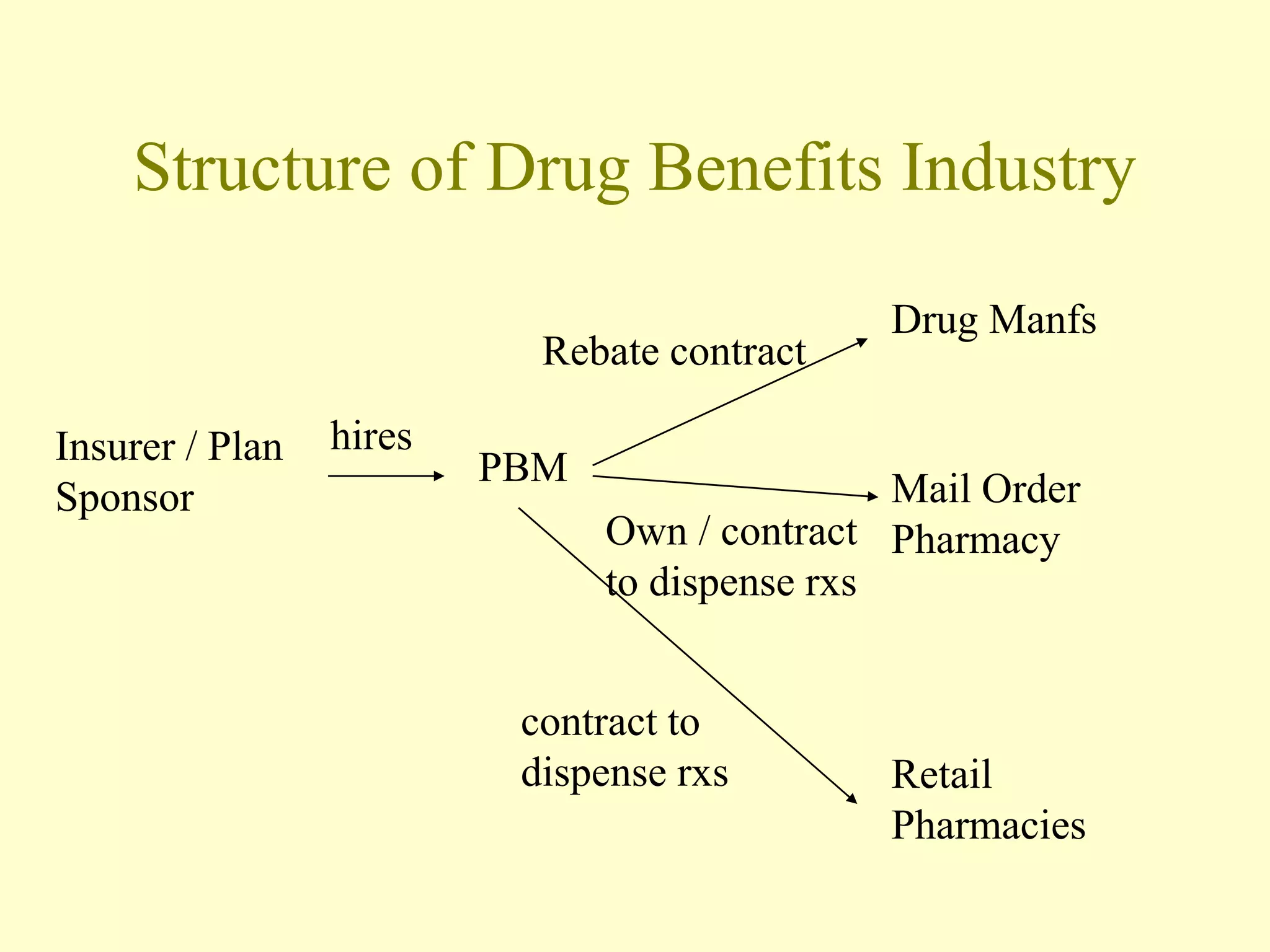
Structure of Drug Benefits Industry 
Insurer / Plan 
Sponsor 
PBM 
Drug Manfs 
Mail Order 
Pharmacy 
Retail 
Pharmacies 
hires 
Rebate contract 
Own / contract 
to dispense rxs 
contract to 
dispense rxs
Video of mail order pharmacy 
• http://www.uhc.com/pharmacy/learning_ce 
nter/optumrx_mail_service_facility.htm
Advantages and Disadvantages of Mail 
Order Pharmacy 
• Advantages: 
• Disadvantages:
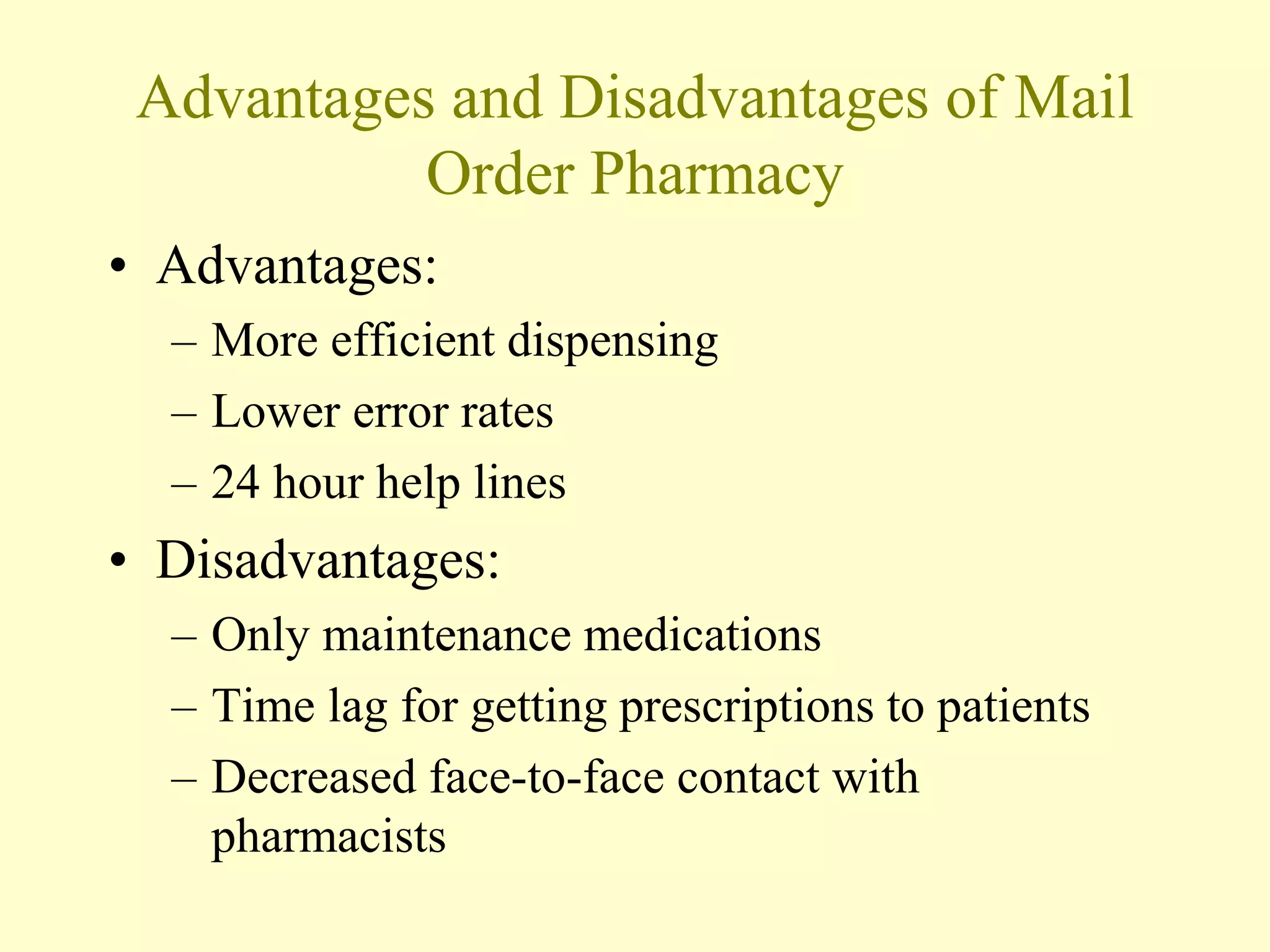
Advantages and Disadvantages of Mail 
Order Pharmacy 
• Advantages: 
– More efficient dispensing 
– Lower error rates 
– 24 hour help lines 
• Disadvantages: 
– Only maintenance medications 
– Time lag for getting prescriptions to patients 
– Decreased face-to-face contact with 
pharmacists
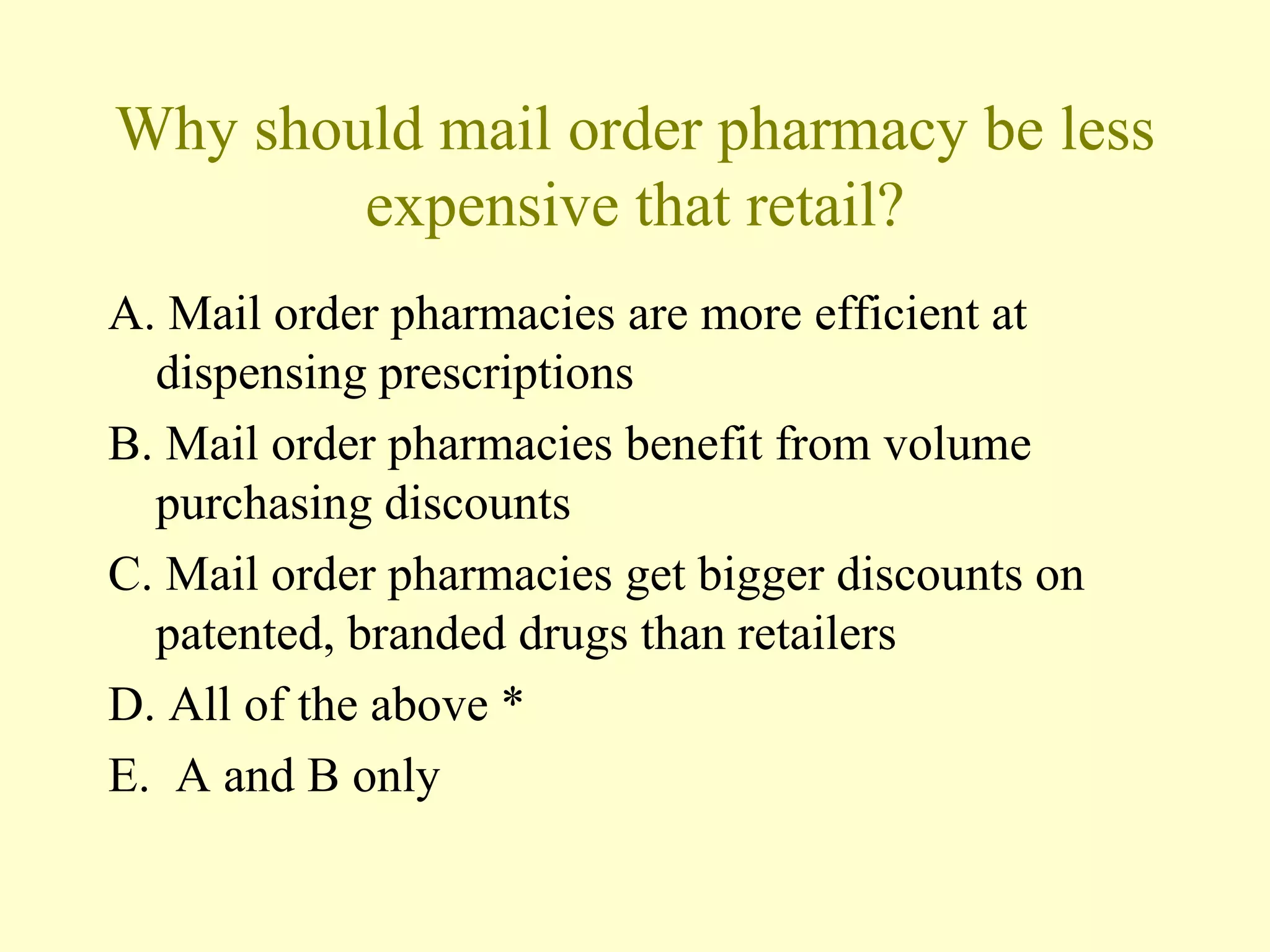
Why should mail order pharmacy be less 
expensive that retail? 
A. Mail order pharmacies are more efficient at 
dispensing prescriptions 
B. Mail order pharmacies benefit from volume 
purchasing discounts 
C. Mail order pharmacies get bigger discounts on 
patented, branded drugs than retailers 
D. All of the above * 
E. A and B only
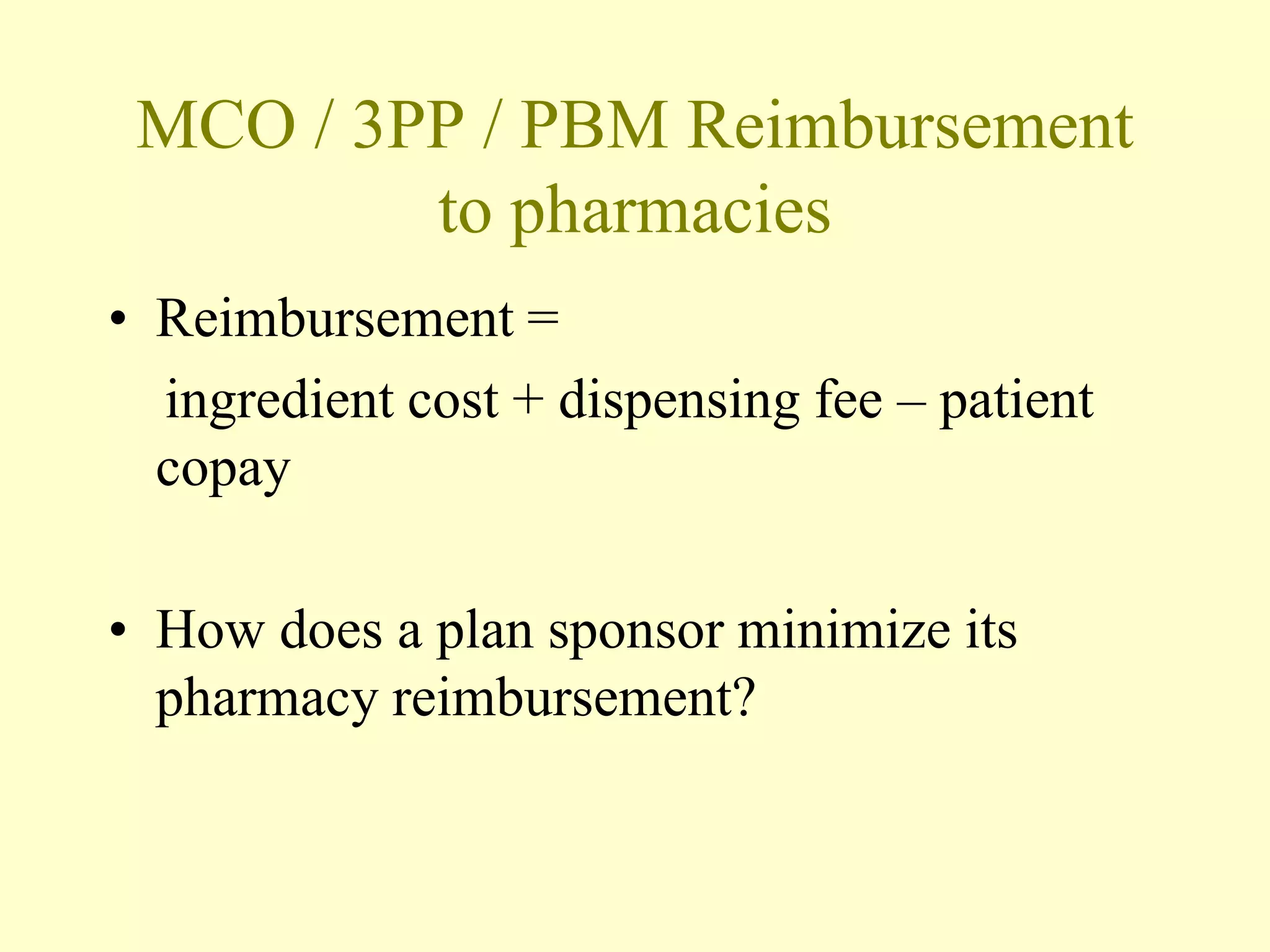
MCO / 3PP / PBM Reimbursement 
to pharmacies 
• Reimbursement = 
ingredient cost + dispensing fee – patient 
copay 
• How does a plan sponsor minimize its 
pharmacy reimbursement?
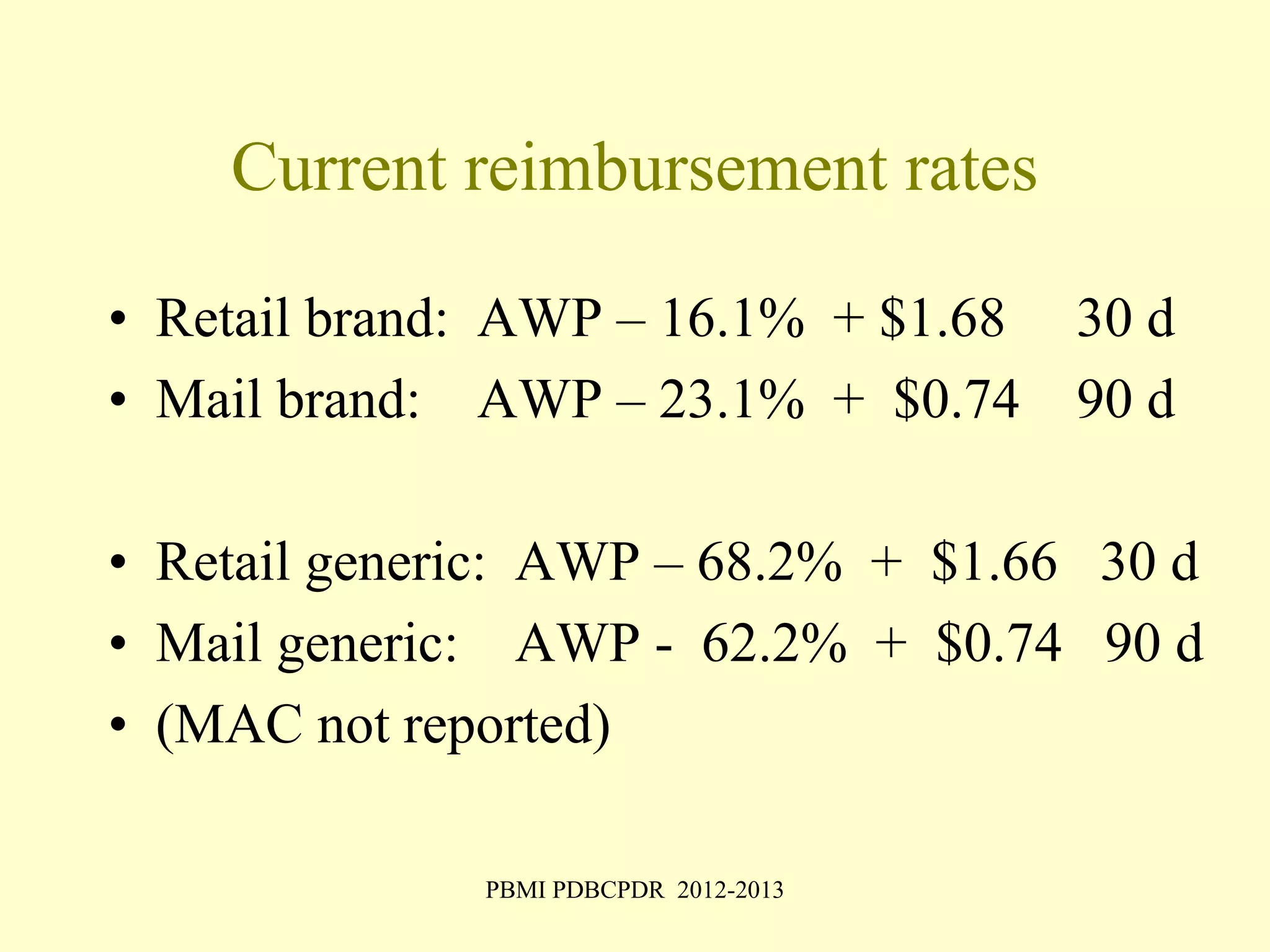
Current reimbursement rates 
• Retail brand: AWP – 16.1% + $1.68 30 d 
• Mail brand: AWP – 23.1% + $0.74 90 d 
• Retail generic: AWP – 68.2% + $1.66 30 d 
• Mail generic: AWP - 62.2% + $0.74 90 d 
• (MAC not reported) 
PBMI PDBCPDR 2012-2013
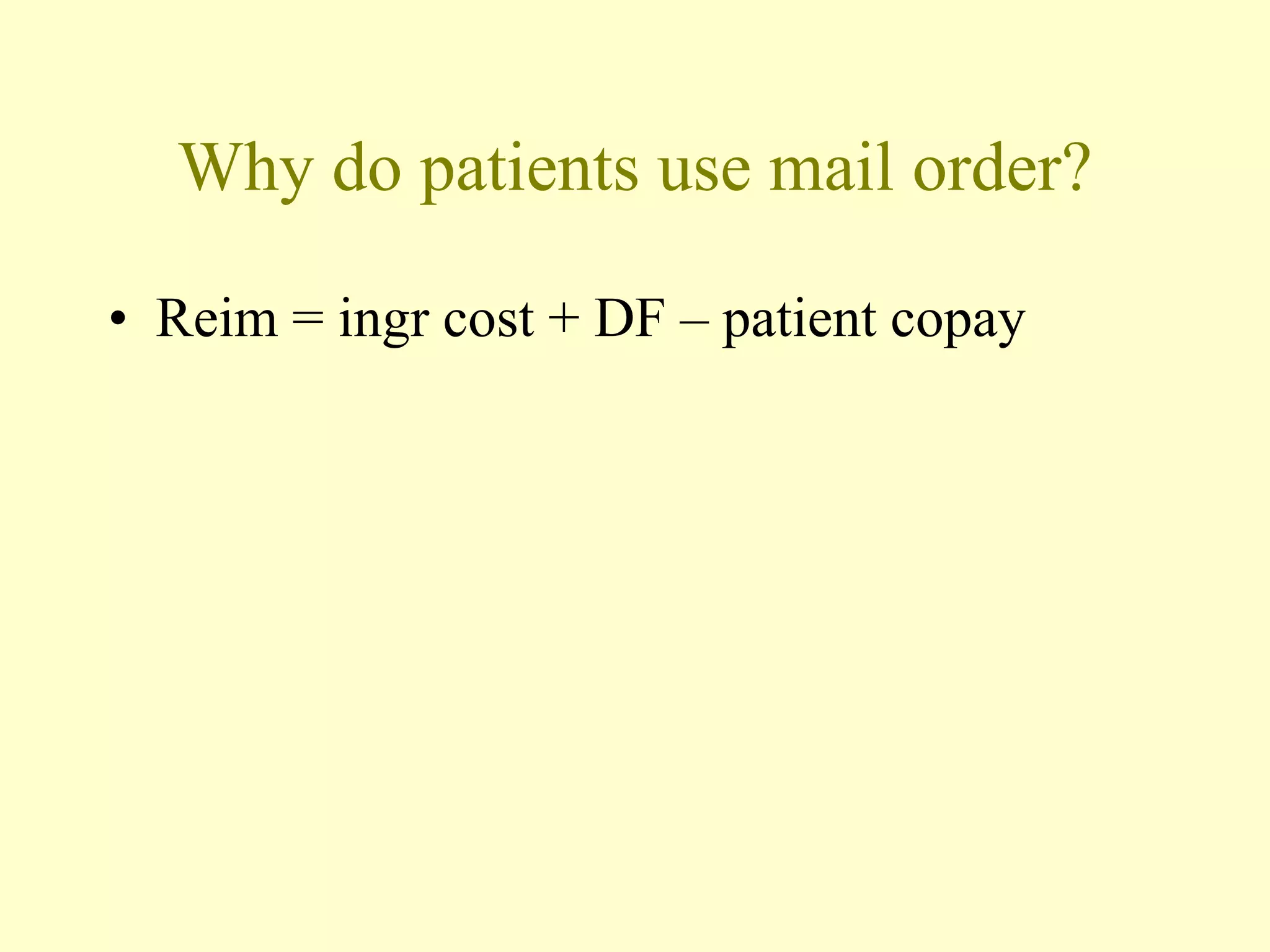
Why do patients use mail order? 
• Reim = ingr cost + DF – patient copay
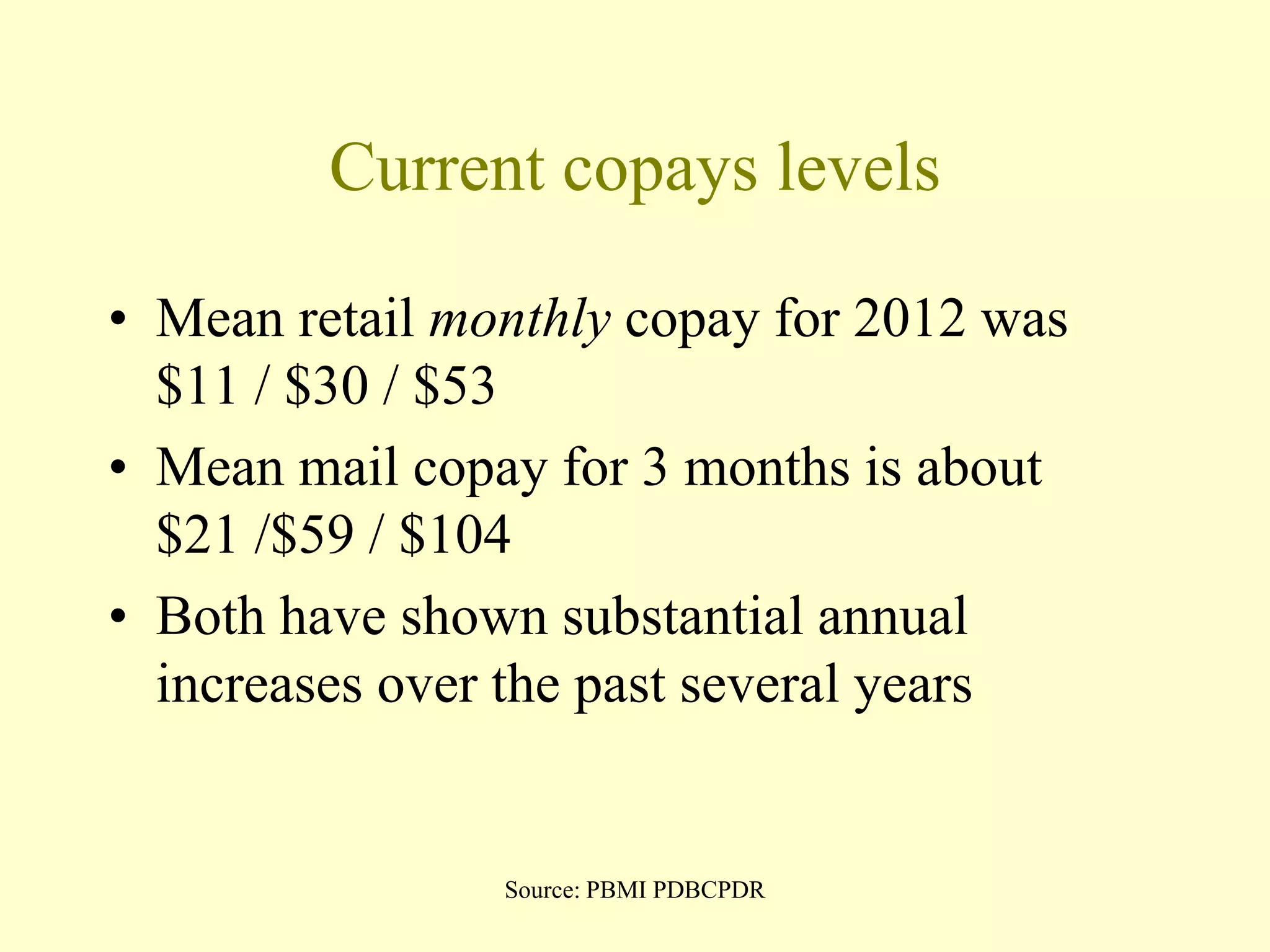
Current copays levels 
• Mean retail monthly copay for 2012 was 
$11 / $30 / $53 
• Mean mail copay for 3 months is about 
$21 /$59 / $104 
• Both have shown substantial annual 
increases over the past several years 
Source: PBMI PDBCPDR
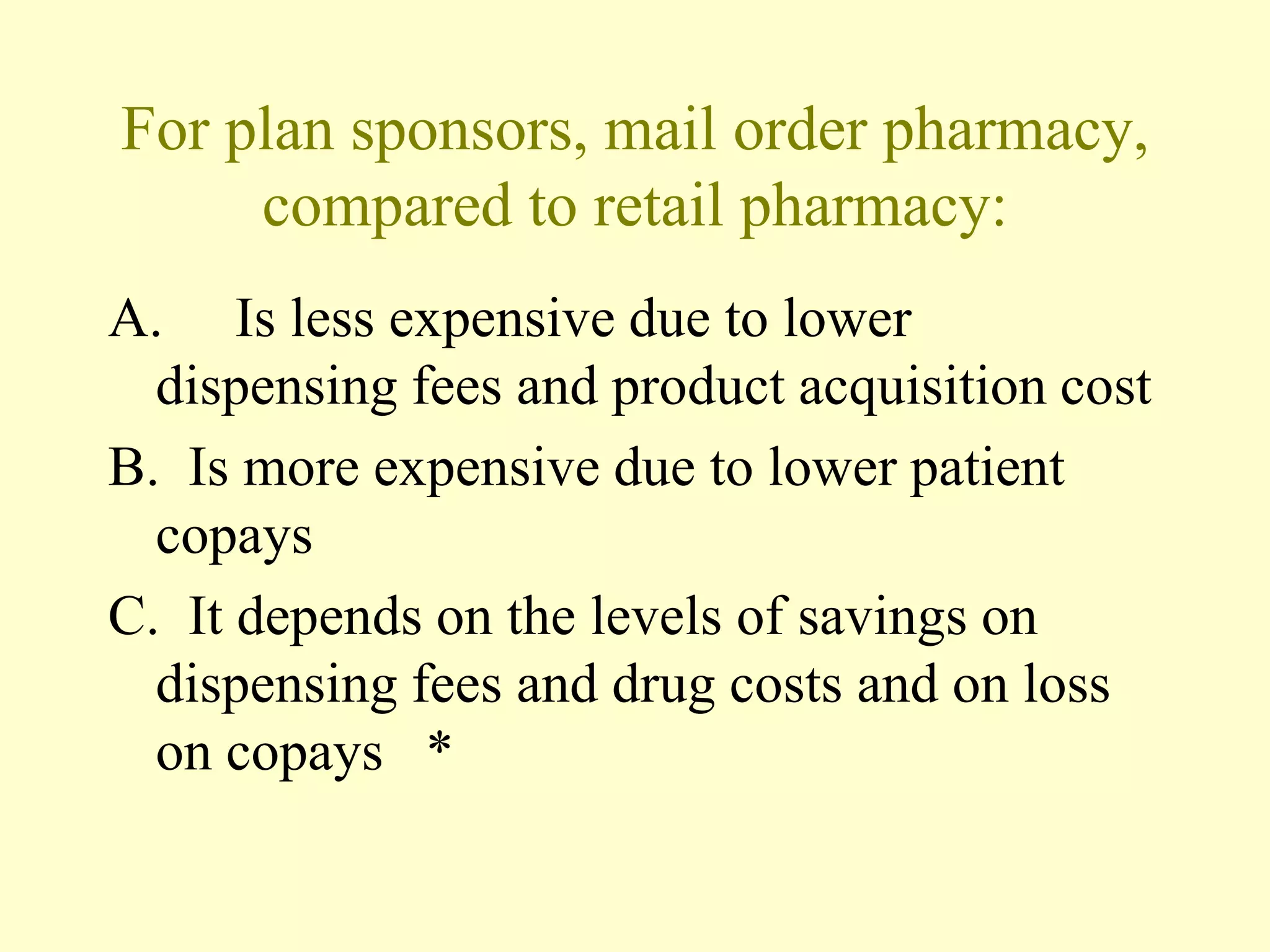
For plan sponsors, mail order pharmacy, 
compared to retail pharmacy: 
A. Is less expensive due to lower 
dispensing fees and product acquisition cost 
B. Is more expensive due to lower patient 
copays 
C. It depends on the levels of savings on 
dispensing fees and drug costs and on loss 
on copays *
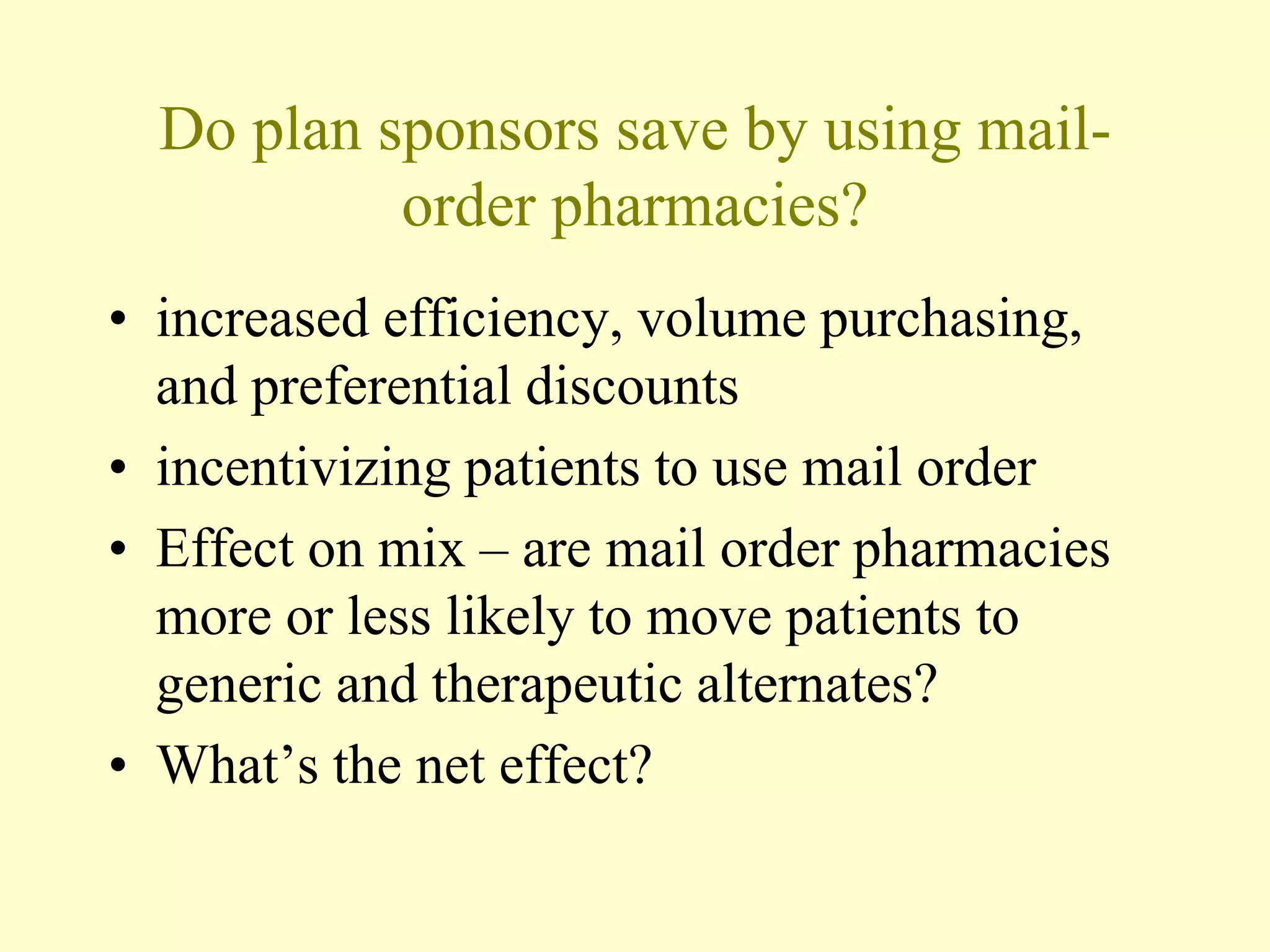
Do plan sponsors save by using mail-order 
pharmacies? 
• increased efficiency, volume purchasing, 
and preferential discounts 
• incentivizing patients to use mail order 
• Effect on mix – are mail order pharmacies 
more or less likely to move patients to 
generic and therapeutic alternates? 
• What’s the net effect?
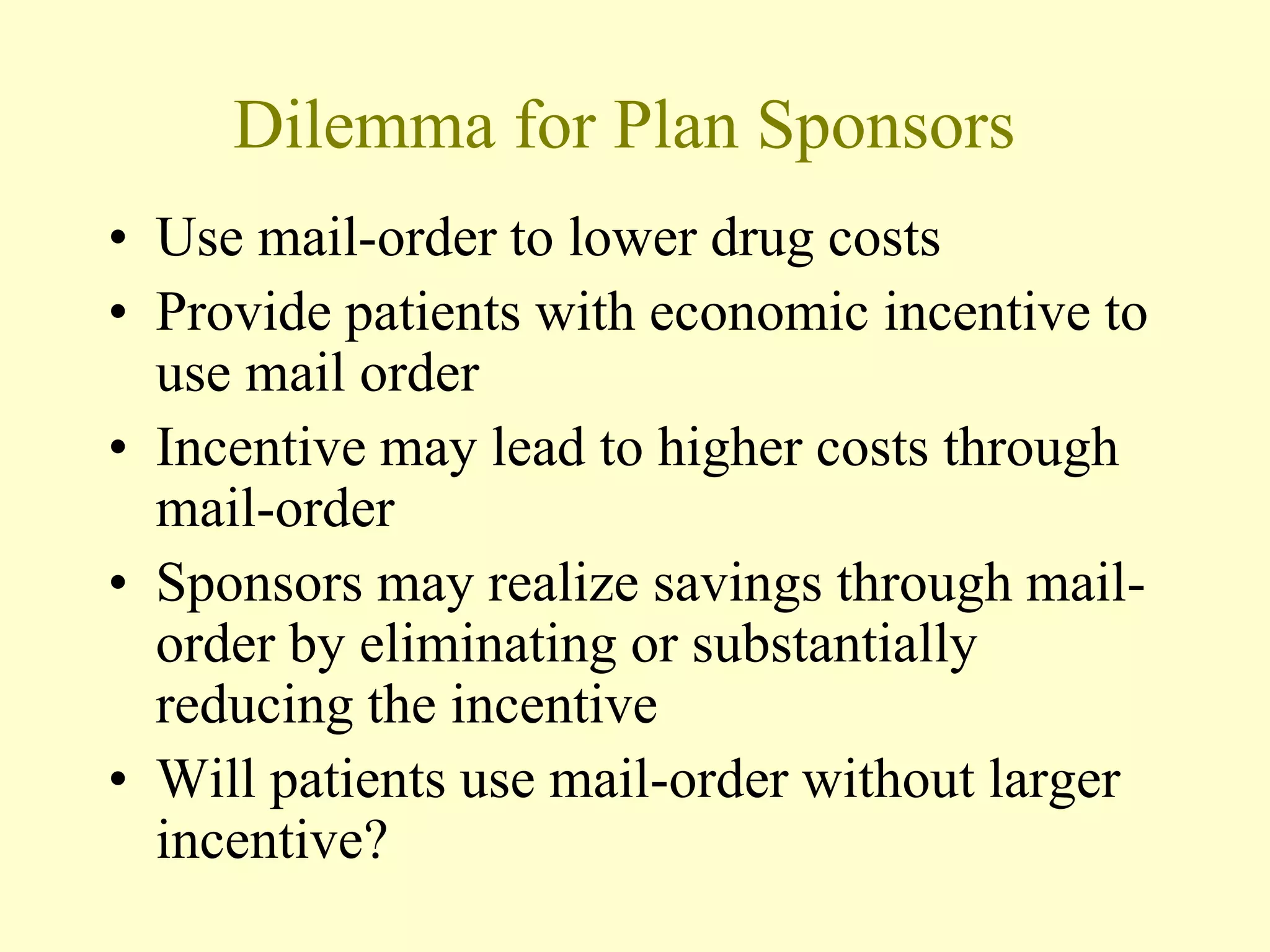
Dilemma for Plan Sponsors 
• Use mail-order to lower drug costs 
• Provide patients with economic incentive to 
use mail order 
• Incentive may lead to higher costs through 
mail-order 
• Sponsors may realize savings through mail-order 
by eliminating or substantially 
reducing the incentive 
• Will patients use mail-order without larger 
incentive?
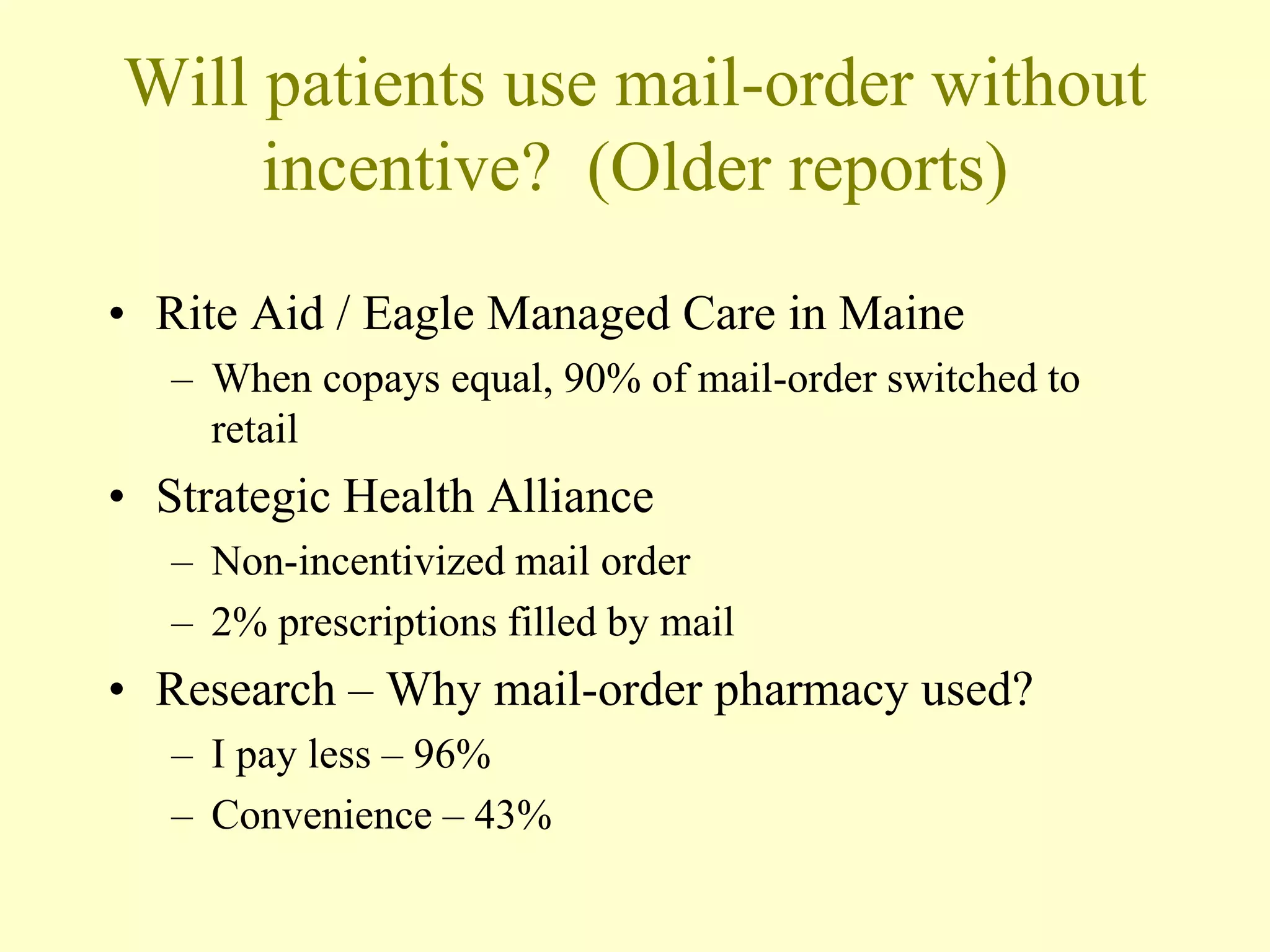
Will patients use mail-order without 
incentive? (Older reports) 
• Rite Aid / Eagle Managed Care in Maine 
– When copays equal, 90% of mail-order switched to 
retail 
• Strategic Health Alliance 
– Non-incentivized mail order 
– 2% prescriptions filled by mail 
• Research – Why mail-order pharmacy used? 
– I pay less – 96% 
– Convenience – 43%
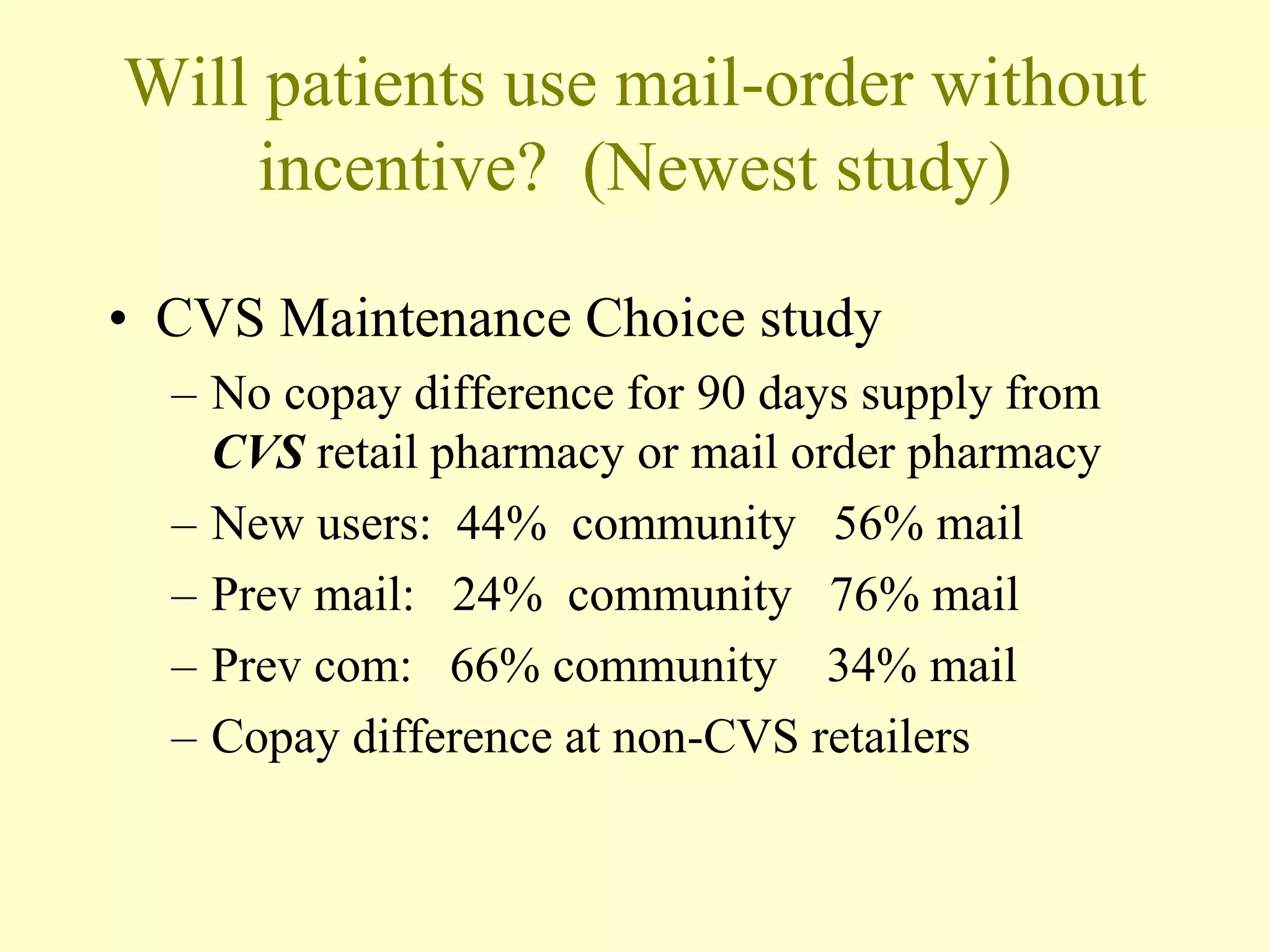
Will patients use mail-order without 
incentive? (Newest study) 
• CVS Maintenance Choice study 
– No copay difference for 90 days supply from 
CVS retail pharmacy or mail order pharmacy 
– New users: 44% community 56% mail 
– Prev mail: 24% community 76% mail 
– Prev com: 66% community 34% mail 
– Copay difference at non-CVS retailers
Would you expect to find higher or lower 
adherence from mail order pharmacies? 
A. Lower – lack of face to face contact 
B. Higher – 90 day supplies of medication 
C. Higher – adherence usually measured as 
quantity on hand rather than quantity 
actually taken 
D. B and C
Adherence higher with mail? 
• 90 day supply difference 
– Farley et al in Health Affairs 
• AJMC Kaiser N Calif Study 
– Adherence higher at mail 
– Most got 100 d supplies 
• adherence or waste?

Mail and retail networks 2014

  • 1.
    Retail and Mail-orderNetworks Norman V. Carroll VCU School of Pharmacy
  • 2.
    Objectives • Listand discuss advantages and disadvantages of mail order pharmacy for patients • List and discuss reasons that mail order pharmacies should be less expensive than retail pharmacies • List reasons that mail order pharmacies should be more expensive than retail pharmacies • Discuss reasons that patients use mail order pharmacies • List and discuss ways that mail order pharmacy may affect patient adherence
  • 3.
    Structure of DrugBenefits Industry Insurer / Plan Sponsor PBM Drug Manfs Mail Order Pharmacy Retail Pharmacies hires Rebate contract Own / contract to dispense rxs contract to dispense rxs
  • 4.
    Video of mailorder pharmacy • http://www.uhc.com/pharmacy/learning_ce nter/optumrx_mail_service_facility.htm
  • 5.
    Advantages and Disadvantagesof Mail Order Pharmacy • Advantages: • Disadvantages:
  • 6.
    Advantages and Disadvantagesof Mail Order Pharmacy • Advantages: – More efficient dispensing – Lower error rates – 24 hour help lines • Disadvantages: – Only maintenance medications – Time lag for getting prescriptions to patients – Decreased face-to-face contact with pharmacists
  • 7.
    Why should mailorder pharmacy be less expensive that retail? A. Mail order pharmacies are more efficient at dispensing prescriptions B. Mail order pharmacies benefit from volume purchasing discounts C. Mail order pharmacies get bigger discounts on patented, branded drugs than retailers D. All of the above * E. A and B only
  • 8.
    MCO / 3PP/ PBM Reimbursement to pharmacies • Reimbursement = ingredient cost + dispensing fee – patient copay • How does a plan sponsor minimize its pharmacy reimbursement?
  • 9.
    Current reimbursement rates • Retail brand: AWP – 16.1% + $1.68 30 d • Mail brand: AWP – 23.1% + $0.74 90 d • Retail generic: AWP – 68.2% + $1.66 30 d • Mail generic: AWP - 62.2% + $0.74 90 d • (MAC not reported) PBMI PDBCPDR 2012-2013
  • 10.
    Why do patientsuse mail order? • Reim = ingr cost + DF – patient copay
  • 11.
    Current copays levels • Mean retail monthly copay for 2012 was $11 / $30 / $53 • Mean mail copay for 3 months is about $21 /$59 / $104 • Both have shown substantial annual increases over the past several years Source: PBMI PDBCPDR
  • 12.
    For plan sponsors,mail order pharmacy, compared to retail pharmacy: A. Is less expensive due to lower dispensing fees and product acquisition cost B. Is more expensive due to lower patient copays C. It depends on the levels of savings on dispensing fees and drug costs and on loss on copays *
  • 13.
    Do plan sponsorssave by using mail-order pharmacies? • increased efficiency, volume purchasing, and preferential discounts • incentivizing patients to use mail order • Effect on mix – are mail order pharmacies more or less likely to move patients to generic and therapeutic alternates? • What’s the net effect?
  • 14.
    Dilemma for PlanSponsors • Use mail-order to lower drug costs • Provide patients with economic incentive to use mail order • Incentive may lead to higher costs through mail-order • Sponsors may realize savings through mail-order by eliminating or substantially reducing the incentive • Will patients use mail-order without larger incentive?
  • 15.
    Will patients usemail-order without incentive? (Older reports) • Rite Aid / Eagle Managed Care in Maine – When copays equal, 90% of mail-order switched to retail • Strategic Health Alliance – Non-incentivized mail order – 2% prescriptions filled by mail • Research – Why mail-order pharmacy used? – I pay less – 96% – Convenience – 43%
  • 16.
    Will patients usemail-order without incentive? (Newest study) • CVS Maintenance Choice study – No copay difference for 90 days supply from CVS retail pharmacy or mail order pharmacy – New users: 44% community 56% mail – Prev mail: 24% community 76% mail – Prev com: 66% community 34% mail – Copay difference at non-CVS retailers
  • 17.
    Would you expectto find higher or lower adherence from mail order pharmacies? A. Lower – lack of face to face contact B. Higher – 90 day supplies of medication C. Higher – adherence usually measured as quantity on hand rather than quantity actually taken D. B and C
  • 18.
    Adherence higher withmail? • 90 day supply difference – Farley et al in Health Affairs • AJMC Kaiser N Calif Study – Adherence higher at mail – Most got 100 d supplies • adherence or waste?