1
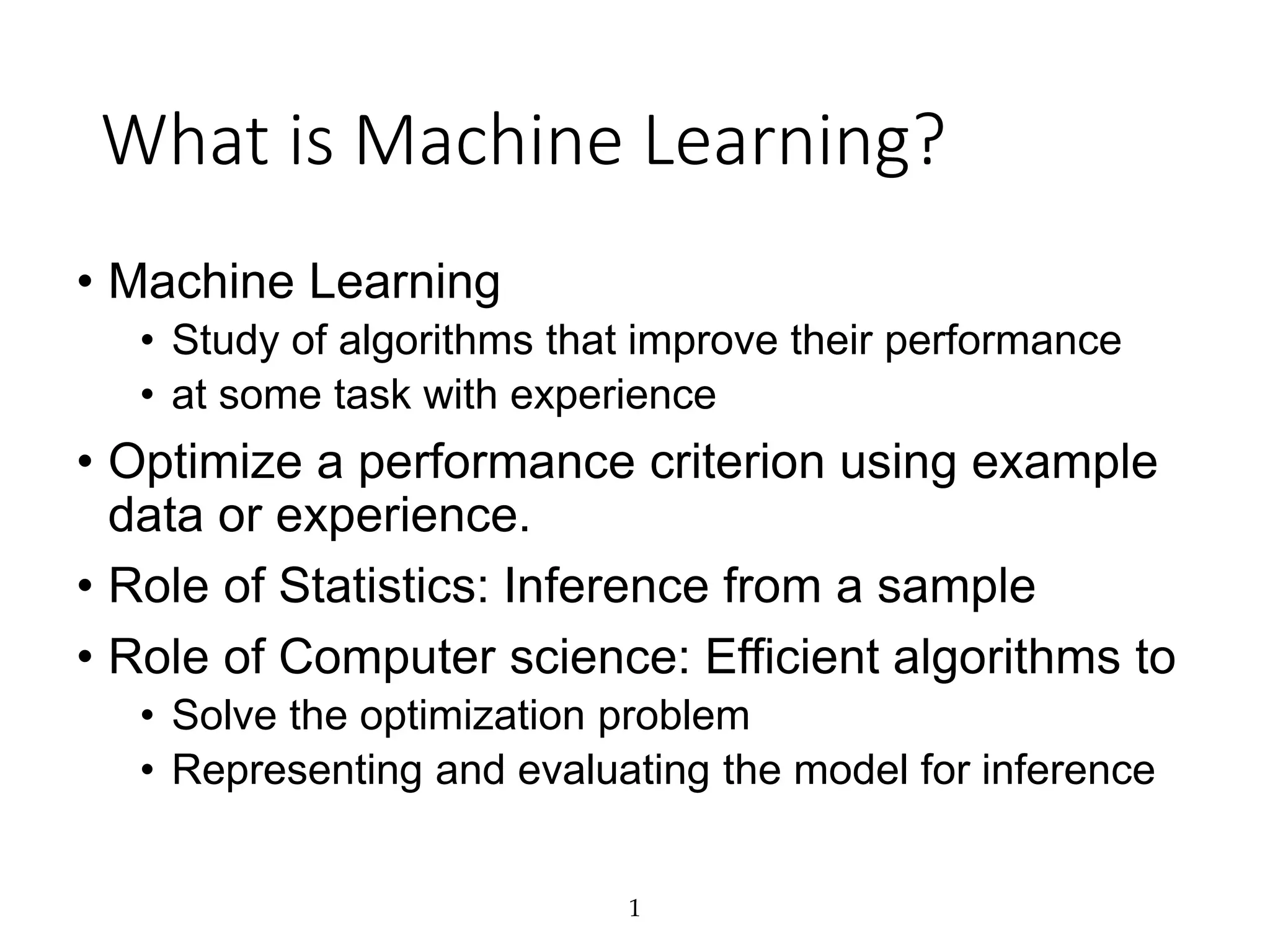
What is Machine Learning?
• Machine Learning
• Study of algorithms that improve their performance
• at some task with experience
• Optimize a performance criterion using example
data or experience.
• Role of Statistics: Inference from a sample
• Role of Computer science: Efficient algorithms to
• Solve the optimization problem
• Representing and evaluating the model for inference
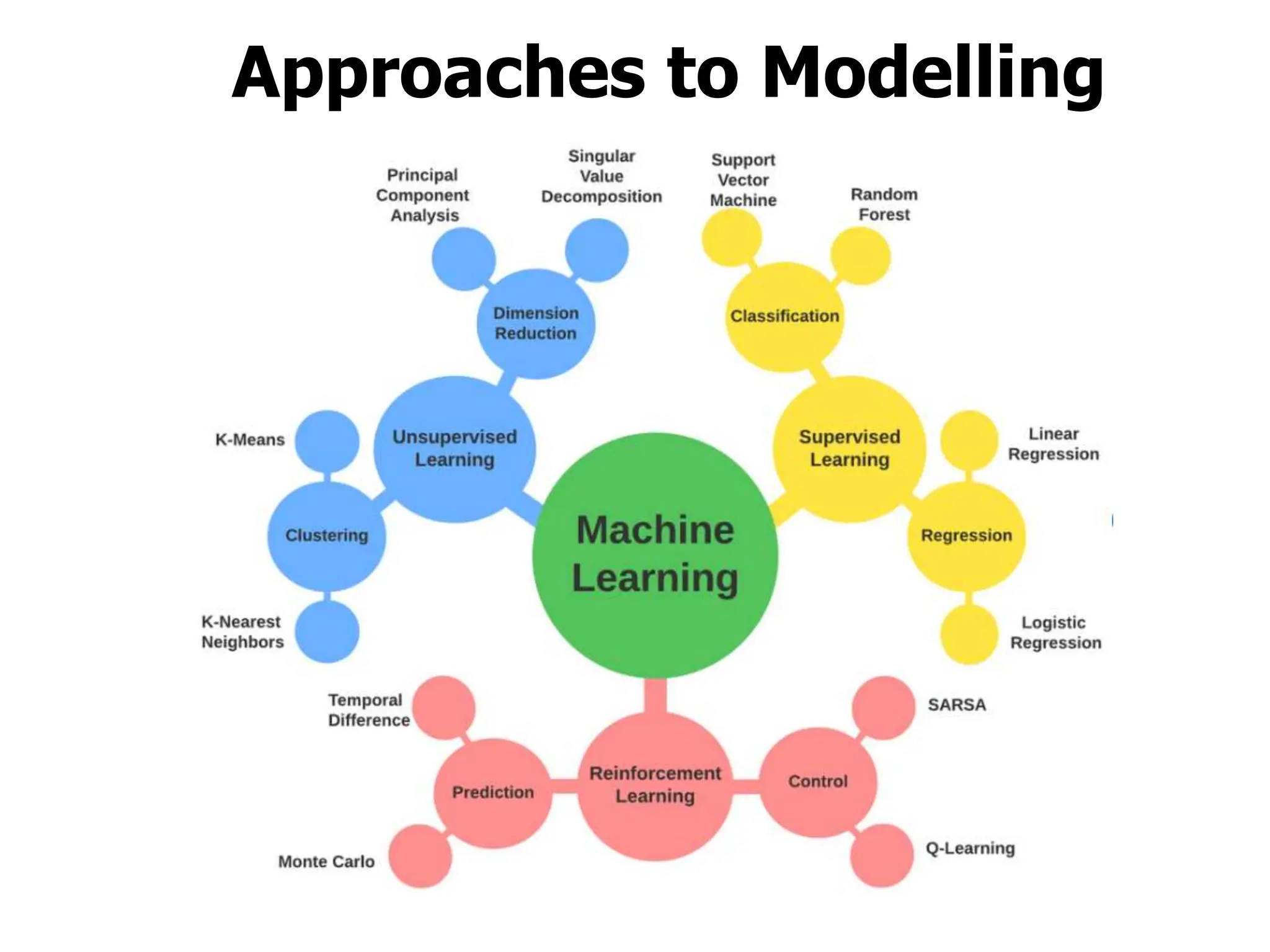
Approaches to Modelling
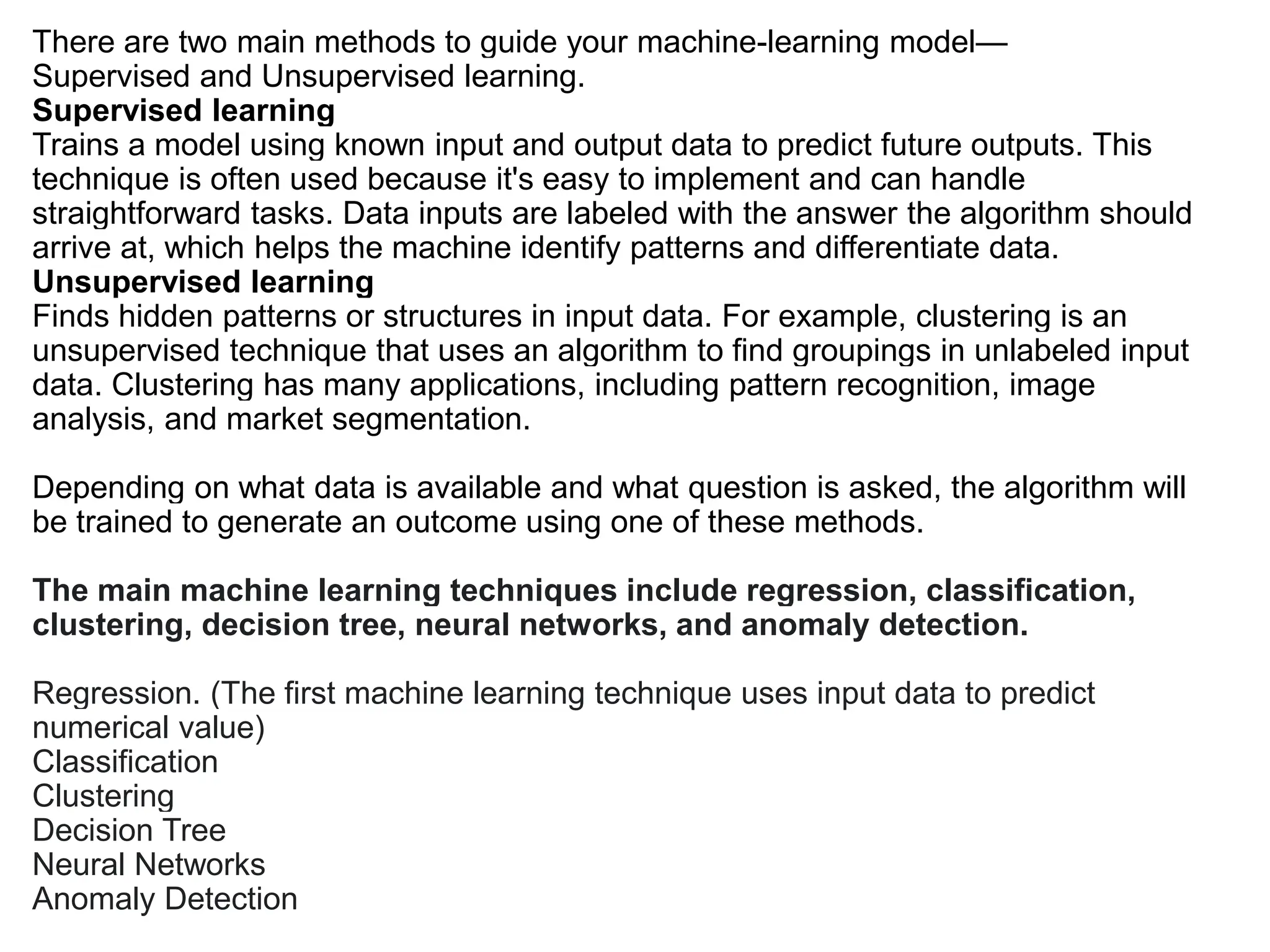
There are two main methods to guide your machine-learning model—
Supervised and Unsupervised learning.
Supervised learning
Trains a model using known input and output data to predict future outputs. This
technique is often used because it's easy to implement and can handle
straightforward tasks. Data inputs are labeled with the answer the algorithm should
arrive at, which helps the machine identify patterns and differentiate data.
Unsupervised learning
Finds hidden patterns or structures in input data. For example, clustering is an
unsupervised technique that uses an algorithm to find groupings in unlabeled input
data. Clustering has many applications, including pattern recognition, image
analysis, and market segmentation.
Depending on what data is available and what question is asked, the algorithm will
be trained to generate an outcome using one of these methods.
The main machine learning techniques include regression, classification,
clustering, decision tree, neural networks, and anomaly detection.
Regression. (The first machine learning technique uses input data to predict
numerical value)
Classification
Clustering
Decision Tree
Neural Networks
Anomaly Detection
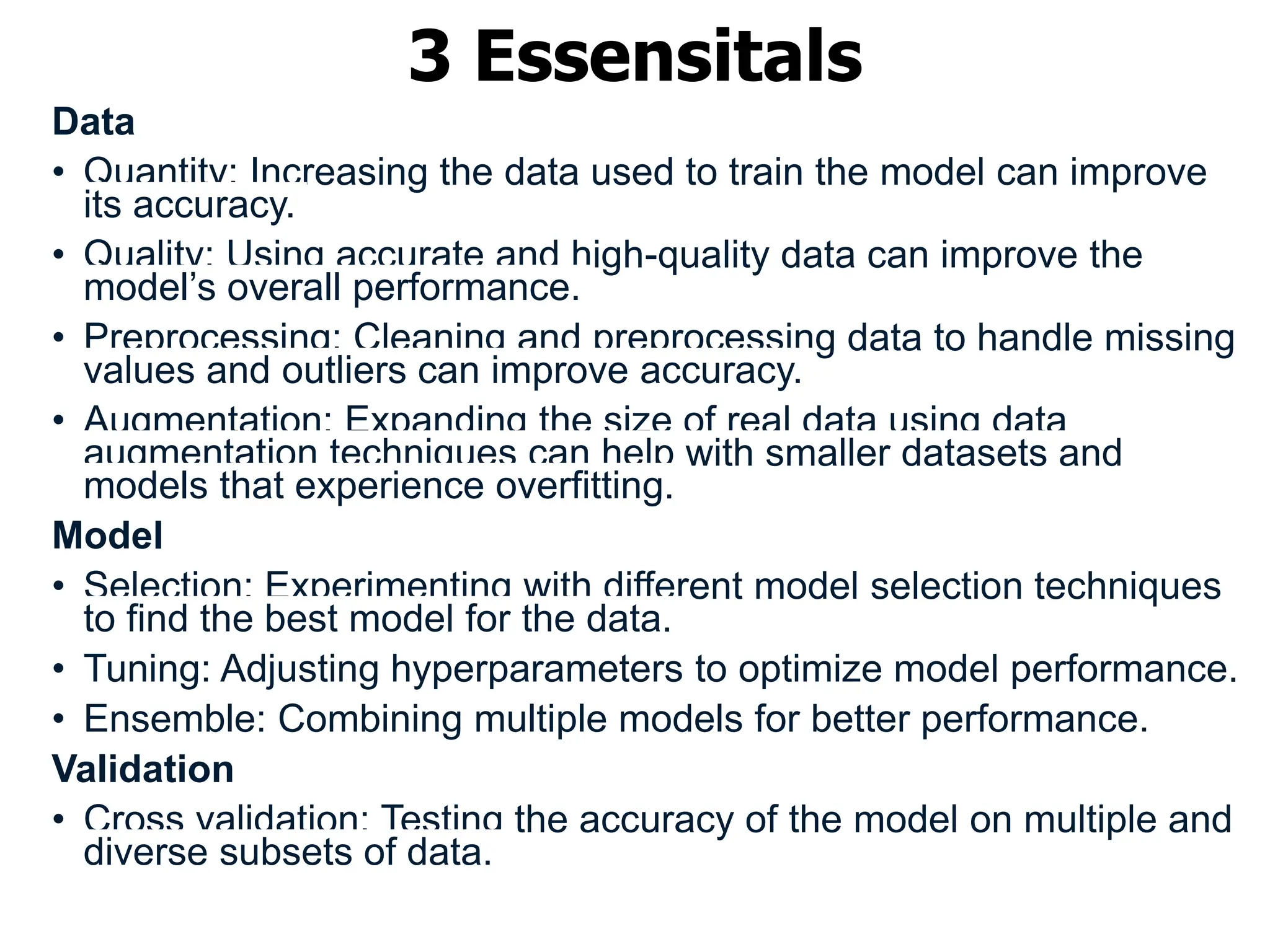
3 Essensitals
Data
• Quantity: Increasing the data used to train the model can improve
its accuracy.
• Quality: Using accurate and high-quality data can improve the
model’s overall performance.
• Preprocessing: Cleaning and preprocessing data to handle missing
values and outliers can improve accuracy.
• Augmentation: Expanding the size of real data using data
augmentation techniques can help with smaller datasets and
models that experience overfitting.
Model
• Selection: Experimenting with different model selection techniques
to find the best model for the data.
• Tuning: Adjusting hyperparameters to optimize model performance.
• Ensemble: Combining multiple models for better performance.
Validation
• Cross validation: Testing the accuracy of the model on multiple and
diverse subsets of data.
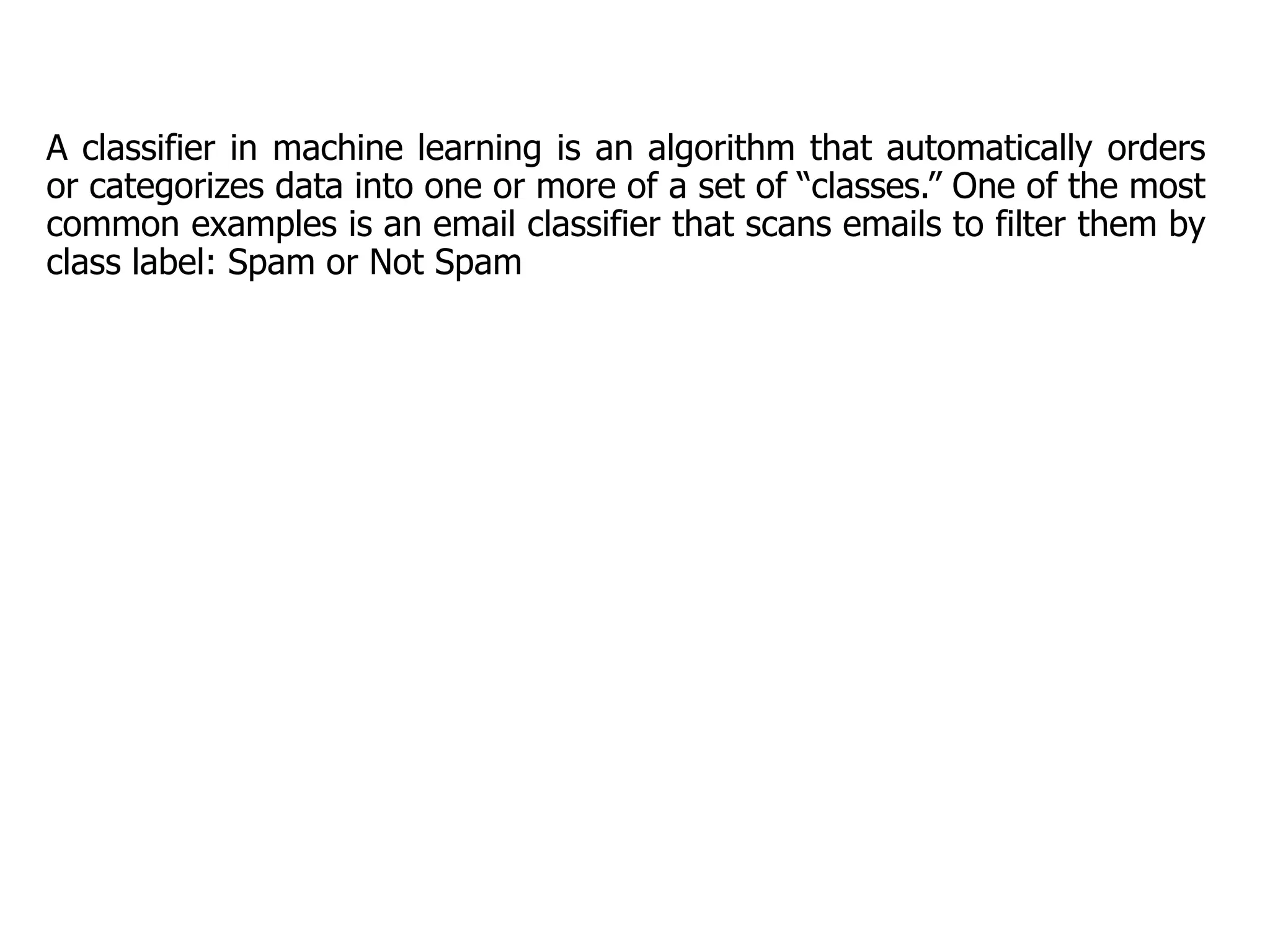
A classifier in machine learning is an algorithm that automatically orders
or categorizes data into one or more of a set of “classes.” One of the most
common examples is an email classifier that scans emails to filter them by
class label: Spam or Not Spam

Machine Learning Essentials and Fundamentals.pptx

  • 1.
    1 What is MachineLearning? • Machine Learning • Study of algorithms that improve their performance • at some task with experience • Optimize a performance criterion using example data or experience. • Role of Statistics: Inference from a sample • Role of Computer science: Efficient algorithms to • Solve the optimization problem • Representing and evaluating the model for inference
  • 3.
  • 4.
    There are twomain methods to guide your machine-learning model— Supervised and Unsupervised learning. Supervised learning Trains a model using known input and output data to predict future outputs. This technique is often used because it's easy to implement and can handle straightforward tasks. Data inputs are labeled with the answer the algorithm should arrive at, which helps the machine identify patterns and differentiate data. Unsupervised learning Finds hidden patterns or structures in input data. For example, clustering is an unsupervised technique that uses an algorithm to find groupings in unlabeled input data. Clustering has many applications, including pattern recognition, image analysis, and market segmentation. Depending on what data is available and what question is asked, the algorithm will be trained to generate an outcome using one of these methods. The main machine learning techniques include regression, classification, clustering, decision tree, neural networks, and anomaly detection. Regression. (The first machine learning technique uses input data to predict numerical value) Classification Clustering Decision Tree Neural Networks Anomaly Detection
  • 5.
    3 Essensitals Data • Quantity:Increasing the data used to train the model can improve its accuracy. • Quality: Using accurate and high-quality data can improve the model’s overall performance. • Preprocessing: Cleaning and preprocessing data to handle missing values and outliers can improve accuracy. • Augmentation: Expanding the size of real data using data augmentation techniques can help with smaller datasets and models that experience overfitting. Model • Selection: Experimenting with different model selection techniques to find the best model for the data. • Tuning: Adjusting hyperparameters to optimize model performance. • Ensemble: Combining multiple models for better performance. Validation • Cross validation: Testing the accuracy of the model on multiple and diverse subsets of data.
  • 6.
    A classifier inmachine learning is an algorithm that automatically orders or categorizes data into one or more of a set of “classes.” One of the most common examples is an email classifier that scans emails to filter them by class label: Spam or Not Spam