Welcome!
   Language Arts


Ms. Marek
Thursday-Friday, January 26-27,
2012
Independent Reading

      Retrieve your library book


 READ READ READ READ
    READ READ READ
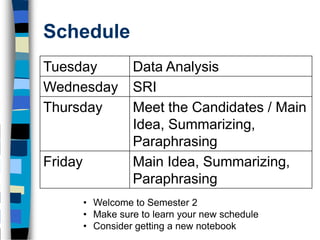
Schedule
Tuesday            Data Analysis
Wednesday          SRI
Thursday           Meet the Candidates / Main
                   Idea, Summarizing,
                   Paraphrasing
Friday             Main Idea, Summarizing,
                   Paraphrasing
         • Welcome to Semester 2
         • Make sure to learn your new schedule
         • Consider getting a new notebook
OBJECTIVE


            SWBAT determine
            main idea in a text or
            selection of text.

            SWBAT summarize
            and paraphrase text or
            selection of text.
Think*Write*Share*

 What do you know about the election?
 Some sample questions for you to
  consider as you are writing what you
  know …
    – Who is running?
    – Who is in the lead?
    – How do our elections work?
    – What are these primary elections all
      about?
Important Vocabulary
    You will have a quiz next FRIDAY – February 3

   campaign: the competition for public office
   candidate: a person who seeks office
   caucus: an early statewide meeting where members
    of a political party select delegates to support their
    favorite candidates
   convention: a big meeting in which delegates from a
    political party pick the candidates for President and
    Vice President
   delegate: a person given power or authority to act for
    others; a representative
Important Vocabulary
    You will have a quiz next FRIDAY – February 3

   front-runner: a candidate who is thought to be in the
    lead
   nominee: a person chosen by a political party to be a
    candidate
   political party: an organized group of voters with
    similar ideas and goals for a country and its
    government. The two main parties in the U.S. are the
    Republican Party and the Democratic Party.
   polls: surveys of specific groups; places where
    people vote
   primary: an early, statewide election in which voters
    choose their favorite candidates
Let’s Meet the Candidates
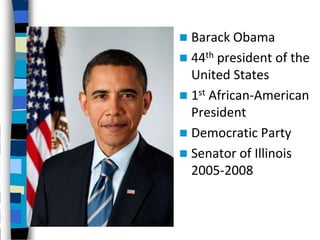
 Barack Obama
 44th president of the
  United States
 1st African-American
  President
 Democratic Party
 Senator of Illinois
  2005-2008
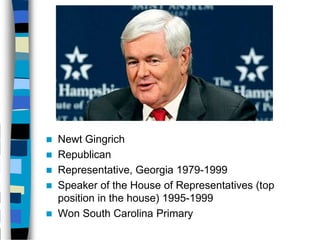
   Newt Gingrich
   Republican
   Representative, Georgia 1979-1999
   Speaker of the House of Representatives (top
    position in the house) 1995-1999
   Won South Carolina Primary
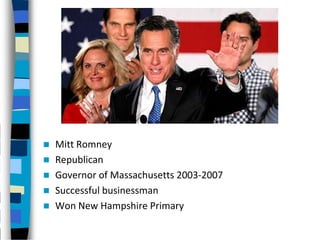
   Mitt Romney
   Republican
   Governor of Massachusetts 2003-2007
   Successful businessman
   Won New Hampshire Primary
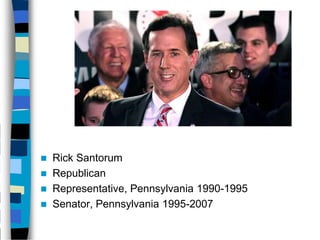
   Rick Santorum
   Republican
   Representative, Pennsylvania 1990-1995
   Senator, Pennsylvania 1995-2007
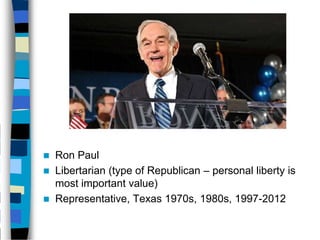
   Ron Paul
   Libertarian (type of Republican – personal liberty is
    most important value)
   Representative, Texas 1970s, 1980s, 1997-2012
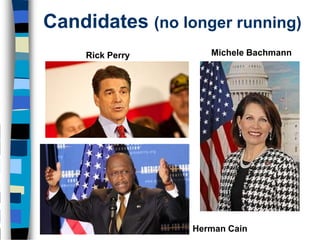
Candidates (no longer running)
    Rick Perry      Michele Bachmann


                 Herman Cain
Summarizing vs Paraphrasing

 Indicator 2.A.4.d – 31% Basic
 Paraphrasing – taking a section of text and
  restating it in your own words
 Summarizing - telling the main idea or
  selection of events in your own words
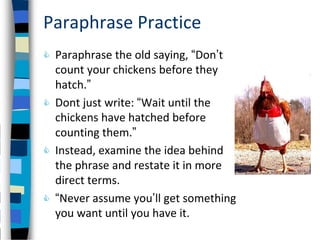
Paraphrase Practice
 Paraphrase the old saying, “Don’t
  count your chickens before they
  hatch.”
 Dont just write: “Wait until the
  chickens have hatched before
  counting them.”
 Instead, examine the idea behind
  the phrase and restate it in more
  direct terms.
 “Never assume you’ll get something
  you want until you have it.
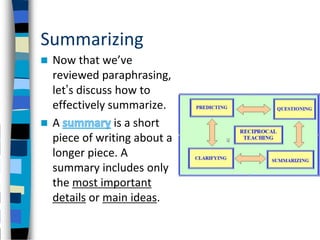
Summarizing
 Now that we’ve
  reviewed paraphrasing,
  let’s discuss how to
  effectively summarize.
 A             is a short
  piece of writing about a
  longer piece. A
  summary includes only
  the most important
  details or main ideas.
Summarizing vs Paraphrasing

 Indicator 2.A.4.d – 31% Basic
 What is the difference between
  summarizing and paraphrasing?
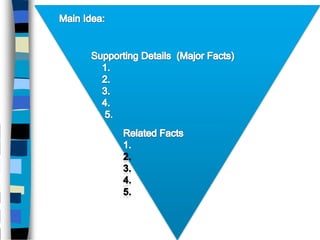
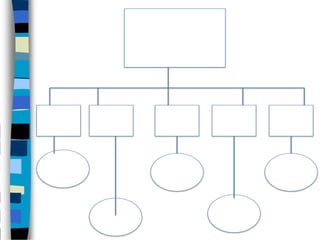
Main Idea


Supporting
  Details


 Related
  Facts
Summarizing
              “Gingrich wins South Carolina”

   Work with a partner to complete a main idea,
    supporting details, related facts chart
   Work independently to write a summary of the article
    on a SEPARATE PIECE OF PAPER!
Homework
   Read a newspaper article about the 2012 election.
    – Must come from a reputable source (New York Times,
      Washington Post, Baltimore Sun, Time Magazine,
      Newsweek)
   Complete a main idea, supporting details, related
    facts chart.
   Complete a 1 paragraph summary of the article.
   Make sure to include the title of the article and where
    you found it.
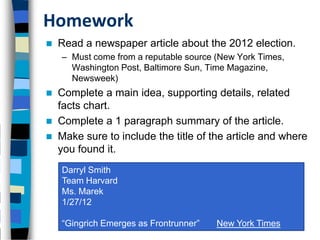
    Darryl Smith
    Team Harvard
    Ms. Marek
    1/27/12

    “Gingrich Emerges as Frontrunner”   New York Times
Weekend Homework

 Candidate Report (1-2 pages)
 Select a candidate running for president
 Find out his / her bibliographic information
  (where was she/he born, what jobs has
  she/her had in the past)
 Determine his / her political beliefs
 Include his / her campaign slogan
REMINDERS

READ READ READ!


Start thinking about a book you
want to read.


READ READ READ!

M. marek dfms lp 70 main idea, paraphrasing, and summarizing

  • 1.
    Welcome! Language Arts Ms. Marek Thursday-Friday, January 26-27, 2012
  • 2.
    Independent Reading Retrieve your library book READ READ READ READ READ READ READ
  • 3.
    Schedule Tuesday Data Analysis Wednesday SRI Thursday Meet the Candidates / Main Idea, Summarizing, Paraphrasing Friday Main Idea, Summarizing, Paraphrasing • Welcome to Semester 2 • Make sure to learn your new schedule • Consider getting a new notebook
  • 4.
    OBJECTIVE SWBAT determine main idea in a text or selection of text. SWBAT summarize and paraphrase text or selection of text.
  • 5.
    Think*Write*Share*  What doyou know about the election?  Some sample questions for you to consider as you are writing what you know … – Who is running? – Who is in the lead? – How do our elections work? – What are these primary elections all about?
  • 6.
    Important Vocabulary You will have a quiz next FRIDAY – February 3  campaign: the competition for public office  candidate: a person who seeks office  caucus: an early statewide meeting where members of a political party select delegates to support their favorite candidates  convention: a big meeting in which delegates from a political party pick the candidates for President and Vice President  delegate: a person given power or authority to act for others; a representative
  • 7.
    Important Vocabulary You will have a quiz next FRIDAY – February 3  front-runner: a candidate who is thought to be in the lead  nominee: a person chosen by a political party to be a candidate  political party: an organized group of voters with similar ideas and goals for a country and its government. The two main parties in the U.S. are the Republican Party and the Democratic Party.  polls: surveys of specific groups; places where people vote  primary: an early, statewide election in which voters choose their favorite candidates
  • 8.
    Let’s Meet theCandidates
  • 9.
     Barack Obama 44th president of the United States  1st African-American President  Democratic Party  Senator of Illinois 2005-2008
  • 10.
    Newt Gingrich  Republican  Representative, Georgia 1979-1999  Speaker of the House of Representatives (top position in the house) 1995-1999  Won South Carolina Primary
  • 11.
    Mitt Romney  Republican  Governor of Massachusetts 2003-2007  Successful businessman  Won New Hampshire Primary
  • 12.
    Rick Santorum  Republican  Representative, Pennsylvania 1990-1995  Senator, Pennsylvania 1995-2007
  • 13.
    Ron Paul  Libertarian (type of Republican – personal liberty is most important value)  Representative, Texas 1970s, 1980s, 1997-2012
  • 14.
    Candidates (no longerrunning) Rick Perry Michele Bachmann Herman Cain
  • 15.
    Summarizing vs Paraphrasing Indicator 2.A.4.d – 31% Basic  Paraphrasing – taking a section of text and restating it in your own words  Summarizing - telling the main idea or selection of events in your own words
  • 16.
    Paraphrase Practice  Paraphrasethe old saying, “Don’t count your chickens before they hatch.”  Dont just write: “Wait until the chickens have hatched before counting them.”  Instead, examine the idea behind the phrase and restate it in more direct terms.  “Never assume you’ll get something you want until you have it.
  • 17.
    Summarizing  Now thatwe’ve reviewed paraphrasing, let’s discuss how to effectively summarize.  A is a short piece of writing about a longer piece. A summary includes only the most important details or main ideas.
  • 18.
    Summarizing vs Paraphrasing Indicator 2.A.4.d – 31% Basic  What is the difference between summarizing and paraphrasing?
  • 20.
    Main Idea Supporting Details Related Facts
  • 21.
    Summarizing “Gingrich wins South Carolina”  Work with a partner to complete a main idea, supporting details, related facts chart  Work independently to write a summary of the article on a SEPARATE PIECE OF PAPER!
  • 22.
    Homework  Read a newspaper article about the 2012 election. – Must come from a reputable source (New York Times, Washington Post, Baltimore Sun, Time Magazine, Newsweek)  Complete a main idea, supporting details, related facts chart.  Complete a 1 paragraph summary of the article.  Make sure to include the title of the article and where you found it. Darryl Smith Team Harvard Ms. Marek 1/27/12 “Gingrich Emerges as Frontrunner” New York Times
  • 23.
    Weekend Homework  CandidateReport (1-2 pages)  Select a candidate running for president  Find out his / her bibliographic information (where was she/he born, what jobs has she/her had in the past)  Determine his / her political beliefs  Include his / her campaign slogan
  • 24.
    REMINDERS READ READ READ! Startthinking about a book you want to read. READ READ READ!

Editor's Notes