 http://youtu.be/9xPGQJUsYM0
Lesson 3
11.2.15
By the end of the lesson today you will be able
to …….
1. Identify the benefits and effects of a vacuum
suction treatment
2. Describe how the machine works
3. Describe key contra-indications to treatment
4. Demonstrate treatment to the legs adhering to
health and safety guidelines
5. Locate and name key lymph nodes of the body
6. State the function of the lymphatic system
7. Evaluate own performance
 Oedema
 Vaso-dilation
 Ventouse
 Lymphatic drainage
 Lymph nodes
1. What are the functions of the lymphatic
system?
2. What is the composition of lymph?
3. What structures are within the system?
4. Identify name and location of lymph nodes
of the body
 Print off from diagrams lymph nodes
 Order in birthdays then number 1 2 3 4 and
put in groups to discuss and make notes then
split into new groups to teach others
followed by direct questionning to check
learning
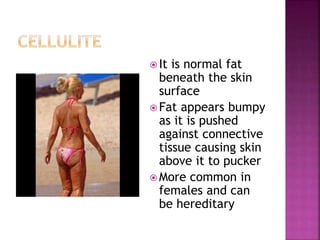
 It is normal fat
beneath the skin
surface
 Fat appears bumpy
as it is pushed
against connective
tissue causing skin
above it to pucker
 More common in
females and can
be hereditary
 Poor diet
 Fad dieting
 Hormonal changes
 Slow metabolism
 Lack of physical
exercise
 Dehydration
 Total body fat
 Thickness and
colour of skin (more
noticeable on paler
skin)
Benefits of treatment
 Helps to improve and
reduce areas of cellulite
 Improves local
accumulation of non
medical oedema
 Reduces fatty deposits
to localised areas
 Helps to reduce fatty
deposits over neck and
shoulder area, such as
in Dowagers hump
1. Lymphatic Blood
 Loose crepey paper skin
 Thin skin
 Broken capillaries
 Varicose veins
 Bruising
 Recent scar tissue
 Overly hair areas
 Complete revision on the lymphatic system
and prepare your dice for after half term

Lp 12.2.15 lp3

  • 1.
  • 2.
  • 3.
    By the endof the lesson today you will be able to ……. 1. Identify the benefits and effects of a vacuum suction treatment 2. Describe how the machine works 3. Describe key contra-indications to treatment 4. Demonstrate treatment to the legs adhering to health and safety guidelines 5. Locate and name key lymph nodes of the body 6. State the function of the lymphatic system 7. Evaluate own performance
  • 4.
     Oedema  Vaso-dilation Ventouse  Lymphatic drainage  Lymph nodes
  • 5.
    1. What arethe functions of the lymphatic system? 2. What is the composition of lymph? 3. What structures are within the system? 4. Identify name and location of lymph nodes of the body
  • 6.
     Print offfrom diagrams lymph nodes
  • 7.
     Order inbirthdays then number 1 2 3 4 and put in groups to discuss and make notes then split into new groups to teach others followed by direct questionning to check learning
  • 9.
     It isnormal fat beneath the skin surface  Fat appears bumpy as it is pushed against connective tissue causing skin above it to pucker  More common in females and can be hereditary
  • 10.
     Poor diet Fad dieting  Hormonal changes  Slow metabolism  Lack of physical exercise  Dehydration  Total body fat  Thickness and colour of skin (more noticeable on paler skin)
  • 11.
    Benefits of treatment Helps to improve and reduce areas of cellulite  Improves local accumulation of non medical oedema  Reduces fatty deposits to localised areas  Helps to reduce fatty deposits over neck and shoulder area, such as in Dowagers hump
  • 12.
  • 13.
     Loose crepeypaper skin  Thin skin  Broken capillaries  Varicose veins  Bruising  Recent scar tissue  Overly hair areas
  • 15.
     Complete revisionon the lymphatic system and prepare your dice for after half term