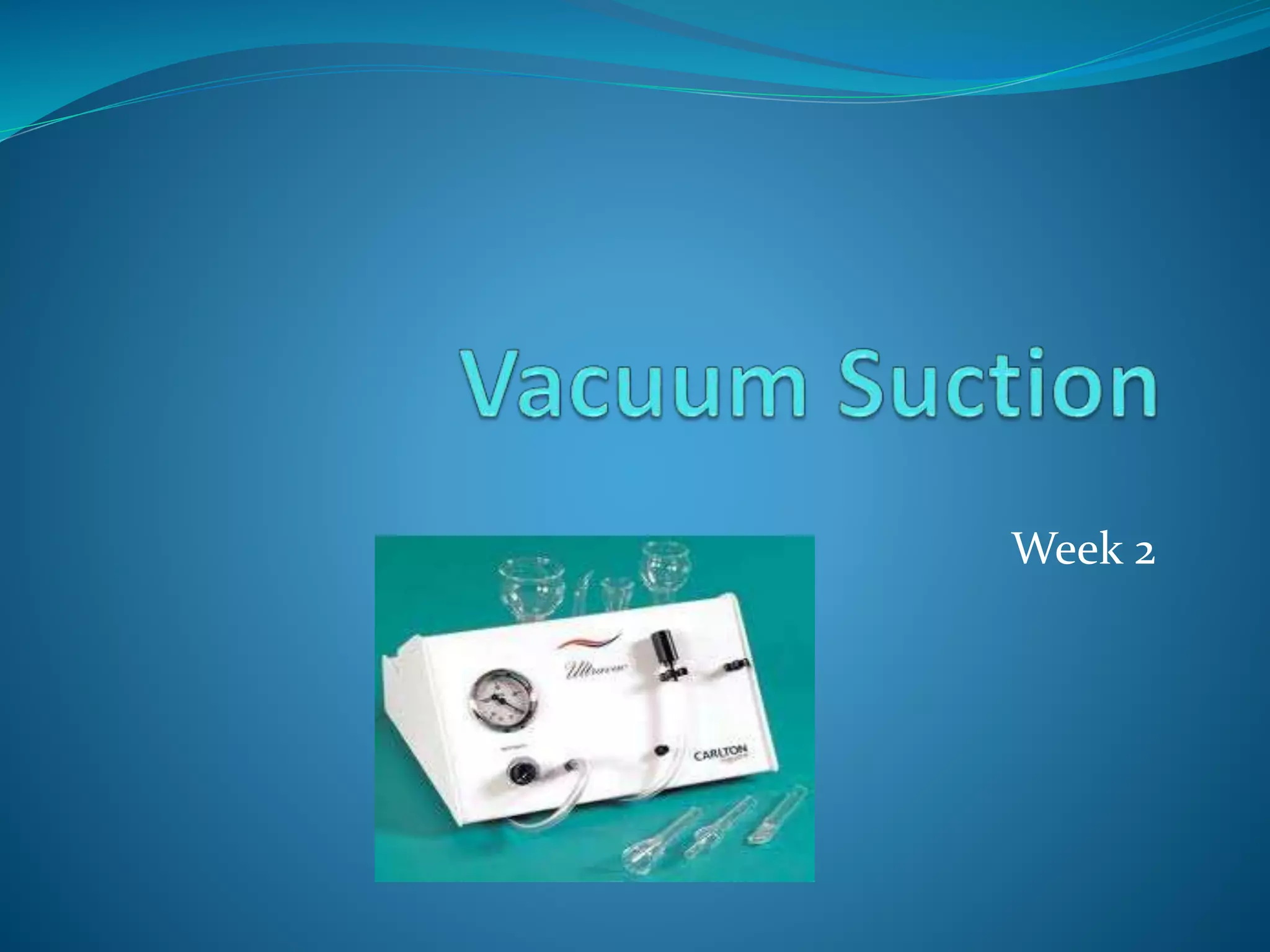
Week 2
Objectives of the Session
 Describe the functions of the lymphatic system
 List components of lymph
 Identify contra indications, benefits and effects of
vacuum suction
 Demonstrate vacuum suction to the arms and chest
 State consultation questioning techniques
 Compare postural problems
Your lymphatic questions
1. What are the structures that make-up the lymphatic
system?
2. What is lymph?
3. What journey will lymph take through the structures?
4. What are the main functions of the lymphatic system?
5. What are the main lymph nodes of the body called and
where are they located?
6. What is contained within the lymph nodes?
7. Which direction does lymph travel around the body?
8. What is the spleen and what role does it play within the
lymphatic system?
9. Name a condition associated with the lymphatic system
Lymphatic System
1. What are the structures that make-up the lymphatic
system?
Lymphatic capillaries, vessels, nodes and ducts
2. What is lymph?
Straw coloured fluid which originates from blood.
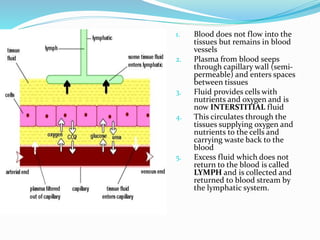
1. Blood does not flow into the
tissues but remains in blood
vessels
2. Plasma from blood seeps
through capillary wall (semi-
permeable) and enters spaces
between tissues
3. Fluid provides cells with
nutrients and oxygen and is
now INTERSTITIAL fluid
4. This circulates through the
tissues supplying oxygen and
nutrients to the cells and
carrying waste back to the
blood
5. Excess fluid which does not
return to the blood is called
LYMPH and is collected and
returned to blood stream by
the lymphatic system.
1. What journey will lymph take through the
structures?
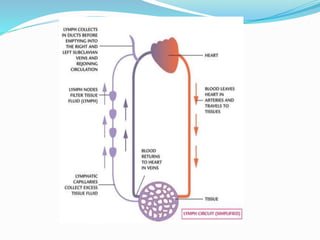
Lymph travels from the lymphatic capillaries to the larger
lymphatic vessels. It will then pass through lymphatic
nodes which are situated around the body at sites of
greater risk of infection. After passing through at least
one lymph node it will then travel into lymphatic ducts.
These ducts pass lymph back into the circulation where it
becomes part of the blood for the cycle to begin again.
1. What are the main functions of the lymphatic system?
To help fight infection – part of immune system and produces
specialised white blood cells called lymphocytes, which
recognise harmful substances and destroy them.
Distributes fluid in the body – lymphatic vessels can drain as
much as 3 litres of excess fluid daily from tissue spaces
Transports fats – carbohydrates and proteins are passed from
small intestine directly into blood stream. However fats are
passed from small intestine into lymphatic vessels before
entering into the bloodstream.
1. What are the main lymph nodes of the body called and where are they
located?
2. What is contained within the lymph nodes?
Specialised white blood cells called monocytes and lymphocytes.
Monocytes destroy harmful substances by ingesting or eating them and lymphocytes produce
antibodies that stop the growth of bacteria and prevent harm.
1. Which direction does lymph travel around the body?
It is a one way system always towards the heart, relying on muscular contraction for
movement
1. What is the spleen?
The spleen consists of lymph tissue and is part of the system. It is found on the left hand side
of the abdomen behind the stomach. It is a reservoir for blood and if blood is urgently
required anywhere in the body due to injury, it will be used. Lymphocytes are also produced
here and it is also a filter for old worn out blood cells where they are destroyed.
1. Name a condition associated with the lymphatic system
Oedema and Hodgkins disease
Consultations for Body treatments
Questions to ask but how do they
help you as a therapist?
 What are you hoping to gain from this treatment?
You can assess if this is achievable and realistic for the client. It also stops
you assuming you know what the client wants.
 Have you had these treatments before? Were they successful? Did you
enjoy them?
The clients likes and dislikes, how successful the treatment was, if it was a
course of treatments, if the client was committed, if they contributed to
the success of the plan and what the results were.
 How long ago were your previous treatments? Do you think the
condition has got worse with time? Why did you stop the treatment?
This will give you some idea of the time and cost implications of the
treatment, what homecare and lifestyle contribution is to the condition
being treated and how much support they will need to maintain a new
course of action.
Home work
 Research the various types of muscle tissue; Voluntary,
Involuntary and Cardiac Muscles
 Research the following terms for next week in relation
to muscle function:
 -Contractibility
 -Extensibility
 -Elasticity
 -Irritability

B elec 25.2.15

  • 1.
  • 2.
    Objectives of theSession  Describe the functions of the lymphatic system  List components of lymph  Identify contra indications, benefits and effects of vacuum suction  Demonstrate vacuum suction to the arms and chest  State consultation questioning techniques  Compare postural problems
  • 3.
    Your lymphatic questions 1.What are the structures that make-up the lymphatic system? 2. What is lymph? 3. What journey will lymph take through the structures? 4. What are the main functions of the lymphatic system? 5. What are the main lymph nodes of the body called and where are they located? 6. What is contained within the lymph nodes? 7. Which direction does lymph travel around the body? 8. What is the spleen and what role does it play within the lymphatic system? 9. Name a condition associated with the lymphatic system
  • 4.
    Lymphatic System 1. Whatare the structures that make-up the lymphatic system? Lymphatic capillaries, vessels, nodes and ducts 2. What is lymph? Straw coloured fluid which originates from blood.
  • 5.
    1. Blood doesnot flow into the tissues but remains in blood vessels 2. Plasma from blood seeps through capillary wall (semi- permeable) and enters spaces between tissues 3. Fluid provides cells with nutrients and oxygen and is now INTERSTITIAL fluid 4. This circulates through the tissues supplying oxygen and nutrients to the cells and carrying waste back to the blood 5. Excess fluid which does not return to the blood is called LYMPH and is collected and returned to blood stream by the lymphatic system.
  • 6.
    1. What journeywill lymph take through the structures? Lymph travels from the lymphatic capillaries to the larger lymphatic vessels. It will then pass through lymphatic nodes which are situated around the body at sites of greater risk of infection. After passing through at least one lymph node it will then travel into lymphatic ducts. These ducts pass lymph back into the circulation where it becomes part of the blood for the cycle to begin again.
  • 8.
    1. What arethe main functions of the lymphatic system? To help fight infection – part of immune system and produces specialised white blood cells called lymphocytes, which recognise harmful substances and destroy them. Distributes fluid in the body – lymphatic vessels can drain as much as 3 litres of excess fluid daily from tissue spaces Transports fats – carbohydrates and proteins are passed from small intestine directly into blood stream. However fats are passed from small intestine into lymphatic vessels before entering into the bloodstream.
  • 9.
    1. What arethe main lymph nodes of the body called and where are they located? 2. What is contained within the lymph nodes? Specialised white blood cells called monocytes and lymphocytes. Monocytes destroy harmful substances by ingesting or eating them and lymphocytes produce antibodies that stop the growth of bacteria and prevent harm. 1. Which direction does lymph travel around the body? It is a one way system always towards the heart, relying on muscular contraction for movement 1. What is the spleen? The spleen consists of lymph tissue and is part of the system. It is found on the left hand side of the abdomen behind the stomach. It is a reservoir for blood and if blood is urgently required anywhere in the body due to injury, it will be used. Lymphocytes are also produced here and it is also a filter for old worn out blood cells where they are destroyed. 1. Name a condition associated with the lymphatic system Oedema and Hodgkins disease
  • 10.
    Consultations for Bodytreatments Questions to ask but how do they help you as a therapist?  What are you hoping to gain from this treatment? You can assess if this is achievable and realistic for the client. It also stops you assuming you know what the client wants.  Have you had these treatments before? Were they successful? Did you enjoy them? The clients likes and dislikes, how successful the treatment was, if it was a course of treatments, if the client was committed, if they contributed to the success of the plan and what the results were.  How long ago were your previous treatments? Do you think the condition has got worse with time? Why did you stop the treatment? This will give you some idea of the time and cost implications of the treatment, what homecare and lifestyle contribution is to the condition being treated and how much support they will need to maintain a new course of action.
  • 11.
    Home work  Researchthe various types of muscle tissue; Voluntary, Involuntary and Cardiac Muscles  Research the following terms for next week in relation to muscle function:  -Contractibility  -Extensibility  -Elasticity  -Irritability