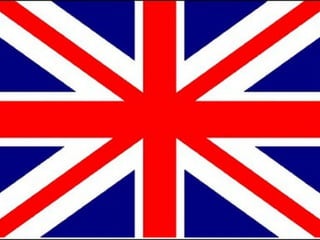
THE UNION JACK
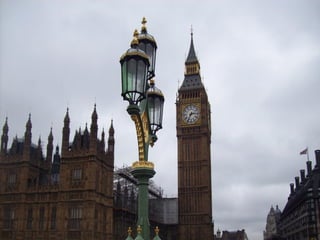
When Parliament is sitting ,a Union Jack
flies on the tower.
As well as being the capital of England
and Great Britain, London is the capital
of the U.K.
BUCKINGHAM PALACE
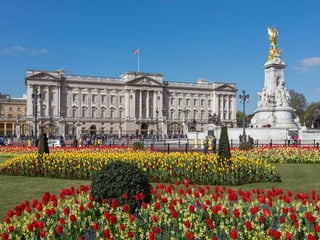
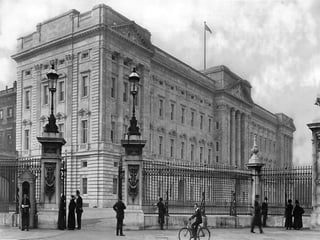
It is the official London residence of
the Queen and the Royal Family.
When the Queen is at home the Royal
Flag flies on top.
Queen Victoria was the first monarch
who lived at Buckingham Palace.She
moved there in 1837 and this palace is
now the official London residence of
the British Monarch.
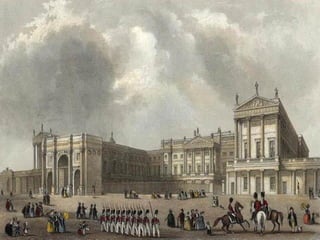
Most of the palace was built between
1820 and 1837, and it has six hundred
rooms.
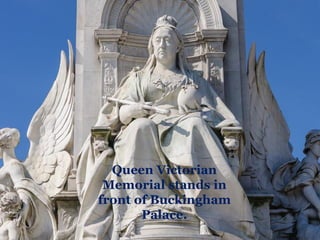
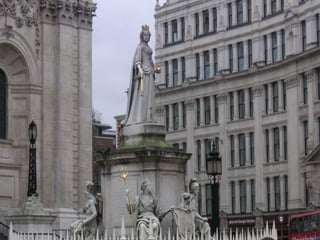
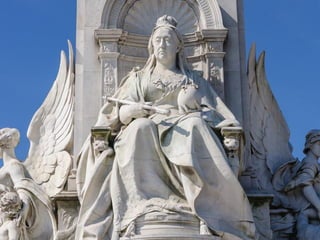
Queen Victorian
Memorial stands in
front of Buckingham
Palace.
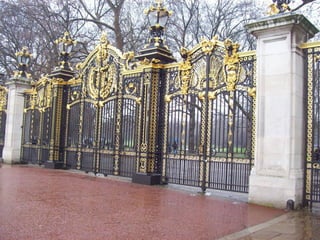
The only places open to the public are the
Queen’s Gallery and the Royal Mews.
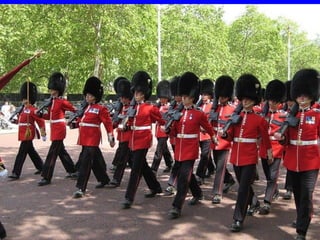
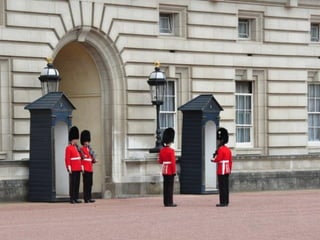
You can see the Changing of the Guard at
the gates of Buckingham Palace at 11:30
every day.
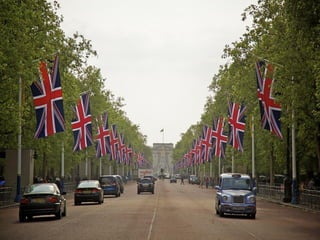
The Mall is a lovely tree-lined street
which goes from Buckingham Palace to
Trafalgar Square. Along one side of the
Mall you can see beautiful historic
buildings and houses such as St. James's
Palace, once the home of King Henry
VIII, Marlborough House, Clarence
House and Lancaster House.
WESTMINSTER
Westminster is about a mile west of the
City. For centuries Westminster was the
political and religious centre and the City
was London's business centre. Today
Westminster is still the centre of
Government.
THE HOUSES OF
PARLIAMENT
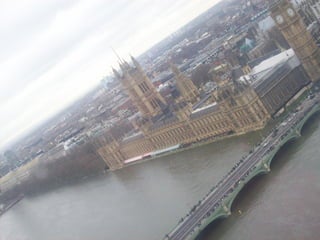
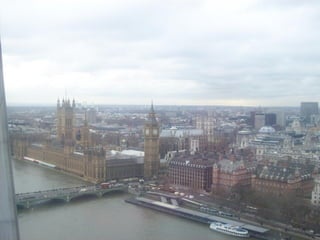
The building stands on the north bank of the
River Thames and is the place where the
House of Lords and the House of Commons
meet to discuss and pass laws .
The Houses of Parliament were
built in the 19th century. In 1834
the Houses of Parliament were
destroyed by fire and were rebuilt
in Gothic style.
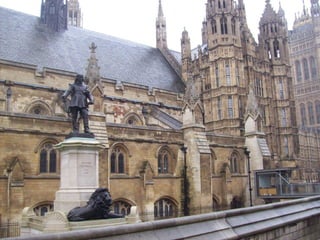
Oliver Cromwell’s statue
stands
in front of the Houses of
Parliament.
BIG BEN
Big Ben is the landmark of London.
It is the nickname of the bell
inside the clock tower next
to the Houses of Parliament. It was
named after the bulky commissioner of
works “Benjamin Hall” and it rings
every quarter of an hour.
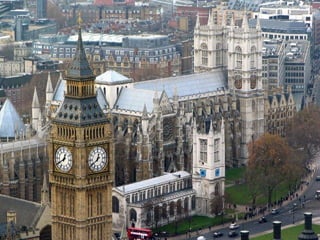
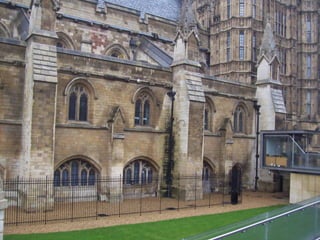
Westminster Abbey is one of the
oldest buildings in London and one
of the most important religious
centres in the country.
William the Conqueror was crowned
here on the coronation throne.
WESTMINSTER
ABBEY
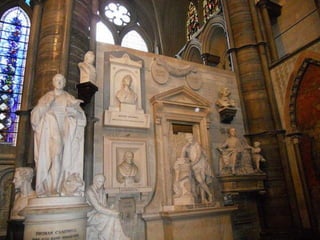
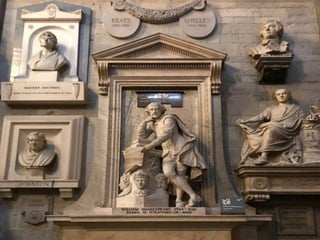
POETS’ CORNER
Poets' Corner is located in in Westminster
Abbey and it is a special place where
Britain's greatest writers are either buried
or remembered with a memorial plaque.
Chaucer, Spencer, Dickens, Kipling and
many other great writers are buried in
Poets' Corner.
Memorial plaques remember great people
who are buried in other places, such as
William Shakespeare, the Brontë Sisters,
Oscar Wilde and others.
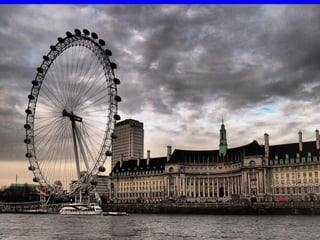
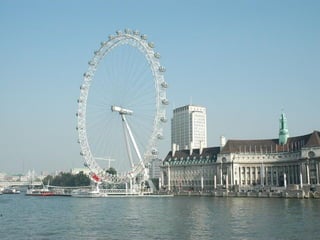
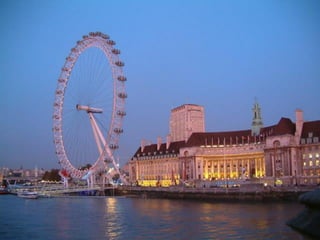
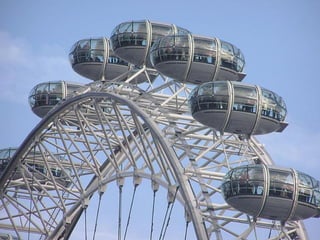
THE LONDON EYE
The London Eye is the world’s highest
observation wheel, towering 135 metres
above the centre of London.It offers
magnificent panoramic views.
If you walk along Whitehall you will see
Britain's most important government
offices and buildings: the Treasury, the
Foreign and Commonwealth Office,
Banqueting House, Horse Guards
Parade and the Prime Minster's famous
residence at 10,Downing Street.
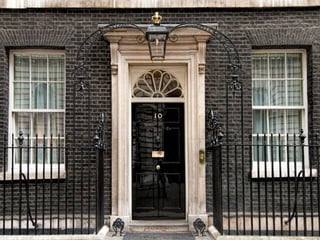
10, Downing Street is the official
London residence of the Prime
Minister.
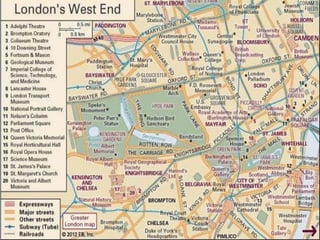
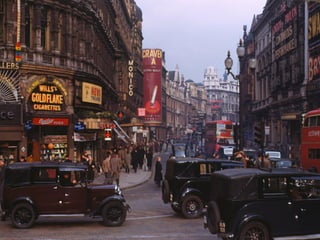
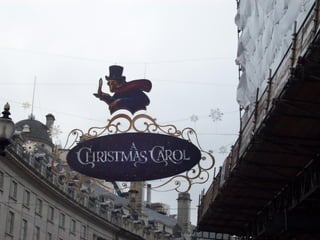
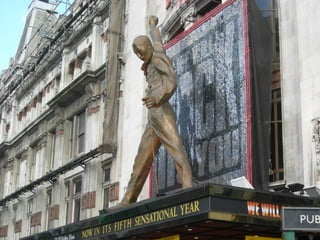
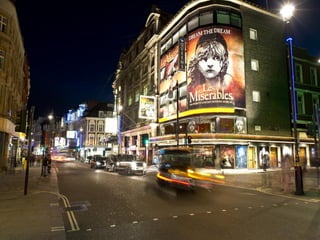
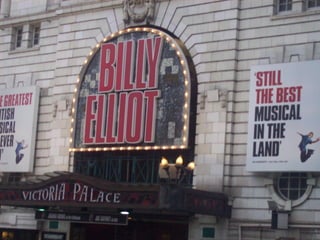
The West End is an exciting part of
London. It is home to London’s
finest museums, theatres, art
galleries, shops, restaurants and
hotels.
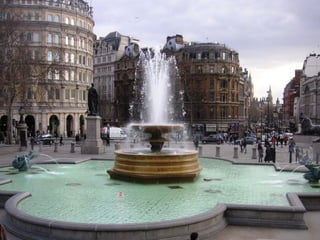
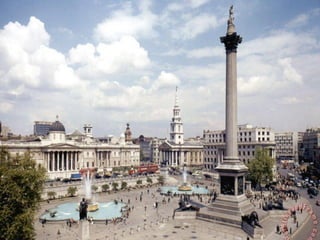
TRAFALGAR SQUARE
Trafalgar Square was named after
Horatio Nelson’s victory over Napoleon
at Trafalgar in 1805.
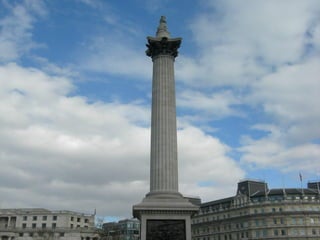
NELSON’S
COLUMN
Nelson’s column commemorates
the victory.
The statue on top is over 5 metres tall,
and shows Nelson without one arm and
one eye. He lost them in battle.
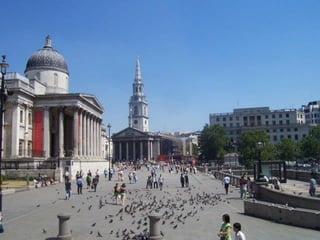
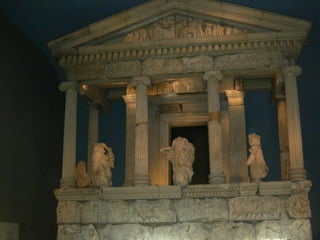
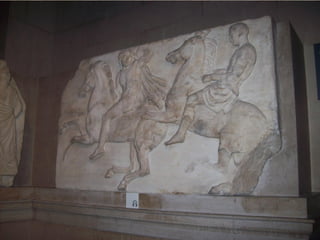
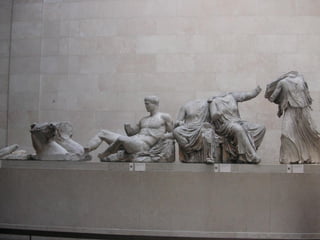
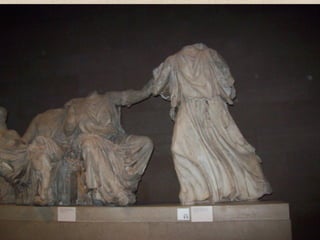
Trafalgar Square is often called the heart
of London because it connects the
political area of Westminster to the rest
of West London.
To the east of Trafalgar
Square there is
the Church of St. Martin in
the Fields.
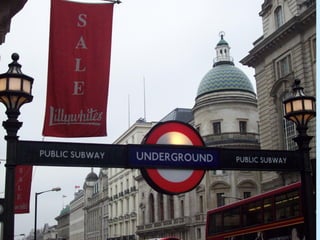
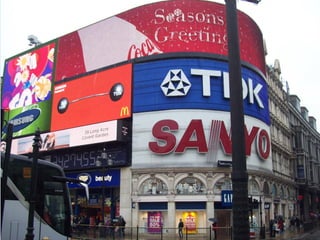
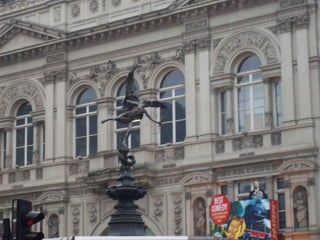
PICCADILLY CIRCUS
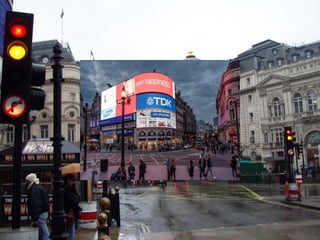
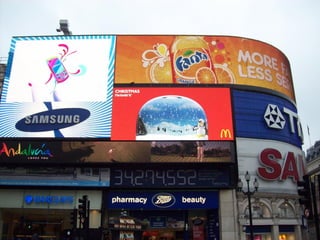
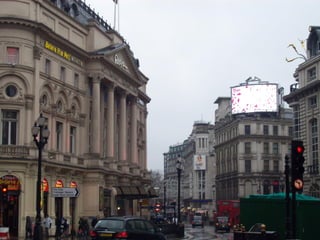
Piccadilly Circus is the centre of
London’s entertainment world. In this area
there are many theatres, cinemas,
restaurants, discos and nightclubs.
The statue of Eros , the God of love, stands
in the middle of the square.
Piccadilly Circus is a big public space
built in 1819.
The word ‘circus’ comes from the
Latin word for circle and it means a
big open space where people meet.
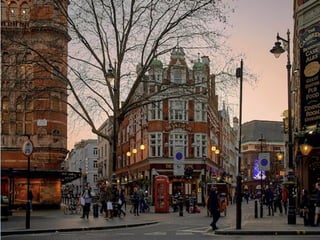
SOHO
Soho is an area north of Piccadilly Circus
near Oxford Street. It attracted many
foreigners, artists and writers in the past.
Old Compton Road is the heart of Soho and
here you can find French, Italian and
Middle Eastern food shops, coffee shops
and restaurants.
Charing Cross Road divides Soho from
Convent Garden and is famous for its
many bookshops.
Foyle’s in Charing Cross Road is London’s
largest bookshop and a fun place to visit.
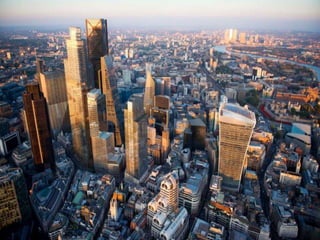
The City is the business and financial
centre of the UK. It is one of the world’s
most important business and financial
centres, with the Royal Exchange, the
London Stock Exchange, the Bank of
England and over 500 banks.
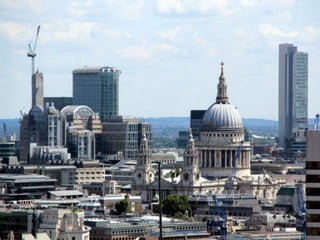
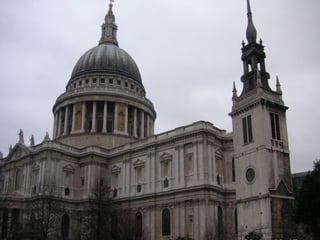
ST. PAUL’S CATHEDRAL
St. Paul’s Cathedral is in the centre of the
City.It was built by Sir Christopher Wren
after the old Cathedral had been
completely destroyed by the Great Fire of
London in 1666.Its dome is 110 metres tall
and it is the second tallest dome in the
world.
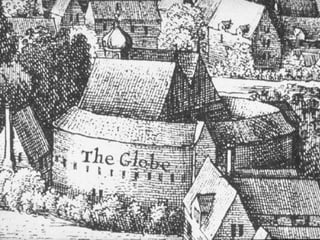
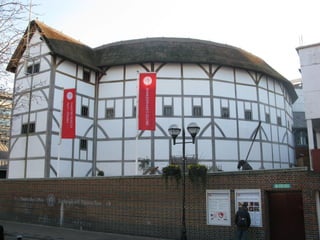
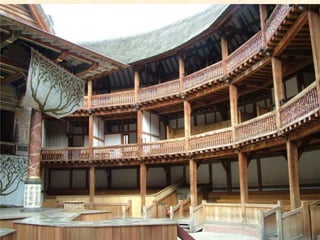
THE GLOBE
Shakespeare's Globe theatre is a
reconstruction of the original open-
air Elizabethan Globe theatre first
built in 1599, where many of
Shakespeare's greatest works were
performed.
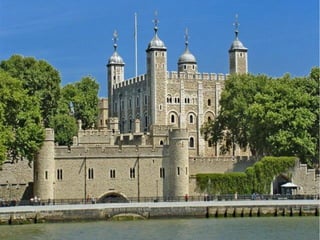
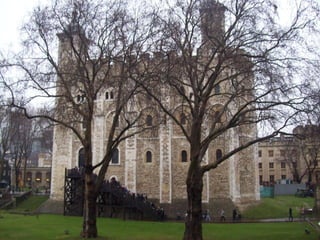
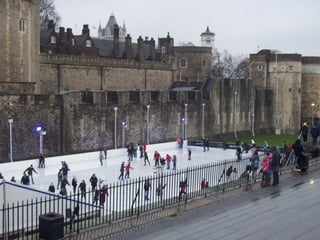
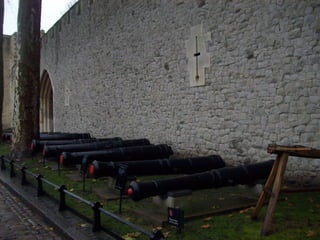
THE TOWER OF LONDON
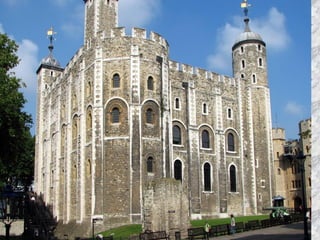
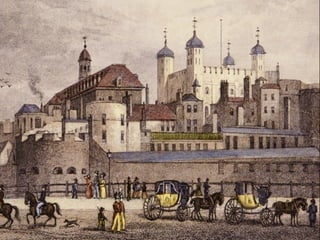
The Tower of London is the old
Norman fortress built by William the
Conqueror. It was a fortress , a royal
palace and a prison.
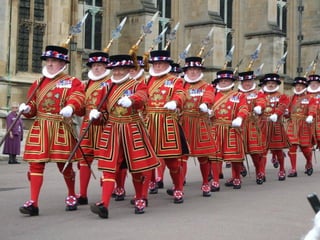
It is guarded by Beefeaters in
traditional Tudor Uniforms. They are the
guards and tour guides of the Tower.
….
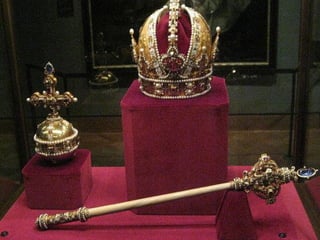
The Crown Jewels are
on show here. They belong to the
state and are used by the Royal
Family only on state occasions.
Many people, such as
Anne Boleyn, mother
of Queen Elizabeth I,
were executed here.
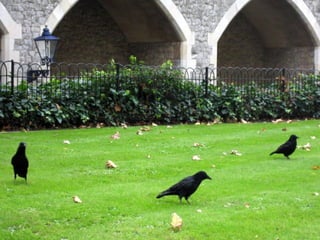
Eight ravens are kept at the tower;
a legend says
that the tower will fall
if they leave.
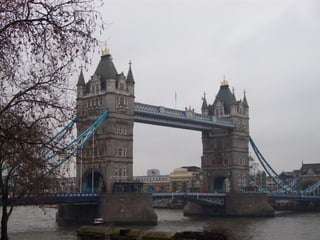
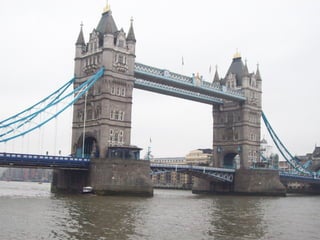
TOWER BRIDGE
It is on the River Thames and
is a drawbridge which
can be raised
to let ships pass through.
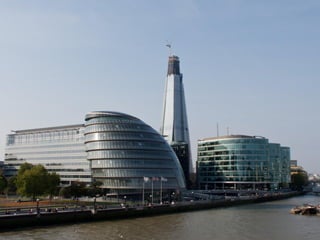
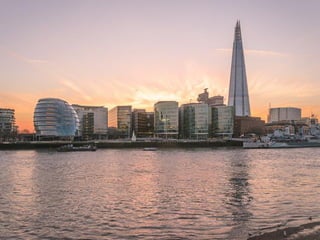
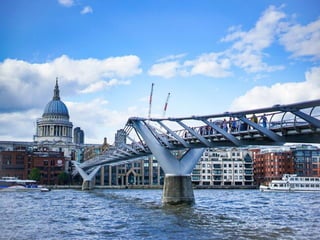
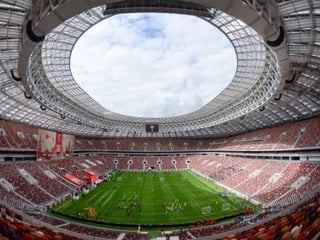
London offers lots of examples of modern
and contemporary architecture such as
the Shard by Renzo Piano, Europe’s tallest
building, the Olympic Stadium,
Millennium Bridge…
There are more than 240 museums in
London and most of them are
free.Some are small and others are
very large, and they are all fun to visit.
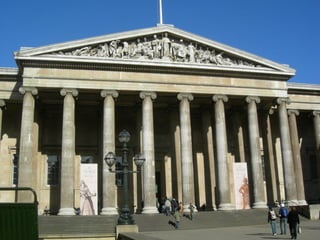
The British Museum is the largest and richest
museum in the world. It was founded in 1753
and contains one of the world’s richest
collections of antiquities.
THE BRITISH MUSEUM
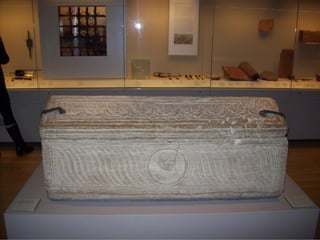
It has more than seven million objects
from all over the world:Ancient Egypt,
Ancient Greece and Rome, Europe, Asia
and the Middle East.
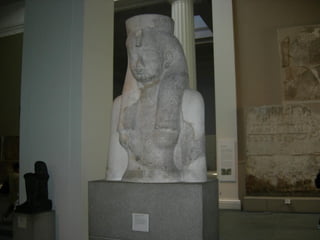
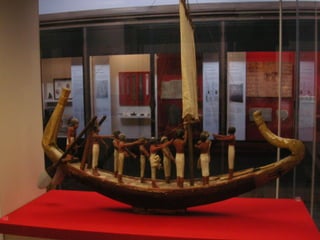
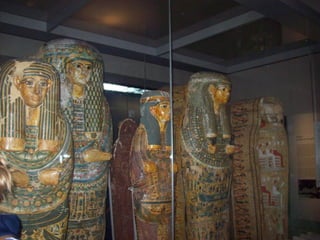
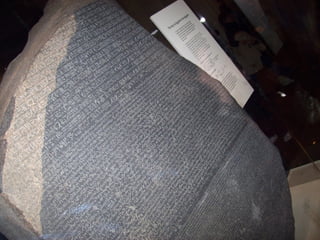
The Egyptian Galleries contain human and
animal mummies and the Rosetta Stone,
which enabled us to decipher hieroglyphic
texts.
Some parts of Athen’s
Parthenon are in Greek
section.
THE BRITISH NATIONAL
LIBRARY
In the British National Library there are
the originals of the Magna Charta and of
many famous books and also the
original manuscripts of some Beatles’
songs.
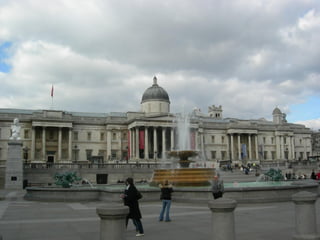
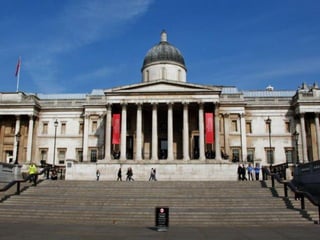
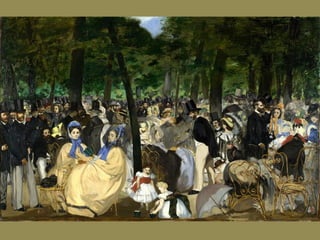
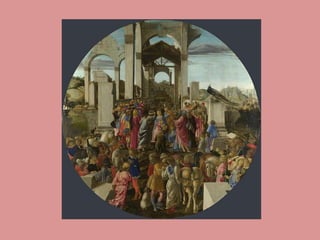
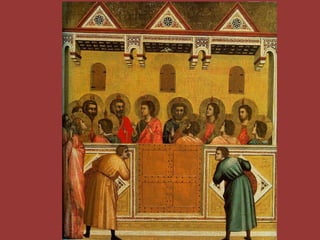
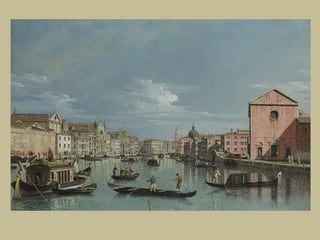
The National Gallery stands on the north
side of Trafalgar Square. It contains
paintings from the 13th century to this
century.
THE NATIONAL
GALLERY
The collection includes paintings by
Botticelli, Leonardo, Rembrandt, Rubens,
Turner, Constable, Cezanne, Monet, Van
Gogh...
TATE BRITAIN
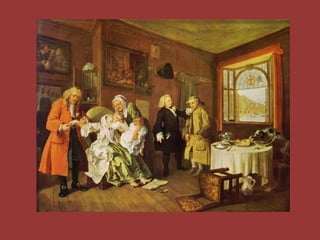
It contains famous British paintings by
Constable, Turner, Blake, Hogarth and
the Pre-Raphaelites. It contains paintings
from the 16th century to this century.
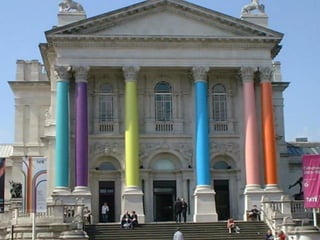
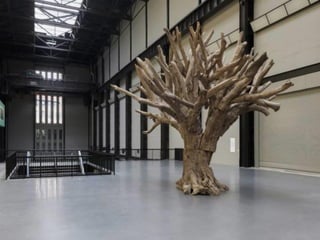
THE TATE MODERN
The impressive Tate Modern
is Britain’s modern art
National museum.The gallery
dispays major paintings by
Matisse and Picasso as well
as contemporary exhibitions
.
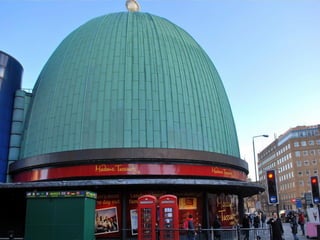
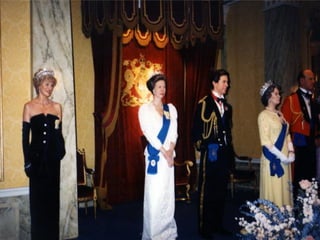
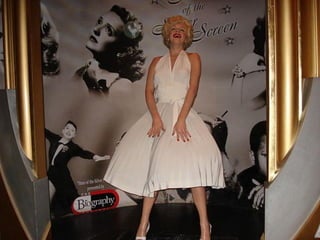
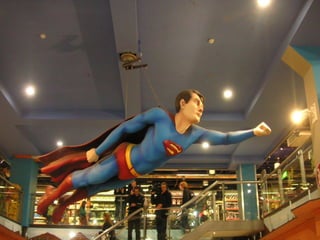
MADAME TUSSAUD’S
Madame Tussaud’s is an exhibition
of hundreds of
life-size wax models of famous
people of yesterday and today.
Here you can meet Cassius Clay, Marilyn
Monroe,Humphrey Bogarth, Elton John,
Picasso, the Royal Family, the Beatles,
Adolf Hitler and many other writers, film
stars, singers, politicians, footballers and
so on.
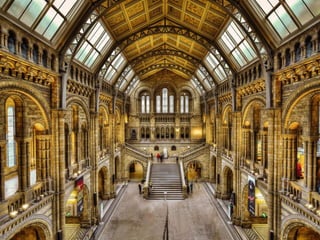
THE NATURAL HISTORY
MUSEM
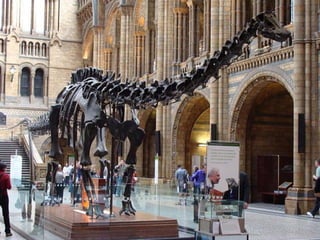
The Natural History Museum contains a
permanent dinosaur exhibition and a
collection of the biggest animals in the
world.
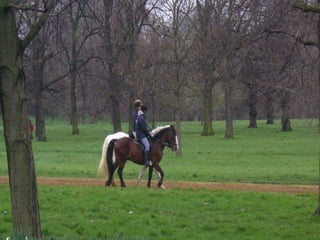
The parks have been called the “lungs”
of London. They give Londoners the
opportunity to walk in the green, have
picnics, row boats, go horse- riding, feed
and watch animals, and all this without
leaving the city.
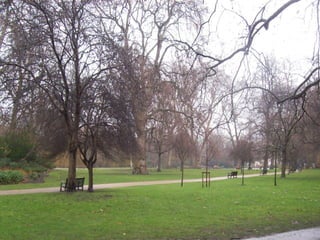
ST. JAMES’S PARK
St. James’s Park is the most
ancient of London’s Royal parks.
The area was bought by Henry
VIII in 1530 and in 1660 Charles
II had it landscaped by a French
architect.
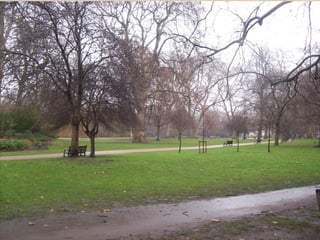
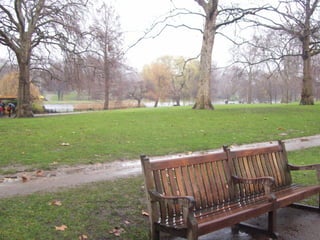
HYDE PARK
Hyde Park is the people’s park.
It is used for very kind of public
occasion.
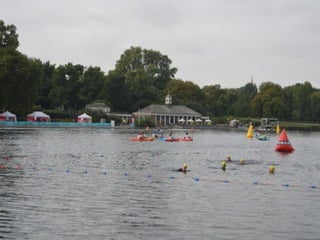
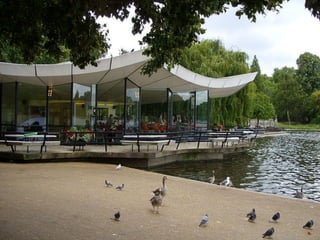
The Serpentine is the lake which
separates Hyde Park from Kensington
Gardens, a park which used to be the
private garden of Kensington Palace.
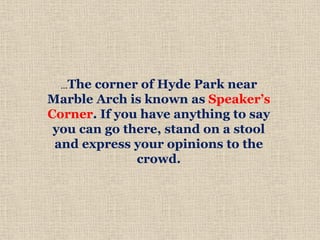
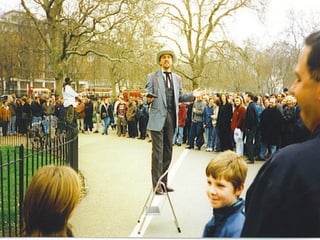
…The corner of Hyde Park near
Marble Arch is known as Speaker’s
Corner. If you have anything to say
you can go there, stand on a stool
and express your opinions to the
crowd.
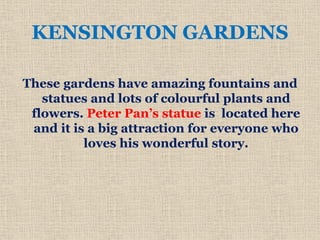
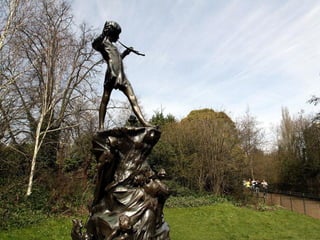
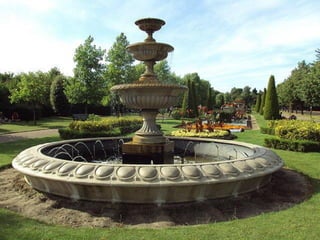
These gardens have amazing fountains and
statues and lots of colourful plants and
flowers. Peter Pan’s statue is located here
and it is a big attraction for everyone who
loves his wonderful story.
REGENTS’ PARK
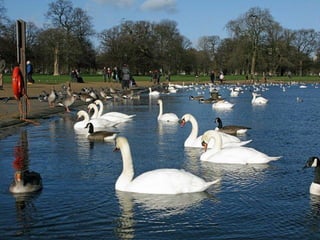
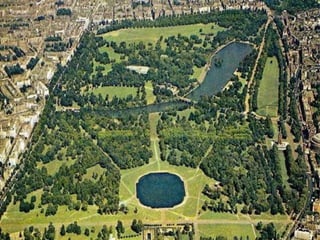
Regent's Park is the right place to go if you
like animals. Here you can feed the ducks
and watch the pelicans. You can also visit
the Zoological Gardens, the largest zoo in
the country.
What to Eat
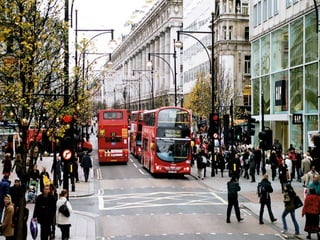
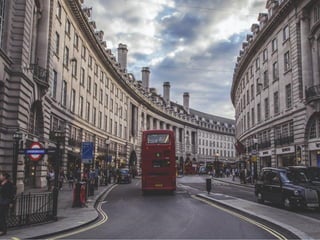
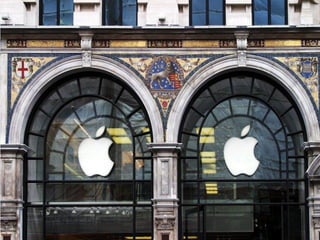
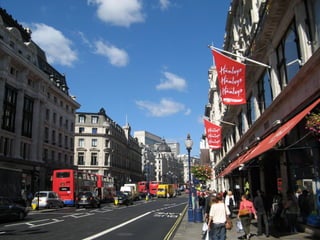
If you like shopping, London is the place to
go! If you walk in Oxford Street, Regent
Street, Bond Street or Piccadilly Circus, you
will find thousands of shops and
department stores.
REGENTS’ PARK
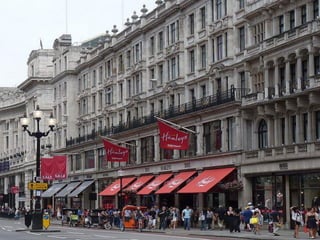
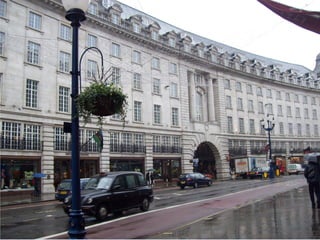
Regent Street offers a good range of
fashion stores, including some of the city’s
oldest and most famous shops.
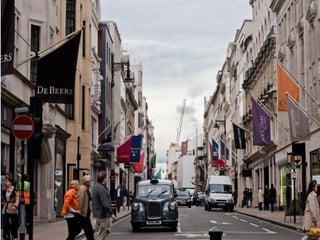
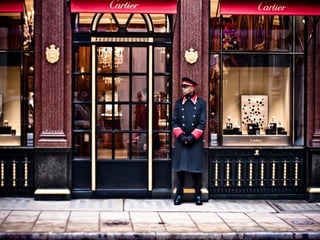
New Bond Street is one of London’ s most
exclusive shopping areas and Oxford
Street has about 300 shops and landmark
stores.
Piccadilly is an important street that goes
from Hyde Park Corner to the famous
Piccadilly Circus. One of the best and oldest
department stores is Fortnum and Masons
at 181 Piccadilly. It sells fine food, tea,
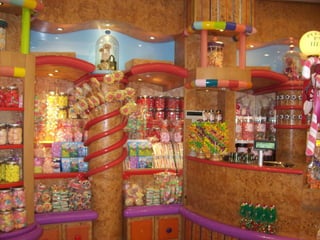
coffee, sweets and many other products.
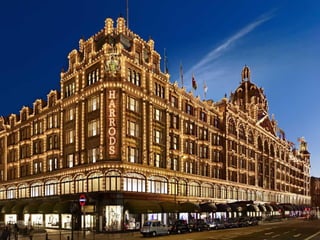
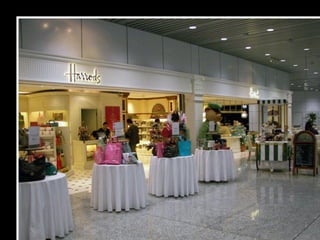
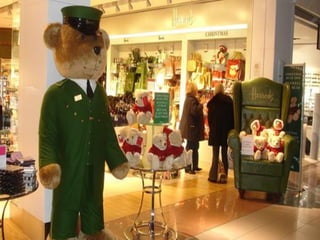
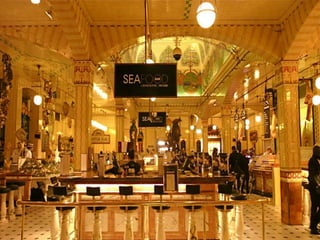
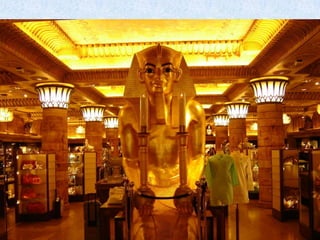
.Don’t forget to pay a visit to Harrods and
Selfridges, the largest department stores in
Europe.
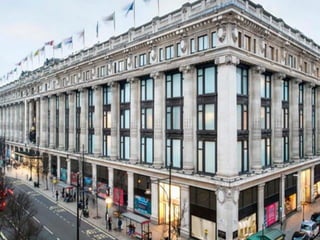
Selfridges is in Oxford Street. It offers
banking services and the opportunity to eat
in many restaurants.
Harrods is in Knightsbridge and it is the
official London shop of the Royal Family.
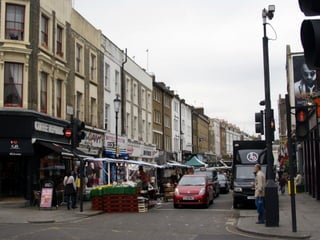
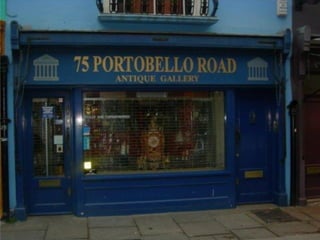
If you like street markets you will enjoy
Portobello Road Market, one of the oldest
and most famous markets in London,
Petticoat Lane Market, open only on
Sunday mornings from 9 a.m. to 2 p.m.,
and Camden Lock Market, open on
Saturdays and Sundays.
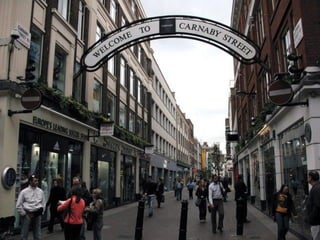
CARNABY STREET
Carnaby Street was the birthplace 0f
the fashion and cultural revolution of
the Revolution of the 1960s.It
is still home to some of the world’s
most exciting fashion and design
talents and it is filled with trendy
clothes.
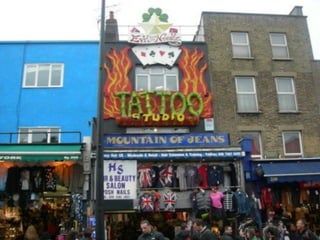
Camden Lock Market is one of the busiest
markets in London. It offers a wide range
of high- quality goods, arts, clothes, crafts,
food and furnishings. You can find craft
workshops, stalls, shops, cafés, bars, and
restaurants there.
CAMDEN LOCK MARKET
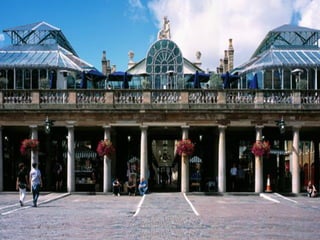
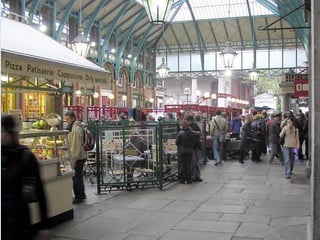
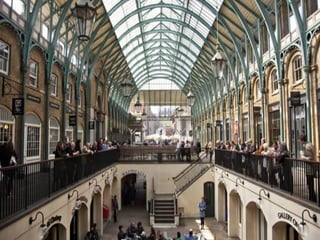
Covent Garden is a modern shopping
centre and tourist attraction with shops,
restaurants, cafés, street performers
and musicians. The famous Royal Opera
House and the Royal Ballet are at Covent
Garden.
COVENT GARDEN
Covent Garden’s old name was Convent
Garden because the garden of a medieval
convent was located there.
In 1630 the great architect Inigo Jones
created Covent Garden Piazza, the first
Italian-style square in London. For
centuries it was London’s biggest fruit,
vegetable and flower market but in 1974 the
market moved away.
CONVENT GARDEN
Convent Garden is a modern shopping
centre and tourist attraction with shops,
restaurants, cafés, street performers
and musicians.
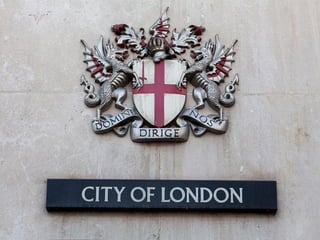
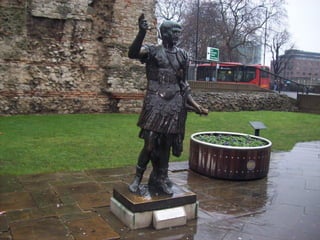
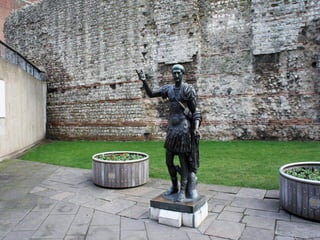
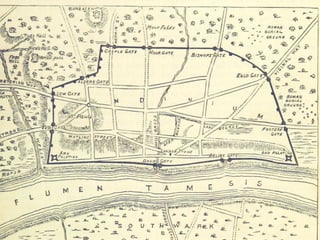
London was founded by the Romans in 43
A.D. and was called Londinium. In 61 A.D.
the town was burnt down and when it was
rebuilt by the Romans it was surrounded by
a wall. That area within the wall is now
called the City of London.
In 410 the Romans abandoned London at
the mercy of Saxon invaders.
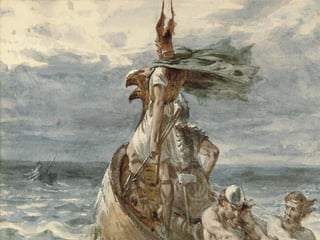
In the 9th and 10th centuries the Danish
Vikings attacked and invaded the city.
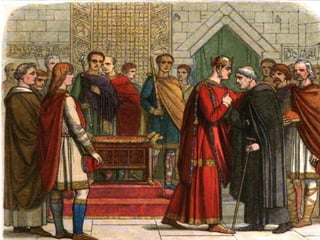
When William the Conqueror, leader of the
Normans, conquered England in 1066 he
made London his base. He built a fortress
where the Tower of London now stands
and he was crowned in the original
Westminster Abbey.
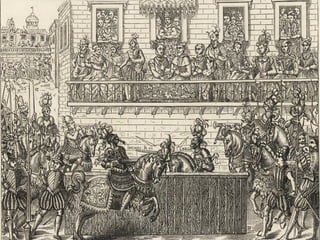
During the Middle Ages many churches and
monasteries were built. Merchants and
craftsmen lived inside the City walls and
worked in particular areas.
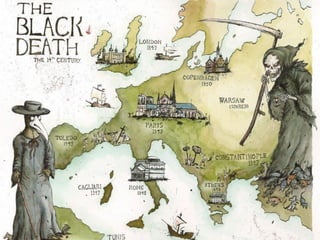
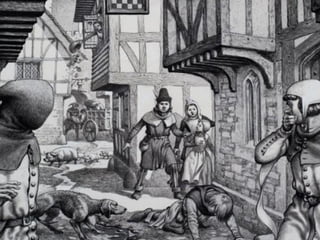
In 1348 the city was hit by the
Europe-wide Bubonic Plague,
the Black Death.
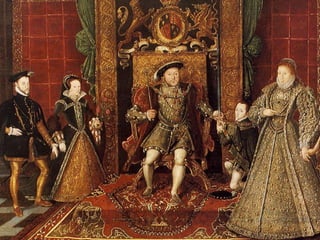
During the Tudor period (16th century)
London became an important economic
and financial centre and the centre of
culture and the arts.
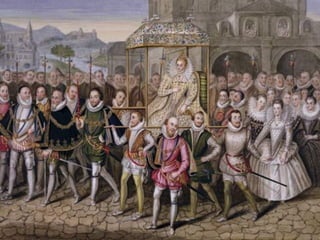
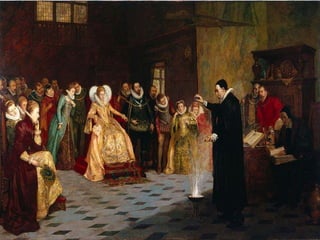
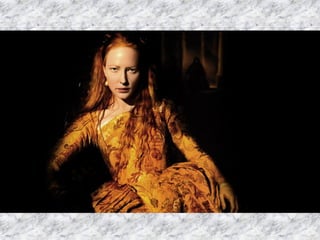
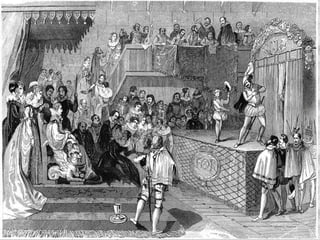
During the reign of Elizabeth I (1558-1603)
London witnessed a specifically English
Renaissance, especially in the fields of
literature and drama. The Londoners of
the Elizabethan period built the first
theatres. The main playwrights were
Christopher Marlowe and William
Shakespeare.
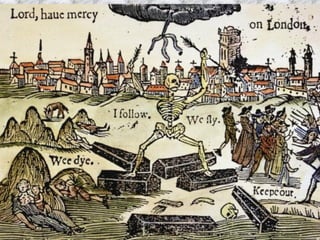
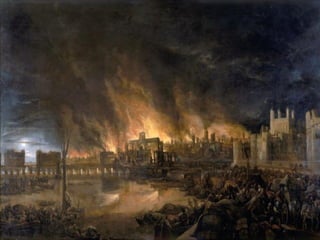
In 1665 the Great Plague killed about
1,000,000 people.1666 was the year of the
Great Fire of London, which destroyed
most of the city. After the fire many
buildings were rebuilt by Sir Christopher
Wren.
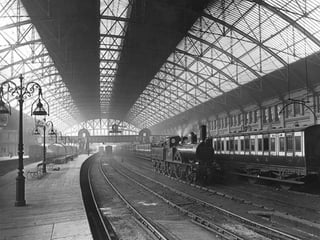
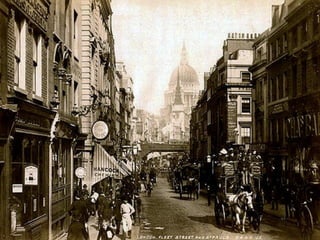
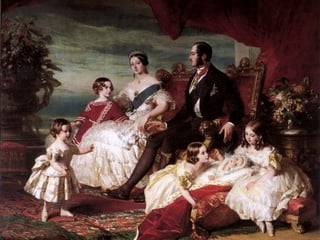
During the Victorian period (1837-1901)
London was one of the most important
centres of the British Empire and the
Industrial Revolution.
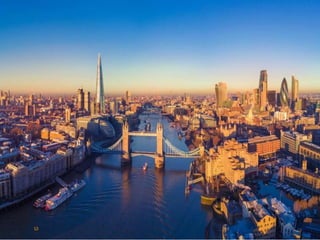
Today London is a cosmopolitan city
and its population is almost
7,000,000.
London  flipped classroom

London flipped classroom

  • 2.
    THE UNION JACK WhenParliament is sitting ,a Union Jack flies on the tower.
  • 3.
    As well asbeing the capital of England and Great Britain, London is the capital of the U.K.
  • 6.
    BUCKINGHAM PALACE It isthe official London residence of the Queen and the Royal Family. When the Queen is at home the Royal Flag flies on top.
  • 9.
    Queen Victoria wasthe first monarch who lived at Buckingham Palace.She moved there in 1837 and this palace is now the official London residence of the British Monarch. Most of the palace was built between 1820 and 1837, and it has six hundred rooms.
  • 12.
    Queen Victorian Memorial standsin front of Buckingham Palace.
  • 13.
    The only placesopen to the public are the Queen’s Gallery and the Royal Mews. You can see the Changing of the Guard at the gates of Buckingham Palace at 11:30 every day.
  • 16.
    The Mall isa lovely tree-lined street which goes from Buckingham Palace to Trafalgar Square. Along one side of the Mall you can see beautiful historic buildings and houses such as St. James's Palace, once the home of King Henry VIII, Marlborough House, Clarence House and Lancaster House.
  • 19.
    WESTMINSTER Westminster is abouta mile west of the City. For centuries Westminster was the political and religious centre and the City was London's business centre. Today Westminster is still the centre of Government.
  • 20.
    THE HOUSES OF PARLIAMENT Thebuilding stands on the north bank of the River Thames and is the place where the House of Lords and the House of Commons meet to discuss and pass laws .
  • 21.
    The Houses ofParliament were built in the 19th century. In 1834 the Houses of Parliament were destroyed by fire and were rebuilt in Gothic style.
  • 24.
    Oliver Cromwell’s statue stands infront of the Houses of Parliament.
  • 26.
    BIG BEN Big Benis the landmark of London. It is the nickname of the bell inside the clock tower next to the Houses of Parliament. It was named after the bulky commissioner of works “Benjamin Hall” and it rings every quarter of an hour.
  • 28.
    Westminster Abbey isone of the oldest buildings in London and one of the most important religious centres in the country. William the Conqueror was crowned here on the coronation throne. WESTMINSTER ABBEY
  • 31.
    POETS’ CORNER Poets' Corneris located in in Westminster Abbey and it is a special place where Britain's greatest writers are either buried or remembered with a memorial plaque. Chaucer, Spencer, Dickens, Kipling and many other great writers are buried in Poets' Corner. Memorial plaques remember great people who are buried in other places, such as William Shakespeare, the Brontë Sisters, Oscar Wilde and others.
  • 34.
    THE LONDON EYE TheLondon Eye is the world’s highest observation wheel, towering 135 metres above the centre of London.It offers magnificent panoramic views.
  • 39.
    If you walkalong Whitehall you will see Britain's most important government offices and buildings: the Treasury, the Foreign and Commonwealth Office, Banqueting House, Horse Guards Parade and the Prime Minster's famous residence at 10,Downing Street.
  • 40.
    10, Downing Streetis the official London residence of the Prime Minister.
  • 43.
    The West Endis an exciting part of London. It is home to London’s finest museums, theatres, art galleries, shops, restaurants and hotels.
  • 50.
    TRAFALGAR SQUARE Trafalgar Squarewas named after Horatio Nelson’s victory over Napoleon at Trafalgar in 1805.
  • 53.
    NELSON’S COLUMN Nelson’s column commemorates thevictory. The statue on top is over 5 metres tall, and shows Nelson without one arm and one eye. He lost them in battle.
  • 56.
    Trafalgar Square isoften called the heart of London because it connects the political area of Westminster to the rest of West London.
  • 57.
    To the eastof Trafalgar Square there is the Church of St. Martin in the Fields.
  • 59.
    PICCADILLY CIRCUS Piccadilly Circusis the centre of London’s entertainment world. In this area there are many theatres, cinemas, restaurants, discos and nightclubs. The statue of Eros , the God of love, stands in the middle of the square.
  • 65.
    Piccadilly Circus isa big public space built in 1819. The word ‘circus’ comes from the Latin word for circle and it means a big open space where people meet.
  • 67.
    SOHO Soho is anarea north of Piccadilly Circus near Oxford Street. It attracted many foreigners, artists and writers in the past. Old Compton Road is the heart of Soho and here you can find French, Italian and Middle Eastern food shops, coffee shops and restaurants.
  • 69.
    Charing Cross Roaddivides Soho from Convent Garden and is famous for its many bookshops. Foyle’s in Charing Cross Road is London’s largest bookshop and a fun place to visit.
  • 73.
    The City isthe business and financial centre of the UK. It is one of the world’s most important business and financial centres, with the Royal Exchange, the London Stock Exchange, the Bank of England and over 500 banks.
  • 76.
    ST. PAUL’S CATHEDRAL St.Paul’s Cathedral is in the centre of the City.It was built by Sir Christopher Wren after the old Cathedral had been completely destroyed by the Great Fire of London in 1666.Its dome is 110 metres tall and it is the second tallest dome in the world.
  • 80.
    THE GLOBE Shakespeare's Globetheatre is a reconstruction of the original open- air Elizabethan Globe theatre first built in 1599, where many of Shakespeare's greatest works were performed.
  • 85.
    THE TOWER OFLONDON The Tower of London is the old Norman fortress built by William the Conqueror. It was a fortress , a royal palace and a prison.
  • 88.
    It is guardedby Beefeaters in traditional Tudor Uniforms. They are the guards and tour guides of the Tower.
  • 89.
  • 90.
    The Crown Jewelsare on show here. They belong to the state and are used by the Royal Family only on state occasions.
  • 92.
    Many people, suchas Anne Boleyn, mother of Queen Elizabeth I, were executed here.
  • 93.
    Eight ravens arekept at the tower; a legend says that the tower will fall if they leave.
  • 98.
    TOWER BRIDGE It ison the River Thames and is a drawbridge which can be raised to let ships pass through.
  • 101.
    London offers lotsof examples of modern and contemporary architecture such as the Shard by Renzo Piano, Europe’s tallest building, the Olympic Stadium, Millennium Bridge…
  • 107.
    There are morethan 240 museums in London and most of them are free.Some are small and others are very large, and they are all fun to visit.
  • 108.
    The British Museumis the largest and richest museum in the world. It was founded in 1753 and contains one of the world’s richest collections of antiquities. THE BRITISH MUSEUM
  • 109.
    It has morethan seven million objects from all over the world:Ancient Egypt, Ancient Greece and Rome, Europe, Asia and the Middle East.
  • 111.
    The Egyptian Galleriescontain human and animal mummies and the Rosetta Stone, which enabled us to decipher hieroglyphic texts.
  • 117.
    Some parts ofAthen’s Parthenon are in Greek section.
  • 122.
    THE BRITISH NATIONAL LIBRARY Inthe British National Library there are the originals of the Magna Charta and of many famous books and also the original manuscripts of some Beatles’ songs.
  • 123.
    The National Gallerystands on the north side of Trafalgar Square. It contains paintings from the 13th century to this century. THE NATIONAL GALLERY
  • 124.
    The collection includespaintings by Botticelli, Leonardo, Rembrandt, Rubens, Turner, Constable, Cezanne, Monet, Van Gogh...
  • 131.
    TATE BRITAIN It containsfamous British paintings by Constable, Turner, Blake, Hogarth and the Pre-Raphaelites. It contains paintings from the 16th century to this century.
  • 133.
    THE TATE MODERN Theimpressive Tate Modern is Britain’s modern art National museum.The gallery dispays major paintings by Matisse and Picasso as well as contemporary exhibitions .
  • 135.
    MADAME TUSSAUD’S Madame Tussaud’sis an exhibition of hundreds of life-size wax models of famous people of yesterday and today.
  • 136.
    Here you canmeet Cassius Clay, Marilyn Monroe,Humphrey Bogarth, Elton John, Picasso, the Royal Family, the Beatles, Adolf Hitler and many other writers, film stars, singers, politicians, footballers and so on.
  • 140.
    THE NATURAL HISTORY MUSEM TheNatural History Museum contains a permanent dinosaur exhibition and a collection of the biggest animals in the world.
  • 144.
    The parks havebeen called the “lungs” of London. They give Londoners the opportunity to walk in the green, have picnics, row boats, go horse- riding, feed and watch animals, and all this without leaving the city.
  • 145.
    ST. JAMES’S PARK St.James’s Park is the most ancient of London’s Royal parks. The area was bought by Henry VIII in 1530 and in 1660 Charles II had it landscaped by a French architect.
  • 149.
    HYDE PARK Hyde Parkis the people’s park. It is used for very kind of public occasion.
  • 150.
    The Serpentine isthe lake which separates Hyde Park from Kensington Gardens, a park which used to be the private garden of Kensington Palace.
  • 154.
    …The corner ofHyde Park near Marble Arch is known as Speaker’s Corner. If you have anything to say you can go there, stand on a stool and express your opinions to the crowd.
  • 156.
    These gardens haveamazing fountains and statues and lots of colourful plants and flowers. Peter Pan’s statue is located here and it is a big attraction for everyone who loves his wonderful story.
  • 159.
    REGENTS’ PARK Regent's Parkis the right place to go if you like animals. Here you can feed the ducks and watch the pelicans. You can also visit the Zoological Gardens, the largest zoo in the country.
  • 160.
  • 163.
    If you likeshopping, London is the place to go! If you walk in Oxford Street, Regent Street, Bond Street or Piccadilly Circus, you will find thousands of shops and department stores.
  • 165.
  • 172.
    Regent Street offersa good range of fashion stores, including some of the city’s oldest and most famous shops. New Bond Street is one of London’ s most exclusive shopping areas and Oxford Street has about 300 shops and landmark stores.
  • 174.
    Piccadilly is animportant street that goes from Hyde Park Corner to the famous Piccadilly Circus. One of the best and oldest department stores is Fortnum and Masons at 181 Piccadilly. It sells fine food, tea, coffee, sweets and many other products.
  • 180.
    .Don’t forget topay a visit to Harrods and Selfridges, the largest department stores in Europe. Selfridges is in Oxford Street. It offers banking services and the opportunity to eat in many restaurants. Harrods is in Knightsbridge and it is the official London shop of the Royal Family.
  • 189.
    If you likestreet markets you will enjoy Portobello Road Market, one of the oldest and most famous markets in London, Petticoat Lane Market, open only on Sunday mornings from 9 a.m. to 2 p.m., and Camden Lock Market, open on Saturdays and Sundays.
  • 192.
    CARNABY STREET Carnaby Streetwas the birthplace 0f the fashion and cultural revolution of the Revolution of the 1960s.It is still home to some of the world’s most exciting fashion and design talents and it is filled with trendy clothes.
  • 194.
    Camden Lock Marketis one of the busiest markets in London. It offers a wide range of high- quality goods, arts, clothes, crafts, food and furnishings. You can find craft workshops, stalls, shops, cafés, bars, and restaurants there. CAMDEN LOCK MARKET
  • 197.
    Covent Garden isa modern shopping centre and tourist attraction with shops, restaurants, cafés, street performers and musicians. The famous Royal Opera House and the Royal Ballet are at Covent Garden. COVENT GARDEN
  • 198.
    Covent Garden’s oldname was Convent Garden because the garden of a medieval convent was located there. In 1630 the great architect Inigo Jones created Covent Garden Piazza, the first Italian-style square in London. For centuries it was London’s biggest fruit, vegetable and flower market but in 1974 the market moved away.
  • 199.
    CONVENT GARDEN Convent Gardenis a modern shopping centre and tourist attraction with shops, restaurants, cafés, street performers and musicians.
  • 203.
    London was foundedby the Romans in 43 A.D. and was called Londinium. In 61 A.D. the town was burnt down and when it was rebuilt by the Romans it was surrounded by a wall. That area within the wall is now called the City of London.
  • 207.
    In 410 theRomans abandoned London at the mercy of Saxon invaders. In the 9th and 10th centuries the Danish Vikings attacked and invaded the city.
  • 210.
    When William theConqueror, leader of the Normans, conquered England in 1066 he made London his base. He built a fortress where the Tower of London now stands and he was crowned in the original Westminster Abbey.
  • 213.
    During the MiddleAges many churches and monasteries were built. Merchants and craftsmen lived inside the City walls and worked in particular areas.
  • 215.
    In 1348 thecity was hit by the Europe-wide Bubonic Plague, the Black Death.
  • 218.
    During the Tudorperiod (16th century) London became an important economic and financial centre and the centre of culture and the arts.
  • 221.
    During the reignof Elizabeth I (1558-1603) London witnessed a specifically English Renaissance, especially in the fields of literature and drama. The Londoners of the Elizabethan period built the first theatres. The main playwrights were Christopher Marlowe and William Shakespeare.
  • 226.
    In 1665 theGreat Plague killed about 1,000,000 people.1666 was the year of the Great Fire of London, which destroyed most of the city. After the fire many buildings were rebuilt by Sir Christopher Wren.
  • 230.
    During the Victorianperiod (1837-1901) London was one of the most important centres of the British Empire and the Industrial Revolution.
  • 236.
    Today London isa cosmopolitan city and its population is almost 7,000,000.