-By Snehal Takawale.
 Introduction
 History
 Concepts in LBS
 Locating methods
 Applications
 LBS in market
 Key factors for LBS to success
 Major design challenges
 Security design for privacy
 conclusion
 Location-based services (LBS) are a general class of
computer program-level services that use location
data to control features.
 As such LBS is an information service and has a
number of uses in social networking today as an
entertainment service, which is accessible with
mobile devices through the mobile network and
which uses information on the geographical position
of the mobile device.
 Emergency Medical Services(EMS)
 Yellow Pages
 Local weather and traffic broadcast in radio and TV
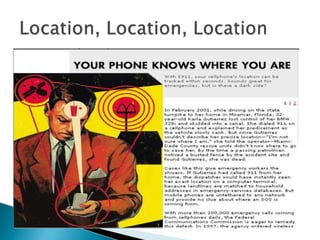
 Emergency phone services
 Position
 “32.49’49.7964”-116.49’.9.9228””
 Location
 “San diego downtown gas lamp quarter”
 Location Service(LCS)
 “Where am I?”
 Location Based Service(LBS)
 “How can I go to gas lamp quarter from
here?”
 Control plane locating
Sometimes referred to as positioning
 Self-reported positioning
A low cost alternative to using location technology to track the
player, is to not track at all.
this is more commonly known as a user "check-in".
 Others
local-range technologies such as Bluetooth Low Energy, WLAN,
infrared and/or RFID/Near Field Communication technologies
are used to match devices to nearby services.
 Compelling applications
• Valuable to consumer and businesses
• Easy and intuitive to use
• Good return on the investment
 Handset availability
• Wide range of LBS-capable handsets
 Internet-friendly
• IP based user plane standards
 Good business model
• Custom segmentation is important
• Adopt applications from 3rd parties
• Help operators increase revenue
 User awareness and promotion
• Security and privacy concerns
 Positioning technologies
 Privacy
 Interoperability
 Emergency services
 It could do harm to the user’s privacy
 There is consumer's concerns about potential
threats to personal security and use of personal
location records for commercial purposes and
legal actions.
 Preventing unauthorized access to personal
location information is a prerequisite to protect
privacy.
 Location-based services are transforming the
ways people across the country conduct
business, organize their lives, and have fun. They
can save time, money, and even lives.
 As both the potential and the challenges of LBS
have become more understood, the Commission,
has begun to assess ways to best ensure the LBS
users enjoy all their benefits and that their
confidential information is secure.
Location Based Technology

Location Based Technology

  • 1.
  • 2.
     Introduction  History Concepts in LBS  Locating methods  Applications  LBS in market  Key factors for LBS to success  Major design challenges  Security design for privacy  conclusion
  • 3.
     Location-based services(LBS) are a general class of computer program-level services that use location data to control features.  As such LBS is an information service and has a number of uses in social networking today as an entertainment service, which is accessible with mobile devices through the mobile network and which uses information on the geographical position of the mobile device.
  • 6.
     Emergency MedicalServices(EMS)  Yellow Pages  Local weather and traffic broadcast in radio and TV  Emergency phone services
  • 7.
     Position  “32.49’49.7964”-116.49’.9.9228”” Location  “San diego downtown gas lamp quarter”  Location Service(LCS)  “Where am I?”  Location Based Service(LBS)  “How can I go to gas lamp quarter from here?”
  • 8.
     Control planelocating Sometimes referred to as positioning  Self-reported positioning A low cost alternative to using location technology to track the player, is to not track at all. this is more commonly known as a user "check-in".  Others local-range technologies such as Bluetooth Low Energy, WLAN, infrared and/or RFID/Near Field Communication technologies are used to match devices to nearby services.
  • 11.
     Compelling applications •Valuable to consumer and businesses • Easy and intuitive to use • Good return on the investment  Handset availability • Wide range of LBS-capable handsets
  • 12.
     Internet-friendly • IPbased user plane standards  Good business model • Custom segmentation is important • Adopt applications from 3rd parties • Help operators increase revenue  User awareness and promotion • Security and privacy concerns
  • 13.
     Positioning technologies Privacy  Interoperability  Emergency services
  • 14.
     It coulddo harm to the user’s privacy  There is consumer's concerns about potential threats to personal security and use of personal location records for commercial purposes and legal actions.  Preventing unauthorized access to personal location information is a prerequisite to protect privacy.
  • 15.
     Location-based servicesare transforming the ways people across the country conduct business, organize their lives, and have fun. They can save time, money, and even lives.  As both the potential and the challenges of LBS have become more understood, the Commission, has begun to assess ways to best ensure the LBS users enjoy all their benefits and that their confidential information is secure.