To Share, or Not to Share, That is the Question: Information Sharing Among Urban CraftersSarah CaldwellSarah GanderupErica Leigh NelsonMeredith SlotaJulie Tanaka
Who? And Why?Population
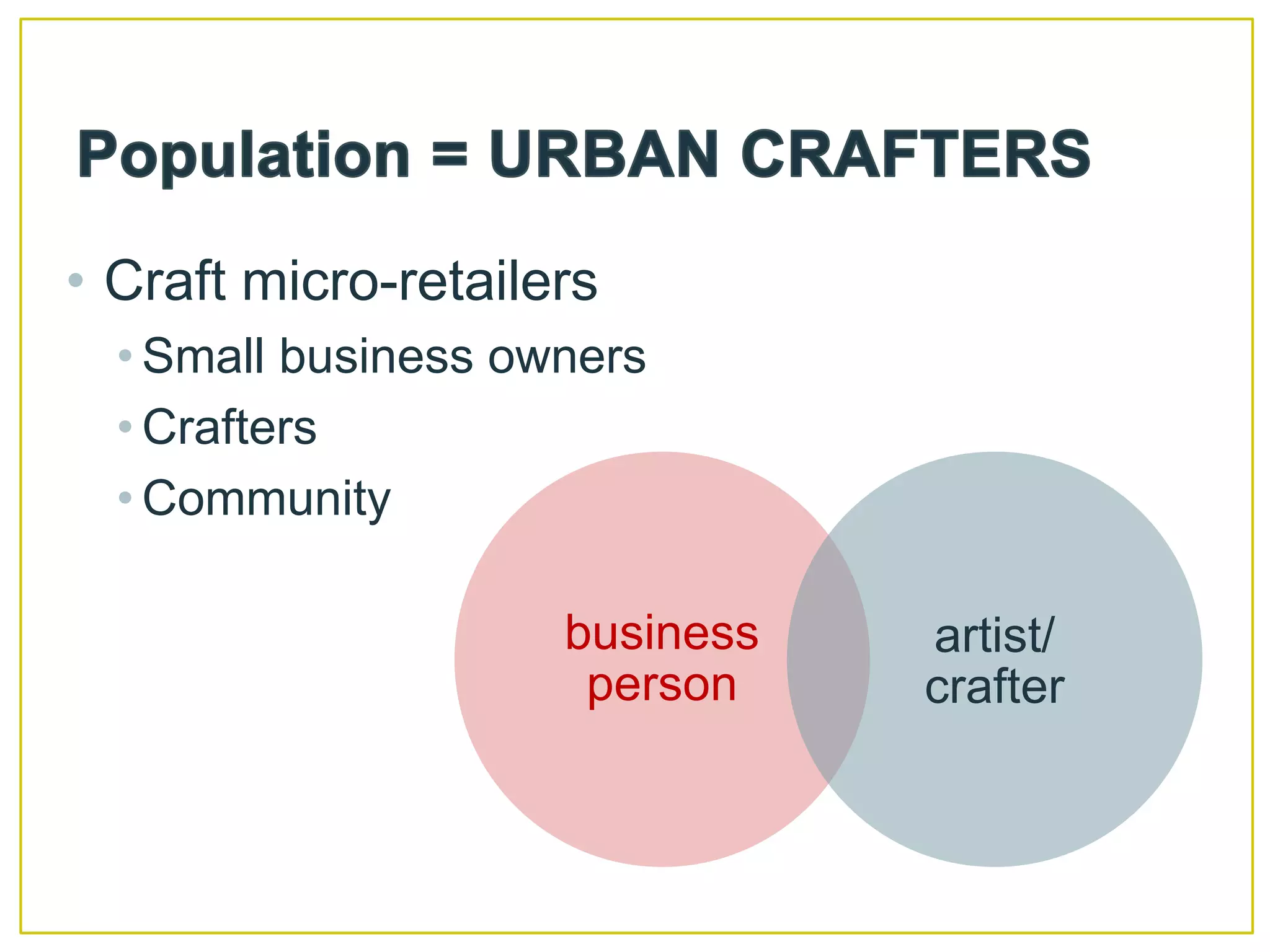
Population = URBAN CRAFTERSCraft micro-retailersSmall business ownersCraftersCommunity members
Urban Crafters“Small business owner” Compose >99% of all businesses in the U.S.A. Legal definition = <500 employees (www.sba.gov) Sole-proprietorship or LLCMost have just ONE employee: the owner!“Crafter”Hand-crafted productsDesign + fabrication in-houseD.I.Y. ethicUrban Craft Uprising+Local popular craft fairNumber of vendors > 100
Urban Craft UprisingUrban Craft Uprising's Mission: “To build a fun, successful showcase for indie crafters and to nurture a supportive DIY crafting community”http://urbancraftuprising.com/Our question is:How does membership in this community affect information behavior?To what extent do members of this “community” share information?Is there competition? Does that affect the ways in  which information is shared?
Urban Craft Uprising
What ExistsProblemsAreas of AgreementAreas of DisagreementLiterature Review
Literature ReviewThe Literature on CraftersWhat ExistsSharing business informationSharing artistic informationBest LiteratureExampleFurther Research
She’s Crafty: Are YOU?Participation
Game InstructionsYou’ve each been given a set of instructions for how to build a boat, but your set may be incomplete and/or contain duplicates. Your goal is to acquire a full set of the 5 instructionsHint: they’re numbered!You must talk to your fellow crafters and try to get the information you need (i.e. a slip of paper with the instruction(s) you need).Time’s up when the song ends!
Survey + InterviewsFieldwork
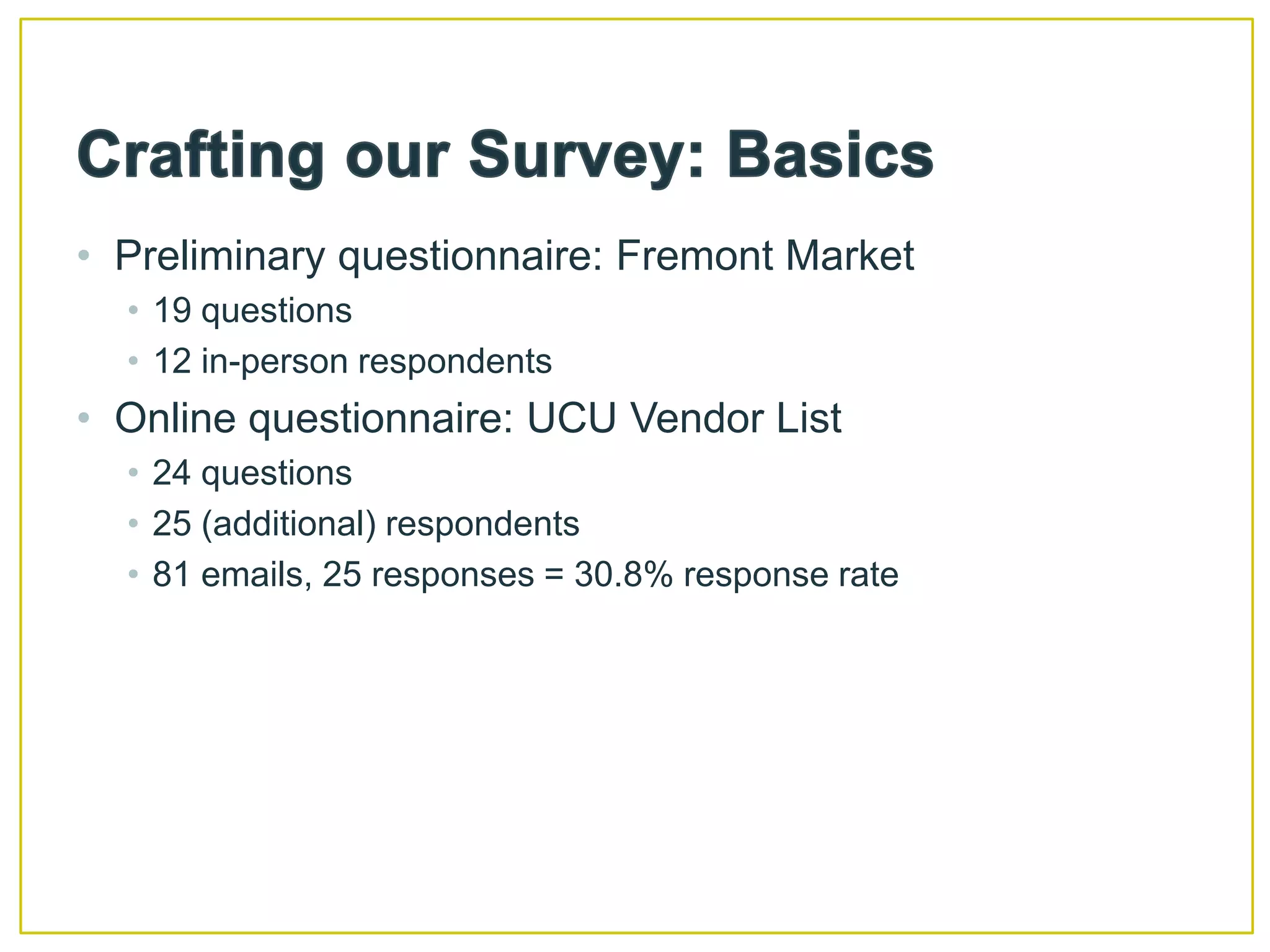
Crafting our Survey: BasicsPreliminary questionnaire: Fremont Market 19 questions12 in-person respondentsOnline questionnaire: UCU Vendor List24 questions25 (additional) respondents81 emails, 25 responses = 30.8% response rate
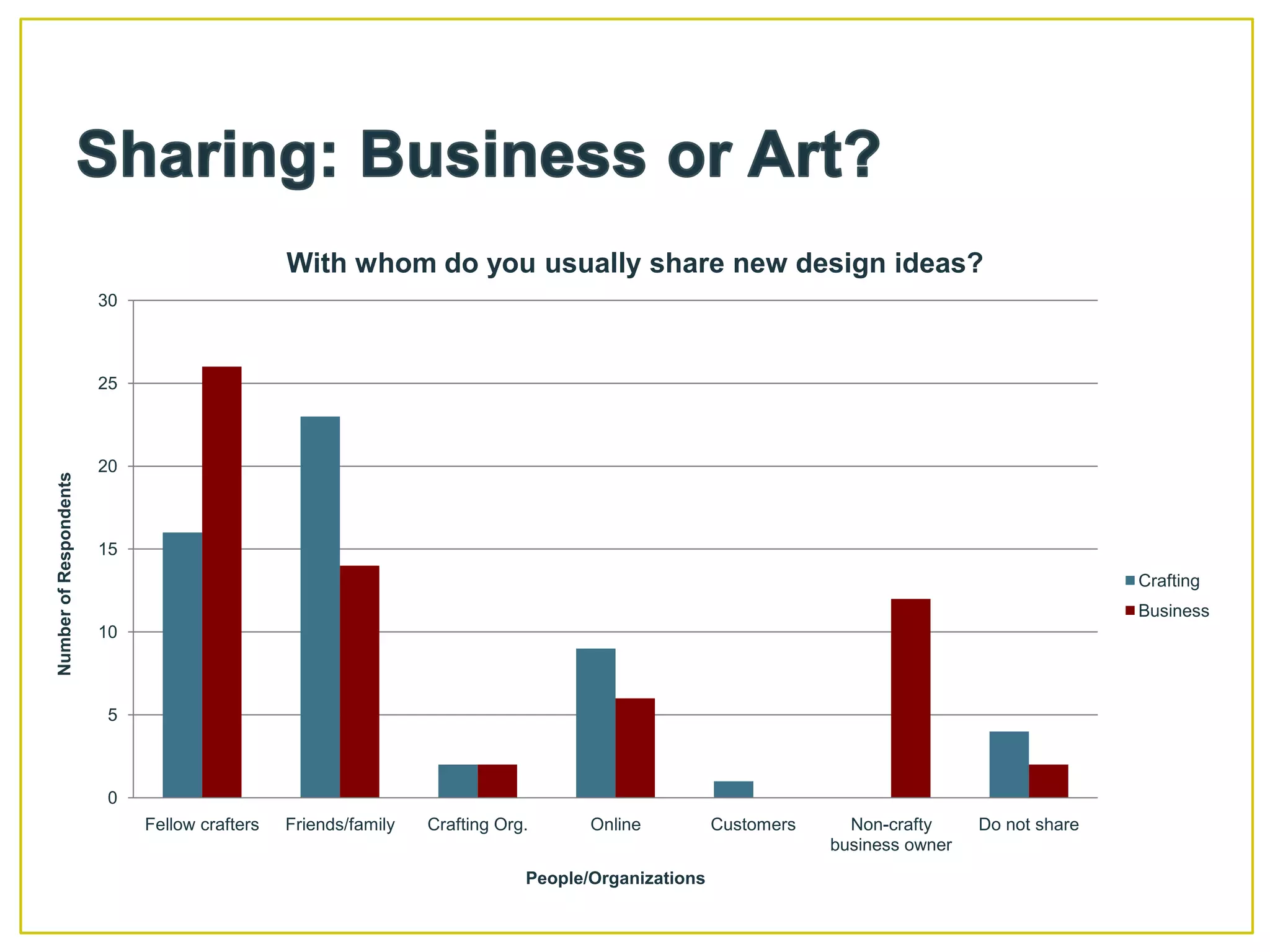
Sharing: Business or Art?
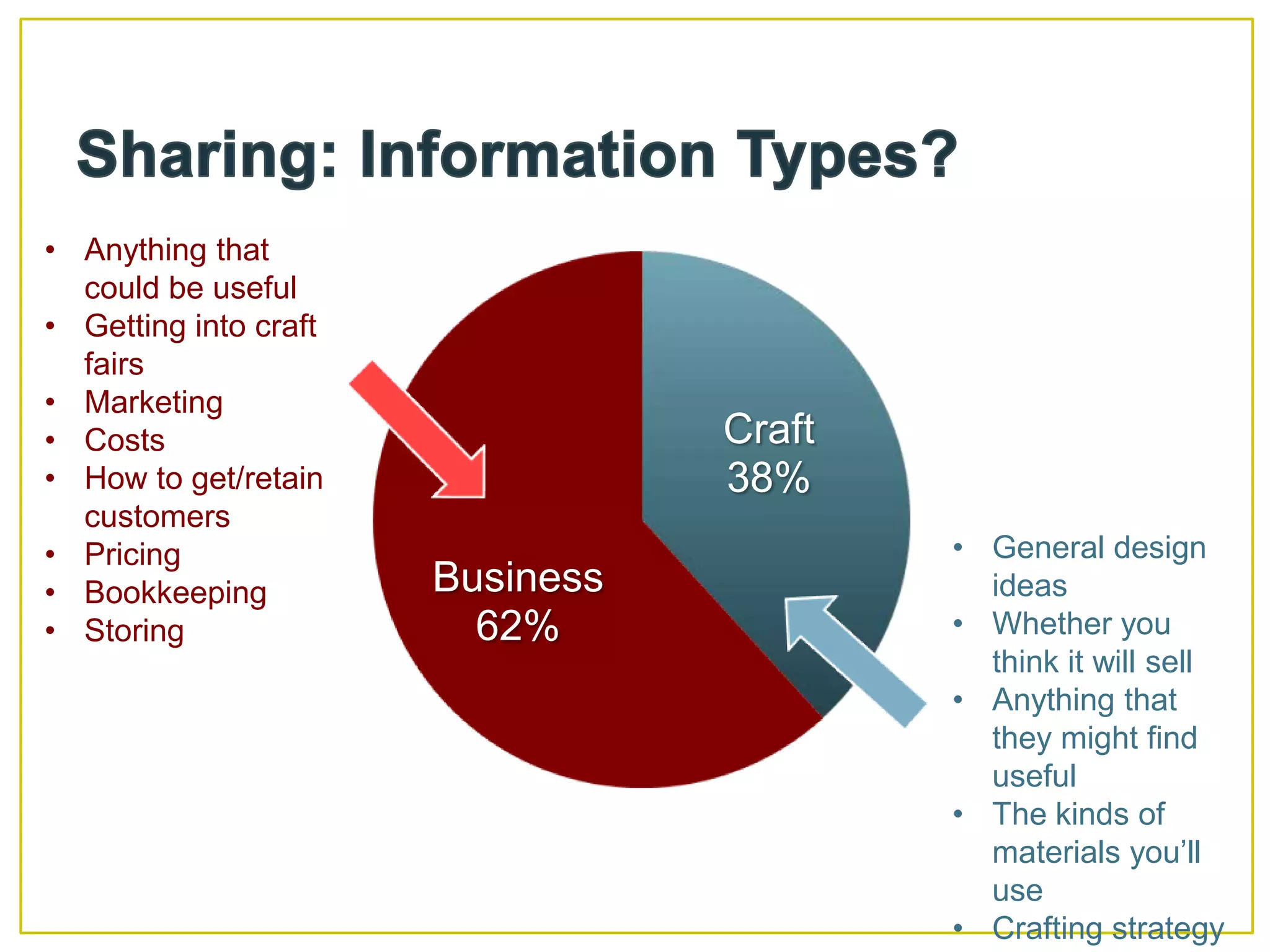
Sharing: Information Types?Anything that could be useful
Getting into craft fairs
Marketing
Costs
How to get/retain customers
Pricing
Bookkeeping
Storing
General design ideas
Whether you think it will sell
Anything that they might find useful
The kinds of materials you’ll use
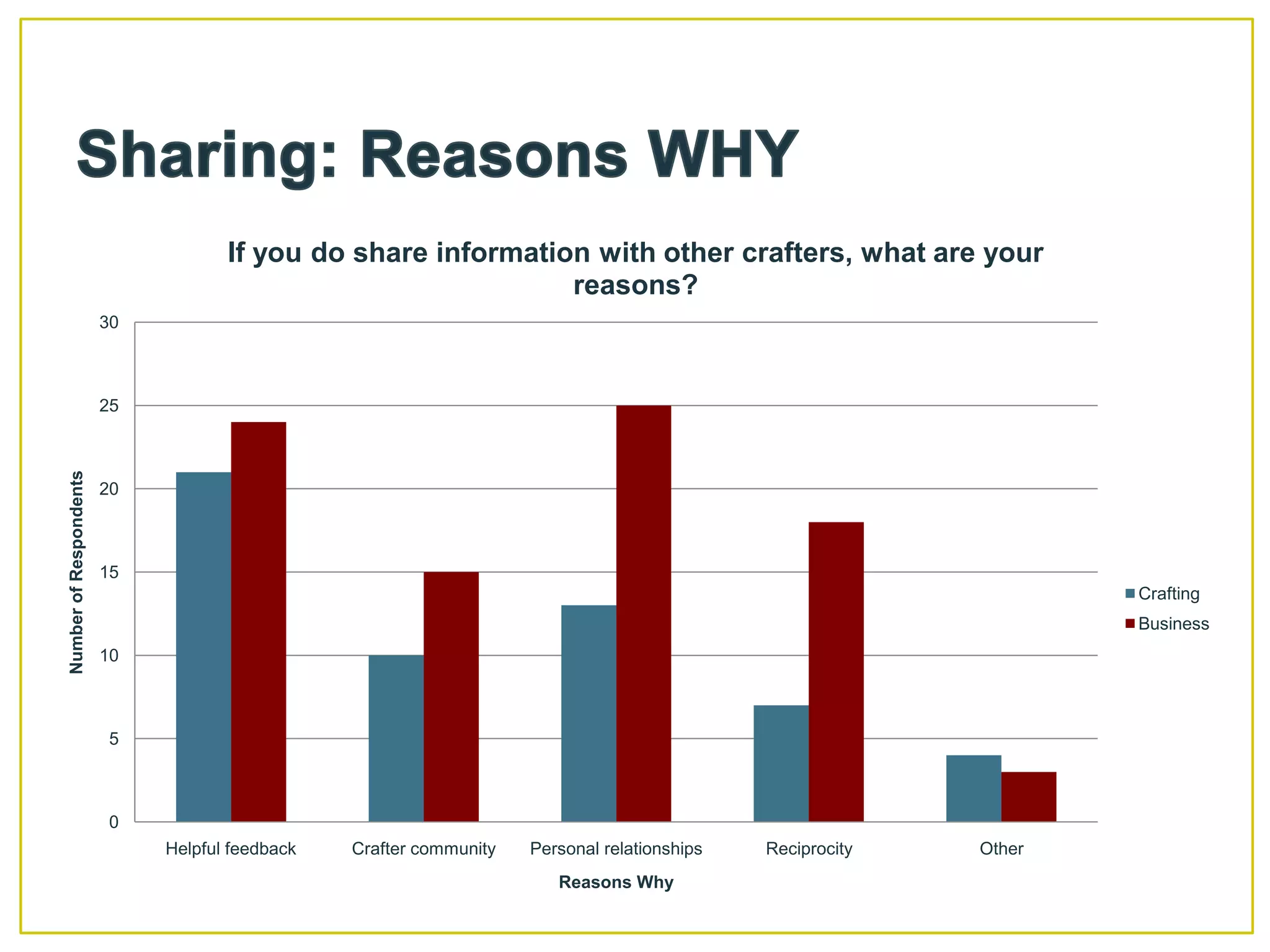
Crafting strategySharing: Reasons WHY
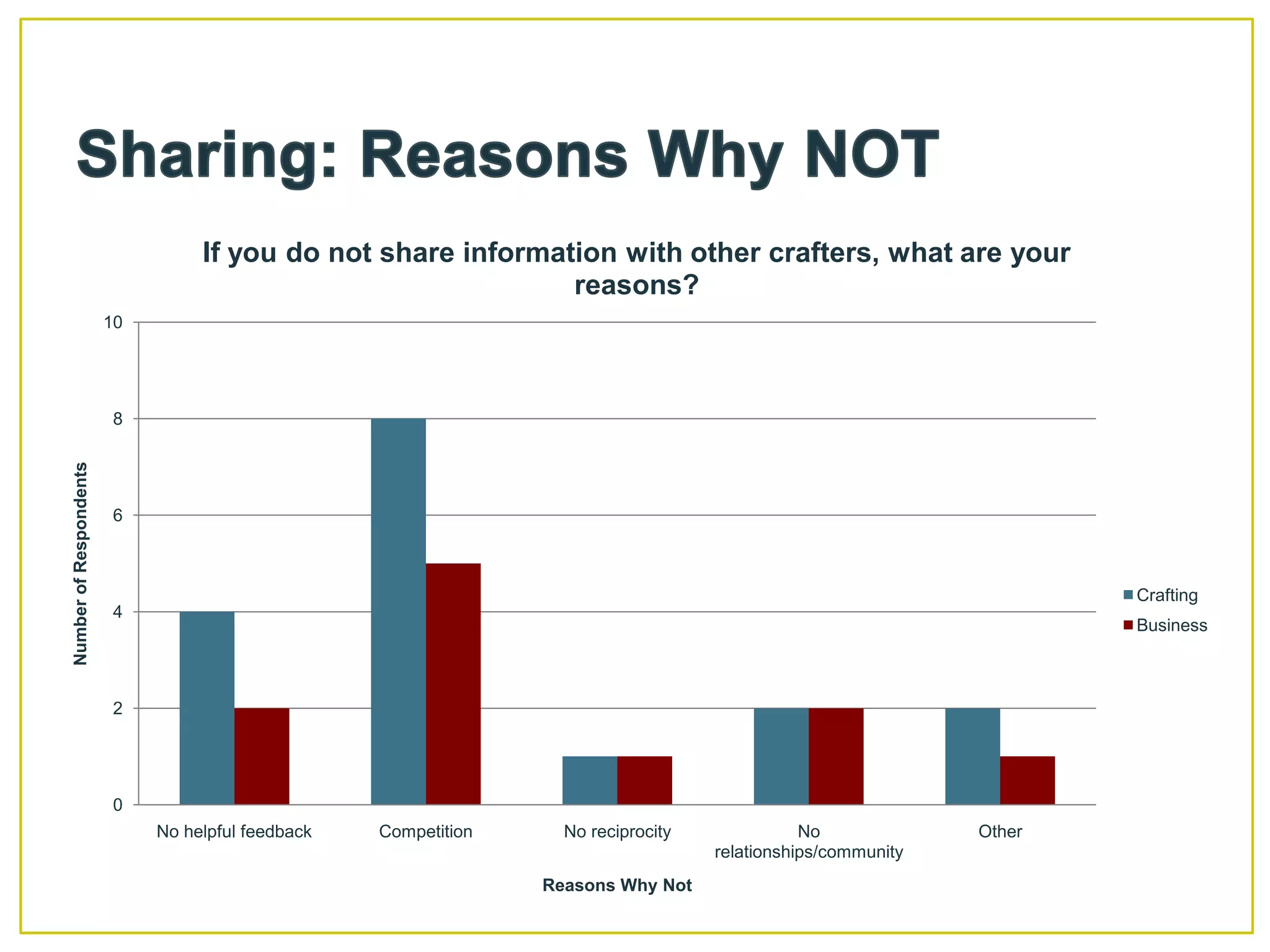
Sharing: Reasons Why NOT
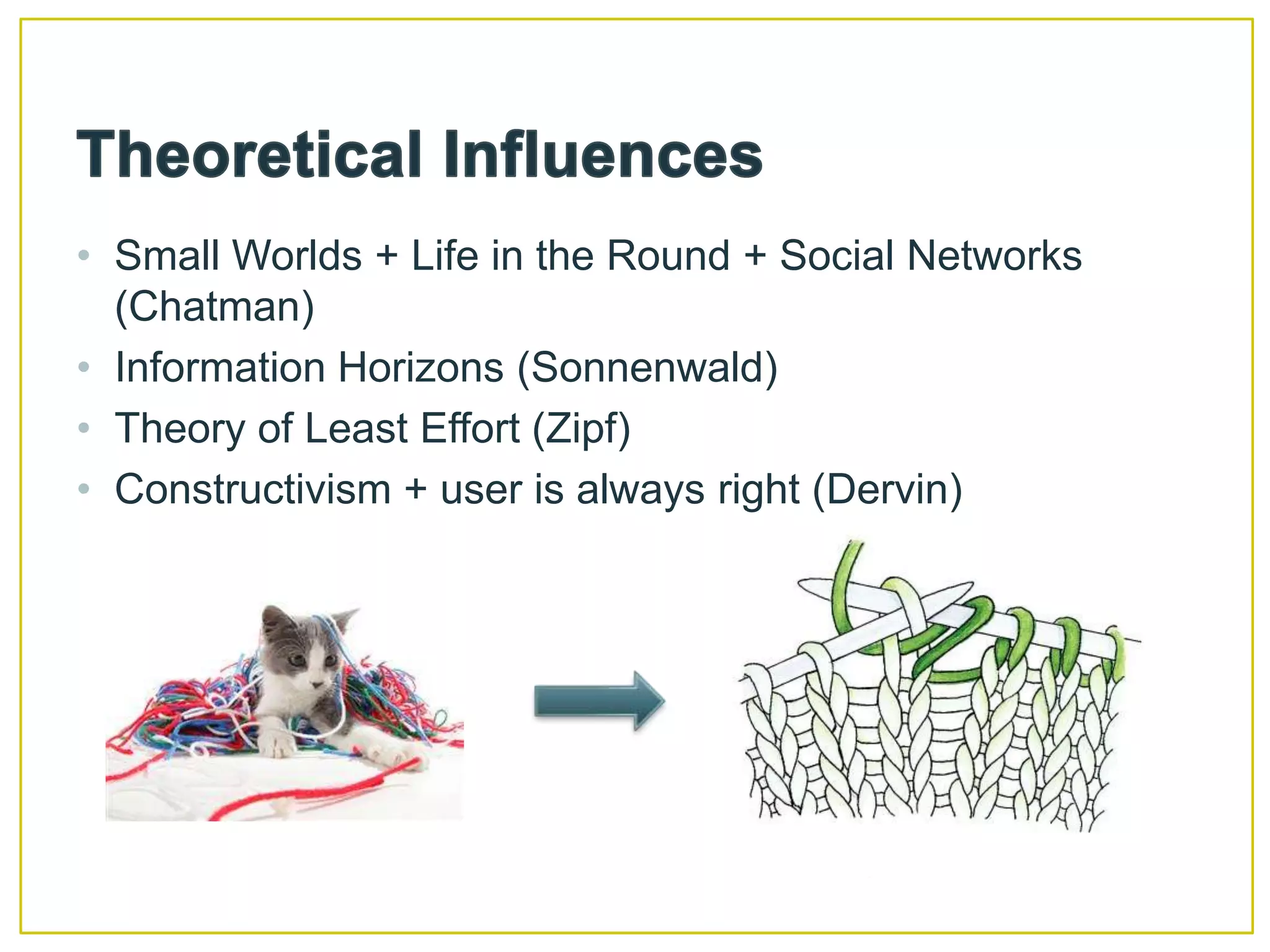
Theoretical InfluencesSmall Worlds+ Life in the Round + Social Networks (Chatman)Information Horizons (Sonnenwald)Theory of Least Effort (Zipf)Constructivism + user is always right (Dervin)
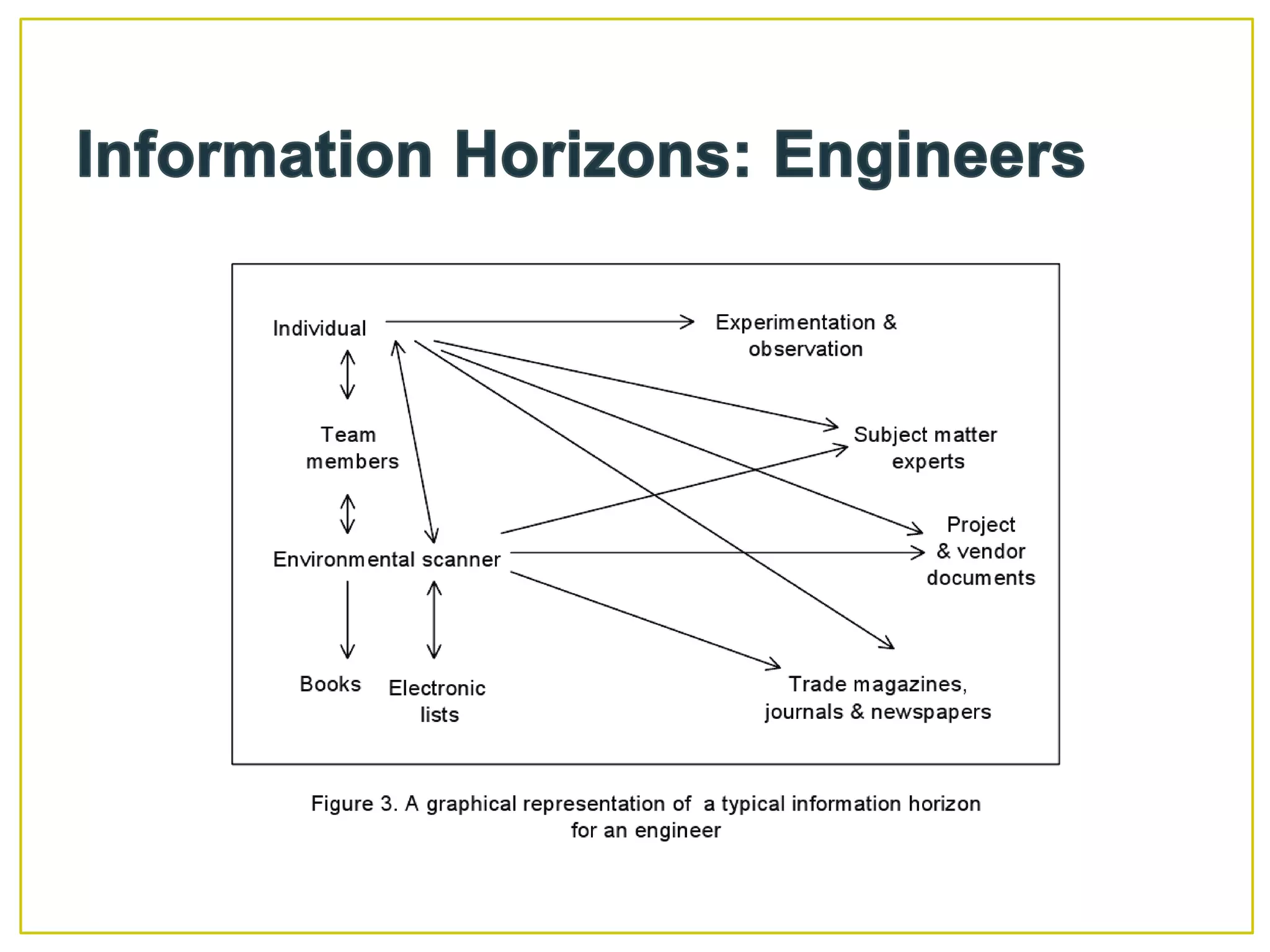
Information Horizons: Engineers
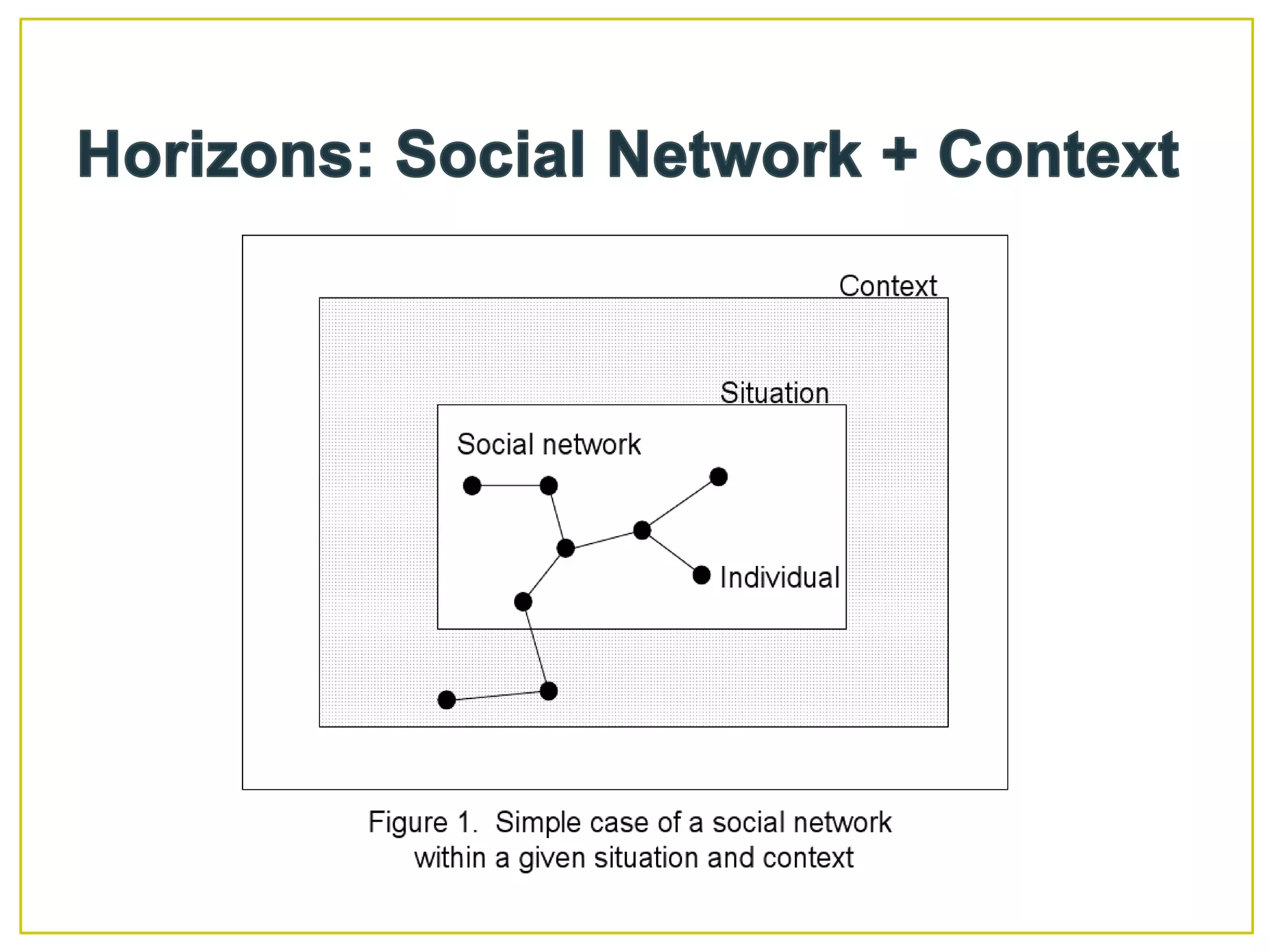
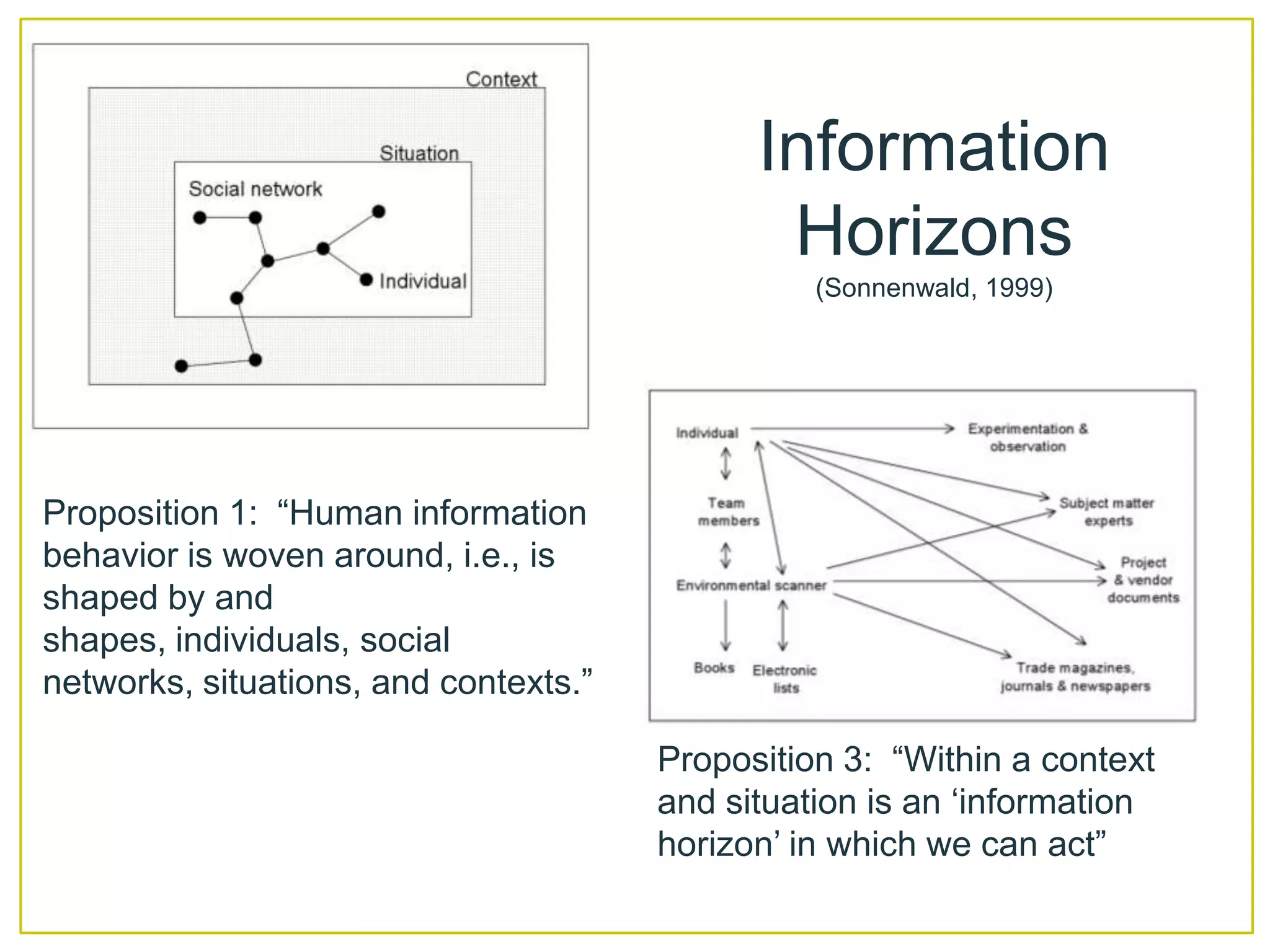
Horizons: Social Network + Context
Fieldwork 2.0 : Crafting InterviewsThree interviews with local craftersOpen-ended, topical questions based on questionnaire Focus on personal details of processes of sharingMajor findings:Crafters more likely to share business-related information than design-related informationPersonal contacts (2) and online message boards (1) most important
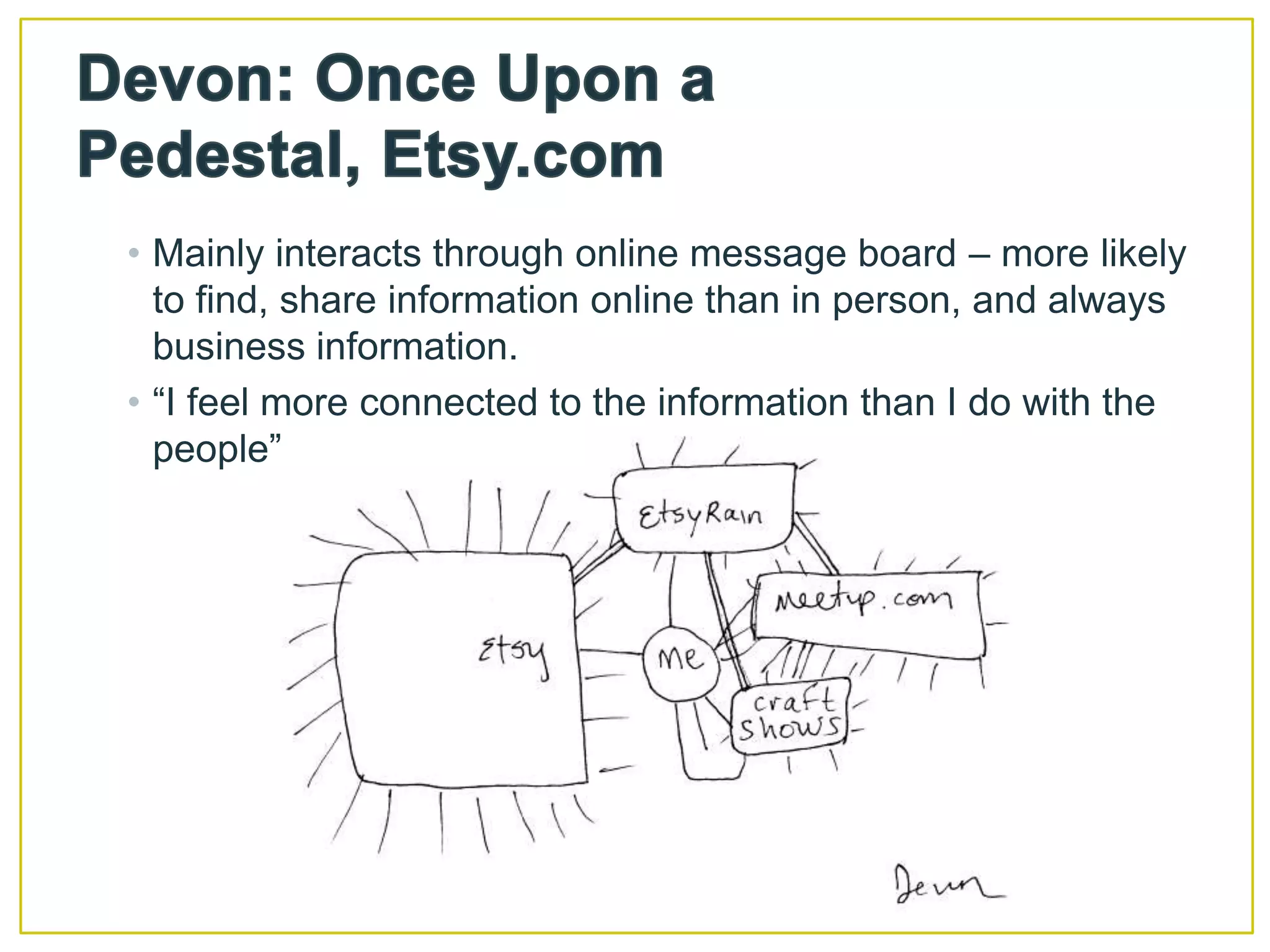
Devon: Once Upon a Pedestal, Etsy.comMainly interacts through online message board – more likely to find, share information online than in person, and always business information.“I feel more connected to the information than I do with the people”

LIS 510 Information Worlds

  • 1.
    To Share, orNot to Share, That is the Question: Information Sharing Among Urban CraftersSarah CaldwellSarah GanderupErica Leigh NelsonMeredith SlotaJulie Tanaka
  • 2.
  • 3.
    Population = URBANCRAFTERSCraft micro-retailersSmall business ownersCraftersCommunity members
  • 4.
    Urban Crafters“Small businessowner” Compose >99% of all businesses in the U.S.A. Legal definition = <500 employees (www.sba.gov) Sole-proprietorship or LLCMost have just ONE employee: the owner!“Crafter”Hand-crafted productsDesign + fabrication in-houseD.I.Y. ethicUrban Craft Uprising+Local popular craft fairNumber of vendors > 100
  • 5.
    Urban Craft UprisingUrbanCraft Uprising's Mission: “To build a fun, successful showcase for indie crafters and to nurture a supportive DIY crafting community”http://urbancraftuprising.com/Our question is:How does membership in this community affect information behavior?To what extent do members of this “community” share information?Is there competition? Does that affect the ways in which information is shared?
  • 6.
  • 7.
    What ExistsProblemsAreas ofAgreementAreas of DisagreementLiterature Review
  • 8.
    Literature ReviewThe Literatureon CraftersWhat ExistsSharing business informationSharing artistic informationBest LiteratureExampleFurther Research
  • 9.
    She’s Crafty: AreYOU?Participation
  • 10.
    Game InstructionsYou’ve eachbeen given a set of instructions for how to build a boat, but your set may be incomplete and/or contain duplicates. Your goal is to acquire a full set of the 5 instructionsHint: they’re numbered!You must talk to your fellow crafters and try to get the information you need (i.e. a slip of paper with the instruction(s) you need).Time’s up when the song ends!
  • 11.
  • 12.
    Crafting our Survey:BasicsPreliminary questionnaire: Fremont Market 19 questions12 in-person respondentsOnline questionnaire: UCU Vendor List24 questions25 (additional) respondents81 emails, 25 responses = 30.8% response rate
  • 13.
  • 14.
  • 15.
  • 16.
  • 17.
  • 18.
  • 19.
  • 20.
  • 21.
  • 22.
  • 23.
    Whether you thinkit will sell
  • 24.
    Anything that theymight find useful
  • 25.
    The kinds ofmaterials you’ll use
  • 26.
  • 27.
  • 28.
    Theoretical InfluencesSmall Worlds+Life in the Round + Social Networks (Chatman)Information Horizons (Sonnenwald)Theory of Least Effort (Zipf)Constructivism + user is always right (Dervin)
  • 29.
  • 30.
  • 31.
    Fieldwork 2.0 :Crafting InterviewsThree interviews with local craftersOpen-ended, topical questions based on questionnaire Focus on personal details of processes of sharingMajor findings:Crafters more likely to share business-related information than design-related informationPersonal contacts (2) and online message boards (1) most important
  • 32.
    Devon: Once Upona Pedestal, Etsy.comMainly interacts through online message board – more likely to find, share information online than in person, and always business information.“I feel more connected to the information than I do with the people”
  • 33.
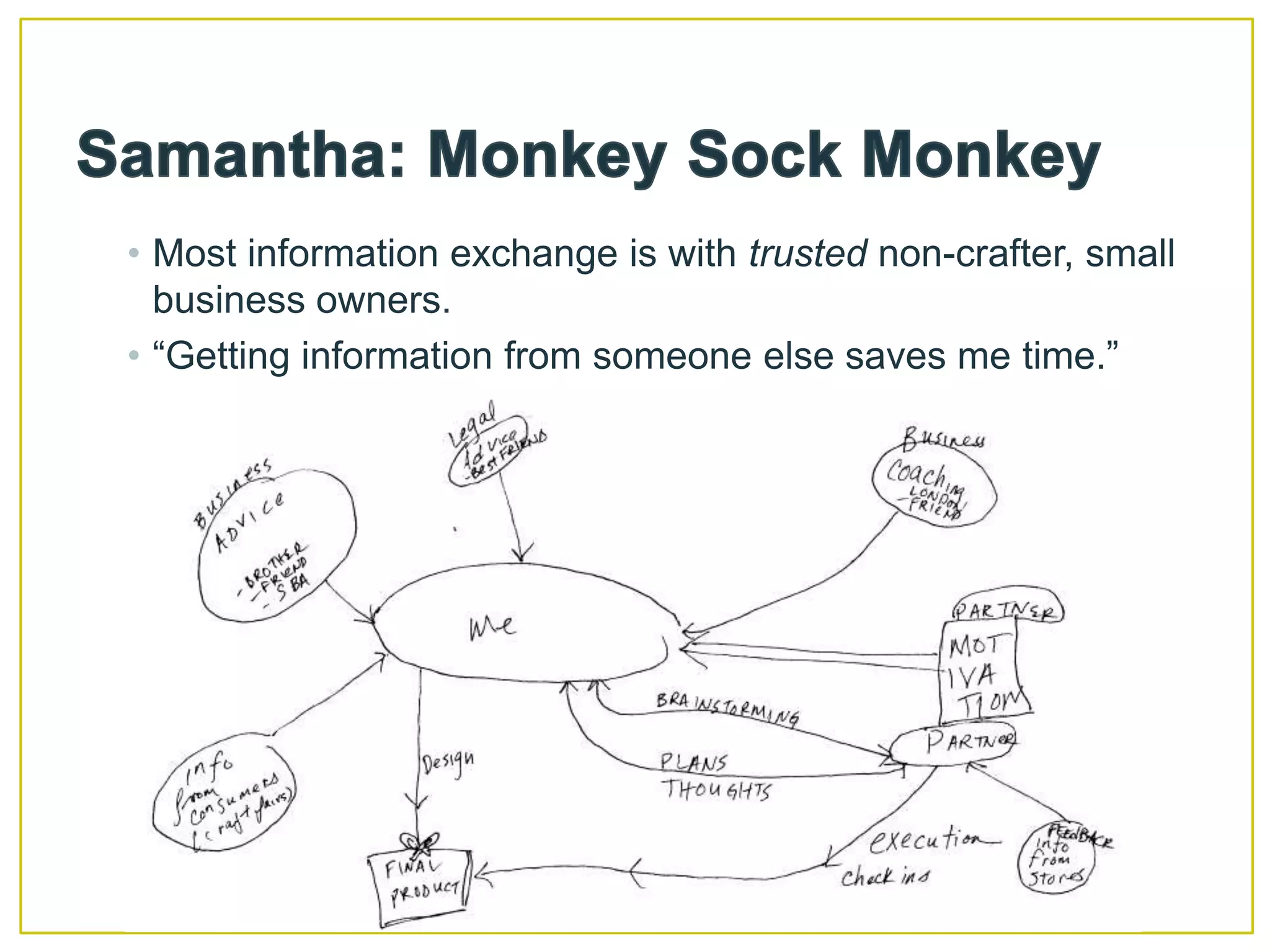
    Samantha: Monkey SockMonkeyMost information exchange is with trusted non-crafter, small business owners.“Getting information from someone else saves me time.”
  • 34.
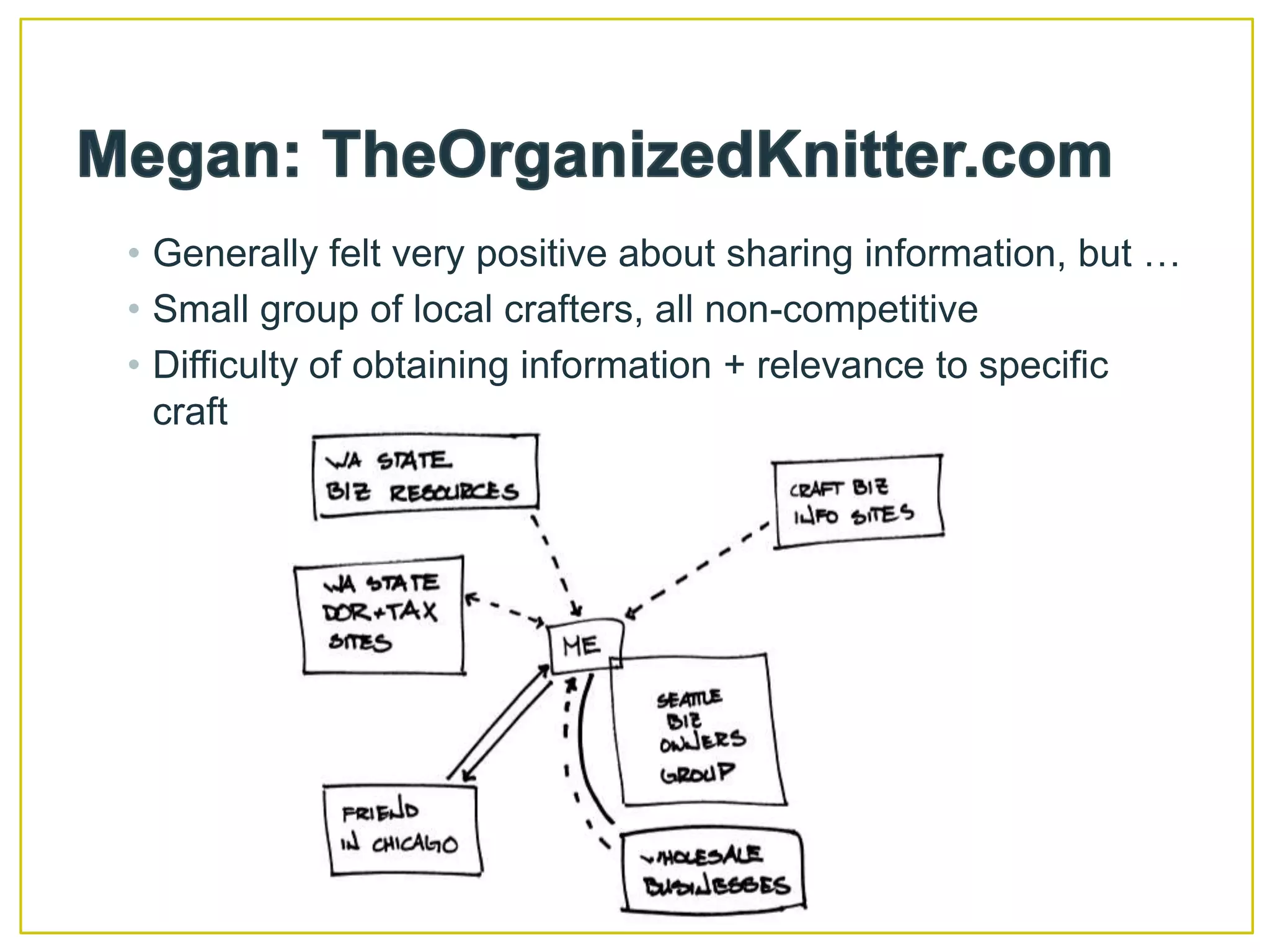
    Megan: TheOrganizedKnitter.comGenerally feltvery positive about sharing information, but …Small group of local crafters, all non-competitiveDifficulty of obtaining information + relevance to specific craft
  • 35.
  • 36.
  • 37.
    Information Horizons(Sonnenwald, 1999)Proposition1: “Human information behavior is woven around, i.e., is shaped by and shapes, individuals, social networks, situations, and contexts.”Proposition 3: “Within a context and situation is an ‘information horizon’ in which we can act”
  • 38.
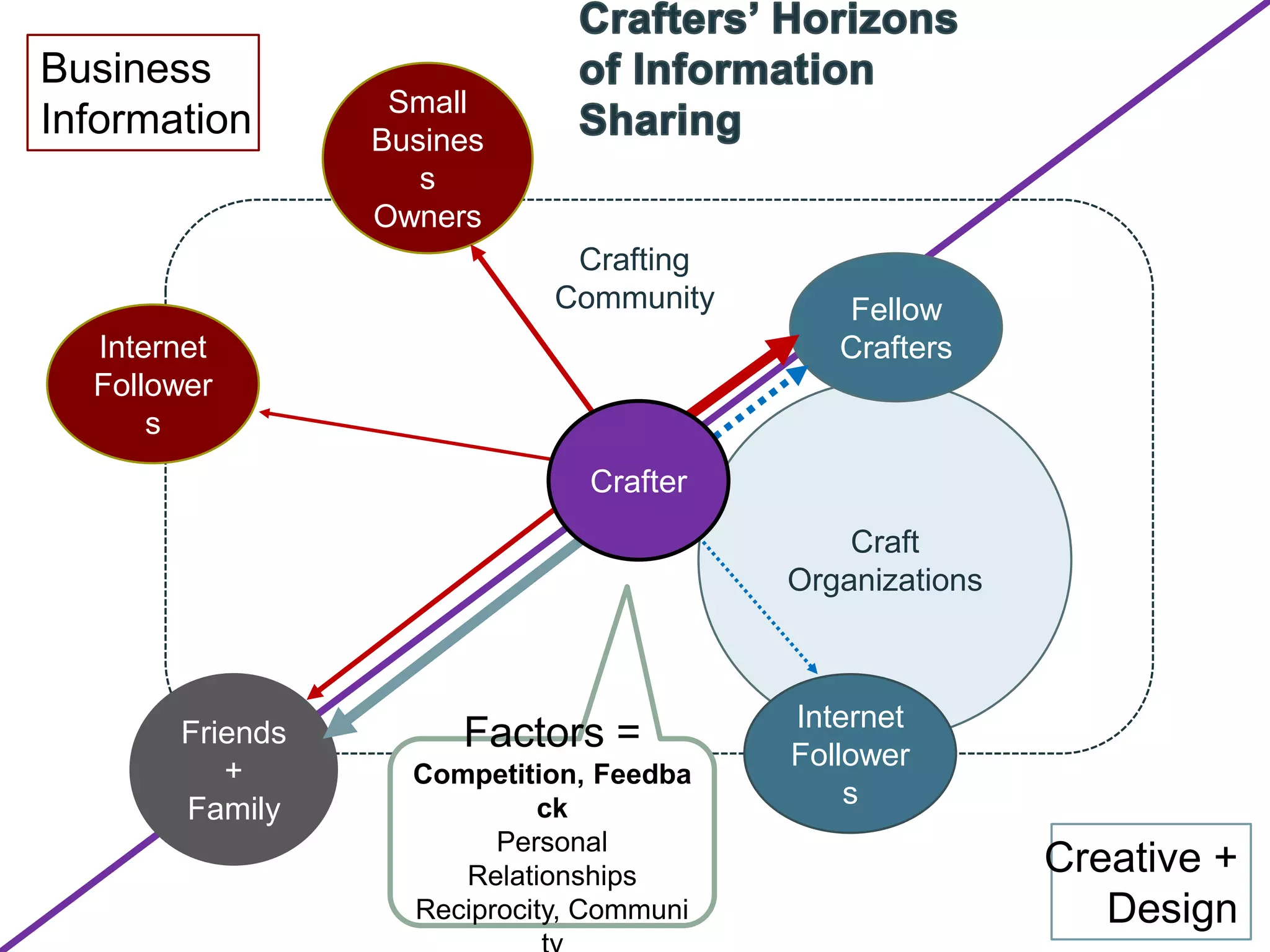
    BusinessInformationCrafters’ Horizons ofInformation SharingSmall Business OwnersCraftingCommunityFellow CraftersInternet FollowersCraft OrganizationsCrafterFriends + FamilyInternet FollowersFactors = Competition, FeedbackPersonal RelationshipsReciprocity, CommunityCreative +Design
  • 39.
  • 40.
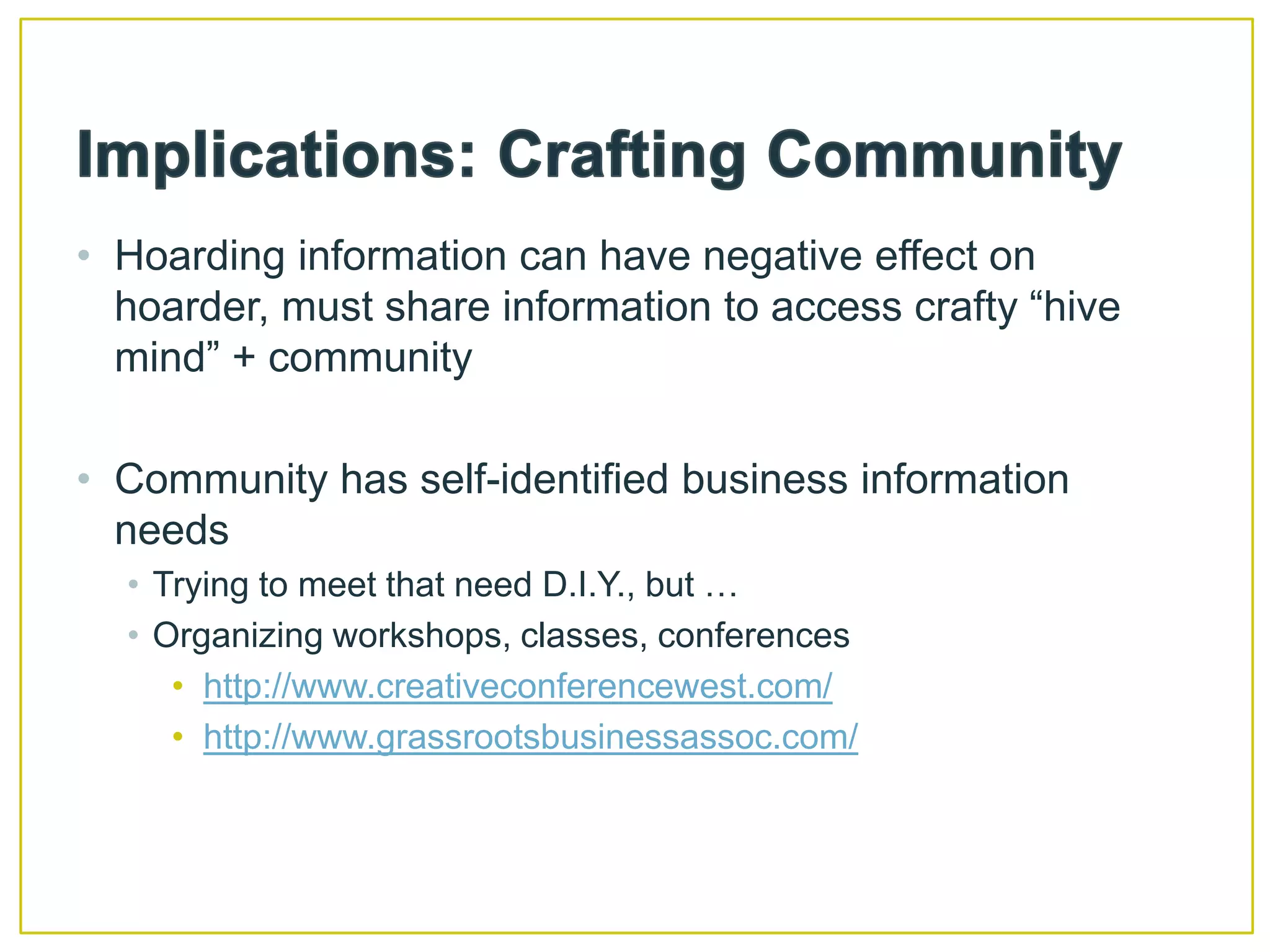
    Implications: Crafting CommunityHoardinginformation can have negative effect on hoarder, must share information to access crafty “hive mind” + communityCommunity has self-identified business information needs Trying to meet that need D.I.Y., but …Organizing workshops, classes, conferenceshttp://www.creativeconferencewest.com/http://www.grassrootsbusinessassoc.com/
  • 41.
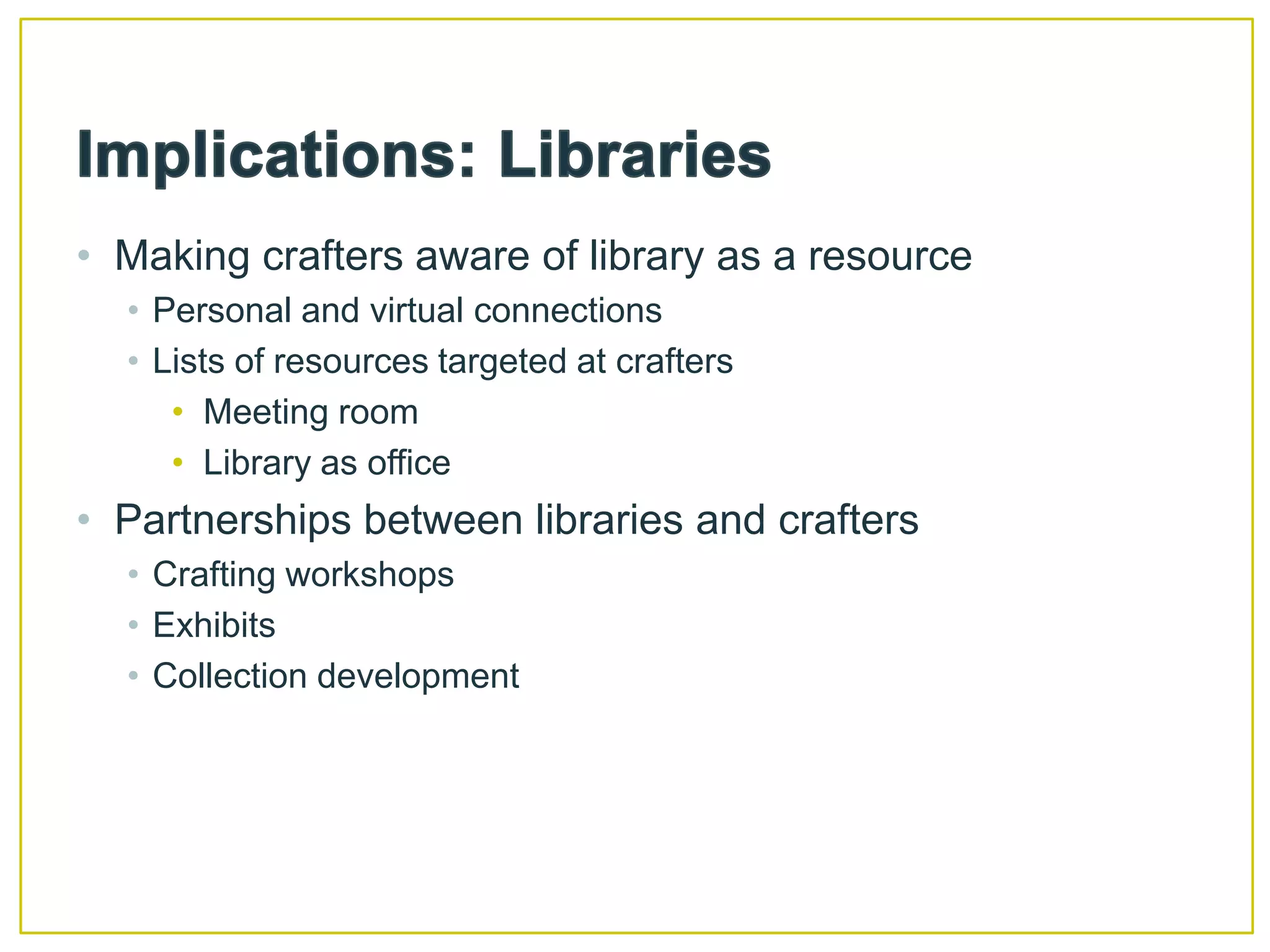
    Implications: LibrariesMaking craftersaware of library as a resourcePersonal and virtual connectionsLists of resources targeted at craftersMeeting roomLibrary as officePartnerships between libraries and craftersCrafting workshopsExhibitsCollection development
  • 42.
    Implications: Government AgenciesMicro-retailersdon’t fit SBA standard “mold”Policies or information tailored to the particular context of micro-retailersLocal gov’ts should explore micro-retailers Their role in the economy Small but vital54% said “essential to livelihood”, 68% said “important” to livelihoodLook for ways to support themUrban Craft Uprising, etc. – partnerships with city resourceshttp://smallbusinesssaturday.com/
  • 43.
    Sarah CaldwellSarah GanderupEricaLeigh NelsonMeredith SlotaJulie TanakaTHE END