 is a Unix-like.
 computer operating system (OS)
 assembled under the model of free and
open-source software
 The defining component of Linux is
the Linux kernel.
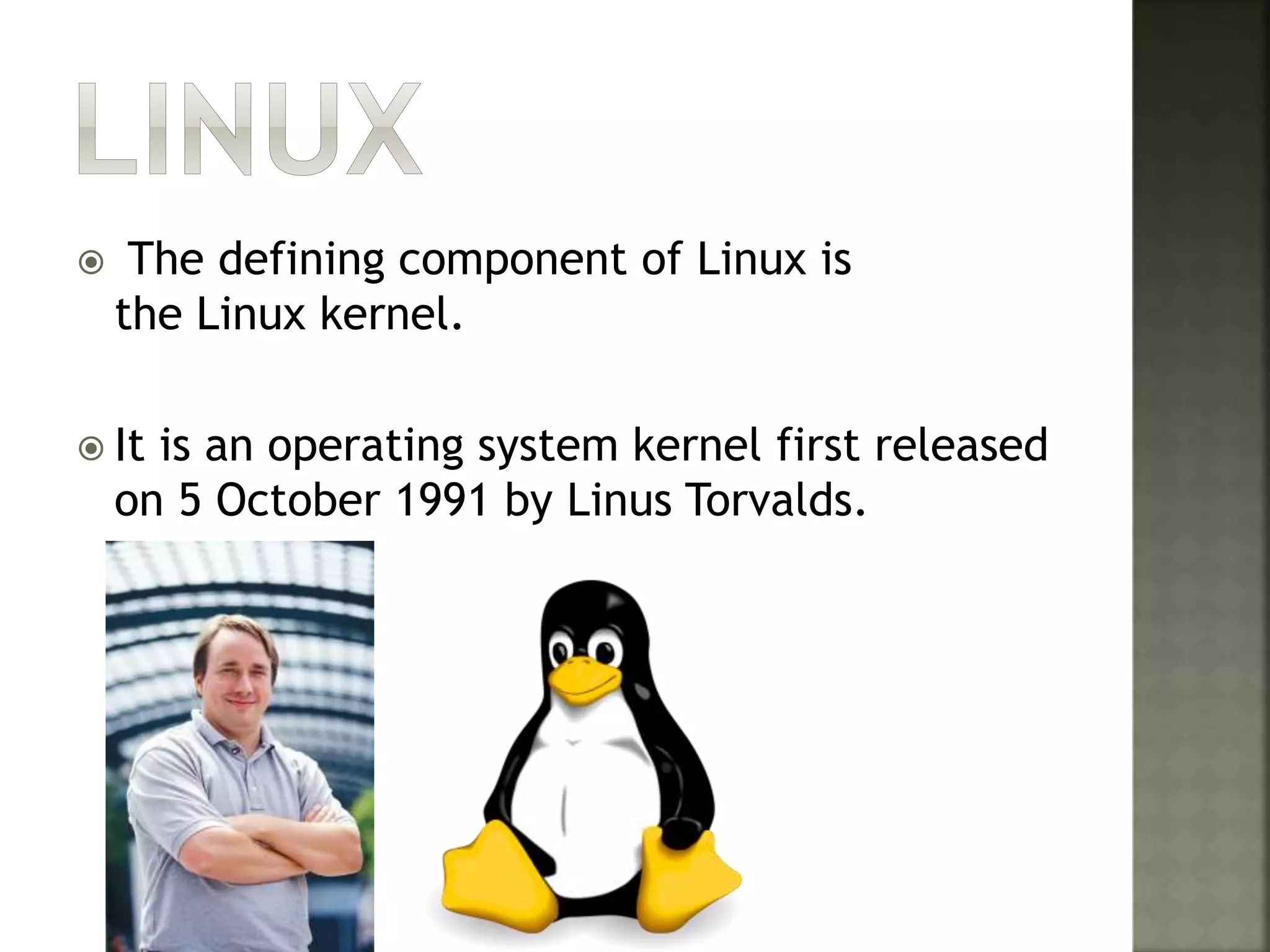
 It is an operating system kernel first released
on 5 October 1991 by Linus Torvalds.
The development of Linux is one
of the most prominent examples
of free and open-source
software collaboration
 Everything is a file. ( Including hardware )
 Small, single-purpose programs.
 Ability to chain programs together to
perform complex tasks.
 Avoid captive user interfaces.
 Configuration data stored in text.
 UNIX systems have many powerful utilities
designed to create and manipulate files. The
UNIX security model is based around the
security of files.
 By treating everything as a file, a
consistency emerges. You can secure access
to hardware in the same way as you secure
access to a document.
 UNIX provides many small utilities that
perform one task very well.
 When new functionality is required, the
general philosophy is to create a separate
program – rather than to extend an existing
utility with new features.
 A core design feature of UNIX is that the
output of one program can be the input for
another. This gives the user the flexibility to
combine many small programs together to
perform a larger, more complex task.
 Interactive commands are rare in UNIX. Most
commands expect their options and
arguments to be typed on the command line
when the command is launched.
 The command completes normally, possibly
producing output, or generates an error
message and quits. Interactivity is reserved
for programs where it makes sense, for
example, text editors (of course, there are
non-interactive text editors too.)
 Text is a universal interface, and many UNIX
utilities exist to manipulate text. Storing
configuration in text allows an administrator
to move a configuration from one machine to
another easily.
 There are several revision control applications
that enable an administrator to track which
change was made on a particular day, and
provide the ability to roll back a system
configuration to a particular date and time.
 Each of the commands that make up this
command line program is a filter.
 That is each command will take an input,
usually from Standard Input, and “filters”
the data stream by making some change to
it, then sends the resulting data stream to
Standard Output.
 Standard Input and Standard Output are
known collectively as STDIO.
 The who command generates an initial
stream of data.
 Each following command changes that data
stream in some manner, taking the Standard
Input and sending the modified data to
Standard Output for the next command to
manipulate.
 Each of the commands in this program is
fairly small, and each performs a specific
task.
 The sort command, for example does only
one thing. It sorts the data stream sent to it
via Standard Input and sends the results to
Standard Output.
 It can perform numeric, alphabetic and
alphanumeric sorts in forward and reverse
order.
 But it does nothing else. It only sorts but it is
very, very good at that. Because it is very
small, having only 2614 lines of code as
shown in the table below, it is also very fast.
 The portability of shell scripts can be far
more efficient in the long run than the
perceived efficiency of writing a program in a
compiled language—not even considering the
time required to compile and test such a
program—because they can run on many
otherwise incompatible systems.
 it means that by using four command line
commands, we are leveraging the work of
the programmers who created those
commands with over 7,000 lines of C code.
 That is code that we do not have to create.
We are leveraging the efforts of those other,
under-appreciated programmers to
accomplish the task we have set for
ourselves.
 Another aspect of software leverage is that
good programmers write good code and great
programmers borrow good code. Never
rewrite code that has already been written.

Linux principles and philosophy

  • 2.
     is aUnix-like.  computer operating system (OS)  assembled under the model of free and open-source software
  • 3.
     The definingcomponent of Linux is the Linux kernel.  It is an operating system kernel first released on 5 October 1991 by Linus Torvalds.
  • 4.
    The development ofLinux is one of the most prominent examples of free and open-source software collaboration
  • 5.
     Everything isa file. ( Including hardware )  Small, single-purpose programs.  Ability to chain programs together to perform complex tasks.  Avoid captive user interfaces.  Configuration data stored in text.
  • 6.
     UNIX systemshave many powerful utilities designed to create and manipulate files. The UNIX security model is based around the security of files.  By treating everything as a file, a consistency emerges. You can secure access to hardware in the same way as you secure access to a document.
  • 7.
     UNIX providesmany small utilities that perform one task very well.  When new functionality is required, the general philosophy is to create a separate program – rather than to extend an existing utility with new features.
  • 8.
     A coredesign feature of UNIX is that the output of one program can be the input for another. This gives the user the flexibility to combine many small programs together to perform a larger, more complex task.
  • 9.
     Interactive commandsare rare in UNIX. Most commands expect their options and arguments to be typed on the command line when the command is launched.
  • 10.
     The commandcompletes normally, possibly producing output, or generates an error message and quits. Interactivity is reserved for programs where it makes sense, for example, text editors (of course, there are non-interactive text editors too.)
  • 11.
     Text isa universal interface, and many UNIX utilities exist to manipulate text. Storing configuration in text allows an administrator to move a configuration from one machine to another easily.
  • 12.
     There areseveral revision control applications that enable an administrator to track which change was made on a particular day, and provide the ability to roll back a system configuration to a particular date and time.
  • 13.
     Each ofthe commands that make up this command line program is a filter.  That is each command will take an input, usually from Standard Input, and “filters” the data stream by making some change to it, then sends the resulting data stream to Standard Output.
  • 14.
     Standard Inputand Standard Output are known collectively as STDIO.  The who command generates an initial stream of data.  Each following command changes that data stream in some manner, taking the Standard Input and sending the modified data to Standard Output for the next command to manipulate.
  • 15.
     Each ofthe commands in this program is fairly small, and each performs a specific task.  The sort command, for example does only one thing. It sorts the data stream sent to it via Standard Input and sends the results to Standard Output.
  • 16.
     It canperform numeric, alphabetic and alphanumeric sorts in forward and reverse order.  But it does nothing else. It only sorts but it is very, very good at that. Because it is very small, having only 2614 lines of code as shown in the table below, it is also very fast.
  • 17.
     The portabilityof shell scripts can be far more efficient in the long run than the perceived efficiency of writing a program in a compiled language—not even considering the time required to compile and test such a program—because they can run on many otherwise incompatible systems.
  • 18.
     it meansthat by using four command line commands, we are leveraging the work of the programmers who created those commands with over 7,000 lines of C code.
  • 19.
     That iscode that we do not have to create. We are leveraging the efforts of those other, under-appreciated programmers to accomplish the task we have set for ourselves.
  • 20.
     Another aspectof software leverage is that good programmers write good code and great programmers borrow good code. Never rewrite code that has already been written.