Linear system
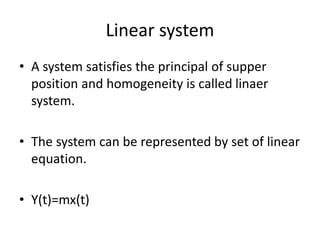
• A system satisfies the principal of supper
position and homogeneity is called linaer
system.
• The system can be represented by set of linear
equation.
• Y(t)=mx(t)
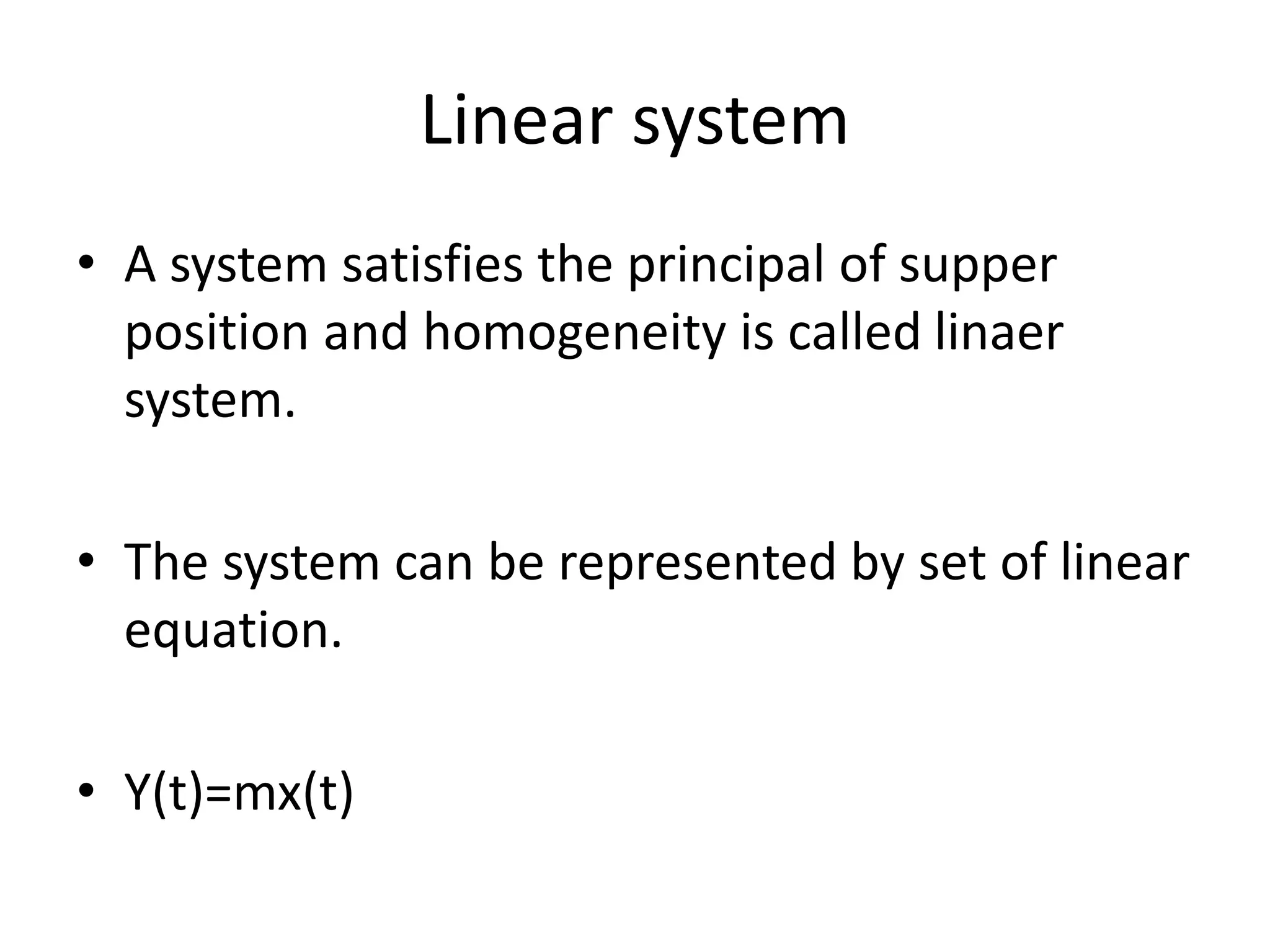
Time variant system
• Time variant system: The system’s output
directly depends on time.
• Y(t)=tx(t)
• Time invariant system: The system’s output
does not directly depend on time.
• Y(t)=ax(t)
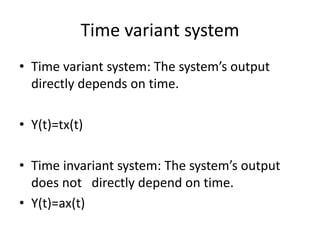
Transfer function
For linear time invariant system the transfer
function is defined as the ratio of Laplace
transfer of output to Laplace transform of
input under the assumption that all initial
condition are zero.
Characteristic of transfer function
• It relates output variable to input variable.
• It is the property of system itself.
• It does not provide the physical structure of the
system.
• It is used to analysis and determine the response
of the system under different input.
Steps to find transfer function
• Find the mathematical equation depending
upon the physical law.
• Take Laplace transform transformation of the
equations considering the initial condition
zero.
• Find the output to input ratio.
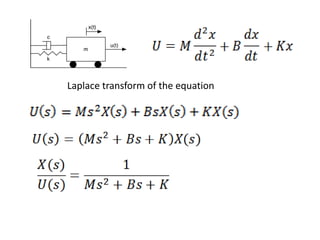
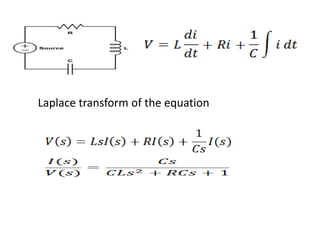
Laplace transform of the equation

Linear system explanation is given the ppt presentation

  • 1.
    Linear system • Asystem satisfies the principal of supper position and homogeneity is called linaer system. • The system can be represented by set of linear equation. • Y(t)=mx(t)
  • 2.
    Time variant system •Time variant system: The system’s output directly depends on time. • Y(t)=tx(t) • Time invariant system: The system’s output does not directly depend on time. • Y(t)=ax(t)
  • 3.
    Transfer function For lineartime invariant system the transfer function is defined as the ratio of Laplace transfer of output to Laplace transform of input under the assumption that all initial condition are zero.
  • 4.
    Characteristic of transferfunction • It relates output variable to input variable. • It is the property of system itself. • It does not provide the physical structure of the system. • It is used to analysis and determine the response of the system under different input.
  • 5.
    Steps to findtransfer function • Find the mathematical equation depending upon the physical law. • Take Laplace transform transformation of the equations considering the initial condition zero. • Find the output to input ratio.
  • 6.
  • 7.