LIGHTNING
LIGHTNING
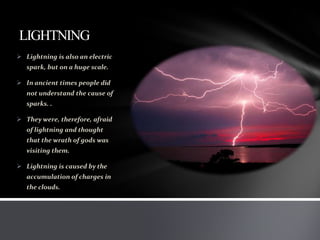
 Lightning is also an electric
spark, but on a huge scale.
 In ancient times people did
not understand the cause of
sparks. .
 They were, therefore, afraid
of lightning and thought
that the wrath of gods was
visiting them.
 Lightning is caused by the
accumulation of charges in
the clouds.
THE SPARKS
THAT THE
GREEKS KNEW
ABOUT
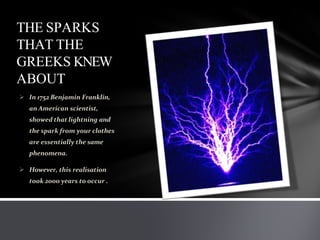
 In 1752 Benjamin Franklin,
an American scientist,
showed that lightning and
the spark from your clothes
are essentially the same
phenomena.
 However, this realisation
took 2000 years to occur .
EARTHING
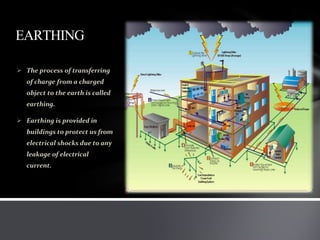
 The process of transferring
of charge from a charged
object to the earth is called
earthing.
 Earthing is provided in
buildings to protect us from
electrical shocks due to any
leakage of electrical
current.
THE STORY OF
LIGHTNING
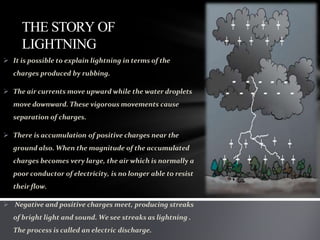
 It is possible to explain lightning in terms of the
charges produced by rubbing.
 The air currents move upward while the water droplets
move downward. These vigorous movements cause
separation of charges.
 There is accumulation of positive charges near the
ground also. When the magnitude of the accumulated
charges becomes very large, the air which is normally a
poor conductor of electricity, is no longer able to resist
their flow.
 Negative and positive charges meet, producing streaks
of bright light and sound. We see streaks as lightning .
The process is called an electric discharge.
LIGHTNING SAFETY
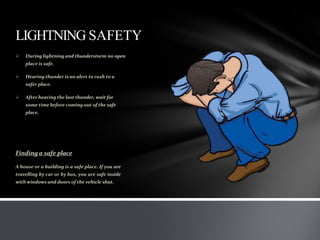
 During lightningand thunderstorm no open
place is safe.
 Hearing thunder is an alert to rush to a
safer place.
 After hearing the last thunder, wait for
some time before coming out of the safe
place.
Finding a safe place
A house or a building is a safe place. If you are
travelling by car or by bus, you are safe inside
with windows and doors of the vehicle shut.
DO’S AND DON’TS DURING A THUNDERSTORM
Outside
Open vehicles, like motorbikes, tractors, construction
machinery, open cars are not safe. Open fields, tall trees,
shelters in parks, elevated places do not protect us from
lightning strokes.
Carrying umbrella is not a good idea at all during
thunderstorms.
If in a forest, take shelter under shorter trees.
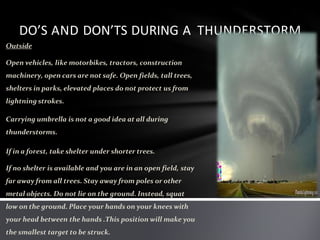
If no shelter is available and you are in an open field, stay
far away from all trees. Stay away from poles or other
metal objects. Do not lie on the ground. Instead, squat
low on the ground. Place your hands on your knees with
your head between the hands .This position will make you
the smallest target to be struck.
Inside the house
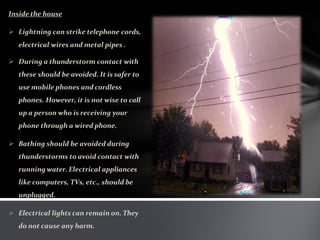
 Lightning can strike telephone cords,
electrical wires and metal pipes .
 During a thunderstorm contact with
these should be avoided. It is safer to
use mobile phones and cordless
phones. However, it is not wise to call
up a person who is receiving your
phone through a wired phone.
 Bathing should be avoided during
thunderstorms to avoid contact with
running water. Electrical appliances
like computers, TVs, etc., should be
unplugged.
 Electrical lights can remain on. They
do not cause any harm.

lightning-13070312304tfesw5-phpapp01.pptx

  • 1.
  • 2.
    LIGHTNING  Lightning isalso an electric spark, but on a huge scale.  In ancient times people did not understand the cause of sparks. .  They were, therefore, afraid of lightning and thought that the wrath of gods was visiting them.  Lightning is caused by the accumulation of charges in the clouds.
  • 3.
    THE SPARKS THAT THE GREEKSKNEW ABOUT  In 1752 Benjamin Franklin, an American scientist, showed that lightning and the spark from your clothes are essentially the same phenomena.  However, this realisation took 2000 years to occur .
  • 4.
    EARTHING  The processof transferring of charge from a charged object to the earth is called earthing.  Earthing is provided in buildings to protect us from electrical shocks due to any leakage of electrical current.
  • 5.
    THE STORY OF LIGHTNING It is possible to explain lightning in terms of the charges produced by rubbing.  The air currents move upward while the water droplets move downward. These vigorous movements cause separation of charges.  There is accumulation of positive charges near the ground also. When the magnitude of the accumulated charges becomes very large, the air which is normally a poor conductor of electricity, is no longer able to resist their flow.  Negative and positive charges meet, producing streaks of bright light and sound. We see streaks as lightning . The process is called an electric discharge.
  • 6.
    LIGHTNING SAFETY  Duringlightningand thunderstorm no open place is safe.  Hearing thunder is an alert to rush to a safer place.  After hearing the last thunder, wait for some time before coming out of the safe place. Finding a safe place A house or a building is a safe place. If you are travelling by car or by bus, you are safe inside with windows and doors of the vehicle shut.
  • 7.
    DO’S AND DON’TSDURING A THUNDERSTORM Outside Open vehicles, like motorbikes, tractors, construction machinery, open cars are not safe. Open fields, tall trees, shelters in parks, elevated places do not protect us from lightning strokes. Carrying umbrella is not a good idea at all during thunderstorms. If in a forest, take shelter under shorter trees. If no shelter is available and you are in an open field, stay far away from all trees. Stay away from poles or other metal objects. Do not lie on the ground. Instead, squat low on the ground. Place your hands on your knees with your head between the hands .This position will make you the smallest target to be struck.
  • 8.
    Inside the house Lightning can strike telephone cords, electrical wires and metal pipes .  During a thunderstorm contact with these should be avoided. It is safer to use mobile phones and cordless phones. However, it is not wise to call up a person who is receiving your phone through a wired phone.  Bathing should be avoided during thunderstorms to avoid contact with running water. Electrical appliances like computers, TVs, etc., should be unplugged.  Electrical lights can remain on. They do not cause any harm.