Notes: Life processes and
Homeostasis (pg 4)
Baby Girl!
Life processes
1. Maintaining boundaries
a. Every cell is surrounded by a membrane
b. The body is surrounded by skin
Life processes
1. Maintaining boundaries
a. Every cell is surrounded by a membrane
b. The body is surrounded by skin
2. Metabolism: Chemical reactions within body cells
a. Catabolism: Destructive. Food → Nutrients
b. Anabolism: Constructive. Nutrients → Muscle
Life processes
1.Boundaries
2. Metabolism
a. Catabolism: Destructive. Food → Nutrients
b. Anabolism: Constructive. Nutrients → Muscle
3. Responsiveness (Irritability): Ability to respond to a
stimulus
Life processes
1. Boundaries
2. Metabolism
a. Catabolism: Destructive. Food → Nutrients
b. Anabolism: Constructive. Nutrients → Muscle
3. Responsiveness (Irritability): Ability to respond to a
stimulus
4. Movement: Includes movement of the whole body
(walking, running), parts of the body, and
movement within the body (blood flowing through
blood vessels, food through the digestive system,
etc.)
Life processes
1. Boundaries
2. Metabolism
3. Responsiveness (Irritability): Ability to respond to a
stimulus
4. Movement: Includes movement of the whole body
(walking, running), parts of the body, and
movement within the body (blood flowing through
blood vessels, food through the digestive system,
etc.)
5. Reproduction:
a. Cellular level- for growth and repair and
replacement of old cells.
b. Organism level-formation of a new individual
Life processes
6. Growth: Increase in size either through increased #
of cells or size of cells
Life processes
6. Growth: Increase in size either through increased #
of cells or size of cells
7. Differentiation: Unspecialized cells develop into
specialized cells with distinctive structural and
functional characteristics
Life processes
6. Growth: Increase in size either through increased #
of cells or size of cells
7. Differentiation: Unspecialized cells develop into
specialized cells with distinctive structural and
functional characteristics
8. Respiration:
Cellular- breakdown of sugar into CO2 using O2
Organism- exchange of CO2and O2 in lungs
Life processes
6. Growth: Increase in size either through increased #
of cells or size of cells
7. Differentiation: Unspecialized cells develop into
specialized cells with distinctive structural and
functional characteristics
8. Respiration:
Cellular- breakdown of sugar into CO2 using O2
Organism- exchange of CO2and O2in lungs
9. Digestion: Breaking down food into nutrients
usable by the body
Life processes
6. Growth: Increase in size either through increased #
of cells or size of cells
7. Differentiation: Unspecialized cells develop into
specialized cells with distinctive structural and
functional characteristics
8. Respiration:
Cellular- breakdown of sugar into CO2 using O2
Organism- exchange of CO2 and O2
9. Digestion: Breaking down food into nutrients
usable by the body
10. Excretion: Removal of non-usable waste and by-
products of metabolism
Output (pg 5)
• Design an alien
Homeostasis (pg 4)
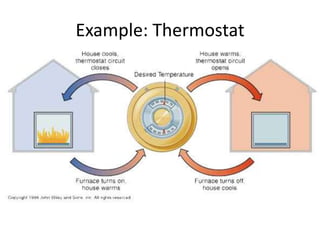
• Constant internal environment that must be
maintained in the body
• Usually accomplished by negative feedback
Example: Thermostat
Body Temperature
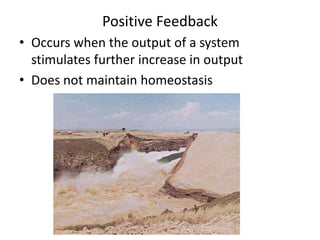
Positive Feedback
• Occurs when the output of a system
stimulates further increase in output
• Does not maintain homeostasis

Life processes

  • 1.
    Notes: Life processesand Homeostasis (pg 4)
  • 2.
  • 3.
    Life processes 1. Maintainingboundaries a. Every cell is surrounded by a membrane b. The body is surrounded by skin
  • 4.
    Life processes 1. Maintainingboundaries a. Every cell is surrounded by a membrane b. The body is surrounded by skin 2. Metabolism: Chemical reactions within body cells a. Catabolism: Destructive. Food → Nutrients b. Anabolism: Constructive. Nutrients → Muscle
  • 5.
    Life processes 1.Boundaries 2. Metabolism a.Catabolism: Destructive. Food → Nutrients b. Anabolism: Constructive. Nutrients → Muscle 3. Responsiveness (Irritability): Ability to respond to a stimulus
  • 6.
    Life processes 1. Boundaries 2.Metabolism a. Catabolism: Destructive. Food → Nutrients b. Anabolism: Constructive. Nutrients → Muscle 3. Responsiveness (Irritability): Ability to respond to a stimulus 4. Movement: Includes movement of the whole body (walking, running), parts of the body, and movement within the body (blood flowing through blood vessels, food through the digestive system, etc.)
  • 7.
    Life processes 1. Boundaries 2.Metabolism 3. Responsiveness (Irritability): Ability to respond to a stimulus 4. Movement: Includes movement of the whole body (walking, running), parts of the body, and movement within the body (blood flowing through blood vessels, food through the digestive system, etc.) 5. Reproduction: a. Cellular level- for growth and repair and replacement of old cells. b. Organism level-formation of a new individual
  • 8.
    Life processes 6. Growth:Increase in size either through increased # of cells or size of cells
  • 9.
    Life processes 6. Growth:Increase in size either through increased # of cells or size of cells 7. Differentiation: Unspecialized cells develop into specialized cells with distinctive structural and functional characteristics
  • 10.
    Life processes 6. Growth:Increase in size either through increased # of cells or size of cells 7. Differentiation: Unspecialized cells develop into specialized cells with distinctive structural and functional characteristics 8. Respiration: Cellular- breakdown of sugar into CO2 using O2 Organism- exchange of CO2and O2 in lungs
  • 11.
    Life processes 6. Growth:Increase in size either through increased # of cells or size of cells 7. Differentiation: Unspecialized cells develop into specialized cells with distinctive structural and functional characteristics 8. Respiration: Cellular- breakdown of sugar into CO2 using O2 Organism- exchange of CO2and O2in lungs 9. Digestion: Breaking down food into nutrients usable by the body
  • 12.
    Life processes 6. Growth:Increase in size either through increased # of cells or size of cells 7. Differentiation: Unspecialized cells develop into specialized cells with distinctive structural and functional characteristics 8. Respiration: Cellular- breakdown of sugar into CO2 using O2 Organism- exchange of CO2 and O2 9. Digestion: Breaking down food into nutrients usable by the body 10. Excretion: Removal of non-usable waste and by- products of metabolism
  • 13.
    Output (pg 5) •Design an alien
  • 14.
    Homeostasis (pg 4) •Constant internal environment that must be maintained in the body • Usually accomplished by negative feedback
  • 15.
  • 16.
  • 17.
    Positive Feedback • Occurswhen the output of a system stimulates further increase in output • Does not maintain homeostasis