Active Hydromodification Control
Judd Goodman, P.E.
Marcus Quigley, P.E.
LID and Hydromodification
“The primary goal of Low Impact Development methods is
to mimic the predevelopment site hydrology by using site
design techniques that store, infiltrate, evaporate, and
detain runoff.”
-Prince George's County, Maryland (1999)
Hydromodification = Hydrograph Modification
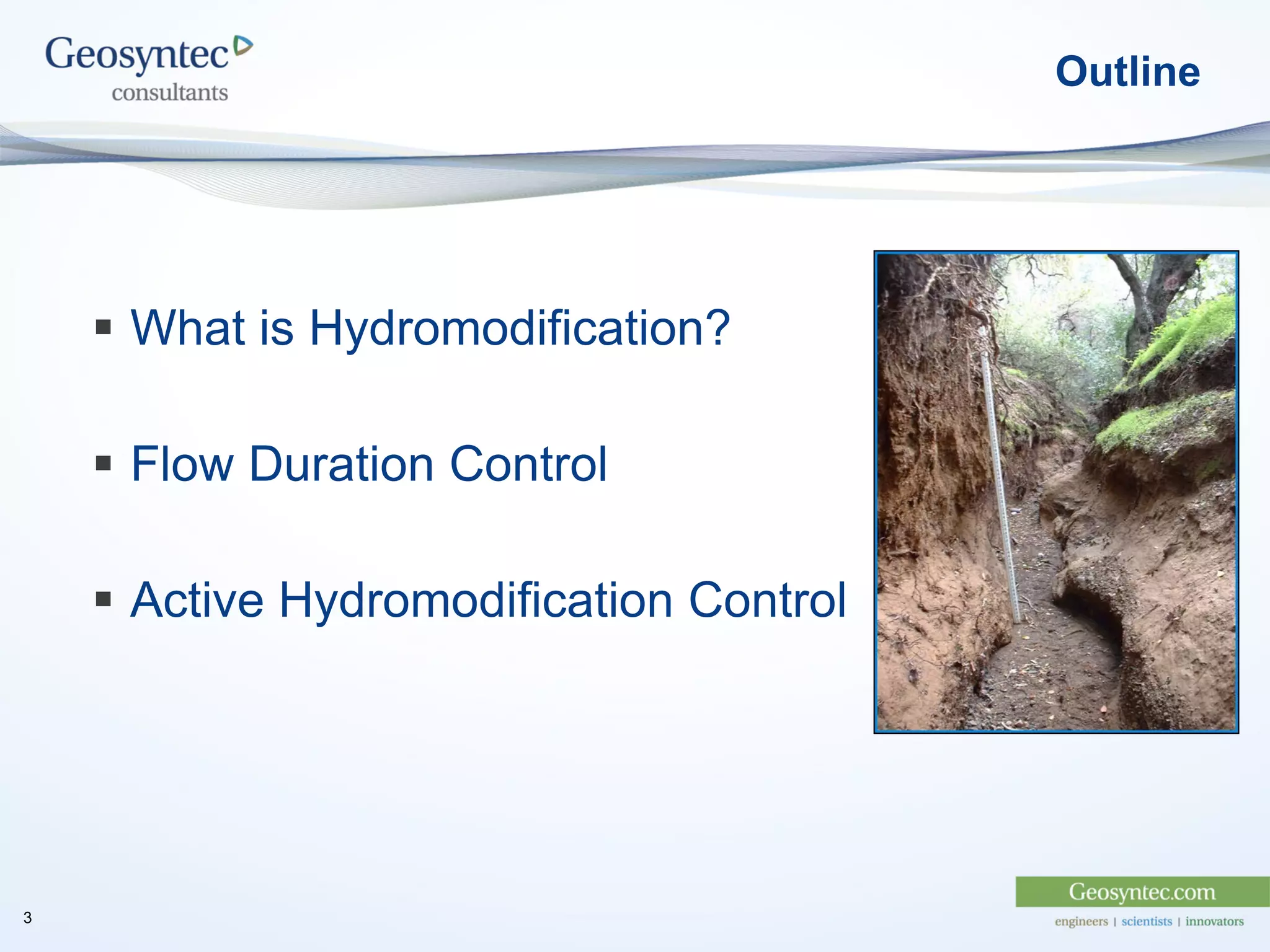
 What is Hydromodification?
 Flow Duration Control
 Active Hydromodification Control
Outline
3
What is Hydromodification?
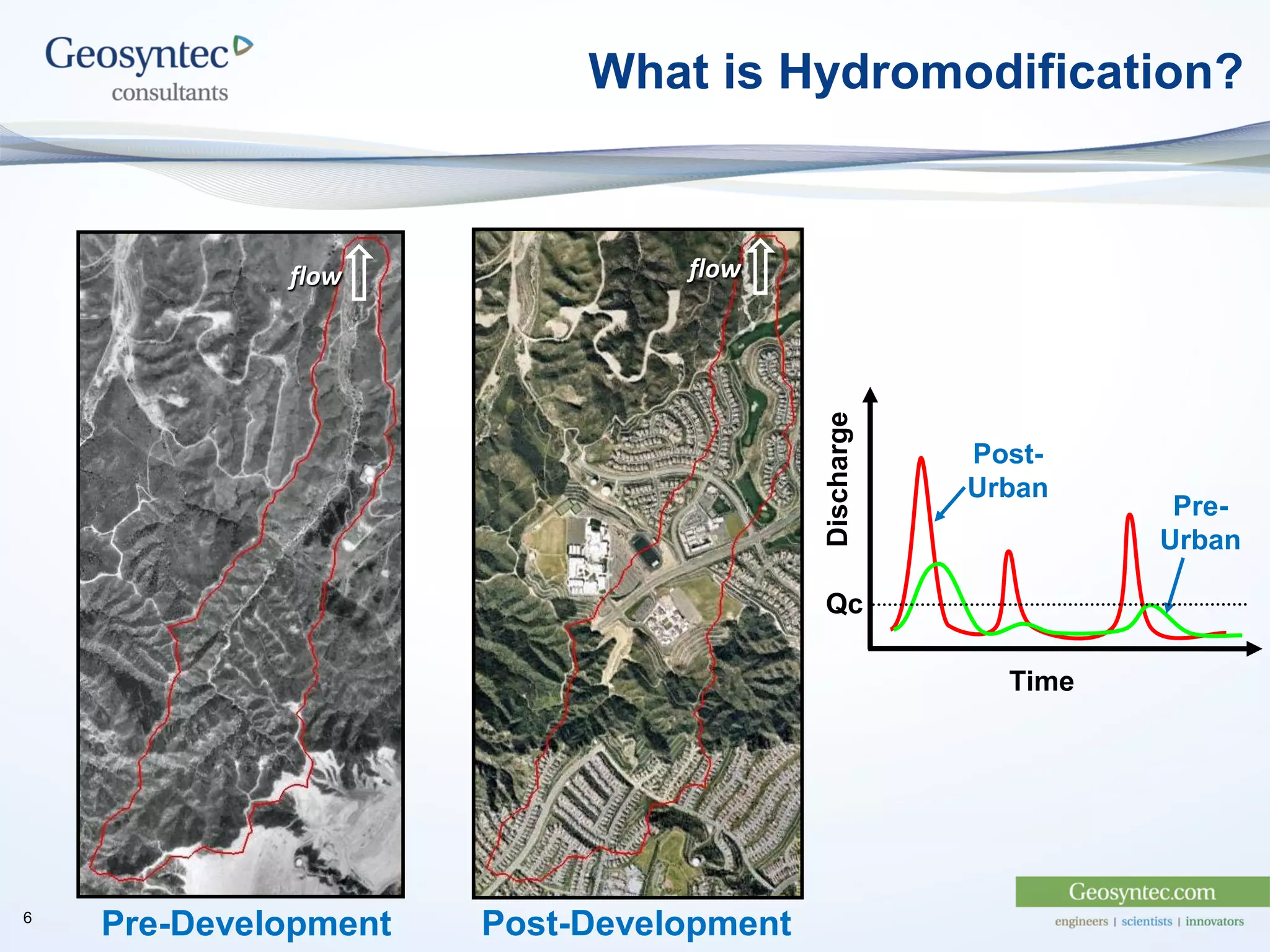
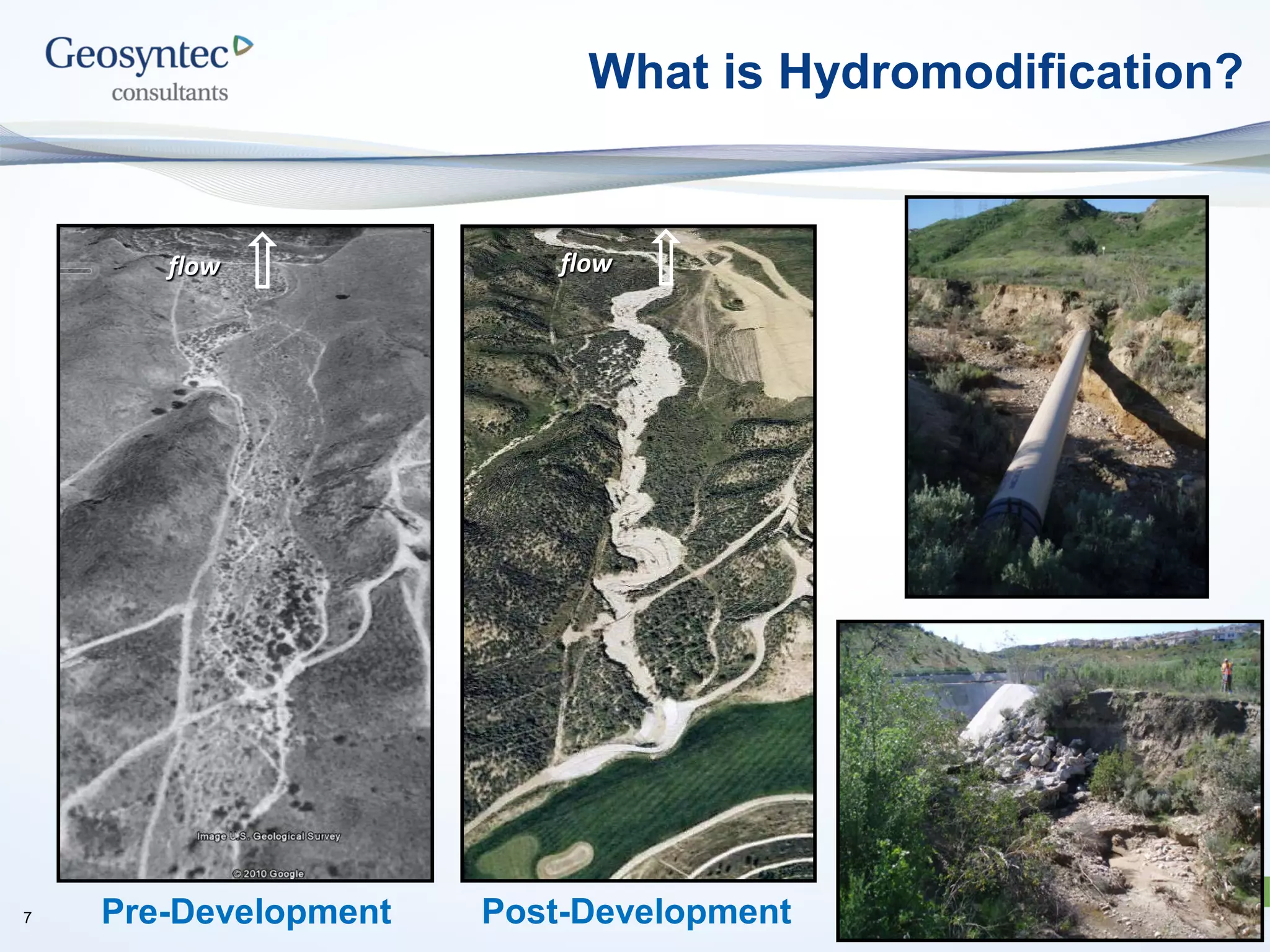
Hydromodification = Changes in runoff
characteristics and in-stream processes caused
by altered land use.
What is Hydromodification?
Restoration vs. Hydromodification Management
Fix an existing
geomorphic
impact
Prevent a future
geomorphic
impact
5
What is Hydromodification?
Pre-Development
flow flow
Post-Development
Pre-
Urban
Post-
Urban
Time
Discharge
Qc
6
What is Hydromodification?
Pre-Development Post-Development
flow flow
7
Flow Duration Control
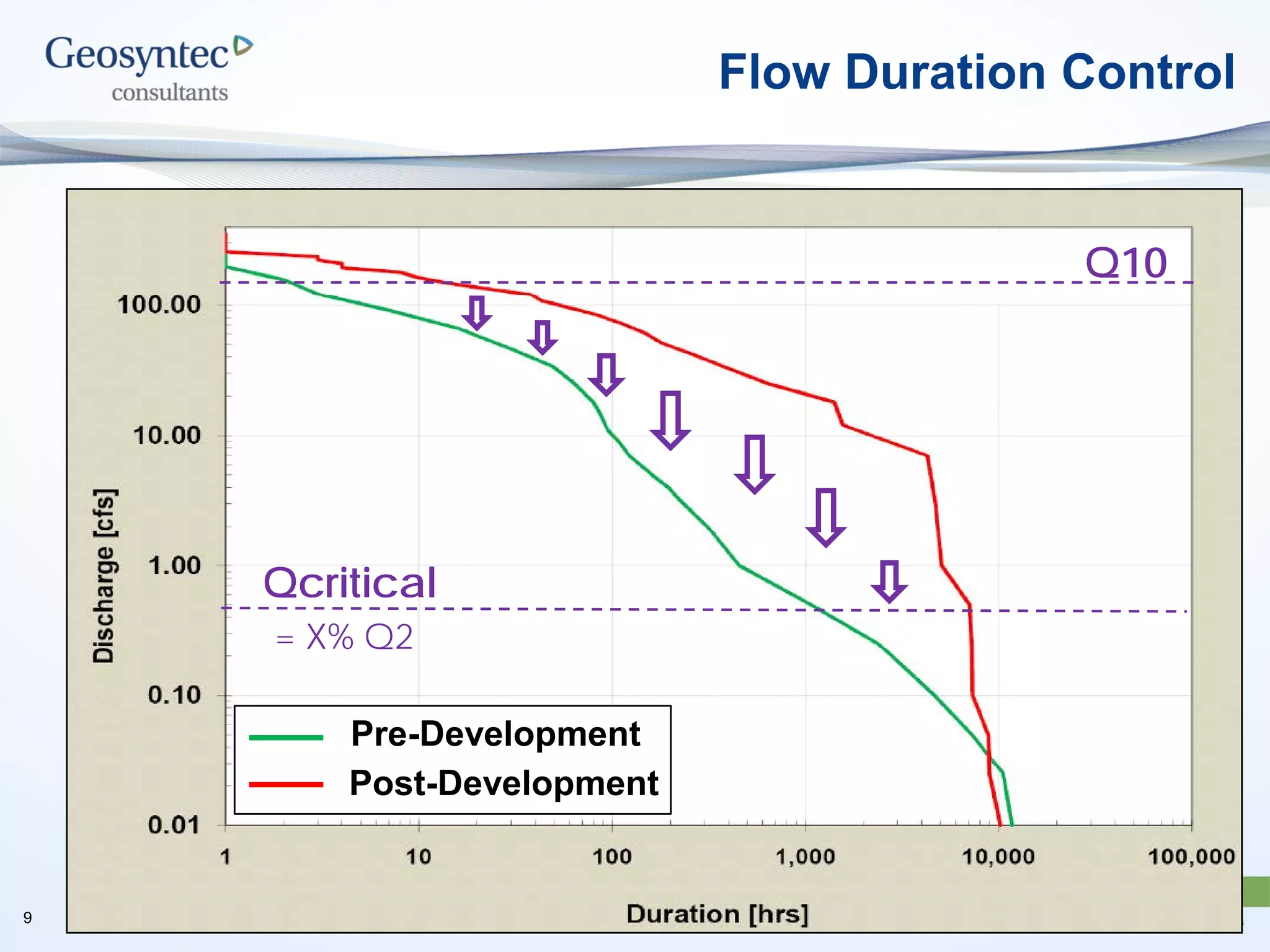
Qcritical
Pre-Development
Post-Development
Q10
Flow Duration Control
9
= X% Q2
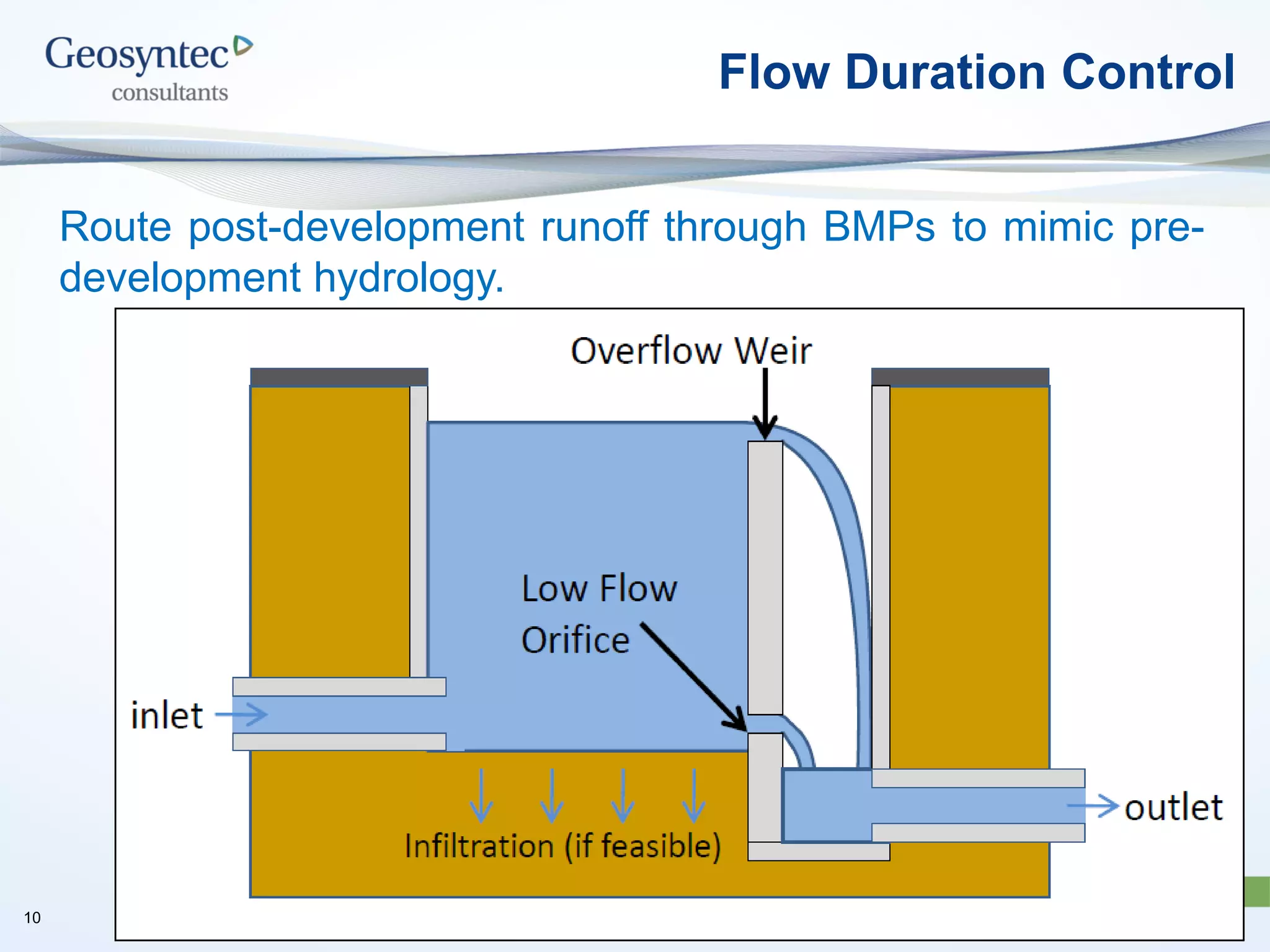
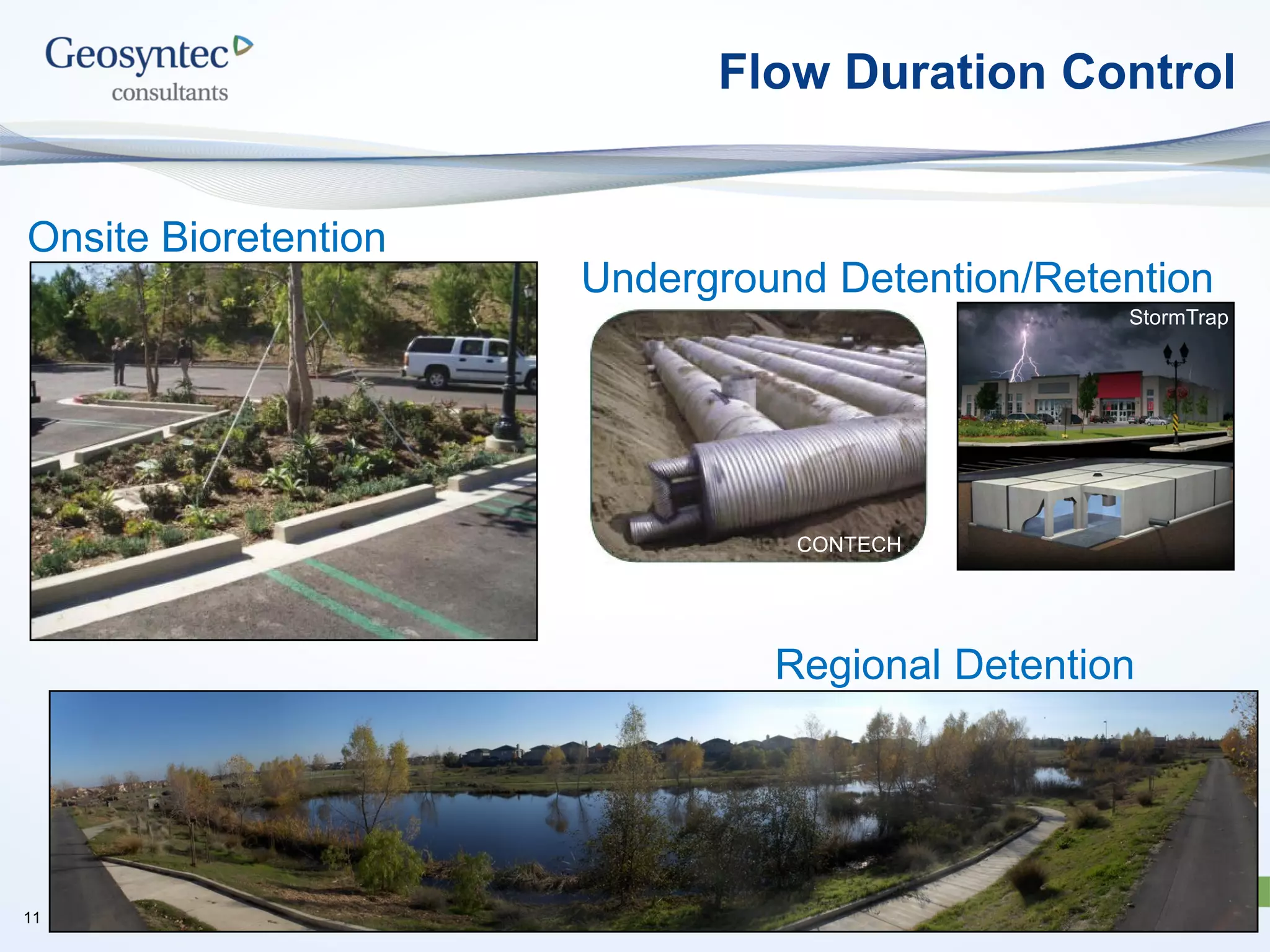
Route post-development runoff through BMPs to mimic pre-
development hydrology.
Flow Duration Control
10
11
Regional Detention
Onsite Bioretention
Underground Detention/Retention
CONTECH
StormTrap
Flow Duration Control
11
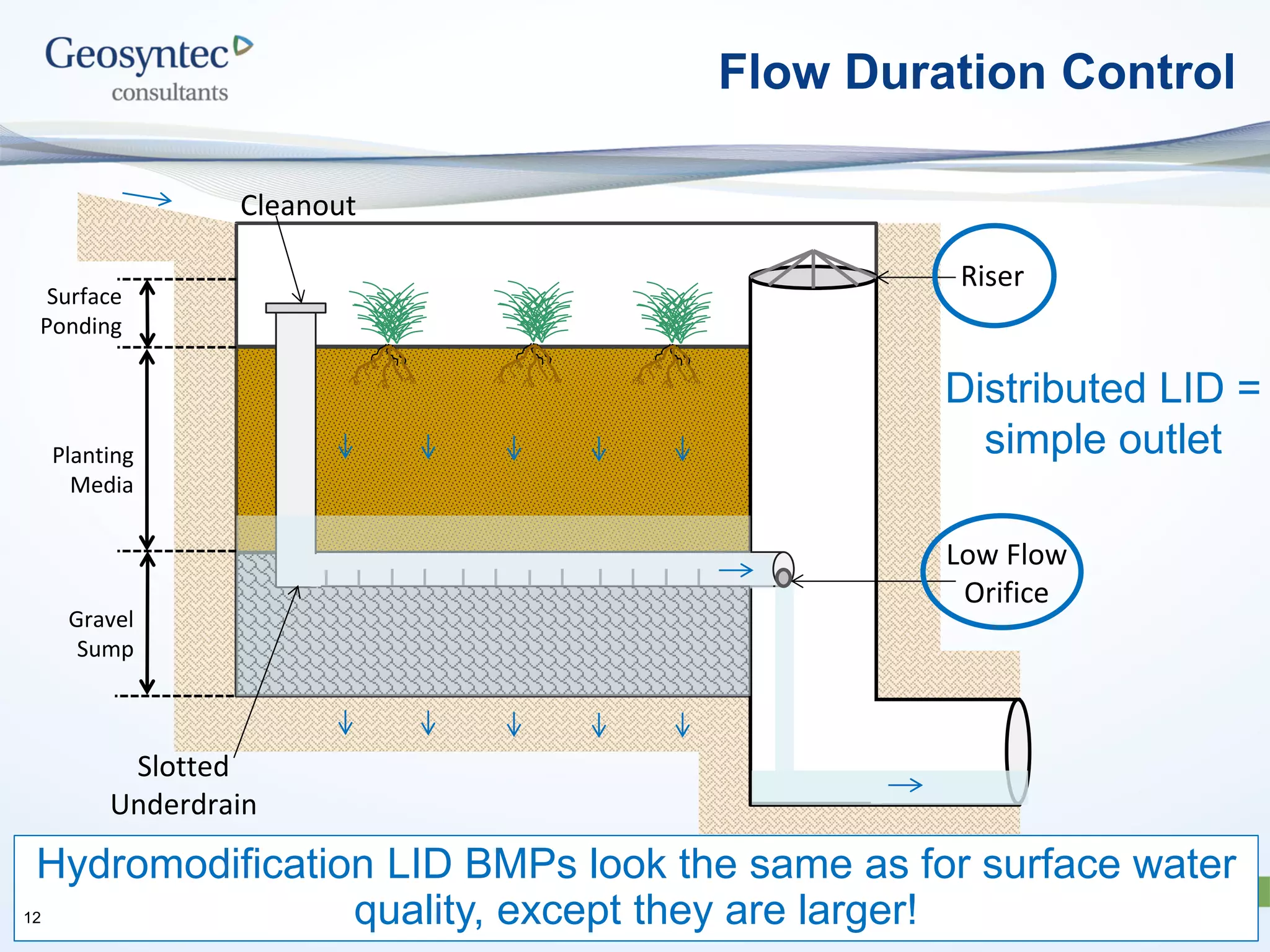
Hydromodification LID BMPs look the same as for surface water
quality, except they are larger!
Flow Duration Control
12
Planting
Media
Gravel
Sump
Surface
Ponding
Riser
Slotted
Underdrain
Cleanout
Low Flow
Orifice
Distributed LID =
simple outlet
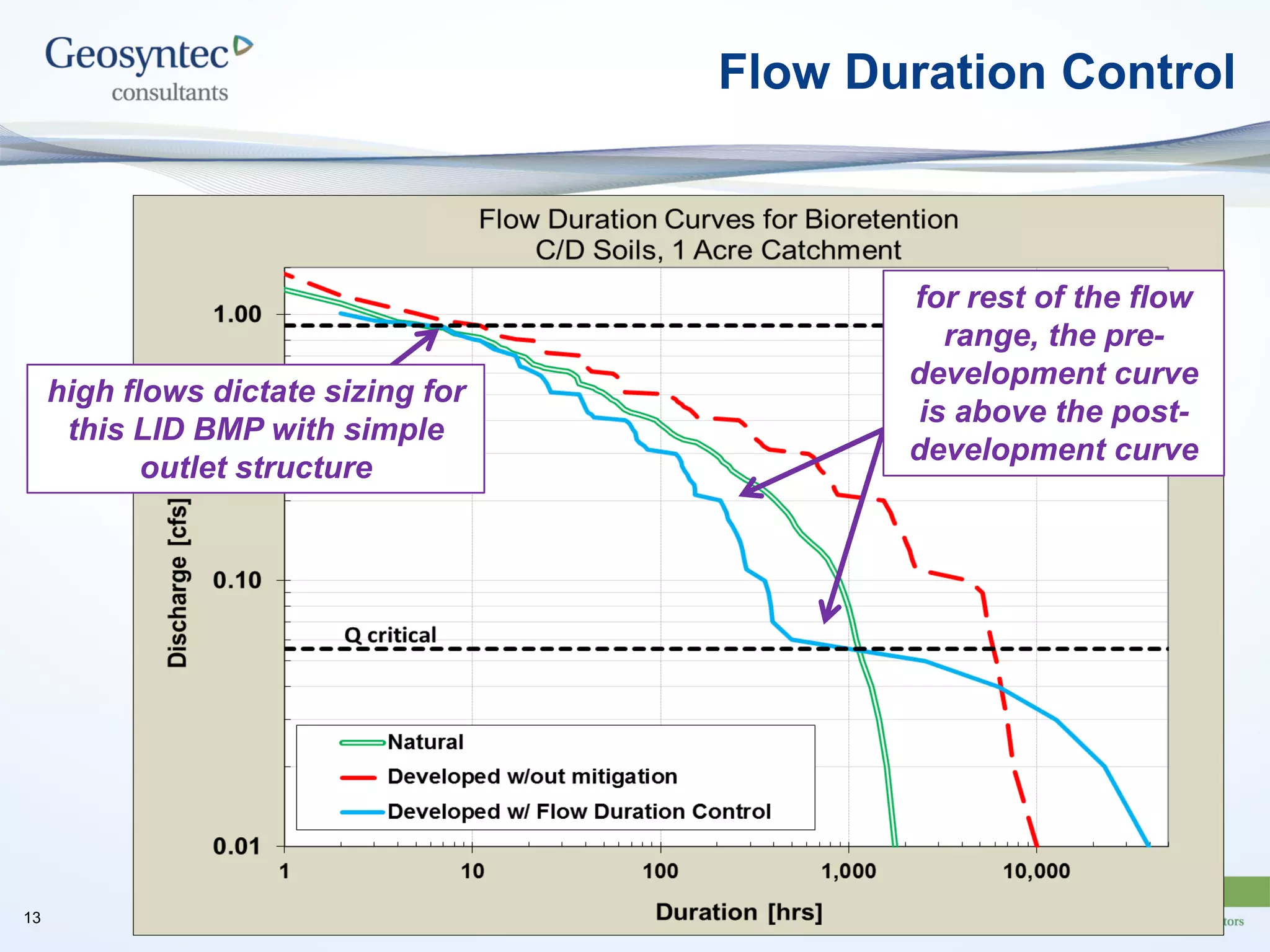
high flows dictate sizing for
this LID BMP with simple
outlet structure
for rest of the flow
range, the pre-
development curve
is above the post-
development curve
Flow Duration Control
13
Active Hydromodification
Control
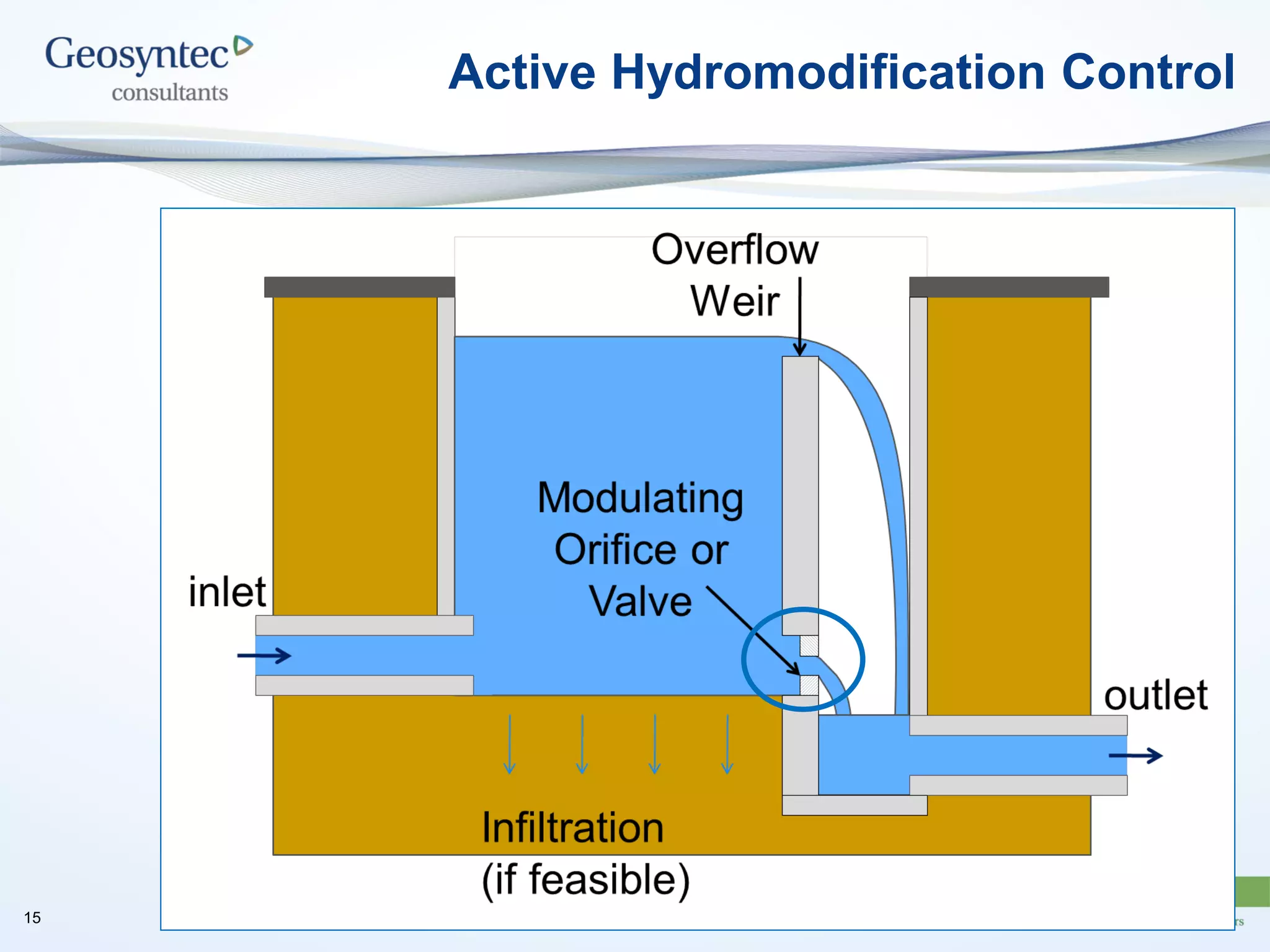
Active Hydromodification Control
15
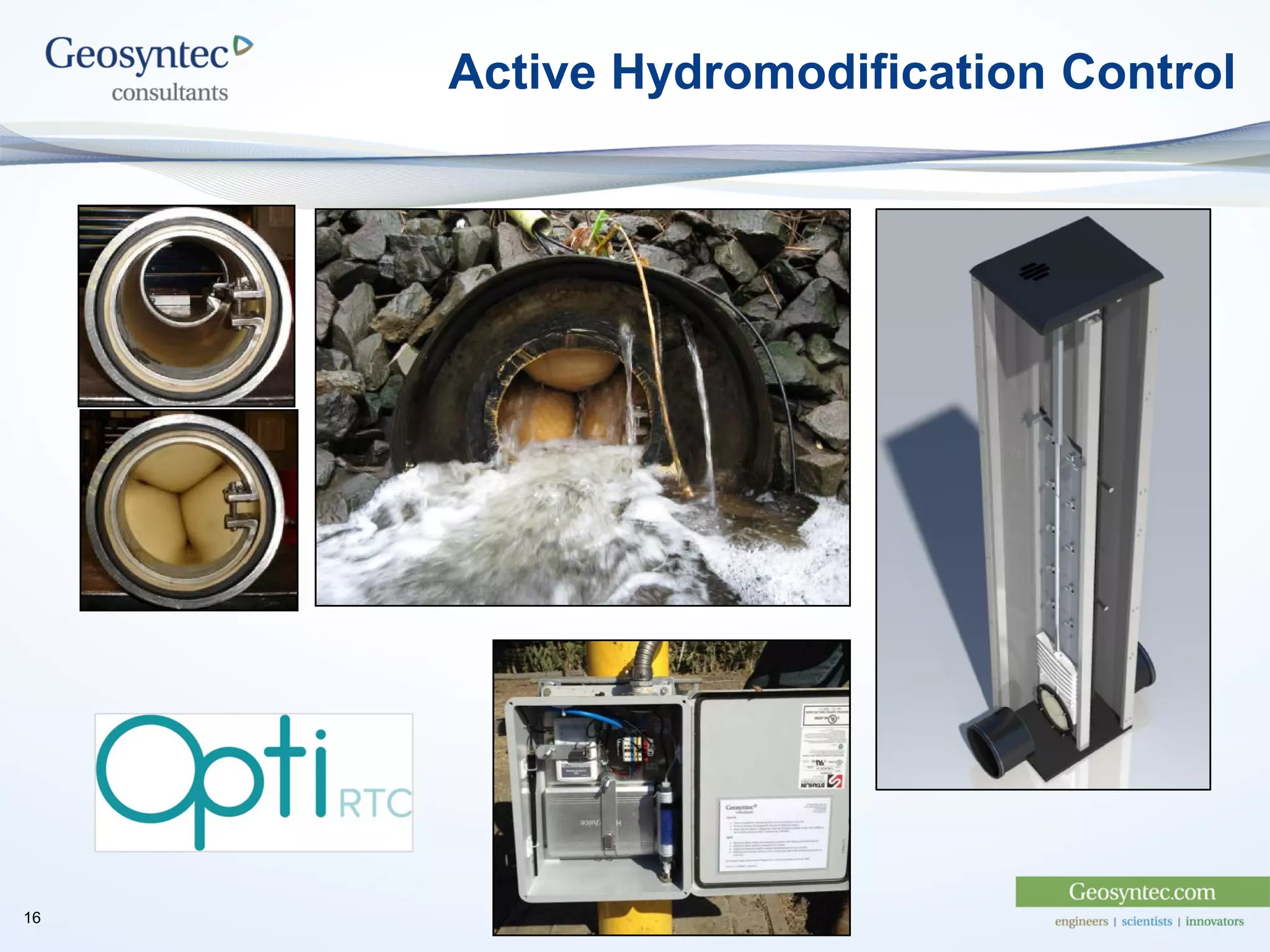
Active Hydromodification Control
16
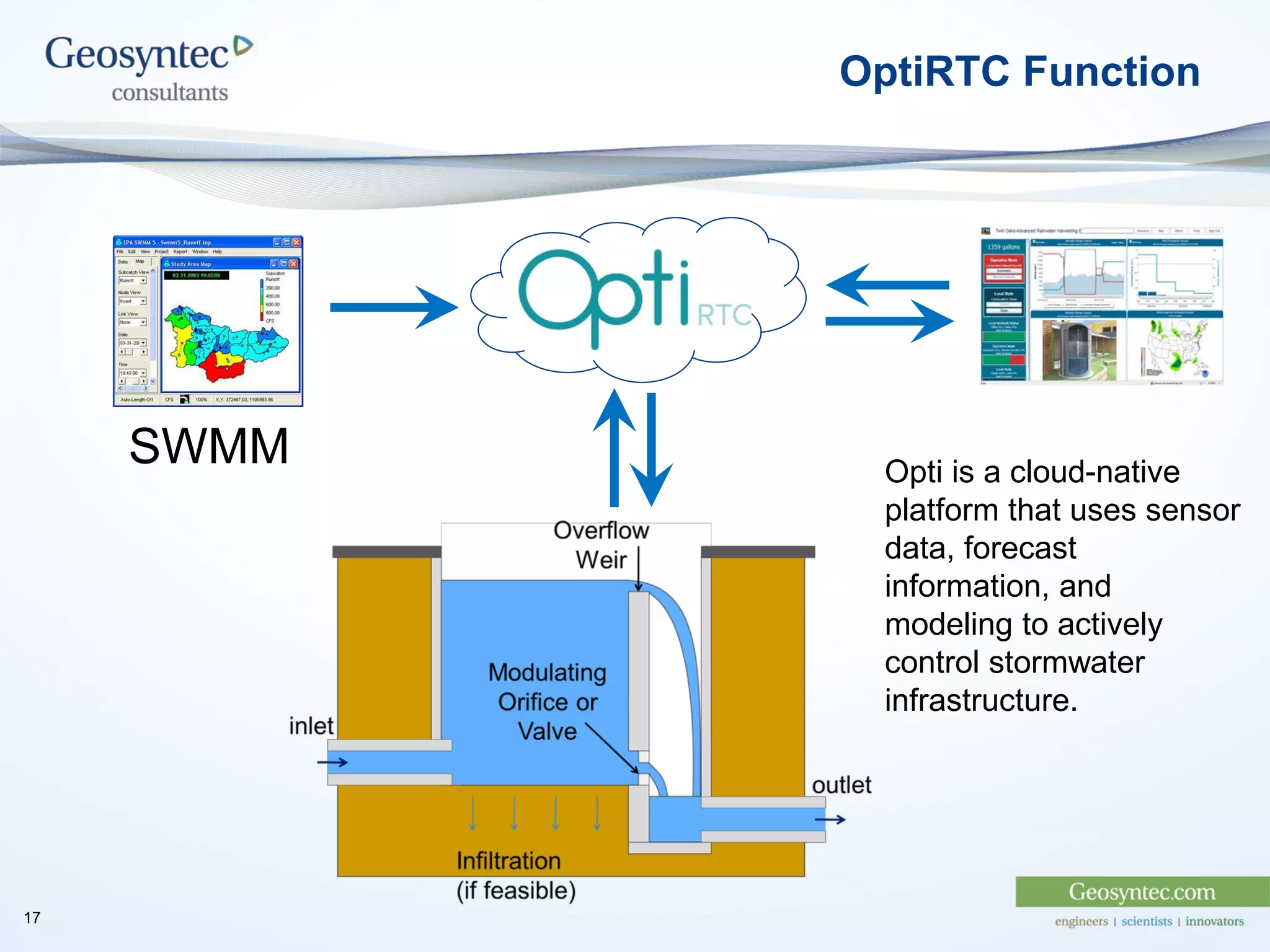
OptiRTC Function
SWMM
17
Opti is a cloud-native
platform that uses sensor
data, forecast
information, and
modeling to actively
control stormwater
infrastructure.
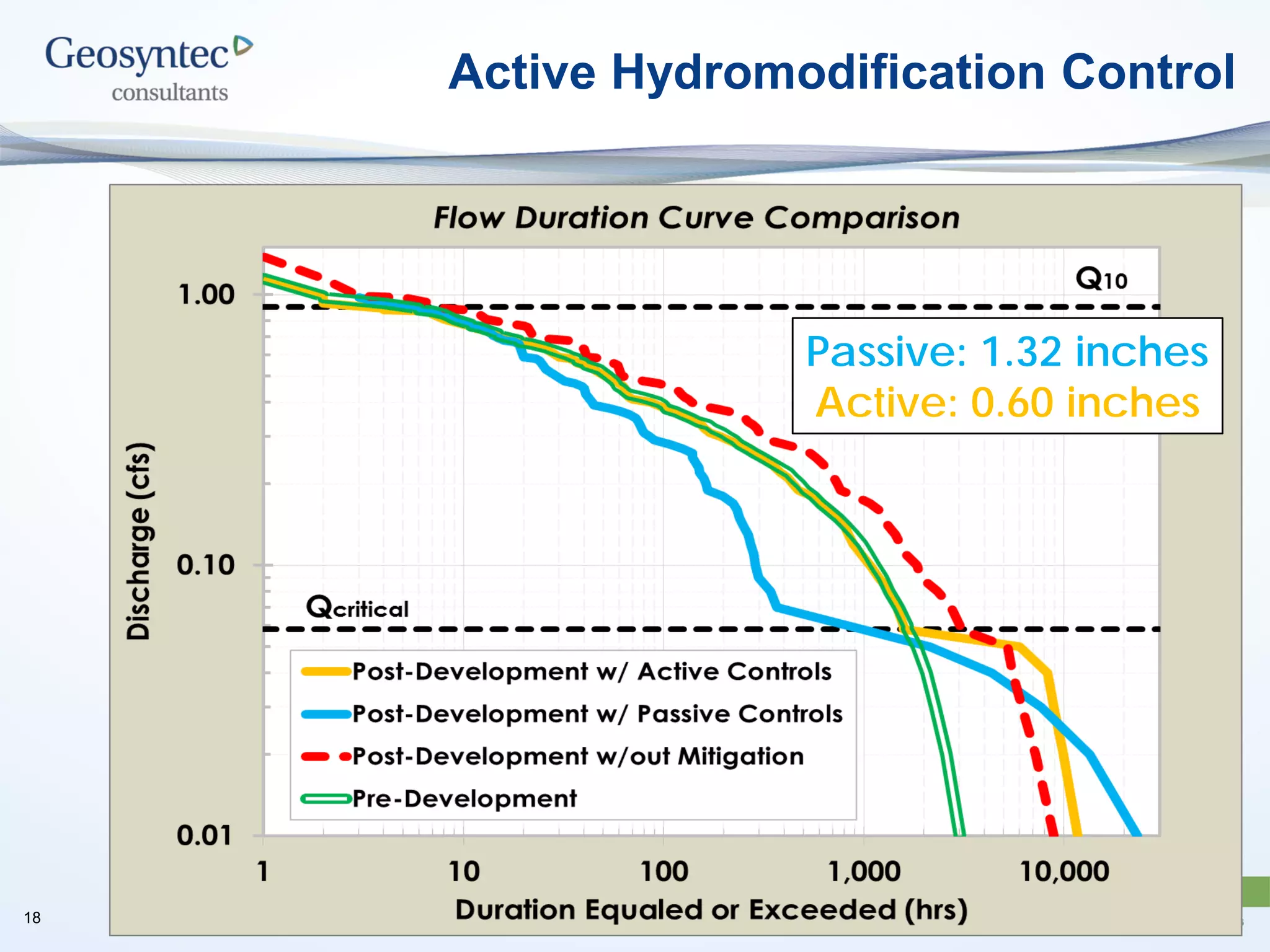
Passive: 1.32 inches
Active: 0.60 inches
Active Hydromodification Control
18
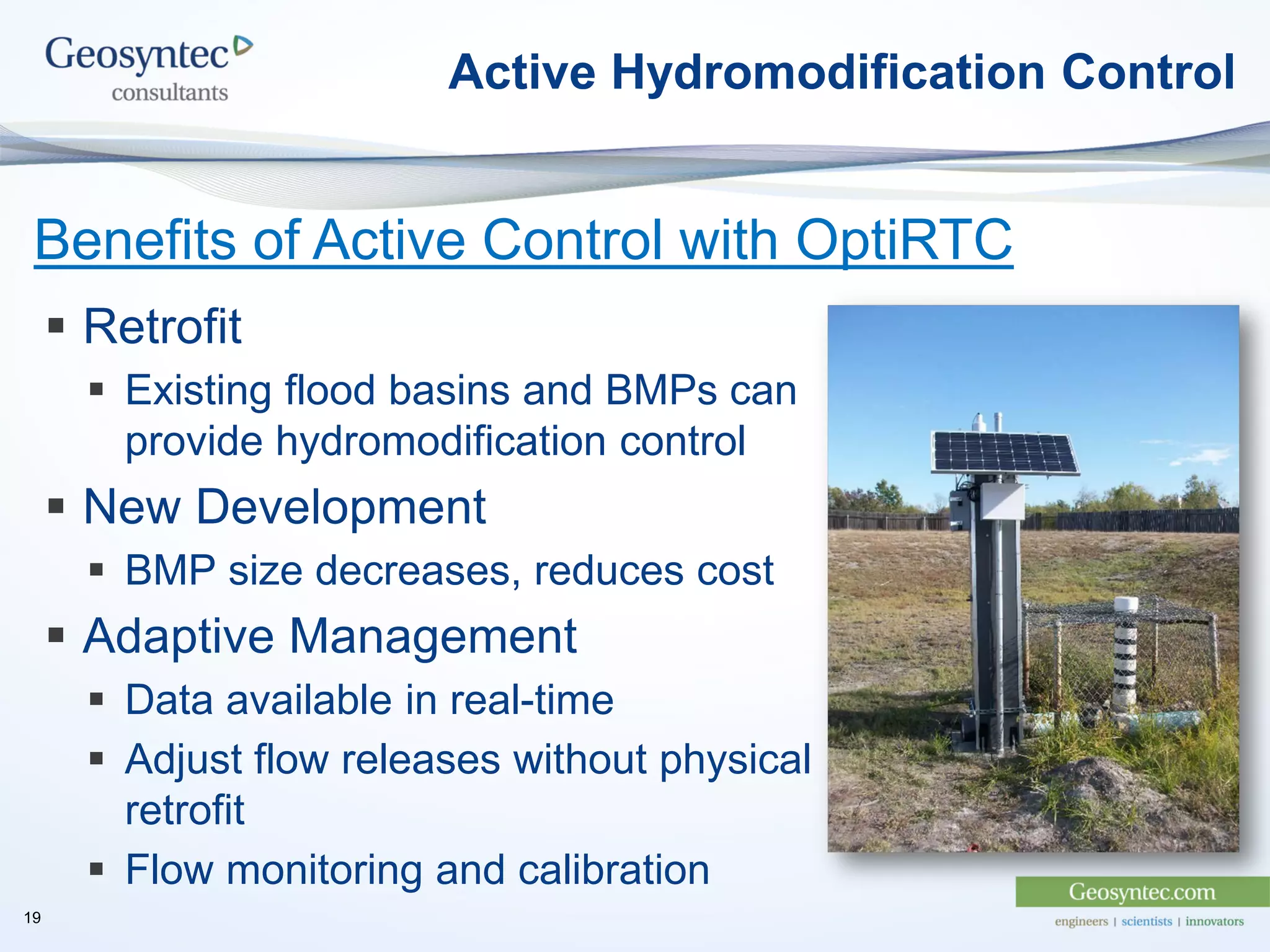
 Retrofit
 Existing flood basins and BMPs can
provide hydromodification control
 New Development
 BMP size decreases, reduces cost
 Adaptive Management
 Data available in real-time
 Adjust flow releases without physical
retrofit
 Flow monitoring and calibration
Benefits of Active Control with OptiRTC
Active Hydromodification Control
19
Thank You!
Judd Goodman
jgoodman@geosyntec.com
Oakland, CA
Marcus Quigley
mquigley@optirtc.com
Boston, MA
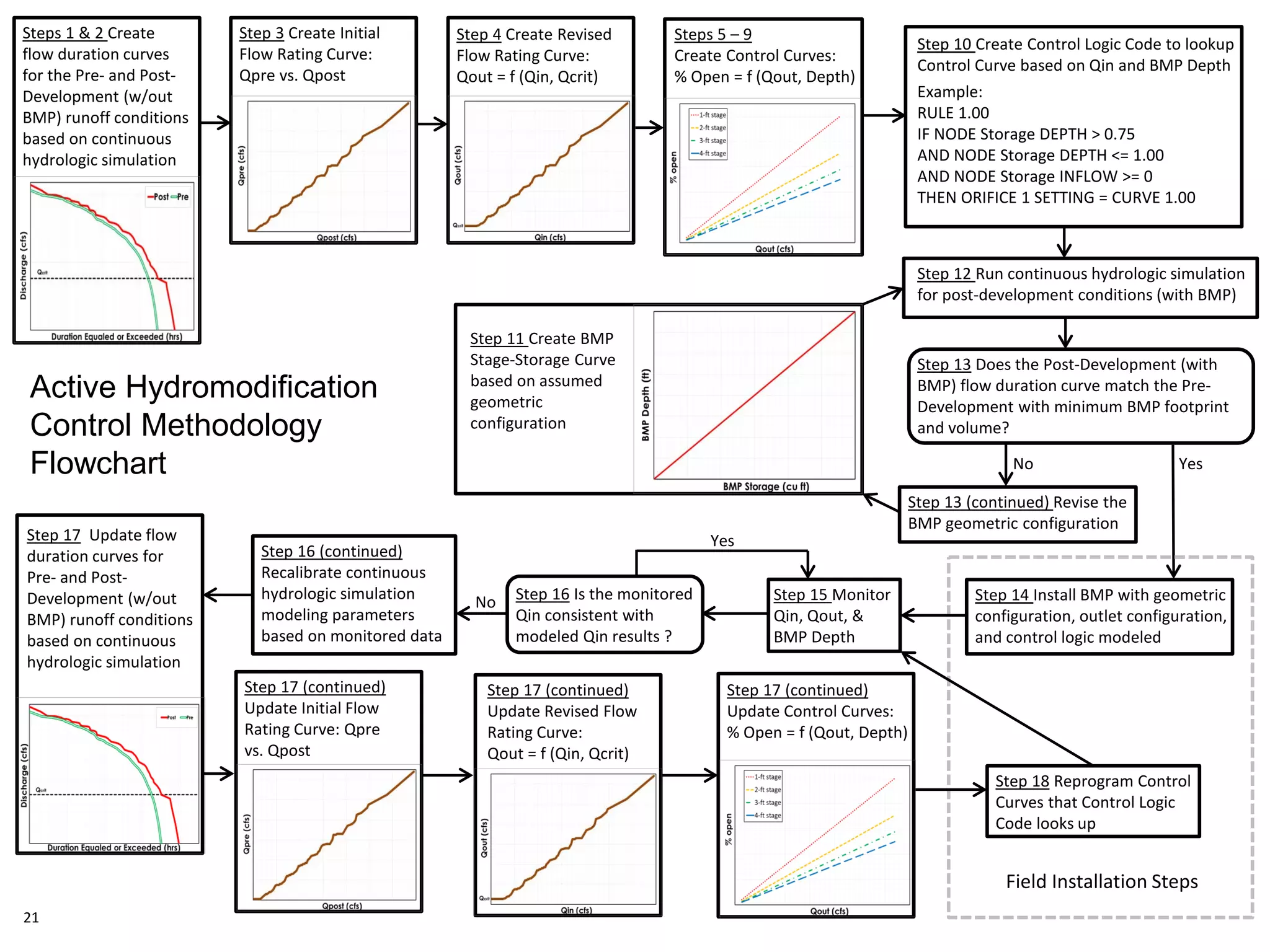
Field Installation Steps
Steps 1 & 2 Create
flow duration curves
for the Pre- and Post-
Development (w/out
BMP) runoff conditions
based on continuous
hydrologic simulation
Step 4 Create Revised
Flow Rating Curve:
Qout = f (Qin, Qcrit)
Steps 5 – 9
Create Control Curves:
% Open = f (Qout, Depth)
Step 10 Create Control Logic Code to lookup
Control Curve based on Qin and BMP Depth
Example:
RULE 1.00
IF NODE Storage DEPTH > 0.75
AND NODE Storage DEPTH <= 1.00
AND NODE Storage INFLOW >= 0
THEN ORIFICE 1 SETTING = CURVE 1.00
Step 11 Create BMP
Stage-Storage Curve
based on assumed
geometric
configuration
Step 12 Run continuous hydrologic simulation
for post-development conditions (with BMP)
Step 13 Does the Post-Development (with
BMP) flow duration curve match the Pre-
Development with minimum BMP footprint
and volume?
Step 13 (continued) Revise the
BMP geometric configuration
Step 14 Install BMP with geometric
configuration, outlet configuration,
and control logic modeled
Step 15 Monitor
Qin, Qout, &
BMP Depth
Step 16 Is the monitored
Qin consistent with
modeled Qin results ?
Step 16 (continued)
Recalibrate continuous
hydrologic simulation
modeling parameters
based on monitored data
Step 17 Update flow
duration curves for
Pre- and Post-
Development (w/out
BMP) runoff conditions
based on continuous
hydrologic simulation
Step 17 (continued)
Update Revised Flow
Rating Curve:
Qout = f (Qin, Qcrit)
Step 17 (continued)
Update Control Curves:
% Open = f (Qout, Depth)
Step 18 Reprogram Control
Curves that Control Logic
Code looks up
YesNo
Yes
No
Step 3 Create Initial
Flow Rating Curve:
Qpre vs. Qpost
Step 17 (continued)
Update Initial Flow
Rating Curve: Qpre
vs. Qpost
Active Hydromodification
Control Methodology
Flowchart
21

Lid 2015 active hydromod control - judd goodman 01-20-15

  • 1.
    Active Hydromodification Control JuddGoodman, P.E. Marcus Quigley, P.E.
  • 2.
    LID and Hydromodification “Theprimary goal of Low Impact Development methods is to mimic the predevelopment site hydrology by using site design techniques that store, infiltrate, evaporate, and detain runoff.” -Prince George's County, Maryland (1999) Hydromodification = Hydrograph Modification
  • 3.
     What isHydromodification?  Flow Duration Control  Active Hydromodification Control Outline 3
  • 4.
  • 5.
    Hydromodification = Changesin runoff characteristics and in-stream processes caused by altered land use. What is Hydromodification? Restoration vs. Hydromodification Management Fix an existing geomorphic impact Prevent a future geomorphic impact 5
  • 6.
    What is Hydromodification? Pre-Development flowflow Post-Development Pre- Urban Post- Urban Time Discharge Qc 6
  • 7.
    What is Hydromodification? Pre-DevelopmentPost-Development flow flow 7
  • 8.
  • 9.
  • 10.
    Route post-development runoffthrough BMPs to mimic pre- development hydrology. Flow Duration Control 10
  • 11.
    11 Regional Detention Onsite Bioretention UndergroundDetention/Retention CONTECH StormTrap Flow Duration Control 11
  • 12.
    Hydromodification LID BMPslook the same as for surface water quality, except they are larger! Flow Duration Control 12 Planting Media Gravel Sump Surface Ponding Riser Slotted Underdrain Cleanout Low Flow Orifice Distributed LID = simple outlet
  • 13.
    high flows dictatesizing for this LID BMP with simple outlet structure for rest of the flow range, the pre- development curve is above the post- development curve Flow Duration Control 13
  • 14.
  • 15.
  • 16.
  • 17.
    OptiRTC Function SWMM 17 Opti isa cloud-native platform that uses sensor data, forecast information, and modeling to actively control stormwater infrastructure.
  • 18.
    Passive: 1.32 inches Active:0.60 inches Active Hydromodification Control 18
  • 19.
     Retrofit  Existingflood basins and BMPs can provide hydromodification control  New Development  BMP size decreases, reduces cost  Adaptive Management  Data available in real-time  Adjust flow releases without physical retrofit  Flow monitoring and calibration Benefits of Active Control with OptiRTC Active Hydromodification Control 19
  • 20.
    Thank You! Judd Goodman jgoodman@geosyntec.com Oakland,CA Marcus Quigley mquigley@optirtc.com Boston, MA
  • 21.
    Field Installation Steps Steps1 & 2 Create flow duration curves for the Pre- and Post- Development (w/out BMP) runoff conditions based on continuous hydrologic simulation Step 4 Create Revised Flow Rating Curve: Qout = f (Qin, Qcrit) Steps 5 – 9 Create Control Curves: % Open = f (Qout, Depth) Step 10 Create Control Logic Code to lookup Control Curve based on Qin and BMP Depth Example: RULE 1.00 IF NODE Storage DEPTH > 0.75 AND NODE Storage DEPTH <= 1.00 AND NODE Storage INFLOW >= 0 THEN ORIFICE 1 SETTING = CURVE 1.00 Step 11 Create BMP Stage-Storage Curve based on assumed geometric configuration Step 12 Run continuous hydrologic simulation for post-development conditions (with BMP) Step 13 Does the Post-Development (with BMP) flow duration curve match the Pre- Development with minimum BMP footprint and volume? Step 13 (continued) Revise the BMP geometric configuration Step 14 Install BMP with geometric configuration, outlet configuration, and control logic modeled Step 15 Monitor Qin, Qout, & BMP Depth Step 16 Is the monitored Qin consistent with modeled Qin results ? Step 16 (continued) Recalibrate continuous hydrologic simulation modeling parameters based on monitored data Step 17 Update flow duration curves for Pre- and Post- Development (w/out BMP) runoff conditions based on continuous hydrologic simulation Step 17 (continued) Update Revised Flow Rating Curve: Qout = f (Qin, Qcrit) Step 17 (continued) Update Control Curves: % Open = f (Qout, Depth) Step 18 Reprogram Control Curves that Control Logic Code looks up YesNo Yes No Step 3 Create Initial Flow Rating Curve: Qpre vs. Qpost Step 17 (continued) Update Initial Flow Rating Curve: Qpre vs. Qpost Active Hydromodification Control Methodology Flowchart 21