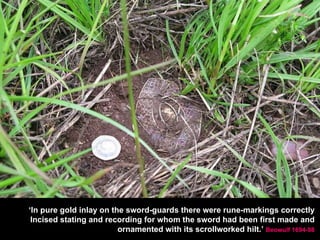
‘ In pure gold inlay on the sword-guards there were rune-markings correctly  Incised stating and recording for whom the sword had been first made and  ornamented with its scrollworked hilt.’  Beowulf 1694-98
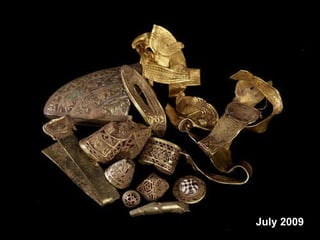
July 2009
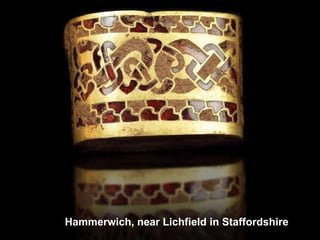
Hammerwich, near Lichfield in Staffordshire
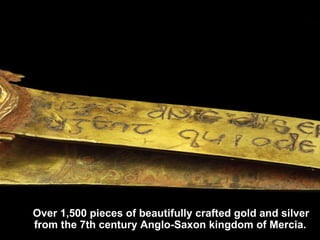
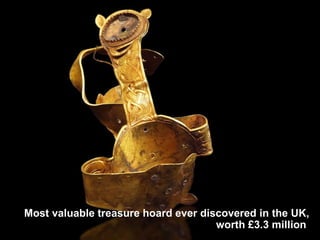
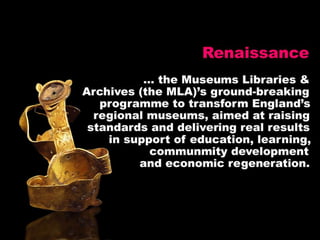
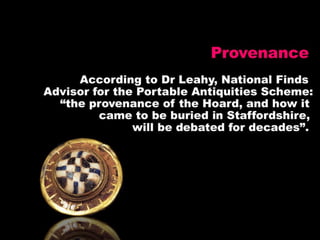
Over 1,500 pieces of beautifully crafted gold and silver from the 7th century Anglo-Saxon kingdom of Mercia.
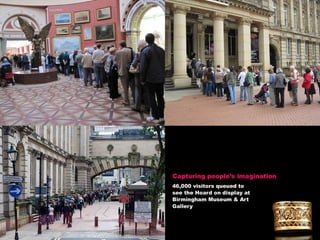
Most valuable treasure hoard ever discovered in the UK, worth £3.3 million
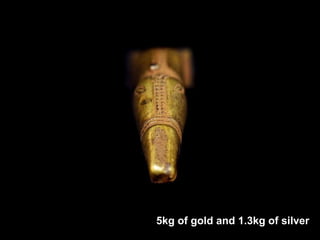
5kg of gold and 1.3kg of silver
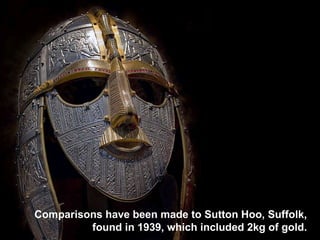
Comparisons have been made to Sutton Hoo, Suffolk, found in 1939, which included 2kg of gold.
Reported, by finder Terry Herbert, to the local Scheme's Finds Liaison Officer for the Portable Antiquities Scheme. A team of worked in secret at the Hammerwich site. Declared treasure under Treasures Act. Placed in the care of the British Museum.  British Museum said it needed to remain in the region of discovery.  A national first! Renaissance and the regions
 
 
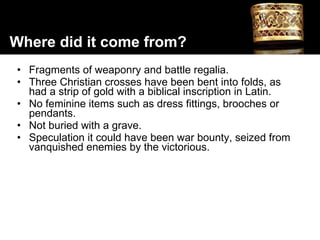
Fragments of weaponry and battle regalia. Three Christian crosses have been bent into folds, as had a strip of gold with a biblical inscription in Latin.  No feminine items such as dress fittings, brooches or pendants. Not buried with a grave. Speculation it could have been war bounty, seized from vanquished enemies by the victorious. Where did it come from?
During the Anglo-Saxon era, Lichfield and environs was part of the kingdom of Mercia – one of Britain’s largest and most aggressive kingdoms, stretching from Humber to London.  Its belligerent kings and chieftains waged brief but ferocious battles. Discovering the Hoard
 
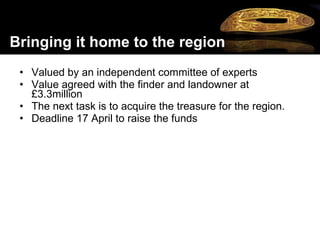
Valued by an independent committee of experts Value agreed with the finder and landowner at £3.3million  The next task is to acquire the treasure for the region.  Deadline 17 April to raise the funds   Bringing it home to the region
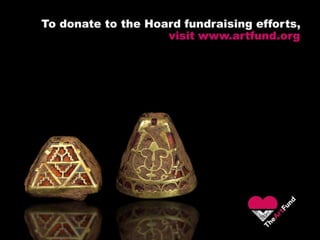
Arts & Business wrote an umbrella fundraising strategy. The Art Fund was appointed to lead on the fund raising. The Art Fund is a charity devoted to raising funds to keep art in the country. A website has been built. Ways of online paying set up. Public launch delivered. Ongoing campaigns delivered. A national & regional effort A national & regional approach
Celebrities  swing into action behind the fundraising campaign
 
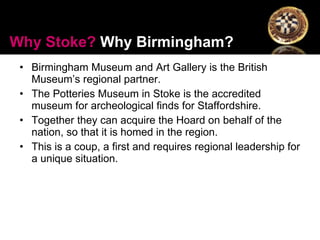
Birmingham Museum and Art Gallery is the British Museum’s regional partner. The Potteries Museum in Stoke is the accredited museum for archeological finds for Staffordshire.  Together they can acquire the Hoard on behalf of the nation, so that it is homed in the region.  This is a coup, a first and requires regional leadership for a unique situation. Why Stoke?  Why Birmingham?
 
Lichfield, Tamworth and Repton are acknowledged as the heartland of the Kingdom of Mercia.   Lichfield was the ecclesiastical centre. Lichfield’s role in Mercia as an important Anglo Saxon community. Anglo-Saxon archaeological finds - the Lichfield Angel & St Chad Gospels. Tamworth was the seat of the military and government of Mercia. Heightened significance through links with the military nature of the find.  Why Lichfield Cathedral?   Why Tamworth Castle?
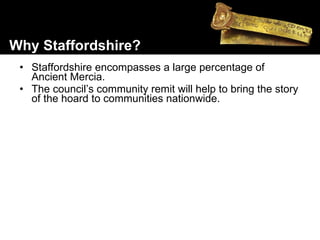
Staffordshire encompasses a large percentage of Ancient Mercia. The council’s community remit will help to bring the story of the hoard to communities nationwide. Why Staffordshire?
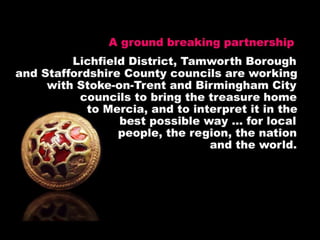
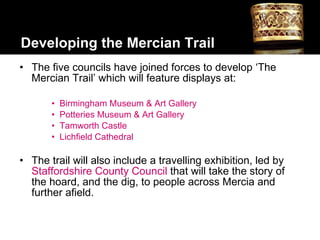
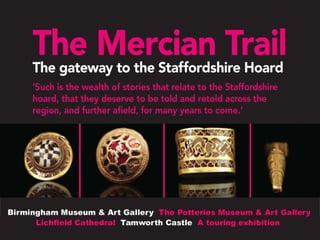
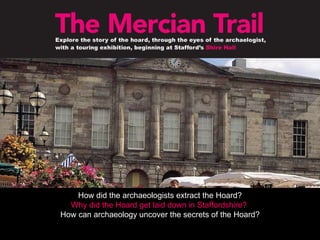
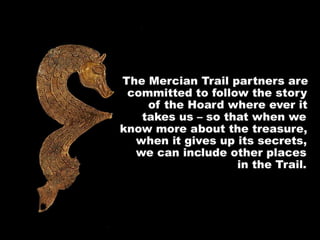
The five councils have joined forces to develop ‘The Mercian Trail’ which will feature displays at: Birmingham Museum & Art Gallery  Potteries Museum & Art Gallery  Tamworth Castle Lichfield Cathedral The trail will also include a travelling exhibition, led by  Staffordshire County Council  that will take the story of the hoard, and the dig, to people across Mercia and further afield.  Developing the Mercian Trail
 
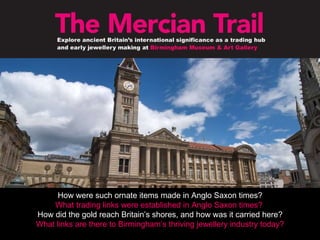
How were such ornate items made in Anglo Saxon times? What trading links were established in Anglo Saxon times?   How did the gold reach Britain’s shores, and how was it carried here? What links are there to Birmingham’s thriving jewellery industry today?
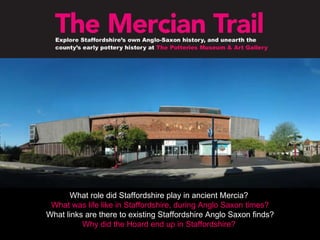
What role did Staffordshire play in ancient Mercia?  What was life like in Staffordshire, during Anglo Saxon times? What links are there to existing Staffordshire Anglo Saxon finds? Why did the Hoard end up in Staffordshire?
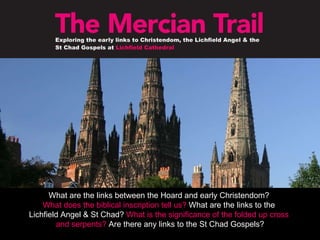
What are the links between the Hoard and early Christendom?  What does the biblical inscription tell us?  What are the links to the  Lichfield Angel & St Chad?  What is the significance of the folded up cross  and serpents?  Are there any links to the St Chad Gospels?
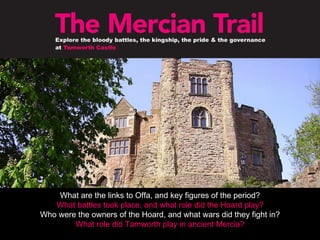
What are the links to Offa, and key figures of the period? What battles took place, and what role did the Hoard play? Who were the owners of the Hoard, and what wars did they fight in? What role did Tamworth play in ancient Mercia?
How did the archaeologists extract the Hoard? Why did the Hoard get laid down in Staffordshire?  How can archaeology uncover the secrets of the Hoard?
 
The Hoard needs to be conserved and studied. It could take until 2012 until the first major exhibition goes on display.  Understand the story behind the artefacts – this will take academics some years to unfurl.  Funding needed for both these activities.  We will also need funds to develop the Mercian Trail venues to display and interpret the Hoard and provide a 21st century visitor experience. The timeline
 
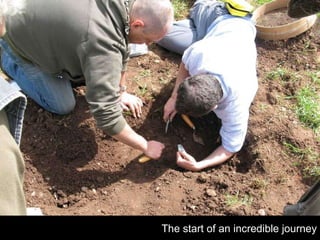
The start of an incredible journey
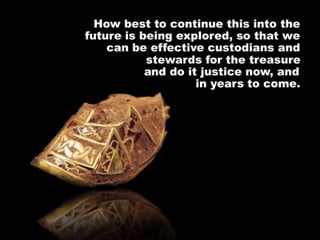
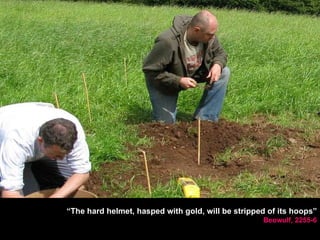
“ The hard helmet, hasped with gold, will be stripped of its hoops” Beowulf, 2255-6
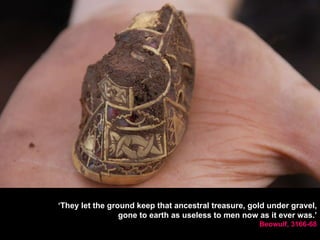
‘ They let the ground keep that ancestral treasure, gold under gravel, gone to earth as useless to men now as it ever was.’ Beowulf, 3166-68
 

LGA Mercian Trail Presentation

  • 1.
  • 2.
    ‘ In puregold inlay on the sword-guards there were rune-markings correctly Incised stating and recording for whom the sword had been first made and ornamented with its scrollworked hilt.’ Beowulf 1694-98
  • 3.
  • 4.
  • 5.
    Over 1,500 piecesof beautifully crafted gold and silver from the 7th century Anglo-Saxon kingdom of Mercia.
  • 6.
    Most valuable treasurehoard ever discovered in the UK, worth £3.3 million
  • 7.
    5kg of goldand 1.3kg of silver
  • 8.
    Comparisons have beenmade to Sutton Hoo, Suffolk, found in 1939, which included 2kg of gold.
  • 9.
    Reported, by finderTerry Herbert, to the local Scheme's Finds Liaison Officer for the Portable Antiquities Scheme. A team of worked in secret at the Hammerwich site. Declared treasure under Treasures Act. Placed in the care of the British Museum. British Museum said it needed to remain in the region of discovery. A national first! Renaissance and the regions
  • 10.
  • 11.
  • 12.
    Fragments of weaponryand battle regalia. Three Christian crosses have been bent into folds, as had a strip of gold with a biblical inscription in Latin. No feminine items such as dress fittings, brooches or pendants. Not buried with a grave. Speculation it could have been war bounty, seized from vanquished enemies by the victorious. Where did it come from?
  • 13.
    During the Anglo-Saxonera, Lichfield and environs was part of the kingdom of Mercia – one of Britain’s largest and most aggressive kingdoms, stretching from Humber to London. Its belligerent kings and chieftains waged brief but ferocious battles. Discovering the Hoard
  • 14.
  • 15.
    Valued by anindependent committee of experts Value agreed with the finder and landowner at £3.3million The next task is to acquire the treasure for the region. Deadline 17 April to raise the funds Bringing it home to the region
  • 16.
    Arts & Businesswrote an umbrella fundraising strategy. The Art Fund was appointed to lead on the fund raising. The Art Fund is a charity devoted to raising funds to keep art in the country. A website has been built. Ways of online paying set up. Public launch delivered. Ongoing campaigns delivered. A national & regional effort A national & regional approach
  • 17.
    Celebrities swinginto action behind the fundraising campaign
  • 18.
  • 19.
    Birmingham Museum andArt Gallery is the British Museum’s regional partner. The Potteries Museum in Stoke is the accredited museum for archeological finds for Staffordshire. Together they can acquire the Hoard on behalf of the nation, so that it is homed in the region. This is a coup, a first and requires regional leadership for a unique situation. Why Stoke? Why Birmingham?
  • 20.
  • 21.
    Lichfield, Tamworth andRepton are acknowledged as the heartland of the Kingdom of Mercia. Lichfield was the ecclesiastical centre. Lichfield’s role in Mercia as an important Anglo Saxon community. Anglo-Saxon archaeological finds - the Lichfield Angel & St Chad Gospels. Tamworth was the seat of the military and government of Mercia. Heightened significance through links with the military nature of the find. Why Lichfield Cathedral? Why Tamworth Castle?
  • 22.
    Staffordshire encompasses alarge percentage of Ancient Mercia. The council’s community remit will help to bring the story of the hoard to communities nationwide. Why Staffordshire?
  • 23.
    The five councilshave joined forces to develop ‘The Mercian Trail’ which will feature displays at: Birmingham Museum & Art Gallery Potteries Museum & Art Gallery Tamworth Castle Lichfield Cathedral The trail will also include a travelling exhibition, led by Staffordshire County Council that will take the story of the hoard, and the dig, to people across Mercia and further afield. Developing the Mercian Trail
  • 24.
  • 25.
    How were suchornate items made in Anglo Saxon times? What trading links were established in Anglo Saxon times? How did the gold reach Britain’s shores, and how was it carried here? What links are there to Birmingham’s thriving jewellery industry today?
  • 26.
    What role didStaffordshire play in ancient Mercia? What was life like in Staffordshire, during Anglo Saxon times? What links are there to existing Staffordshire Anglo Saxon finds? Why did the Hoard end up in Staffordshire?
  • 27.
    What are thelinks between the Hoard and early Christendom? What does the biblical inscription tell us? What are the links to the Lichfield Angel & St Chad? What is the significance of the folded up cross and serpents? Are there any links to the St Chad Gospels?
  • 28.
    What are thelinks to Offa, and key figures of the period? What battles took place, and what role did the Hoard play? Who were the owners of the Hoard, and what wars did they fight in? What role did Tamworth play in ancient Mercia?
  • 29.
    How did thearchaeologists extract the Hoard? Why did the Hoard get laid down in Staffordshire? How can archaeology uncover the secrets of the Hoard?
  • 30.
  • 31.
    The Hoard needsto be conserved and studied. It could take until 2012 until the first major exhibition goes on display. Understand the story behind the artefacts – this will take academics some years to unfurl. Funding needed for both these activities. We will also need funds to develop the Mercian Trail venues to display and interpret the Hoard and provide a 21st century visitor experience. The timeline
  • 32.
  • 33.
    The start ofan incredible journey
  • 34.
    “ The hardhelmet, hasped with gold, will be stripped of its hoops” Beowulf, 2255-6
  • 35.
    ‘ They letthe ground keep that ancestral treasure, gold under gravel, gone to earth as useless to men now as it ever was.’ Beowulf, 3166-68
  • 36.