‘ Drawing lines in the sand:  continuity and change in the Marches during the Iron Age / Roman transition ’   An archaeological investigation based on the material culture Peter Reavill : Finds Liaison Officer
The Portable Antiquities Scheme in Herefordshire and Shropshire is supported by the following institutions
 
 
Reconstruction of  Hen Gaer Iron Age hillfort, Bow Street, near Aberystwyth
IA reconstructions
Preconceptions
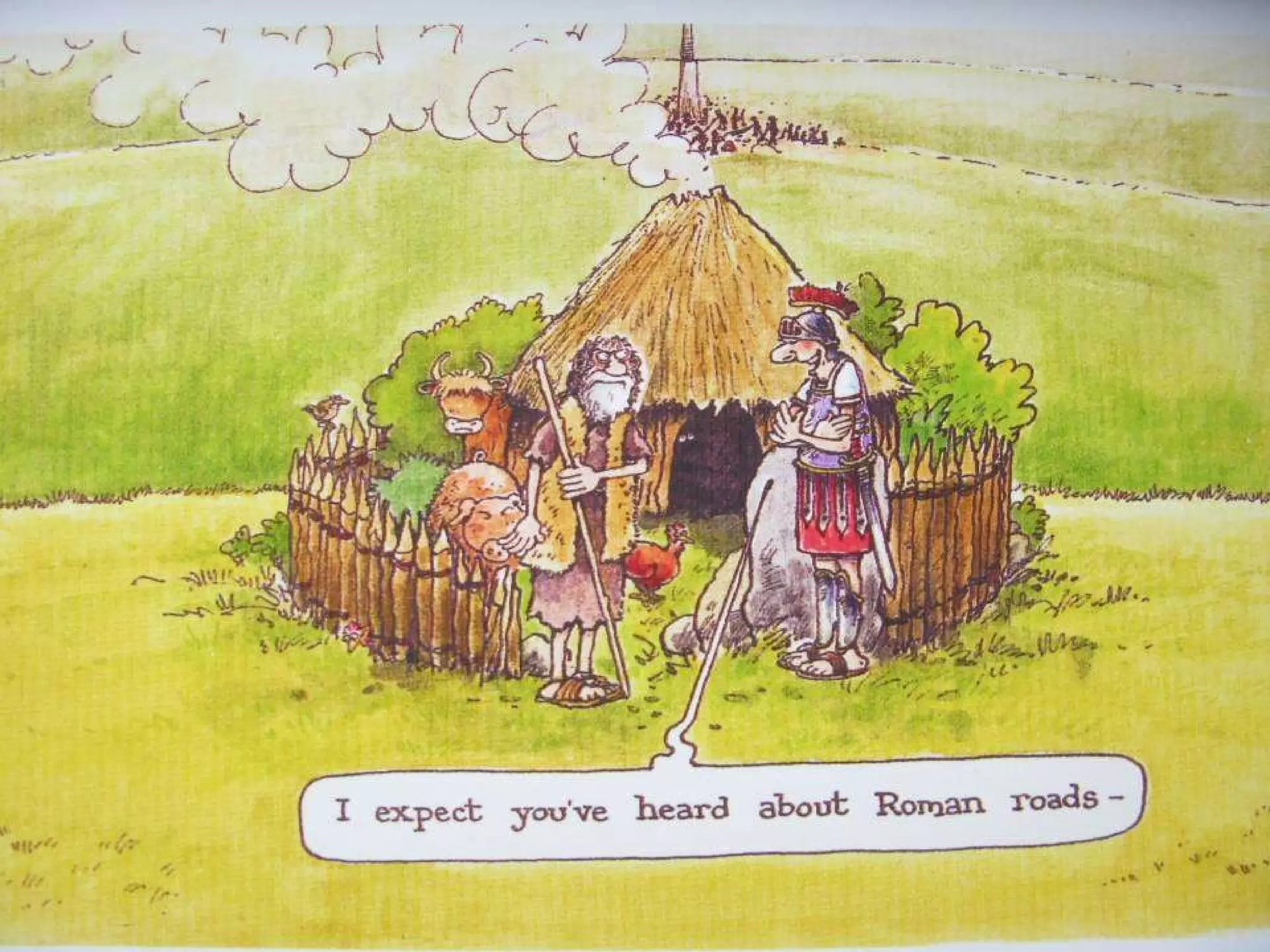
Images of Ritual Feasting and Roman / Native interaction
Iron Age  v  Roman
 
Celtic If I use the word  Celtic  in this talk then  I am not  referring to a pan European group with a shared identity.  However, if  I do use  the term  Celtic  then I may be referring to a shared form of design or expression of artistic nature. In Archaeology neat ‘catch all’ terms do not work– everything is much more messy and more complicated then we could possibly imagine.
The Coinage Evidence Money makes the World Go Round  Or does it?
Gold Stater Inscribed CATTI of the Dubonni (North Shropshire)
Gold ¼ Stater Inscribed COR[IO] of the Dubonnni (Herefordshire)
Silver unit of Dubonnic Tribe – Weston Under Penyard  HESH-544227
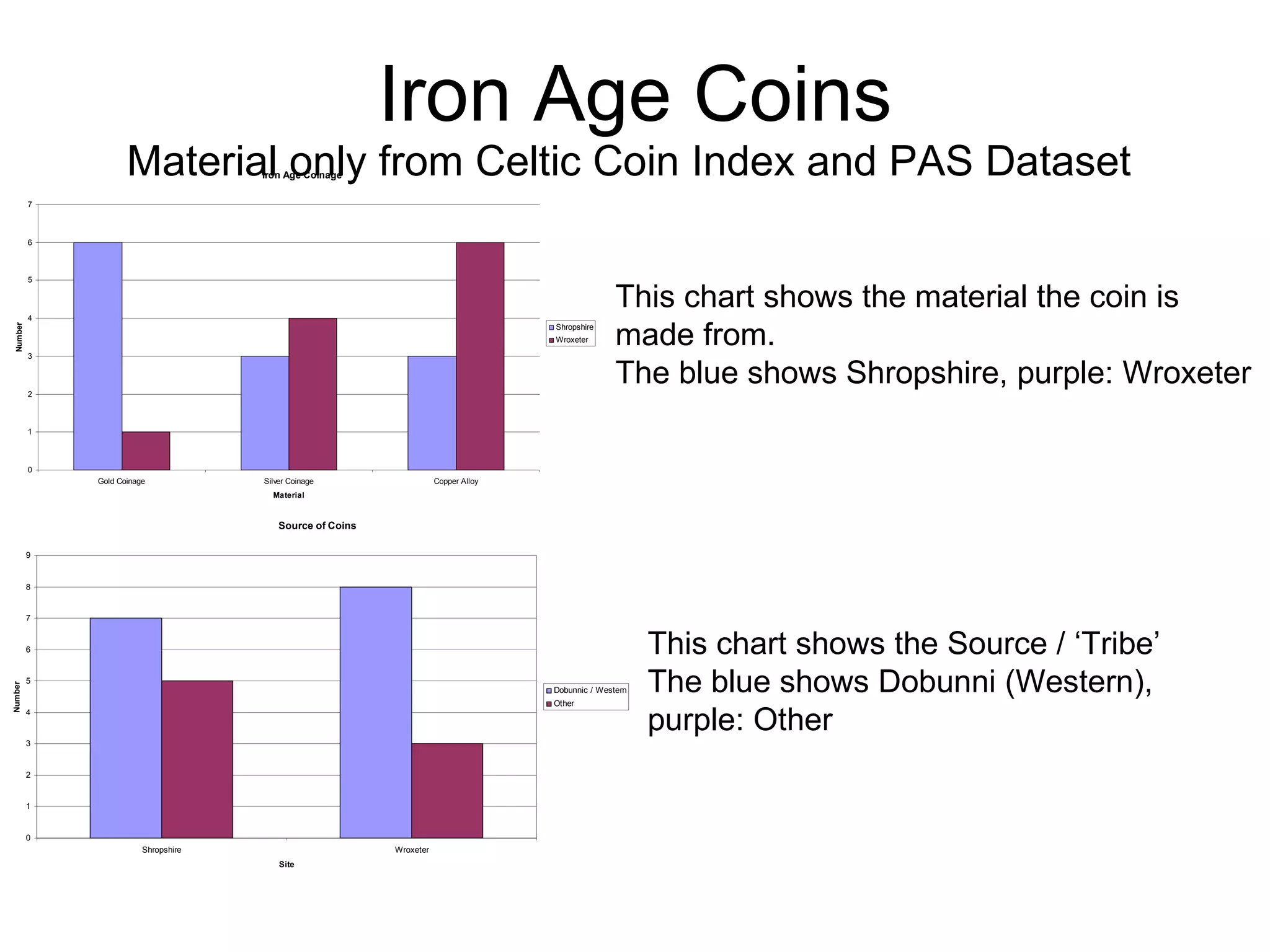
Iron Age Coins Material only from Celtic Coin Index and PAS Dataset  This chart shows the material the coin is  made from.  The blue shows Shropshire, purple: Wroxeter This chart shows the Source / ‘Tribe’ The blue shows Dobunni (Western), purple: Other
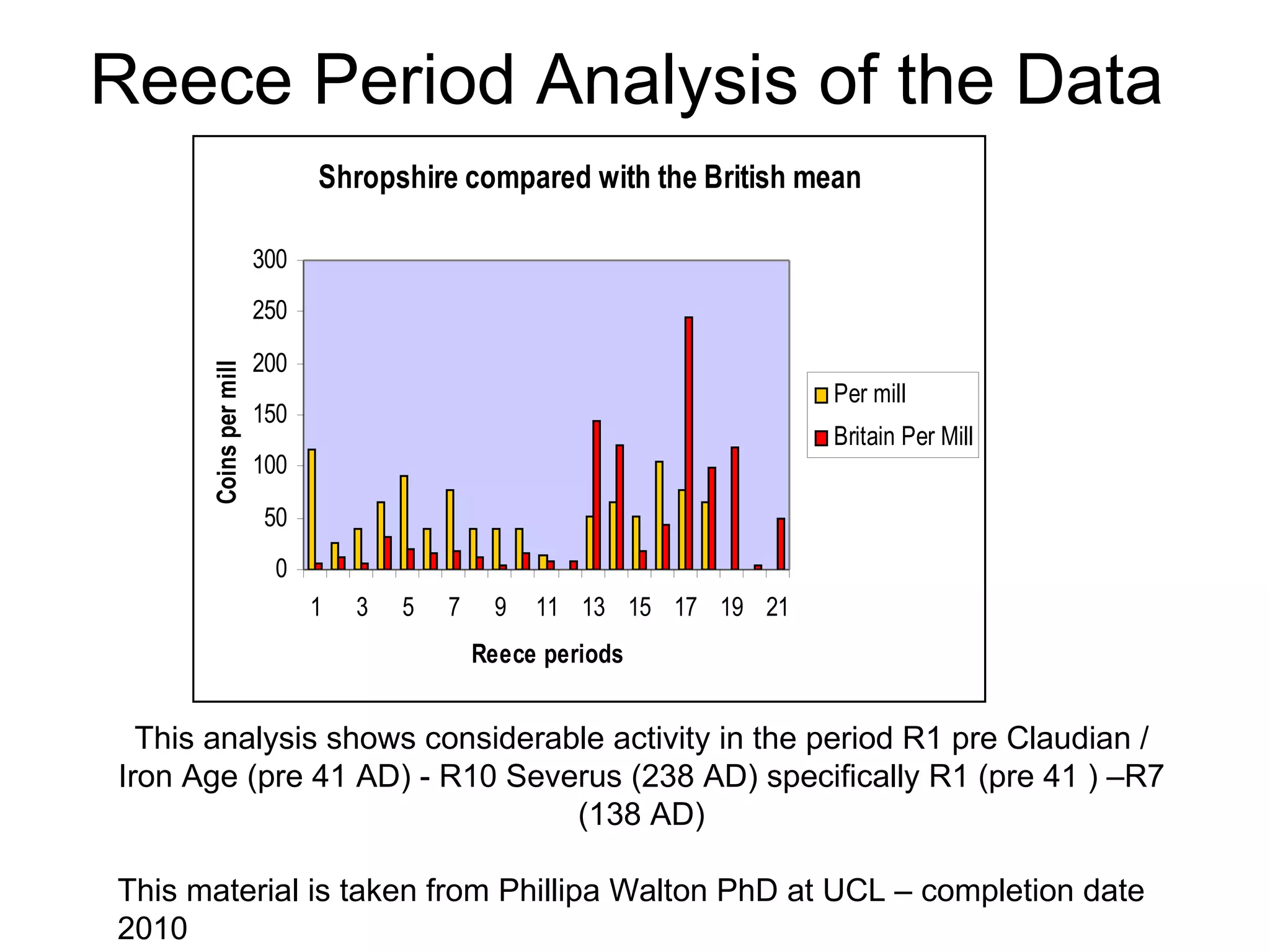
Reece Period Analysis of the Data This analysis shows considerable activity in the period R1 pre Claudian / Iron Age (pre 41 AD) - R10 Severus (238 AD) specifically R1 (pre 41 ) –R7 (138 AD) This material is taken from Phillipa Walton PhD at UCL – completion date 2010
Herefordshire compared with the British mean 0 50 100 150 200 250 300 1 3 5 7 9 11 13 15 17 19 21 Reece periods Coins per mill Per Mill Britain Per Mill
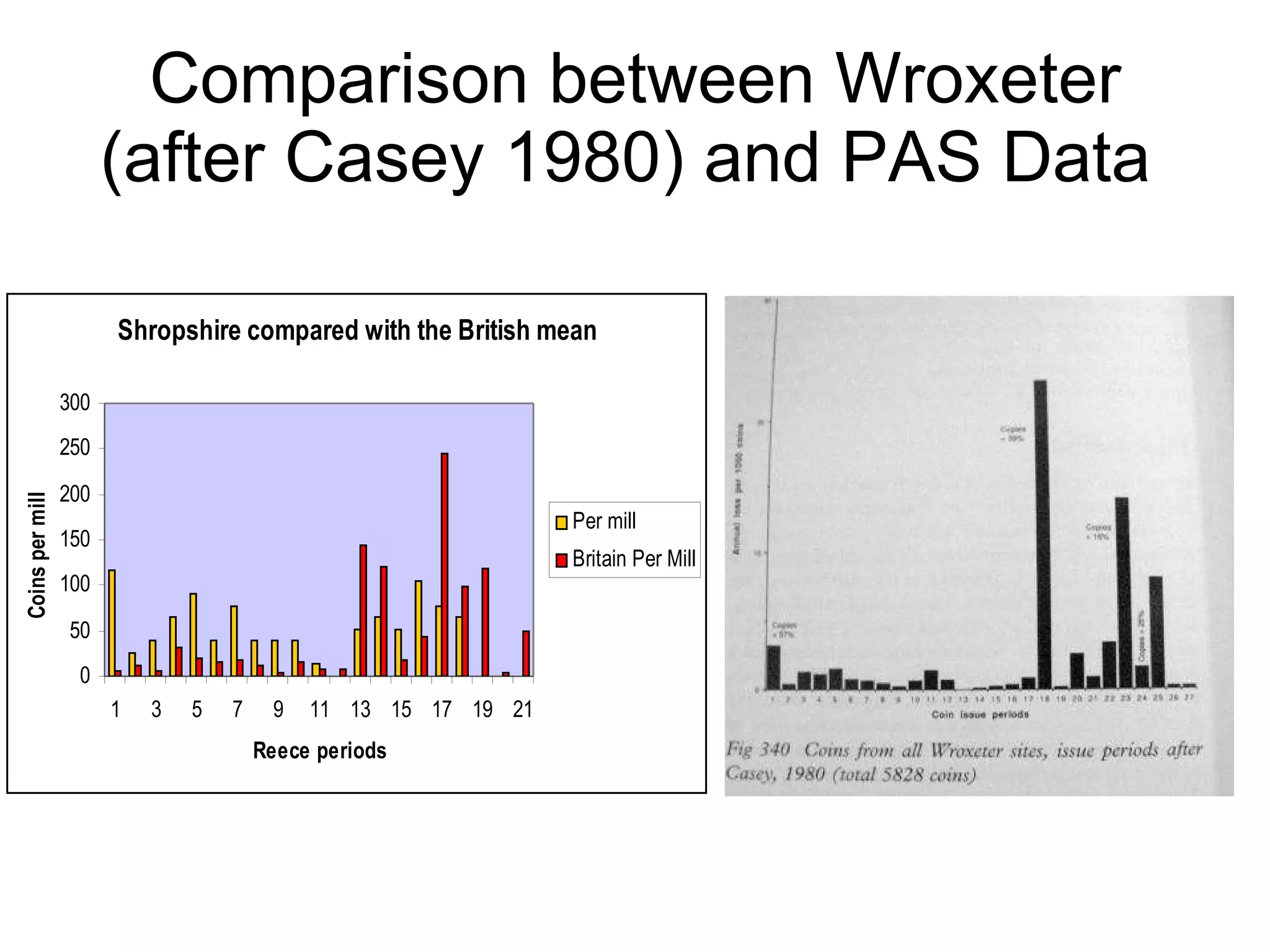
Comparison between Wroxeter (after Casey 1980) and PAS Data
Coin Hoards Some recent Hoards and what they tell us about money and circulation of currency
Albrighton Coin Hoard deposited AD 37 ish
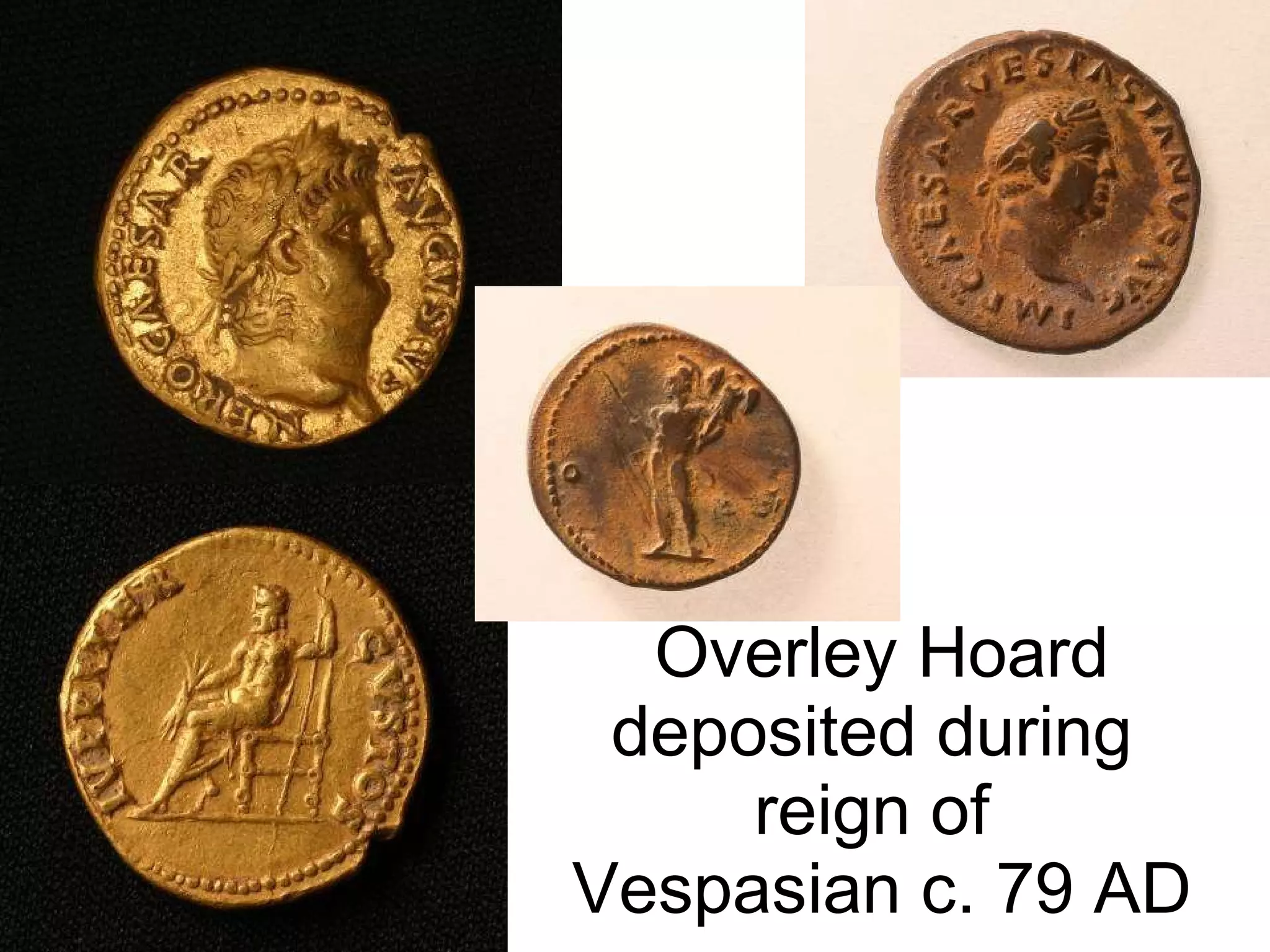
Some examples of the coinage
Overley Hoard deposited during  reign of  Vespasian c. 79 AD
Pattingham Hoard Shropshire
Hoard of nearly 100 Silver Denari from the Oswestry Area
When encounter coins like this then care should be taken Denarius of M Antonius 32-31 BC From Rossett, Wrexham  HESH-B3BB24
Roman Denarii  Left: Domitian AD 89  (HESH 927906) Right:  Marcus Aurelius AD170-171  (HESH BC7744)
Roman coin known as a Barbarous radiate (contemporary copy or forgery) dated between 260 – 290 AD. Found in North Herefordshire.  HESH-F1B8F6
Reece Period Analysis of the Data This analysis shows considerable activity in the period R1 pre Claudian / Iron Age (pre 41 AD) - R10 Severus (238 AD) specifically R1 (pre 41 ) –R7 (138 AD) This material is taken from Phillipa Walton PhD at UCL – completion date 2010
Artefacts These have been separated into a series of case studies showing relatively functional types. I have specifically highlighted those which are common or unusual in the Marches / West Midlands. Thoughts as to deposition or use will be given as we go along – site deposition will be discussed at the end.
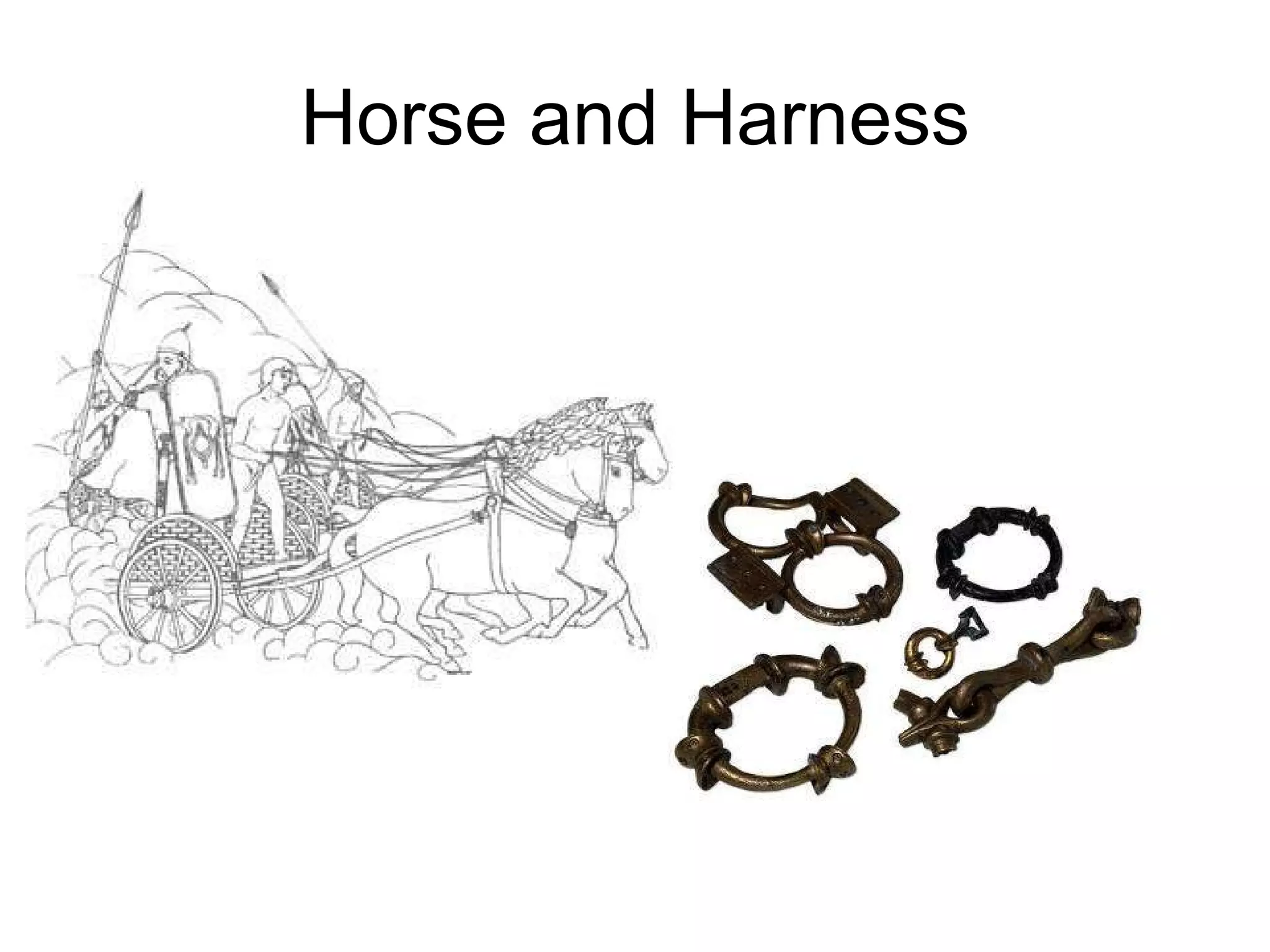
Horse and Harness
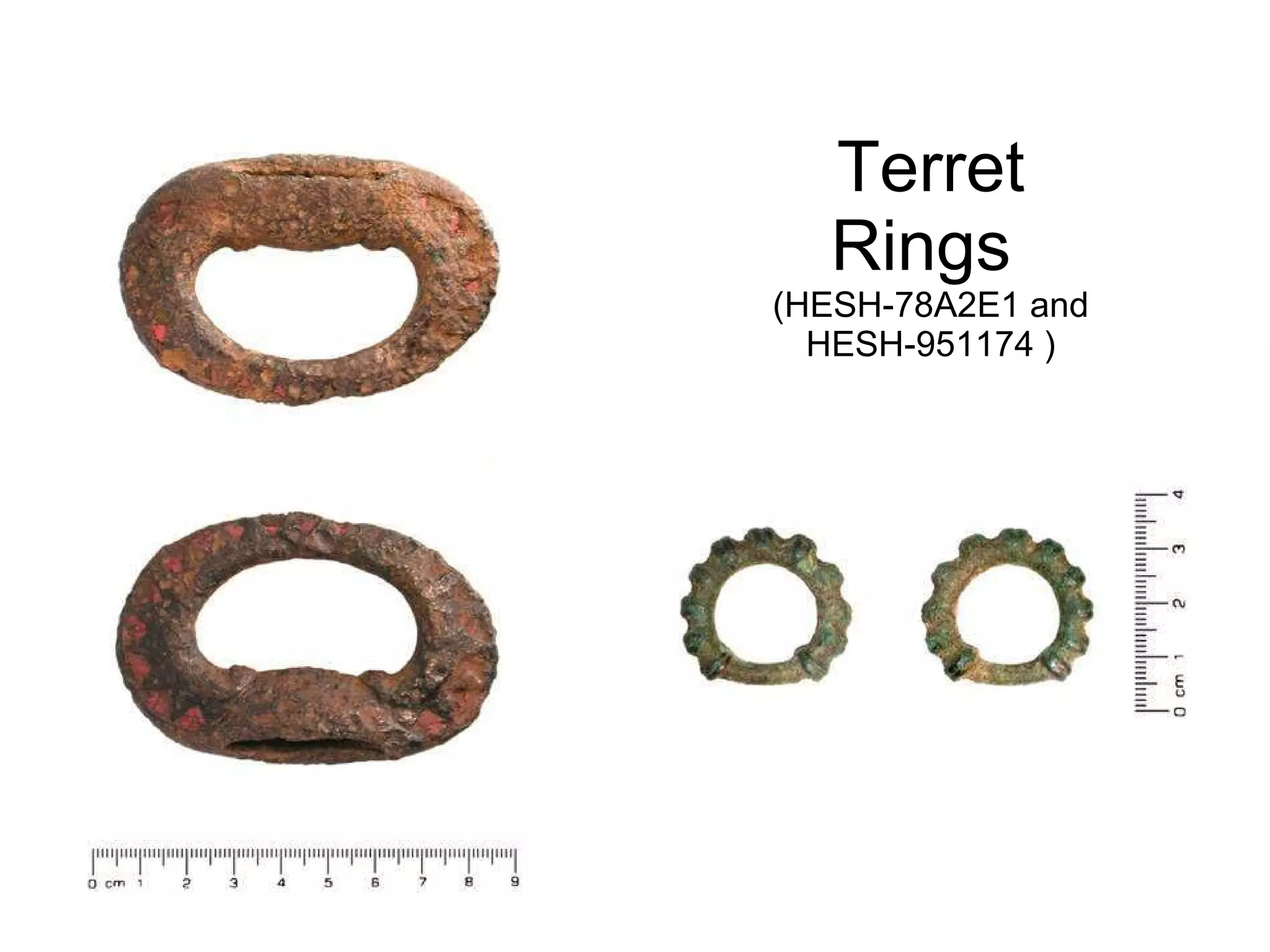
Terret Rings  ( HESH-78A2E1 and HESH-951174 )
 
Polychrome enamelled fragment from a skirted terret  1 st  century AD ish (WMID-3867F2 )
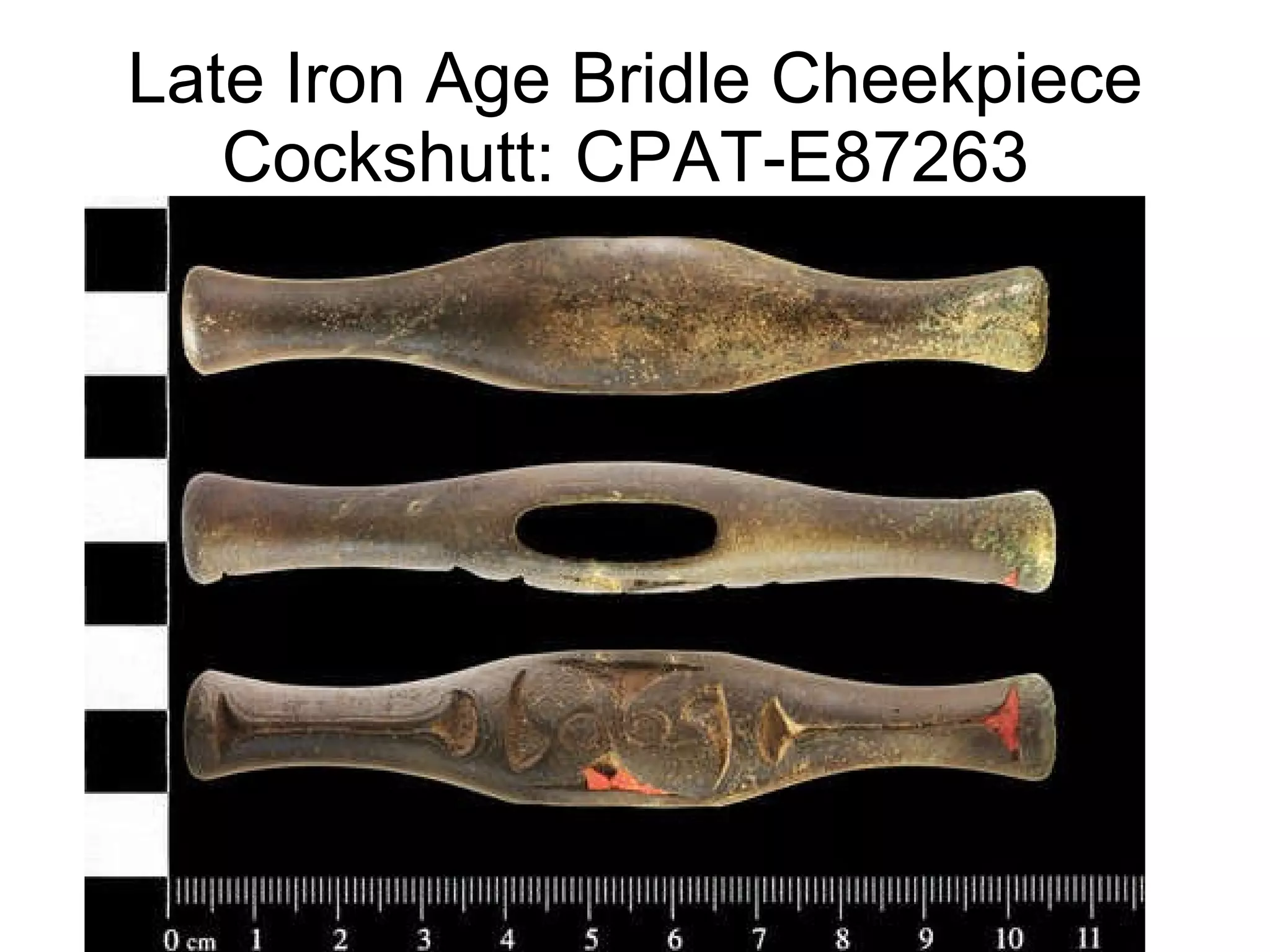
Late Iron Age Bridle Cheekpiece Cockshutt: CPAT-E87263
Paralleled  with this example (the first from Wales) from Maescar, (Brecon) Powys (NMGW-31C972 )
Linch pin Linch Pin from Staffordshire border 1 st  century AD WMID-94763
Strap Slide (HESH-116CA2) Mount ( HESH-165726 ) Strap Junction ( HESH-F35BD6 )
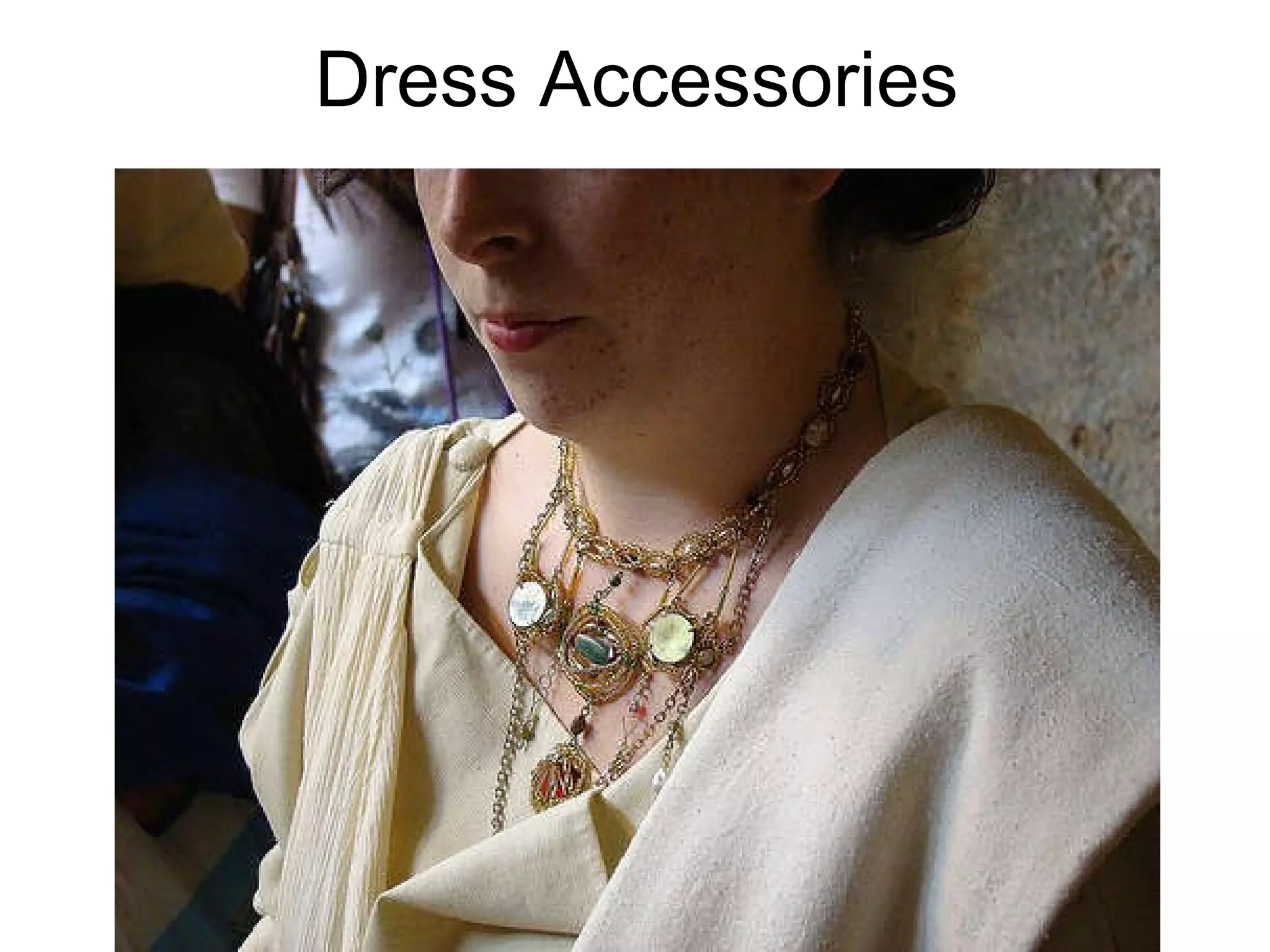
Dress Accessories
Iron Age La Tene (II) Style Bow brooch  HESH - 49FBD8
La Tene III Bow Brooch – N Shrops
One Piece Colchester Brooch ( HESH-B5A7C1 )
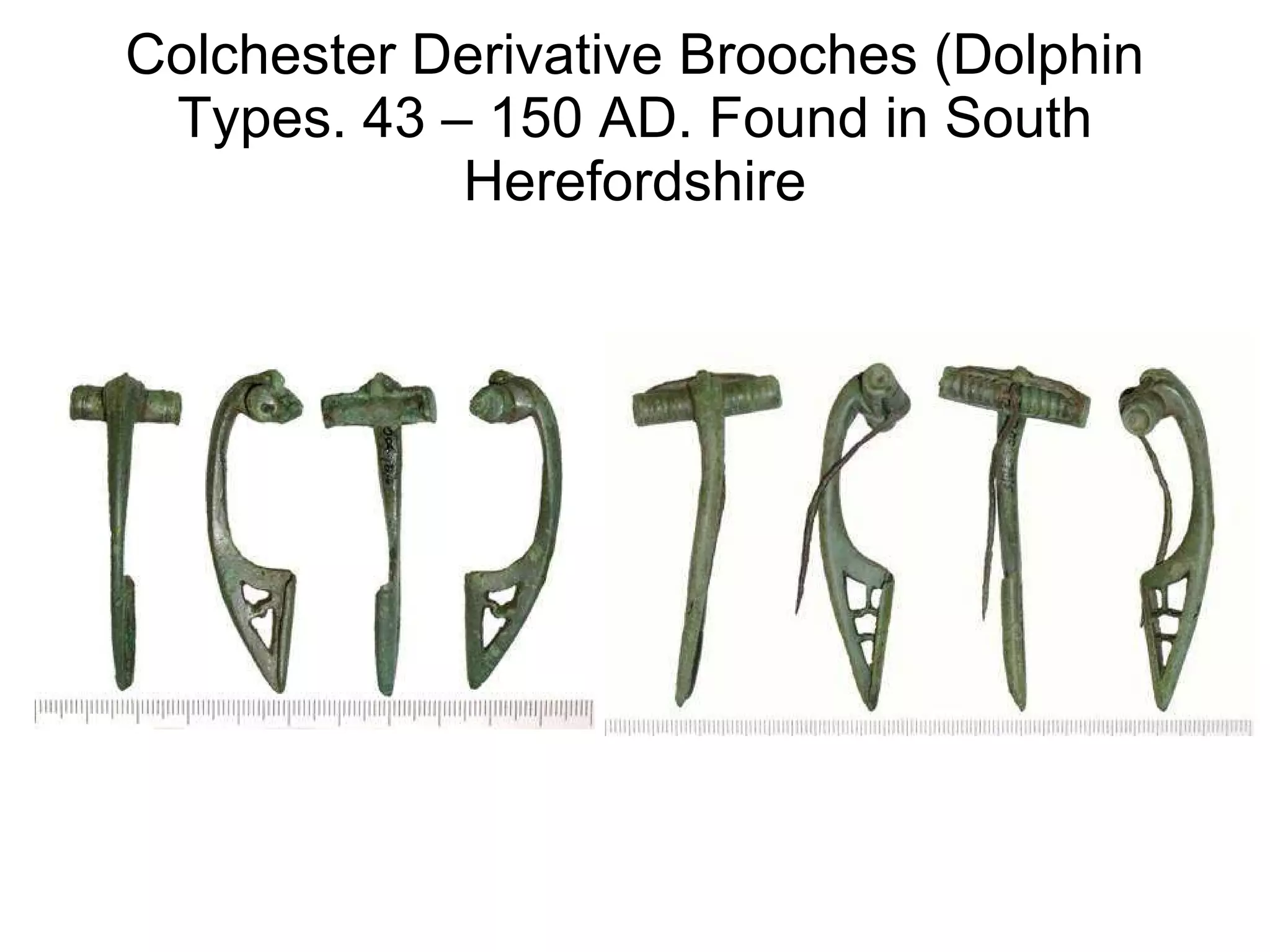
Colchester Derivative Brooches (Dolphin Types. 43 – 150 AD. Found in South Herefordshire
Polden hill (Dolphin) type copper alloy (bronze) brooch. 43 – 100 AD. Found in East Shropshire.   HESH 2CBA21
Rare complete Roman bow (Polden Hill type) Brooch with pin found in East Shropshire (HESH-4FE278)
Early Roman (75-150 AD) Trumpet Brooch – Whittington
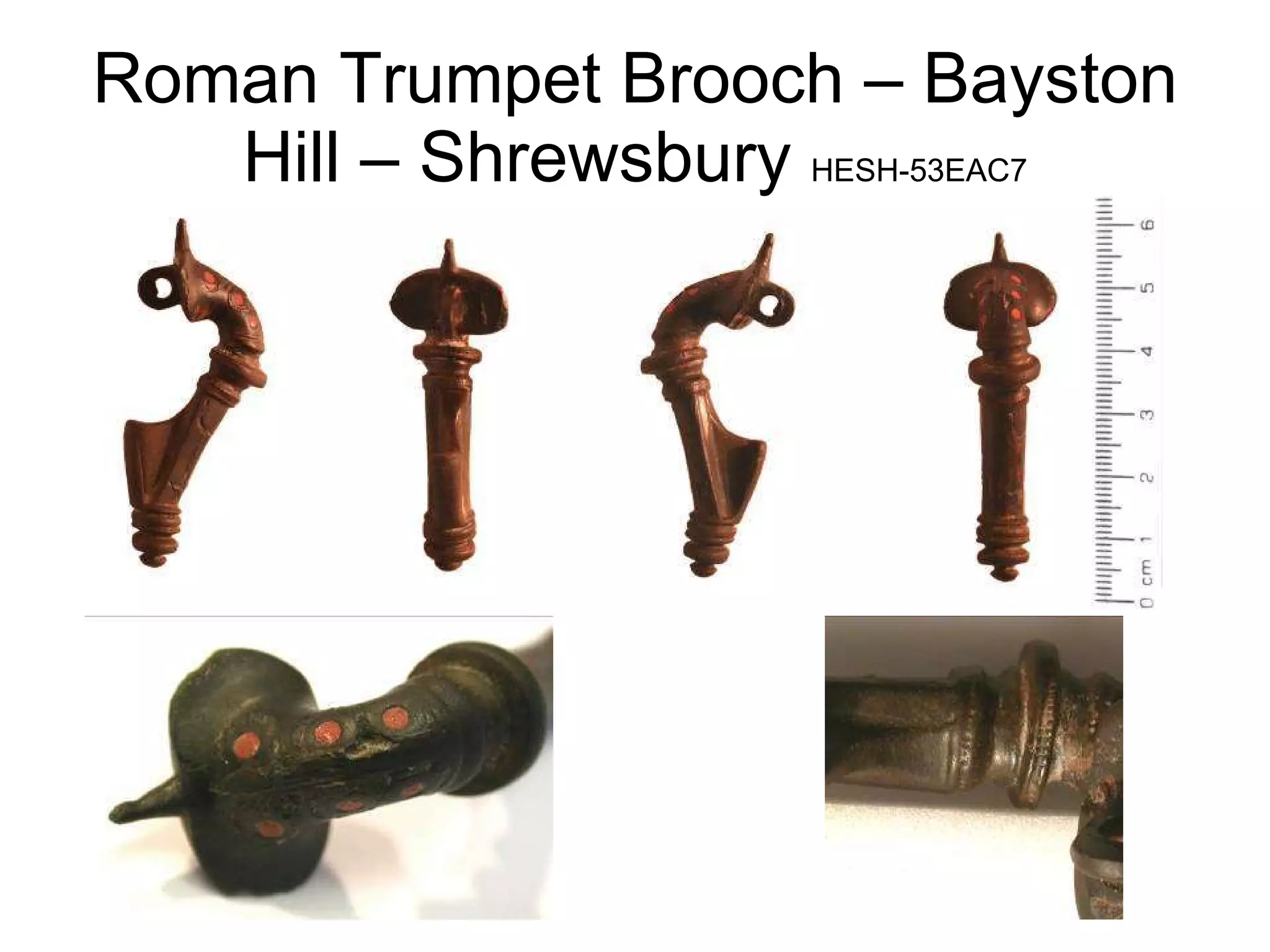
Roman Trumpet Brooch – Bayston Hill – Shrewsbury  HESH-53EAC7
Dragonesque Style Brooch, Bridgnorth Area HESH-69B018
Plate Brooch – Early Roman.  HESH-040BF6
Gilt disc brooch – Cockshutt – 3 rd  Century HESH-E14AF3
Bulls Head Bucket Mounts
Bulls Head Bucket Mount from Staffordshire Border
Illustration of Bulls Head Mount
Late Iron Age Bulls-head Vessel Mount HESH-E00294
 
Bulls Head Vessel Mount, Newport Area ( HESH-C96C96)
 
From Frodesley after Wroxeter Hinterland Project Now in Shrewsbury Museum and Art Gallery
The Distribution of Bovine Vessel Mounts in Relation to Their Methods of Discovery or Recording
Cosmetic mortars HESH-88D672 West Felton HESH-83A395 Whitchurch
National Distribution of  Cosmetic Mortars  after Worrell 2007
Button and Loop Fasteners Found in North Shropshire.  HESH-CB73D7
B&L Fastener – Newport HESH-61B3C2
B&L Fastener, Bayston Hill
B&L Fastener, Pattingham HESH-101F56
Enamelled Button and Loop Fastener  HESH-157F63
1 st  Century AD Toggle (HESH-786D48)
National Distribution of Button and Loop Fasteners  after Worrell 2007
Tankard Handle  (HESH-7757A4)
Three exceptional finds
1
Telford Torc
 
Snetisham Torc, Norfolk
Gold Pellet like ingots  of Iron Age composition from the Rowton Area Shropshire
2
Pair of Iron Age Spoons Mid Shropshire – 2005 T228
Distribution of Spoons  After Fitzpatrick 2008
Spoons from Penbryn, Dyfed
 
 
3
Copper alloy scabbard guard studied by Adam Gwilt and Mary Davis NGMW Cardiff
 
And the only site which consistently produce Material from both the Roman and Iron Age periods
Tankard Handle  (HESH-7757A4)
What Next Although I have spoken for too Long (Sorry) There is very little site specific information about finds in Shropshire when compared to the other known archaeology Finds tell you about people and can tell you as much about an area as any other form of archaeology More fieldwork is desperately needed A well thought out research strategy for the county is also needed – with this practical research can be carried out to answer some of the big questions Who can do this: I suggest the audience may have the answer Although I will lend a hand!
Peter Reavill; Finds Liaison Officer Ludlow Museum Resource Centre 7-9, Parkway. Ludlow. Shropshire.  SY8 2PG Telephone:  01584 813 641 Email:  [email_address] Website:  www.finds.org.uk. or visit me at one of my regular finds ID days

Iron age roman transition comp

Editor's Notes

  • #17 CCI includes some of the early wroxter material
  • #18 Reece – out of date – only used site finds which are now not representative for nation. New Reece periodisation is forthcoming from Philipa Walton and so this will not be as marked However does show considerable activity none the less Other factors: detectorists selection of recording finds – shiny Long use of the earlier silver coinage (especially republican)
  • #19 shows a unusual peak post Flavian Period 69 – Antonine 180 AD Does not have the 1 st century AD activity that can be seen in Shropshire
  • #20 Casey also sees the peak in the pre Claudian period however Wroxeter then tracks the national average Also note that Casey larger dataset of coins for study over 5K whereas PAS under 500 findspots.
  • #22 69 denari of which 51 repub and 18 imperial Oldest 140 BC Newest: Tiberius 37 AD
  • #25 Contains a single republican denari (46 BC) Depositied in AD 173 (denarius of Marcus Aurielius) bulk of coins = Ant. Pius
  • #26 Hoard of 97 and 23 coins Again bulk are Hadrianic and A P Although distinct number are early – including coins of M antoni / Nero and Otho. Deposited AD 176 28 1 st century coins
  • #30 Reece – out of date – only used site finds which are now not representative for nation. New Reece periodisation is forthcoming from Philipa Walton and so this will not be as marked However does show considerable activity none the less Other factors: detectorists selection of recording finds – shiny Long use of the earlier silver coinage (especially republican)