Lesson: Aware of Our Potentials
Electric Potential
Potential Difference
Electrical Energy
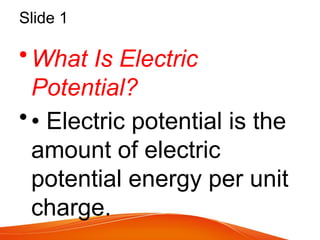
Slide 1
•What Is Electric
Potential?
•• Electric potential is the
amount of electric
potential energy per unit
charge.
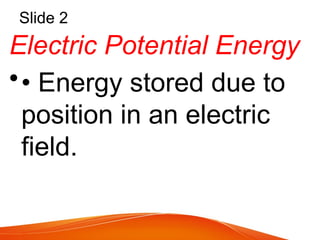
Slide 2
Electric Potential Energy
•• Energy stored due to
position in an electric
field.
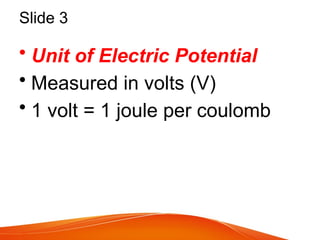
Slide 3
• Unit of Electric Potential
• Measured in volts (V)
• 1 volt = 1 joule per coulomb
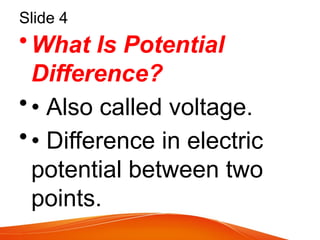
Slide 4
•What Is Potential
Difference?
•• Also called voltage.
•• Difference in electric
potential between two
points.
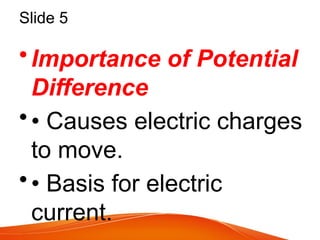
Slide 5
•Importance of Potential
Difference
•• Causes electric charges
to move.
•• Basis for electric
current.
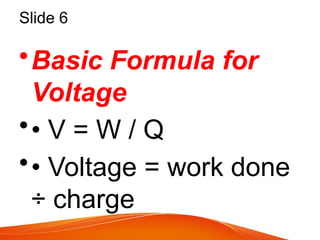
Slide 6
•Basic Formula for
Voltage
•• V = W / Q
•• Voltage = work done
÷ charge
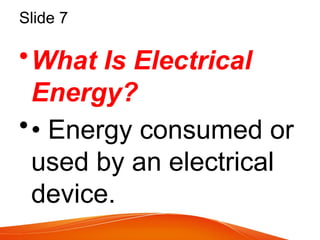
Slide 7
•What Is Electrical
Energy?
•• Energy consumed or
used by an electrical
device.
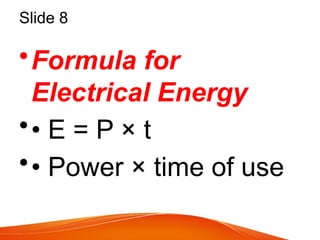
Slide 8
•Formula for
Electrical Energy
•• E = P × t
•• Power × time of use
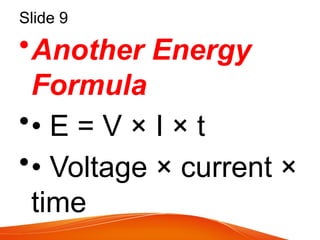
Slide 9
•Another Energy
Formula
•• E = V × I × t
•• Voltage × current ×
time
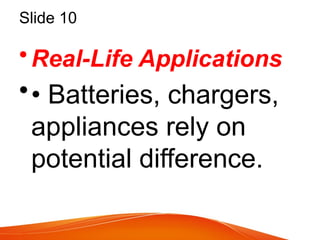
Slide 10
•Real-Life Applications
•• Batteries, chargers,
appliances rely on
potential difference.
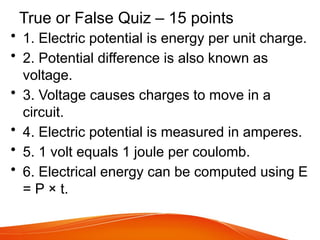
True or False Quiz – 15 points
• 1. Electric potential is energy per unit charge.
• 2. Potential difference is also known as
voltage.
• 3. Voltage causes charges to move in a
circuit.
• 4. Electric potential is measured in amperes.
• 5. 1 volt equals 1 joule per coulomb.
• 6. Electrical energy can be computed using E
= P × t.
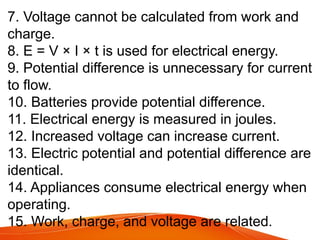
7. Voltage cannot be calculated from work and
charge.
8. E = V × I × t is used for electrical energy.
9. Potential difference is unnecessary for current
to flow.
10. Batteries provide potential difference.
11. Electrical energy is measured in joules.
12. Increased voltage can increase current.
13. Electric potential and potential difference are
identical.
14. Appliances consume electrical energy when
operating.
15. Work, charge, and voltage are related.
ANSWER KEY

Lesson_Aware_of_Our_Potentials_Presentation.pptx

  • 1.
    Lesson: Aware ofOur Potentials Electric Potential Potential Difference Electrical Energy
  • 2.
    Slide 1 •What IsElectric Potential? •• Electric potential is the amount of electric potential energy per unit charge.
  • 3.
    Slide 2 Electric PotentialEnergy •• Energy stored due to position in an electric field.
  • 4.
    Slide 3 • Unitof Electric Potential • Measured in volts (V) • 1 volt = 1 joule per coulomb
  • 5.
    Slide 4 •What IsPotential Difference? •• Also called voltage. •• Difference in electric potential between two points.
  • 6.
    Slide 5 •Importance ofPotential Difference •• Causes electric charges to move. •• Basis for electric current.
  • 7.
    Slide 6 •Basic Formulafor Voltage •• V = W / Q •• Voltage = work done ÷ charge
  • 8.
    Slide 7 •What IsElectrical Energy? •• Energy consumed or used by an electrical device.
  • 9.
    Slide 8 •Formula for ElectricalEnergy •• E = P × t •• Power × time of use
  • 10.
    Slide 9 •Another Energy Formula ••E = V × I × t •• Voltage × current × time
  • 11.
    Slide 10 •Real-Life Applications ••Batteries, chargers, appliances rely on potential difference.
  • 14.
    True or FalseQuiz – 15 points • 1. Electric potential is energy per unit charge. • 2. Potential difference is also known as voltage. • 3. Voltage causes charges to move in a circuit. • 4. Electric potential is measured in amperes. • 5. 1 volt equals 1 joule per coulomb. • 6. Electrical energy can be computed using E = P × t.
  • 15.
    7. Voltage cannotbe calculated from work and charge. 8. E = V × I × t is used for electrical energy. 9. Potential difference is unnecessary for current to flow. 10. Batteries provide potential difference. 11. Electrical energy is measured in joules. 12. Increased voltage can increase current. 13. Electric potential and potential difference are identical. 14. Appliances consume electrical energy when operating. 15. Work, charge, and voltage are related.
  • 17.

Editor's Notes

  • #1 • Electric Potential – Energy per unit charge at a point in an electric field. • Potential Difference – The difference in electric potential between two points (voltage). • Electrical Energy – Energy used or produced by moving electric charges.
  • #2 Electric potential is the energy a unit positive charge has at a specific point in an electric field. It shows how much work is needed to move the charge to that point.
  • #3 This refers to electric potential energy, which is the energy a charge has because of its position within an electric field.
  • #4 Voltage is the measure of electric potential difference. It tells how much energy each coulomb of charge carries. One volt means 1 joule of energy per coulomb of charge.
  • #5 otential Difference (Voltage) Also called voltage, it is the difference in electric potential between two points in a circuit. It is measured in volts (V), where 1 volt = 1 joule per coulomb. This difference causes electric charges to move and produce current.
  • #6 Potential difference (voltage) is what causes electric charges to move in a circuit. It provides the “push” that drives electrons, making electric current flow. It is the essential factor that allows electricity to function.
  • #8 Electrical energy is the energy used or consumed by devices when electric charges move through them.
  • #11 Electrical Energy Electrical energy is the energy used or consumed by an electrical device when electric charges move through it. Appliances, batteries, and chargers rely on potential difference (voltage) to make charges flow, allowing them to operate.