Frog and Toad All Year Lesson 2 Day 3
Question of the Day Which do you find more interesting to read, a poem about frogs or a book of facts about frogs? Why? What makes poems interesting to read? What makes a book of facts interesting to read? I like to read ____ because ____. Daily Proofreading that frog is brown That frog is brown.
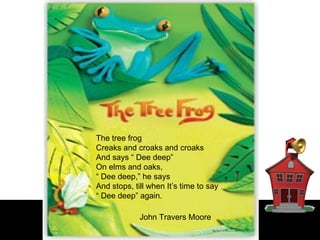
The tree frog  Creaks and croaks and croaks  And says “ Dee deep”  On elms and oaks,  “  Dee deep,” he says  And stops, till when It’s time to say  “  Dee deep” again.   John Travers Moore
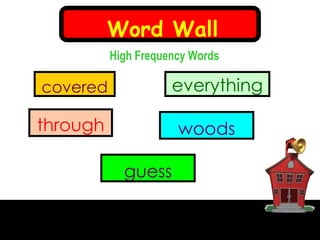
High Frequency Words Word Wall everything through woods covered guess
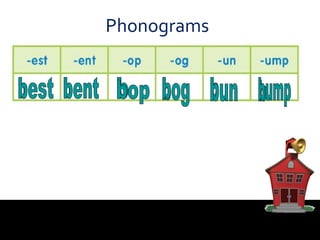
Phonograms bog b best b bent b b b b bop bun bump
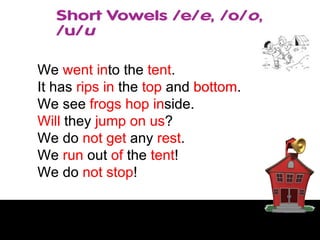
We went into the tent. It has rips in the top and bottom. We see frogs hop inside. Will they jump on us? We do not get any rest. We run out of the tent! We do not stop! We  went   in to the  tent . It has  rips   in  the  top  and  bottom . We see  frogs   hop   in side. Will  they  jump   on   us ? We do  not   get  any  rest . We  run  out  of  the  tent ! We do  not   stop !
 
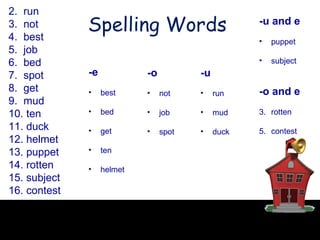
Spelling Words run not best job bed spot get mud ten duck helmet puppet rotten subject contest -e   best   bed get ten helmet -o not job spot -u run mud duck -u and e puppet subject -o and e rotten contest
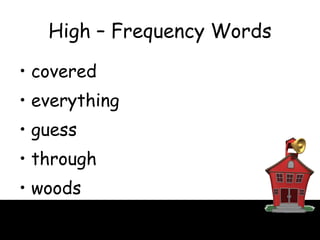
High – Frequency Words covered everything guess through woods
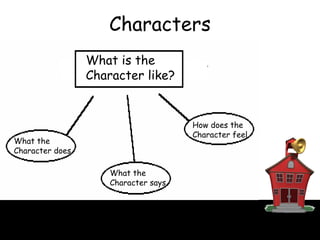
Characters What is the  Character like? How does the Character feel What the Character says What the Character does
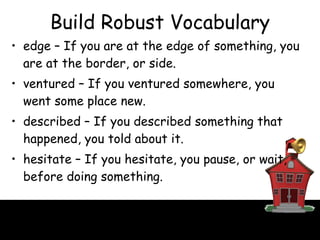
Build Robust Vocabulary edge – If you are at the edge of something, you are at the border, or side. ventured – If you ventured somewhere, you went some place new. described – If you described something that happened, you told about it. hesitate – If you hesitate, you pause, or wait, before doing something.
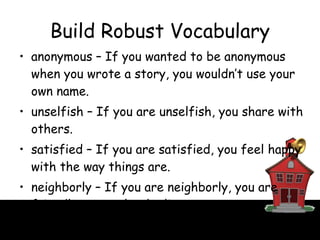
Build Robust Vocabulary anonymous – If you wanted to be anonymous when you wrote a story, you wouldn’t use your own name. unselfish – If you are unselfish, you share with others. satisfied – If you are satisfied, you feel happy with the way things are. neighborly – If you are neighborly, you are friendly to people who live near you.
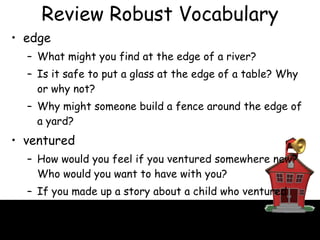
Review Robust Vocabulary edge  What might you find at the edge of a river? Is it safe to put a glass at the edge of a table? Why or why not? Why might someone build a fence around the edge of a yard? ventured How would you feel if you ventured somewhere new? Who would you want to have with you? If you made up a story about a child who ventured somewhere, where would the child go?
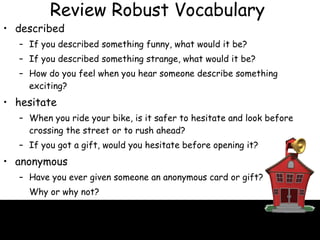
described If you described something funny, what would it be? If you described something strange, what would it be? How do you feel when you hear someone describe something exciting? hesitate When you ride your bike, is it safer to hesitate and look before crossing the street or to rush ahead? If you got a gift, would you hesitate before opening it? anonymous Have you ever given someone an anonymous card or gift?  Why or why not? Why might someone who gave a gift want to remain   anonymous? Review Robust Vocabulary
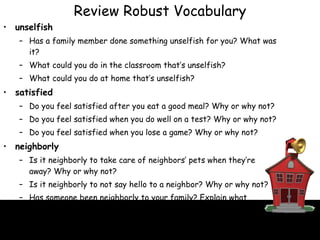
unselfish Has a family member done something unselfish for you? What was it? What could you do in the classroom that’s unselfish? What could you do at home that’s unselfish? satisfied Do you feel satisfied after you eat a good meal? Why or why not? Do you feel satisfied when you do well on a test? Why or why not? Do you feel satisfied when you lose a game? Why or why not? neighborly Is it neighborly to take care of neighbors’ pets when they’re away? Why or why not? Is it neighborly to not say hello to a neighbor? Why or why not? Has someone been neighborly to your family? Explain what happened. Review Robust Vocabulary
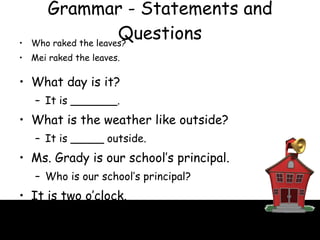
Grammar - Statements and Questions Who raked the leaves? Mei raked the leaves. What day is it? It is _______. What is the weather like outside? It is _____ outside. Ms. Grady is our school’s principal. Who is our school’s principal? It is two o’clock. What time is it?
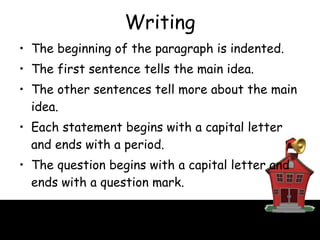
Writing The beginning of the paragraph is indented. The first sentence tells the main idea. The other sentences tell more about the main idea. Each statement begins with a capital letter and ends with a period. The question begins with a capital letter and ends with a question mark.

Lesson 2 Day 3

  • 1.
    Frog and ToadAll Year Lesson 2 Day 3
  • 2.
    Question of theDay Which do you find more interesting to read, a poem about frogs or a book of facts about frogs? Why? What makes poems interesting to read? What makes a book of facts interesting to read? I like to read ____ because ____. Daily Proofreading that frog is brown That frog is brown.
  • 3.
    The tree frog Creaks and croaks and croaks And says “ Dee deep” On elms and oaks, “ Dee deep,” he says And stops, till when It’s time to say “ Dee deep” again.   John Travers Moore
  • 4.
    High Frequency WordsWord Wall everything through woods covered guess
  • 5.
    Phonograms bog bbest b bent b b b b bop bun bump
  • 6.
    We went intothe tent. It has rips in the top and bottom. We see frogs hop inside. Will they jump on us? We do not get any rest. We run out of the tent! We do not stop! We went in to the tent . It has rips in the top and bottom . We see frogs hop in side. Will they jump on us ? We do not get any rest . We run out of the tent ! We do not stop !
  • 7.
  • 8.
    Spelling Words runnot best job bed spot get mud ten duck helmet puppet rotten subject contest -e best bed get ten helmet -o not job spot -u run mud duck -u and e puppet subject -o and e rotten contest
  • 9.
    High – FrequencyWords covered everything guess through woods
  • 10.
    Characters What isthe Character like? How does the Character feel What the Character says What the Character does
  • 11.
    Build Robust Vocabularyedge – If you are at the edge of something, you are at the border, or side. ventured – If you ventured somewhere, you went some place new. described – If you described something that happened, you told about it. hesitate – If you hesitate, you pause, or wait, before doing something.
  • 12.
    Build Robust Vocabularyanonymous – If you wanted to be anonymous when you wrote a story, you wouldn’t use your own name. unselfish – If you are unselfish, you share with others. satisfied – If you are satisfied, you feel happy with the way things are. neighborly – If you are neighborly, you are friendly to people who live near you.
  • 13.
    Review Robust Vocabularyedge What might you find at the edge of a river? Is it safe to put a glass at the edge of a table? Why or why not? Why might someone build a fence around the edge of a yard? ventured How would you feel if you ventured somewhere new? Who would you want to have with you? If you made up a story about a child who ventured somewhere, where would the child go?
  • 14.
    described If youdescribed something funny, what would it be? If you described something strange, what would it be? How do you feel when you hear someone describe something exciting? hesitate When you ride your bike, is it safer to hesitate and look before crossing the street or to rush ahead? If you got a gift, would you hesitate before opening it? anonymous Have you ever given someone an anonymous card or gift? Why or why not? Why might someone who gave a gift want to remain anonymous? Review Robust Vocabulary
  • 15.
    unselfish Has afamily member done something unselfish for you? What was it? What could you do in the classroom that’s unselfish? What could you do at home that’s unselfish? satisfied Do you feel satisfied after you eat a good meal? Why or why not? Do you feel satisfied when you do well on a test? Why or why not? Do you feel satisfied when you lose a game? Why or why not? neighborly Is it neighborly to take care of neighbors’ pets when they’re away? Why or why not? Is it neighborly to not say hello to a neighbor? Why or why not? Has someone been neighborly to your family? Explain what happened. Review Robust Vocabulary
  • 16.
    Grammar - Statementsand Questions Who raked the leaves? Mei raked the leaves. What day is it? It is _______. What is the weather like outside? It is _____ outside. Ms. Grady is our school’s principal. Who is our school’s principal? It is two o’clock. What time is it?
  • 17.
    Writing The beginningof the paragraph is indented. The first sentence tells the main idea. The other sentences tell more about the main idea. Each statement begins with a capital letter and ends with a period. The question begins with a capital letter and ends with a question mark.