WINDOWS SERVER 2008 R2
BY: ROLAND SEAN R. LAURE
Network Operating System
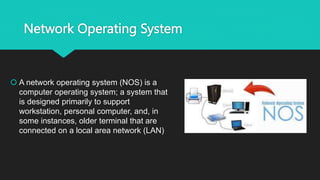
 A network operating system (NOS) is a
computer operating system; a system that
is designed primarily to support
workstation, personal computer, and, in
some instances, older terminal that are
connected on a local area network (LAN)
Features of NOS
Basic operating system features support like protocol support, processor support,
hardware detection and multiprocessing support for applications
 Security features like authentication, restrictions, authorizations and access
control
 Features for file, Web service, printing and replication
 Directory and name services management
 User management features along with provisions for remote access and system
management
 Internetworking features like routing and WAN ports
 Clustering capabilities
Common tasks associated with NOS
 User administration
 System maintenance activities like backup
 Tasks associated with file management
 Security monitoring on all resources in the network
 Setting priority to print jobs in the network
What is a Client?
 It is a piece of computer hardware or software that accesses a service
made available by a server. The server is often (but not always) on
another computer system, in which case the client accesses the service
by way of a network.
 The term applies to programs or devices that are part of a client–server
model.
 A client is the requesting program or user in a client/server relationship.
 For example, the user of a Web browser is effectively making client
requests for pages from servers all over the Web.
What is a Server?
 It is a computer or computer program that manages access to a
centralized resource or service in a network.
 In computer networking, a server is a computer designed to process
requests and deliver data to other (client) computers over a local network
or the Internet.
 Many types of servers exist, including web servers, mail servers, and file
servers. Each type runs software specific to the purpose of the server.
 For example, a Web server may run Apache HTTP Server or Microsoft IIS,
which both provide access to websites over the Internet.
What is Domain vs Workgroup?
Domain
 It is a group of computers and devices on a network that are administered as a
unit with common rules and procedures. Within the Internet, domains are defined
by the IP address. All devices sharing a common part of the IP address are said to
be in the same domain. Workgroup
Workgroup
 In computer networking, a workgroup is a collection of computers on a local area
network (LAN) that share common resources and responsibilities. Workgroups
provide easy sharing of files, printers and other network resources.
What is windows 2008 server r2?
• It is one of powerful set of tools, servers, and
technologies optimized for building and hosting
next-generation Web applications and
solutions.
• This NOS are available in multiple editions to
support the varying server and workload needs
of organizations. The four main editions include
Windows Server® 2008 R2 Standard, Windows
Server® 2008 R2 Enterprise, Windows
Server® 2008 R2 Datacenter, and Windows®
Web Server 2008 R2
What is windows 2008 server r2?
• Hardware Requirements Processor — Processor
performance depends not only on the clock frequency
of the processor, but also on the number of processor
cores and the size of the processor cache.
The following are the processor requirements:
• Minimum: 1 GHz (for x86 processors) or 1.4 GHz (for
x64 processors)
• Recommended: 2 GHz or faster RAM — the following
are the RAM requirements:
What is windows 2008 server r2?
• Minimum: 512 MB
• Recommended: 2 GB or more
• Maximum (32-bit systems): 4 GB (for Windows Server
2008 Standard) or 64 GB (for Windows Server 2008
Enterprise or Windows Server 2008 Datacenter)
• Maximum (64-bit systems): 32 GB (for Windows
Server 2008 Standard) or 2 terabyte (for Windows
Server 2008 Enterprise, Windows Server 2008
Datacenter, or Windows Server® 2008 for Itanium-
Based Systems)
What is windows 2008 server r2?
• Disk space requirements —The following are the
approximate disk space requirements for the system
partition. Itanium-based and x64-based operating
systems will vary from these estimates. Additional disk
space may be required if you install the system over a
network:
• Minimum: 10 GB
• Recommended: 40 GB or more
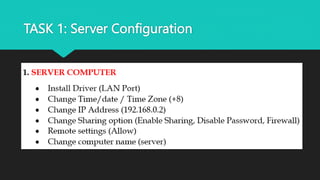
TASK 1: Server Configuration
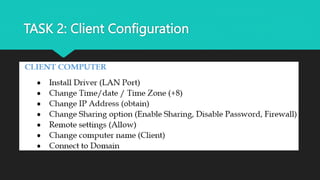
TASK 2: Client Configuration
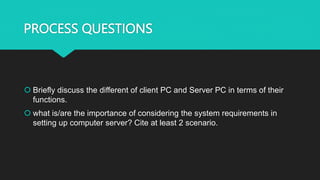
PROCESS QUESTIONS
 Briefly discuss the different of client PC and Server PC in terms of their
functions.
 what is/are the importance of considering the system requirements in
setting up computer server? Cite at least 2 scenario.

LESSON 1 - Windows Server 2008 R2 Configuration.pptx

  • 1.
    WINDOWS SERVER 2008R2 BY: ROLAND SEAN R. LAURE
  • 2.
    Network Operating System A network operating system (NOS) is a computer operating system; a system that is designed primarily to support workstation, personal computer, and, in some instances, older terminal that are connected on a local area network (LAN)
  • 3.
    Features of NOS Basicoperating system features support like protocol support, processor support, hardware detection and multiprocessing support for applications  Security features like authentication, restrictions, authorizations and access control  Features for file, Web service, printing and replication  Directory and name services management  User management features along with provisions for remote access and system management  Internetworking features like routing and WAN ports  Clustering capabilities
  • 4.
    Common tasks associatedwith NOS  User administration  System maintenance activities like backup  Tasks associated with file management  Security monitoring on all resources in the network  Setting priority to print jobs in the network
  • 5.
    What is aClient?  It is a piece of computer hardware or software that accesses a service made available by a server. The server is often (but not always) on another computer system, in which case the client accesses the service by way of a network.  The term applies to programs or devices that are part of a client–server model.  A client is the requesting program or user in a client/server relationship.  For example, the user of a Web browser is effectively making client requests for pages from servers all over the Web.
  • 6.
    What is aServer?  It is a computer or computer program that manages access to a centralized resource or service in a network.  In computer networking, a server is a computer designed to process requests and deliver data to other (client) computers over a local network or the Internet.  Many types of servers exist, including web servers, mail servers, and file servers. Each type runs software specific to the purpose of the server.  For example, a Web server may run Apache HTTP Server or Microsoft IIS, which both provide access to websites over the Internet.
  • 7.
    What is Domainvs Workgroup? Domain  It is a group of computers and devices on a network that are administered as a unit with common rules and procedures. Within the Internet, domains are defined by the IP address. All devices sharing a common part of the IP address are said to be in the same domain. Workgroup Workgroup  In computer networking, a workgroup is a collection of computers on a local area network (LAN) that share common resources and responsibilities. Workgroups provide easy sharing of files, printers and other network resources.
  • 8.
    What is windows2008 server r2? • It is one of powerful set of tools, servers, and technologies optimized for building and hosting next-generation Web applications and solutions. • This NOS are available in multiple editions to support the varying server and workload needs of organizations. The four main editions include Windows Server® 2008 R2 Standard, Windows Server® 2008 R2 Enterprise, Windows Server® 2008 R2 Datacenter, and Windows® Web Server 2008 R2
  • 9.
    What is windows2008 server r2? • Hardware Requirements Processor — Processor performance depends not only on the clock frequency of the processor, but also on the number of processor cores and the size of the processor cache. The following are the processor requirements: • Minimum: 1 GHz (for x86 processors) or 1.4 GHz (for x64 processors) • Recommended: 2 GHz or faster RAM — the following are the RAM requirements:
  • 10.
    What is windows2008 server r2? • Minimum: 512 MB • Recommended: 2 GB or more • Maximum (32-bit systems): 4 GB (for Windows Server 2008 Standard) or 64 GB (for Windows Server 2008 Enterprise or Windows Server 2008 Datacenter) • Maximum (64-bit systems): 32 GB (for Windows Server 2008 Standard) or 2 terabyte (for Windows Server 2008 Enterprise, Windows Server 2008 Datacenter, or Windows Server® 2008 for Itanium- Based Systems)
  • 11.
    What is windows2008 server r2? • Disk space requirements —The following are the approximate disk space requirements for the system partition. Itanium-based and x64-based operating systems will vary from these estimates. Additional disk space may be required if you install the system over a network: • Minimum: 10 GB • Recommended: 40 GB or more
  • 12.
    TASK 1: ServerConfiguration
  • 13.
    TASK 2: ClientConfiguration
  • 14.
    PROCESS QUESTIONS  Brieflydiscuss the different of client PC and Server PC in terms of their functions.  what is/are the importance of considering the system requirements in setting up computer server? Cite at least 2 scenario.