Preview of 4 Coming Attractions 
• Today: Derivation of the Demand Curve 
– Consumers (Buyers) 
• Next: Derivation of the Supply Curve 
– Firms (Sellers) 
• Later: Double Auction Market 
– Buyers and and sellers come together 
• Still later: Competitive Equilibrium Model
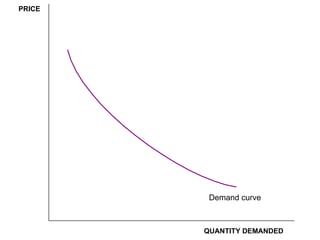
05_01 PRICE 
Demand curve 
QUANTITY DEMANDED
Why study the derivation of the 
demand curve? 
• Helps explain why a competitive market 
works well. 
• Helps determine the position of the demand 
curve and the sensitivity of quantity 
demanded to price.
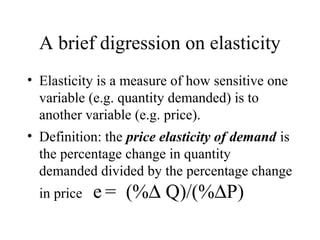
A brief digression on elasticity 
• Elasticity is a measure of how sensitive one 
variable (e.g. quantity demanded) is to 
another variable (e.g. price). 
• Definition: the price elasticity of demand is 
the percentage change in quantity 
demanded divided by the percentage change 
in price e = (%D Q)/(%DP)
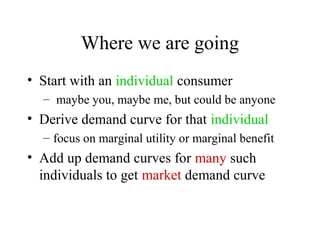
Where we are going 
• Start with an individual consumer 
– maybe you, maybe me, but could be anyone 
• Derive demand curve for that individual 
– focus on marginal utility or marginal benefit 
• Add up demand curves for many such 
individuals to get market demand curve
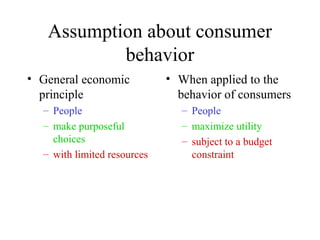
Assumption about consumer 
behavior 
• General economic 
principle 
– People 
– make purposeful 
choices 
– with limited resources 
• When applied to the 
behavior of consumers 
– People 
– maximize utility 
– subject to a budget 
constraint
Utility: a numerical indicator of 
preferences 
• Marginal Utility 
• Diminishing Marginal Utility
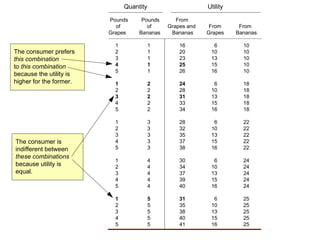
05_03T Quantity Utility 
Pounds Pounds From 
of of Grapes and From From 
Grapes Bananas Bananas Grapes Bananas 
1 1 16 6 10 
2 1 20 10 10 
3 1 23 13 10 
4 1 25 15 10 
5 1 26 16 10 
1 2 24 6 18 
2 2 28 10 18 
3 2 31 13 18 
4 2 33 15 18 
5 2 34 16 18 
1 3 28 6 22 
2 3 32 10 22 
3 3 35 13 22 
4 3 37 15 22 
5 3 38 16 22 
1 4 30 6 24 
2 4 34 10 24 
3 4 37 13 24 
4 4 39 15 24 
5 4 40 16 24 
1 5 31 6 25 
2 5 35 10 25 
3 5 38 13 25 
4 5 40 15 25 
5 5 41 16 25 
The consumer prefers 
this combination 
to this combination 
because the utility is 
higher for the former. 
The consumer is 
indifferent between 
these combinations 
because utility is 
equal.
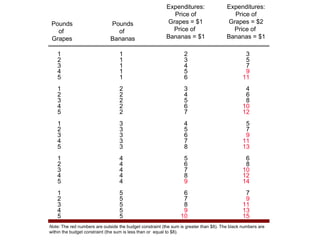
05_04T 
Expenditures: 
Price of 
Grapes = $1 
Price of 
Bananas = $1 
Pounds 
of 
Bananas 
Expenditures: 
Price of 
Grapes = $2 
Price of 
Bananas = $1 
Pounds 
of 
Grapes 
1 1 2 3 
2 1 3 5 
3 1 4 7 
4 1 5 
9 
5 1 6 
11 
1 2 3 4 
2 2 4 6 
3 2 5 8 
4 2 6 
10 
5 2 7 
12 
1 3 4 5 
2 3 5 7 
3 3 6 
9 
4 3 7 
11 
5 3 8 
13 
1 4 5 6 
2 4 6 8 
3 4 7 
10 
4 4 8 
12 
5 4 
9 14 
1 5 6 7 
2 5 7 
9 
3 5 8 
11 
4 5 
9 13 
5 5 
10 15 
Note: The red numbers are outside the budget constraint (the sum is greater than $8). The black numbers are 
within the budget constraint (the sum is less than or equal to $8).
05_05T 
Expenditures: 
Price of 
Grapes = $1 
Price of 
Bananas = $1 
Pounds 
of 
Bananas 
Expenditures: 
Price of 
Grapes = $2 
Price of 
Bananas = $1 
Pounds 
of 
Grapes 
Utility 
from 
Grapes 
and 
Bananas 
1 1 16 2 3 
2 1 20 3 5 
3 1 23 4 7 
4 1 25 5 9 
5 1 26 6 11 
1 2 24 3 4 
2 2 28 4 6 
3 2 31 5 8 
4 2 33 6 10 
5 2 34 7 12 
1 3 28 4 5 
2 3 32 5 7 
3 3 35 6 9 
4 3 37 7 11 
5 3 38 8 13 
1 4 30 5 6 
2 4 34 6 8 
3 4 37 7 10 
4 4 39 8 12 
5 4 40 9 14 
1 5 31 6 7 
2 5 35 7 9 
3 5 38 8 11 
4 5 40 9 13 
5 5 41 10 15 
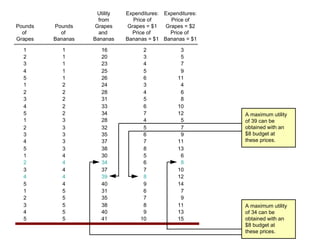
A maximum utility 
of 39 can be 
obtained with an 
$8 budget at 
these prices. 
A maximum utility 
of 34 can be 
obtained with an 
$8 budget at 
these prices.
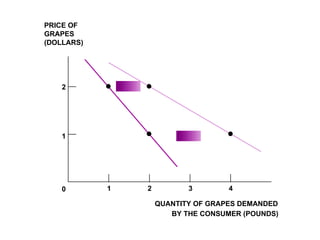
05_C 
PRICE OF 
GRAPES 
(DOLLARS) 
2 
1 
0 
1 2 3 4 
QUANTITY OF GRAPES DEMANDED 
BY THE CONSUMER (POUNDS)
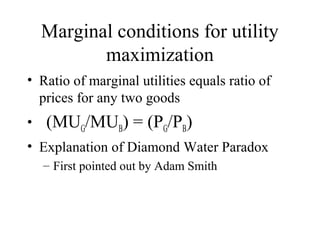
Marginal conditions for utility 
maximization 
• Ratio of marginal utilities equals ratio of 
prices for any two goods 
• (MUG/MUB) = (PG/PB) 
• Explanation of Diamond Water Paradox 
– First pointed out by Adam Smith
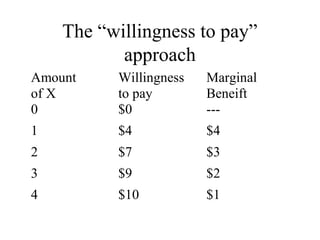
The “willingness to pay” 
approach 
Amount 
of X 
Willingness 
to pay 
Marginal 
Beneift 
0 $0 --- 
1 $4 $4 
2 $7 $3 
3 $9 $2 
4 $10 $1
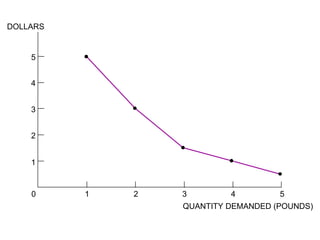
05_05 
1 2 3 4 5 
5 
4 
3 
2 
1 
0 
QUANTITY DEMANDED (POUNDS) 
DOLLARS
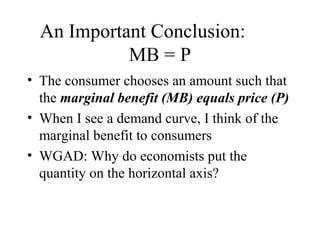
An Important Conclusion: 
MB = P 
• The consumer chooses an amount such that 
the marginal benefit (MB) equals price (P) 
• When I see a demand curve, I think of the 
marginal benefit to consumers 
• WGAD: Why do economists put the 
quantity on the horizontal axis?
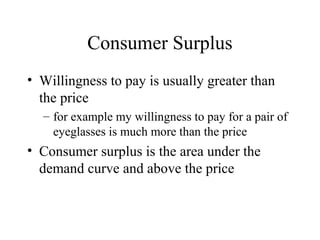
Consumer Surplus 
• Willingness to pay is usually greater than 
the price 
– for example my willingness to pay for a pair of 
eyeglasses is much more than the price 
• Consumer surplus is the area under the 
demand curve and above the price
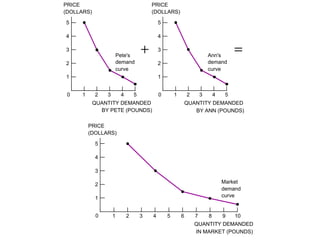
Market Demand Curve 
• Consider all consumers in the market 
• Add up quantity demanded by all 
individuals at each price to get market 
demand 
• Add horizontally
05_06 
5 
4 
3 
2 
1 
0 1 2 3 4 5 
5 
4 
3 
2 
1 
Ann's 
demand 
curve 
0 1 2 3 4 5 
QUANTITY DEMANDED 
5 
4 
3 
2 
1 
BY PETE (POUNDS) 
QUANTITY DEMANDED 
BY ANN (POUNDS) 
0 1 2 3 4 5 6 7 8 9 10 
QUANTITY DEMANDED 
IN MARKET (POUNDS) 
PRICE 
(DOLLARS) 
PRICE 
(DOLLARS) 
PRICE 
(DOLLARS) 
Market 
demand 
curve 
Pete's 
demand 
curve 
+ =

Lecture3(ch5)

  • 2.
    Preview of 4Coming Attractions • Today: Derivation of the Demand Curve – Consumers (Buyers) • Next: Derivation of the Supply Curve – Firms (Sellers) • Later: Double Auction Market – Buyers and and sellers come together • Still later: Competitive Equilibrium Model
  • 3.
    05_01 PRICE Demandcurve QUANTITY DEMANDED
  • 4.
    Why study thederivation of the demand curve? • Helps explain why a competitive market works well. • Helps determine the position of the demand curve and the sensitivity of quantity demanded to price.
  • 5.
    A brief digressionon elasticity • Elasticity is a measure of how sensitive one variable (e.g. quantity demanded) is to another variable (e.g. price). • Definition: the price elasticity of demand is the percentage change in quantity demanded divided by the percentage change in price e = (%D Q)/(%DP)
  • 6.
    Where we aregoing • Start with an individual consumer – maybe you, maybe me, but could be anyone • Derive demand curve for that individual – focus on marginal utility or marginal benefit • Add up demand curves for many such individuals to get market demand curve
  • 7.
    Assumption about consumer behavior • General economic principle – People – make purposeful choices – with limited resources • When applied to the behavior of consumers – People – maximize utility – subject to a budget constraint
  • 8.
    Utility: a numericalindicator of preferences • Marginal Utility • Diminishing Marginal Utility
  • 9.
    05_03T Quantity Utility Pounds Pounds From of of Grapes and From From Grapes Bananas Bananas Grapes Bananas 1 1 16 6 10 2 1 20 10 10 3 1 23 13 10 4 1 25 15 10 5 1 26 16 10 1 2 24 6 18 2 2 28 10 18 3 2 31 13 18 4 2 33 15 18 5 2 34 16 18 1 3 28 6 22 2 3 32 10 22 3 3 35 13 22 4 3 37 15 22 5 3 38 16 22 1 4 30 6 24 2 4 34 10 24 3 4 37 13 24 4 4 39 15 24 5 4 40 16 24 1 5 31 6 25 2 5 35 10 25 3 5 38 13 25 4 5 40 15 25 5 5 41 16 25 The consumer prefers this combination to this combination because the utility is higher for the former. The consumer is indifferent between these combinations because utility is equal.
  • 10.
    05_04T Expenditures: Priceof Grapes = $1 Price of Bananas = $1 Pounds of Bananas Expenditures: Price of Grapes = $2 Price of Bananas = $1 Pounds of Grapes 1 1 2 3 2 1 3 5 3 1 4 7 4 1 5 9 5 1 6 11 1 2 3 4 2 2 4 6 3 2 5 8 4 2 6 10 5 2 7 12 1 3 4 5 2 3 5 7 3 3 6 9 4 3 7 11 5 3 8 13 1 4 5 6 2 4 6 8 3 4 7 10 4 4 8 12 5 4 9 14 1 5 6 7 2 5 7 9 3 5 8 11 4 5 9 13 5 5 10 15 Note: The red numbers are outside the budget constraint (the sum is greater than $8). The black numbers are within the budget constraint (the sum is less than or equal to $8).
  • 11.
    05_05T Expenditures: Priceof Grapes = $1 Price of Bananas = $1 Pounds of Bananas Expenditures: Price of Grapes = $2 Price of Bananas = $1 Pounds of Grapes Utility from Grapes and Bananas 1 1 16 2 3 2 1 20 3 5 3 1 23 4 7 4 1 25 5 9 5 1 26 6 11 1 2 24 3 4 2 2 28 4 6 3 2 31 5 8 4 2 33 6 10 5 2 34 7 12 1 3 28 4 5 2 3 32 5 7 3 3 35 6 9 4 3 37 7 11 5 3 38 8 13 1 4 30 5 6 2 4 34 6 8 3 4 37 7 10 4 4 39 8 12 5 4 40 9 14 1 5 31 6 7 2 5 35 7 9 3 5 38 8 11 4 5 40 9 13 5 5 41 10 15 A maximum utility of 39 can be obtained with an $8 budget at these prices. A maximum utility of 34 can be obtained with an $8 budget at these prices.
  • 12.
    05_C PRICE OF GRAPES (DOLLARS) 2 1 0 1 2 3 4 QUANTITY OF GRAPES DEMANDED BY THE CONSUMER (POUNDS)
  • 13.
    Marginal conditions forutility maximization • Ratio of marginal utilities equals ratio of prices for any two goods • (MUG/MUB) = (PG/PB) • Explanation of Diamond Water Paradox – First pointed out by Adam Smith
  • 14.
    The “willingness topay” approach Amount of X Willingness to pay Marginal Beneift 0 $0 --- 1 $4 $4 2 $7 $3 3 $9 $2 4 $10 $1
  • 15.
    05_05 1 23 4 5 5 4 3 2 1 0 QUANTITY DEMANDED (POUNDS) DOLLARS
  • 16.
    An Important Conclusion: MB = P • The consumer chooses an amount such that the marginal benefit (MB) equals price (P) • When I see a demand curve, I think of the marginal benefit to consumers • WGAD: Why do economists put the quantity on the horizontal axis?
  • 17.
    Consumer Surplus •Willingness to pay is usually greater than the price – for example my willingness to pay for a pair of eyeglasses is much more than the price • Consumer surplus is the area under the demand curve and above the price
  • 18.
    Market Demand Curve • Consider all consumers in the market • Add up quantity demanded by all individuals at each price to get market demand • Add horizontally
  • 19.
    05_06 5 4 3 2 1 0 1 2 3 4 5 5 4 3 2 1 Ann's demand curve 0 1 2 3 4 5 QUANTITY DEMANDED 5 4 3 2 1 BY PETE (POUNDS) QUANTITY DEMANDED BY ANN (POUNDS) 0 1 2 3 4 5 6 7 8 9 10 QUANTITY DEMANDED IN MARKET (POUNDS) PRICE (DOLLARS) PRICE (DOLLARS) PRICE (DOLLARS) Market demand curve Pete's demand curve + =