Objectives:
• To understandthe basics of microbiology and structure of
the cells including: parts of the cells, plasma membrane,
cytoplasm , nucleus, membrane transport mechanisms,
protein synthesis, cell division, ageing process, and cellular
Metabolism.
• Differentiate between the extracellular and intracellular fluid
compartments.
• Name and describe the different membrane transport
mechanisms across a cell membrane.
3.
Objectives:
• Describe thestructure and function of enzymes and factors
influencing enzyme activity.
• Describe aerobic and anaerobic cellular respiration,
fermentation, and photosynthesis
4.
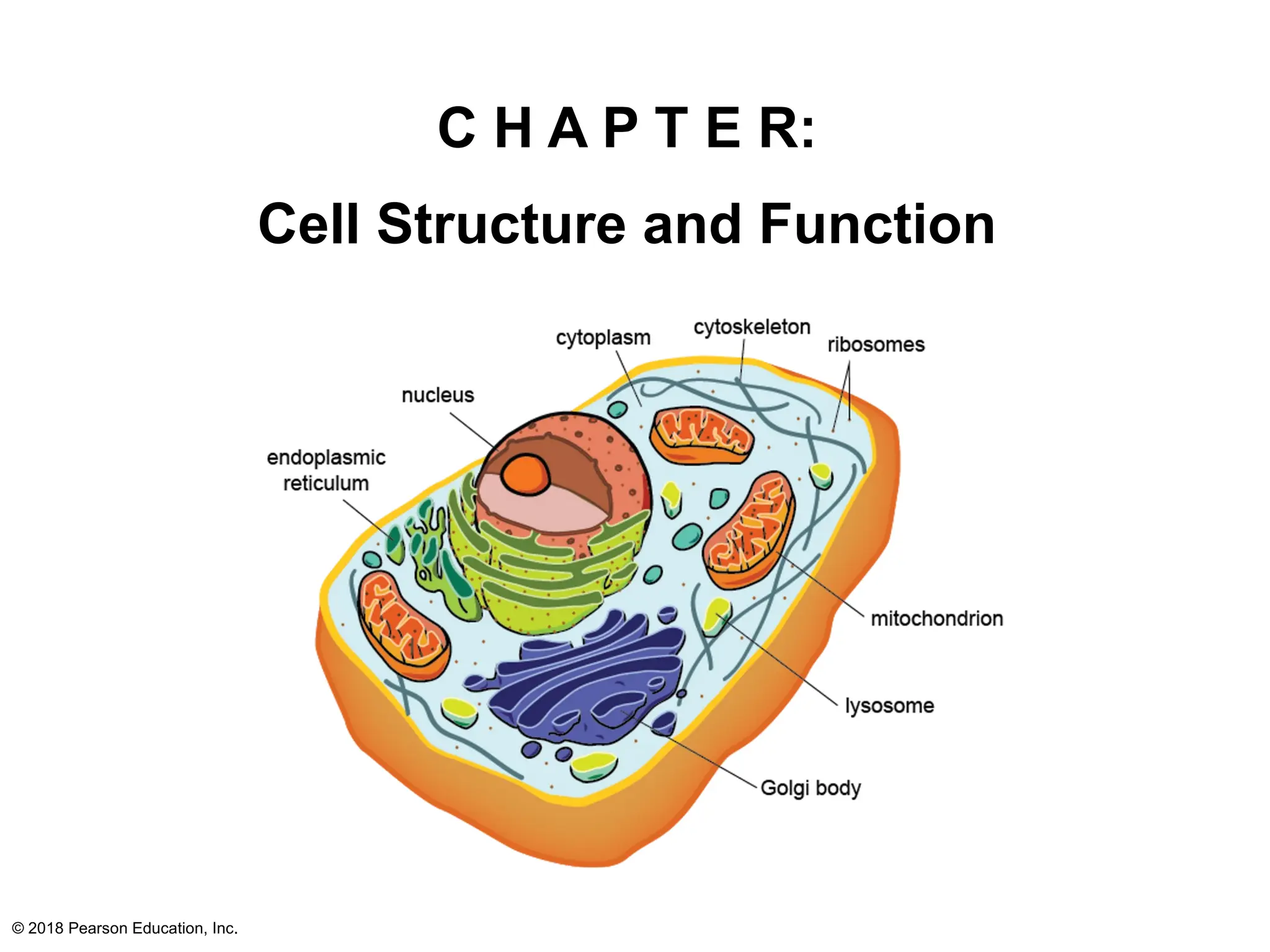
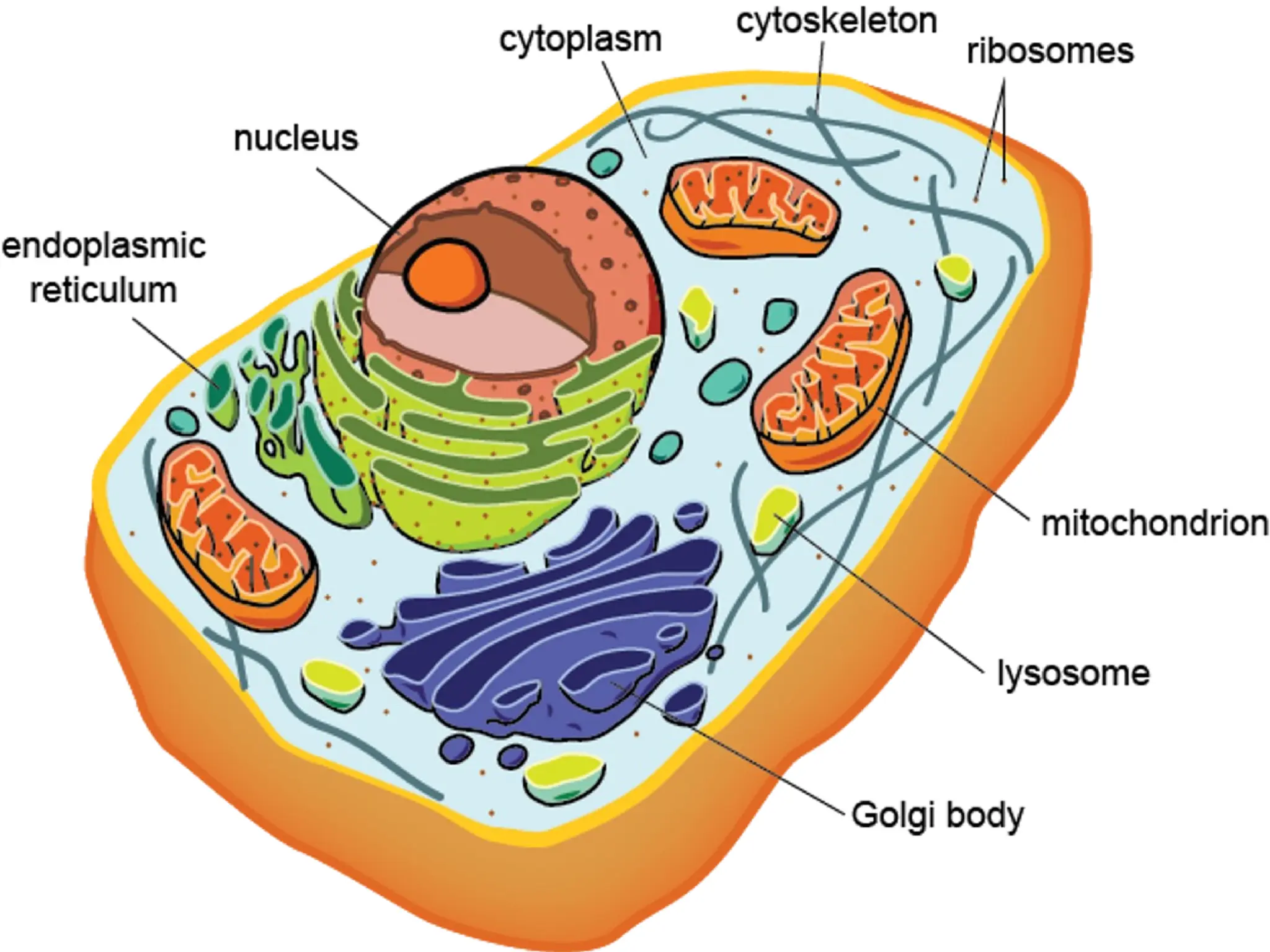
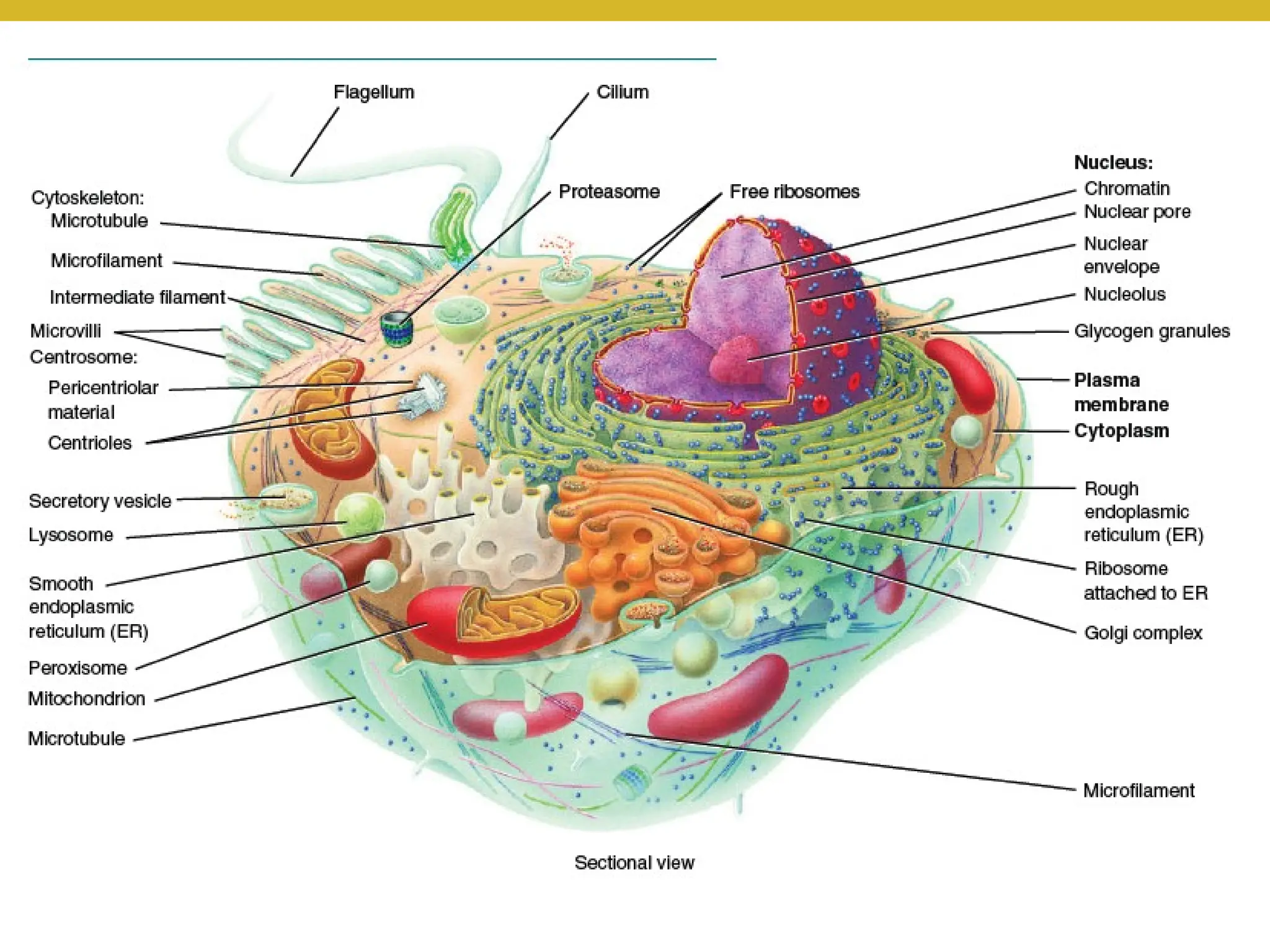
Parts ofthe cells
• The average adult human body consists of more than 100 trillion cells.
Cells are the basic, living, structural, and functional, units of the body.
• Three main component of the cells:
Plasma membrane
Cytoplasm
Nucleus
• Other cell components:
Cytoskeleton
Endoplasmic Reticulum (ER)
Golgi Apparatus
Lysosomes
Endospores
Mitochondria
Peroxisomes
7.
Plasma Membrane
•The plasma membrane forms the cell’s flexible outer
surface, separating the cell’s internal environment
(everything inside the cell) from the external environment
(everything outside the cell).
• It is a selective barrier that regulates the flow of materials
into and out of a cell.
8.
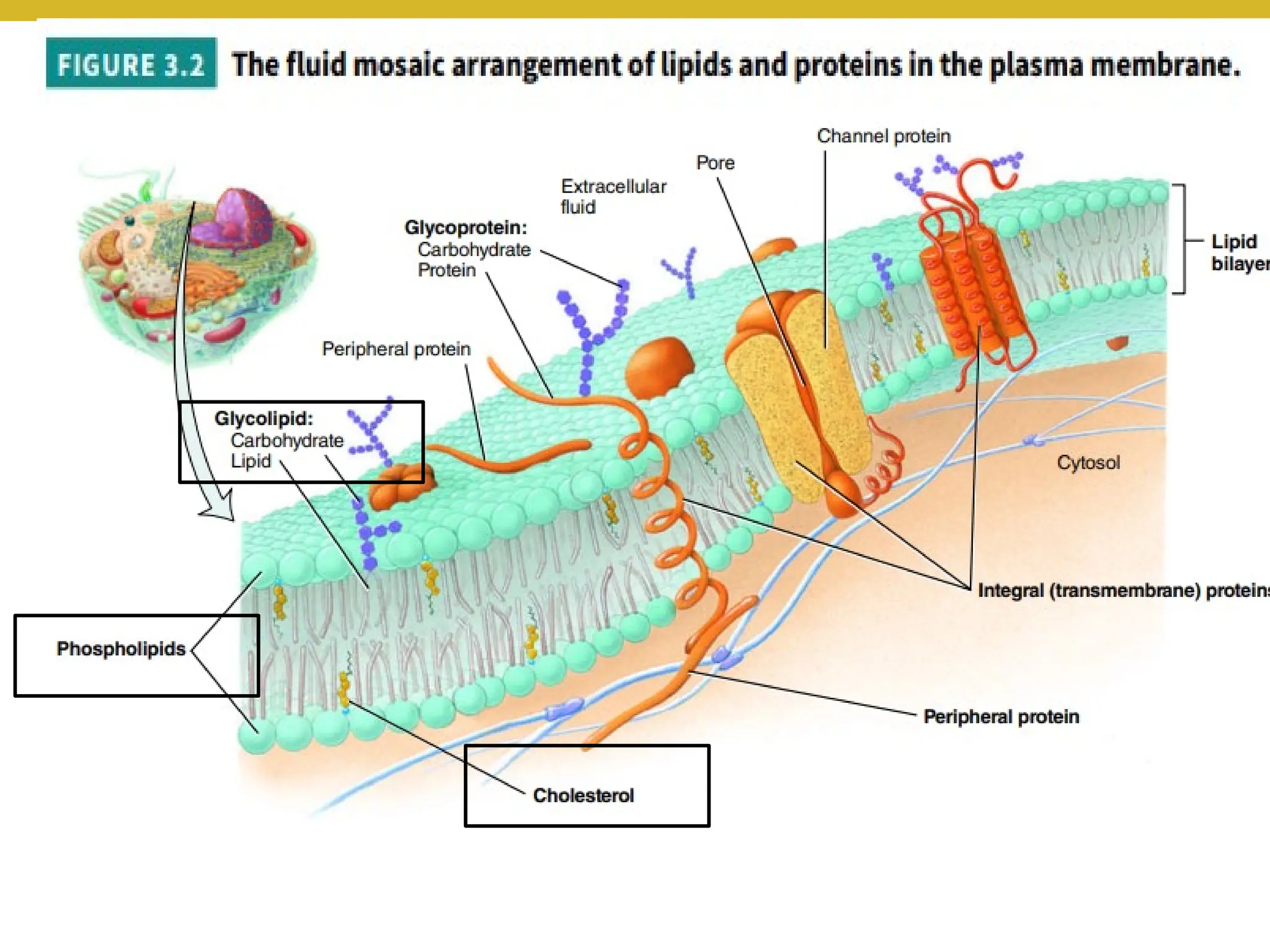
Structure ofthe Plasma Membrane
• The basic structural framework is the lipid bilayer, two
back-to-back layers made up of three types of lipid
molecules:
1. Phospholipids: lipids that contain phosphorus (75% of
membrane lipids)
2. Cholesterol: a steroid with an attached -OH (hydroxyl)
group ((about 20%),
3. Glycolipids : lipids with attached carbohydrate groups
(About 5%).
10.
Membrane Proteins
1.Integral Proteins: extend into or through the lipid bilayer
and are firmly embedded in it ( transmembrane proteins).
•Mainly are glycoproteins, proteins with carbohydrate
groups attached to the ends that protrude into the
extracellular fluid.
•2. Peripheral proteins: are not as firmly embedded in the
membrane.
•They are attached to the polar heads of membrane lipids or
to integral proteins at the inner or outer surface of the
membrane.
11.
Functions ofMembrane Protein
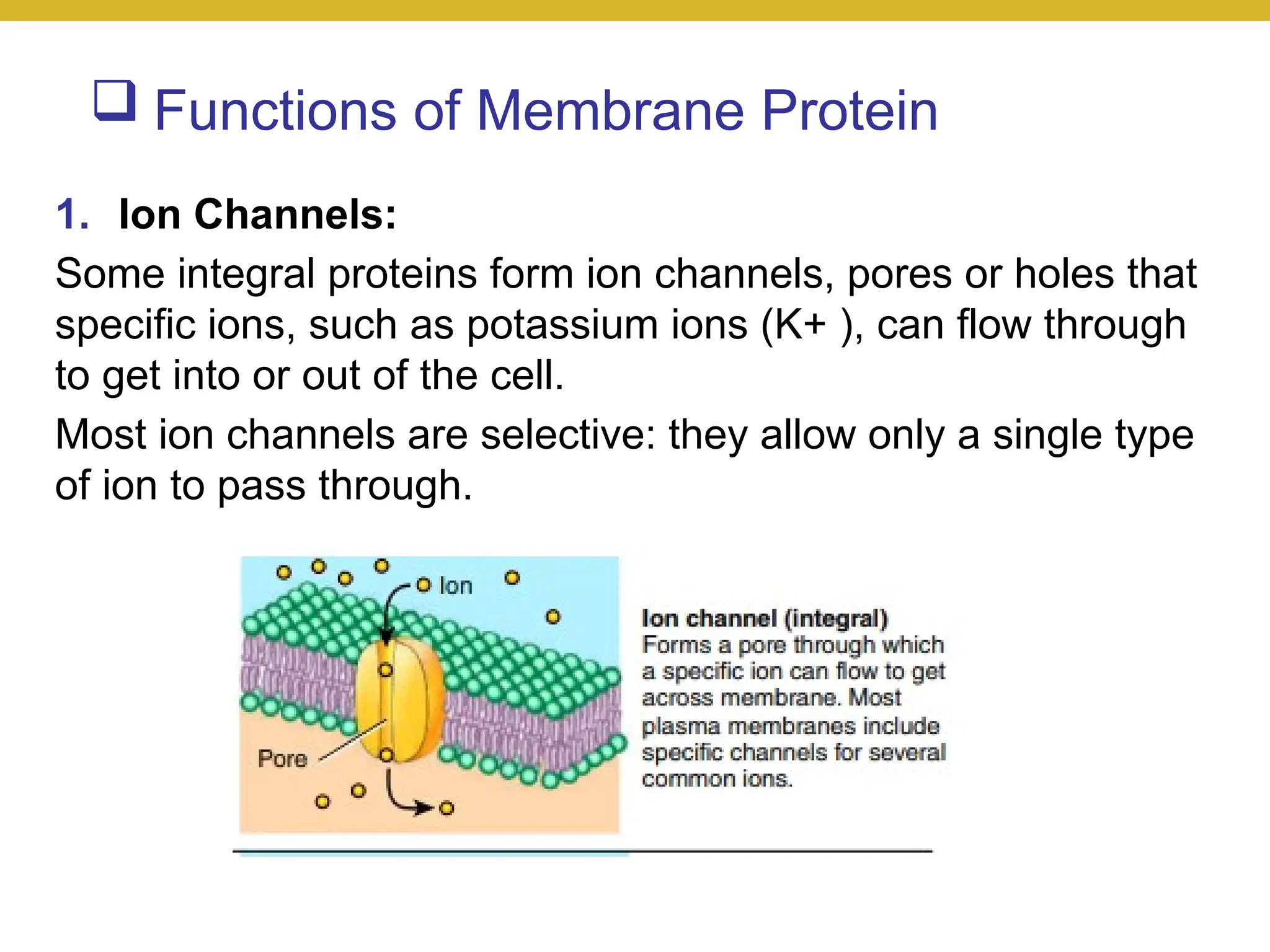
1. Ion Channels:
Some integral proteins form ion channels, pores or holes that
specific ions, such as potassium ions (K+ ), can flow through
to get into or out of the cell.
Most ion channels are selective: they allow only a single type
of ion to pass through.
12.
Functions ofMembrane Protein
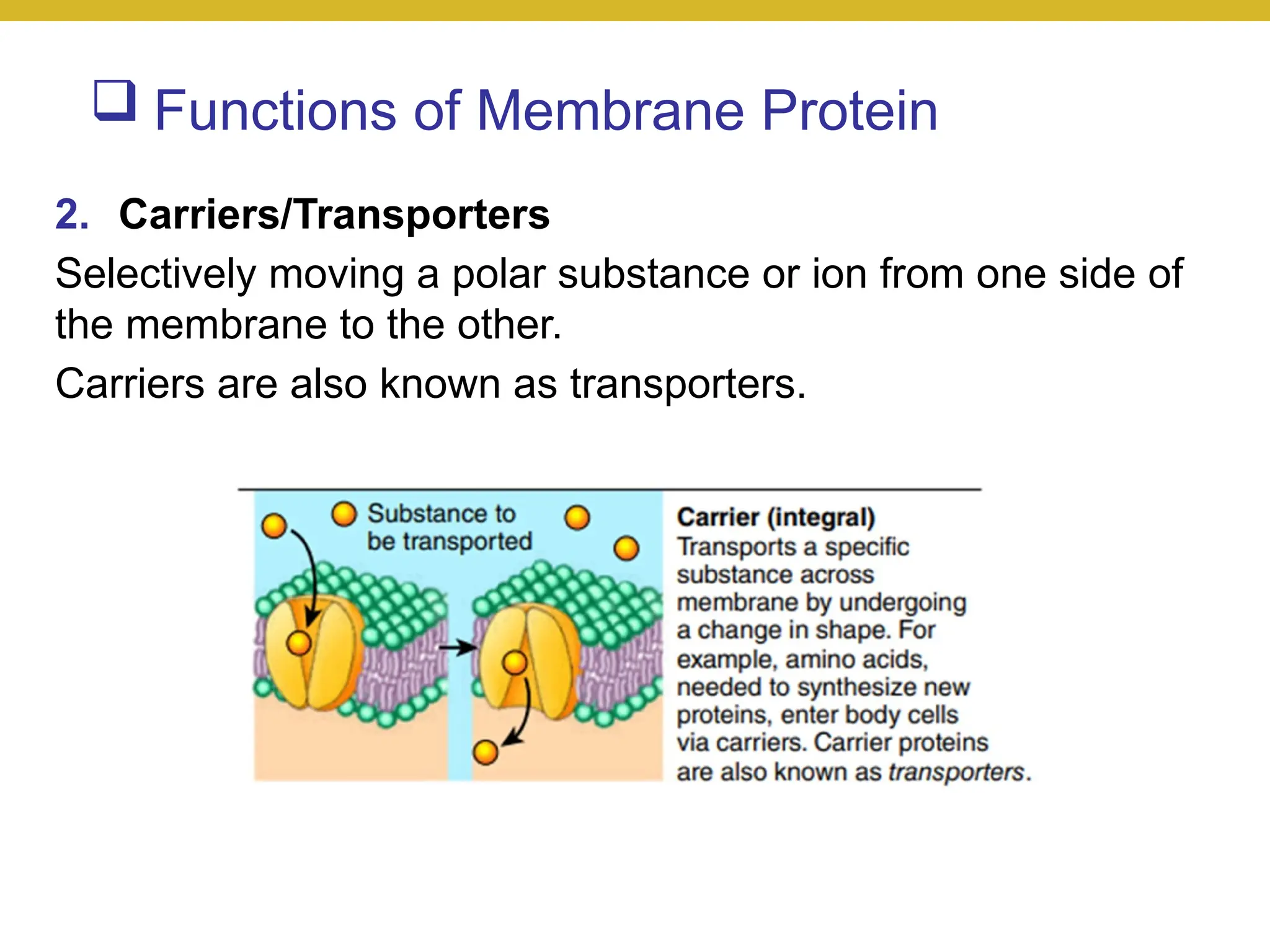
2. Carriers/Transporters
Selectively moving a polar substance or ion from one side of
the membrane to the other.
Carriers are also known as transporters.
13.
Functions ofMembrane Protein
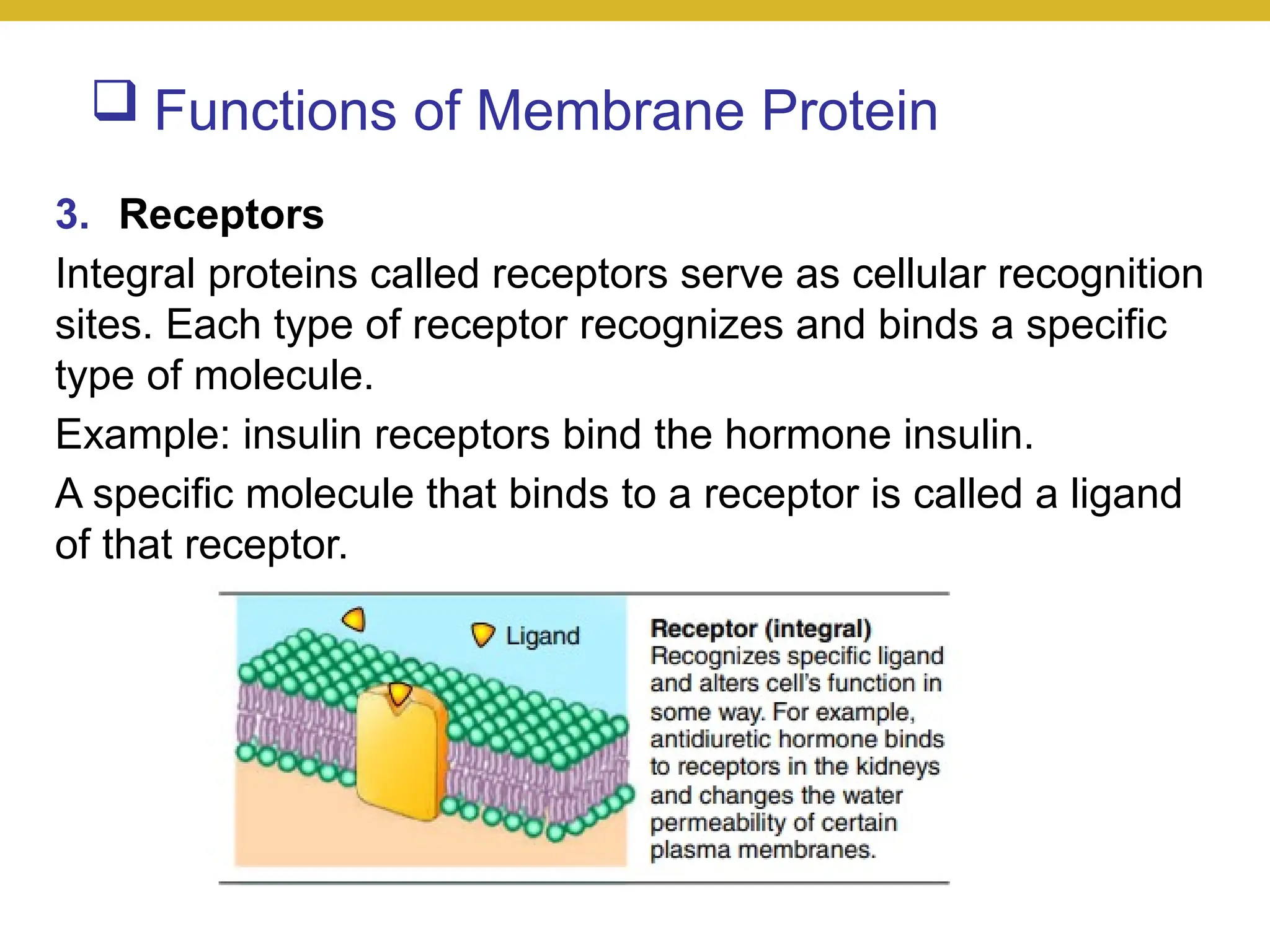
3. Receptors
Integral proteins called receptors serve as cellular recognition
sites. Each type of receptor recognizes and binds a specific
type of molecule.
Example: insulin receptors bind the hormone insulin.
A specific molecule that binds to a receptor is called a ligand
of that receptor.
14.
Functions ofMembrane Protein
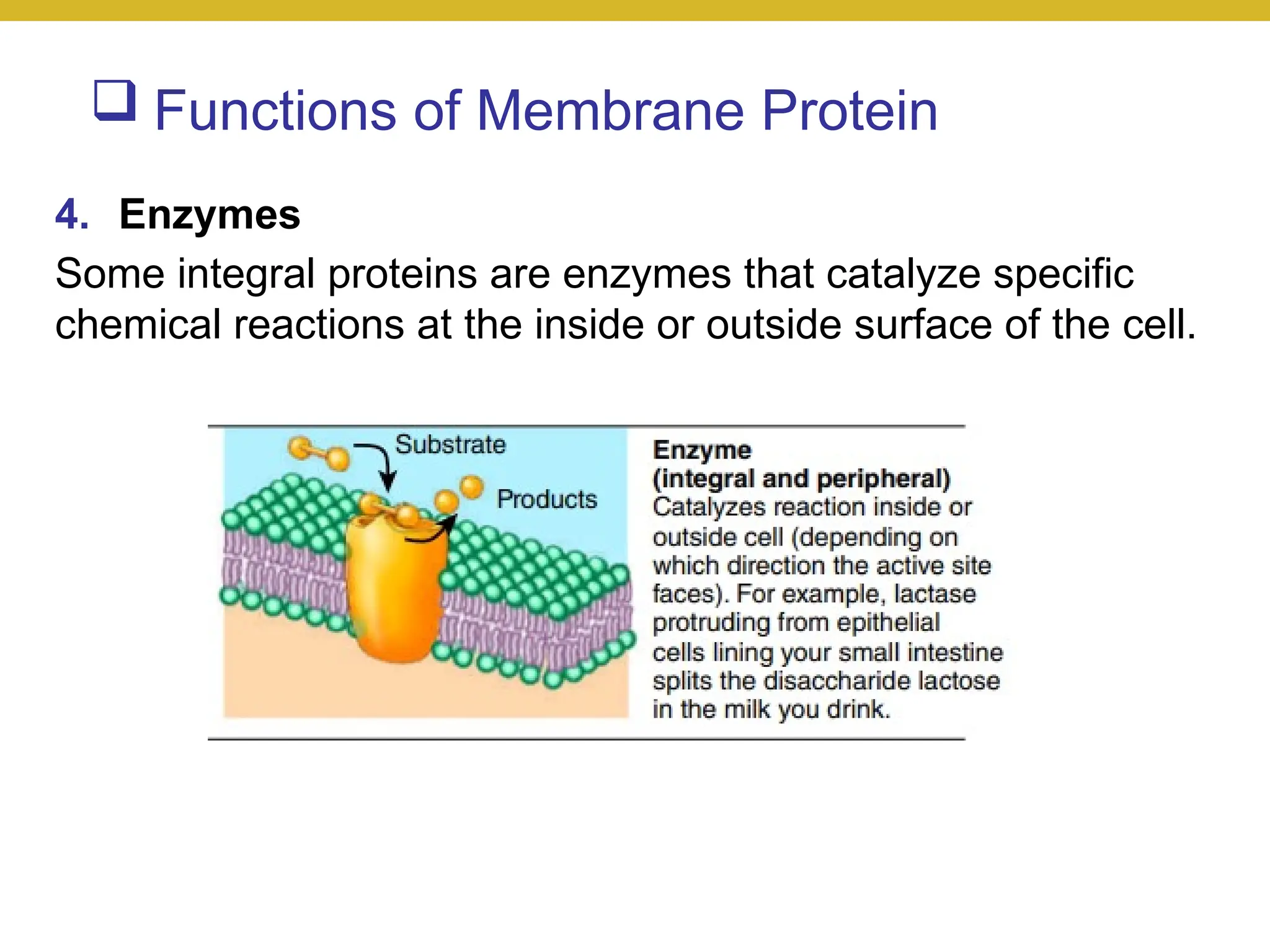
4. Enzymes
Some integral proteins are enzymes that catalyze specific
chemical reactions at the inside or outside surface of the cell.
15.
Functions ofMembrane Protein
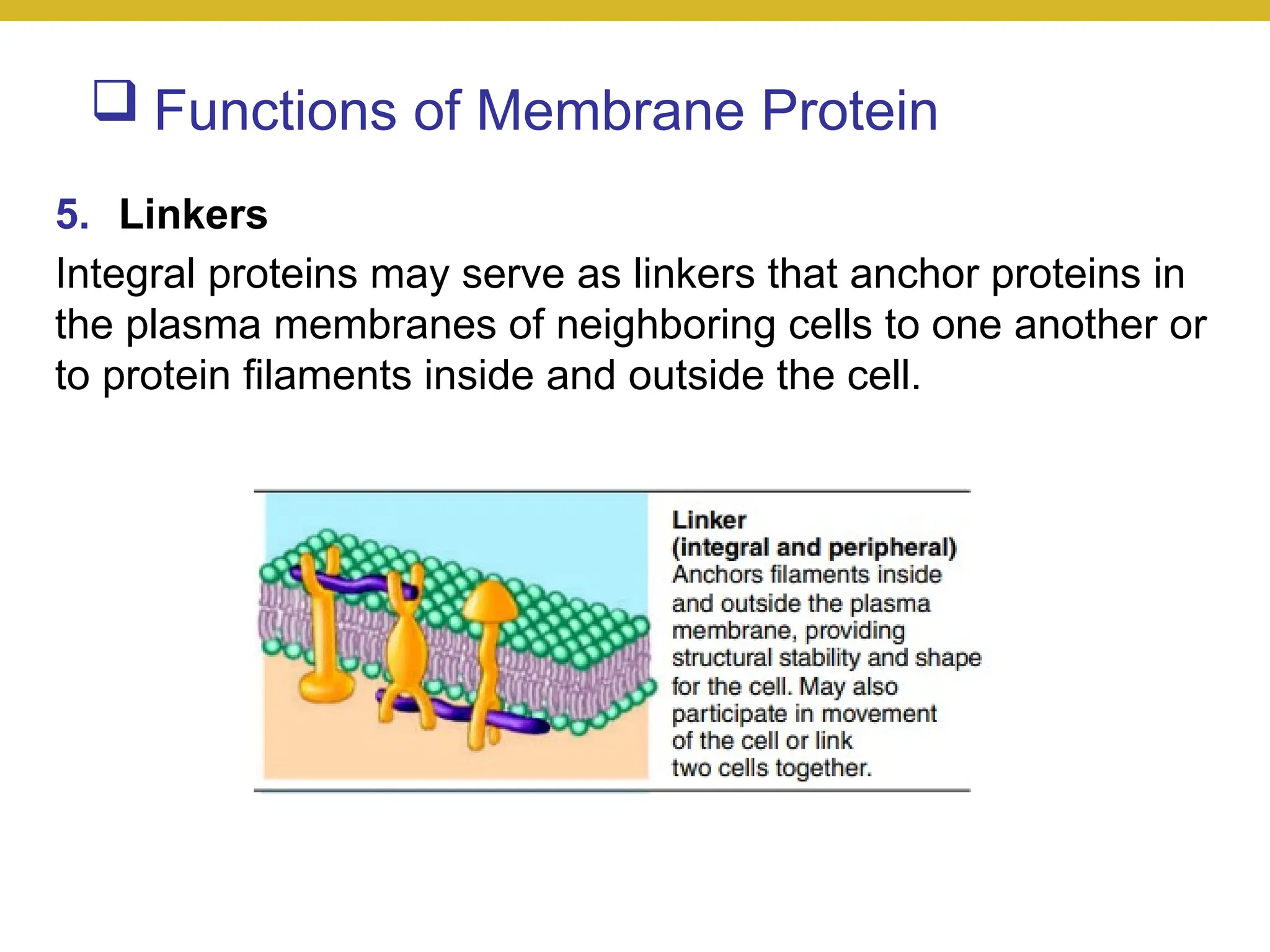
5. Linkers
Integral proteins may serve as linkers that anchor proteins in
the plasma membranes of neighboring cells to one another or
to protein filaments inside and outside the cell.
16.
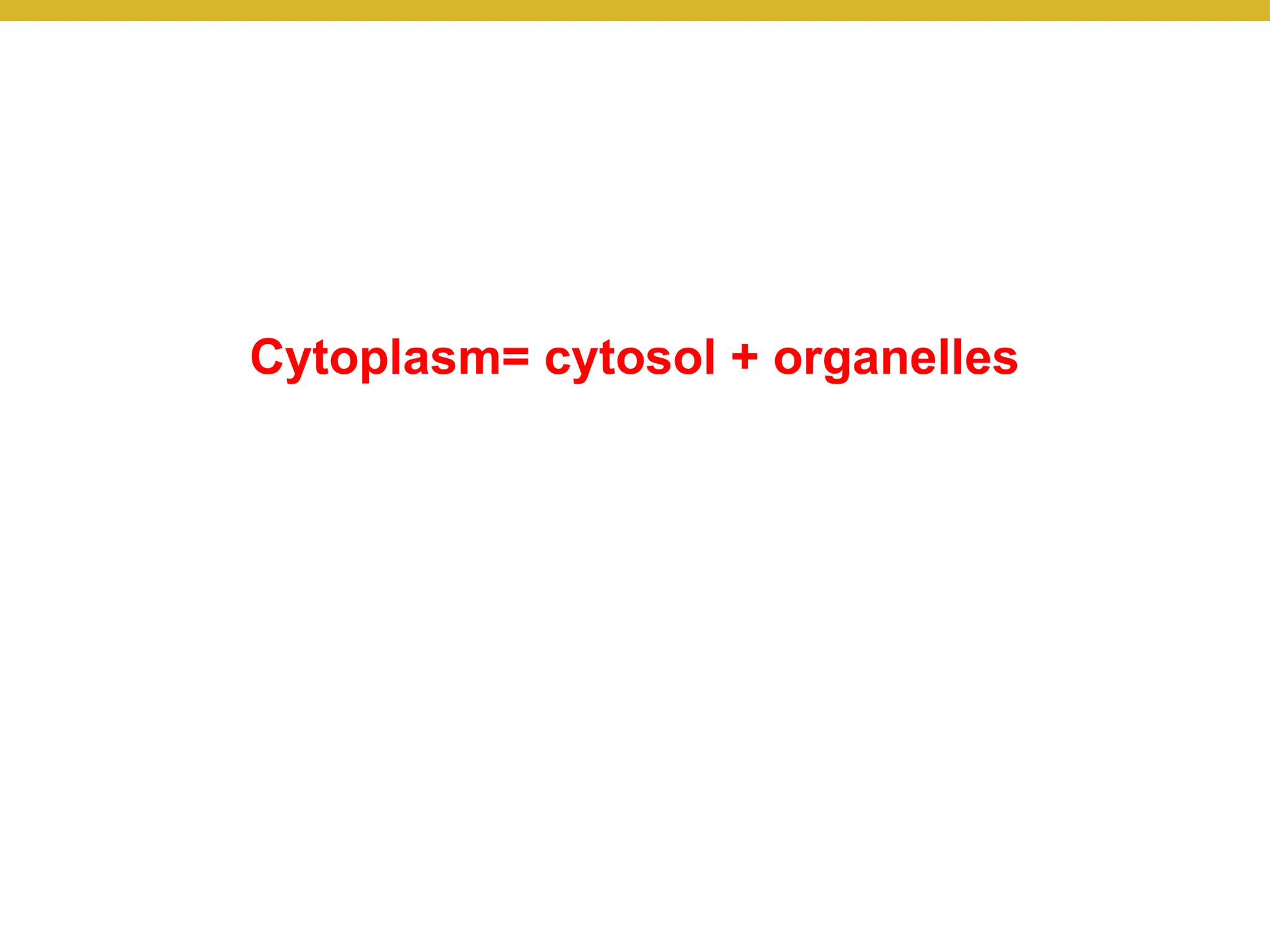
Cytoplasm
• Thecytoplasm consists of all the cellular contents
between the plasma membrane and the nucleus.
• This compartment has two components: cytosol and
organelles.
1. Cytosol: the fluid portion of cytoplasm, also called
intracellular fluid, contains water, and dissolved solutes.
2. Within the cytosol are several different types of
organelles (little organs). Each type of organelle has a
characteristic shape and specific functions. Examples
include the cytoskeleton, ribosomes, lysosomes and
mitochondria.
17.
Cytoplasm
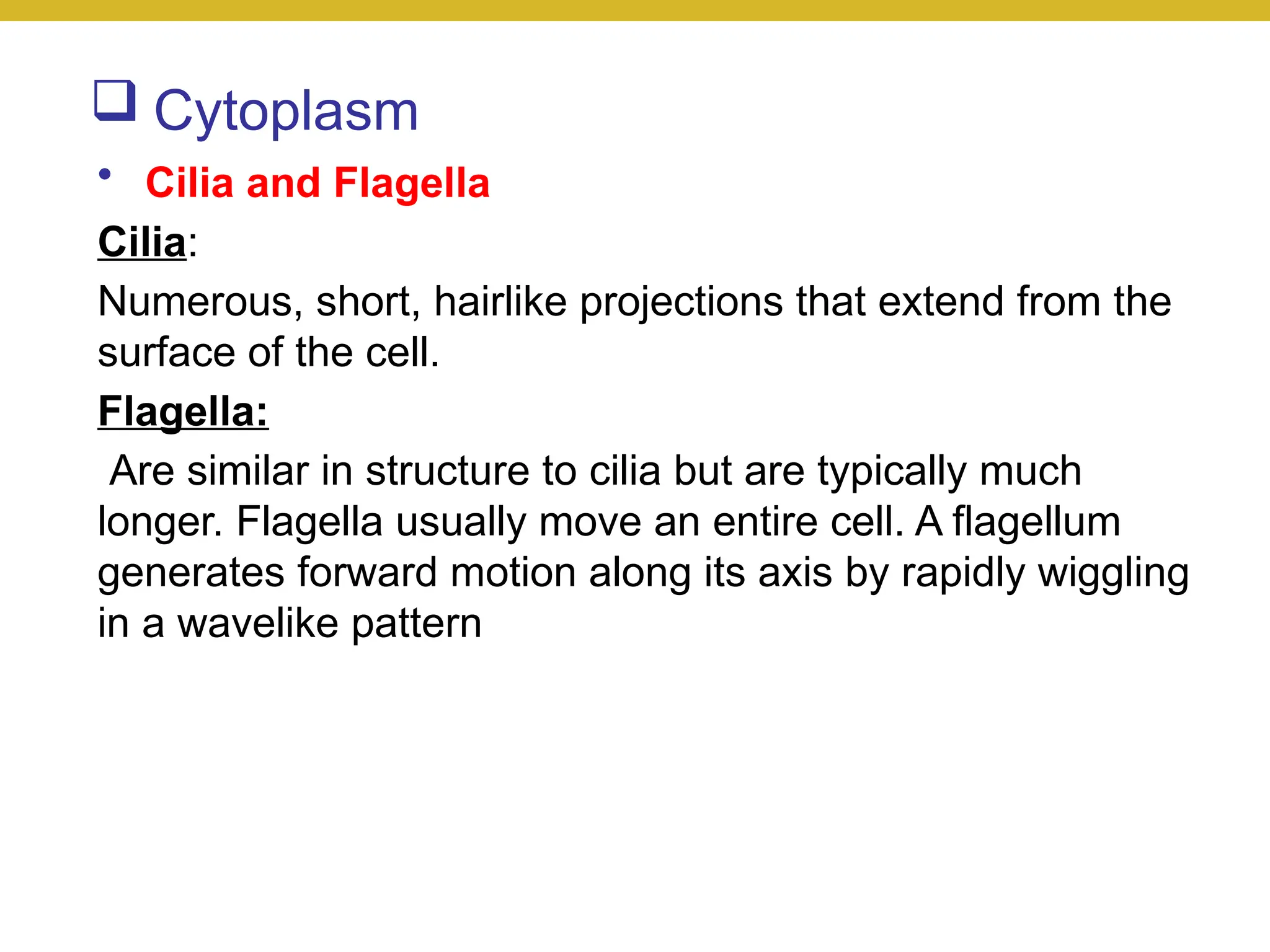
• Ciliaand Flagella
Cilia:
Numerous, short, hairlike projections that extend from the
surface of the cell.
Flagella:
Are similar in structure to cilia but are typically much
longer. Flagella usually move an entire cell. A flagellum
generates forward motion along its axis by rapidly wiggling
in a wavelike pattern
Nucleus
The nucleusis a large organelle that houses most of a
cell’s DNA.
Within the nucleus, each chromosome a single molecule
of DNA associated with several proteins contains
thousands of hereditary units called genes that control
most aspects of cellular structure and function.
20.
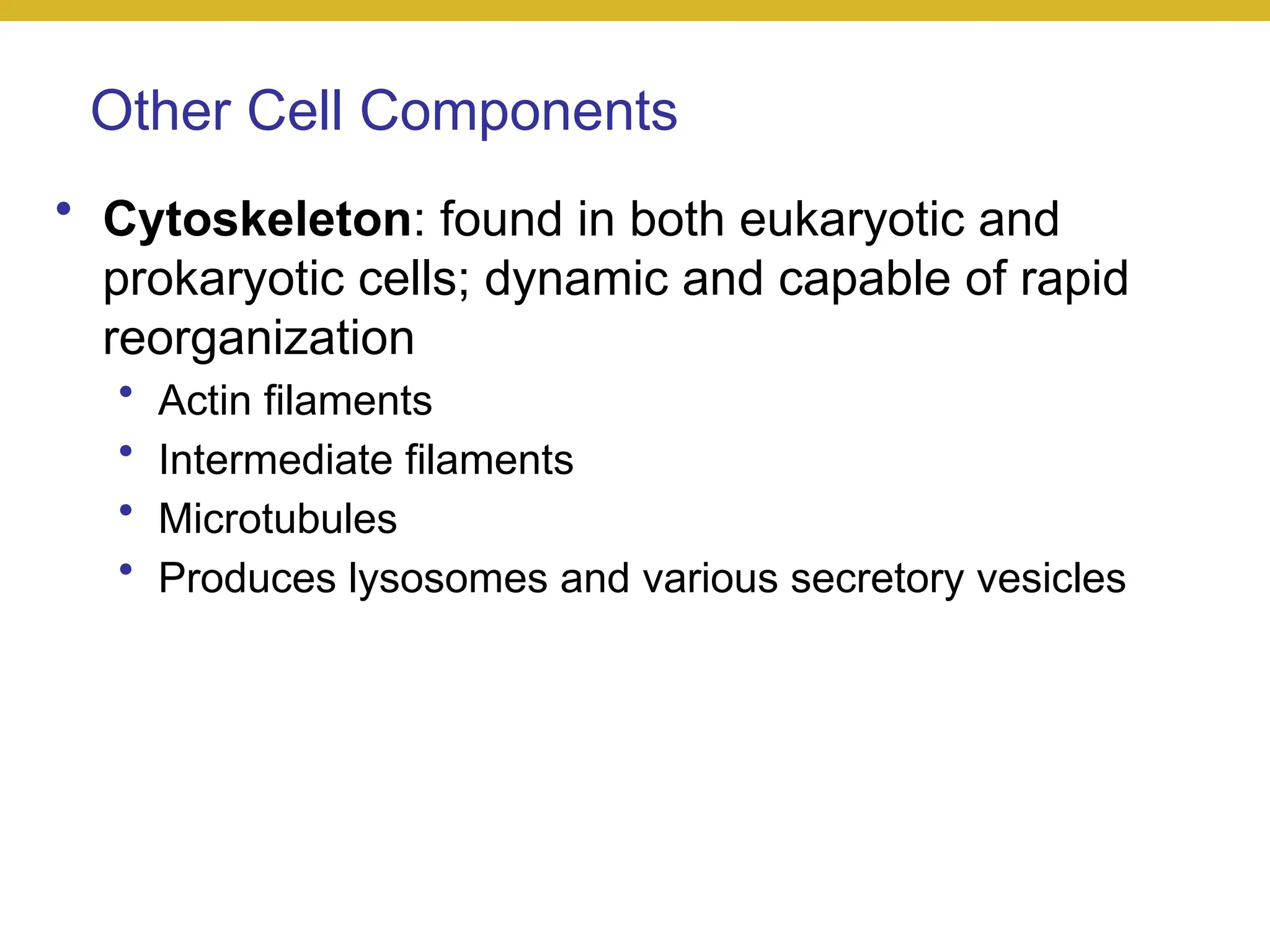
Other Cell Components
•Cytoskeleton: found in both eukaryotic and
prokaryotic cells; dynamic and capable of rapid
reorganization
• Actin filaments
• Intermediate filaments
• Microtubules
• Produces lysosomes and various secretory vesicles
21.
Other Cell Components
•Endoplasmic Reticulum (ER)
Is a network of membranes in the form of flattened
sacs or tubules. Specialized in protein synthesis.
• Golgi Apparatus
• Composed of flattened, disc-shaped sacs surrounded
by vesicles
• Produces lysosomes and various secretory vesicles that
discharge processed proteins.
22.
Other Cell Components
•Lysosomes
• Contain digestive enzymes for intracellular digestion of
debris and food particles
• Breakdown of invading microbes
23.
Other Cell Components
•Mitochondria
• “Powerhouse”
• Generate most of the ATP through aerobic (oxygen-
requiring) respiration
• Bacteria cells do not possess mitochondria
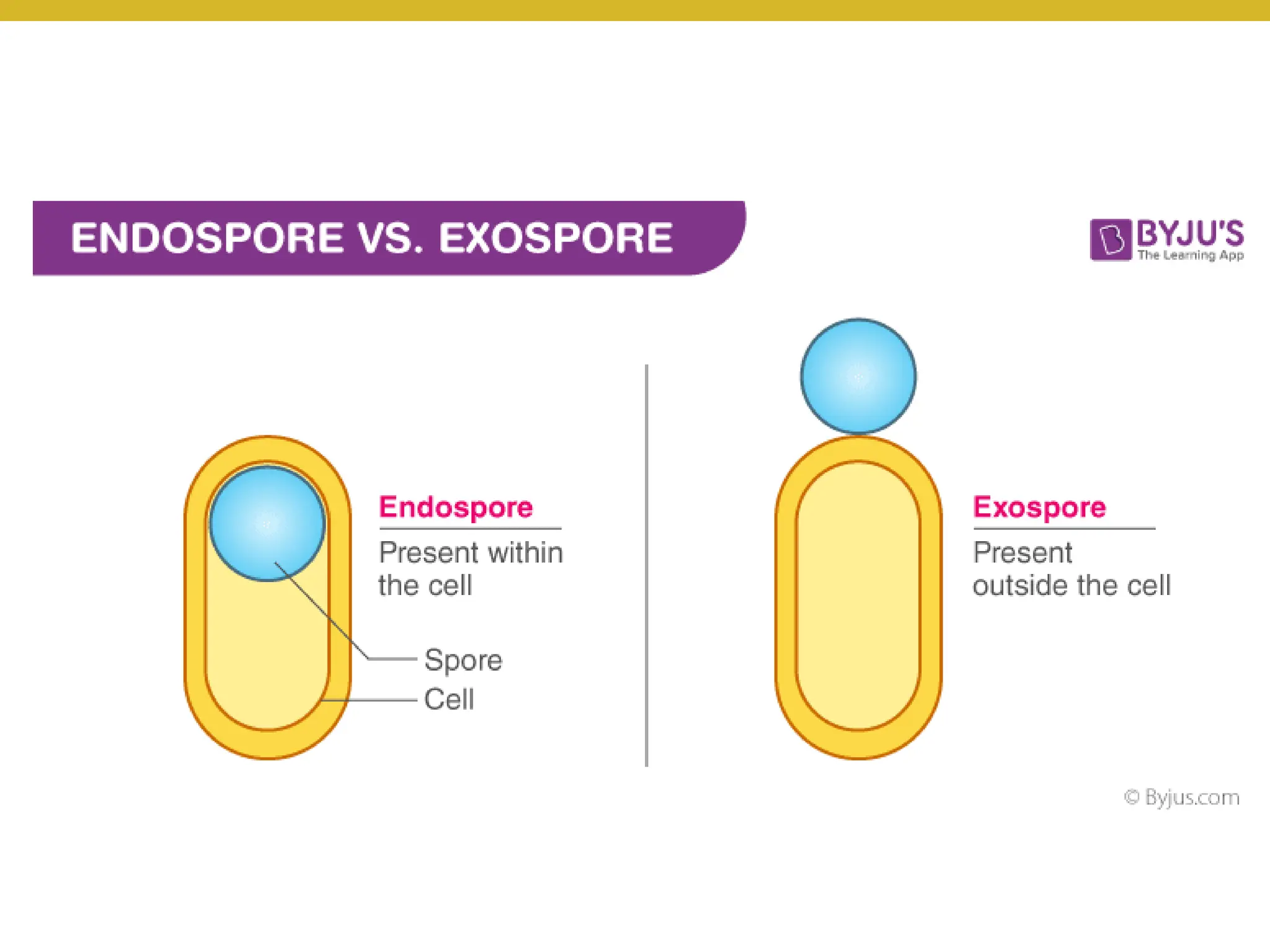
• Endospores
• Special structure that can be formed by some bacteria
to survive in harsh conditions
25.
Fluid Compartments
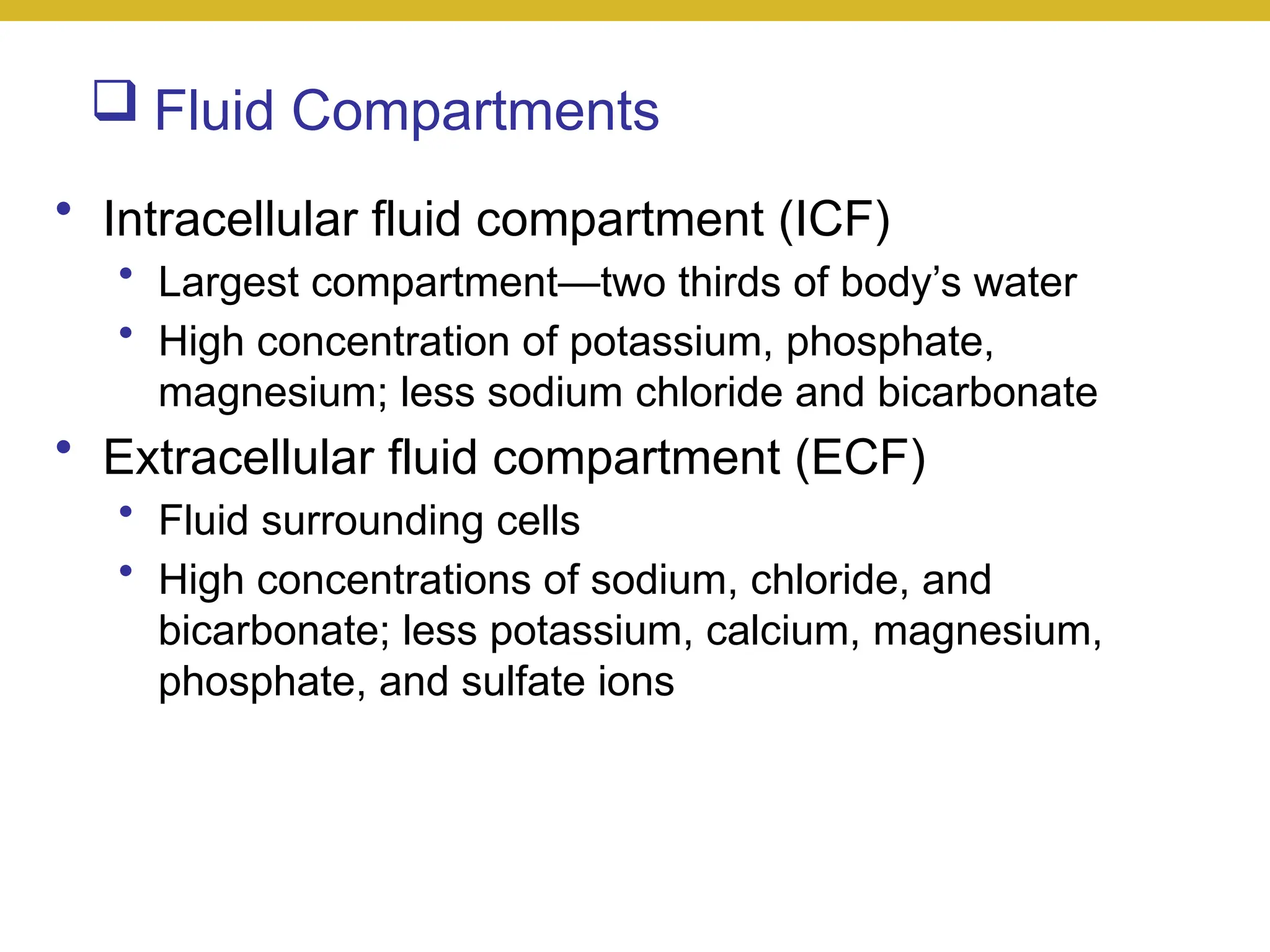
•Intracellular fluid compartment (ICF)
• Largest compartment—two thirds of body’s water
• High concentration of potassium, phosphate,
magnesium; less sodium chloride and bicarbonate
• Extracellular fluid compartment (ECF)
• Fluid surrounding cells
• High concentrations of sodium, chloride, and
bicarbonate; less potassium, calcium, magnesium,
phosphate, and sulfate ions
26.
Gradients Acrossthe Plasma Membrane
● The selective permeability of the plasma membrane
allows a living cell to maintain different concentrations of
certain substances on either side of the plasma
membrane.
● The plasma membrane also creates a difference in the
distribution of positively and negatively charged ions
between the two sides of the plasma membrane.
27.
Gradients Acrossthe Plasma Membrane
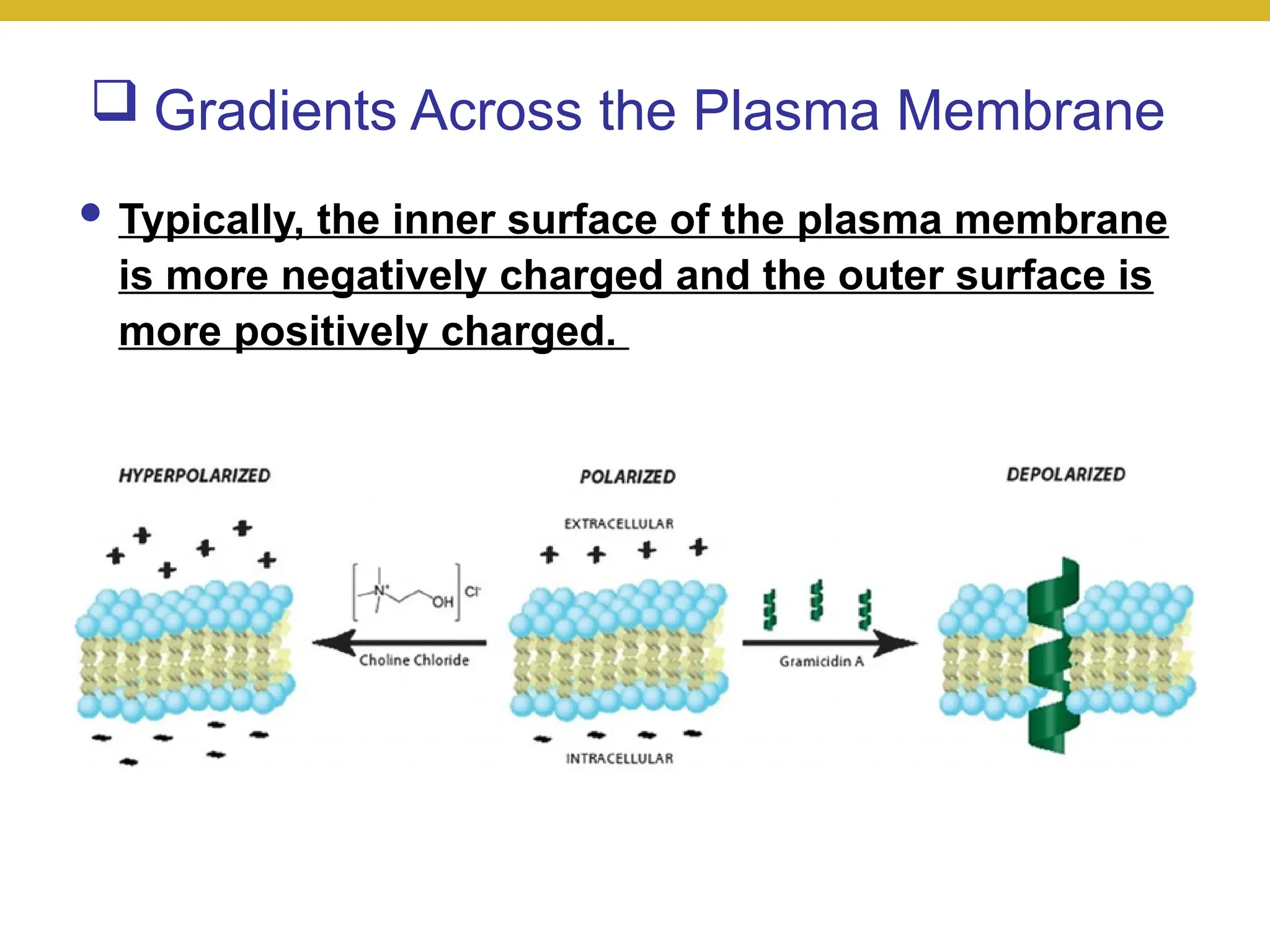
● Typically, the inner surface of the plasma membrane
is more negatively charged and the outer surface is
more positively charged.
28.
Membrane TransportMechanisms
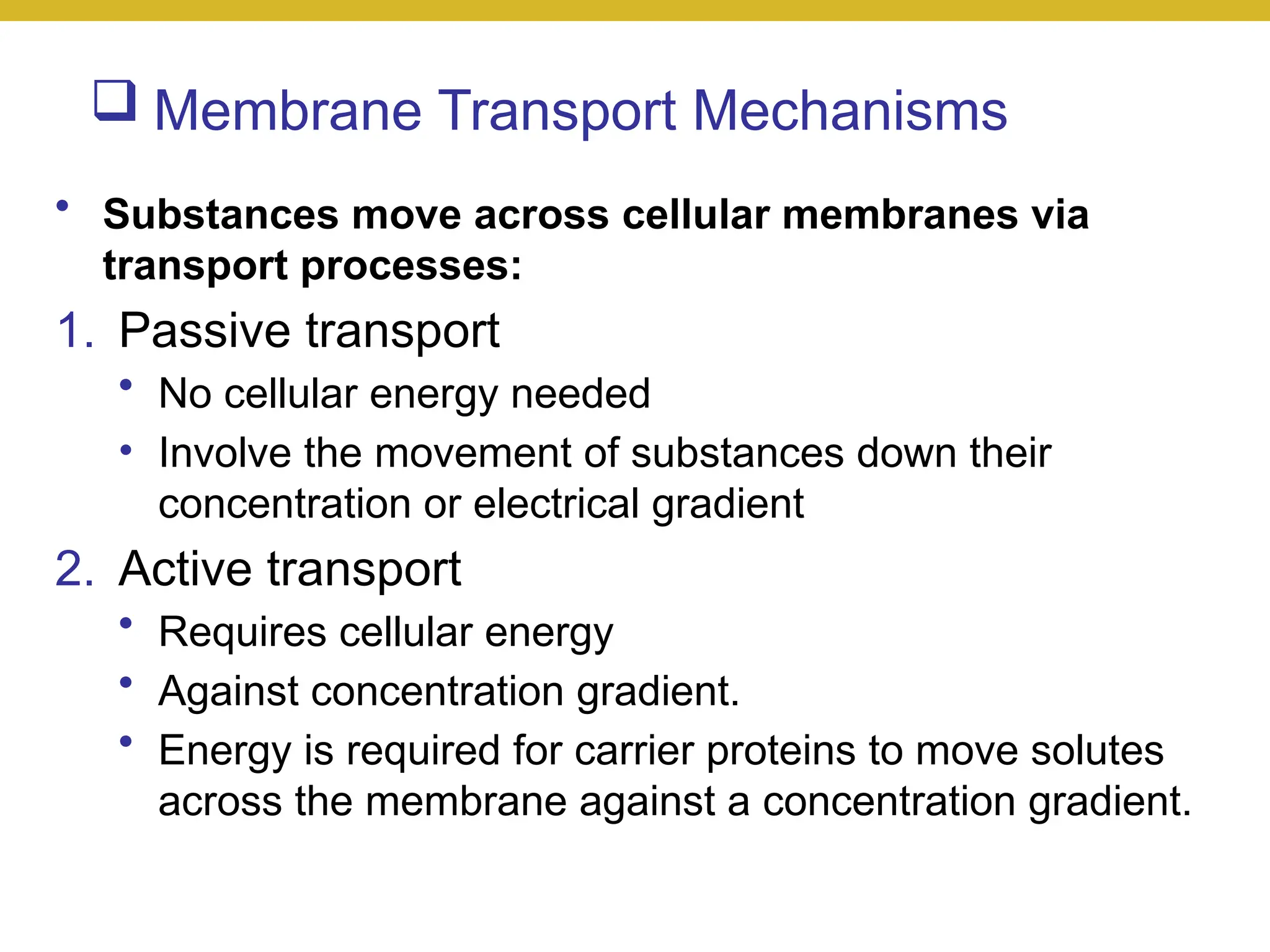
• Substances move across cellular membranes via
transport processes:
1. Passive transport
• No cellular energy needed
• Involve the movement of substances down their
concentration or electrical gradient
2. Active transport
• Requires cellular energy
• Against concentration gradient.
• Energy is required for carrier proteins to move solutes
across the membrane against a concentration gradient.
29.
Passive Transport
•Diffusion: It is a passive process
• The movement of molecules from an area of higher
concentration to an area of lower concentration
• Movement until molecules are equally distributed
30.
Passive Transport
•Osmosis: It is a type of Diffusion
• Osmosis is the diffusion of water through a selectively
permeable membrane
• Goes with concentration gradient.
● Water moves from an area of higher water
concentration to an area of lower water concentration.
31.
Cellular Metabolism
•All chemical reactions in a cell organized into
pathways:
• Catabolism
• Breaks down large molecules into smaller ones
• Releases ATP
• Anabolism
• Produces large molecules from smaller ones
• Requires ATP
32.
Cellular Metabolism:
Enzymes:
• All chemical reactions in a cell
• Organized into pathways
• Catabolism
• Breaks down large molecules into smaller ones
• Releases ATP
• Anabolism
• Produces large molecules from smaller ones
• Requires ATP
33.
Cellular Metabolism:
Enzymes:
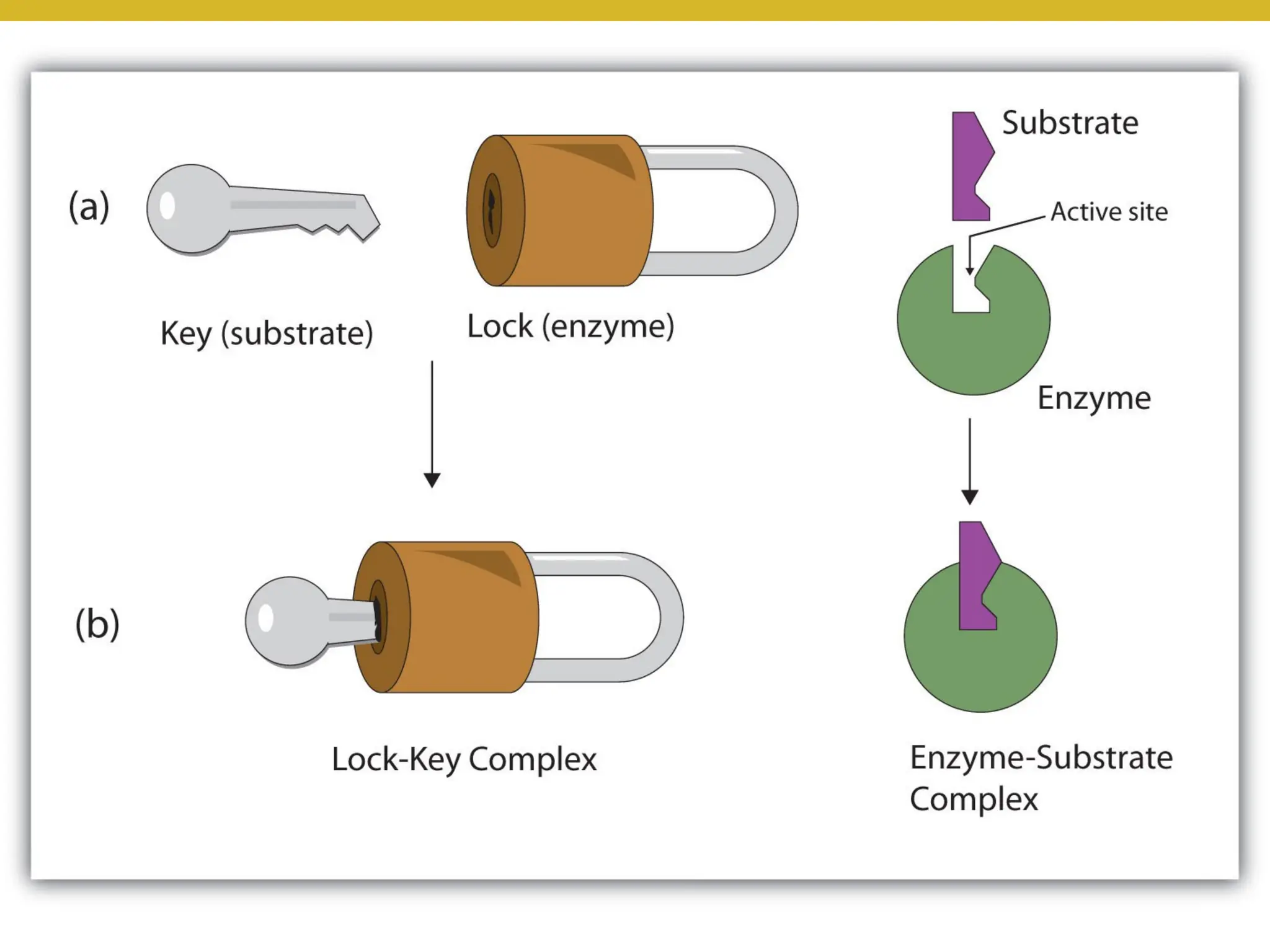
• Enzyme specificity
• Enzymes are specific for specific substrates
• Lock and key model
• Change in the shape of the enzyme will result in
enzyme inhibition
35.
Cellular Metabolism:
•Regulation of Enzyme Activity
• Temperature: High temps: increased rate of reaction;
low temps: decreased
• pH: Enzymes work best at their optimal pH range
• Cofactors and coenzymes: rate of enzyme reaction
may be dependent upon cofactors and/or coenzymes
• Enzyme Inhibition
• Competitive inhibition
• Molecules compete for the active site
• Noncompetitive inhibition
• Substance binds to the allosteric site and changes the
configuration of the active site
36.
Cellular Metabolism:
•Aerobic cellular respiration
• Glycolysis: is the process in which glucose is broken
down to produce energy.
• Krebs cycle: a chain of reactions occurring in the
mitochondria, through which almost all living cells
produce energy in aerobic respiration.
• Anaerobic cellular respiration
• Glycolysis
• Fermentation: chemical process by which molecules
such as glucose are broken down anaerobically
Editor's Notes
#21 Endoplasmic Reticulum is a network of membranes in the form of flattened sacs or tubules (Figure 3.19).
Specialized in protein synthesis.
Rough ER is continuous with the nuclear membrane and usually is folded into a series of flattened sacs (Figure 3.19). The outer surface of rough ER is studded with ribosomes.
Functions of Endoplasmic Reticulum
Rough ER synthesizes glycoproteins and phospholipids that are transferred into cellular organelles, inserted into the plasma membrane, or secreted during exocytosis.
Smooth ER synthesizes fatty acids and steroids, such as estrogens and testosterone; inactivates or detoxifies drugs and other potentially harmful substances; removes the phosphate group from glucose-6-phosphate; and stores and releases calcium ions that trigger contraction in muscle fibers.
Smooth ER extends from the rough ER to form a network of membrane tubules (Figure 3.19). Unlike rough ER, smooth ER does not have ribosomes on the outer surfaces of its membrane.
#28 The concentration gradient and electrical gradient are important because they help move substances across the plasma membrane. In many cases a substance will move across a plasma membrane down its concentration gradient.
The combined influence of the concentration gradient and the electrical gradient on movement of a particular ion is referred to as its electrochemical gradient
#30 Sodium-Potassium Pump
The sodiumpotassium pump is a primary active transport mechanism that expels sodium ions (Na+) from cells and brings potassium ions (K+) in.
These pumps maintain a low concentration of Na+ in the cytosol by pumping these ions into the extracellular fluid against the Na+ concentration gradient.
At the same time, the pumps move K+ into cells against the K+ concentration gradient.