Download to read offline






![Appraisal rep
Managers - think 33% of their people respond
positively to appraisals
People - 20% say they do
[“Beyond the Bonus” The Institute of Leadership and Management]](https://image.slidesharecdn.com/mmuhrmsc230318-180327140833/85/Lecture-Transforming-Performance-Management-10-320.jpg)
![79%
[“Global Human Capital Trends” Deloitte University Press 2017]](https://image.slidesharecdn.com/mmuhrmsc230318-180327140833/85/Lecture-Transforming-Performance-Management-11-320.jpg)

![Threat Reward
Objectivity
Creativity
Problem solving
[See SCARF model
for more detail]](https://image.slidesharecdn.com/mmuhrmsc230318-180327140833/85/Lecture-Transforming-Performance-Management-14-320.jpg)

![Idiosyncratic rater effect
“Although it is implicitly assumed that the
ratings measure the performance of the ratee,
most of what is being measured by the ratings
is the unique rating tendencies of the rater.
Thus ratings reveal more about the rater than
they do about the ratee.”
[Mount, Scullen & Goff, Journal of Applied Psychology]](https://image.slidesharecdn.com/mmuhrmsc230318-180327140833/85/Lecture-Transforming-Performance-Management-19-320.jpg)
![reward
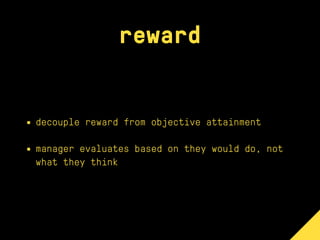
• Deloitte snapshot questions:
1.Given what I know of this persons performance,
and if it were my money, I would award this
person the highest possible compensation and
bonus [5 point scale from strongly agree to strongly disagree]
2.Given what I know of this person’s performance,
I would always want them on my team [same 5 point scale]
3.This person is at risk of low performance [yes/no]
4.This person is ready for promotion today [yes/no]](https://image.slidesharecdn.com/mmuhrmsc230318-180327140833/85/Lecture-Transforming-Performance-Management-28-320.jpg)
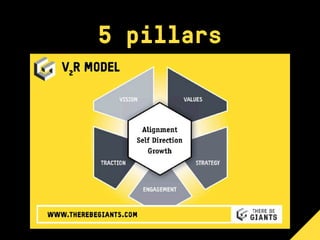
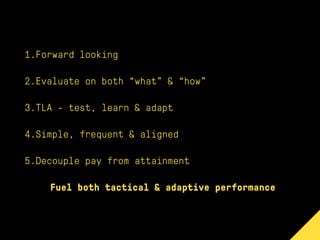


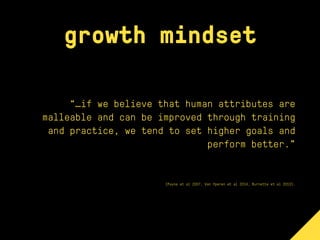
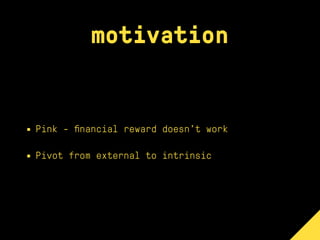
This document discusses transforming performance management systems to focus on growth rather than threats or rewards. It notes that most current PM practices damage performance because they are based on a misunderstanding of human responses. The document advocates shifting to systems that focus on purpose, autonomy and mastery. It proposes that effective PM systems should be forward-looking, evaluate both outcomes and behaviors, embrace test-learn-adapt principles, occur simply and frequently in alignment with goals, and decouple pay from objective attainment to fuel both tactical and adaptive performance. A case study example outlines key elements of an improved system, including vision, peer review, learning and a growth mindset.


