Coal Gasification Technology
• Coal gasification technology efficiently converts coal into:
Power, chemicals, fertilizers, and fuels.
• Clean technology that decomposes coal into components
using steam and oxygen at high pressure and temperature.
• Produces synthesis gas (syngas): a mixture of carbon
monoxide (CO) and hydrogen (H₂).
• Utilized for methanol production as an alternative energy
source.
Major Applications of Coal
Gasification
• Power generation
• Fertilizer production
• Methanol synthesis
• Hydrogen production
• Hydrocarbon production
Coal gasification is the only direct route to produce hydrogen
from coal.
Process Overview
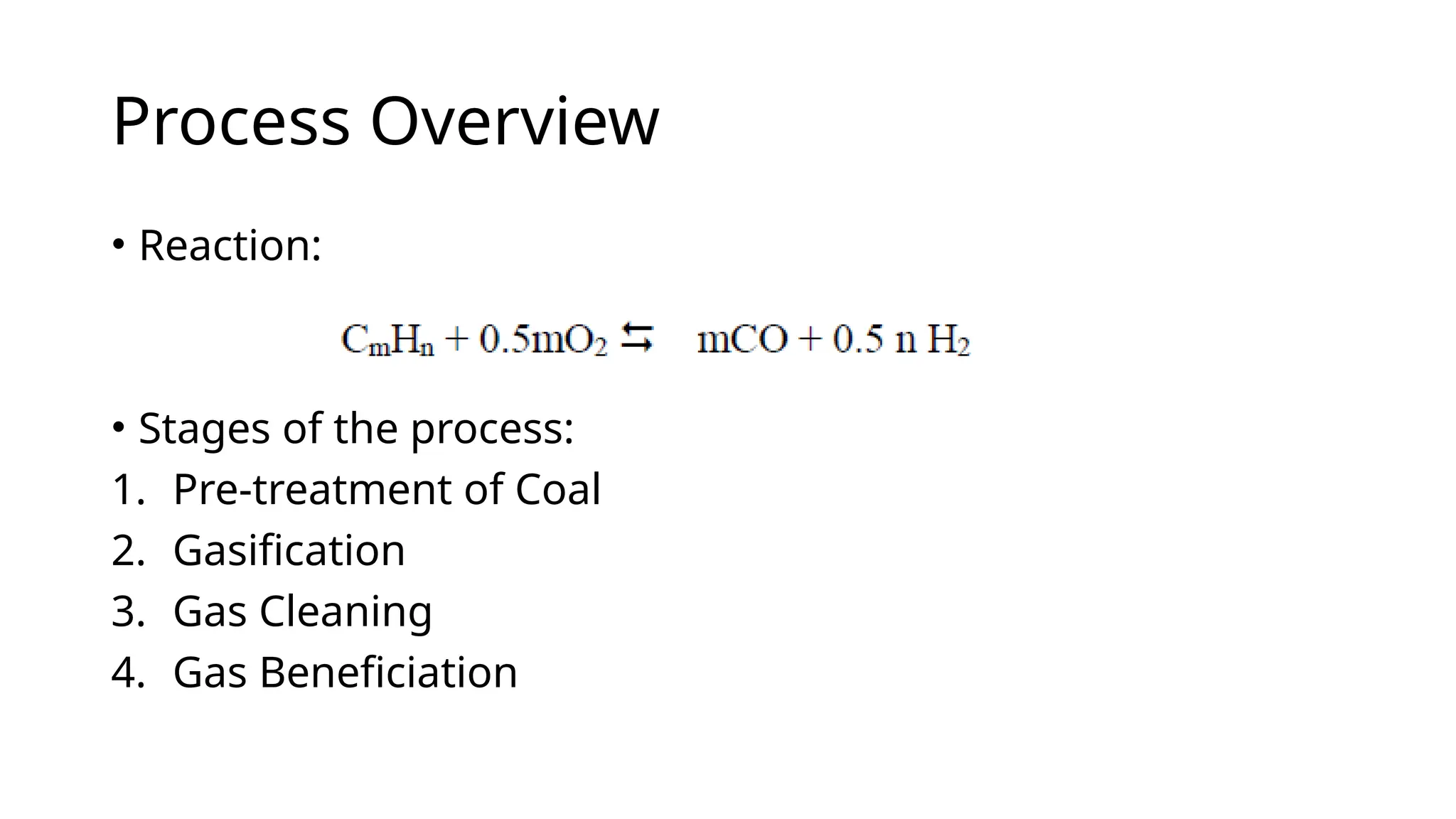
• Reaction:
• Stages of the process:
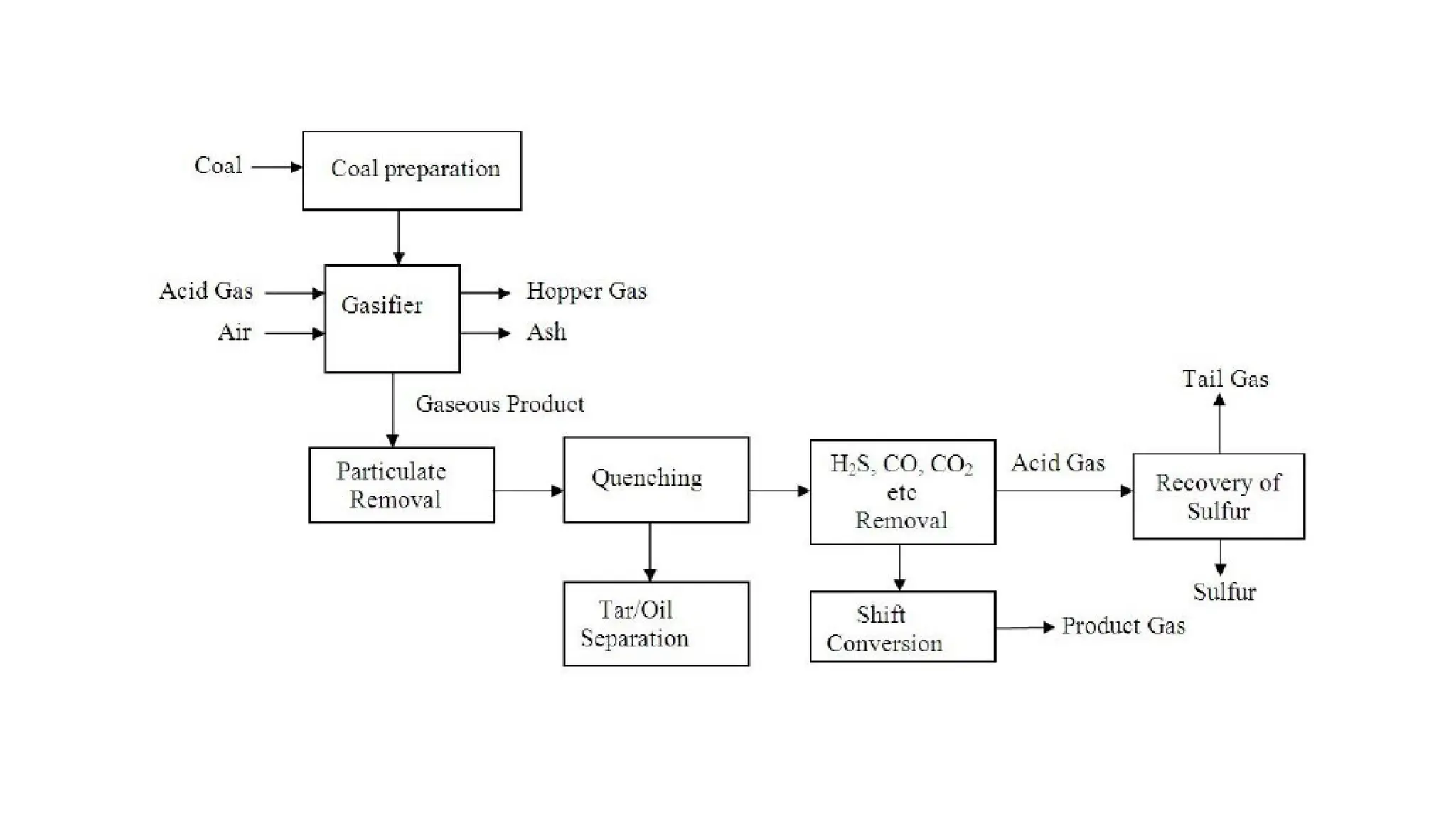
1. Pre-treatment of Coal
2. Gasification
3. Gas Cleaning
4. Gas Beneficiation
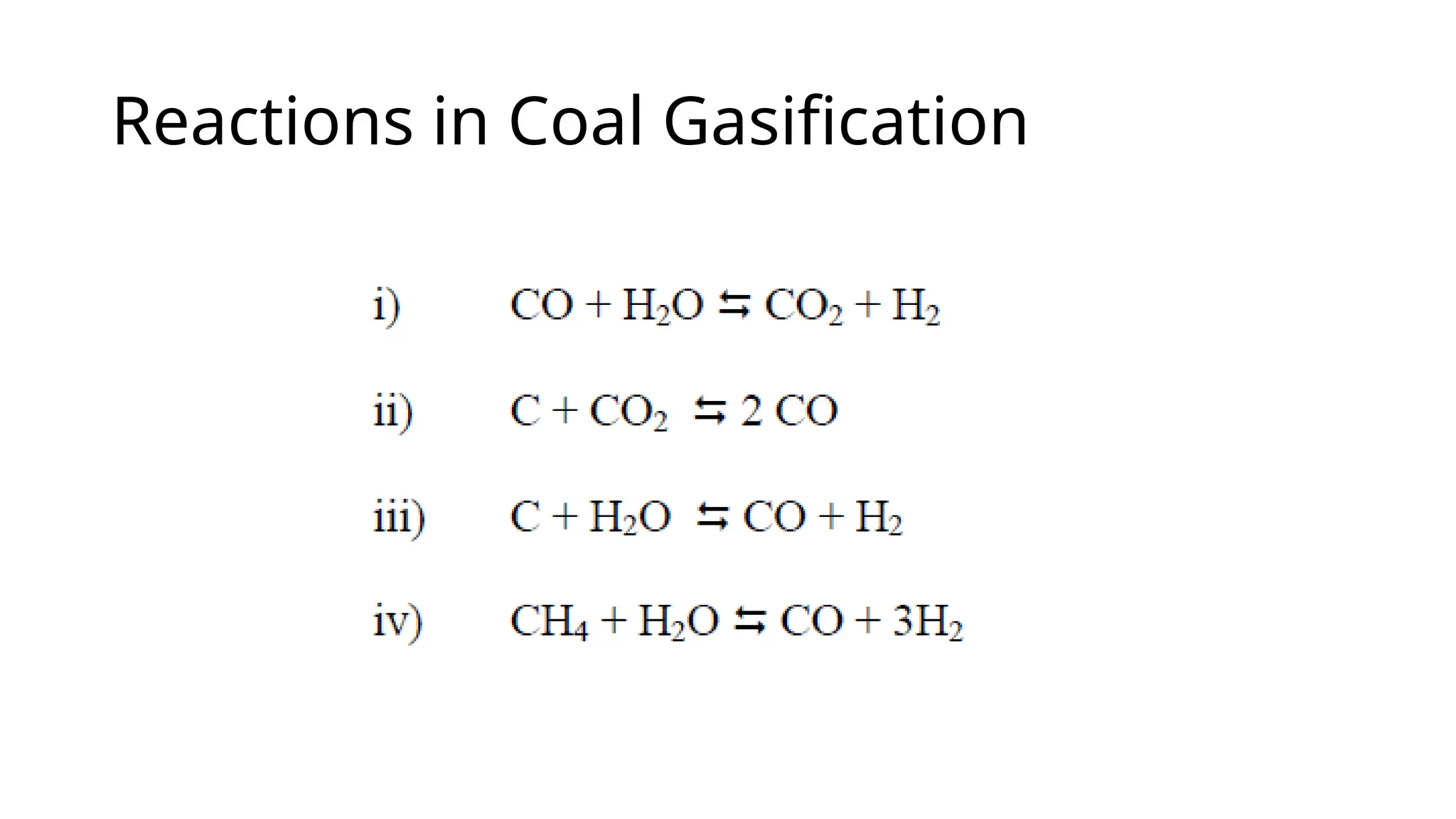
Reactions in Coal Gasification
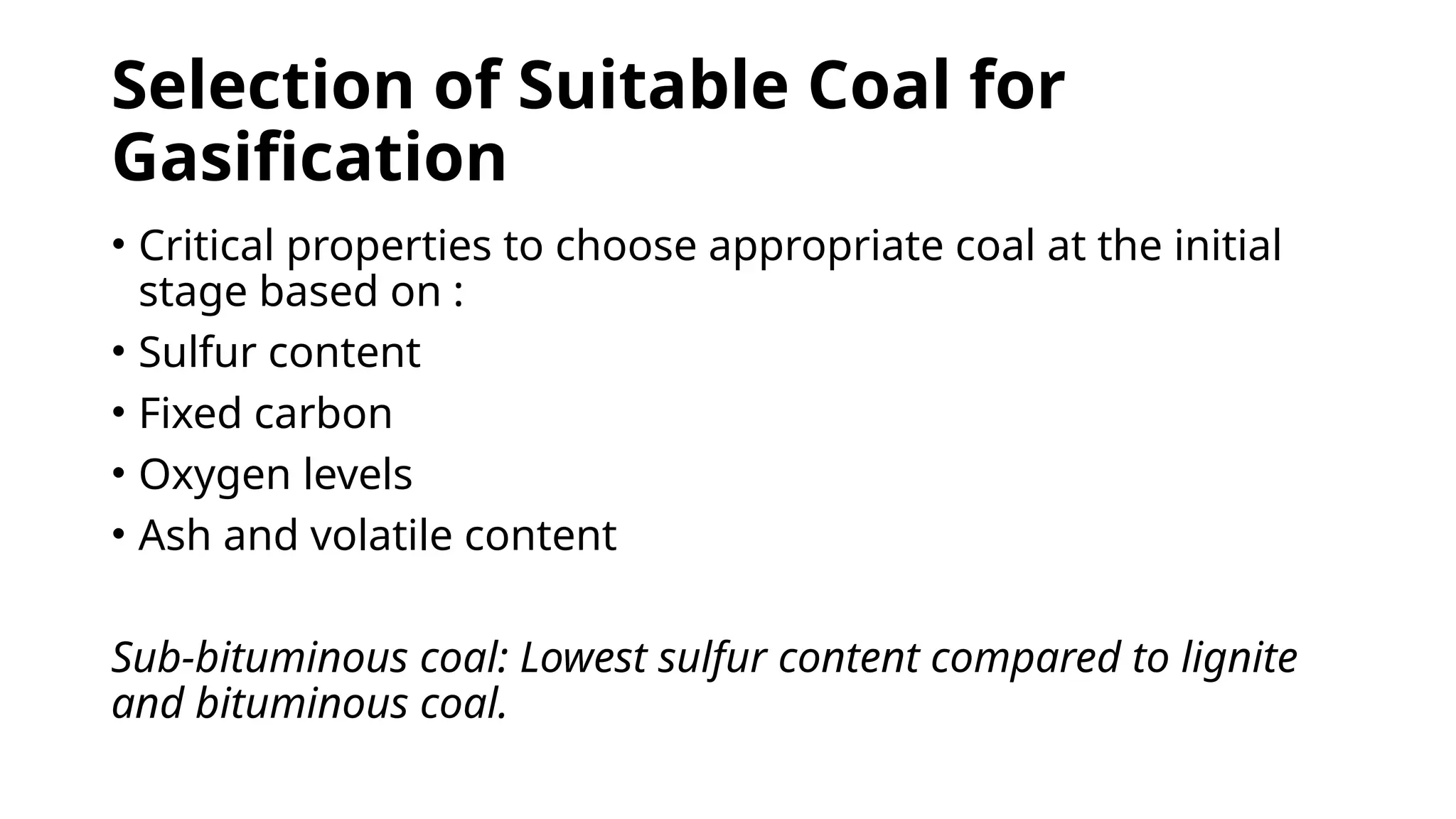
Selection of Suitable Coal for
Gasification
• Critical properties to choose appropriate coal at the initial
stage based on :
• Sulfur content
• Fixed carbon
• Oxygen levels
• Ash and volatile content
Sub-bituminous coal: Lowest sulfur content compared to lignite
and bituminous coal.
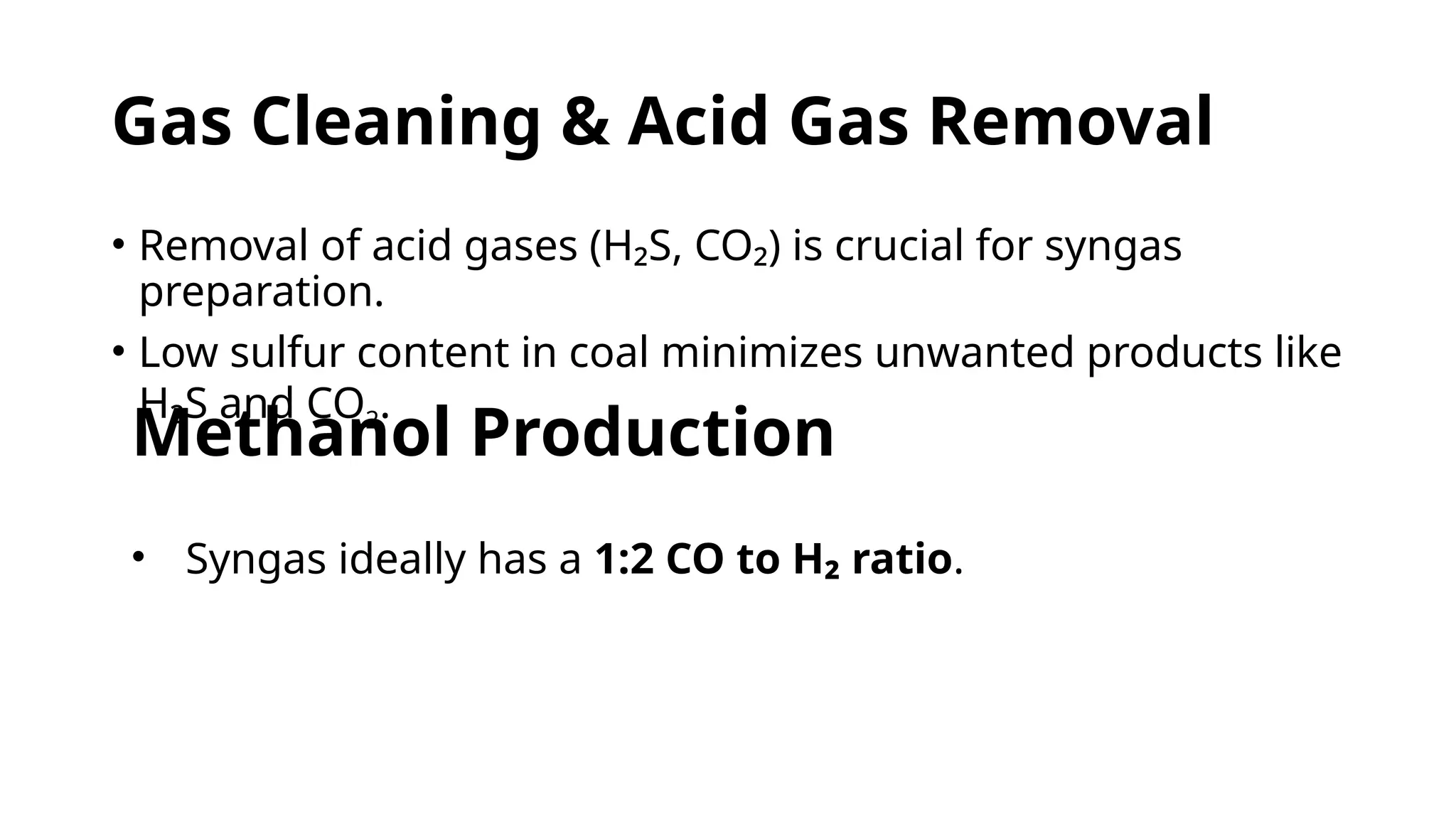
Gas Cleaning & Acid Gas Removal
• Removal of acid gases (H₂S, CO₂) is crucial for syngas
preparation.
• Low sulfur content in coal minimizes unwanted products like
H₂S and CO2.
Methanol Production
• Syngas ideally has a 1:2 CO to H₂ ratio.
Coal Preparation
Pre-treatment step:
• Coal is dried and crushed/pulverized for fluid or entrained
bed gasifiers.
• Moisture removal by drying is essential.
• Caking coals may require partial oxidation for easier gasifier
operation.
• For fixed bed gasifiers, briquetting of fine coal particles is
necessary.
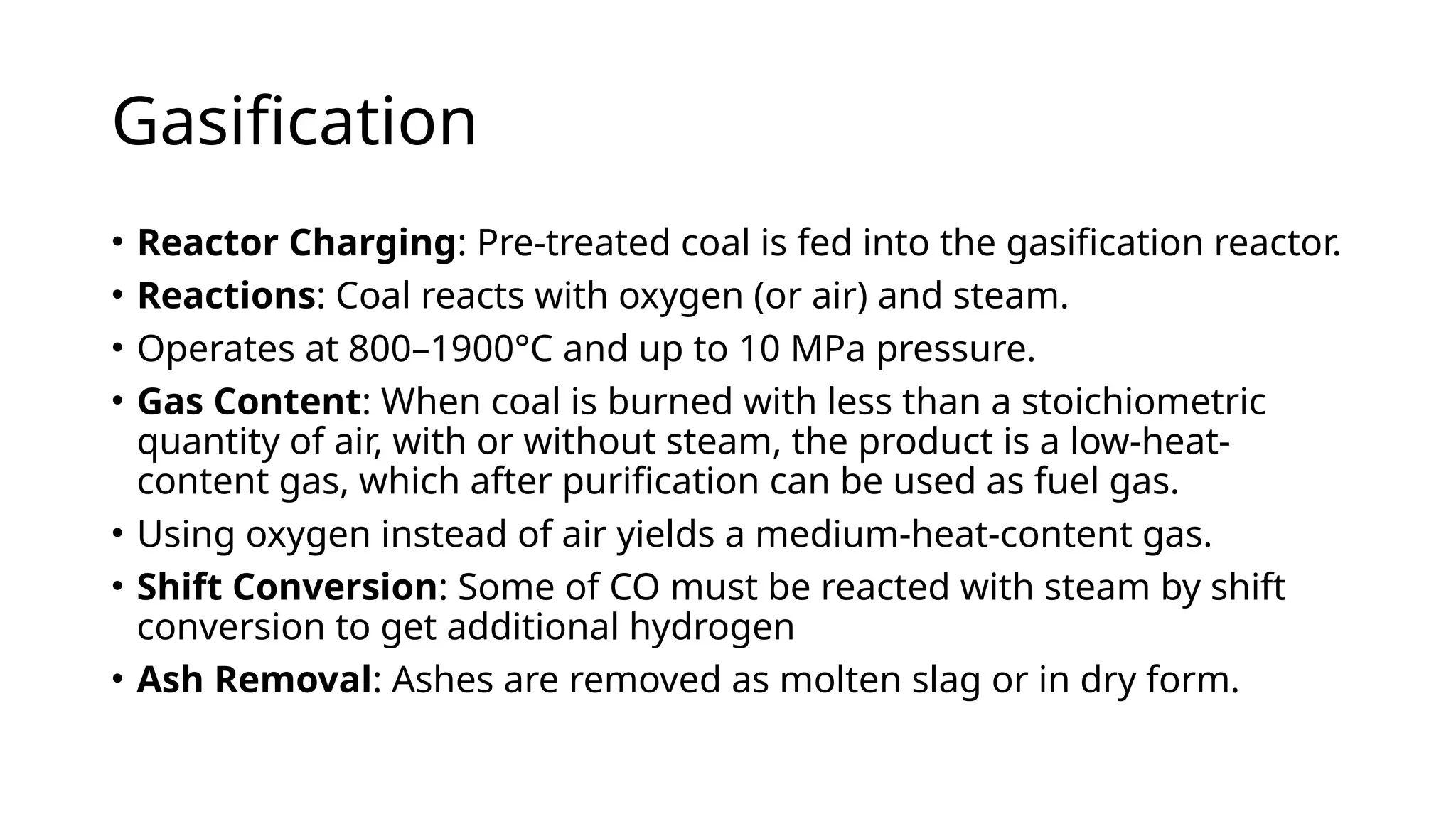
Gasification
• Reactor Charging: Pre-treated coal is fed into the gasification reactor.
• Reactions: Coal reacts with oxygen (or air) and steam.
• Operates at 800–1900°C and up to 10 MPa pressure.
• Gas Content: When coal is burned with less than a stoichiometric
quantity of air, with or without steam, the product is a low-heat-
content gas, which after purification can be used as fuel gas.
• Using oxygen instead of air yields a medium-heat-content gas.
• Shift Conversion: Some of CO must be reacted with steam by shift
conversion to get additional hydrogen
• Ash Removal: Ashes are removed as molten slag or in dry form.
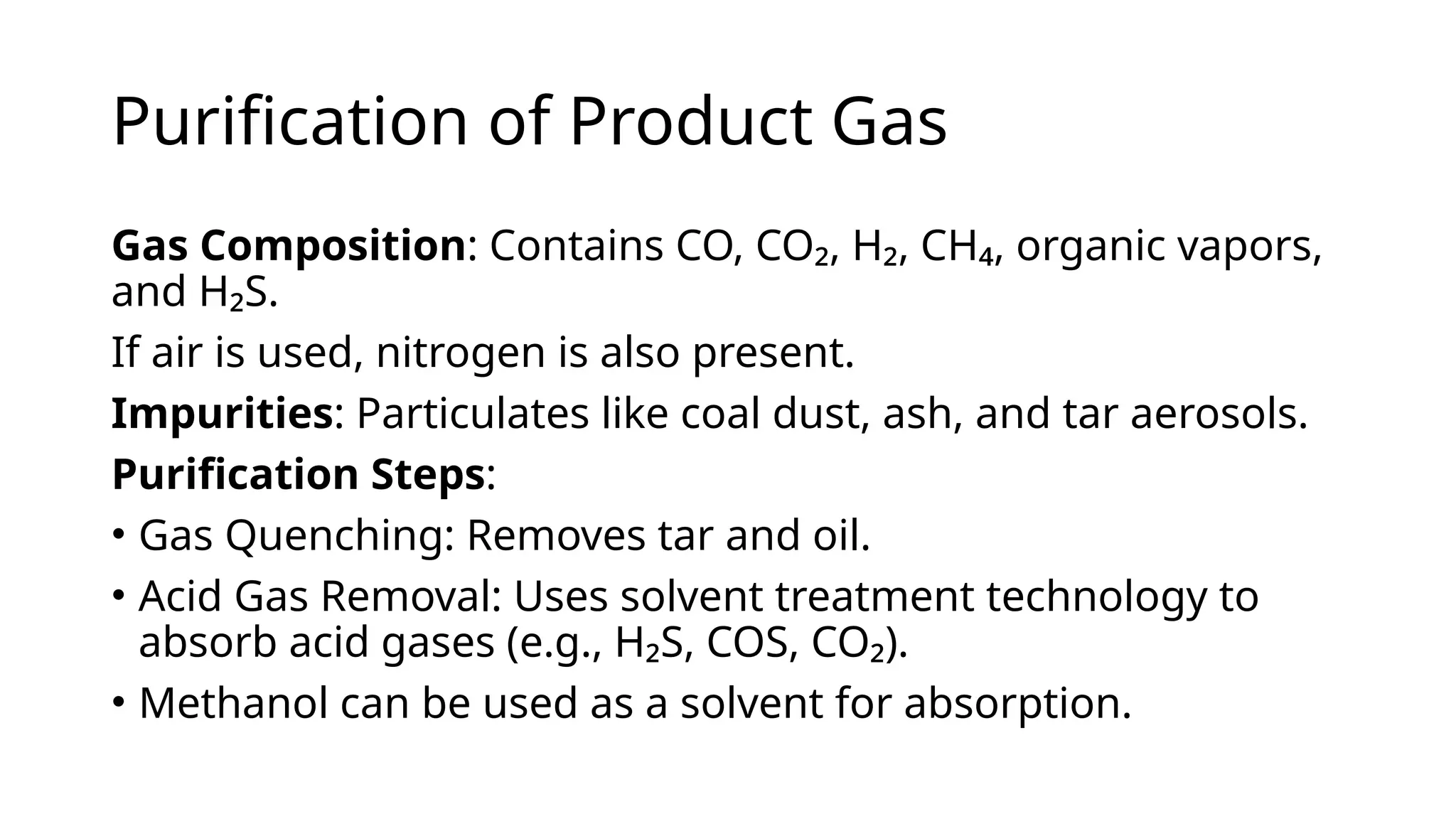
Purification of Product Gas
Gas Composition: Contains CO, CO₂, H₂, CH₄, organic vapors,
and H₂S.
If air is used, nitrogen is also present.
Impurities: Particulates like coal dust, ash, and tar aerosols.
Purification Steps:
• Gas Quenching: Removes tar and oil.
• Acid Gas Removal: Uses solvent treatment technology to
absorb acid gases (e.g., H₂S, COS, CO₂).
• Methanol can be used as a solvent for absorption.
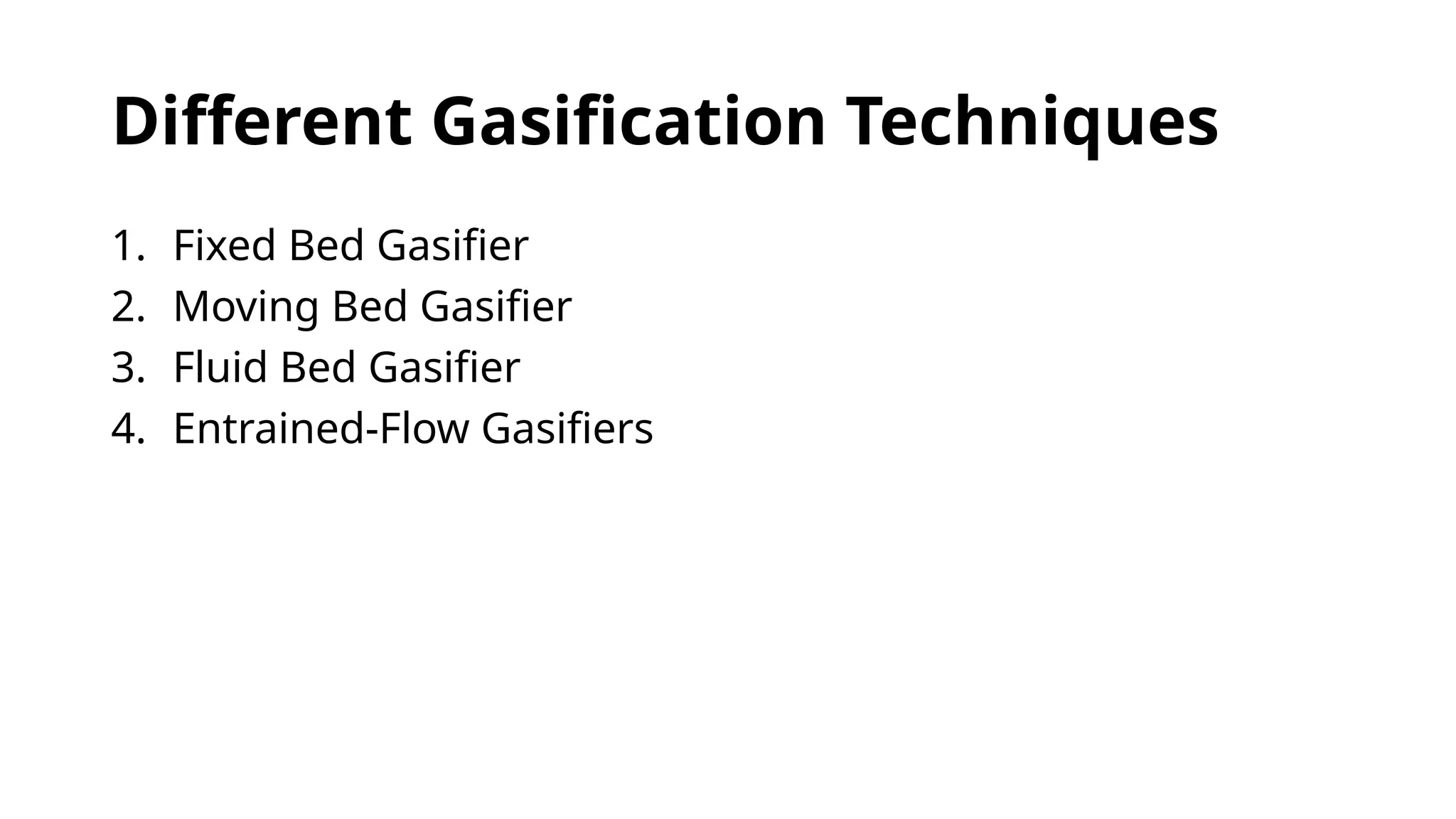
Different Gasification Techniques
1. Fixed Bed Gasifier
2. Moving Bed Gasifier
3. Fluid Bed Gasifier
4. Entrained-Flow Gasifiers
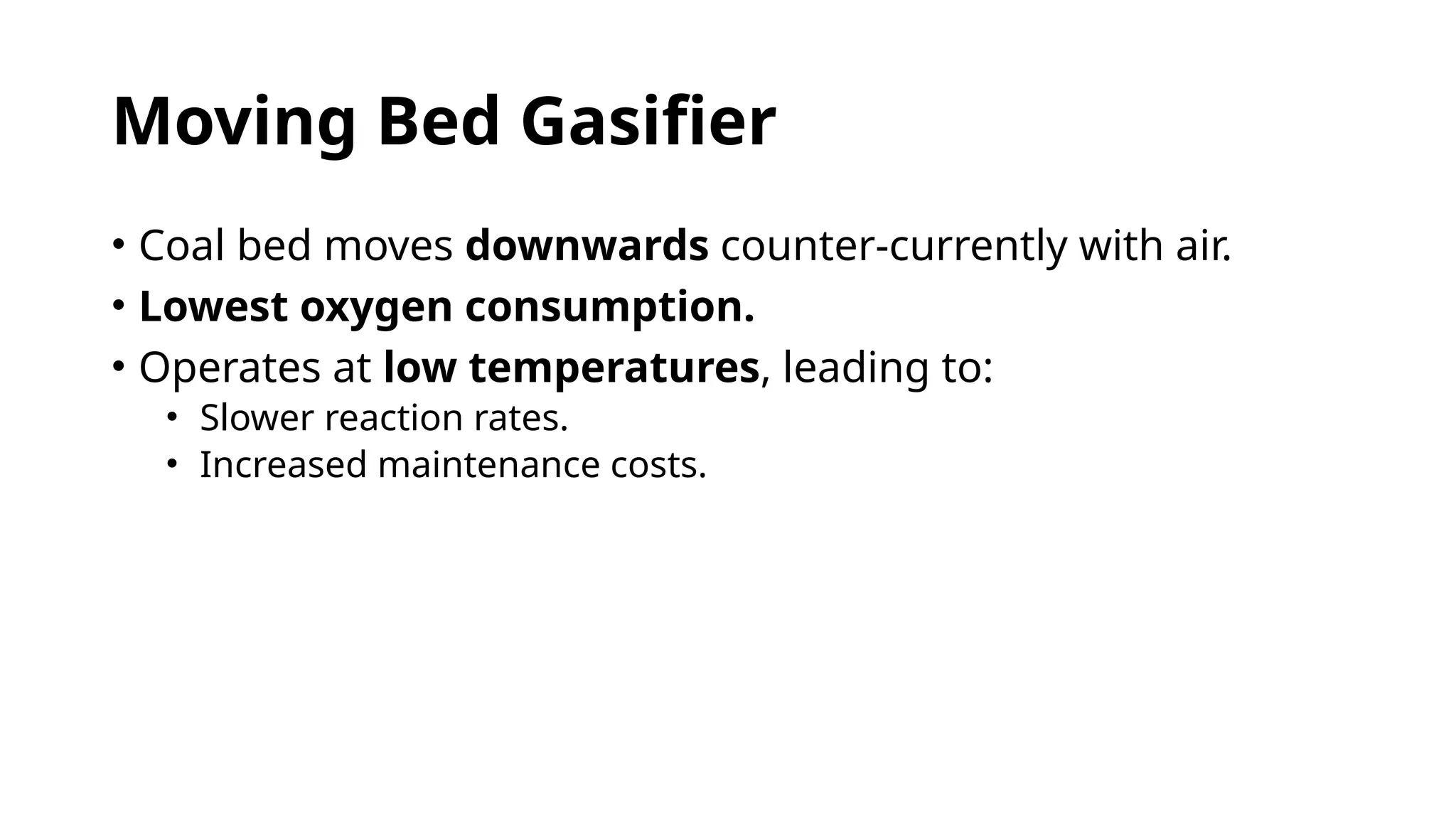
Moving Bed Gasifier
• Coal bed moves downwards counter-currently with air.
• Lowest oxygen consumption.
• Operates at low temperatures, leading to:
• Slower reaction rates.
• Increased maintenance costs.
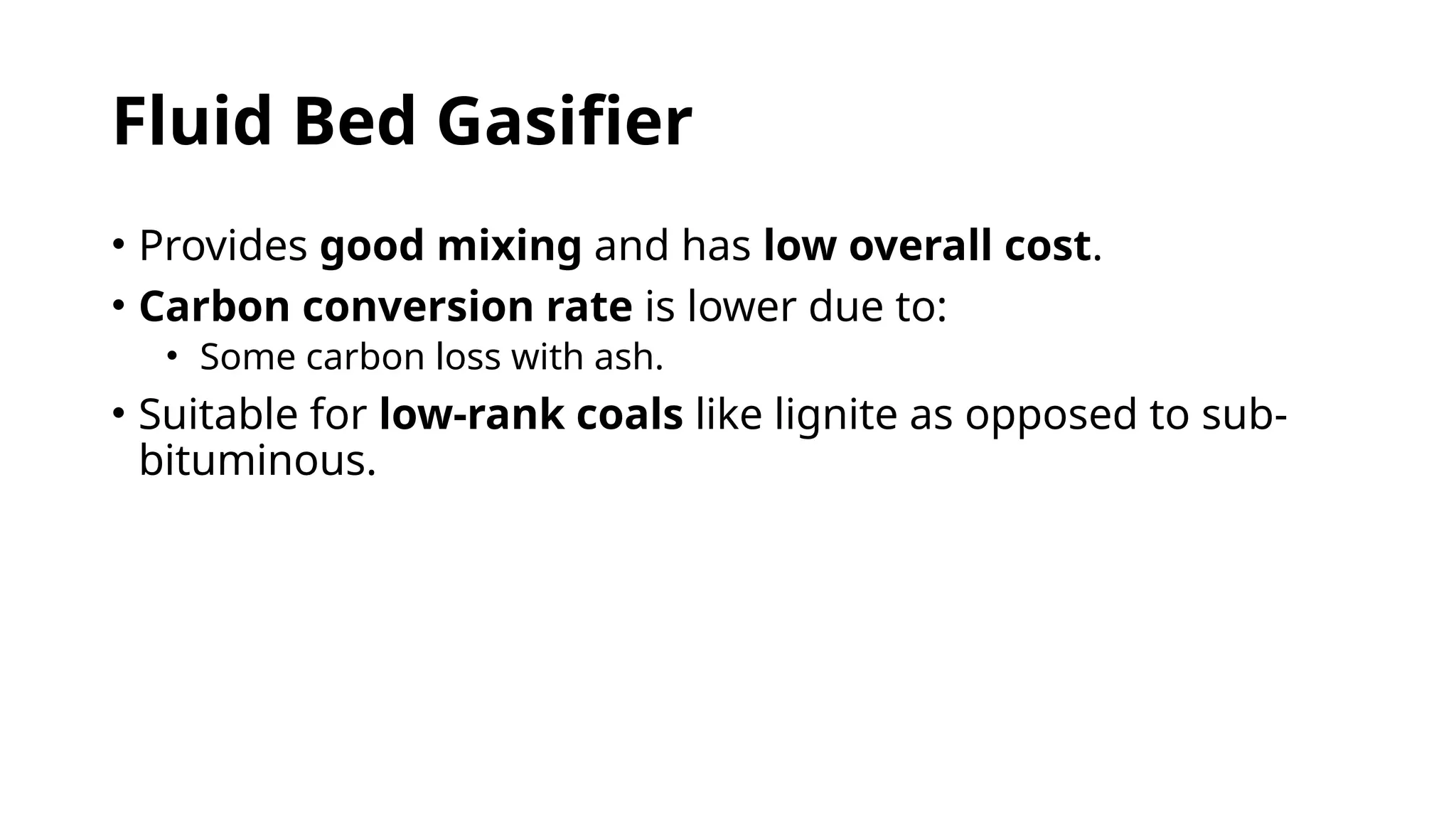
Fluid Bed Gasifier
• Provides good mixing and has low overall cost.
• Carbon conversion rate is lower due to:
• Some carbon loss with ash.
• Suitable for low-rank coals like lignite as opposed to sub-
bituminous.
Entrained-Flow Gasifier
• Fine coal particles react with steam and oxygen co-
currently.
• Operates at high temperatures, leading to:
• High carbon conversion (~99%).
• Destruction of tar and oil, yielding pure syngas.
• High oxygen demand and sensitivity to high ash content.

LEcture 3.pptx Coal Gasification Process

  • 2.
    Coal Gasification Technology •Coal gasification technology efficiently converts coal into: Power, chemicals, fertilizers, and fuels. • Clean technology that decomposes coal into components using steam and oxygen at high pressure and temperature. • Produces synthesis gas (syngas): a mixture of carbon monoxide (CO) and hydrogen (H₂). • Utilized for methanol production as an alternative energy source.
  • 3.
    Major Applications ofCoal Gasification • Power generation • Fertilizer production • Methanol synthesis • Hydrogen production • Hydrocarbon production Coal gasification is the only direct route to produce hydrogen from coal.
  • 4.
    Process Overview • Reaction: •Stages of the process: 1. Pre-treatment of Coal 2. Gasification 3. Gas Cleaning 4. Gas Beneficiation
  • 5.
    Reactions in CoalGasification
  • 7.
    Selection of SuitableCoal for Gasification • Critical properties to choose appropriate coal at the initial stage based on : • Sulfur content • Fixed carbon • Oxygen levels • Ash and volatile content Sub-bituminous coal: Lowest sulfur content compared to lignite and bituminous coal.
  • 8.
    Gas Cleaning &Acid Gas Removal • Removal of acid gases (H₂S, CO₂) is crucial for syngas preparation. • Low sulfur content in coal minimizes unwanted products like H₂S and CO2. Methanol Production • Syngas ideally has a 1:2 CO to H₂ ratio.
  • 9.
    Coal Preparation Pre-treatment step: •Coal is dried and crushed/pulverized for fluid or entrained bed gasifiers. • Moisture removal by drying is essential. • Caking coals may require partial oxidation for easier gasifier operation. • For fixed bed gasifiers, briquetting of fine coal particles is necessary.
  • 10.
    Gasification • Reactor Charging:Pre-treated coal is fed into the gasification reactor. • Reactions: Coal reacts with oxygen (or air) and steam. • Operates at 800–1900°C and up to 10 MPa pressure. • Gas Content: When coal is burned with less than a stoichiometric quantity of air, with or without steam, the product is a low-heat- content gas, which after purification can be used as fuel gas. • Using oxygen instead of air yields a medium-heat-content gas. • Shift Conversion: Some of CO must be reacted with steam by shift conversion to get additional hydrogen • Ash Removal: Ashes are removed as molten slag or in dry form.
  • 11.
    Purification of ProductGas Gas Composition: Contains CO, CO₂, H₂, CH₄, organic vapors, and H₂S. If air is used, nitrogen is also present. Impurities: Particulates like coal dust, ash, and tar aerosols. Purification Steps: • Gas Quenching: Removes tar and oil. • Acid Gas Removal: Uses solvent treatment technology to absorb acid gases (e.g., H₂S, COS, CO₂). • Methanol can be used as a solvent for absorption.
  • 12.
    Different Gasification Techniques 1.Fixed Bed Gasifier 2. Moving Bed Gasifier 3. Fluid Bed Gasifier 4. Entrained-Flow Gasifiers
  • 13.
    Moving Bed Gasifier •Coal bed moves downwards counter-currently with air. • Lowest oxygen consumption. • Operates at low temperatures, leading to: • Slower reaction rates. • Increased maintenance costs.
  • 14.
    Fluid Bed Gasifier •Provides good mixing and has low overall cost. • Carbon conversion rate is lower due to: • Some carbon loss with ash. • Suitable for low-rank coals like lignite as opposed to sub- bituminous.
  • 15.
    Entrained-Flow Gasifier • Finecoal particles react with steam and oxygen co- currently. • Operates at high temperatures, leading to: • High carbon conversion (~99%). • Destruction of tar and oil, yielding pure syngas. • High oxygen demand and sensitivity to high ash content.