INTRODUCTION TO MANAGEMENT
Lecture 1
Why Study Management?
If at first you don’t succeed, try management
What Management is/is not ?
The science and art of getting things done
through people
coordinating and overseeing the work activities
of others so that their activities are completed
efficiently and effectively
Providing good service is an art-
providing it as profitably as
possible is a science
Effectiveness and Efficiency
Efficiency is getting the most output from the least amount
of inputs in order to minimize resource costs.
“Doing things right” ‫الكفاءة‬
Effectiveness is completing activities so that organizational
goals are attained
“Doing the right things”‫الفاعلية‬
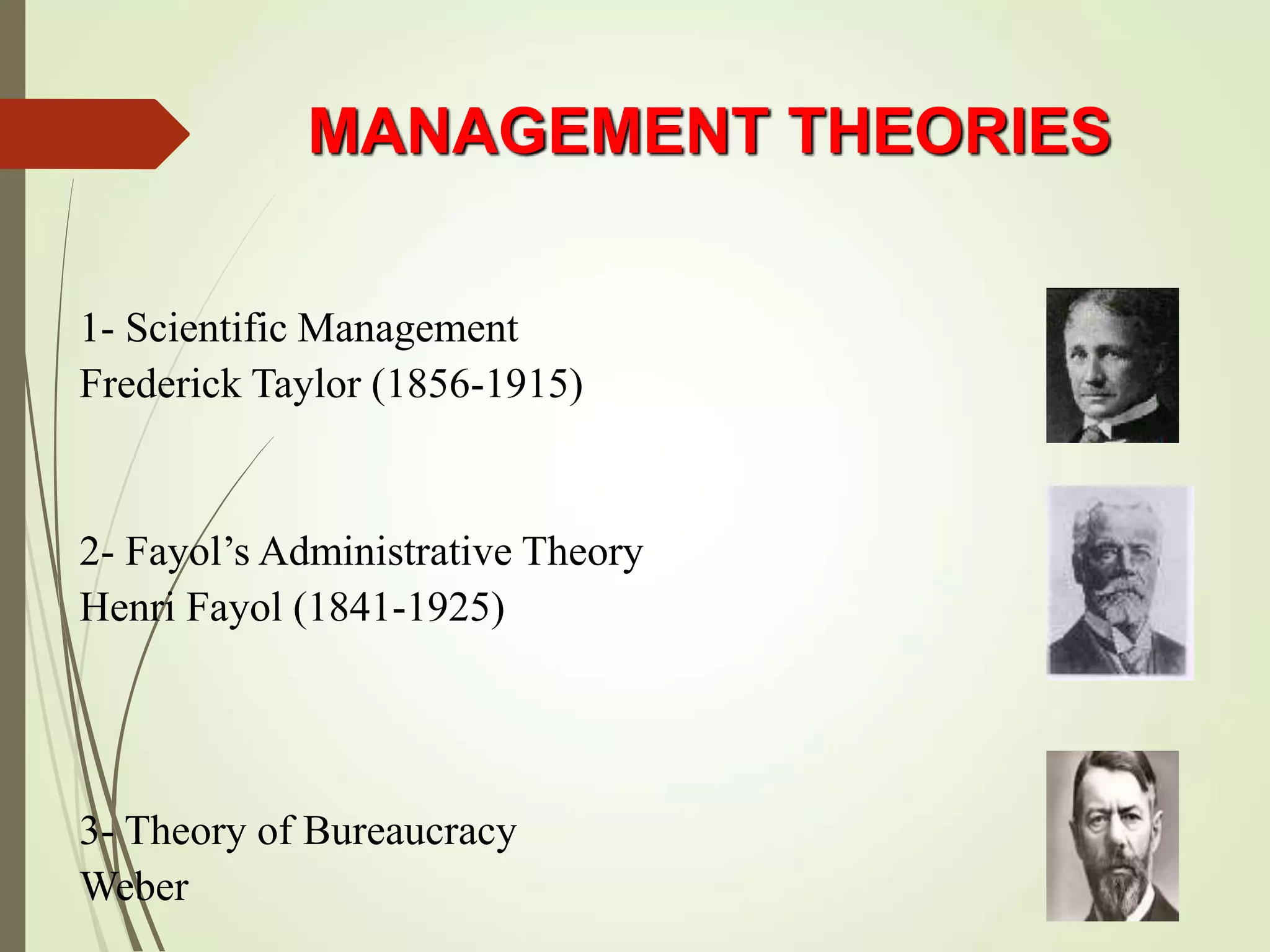
1- Scientific Management
Frederick Taylor (1856-1915)
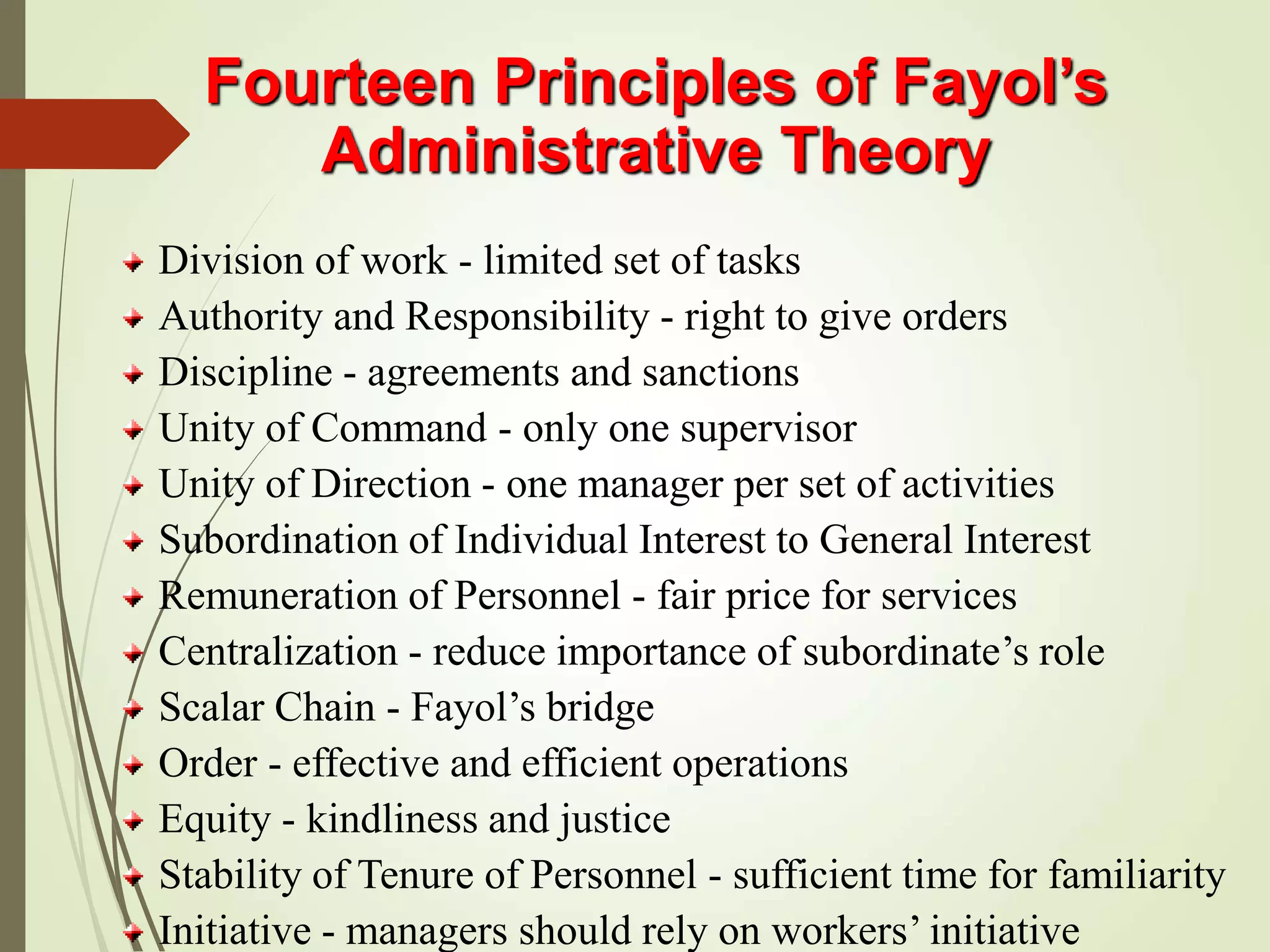
2- Fayol’s Administrative Theory
Henri Fayol (1841-1925)
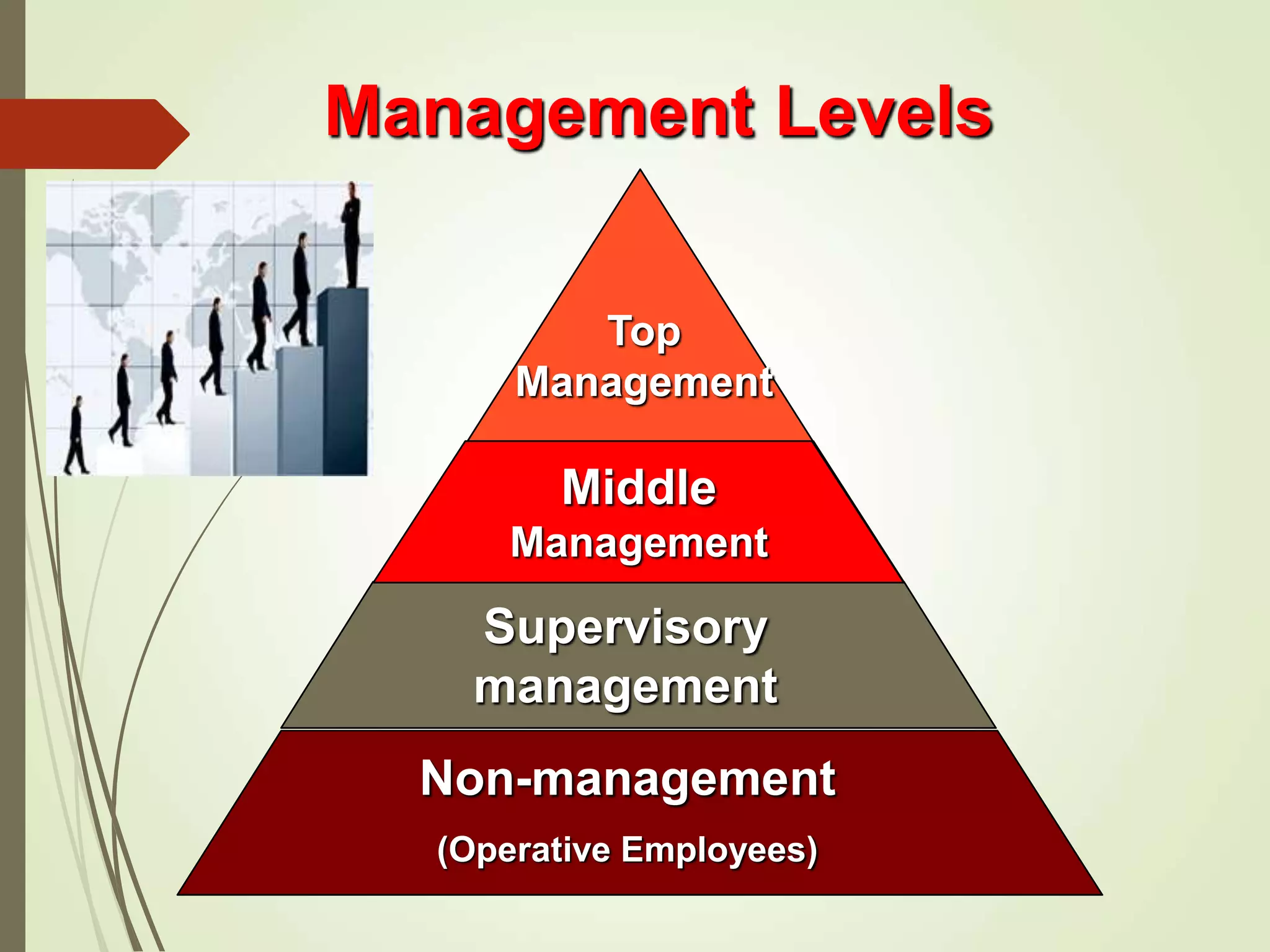
3- Theory of Bureaucracy
Weber
MANAGEMENT THEORIES
Fourteen Principles of Fayol’s
Administrative Theory
Division of work - limited set of tasks
Authority and Responsibility - right to give orders
Discipline - agreements and sanctions
Unity of Command - only one supervisor
Unity of Direction - one manager per set of activities
Subordination of Individual Interest to General Interest
Remuneration of Personnel - fair price for services
Centralization - reduce importance of subordinate’s role
Scalar Chain - Fayol’s bridge
Order - effective and efficient operations
Equity - kindliness and justice
Stability of Tenure of Personnel - sufficient time for familiarity
Initiative - managers should rely on workers’ initiative
Top
Management
Middle
Management
Supervisory
management
Non-management
(Operative Employees)
Management Levels
Responsibilities
First-line Managers: responsible for day-to-day
operation. They supervise the people performing the
activities required to make the good or service.
Middle Managers: Supervise first-line managers. They
are also responsible to find the best way to use
departmental resources to achieve goals.
Top Managers: Responsible for the performance of all
departments and have cross-departmental
responsibility. They establish organizational goals and
monitor middle managers.
LEVELS OF MANAGEMENT
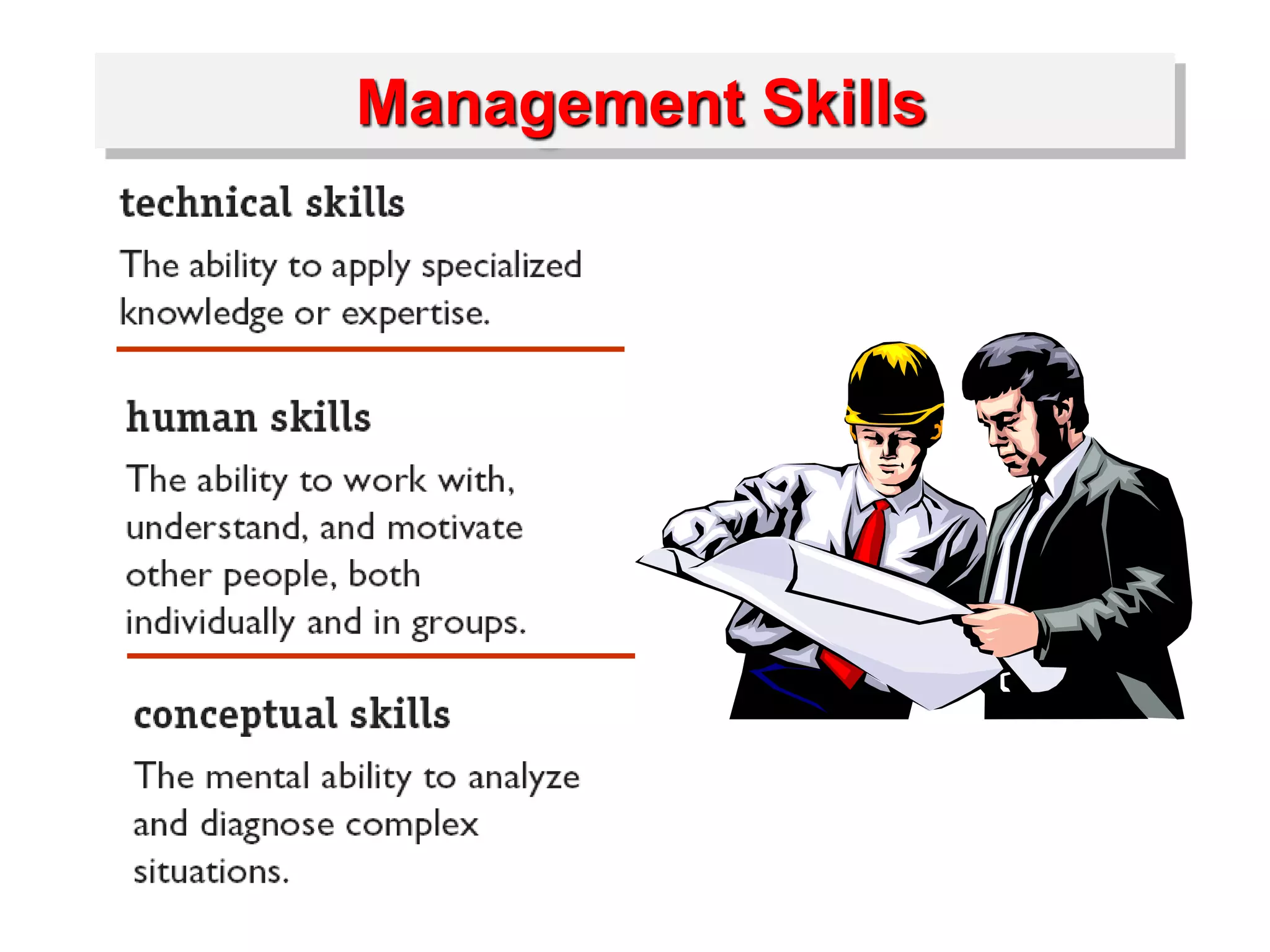
Management Skills
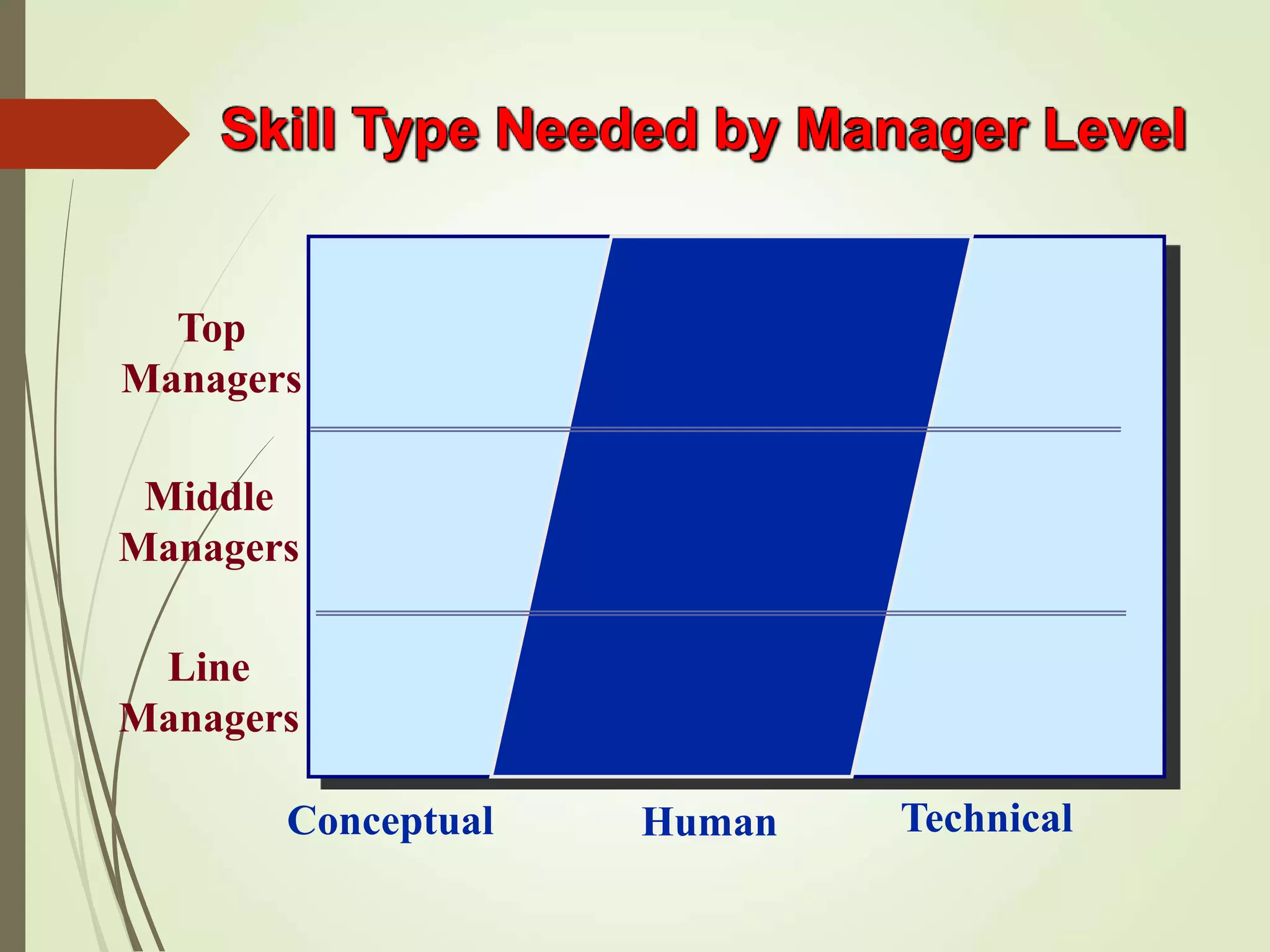
Top
Managers
Middle
Managers
Line
Managers
Conceptual Human Technical
Skill Type Needed by Manager Level
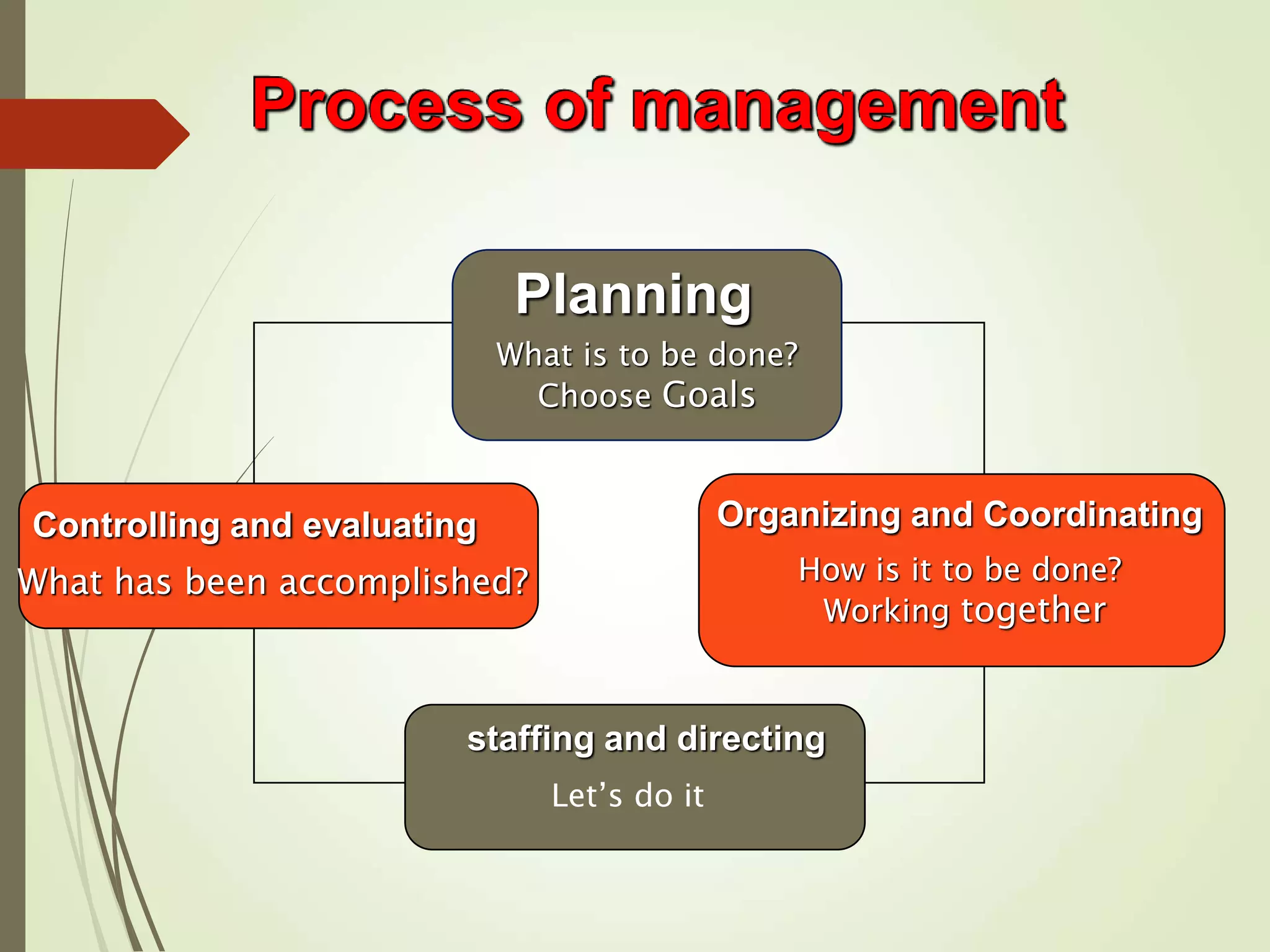
Process of management
Planning
What is to be done?
Choose Goals
Organizing and Coordinating
How is it to be done?
Working together
staffing and directing
Let’s do it
Controlling and evaluating
What has been accomplished?
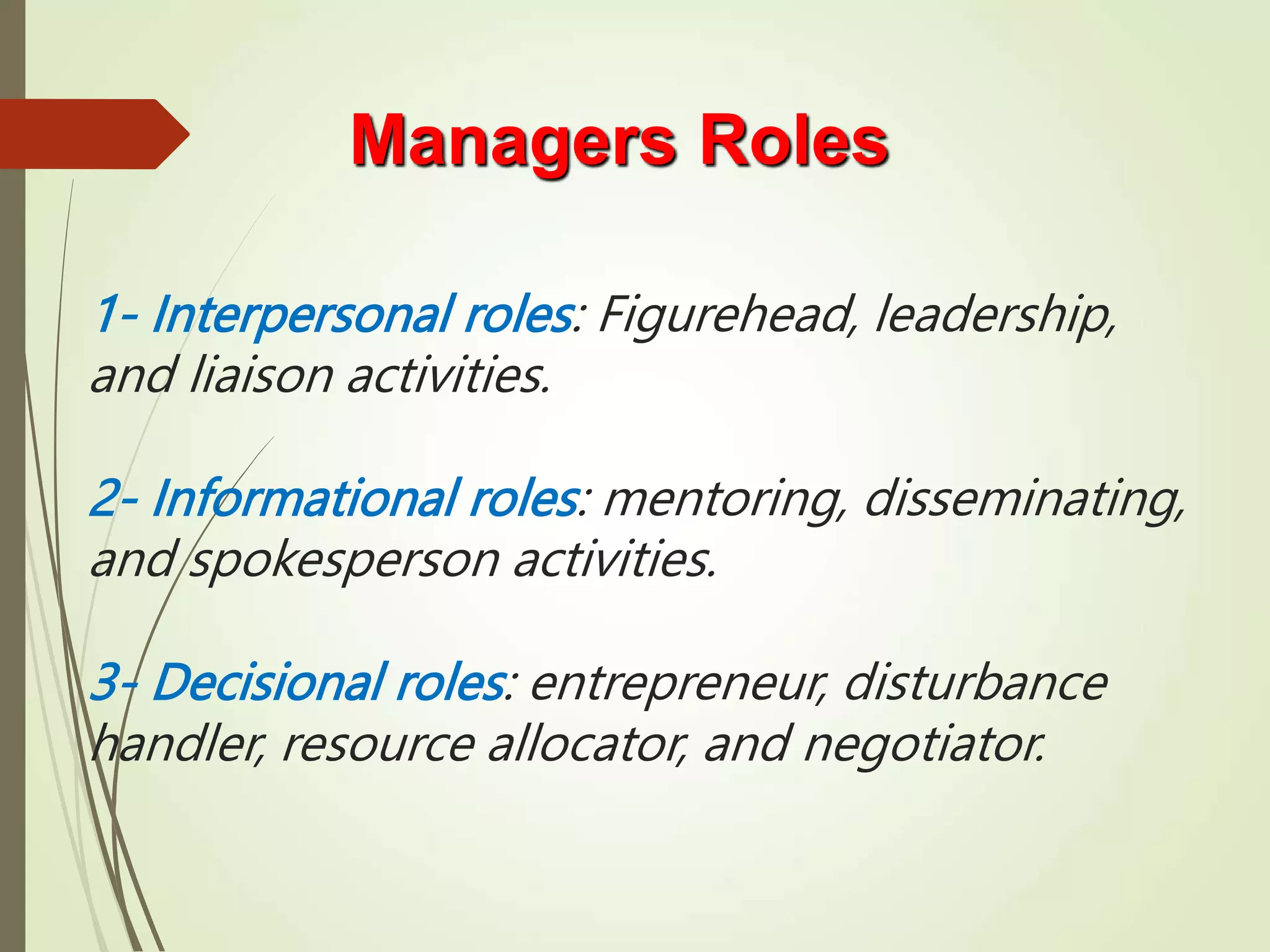
1- Interpersonal roles: Figurehead, leadership,
and liaison activities.
2- Informational roles: mentoring, disseminating,
and spokesperson activities.
3- Decisional roles: entrepreneur, disturbance
handler, resource allocator, and negotiator.
Managers Roles
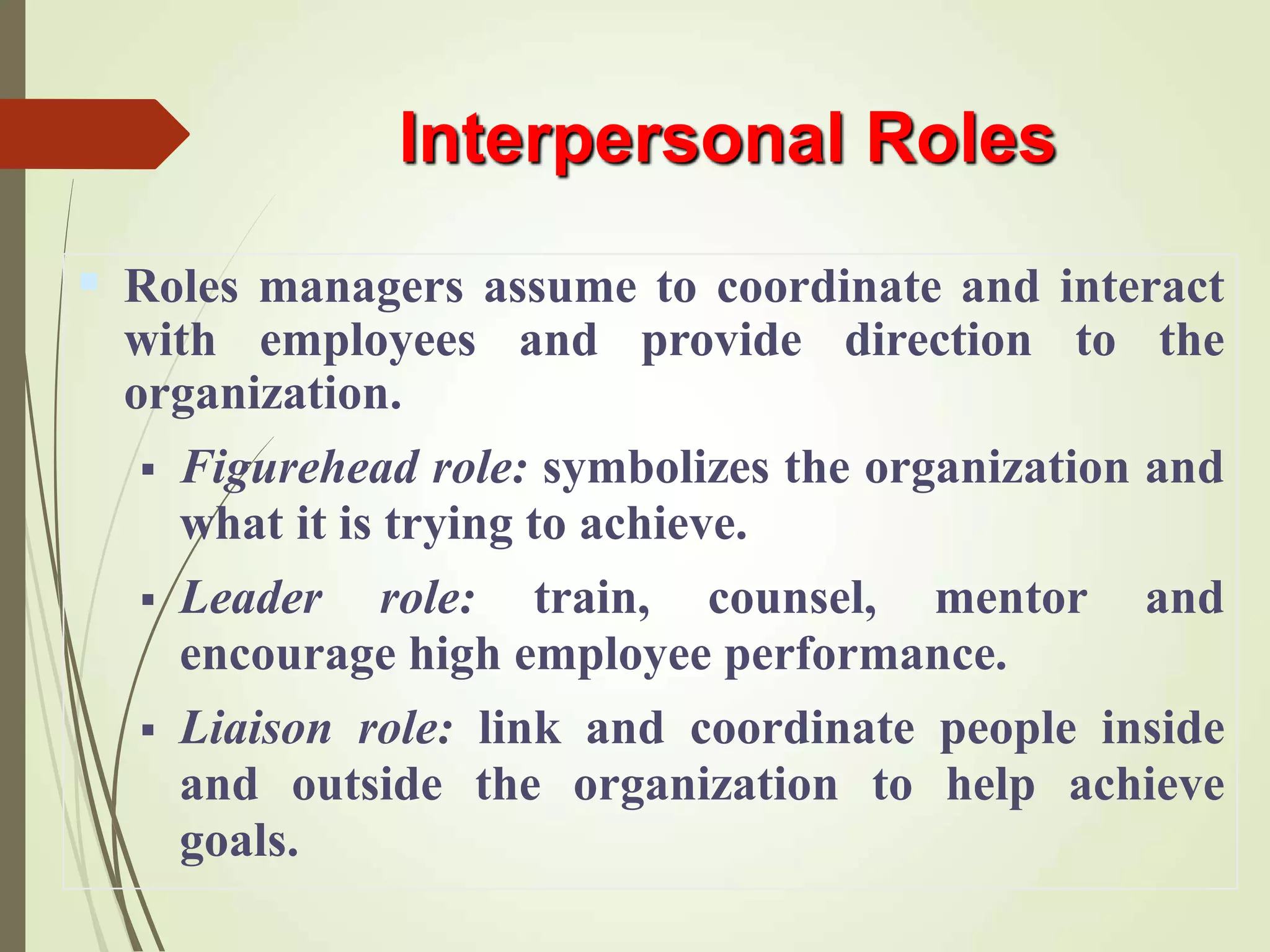
Interpersonal Roles
 Roles managers assume to coordinate and interact
with employees and provide direction to the
organization.
 Figurehead role: symbolizes the organization and
what it is trying to achieve.
 Leader role: train, counsel, mentor and
encourage high employee performance.
 Liaison role: link and coordinate people inside
and outside the organization to help achieve
goals.
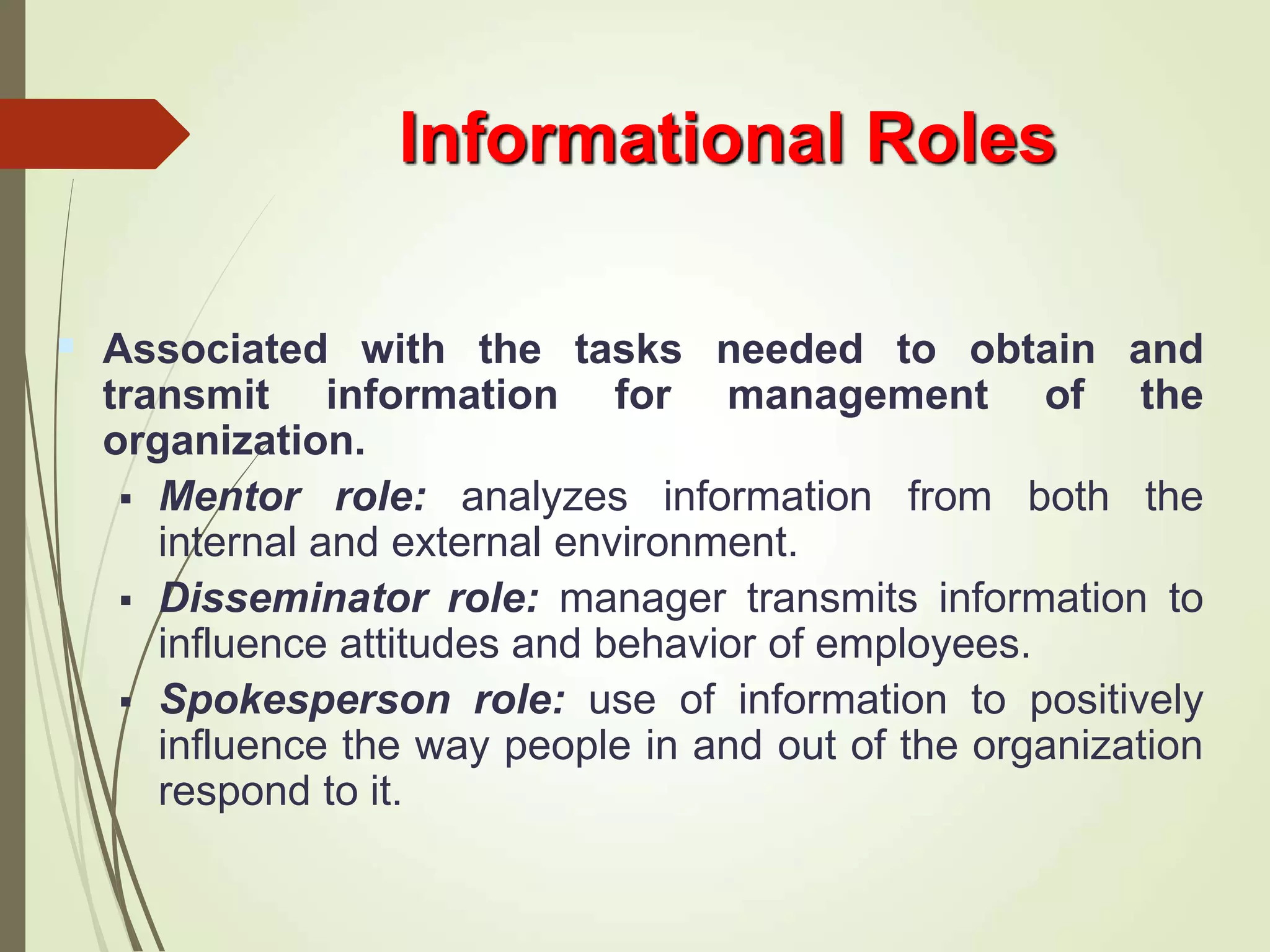
Informational Roles
 Associated with the tasks needed to obtain and
transmit information for management of the
organization.
 Mentor role: analyzes information from both the
internal and external environment.
 Disseminator role: manager transmits information to
influence attitudes and behavior of employees.
 Spokesperson role: use of information to positively
influence the way people in and out of the organization
respond to it.
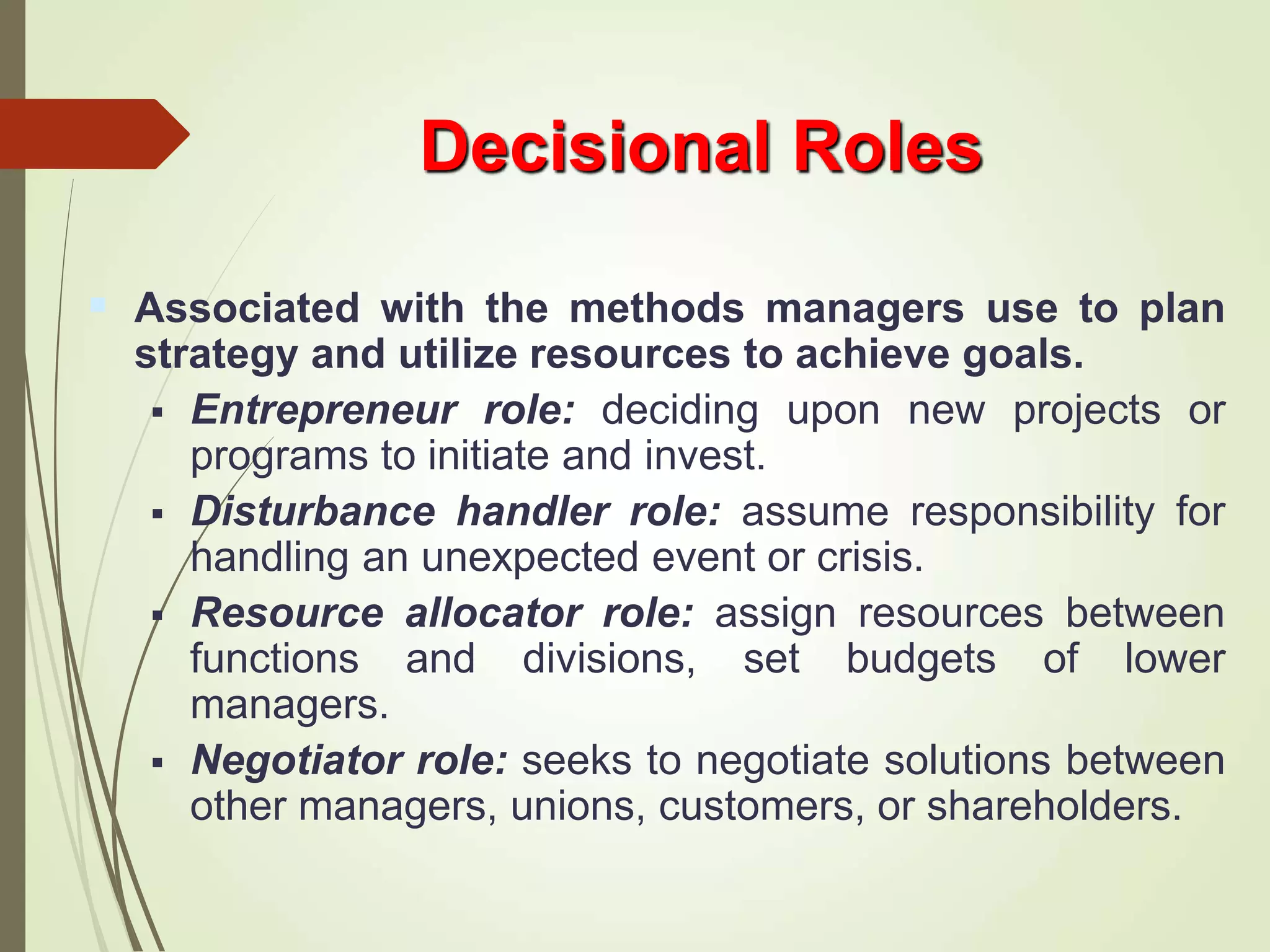
Decisional Roles
 Associated with the methods managers use to plan
strategy and utilize resources to achieve goals.
 Entrepreneur role: deciding upon new projects or
programs to initiate and invest.
 Disturbance handler role: assume responsibility for
handling an unexpected event or crisis.
 Resource allocator role: assign resources between
functions and divisions, set budgets of lower
managers.
 Negotiator role: seeks to negotiate solutions between
other managers, unions, customers, or shareholders.
Thank you for your attention

Lecture 1.ppt

  • 1.
  • 2.
    Why Study Management? Ifat first you don’t succeed, try management
  • 3.
    What Management is/isnot ? The science and art of getting things done through people coordinating and overseeing the work activities of others so that their activities are completed efficiently and effectively Providing good service is an art- providing it as profitably as possible is a science
  • 4.
    Effectiveness and Efficiency Efficiencyis getting the most output from the least amount of inputs in order to minimize resource costs. “Doing things right” ‫الكفاءة‬ Effectiveness is completing activities so that organizational goals are attained “Doing the right things”‫الفاعلية‬
  • 5.
    1- Scientific Management FrederickTaylor (1856-1915) 2- Fayol’s Administrative Theory Henri Fayol (1841-1925) 3- Theory of Bureaucracy Weber MANAGEMENT THEORIES
  • 6.
    Fourteen Principles ofFayol’s Administrative Theory Division of work - limited set of tasks Authority and Responsibility - right to give orders Discipline - agreements and sanctions Unity of Command - only one supervisor Unity of Direction - one manager per set of activities Subordination of Individual Interest to General Interest Remuneration of Personnel - fair price for services Centralization - reduce importance of subordinate’s role Scalar Chain - Fayol’s bridge Order - effective and efficient operations Equity - kindliness and justice Stability of Tenure of Personnel - sufficient time for familiarity Initiative - managers should rely on workers’ initiative
  • 7.
  • 8.
    Responsibilities First-line Managers: responsiblefor day-to-day operation. They supervise the people performing the activities required to make the good or service. Middle Managers: Supervise first-line managers. They are also responsible to find the best way to use departmental resources to achieve goals. Top Managers: Responsible for the performance of all departments and have cross-departmental responsibility. They establish organizational goals and monitor middle managers. LEVELS OF MANAGEMENT
  • 10.
  • 11.
  • 12.
    Process of management Planning Whatis to be done? Choose Goals Organizing and Coordinating How is it to be done? Working together staffing and directing Let’s do it Controlling and evaluating What has been accomplished?
  • 13.
    1- Interpersonal roles:Figurehead, leadership, and liaison activities. 2- Informational roles: mentoring, disseminating, and spokesperson activities. 3- Decisional roles: entrepreneur, disturbance handler, resource allocator, and negotiator. Managers Roles
  • 14.
    Interpersonal Roles  Rolesmanagers assume to coordinate and interact with employees and provide direction to the organization.  Figurehead role: symbolizes the organization and what it is trying to achieve.  Leader role: train, counsel, mentor and encourage high employee performance.  Liaison role: link and coordinate people inside and outside the organization to help achieve goals.
  • 15.
    Informational Roles  Associatedwith the tasks needed to obtain and transmit information for management of the organization.  Mentor role: analyzes information from both the internal and external environment.  Disseminator role: manager transmits information to influence attitudes and behavior of employees.  Spokesperson role: use of information to positively influence the way people in and out of the organization respond to it.
  • 16.
    Decisional Roles  Associatedwith the methods managers use to plan strategy and utilize resources to achieve goals.  Entrepreneur role: deciding upon new projects or programs to initiate and invest.  Disturbance handler role: assume responsibility for handling an unexpected event or crisis.  Resource allocator role: assign resources between functions and divisions, set budgets of lower managers.  Negotiator role: seeks to negotiate solutions between other managers, unions, customers, or shareholders.
  • 17.
    Thank you foryour attention