Microbial
Growth
Microbial growth: Increase in cell number, not cell size!
Temperature
 Minimum growth temperature
 Optimum growth temperature
 Maximum growth temperature
Microbial Growth
Copyright © 2006 Pearson Education, Inc., publishing as Benjamin Cummings
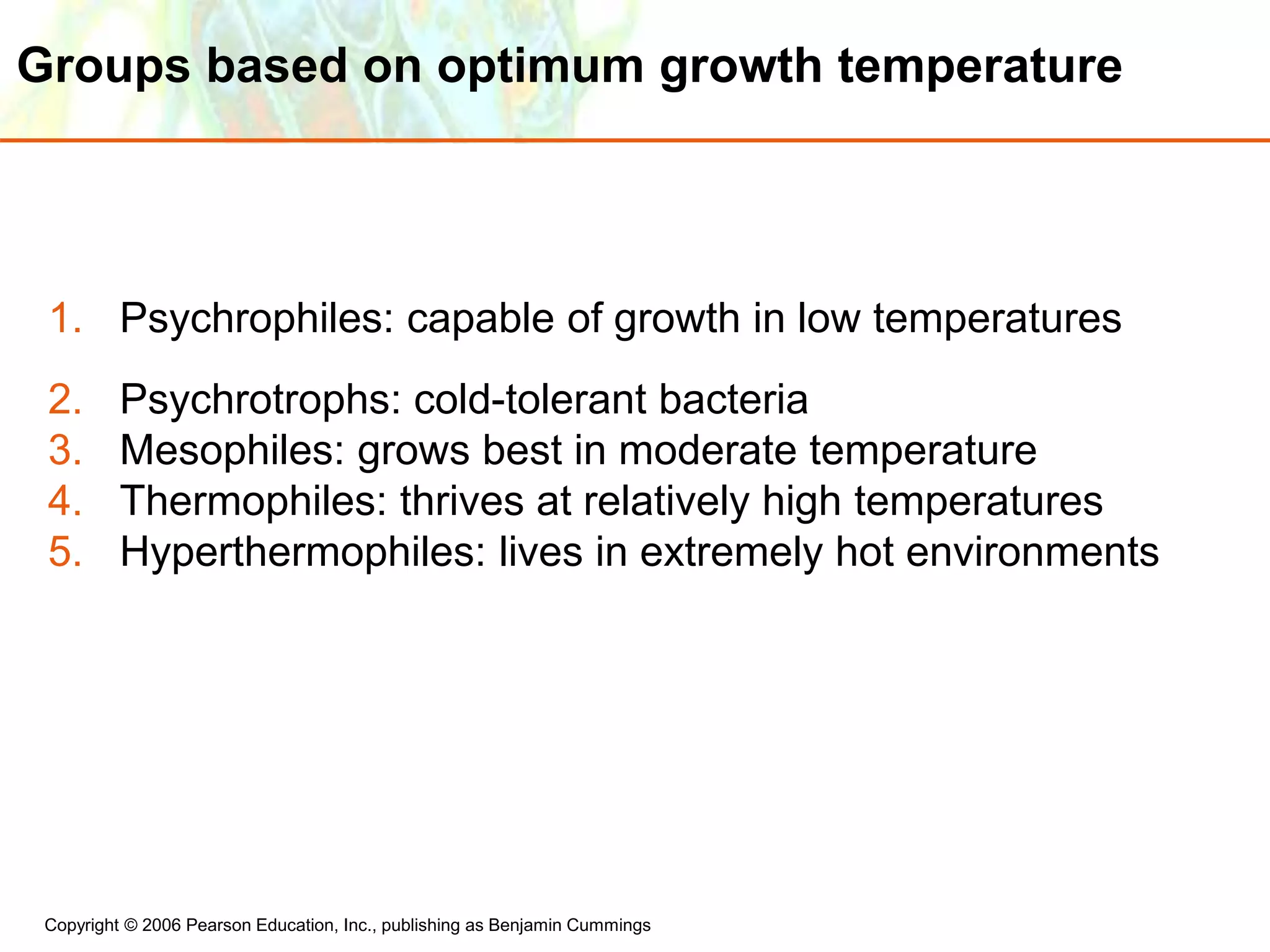
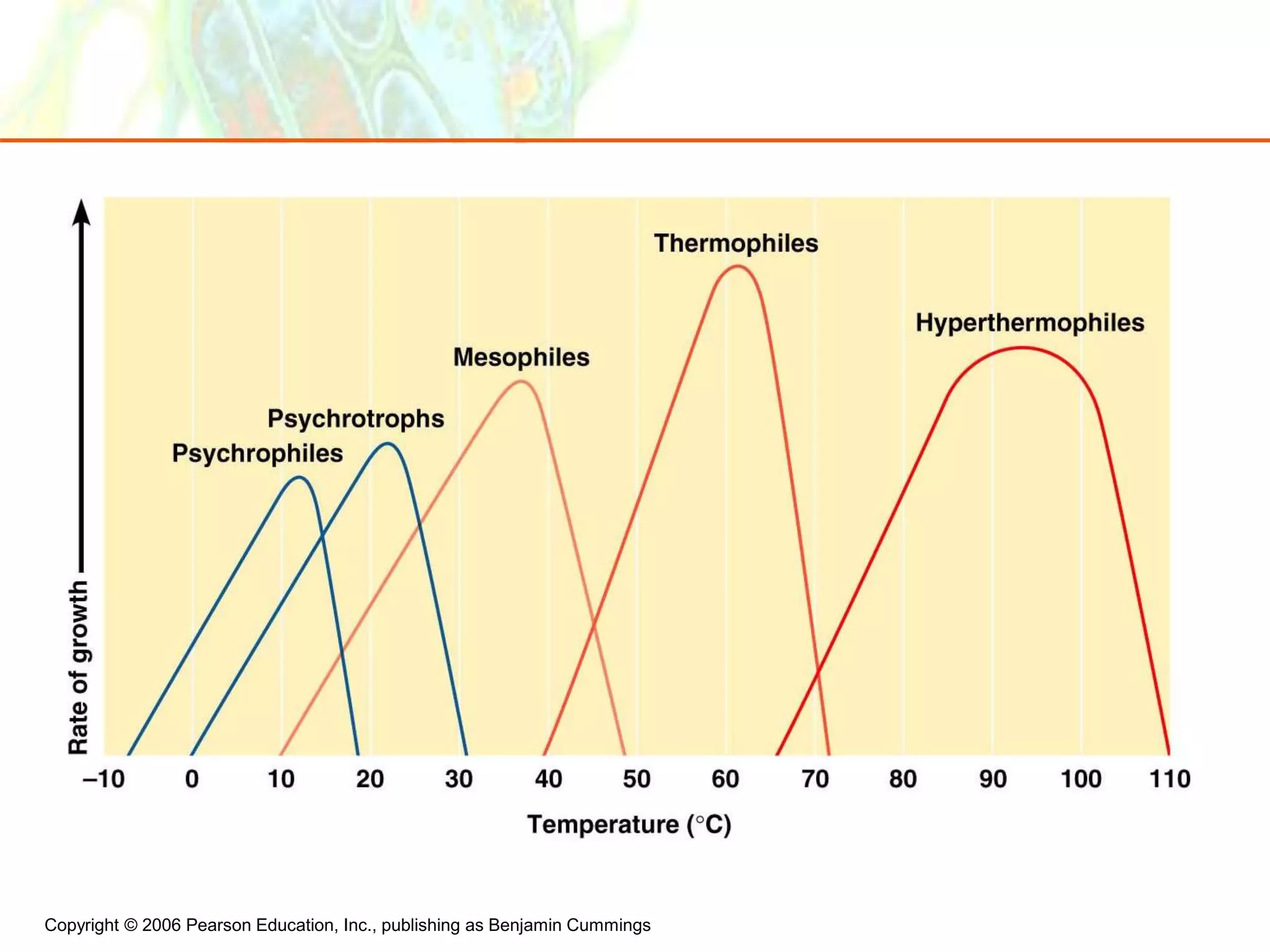
Groups based on optimum growth temperature
1. Psychrophiles: capable of growth in low temperatures
2. Psychrotrophs: cold-tolerant bacteria
3. Mesophiles: grows best in moderate temperature
4. Thermophiles: thrives at relatively high temperatures
5. Hyperthermophiles: lives in extremely hot environments
Copyright © 2006 Pearson Education, Inc., publishing as Benjamin Cummings
The Growth of Bacterial Cultures
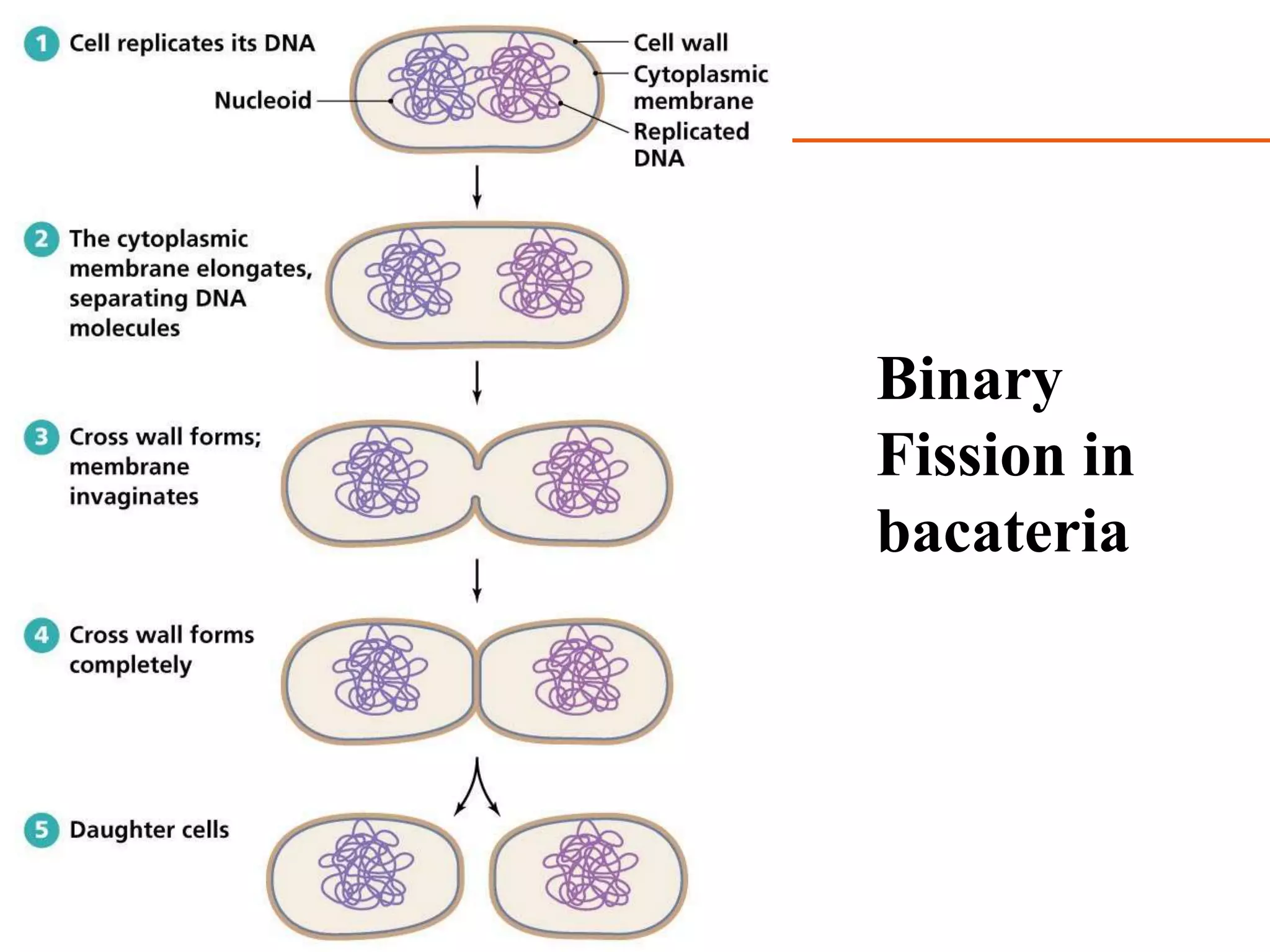
 Bacteria reproduce by binary fission
 exponential growth
 Few bacterial species reproduce by Budding
 Form a small initial outgrowth (a bud) that enlarges until its
size approaches that of parent cell
 Then bud separates
Copyright © 2006 Pearson Education, Inc., publishing as Benjamin Cummings
Binary
Fission in
bacateria
Copyright © 2006 Pearson Education, Inc., publishing as Benjamin Cummings
Generation time
 also known as doubling time
 Time required for cell to divide (and its population to double)
 One cell’s division produce two cells, two cell’s division
produce four cells and so on
 Number of cells in each generation is expressed as a power of 2
 Varies considerably among organisms and with environmental
conditions
 Ranges from 20 min (E. coli) to > 24h (M. tuberculosis)
Copyright © 2006 Pearson Education, Inc., publishing as Benjamin Cummings
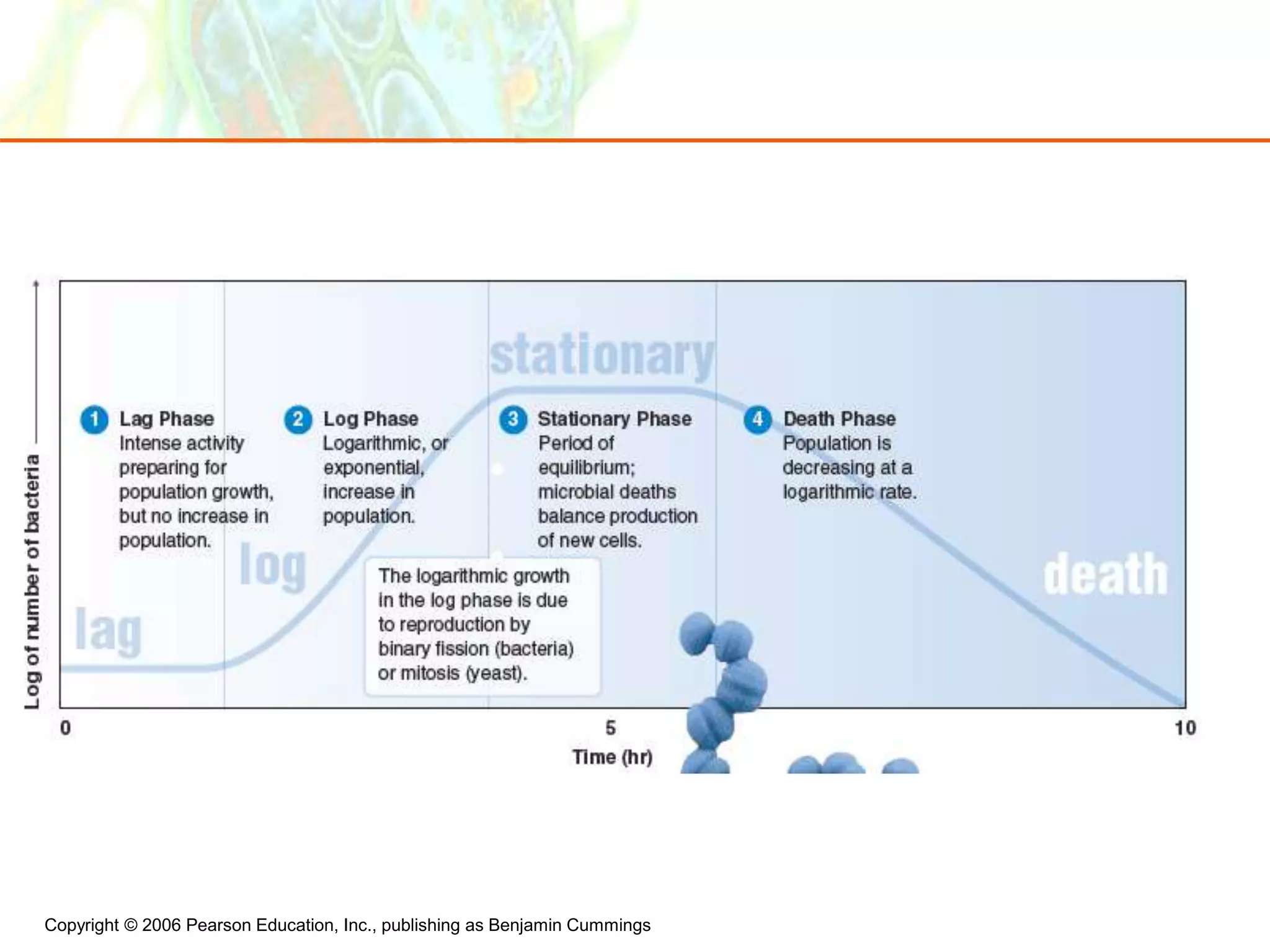
Bacterial Growth Curve
Phases of growth
 Lag phase
 Exponential or logarithmic (log) phase
 Stationary phase
 Death phase (decline phase)
Copyright © 2006 Pearson Education, Inc., publishing as Benjamin Cummings
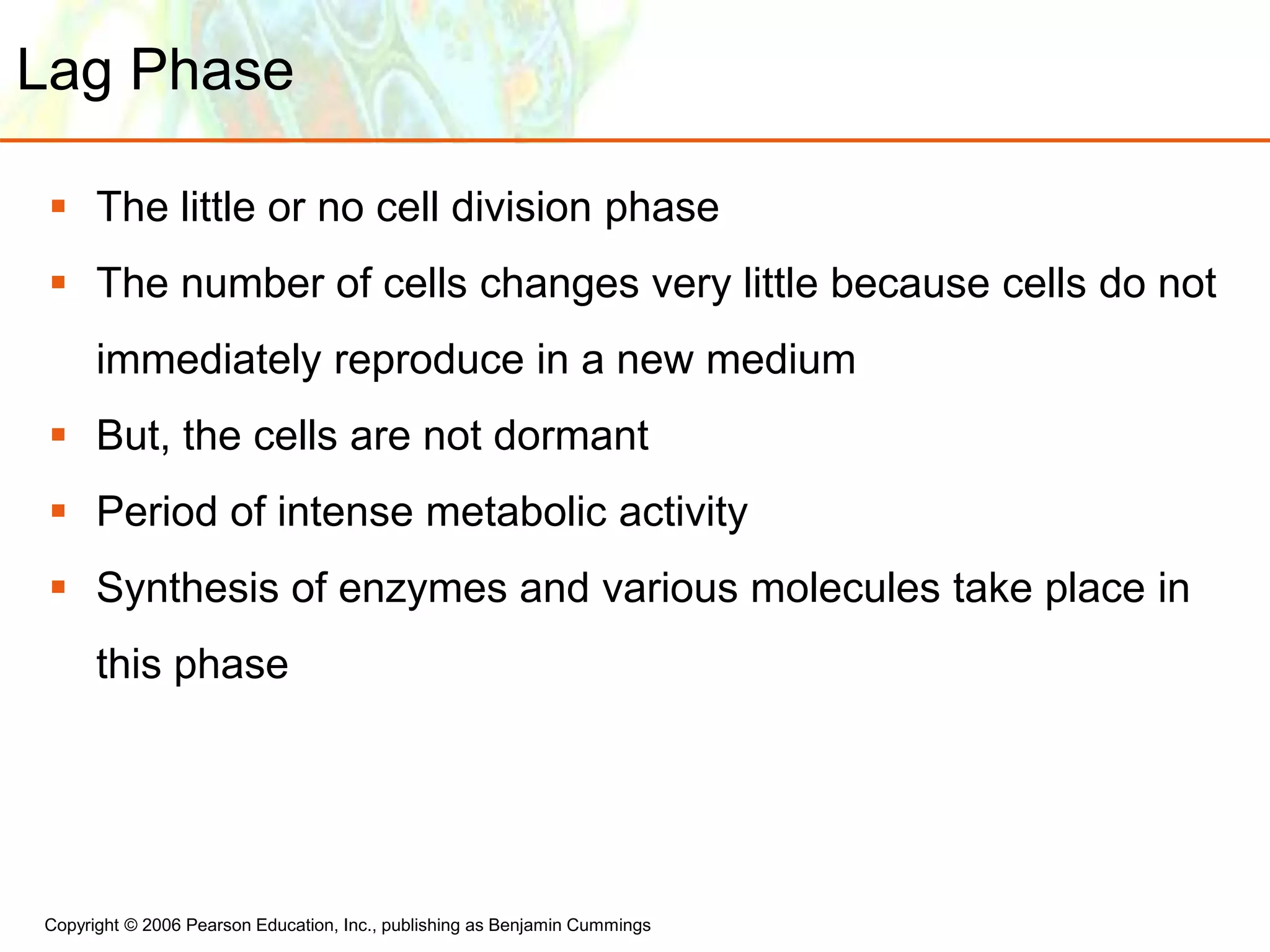
Lag Phase
 The little or no cell division phase
 The number of cells changes very little because cells do not
immediately reproduce in a new medium
 But, the cells are not dormant
 Period of intense metabolic activity
 Synthesis of enzymes and various molecules take place in
this phase
Copyright © 2006 Pearson Education, Inc., publishing as Benjamin Cummings
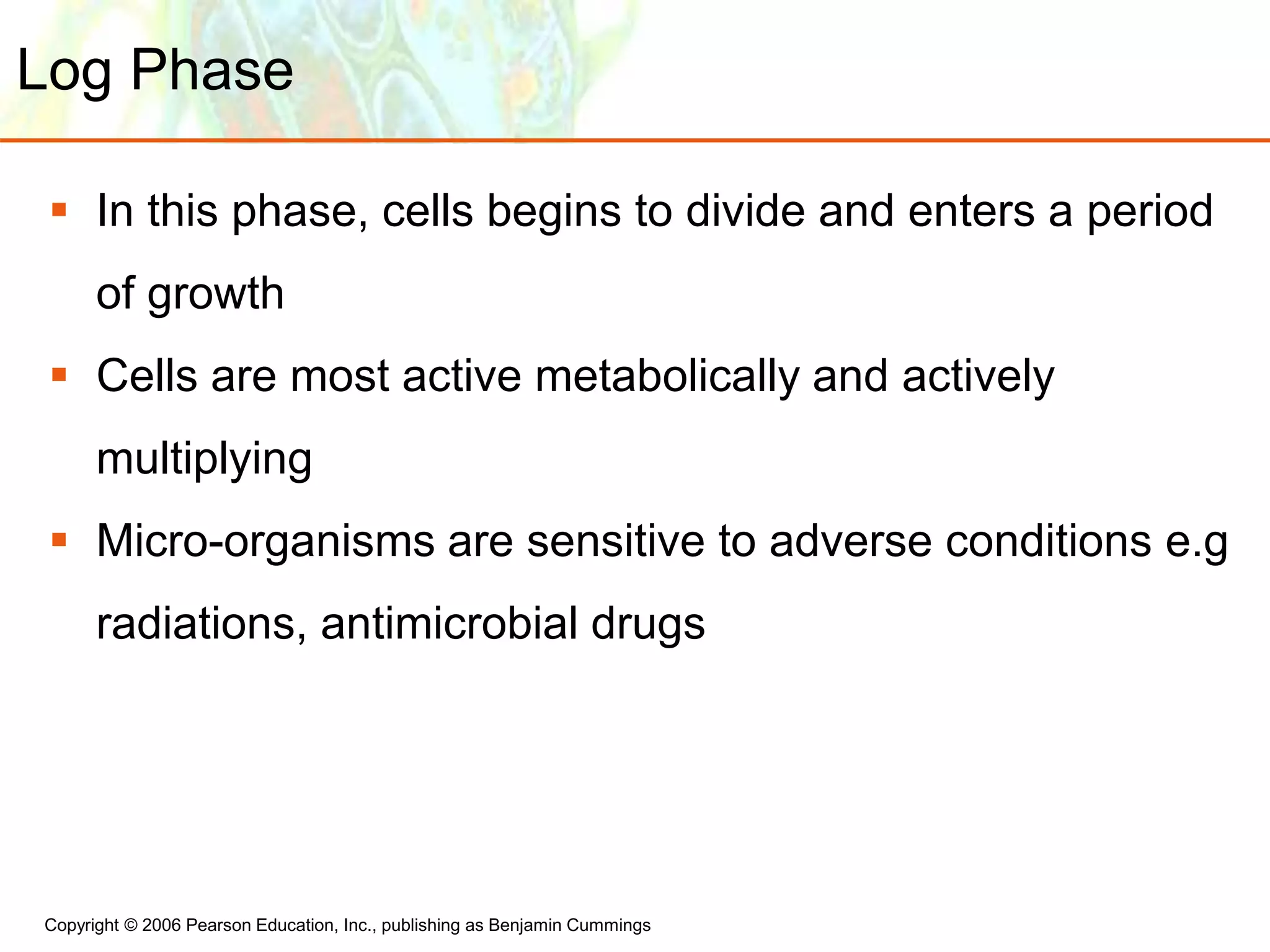
Log Phase
 In this phase, cells begins to divide and enters a period
of growth
 Cells are most active metabolically and actively
multiplying
 Micro-organisms are sensitive to adverse conditions e.g
radiations, antimicrobial drugs
Copyright © 2006 Pearson Education, Inc., publishing as Benjamin Cummings
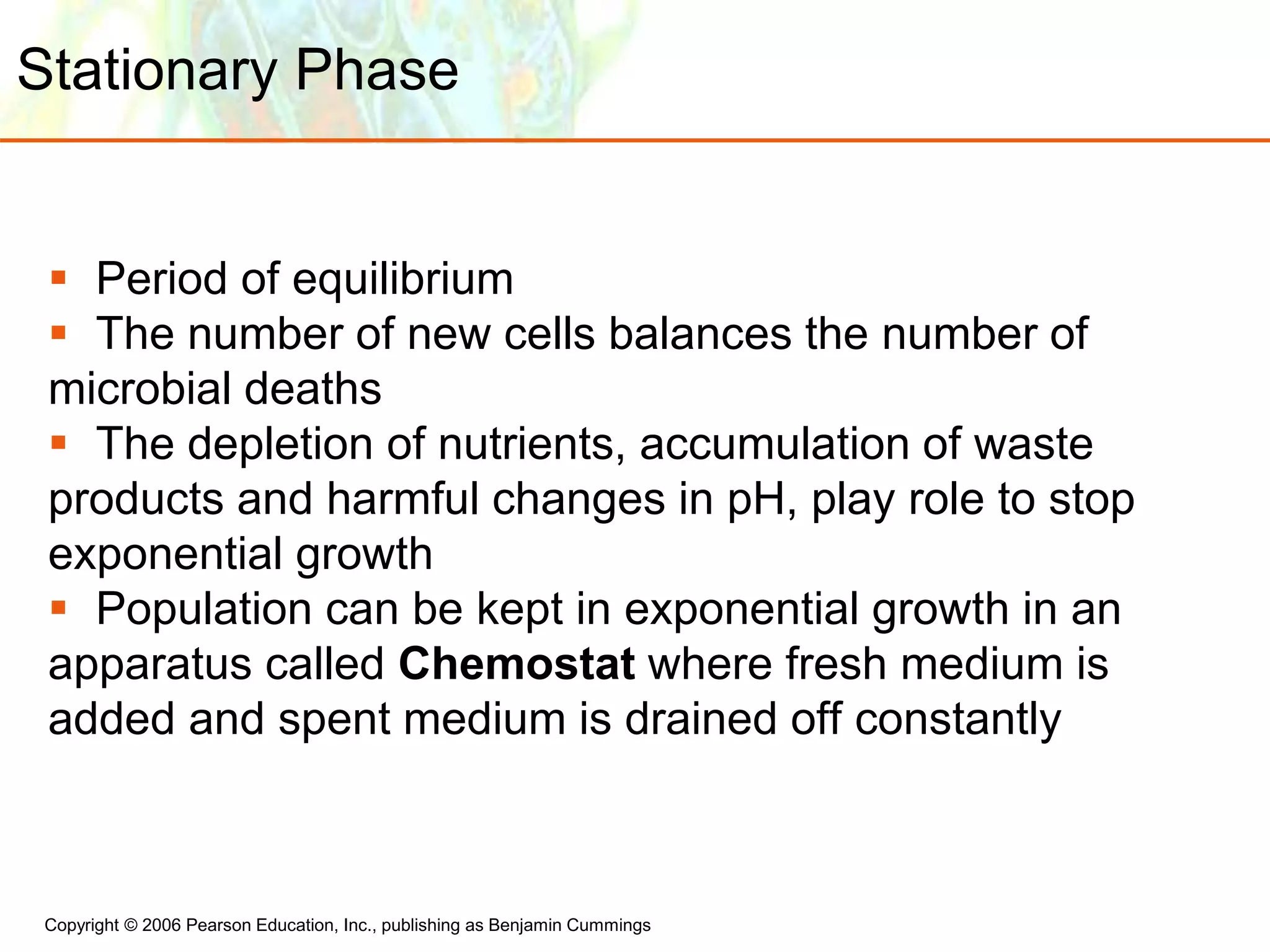
Stationary Phase
 Period of equilibrium
 The number of new cells balances the number of
microbial deaths
 The depletion of nutrients, accumulation of waste
products and harmful changes in pH, play role to stop
exponential growth
 Population can be kept in exponential growth in an
apparatus called Chemostat where fresh medium is
added and spent medium is drained off constantly
Copyright © 2006 Pearson Education, Inc., publishing as Benjamin Cummings
The Death Phase
 Population enters the death phase or logarithmic
decline phase
 Number of death exceed the number of new cells
formed
 This phase continues until population is diminished to
tiny fraction or dies out entirely
Copyright © 2006 Pearson Education, Inc., publishing as Benjamin Cummings
Control of Microbial Growth
 Sterilization: Removal of all microbial life including
spores
 For food: Commercial sterilization to kill C. botulinum
endospores
 Sanitization: reduces microbial numbers to safe
levels (e.g.: eating utensils)
 Bacteriostatic: Inhibits bacterial
reproduction
 Bactericidal: Kills bacteria
Copyright © 2006 Pearson Education, Inc., publishing as Benjamin Cummings
Effectiveness of Antimicrobial Treatment
Depends on
 Time it takes to kill a microbial population is
proportional to number of microbes.
 Microbial species and life cycle phases (e.g.:
endospores) have different susceptibilities to
physical and chemical controls.
 Organic matter may interfere with heat treatments
and chemical control agents.
 Exposure time: Longer exposure to lower heat
produces same effect as shorter time at higher heat.
Copyright © 2006 Pearson Education, Inc., publishing as Benjamin Cummings
Actions of Microbial Control Agents
 Alternation of membrane permeability
 Damage to proteins
 Damage to nucleic acids
Copyright © 2006 Pearson Education, Inc., publishing as Benjamin Cummings
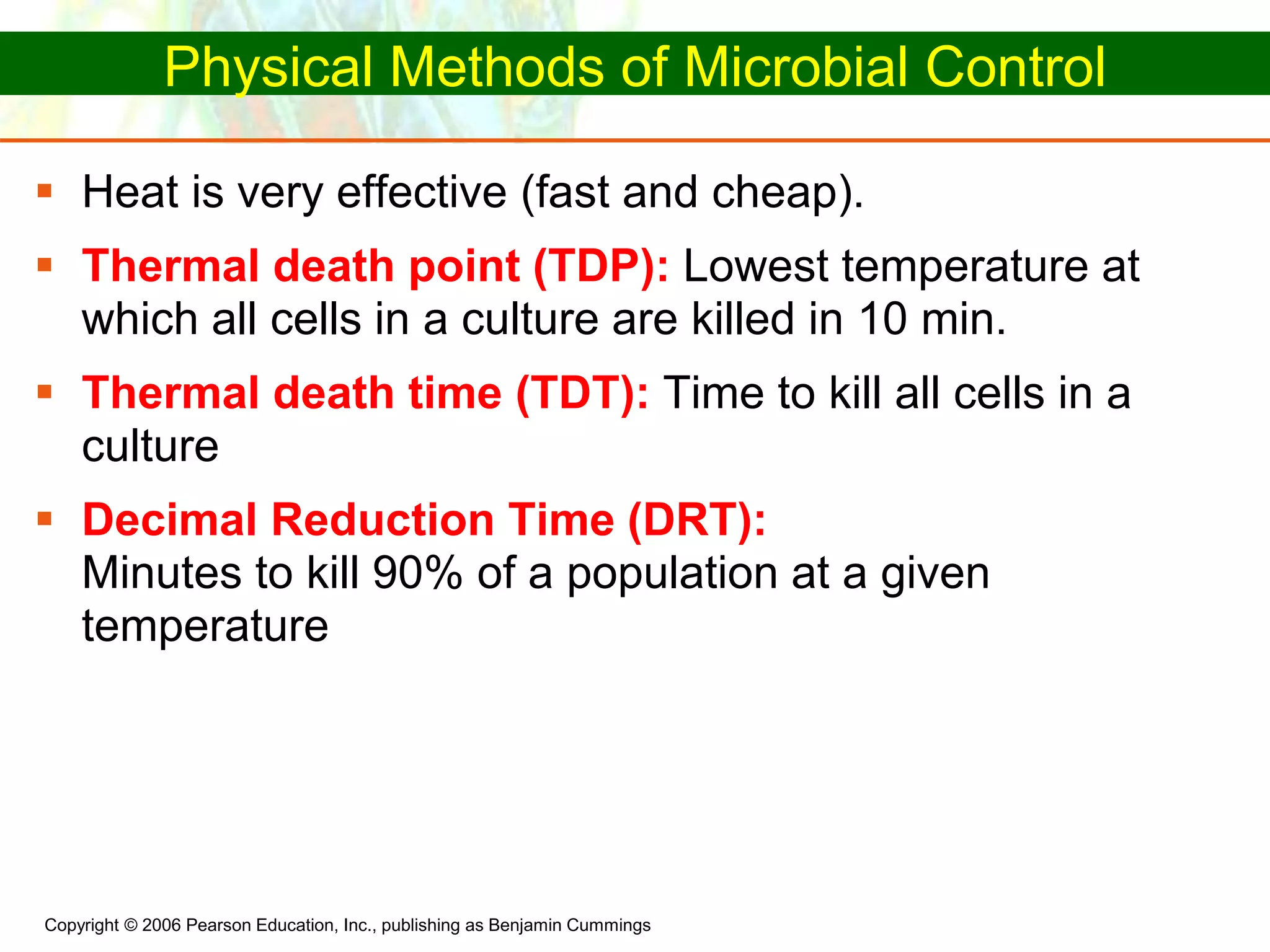
Physical Methods of Microbial Control
 Heat is very effective (fast and cheap).
 Thermal death point (TDP): Lowest temperature at
which all cells in a culture are killed in 10 min.
 Thermal death time (TDT): Time to kill all cells in a
culture
 Decimal Reduction Time (DRT):
Minutes to kill 90% of a population at a given
temperature
Copyright © 2006 Pearson Education, Inc., publishing as Benjamin Cummings
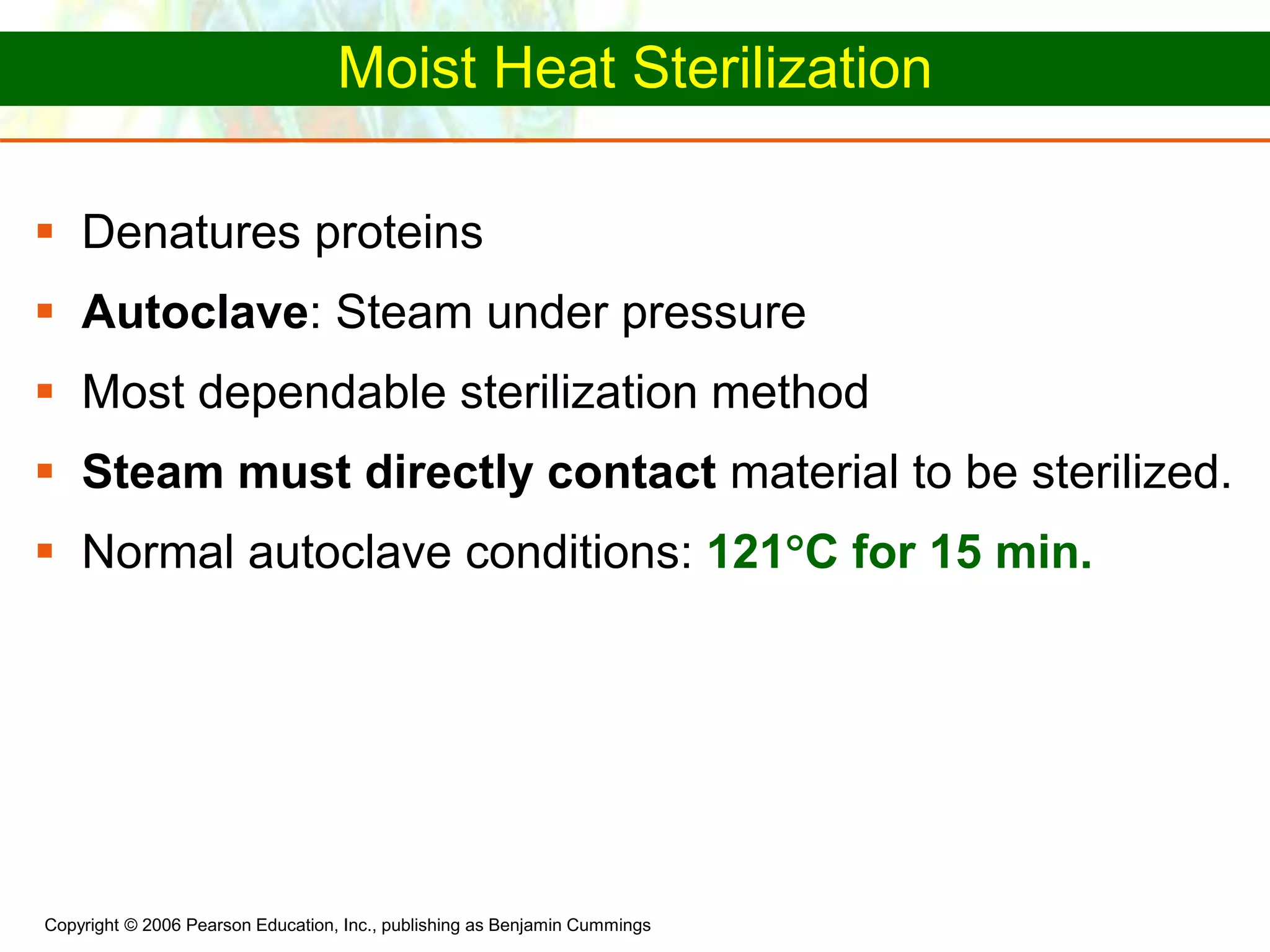
Moist Heat Sterilization
 Denatures proteins
 Autoclave: Steam under pressure
 Most dependable sterilization method
 Steam must directly contact material to be sterilized.
 Normal autoclave conditions: 121C for 15 min.
Copyright © 2006 Pearson Education, Inc., publishing as Benjamin Cummings
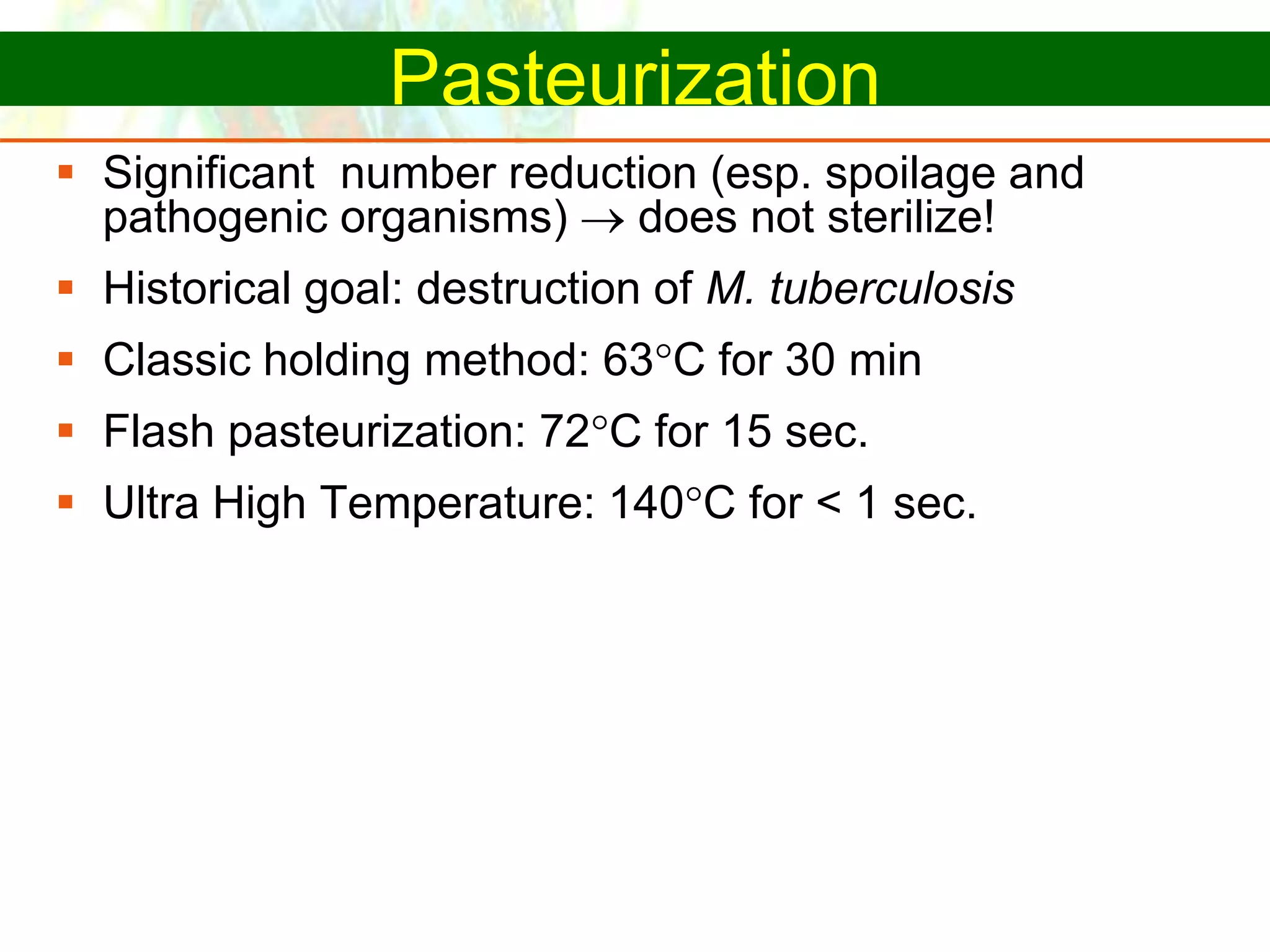
Pasteurization
 Significant number reduction (esp. spoilage and
pathogenic organisms)  does not sterilize!
 Historical goal: destruction of M. tuberculosis
 Classic holding method: 63C for 30 min
 Flash pasteurization: 72C for 15 sec.
 Ultra High Temperature: 140C for < 1 sec.
Copyright © 2006 Pearson Education, Inc., publishing as Benjamin Cummings
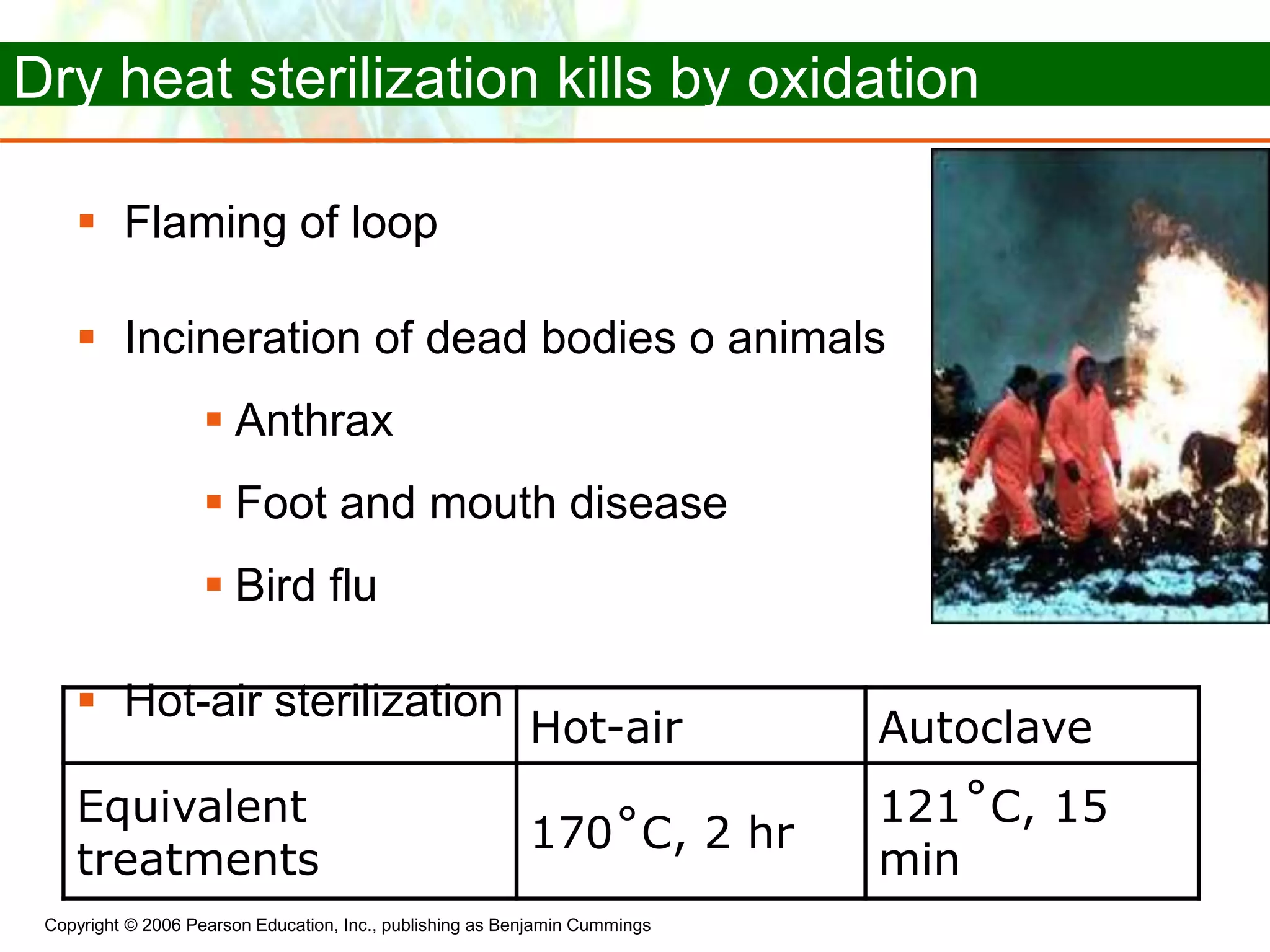
Hot-air Autoclave
Equivalent
treatments
170˚C, 2 hr
121˚C, 15
min
Dry heat sterilization kills by oxidation
 Flaming of loop
 Incineration of dead bodies o animals
 Anthrax
 Foot and mouth disease
 Bird flu
 Hot-air sterilization
Copyright © 2006 Pearson Education, Inc., publishing as Benjamin Cummings
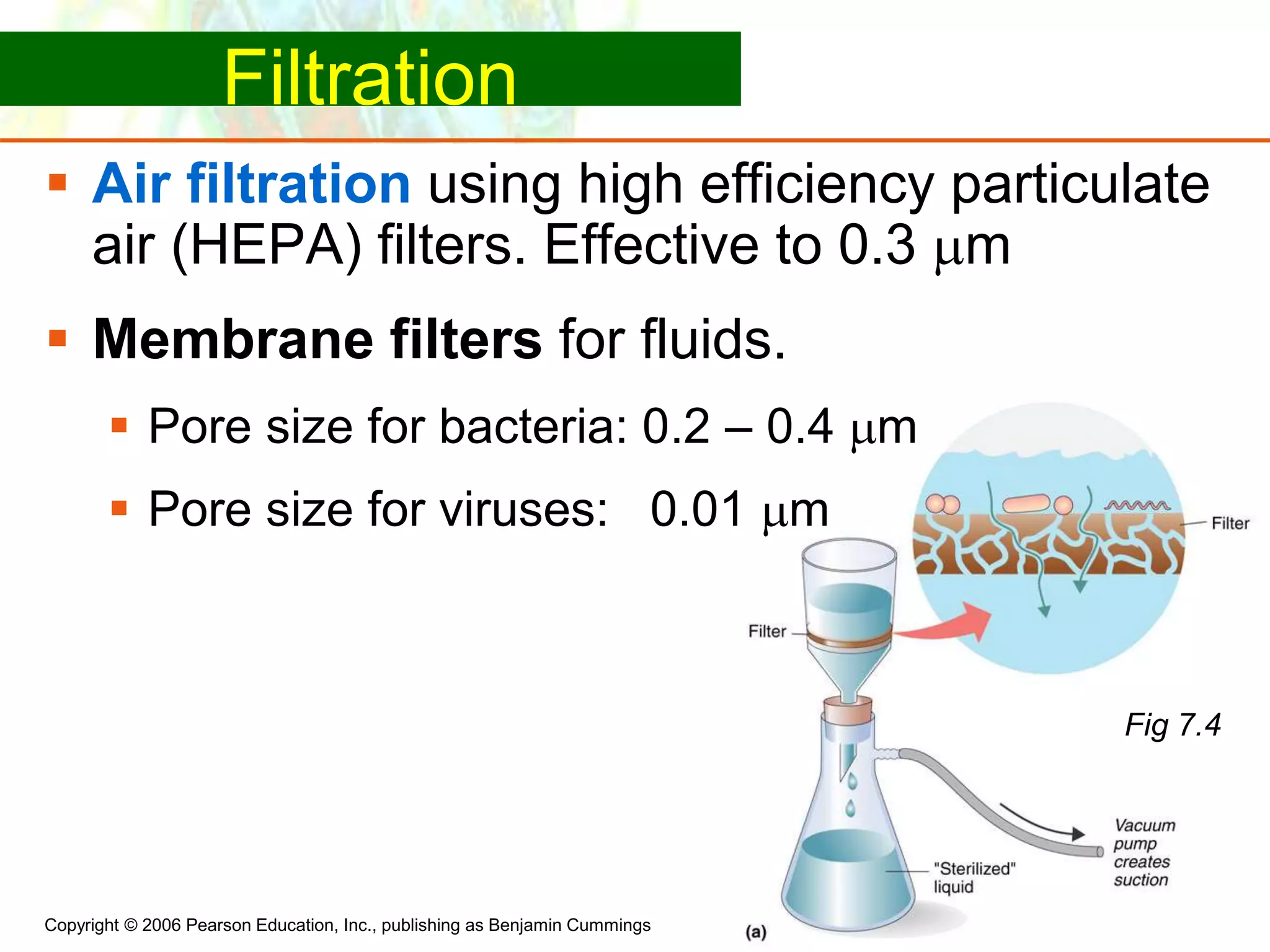
Filtration
 Air filtration using high efficiency particulate
air (HEPA) filters. Effective to 0.3 m
 Membrane filters for fluids.
 Pore size for bacteria: 0.2 – 0.4 m
 Pore size for viruses: 0.01 m
Fig 7.4
Copyright © 2006 Pearson Education, Inc., publishing as Benjamin Cummings
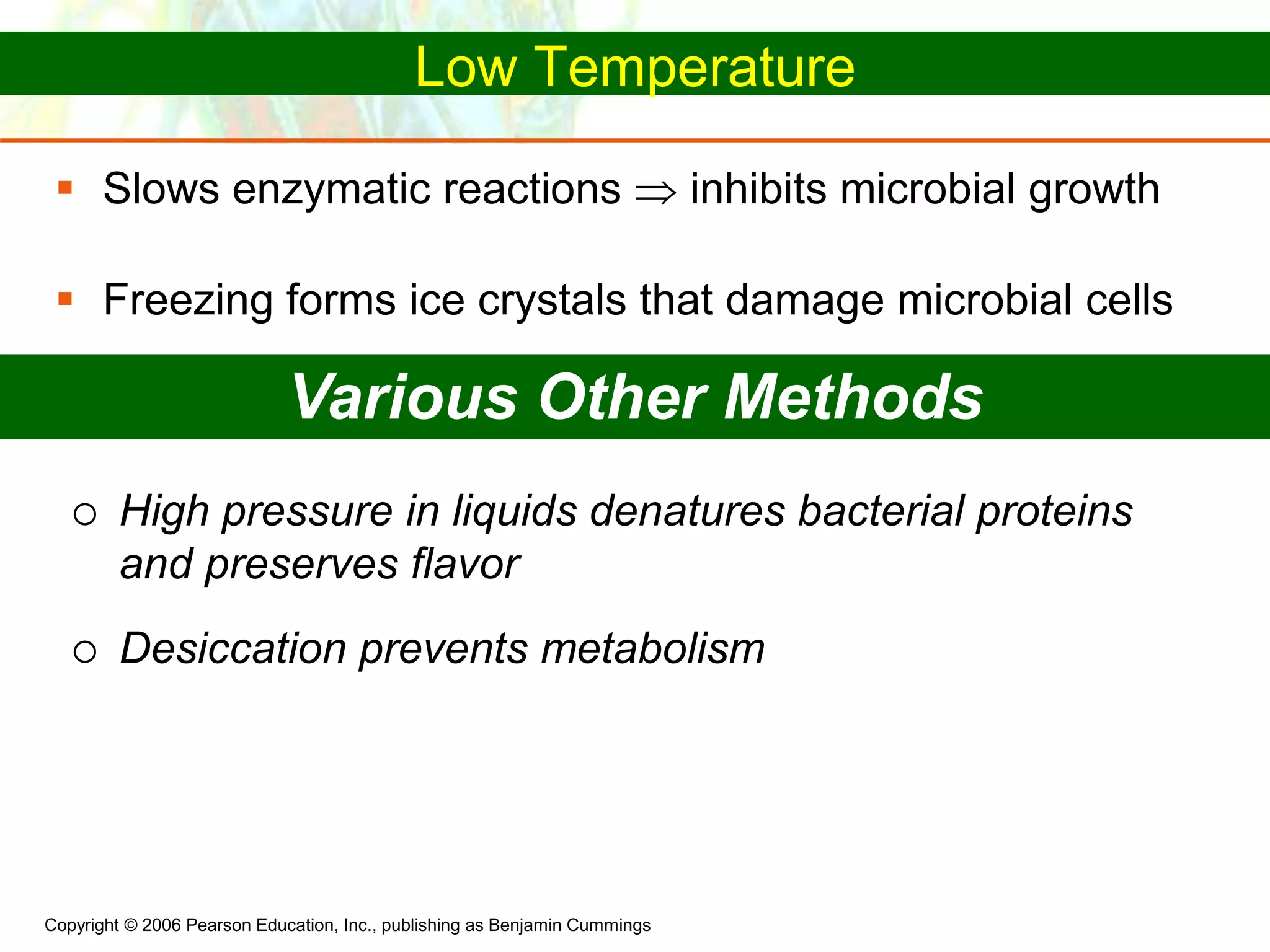
Low Temperature
 Slows enzymatic reactions  inhibits microbial growth
 Freezing forms ice crystals that damage microbial cells
Various Other Methods
 High pressure in liquids denatures bacterial proteins
and preserves flavor
 Desiccation prevents metabolism
Copyright © 2006 Pearson Education, Inc., publishing as Benjamin Cummings
Ionizing Radiation
 X-rays, -rays, electron beams 
dislodge e- from atoms  production
of free radicals and other highly reactive
molecules
 Sterilization of heat sensitive materials: drugs,
vitamins, herbs,
 Also used as “cold pasteurization” of food
Copyright © 2006 Pearson Education, Inc., publishing as Benjamin Cummings
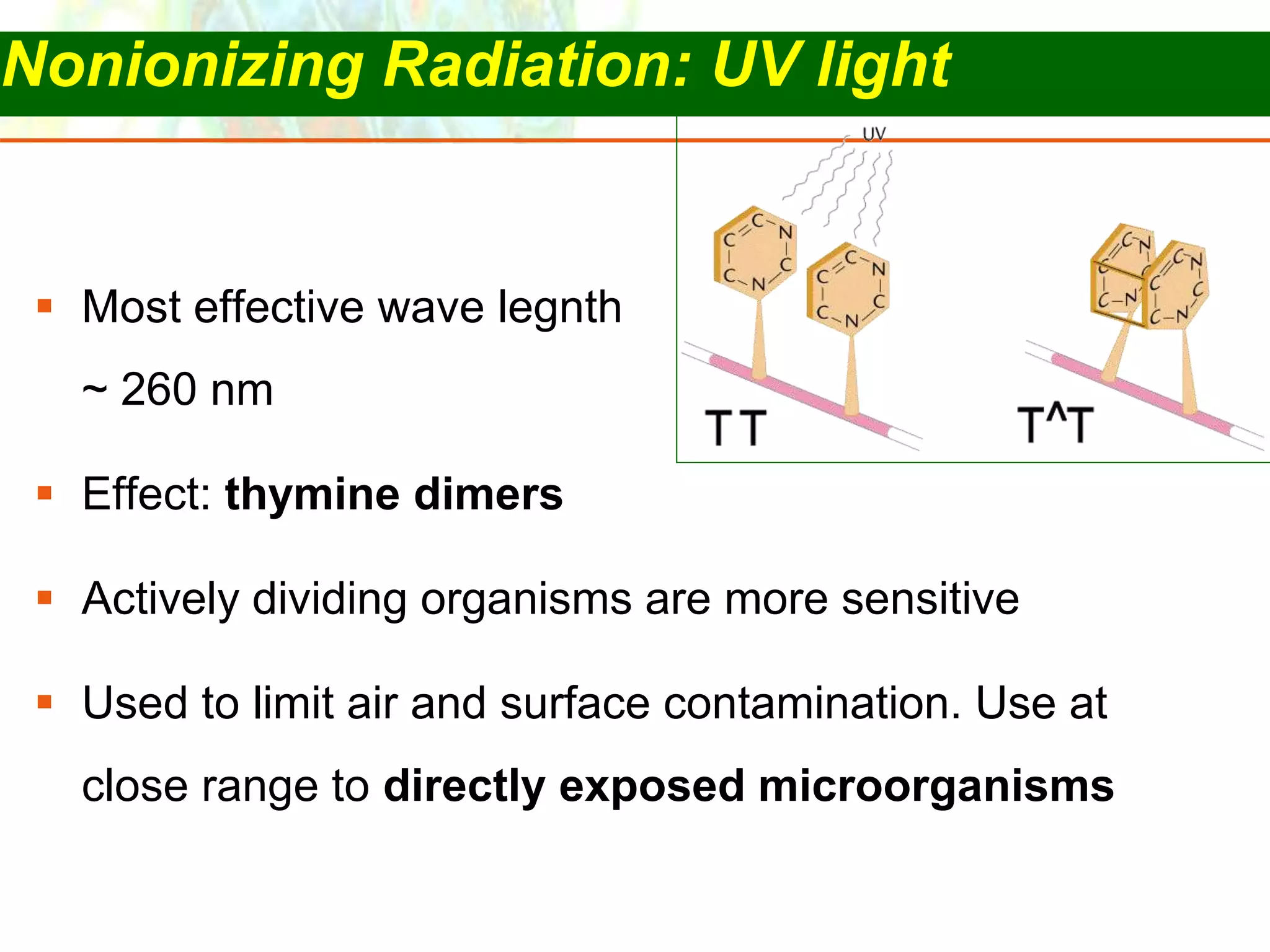
 Most effective wave legnth
~ 260 nm
 Effect: thymine dimers
 Actively dividing organisms are more sensitive
 Used to limit air and surface contamination. Use at
close range to directly exposed microorganisms
Nonionizing Radiation: UV light
Copyright © 2006 Pearson Education, Inc., publishing as Benjamin Cummings
Chemical Methods of Microbial Control
 Few chemical agents achieve sterility
 Consider presence of organic matter, degree of contact
with microorganisms, and temperature
Copyright © 2006 Pearson Education, Inc., publishing as Benjamin Cummings
Types of Disinfectants
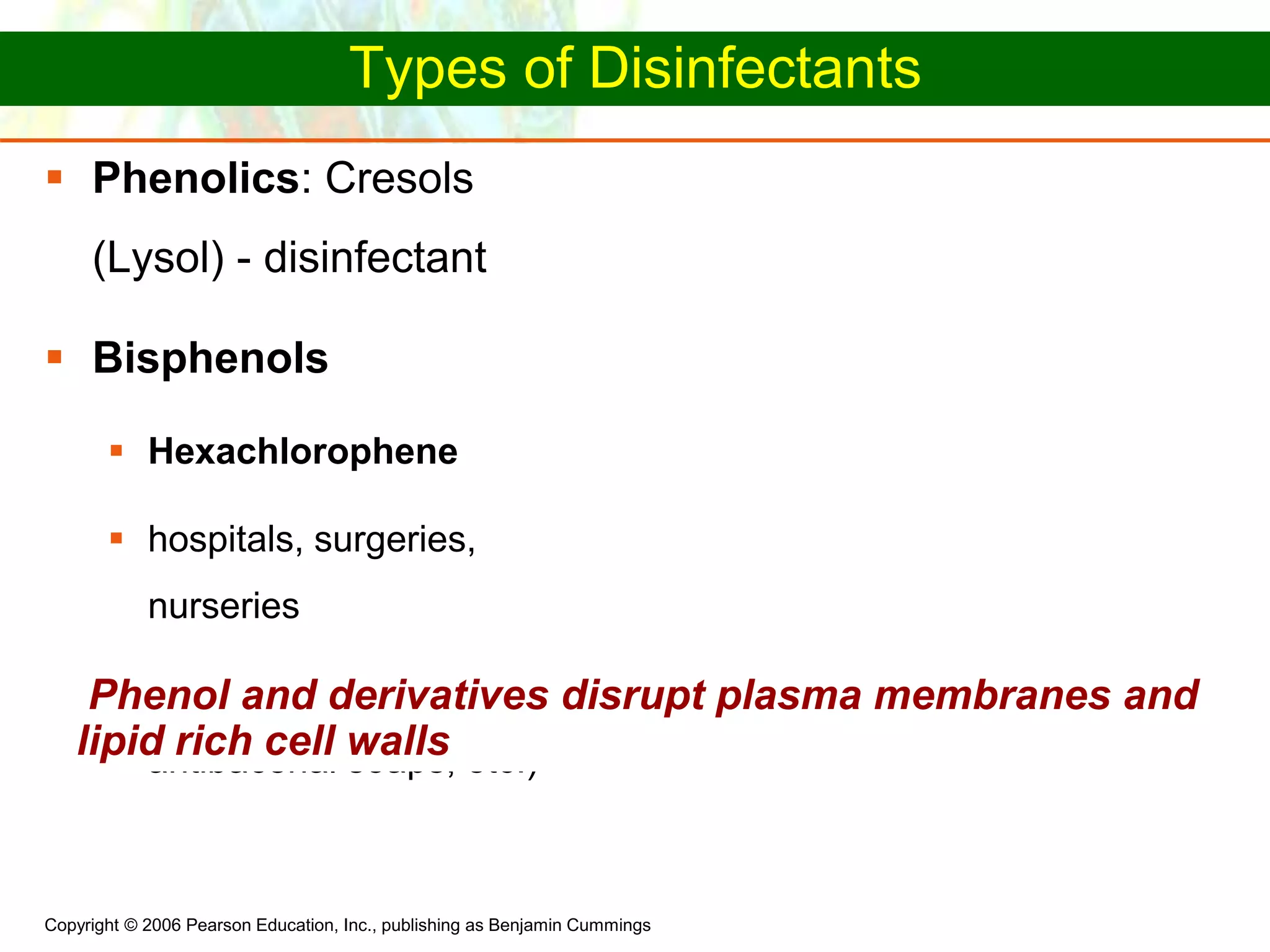
 Phenolics: Cresols
(Lysol) - disinfectant
 Bisphenols
 Hexachlorophene
 hospitals, surgeries,
nurseries
 Triclosan (toothpaste,
antibacerial soaps, etc.)
Phenol and derivatives disrupt plasma membranes and
lipid rich cell walls
Copyright © 2006 Pearson Education, Inc., publishing as Benjamin Cummings
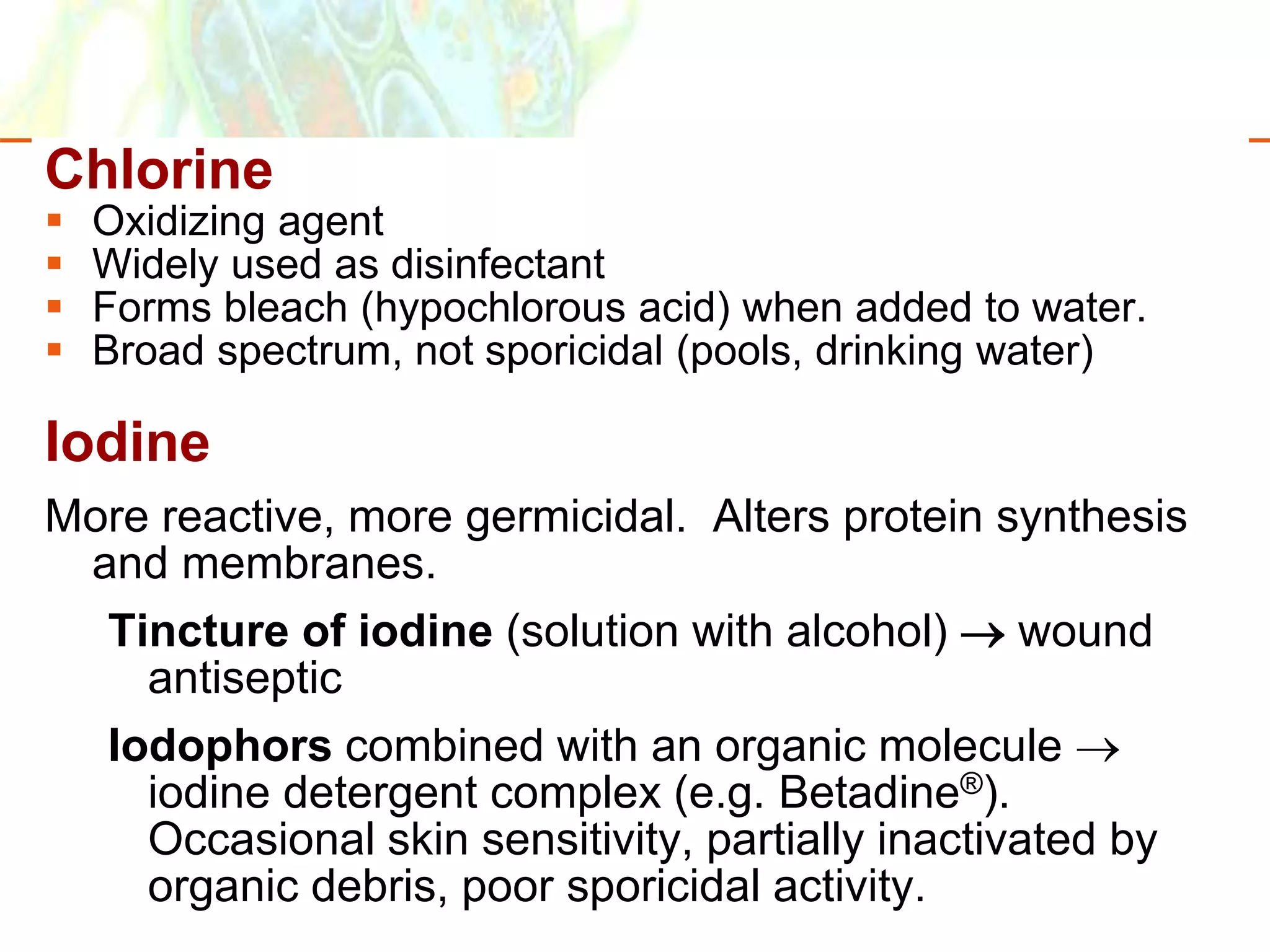
Chlorine
 Oxidizing agent
 Widely used as disinfectant
 Forms bleach (hypochlorous acid) when added to water.
 Broad spectrum, not sporicidal (pools, drinking water)
Iodine
More reactive, more germicidal. Alters protein synthesis
and membranes.
Tincture of iodine (solution with alcohol)  wound
antiseptic
Iodophors combined with an organic molecule 
iodine detergent complex (e.g. Betadine®).
Occasional skin sensitivity, partially inactivated by
organic debris, poor sporicidal activity.
Copyright © 2006 Pearson Education, Inc., publishing as Benjamin Cummings
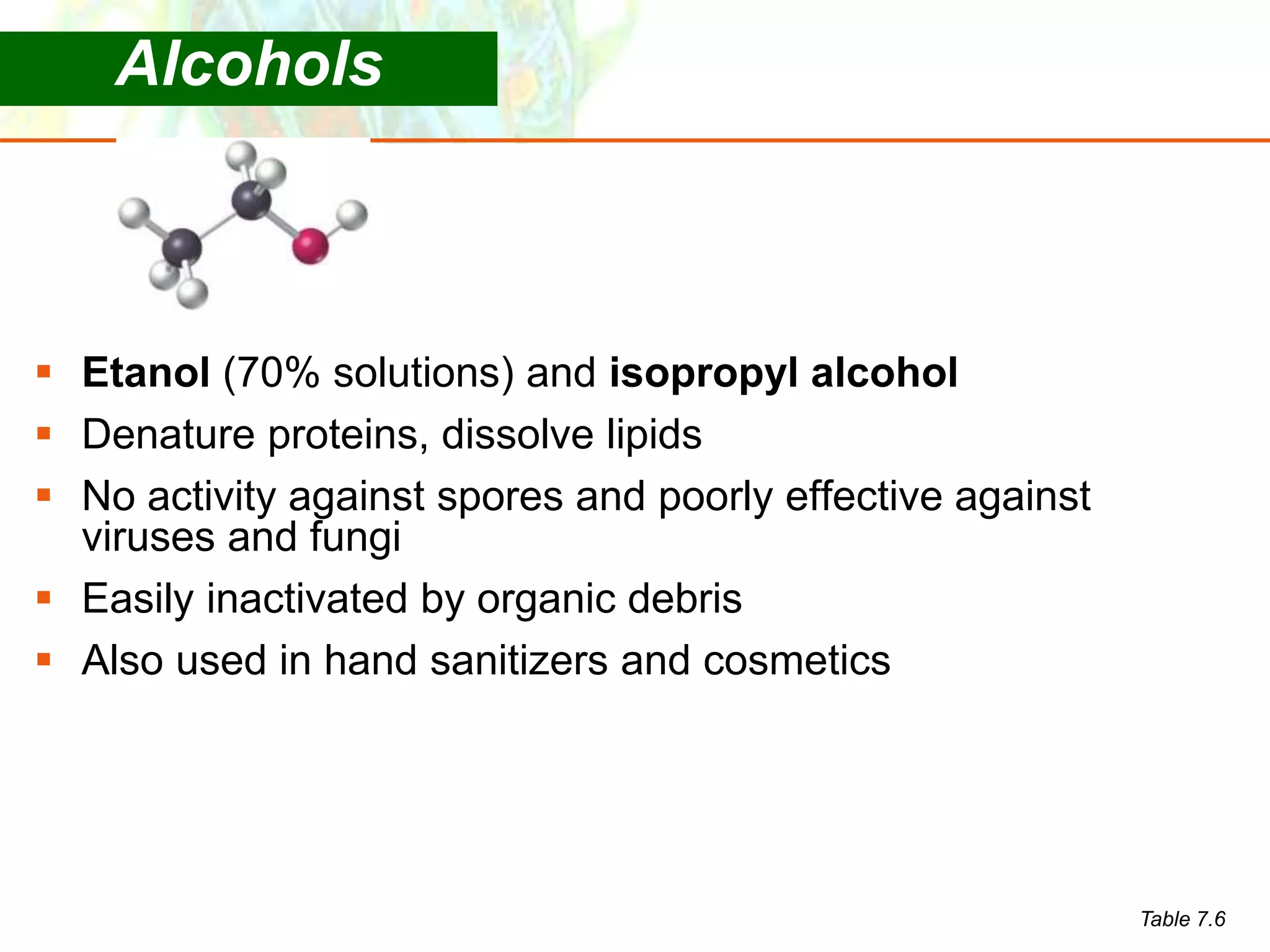
 Etanol (70% solutions) and isopropyl alcohol
 Denature proteins, dissolve lipids
 No activity against spores and poorly effective against
viruses and fungi
 Easily inactivated by organic debris
 Also used in hand sanitizers and cosmetics
Table 7.6
Alcohols
Copyright © 2006 Pearson Education, Inc., publishing as Benjamin Cummings
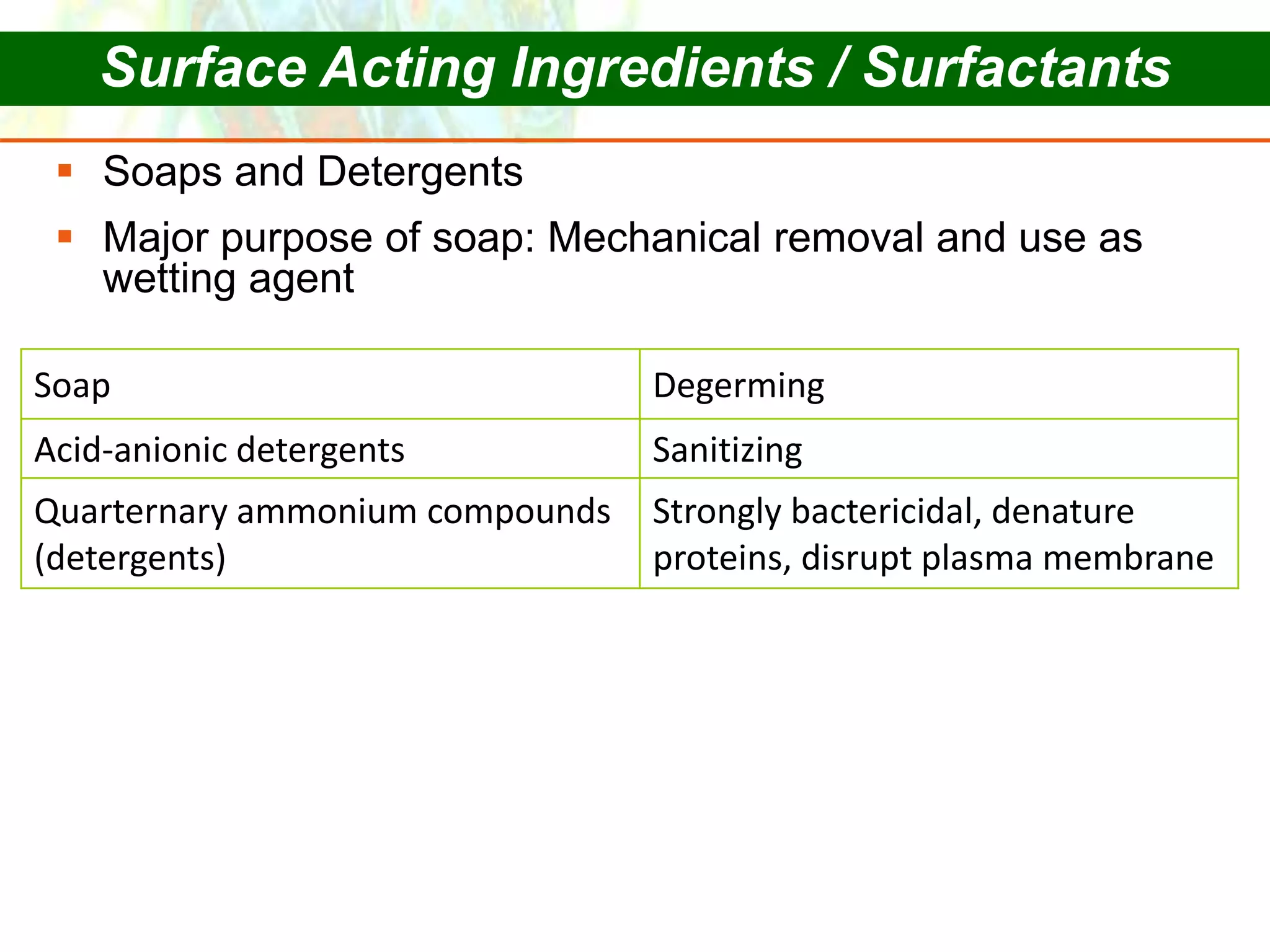
 Soaps and Detergents
 Major purpose of soap: Mechanical removal and use as
wetting agent
Surface Acting Ingredients / Surfactants
Soap Degerming
Acid-anionic detergents Sanitizing
Quarternary ammonium compounds
(detergents)
Strongly bactericidal, denature
proteins, disrupt plasma membrane
Copyright © 2006 Pearson Education, Inc., publishing as Benjamin Cummings
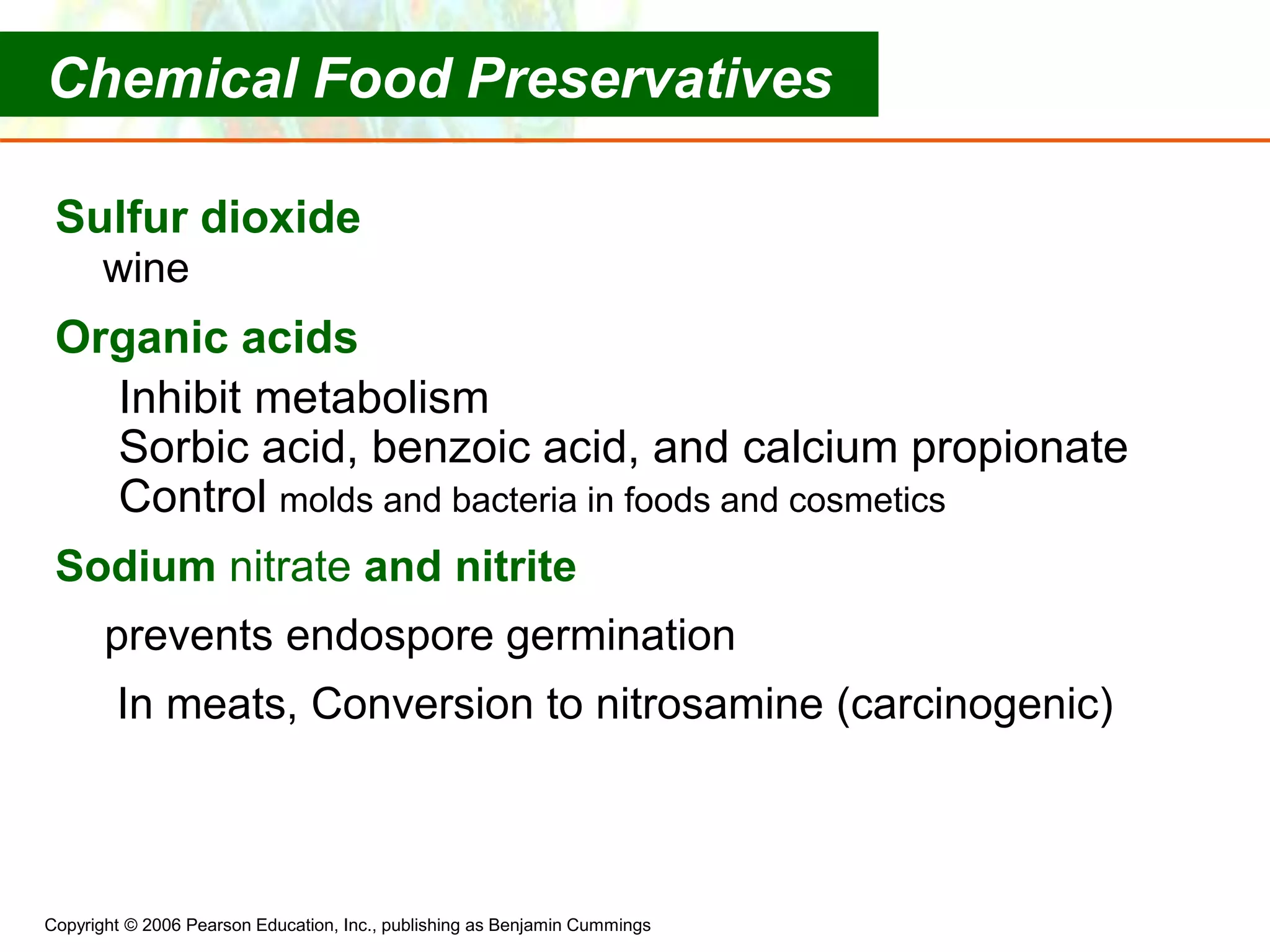
Sulfur dioxide
wine
Organic acids
Inhibit metabolism
Sorbic acid, benzoic acid, and calcium propionate
Control molds and bacteria in foods and cosmetics
Sodium nitrate and nitrite
prevents endospore germination
In meats, Conversion to nitrosamine (carcinogenic)
Chemical Food Preservatives
Copyright © 2006 Pearson Education, Inc., publishing as Benjamin Cummings
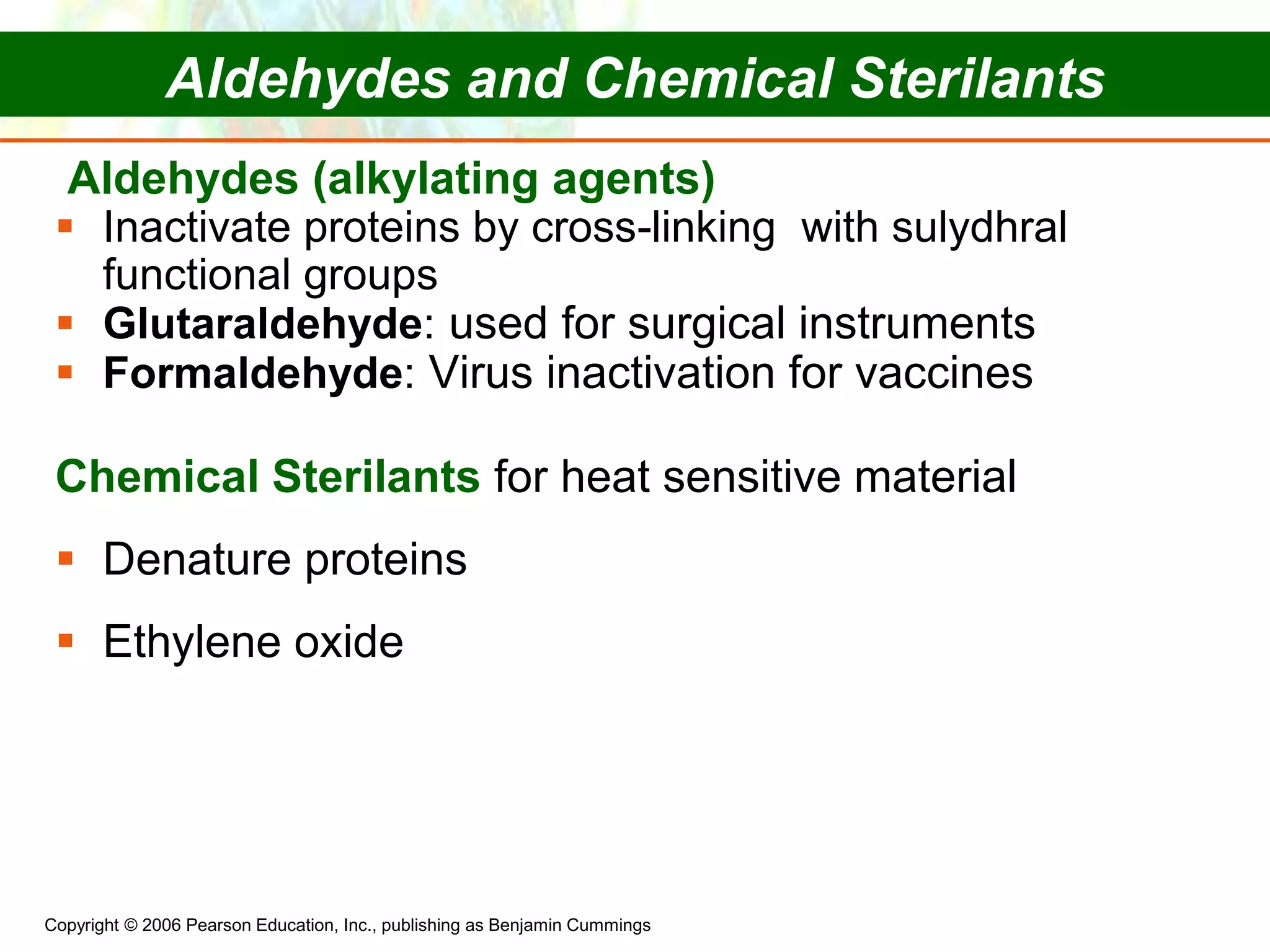
Aldehydes (alkylating agents)
 Inactivate proteins by cross-linking with sulydhral
functional groups
 Glutaraldehyde: used for surgical instruments
 Formaldehyde: Virus inactivation for vaccines
Chemical Sterilants for heat sensitive material
 Denature proteins
 Ethylene oxide
Aldehydes and Chemical Sterilants

Lect 2 Microbial Growth.ppt

  • 1.
  • 2.
    Microbial growth: Increasein cell number, not cell size! Temperature  Minimum growth temperature  Optimum growth temperature  Maximum growth temperature Microbial Growth
  • 3.
    Copyright © 2006Pearson Education, Inc., publishing as Benjamin Cummings Groups based on optimum growth temperature 1. Psychrophiles: capable of growth in low temperatures 2. Psychrotrophs: cold-tolerant bacteria 3. Mesophiles: grows best in moderate temperature 4. Thermophiles: thrives at relatively high temperatures 5. Hyperthermophiles: lives in extremely hot environments
  • 4.
    Copyright © 2006Pearson Education, Inc., publishing as Benjamin Cummings
  • 5.
    Copyright © 2006Pearson Education, Inc., publishing as Benjamin Cummings The Growth of Bacterial Cultures  Bacteria reproduce by binary fission  exponential growth  Few bacterial species reproduce by Budding  Form a small initial outgrowth (a bud) that enlarges until its size approaches that of parent cell  Then bud separates
  • 6.
    Copyright © 2006Pearson Education, Inc., publishing as Benjamin Cummings Binary Fission in bacateria
  • 7.
    Copyright © 2006Pearson Education, Inc., publishing as Benjamin Cummings Generation time  also known as doubling time  Time required for cell to divide (and its population to double)  One cell’s division produce two cells, two cell’s division produce four cells and so on  Number of cells in each generation is expressed as a power of 2  Varies considerably among organisms and with environmental conditions  Ranges from 20 min (E. coli) to > 24h (M. tuberculosis)
  • 8.
    Copyright © 2006Pearson Education, Inc., publishing as Benjamin Cummings Bacterial Growth Curve Phases of growth  Lag phase  Exponential or logarithmic (log) phase  Stationary phase  Death phase (decline phase)
  • 9.
    Copyright © 2006Pearson Education, Inc., publishing as Benjamin Cummings
  • 10.
    Copyright © 2006Pearson Education, Inc., publishing as Benjamin Cummings Lag Phase  The little or no cell division phase  The number of cells changes very little because cells do not immediately reproduce in a new medium  But, the cells are not dormant  Period of intense metabolic activity  Synthesis of enzymes and various molecules take place in this phase
  • 11.
    Copyright © 2006Pearson Education, Inc., publishing as Benjamin Cummings Log Phase  In this phase, cells begins to divide and enters a period of growth  Cells are most active metabolically and actively multiplying  Micro-organisms are sensitive to adverse conditions e.g radiations, antimicrobial drugs
  • 12.
    Copyright © 2006Pearson Education, Inc., publishing as Benjamin Cummings Stationary Phase  Period of equilibrium  The number of new cells balances the number of microbial deaths  The depletion of nutrients, accumulation of waste products and harmful changes in pH, play role to stop exponential growth  Population can be kept in exponential growth in an apparatus called Chemostat where fresh medium is added and spent medium is drained off constantly
  • 13.
    Copyright © 2006Pearson Education, Inc., publishing as Benjamin Cummings The Death Phase  Population enters the death phase or logarithmic decline phase  Number of death exceed the number of new cells formed  This phase continues until population is diminished to tiny fraction or dies out entirely
  • 14.
    Copyright © 2006Pearson Education, Inc., publishing as Benjamin Cummings Control of Microbial Growth  Sterilization: Removal of all microbial life including spores  For food: Commercial sterilization to kill C. botulinum endospores  Sanitization: reduces microbial numbers to safe levels (e.g.: eating utensils)  Bacteriostatic: Inhibits bacterial reproduction  Bactericidal: Kills bacteria
  • 15.
    Copyright © 2006Pearson Education, Inc., publishing as Benjamin Cummings Effectiveness of Antimicrobial Treatment Depends on  Time it takes to kill a microbial population is proportional to number of microbes.  Microbial species and life cycle phases (e.g.: endospores) have different susceptibilities to physical and chemical controls.  Organic matter may interfere with heat treatments and chemical control agents.  Exposure time: Longer exposure to lower heat produces same effect as shorter time at higher heat.
  • 16.
    Copyright © 2006Pearson Education, Inc., publishing as Benjamin Cummings Actions of Microbial Control Agents  Alternation of membrane permeability  Damage to proteins  Damage to nucleic acids
  • 17.
    Copyright © 2006Pearson Education, Inc., publishing as Benjamin Cummings Physical Methods of Microbial Control  Heat is very effective (fast and cheap).  Thermal death point (TDP): Lowest temperature at which all cells in a culture are killed in 10 min.  Thermal death time (TDT): Time to kill all cells in a culture  Decimal Reduction Time (DRT): Minutes to kill 90% of a population at a given temperature
  • 18.
    Copyright © 2006Pearson Education, Inc., publishing as Benjamin Cummings Moist Heat Sterilization  Denatures proteins  Autoclave: Steam under pressure  Most dependable sterilization method  Steam must directly contact material to be sterilized.  Normal autoclave conditions: 121C for 15 min.
  • 19.
    Copyright © 2006Pearson Education, Inc., publishing as Benjamin Cummings Pasteurization  Significant number reduction (esp. spoilage and pathogenic organisms)  does not sterilize!  Historical goal: destruction of M. tuberculosis  Classic holding method: 63C for 30 min  Flash pasteurization: 72C for 15 sec.  Ultra High Temperature: 140C for < 1 sec.
  • 20.
    Copyright © 2006Pearson Education, Inc., publishing as Benjamin Cummings Hot-air Autoclave Equivalent treatments 170˚C, 2 hr 121˚C, 15 min Dry heat sterilization kills by oxidation  Flaming of loop  Incineration of dead bodies o animals  Anthrax  Foot and mouth disease  Bird flu  Hot-air sterilization
  • 21.
    Copyright © 2006Pearson Education, Inc., publishing as Benjamin Cummings Filtration  Air filtration using high efficiency particulate air (HEPA) filters. Effective to 0.3 m  Membrane filters for fluids.  Pore size for bacteria: 0.2 – 0.4 m  Pore size for viruses: 0.01 m Fig 7.4
  • 22.
    Copyright © 2006Pearson Education, Inc., publishing as Benjamin Cummings Low Temperature  Slows enzymatic reactions  inhibits microbial growth  Freezing forms ice crystals that damage microbial cells Various Other Methods  High pressure in liquids denatures bacterial proteins and preserves flavor  Desiccation prevents metabolism
  • 23.
    Copyright © 2006Pearson Education, Inc., publishing as Benjamin Cummings Ionizing Radiation  X-rays, -rays, electron beams  dislodge e- from atoms  production of free radicals and other highly reactive molecules  Sterilization of heat sensitive materials: drugs, vitamins, herbs,  Also used as “cold pasteurization” of food
  • 24.
    Copyright © 2006Pearson Education, Inc., publishing as Benjamin Cummings  Most effective wave legnth ~ 260 nm  Effect: thymine dimers  Actively dividing organisms are more sensitive  Used to limit air and surface contamination. Use at close range to directly exposed microorganisms Nonionizing Radiation: UV light
  • 25.
    Copyright © 2006Pearson Education, Inc., publishing as Benjamin Cummings Chemical Methods of Microbial Control  Few chemical agents achieve sterility  Consider presence of organic matter, degree of contact with microorganisms, and temperature
  • 26.
    Copyright © 2006Pearson Education, Inc., publishing as Benjamin Cummings Types of Disinfectants  Phenolics: Cresols (Lysol) - disinfectant  Bisphenols  Hexachlorophene  hospitals, surgeries, nurseries  Triclosan (toothpaste, antibacerial soaps, etc.) Phenol and derivatives disrupt plasma membranes and lipid rich cell walls
  • 27.
    Copyright © 2006Pearson Education, Inc., publishing as Benjamin Cummings Chlorine  Oxidizing agent  Widely used as disinfectant  Forms bleach (hypochlorous acid) when added to water.  Broad spectrum, not sporicidal (pools, drinking water) Iodine More reactive, more germicidal. Alters protein synthesis and membranes. Tincture of iodine (solution with alcohol)  wound antiseptic Iodophors combined with an organic molecule  iodine detergent complex (e.g. Betadine®). Occasional skin sensitivity, partially inactivated by organic debris, poor sporicidal activity.
  • 28.
    Copyright © 2006Pearson Education, Inc., publishing as Benjamin Cummings  Etanol (70% solutions) and isopropyl alcohol  Denature proteins, dissolve lipids  No activity against spores and poorly effective against viruses and fungi  Easily inactivated by organic debris  Also used in hand sanitizers and cosmetics Table 7.6 Alcohols
  • 29.
    Copyright © 2006Pearson Education, Inc., publishing as Benjamin Cummings  Soaps and Detergents  Major purpose of soap: Mechanical removal and use as wetting agent Surface Acting Ingredients / Surfactants Soap Degerming Acid-anionic detergents Sanitizing Quarternary ammonium compounds (detergents) Strongly bactericidal, denature proteins, disrupt plasma membrane
  • 30.
    Copyright © 2006Pearson Education, Inc., publishing as Benjamin Cummings Sulfur dioxide wine Organic acids Inhibit metabolism Sorbic acid, benzoic acid, and calcium propionate Control molds and bacteria in foods and cosmetics Sodium nitrate and nitrite prevents endospore germination In meats, Conversion to nitrosamine (carcinogenic) Chemical Food Preservatives
  • 31.
    Copyright © 2006Pearson Education, Inc., publishing as Benjamin Cummings Aldehydes (alkylating agents)  Inactivate proteins by cross-linking with sulydhral functional groups  Glutaraldehyde: used for surgical instruments  Formaldehyde: Virus inactivation for vaccines Chemical Sterilants for heat sensitive material  Denature proteins  Ethylene oxide Aldehydes and Chemical Sterilants