Signals travel throughtransmission media, which are
not perfect. The imperfection causes signal impairment.
This means that the signal at the beginning of the
medium is not the same as the signal at the end of the
medium. What is sent is not what is received.
Three causes of impairment are attenuation, distortion,
and noise
Transmission impairment
3.
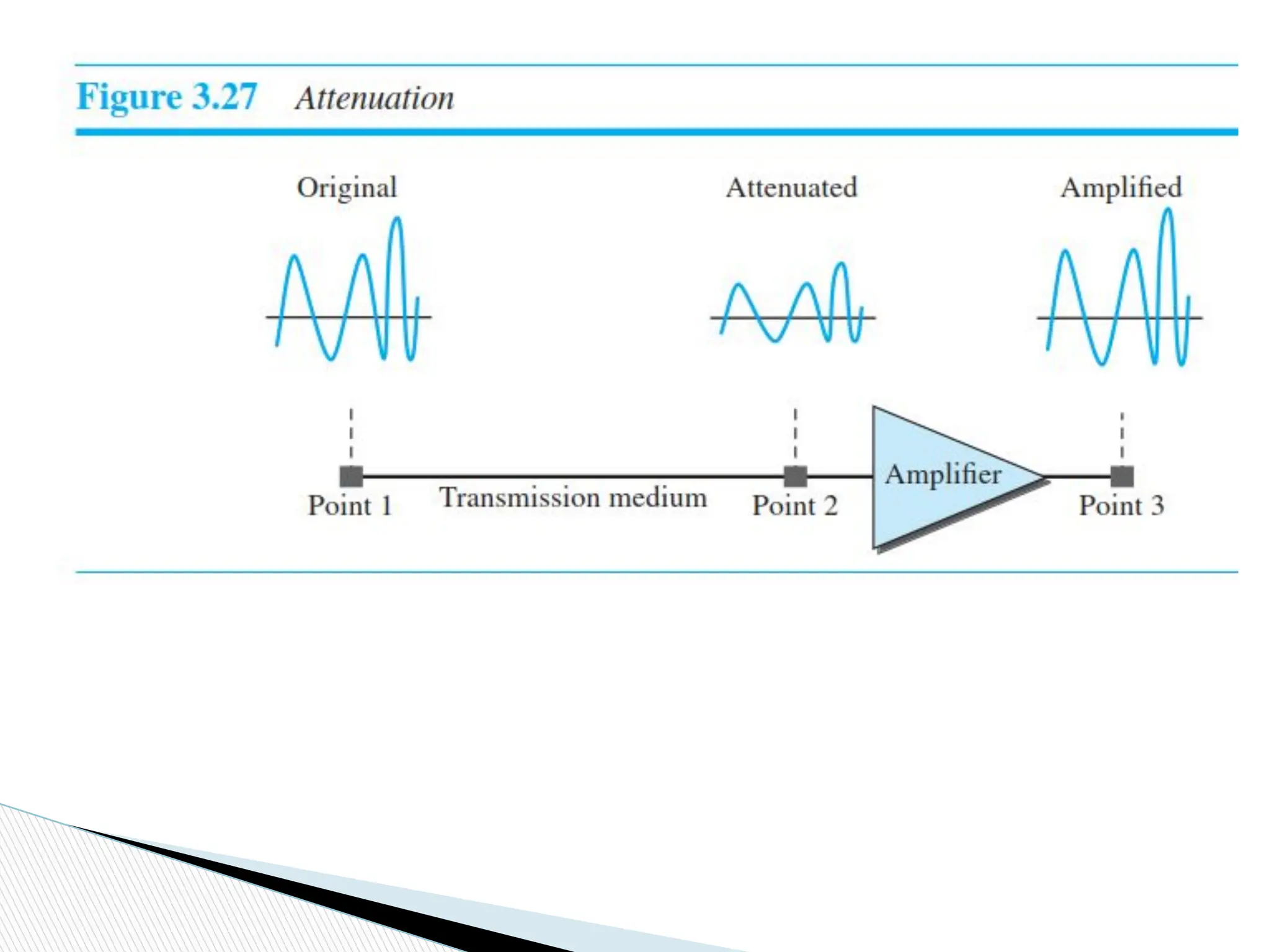
Attenuation means aloss of energy. When a signal,
simple or composite, travels through a medium, it loses
some of its energy in overcoming the resistance of the
medium. That is why a wire carrying electric signals
gets warm, if not hot, after a while.
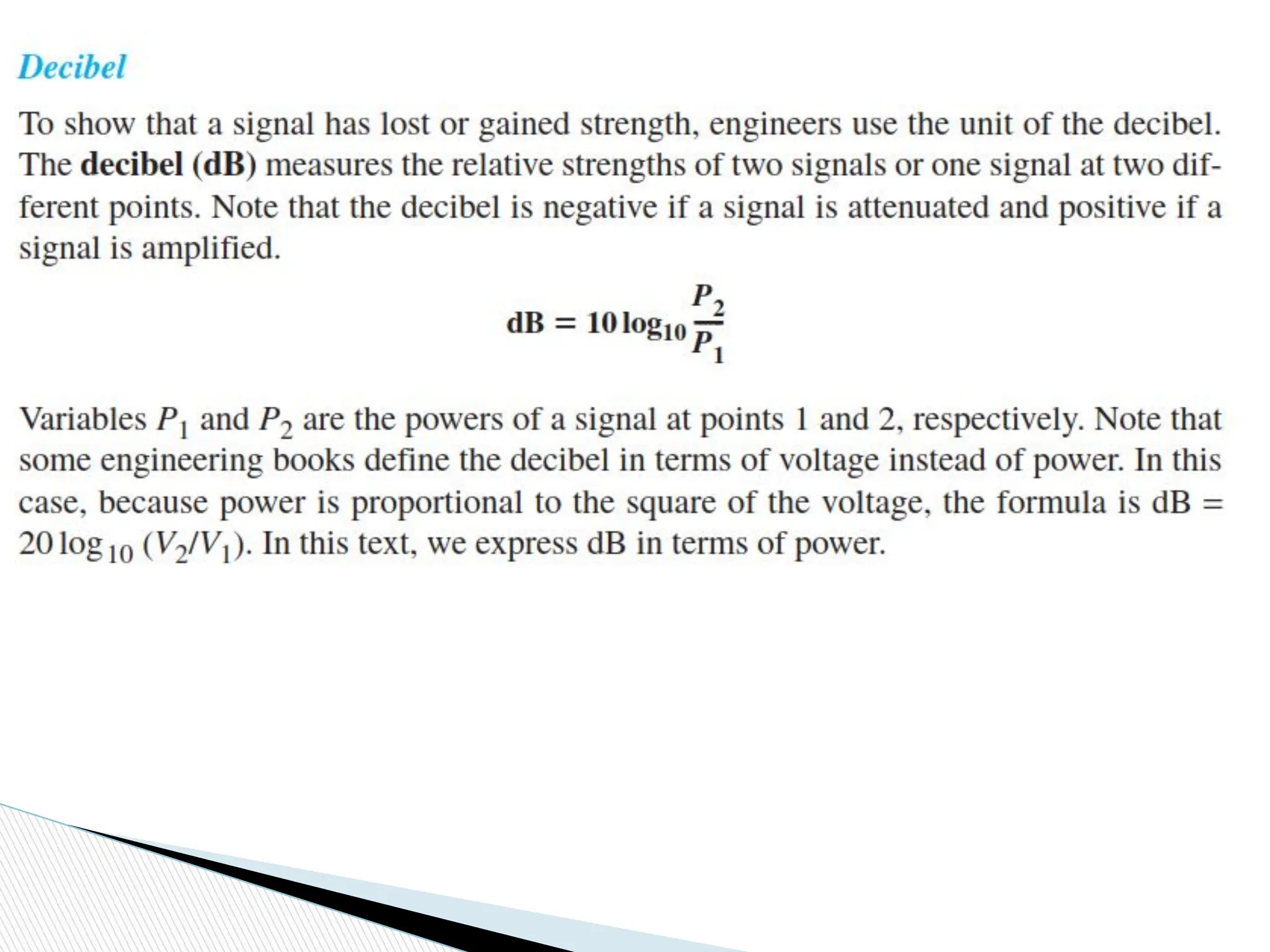
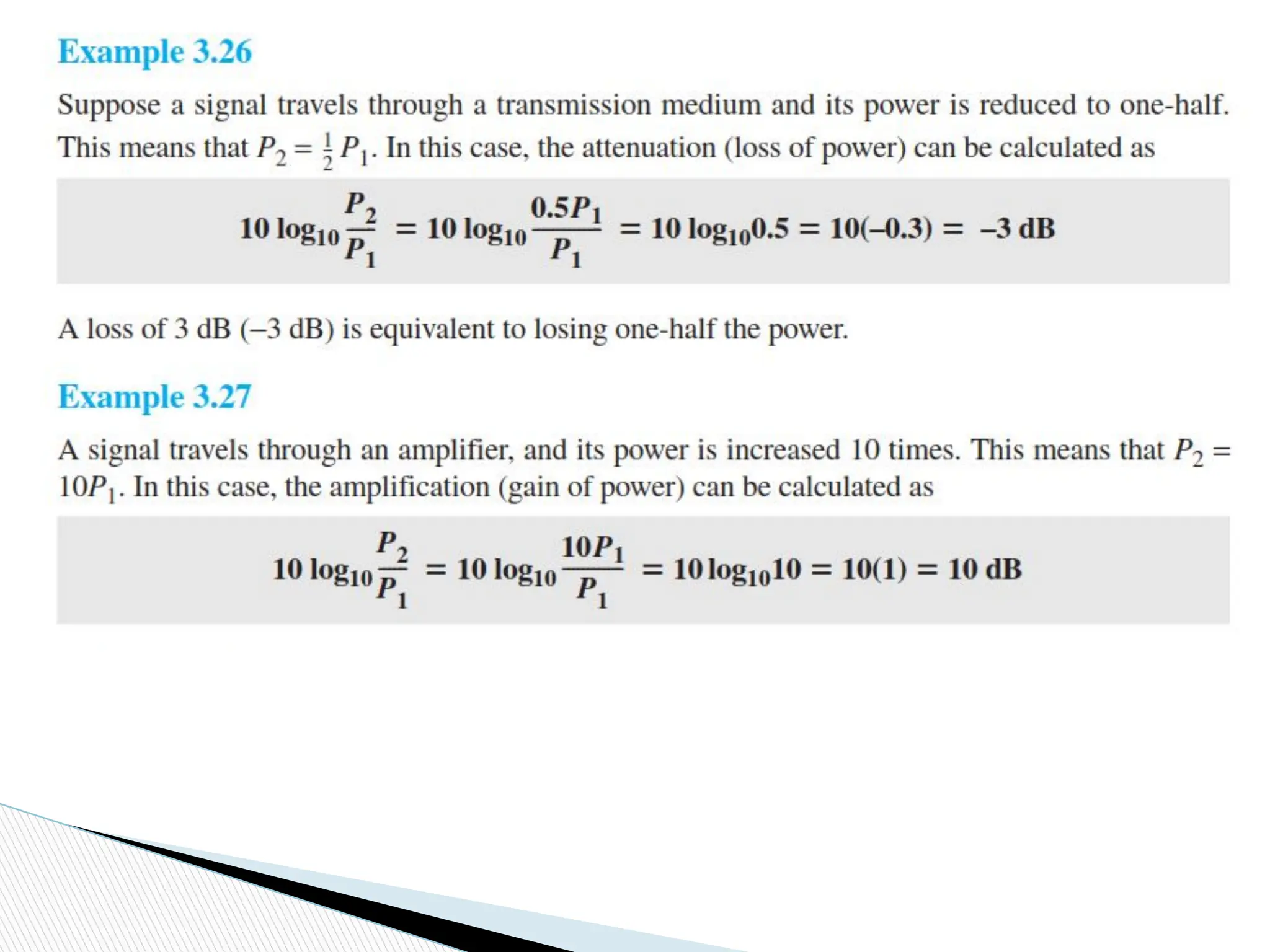
Attenuation
7.
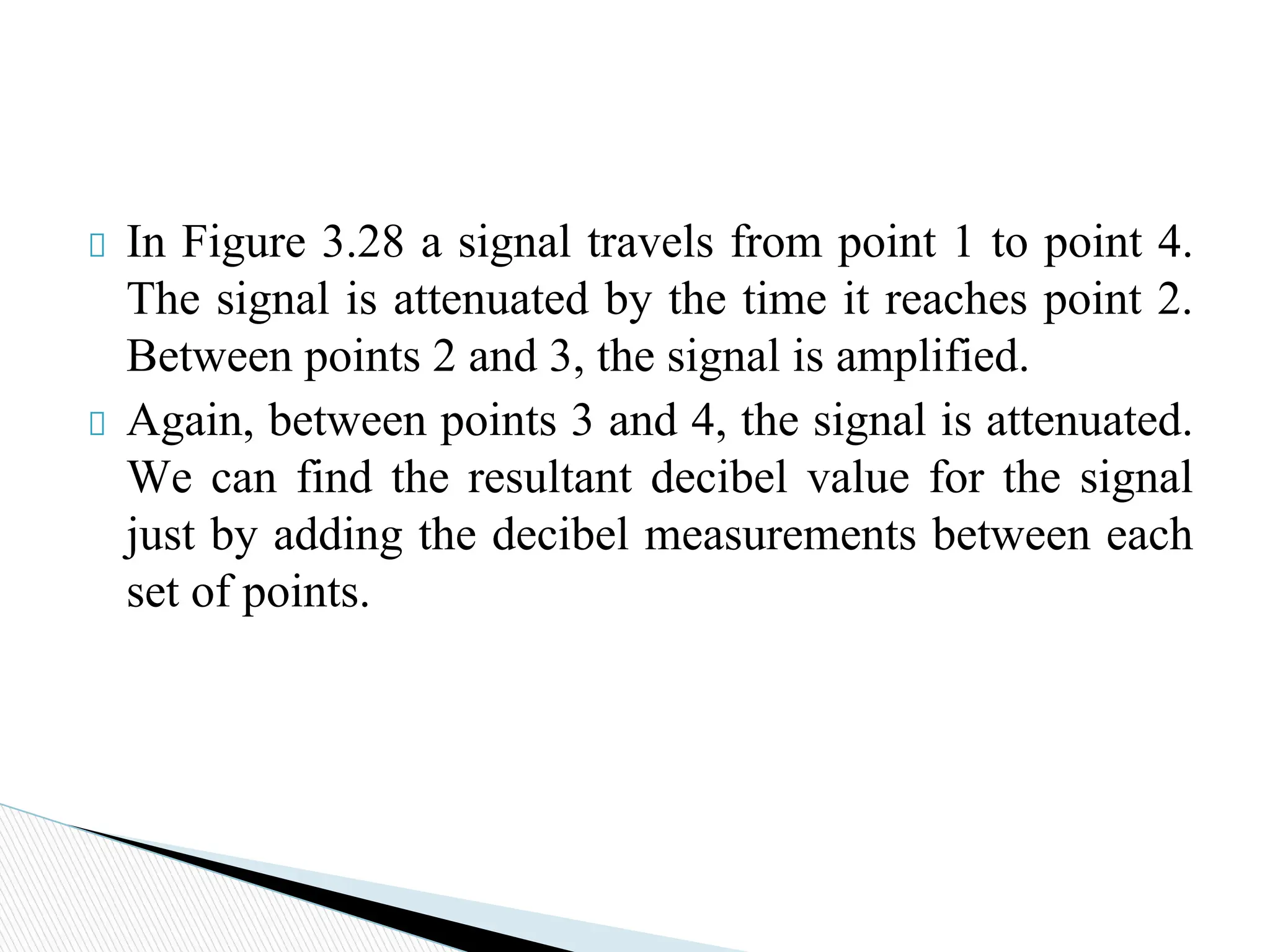
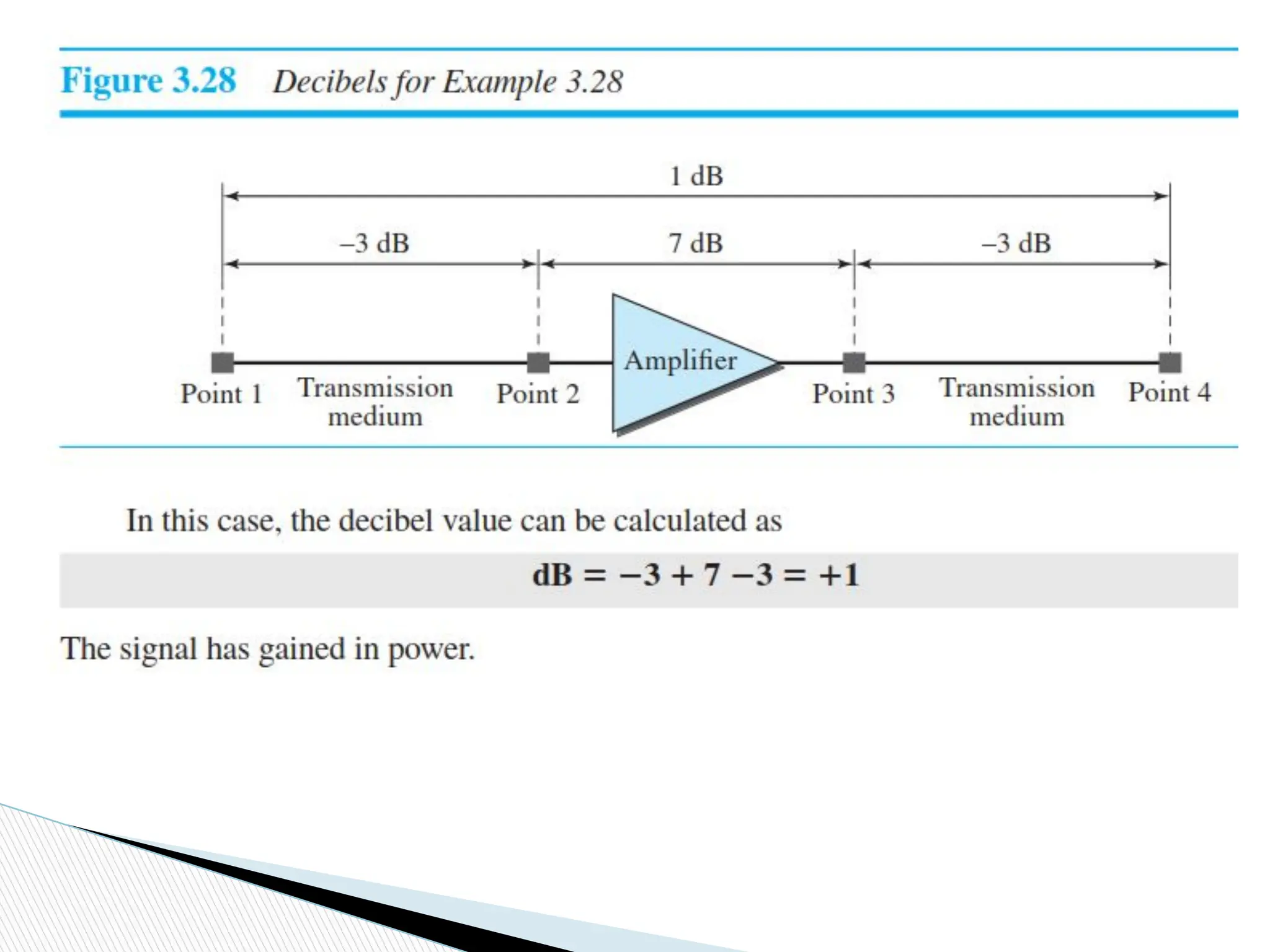
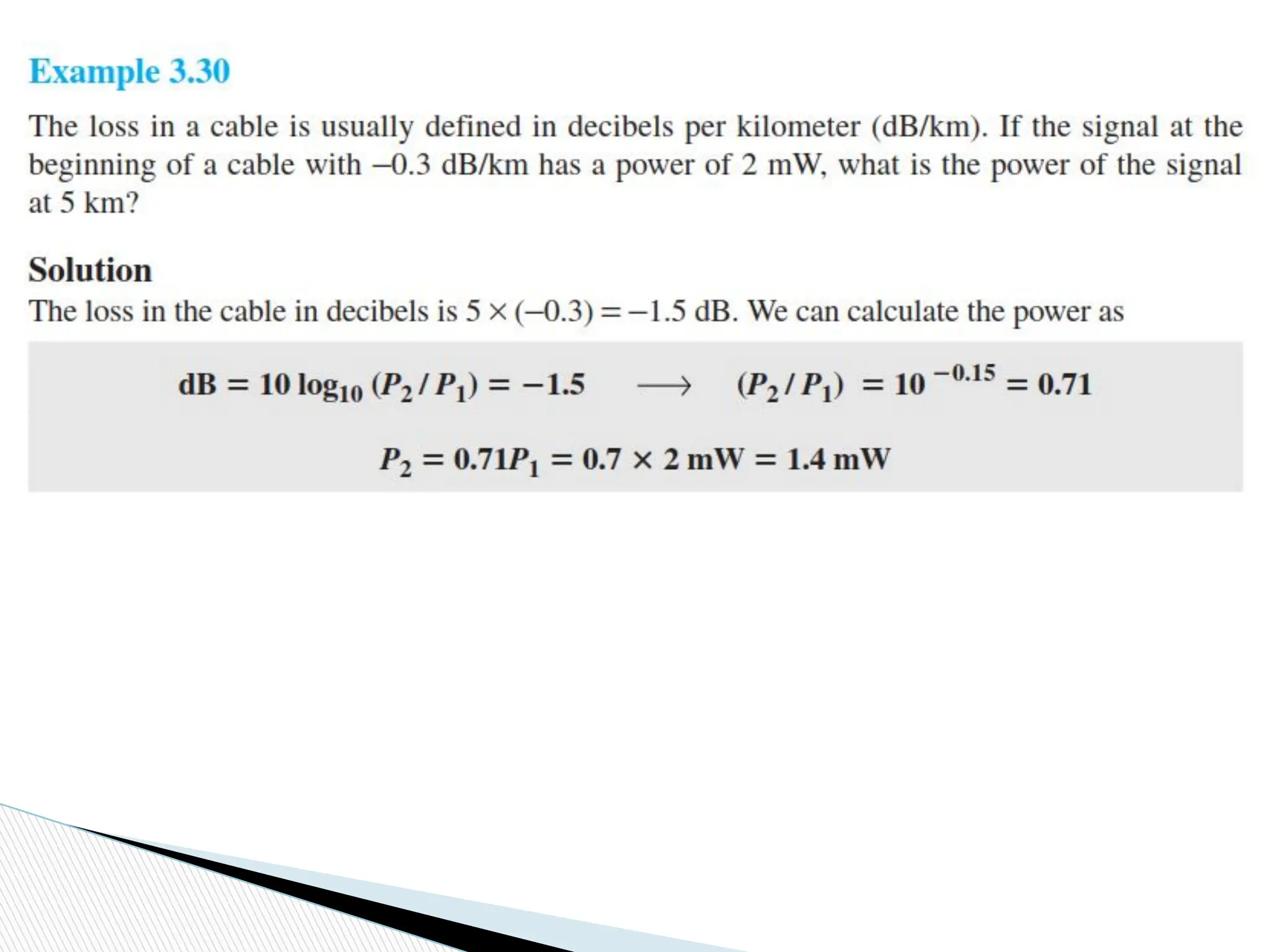
In Figure 3.28a signal travels from point 1 to point 4.
The signal is attenuated by the time it reaches point 2.
Between points 2 and 3, the signal is amplified.
Again, between points 3 and 4, the signal is attenuated.
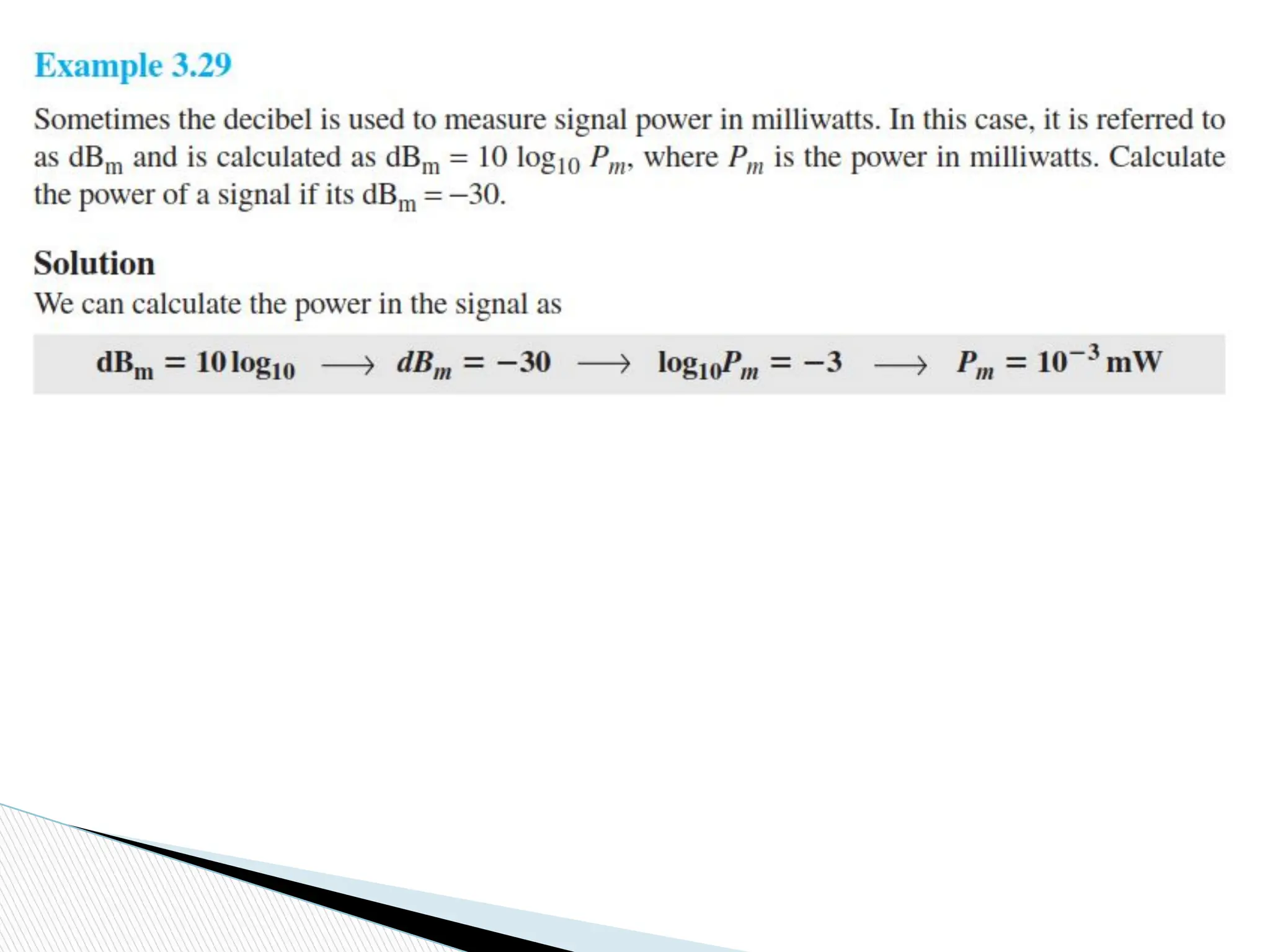
We can find the resultant decibel value for the signal
just by adding the decibel measurements between each
set of points.
11.
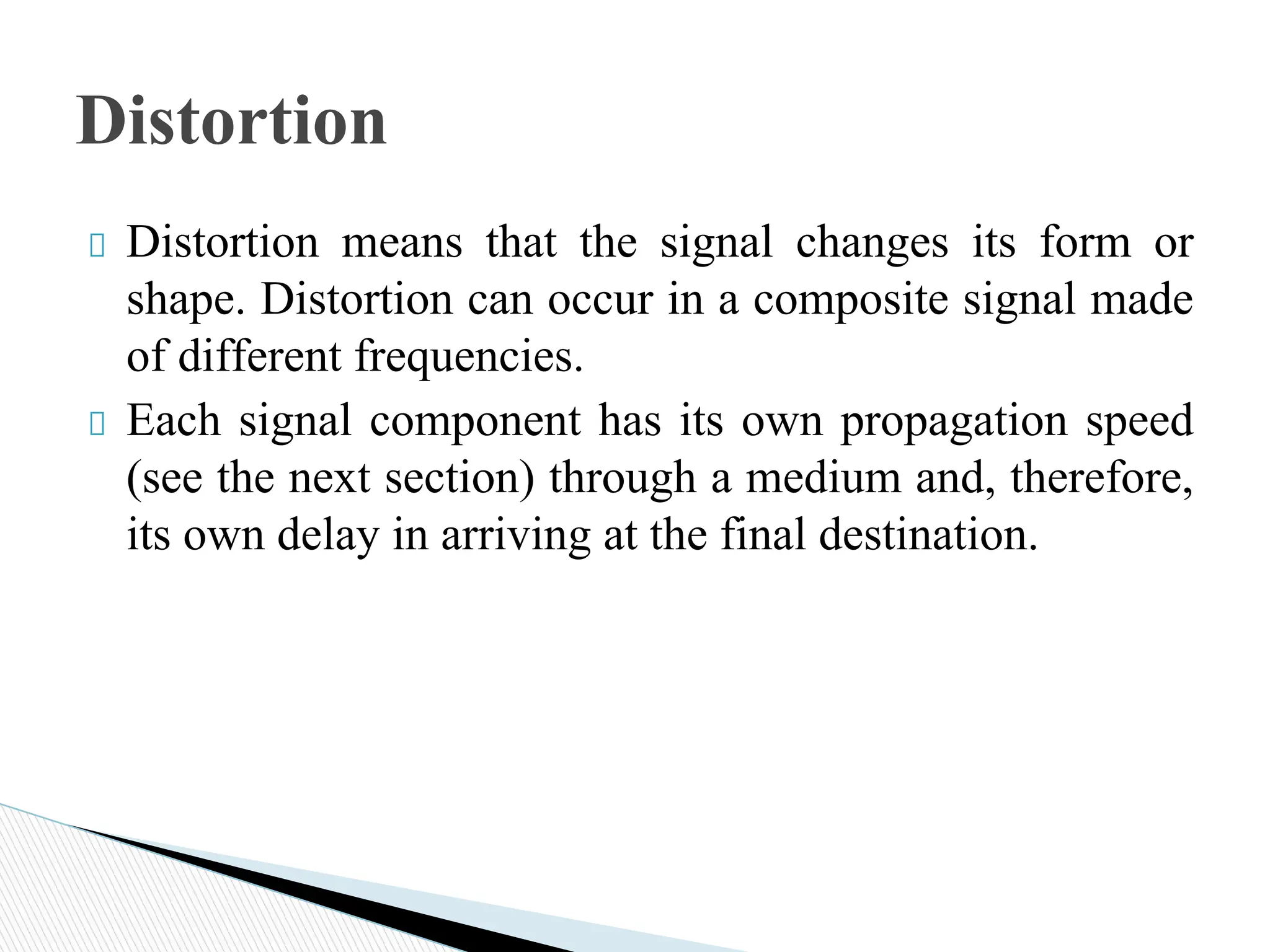
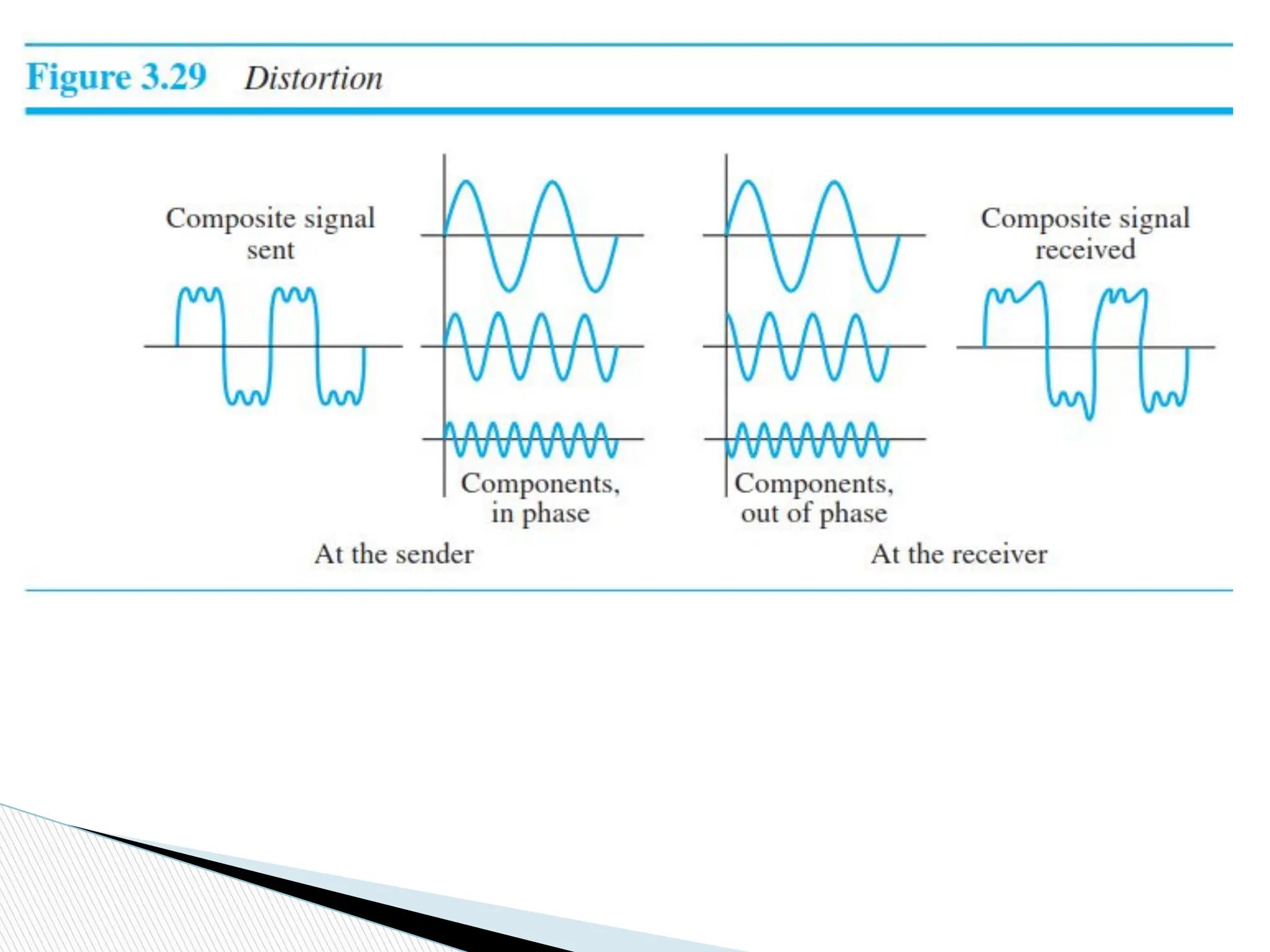
Distortion means thatthe signal changes its form or
shape. Distortion can occur in a composite signal made
of different frequencies.
Each signal component has its own propagation speed
(see the next section) through a medium and, therefore,
its own delay in arriving at the final destination.
Distortion
12.
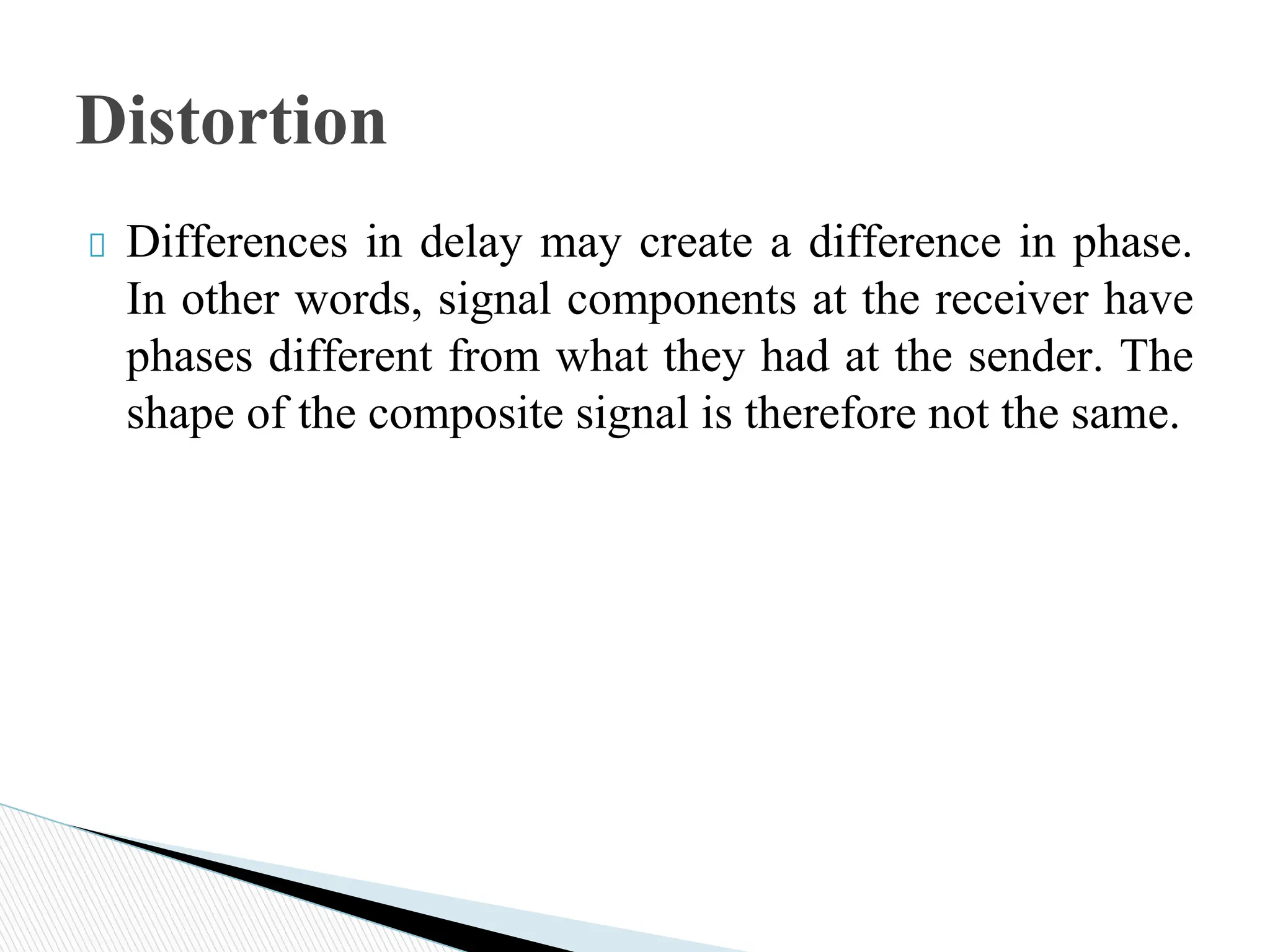
Differences in delaymay create a difference in phase.
In other words, signal components at the receiver have
phases different from what they had at the sender. The
shape of the composite signal is therefore not the same.
Distortion