Cushing’ s syndrome
Dr Okanga
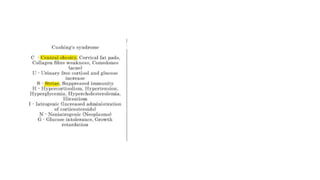
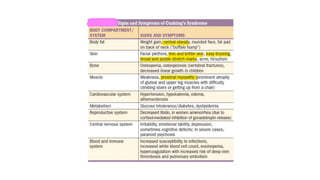
• clinical features that result from chronic exposure to excess
glucocorticoids of any etiology.
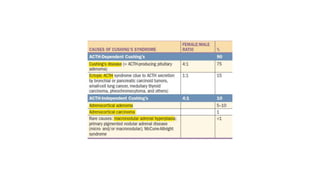
• Causes - ACTH-dependent (e.g., pituitary corticotrope adenoma,
ectopic secretion of ACTH by nonpituitary tumor) or ACTH-
independent (e.g., adrenocortical adenoma, adrenocortical carcinoma
[ACC], nodular adrenal hyperplasia), as well as iatrogenic (e.g.,
administration of exogenous glucocorticoids to treat various
inflammatory conditions).
• Cushing’s disease - Cushing’s syndrome caused by a pituitary
corticotrope adenoma.
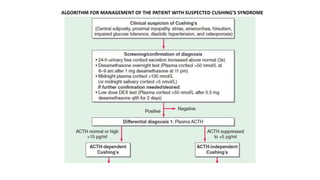
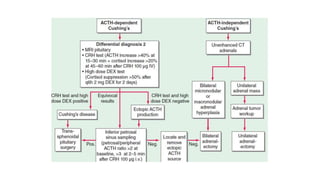
ALGORITHM FOR MANAGEMENT OF THE PATIENT WITH SUSPECTED CUSHING’S SYNDROME
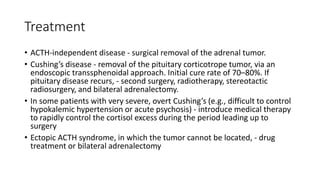
Treatment
• ACTH-independent disease - surgical removal of the adrenal tumor.
• Cushing’s disease - removal of the pituitary corticotrope tumor, via an
endoscopic transsphenoidal approach. Initial cure rate of 70–80%. If
pituitary disease recurs, - second surgery, radiotherapy, stereotactic
radiosurgery, and bilateral adrenalectomy.
• In some patients with very severe, overt Cushing’s (e.g., difficult to control
hypokalemic hypertension or acute psychosis) - introduce medical therapy
to rapidly control the cortisol excess during the period leading up to
surgery
• Ectopic ACTH syndrome, in which the tumor cannot be located, - drug
treatment or bilateral adrenalectomy
Medical therapy
• Ketoconazole 200mg tds max 1.2g
• Metyrapone 500mg tds max 6g
• Mitotane 500 – 1000mg od
• Etomiodate
Post surgery care.
• After the successful removal of an ACTH- or cortisol-producing tumor,
the HPA axis will remain suppressed. Thus, hydrocortisone
replacement needs to be initiated at the time of surgery and slowly
tapered following recovery, to allow physiologic adaptation to normal
cortisol levels.
• Depending on degree and duration of cortisol excess, the HPA axis
may require many months or even years to resume normal function
and sometimes does not recover.
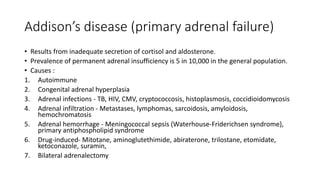
Addison’s disease (primary adrenal failure)
• Results from inadequate secretion of cortisol and aldosterone.
• Prevalence of permanent adrenal insufficiency is 5 in 10,000 in the general population.
• Causes :
1. Autoimmune
2. Congenital adrenal hyperplasia
3. Adrenal infections - TB, HIV, CMV, cryptococcosis, histoplasmosis, coccidioidomycosis
4. Adrenal infiltration - Metastases, lymphomas, sarcoidosis, amyloidosis,
hemochromatosis
5. Adrenal hemorrhage - Meningococcal sepsis (Waterhouse-Friderichsen syndrome),
primary antiphospholipid syndrome
6. Drug-induced- Mitotane, aminoglutethimide, abiraterone, trilostane, etomidate,
ketoconazole, suramin,
7. Bilateral adrenalectomy
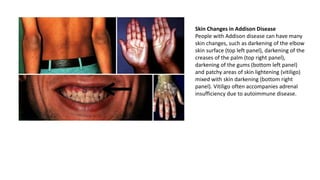
Skin Changes in Addison Disease
People with Addison disease can have many
skin changes, such as darkening of the elbow
skin surface (top left panel), darkening of the
creases of the palm (top right panel),
darkening of the gums (bottom left panel)
and patchy areas of skin lightening (vitiligo)
mixed with skin darkening (bottom right
panel). Vitiligo often accompanies adrenal
insufficiency due to autoimmune disease.
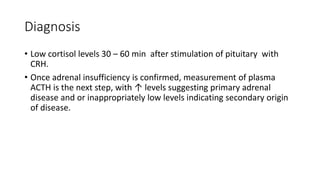
Diagnosis
• Low cortisol levels 30 – 60 min after stimulation of pituitary with
CRH.
• Once adrenal insufficiency is confirmed, measurement of plasma
ACTH is the next step, with ↑ levels suggesting primary adrenal
disease and or inappropriately low levels indicating secondary origin
of disease.
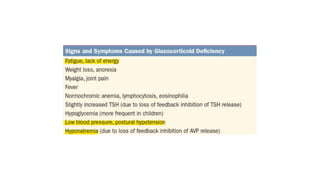
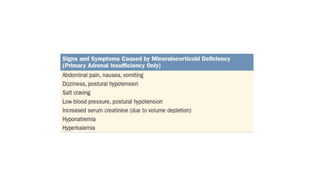
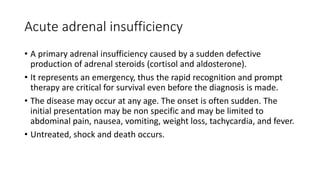
Acute adrenal insufficiency
• A primary adrenal insufficiency caused by a sudden defective
production of adrenal steroids (cortisol and aldosterone).
• It represents an emergency, thus the rapid recognition and prompt
therapy are critical for survival even before the diagnosis is made.
• The disease may occur at any age. The onset is often sudden. The
initial presentation may be non specific and may be limited to
abdominal pain, nausea, vomiting, weight loss, tachycardia, and fever.
• Untreated, shock and death occurs.
Etiology of acute adrenal insufficiency
• Steroid withdrawal
• Precipitating illness (severe infection, acute myocardial infarction,
stroke), surgery without adrenal support, pregnancy, any acute or
chronic disease, or acute trauma
• acute exacerbation of chronic primary adrenal insufficiency.
Treatment – Acute adrenal insufficiency
• Immediate rehydration, - saline infusion at initial rates of 1 L/h
• Glucocorticoid replacement - bolus injection of 100 mg
hydrocortisone, followed by the administration of 200 mg
hydrocortisone over 24 h, preferably by continuous infusion or
alternatively by bolus IV or IM injections.
• Mineralocorticoid replacement can be initiated once the daily
hydrocortisone dose has been reduced to <50 mg because at higher
doses hydrocortisone provides sufficient stimulation of
Mineralocorticoid receptors.
Treatment of chronic adrenal insufficiency.
• Glucocorticoid replacement – Hydrocortisone 15–25 mg in two to three
divided doses. Pregnancy may require an ↑ in hydrocortisone dose by 50%
during the last trimester. In all patients, at least one-half of the daily dose
should be administered in the morning.
• Febrile illness - Double the routine oral glucocorticoid dose, bed rest
Prolonged vomiting, surgery or trauma - IV hydrocortisone injection at a
daily dose of 100 mg.
• Mineralocorticoid replacement - 100–150 μg fludrocortisone
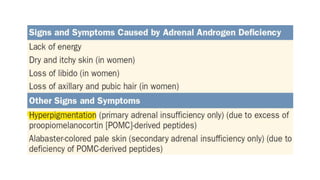
• Adrenal androgen replacement - an option in patients with lack of energy,
despite optimized glucocorticoid and mineralocorticoid replacement. It
may also be indicated in women with features of androgen deficiency,
including loss of libido. Achived by once-daily administration of 25–50 mg
DHEA.

lec 7 Cushing's syndrome.pptx

  • 1.
  • 2.
    • clinical featuresthat result from chronic exposure to excess glucocorticoids of any etiology. • Causes - ACTH-dependent (e.g., pituitary corticotrope adenoma, ectopic secretion of ACTH by nonpituitary tumor) or ACTH- independent (e.g., adrenocortical adenoma, adrenocortical carcinoma [ACC], nodular adrenal hyperplasia), as well as iatrogenic (e.g., administration of exogenous glucocorticoids to treat various inflammatory conditions). • Cushing’s disease - Cushing’s syndrome caused by a pituitary corticotrope adenoma.
  • 6.
    ALGORITHM FOR MANAGEMENTOF THE PATIENT WITH SUSPECTED CUSHING’S SYNDROME
  • 8.
    Treatment • ACTH-independent disease- surgical removal of the adrenal tumor. • Cushing’s disease - removal of the pituitary corticotrope tumor, via an endoscopic transsphenoidal approach. Initial cure rate of 70–80%. If pituitary disease recurs, - second surgery, radiotherapy, stereotactic radiosurgery, and bilateral adrenalectomy. • In some patients with very severe, overt Cushing’s (e.g., difficult to control hypokalemic hypertension or acute psychosis) - introduce medical therapy to rapidly control the cortisol excess during the period leading up to surgery • Ectopic ACTH syndrome, in which the tumor cannot be located, - drug treatment or bilateral adrenalectomy
  • 9.
    Medical therapy • Ketoconazole200mg tds max 1.2g • Metyrapone 500mg tds max 6g • Mitotane 500 – 1000mg od • Etomiodate
  • 10.
    Post surgery care. •After the successful removal of an ACTH- or cortisol-producing tumor, the HPA axis will remain suppressed. Thus, hydrocortisone replacement needs to be initiated at the time of surgery and slowly tapered following recovery, to allow physiologic adaptation to normal cortisol levels. • Depending on degree and duration of cortisol excess, the HPA axis may require many months or even years to resume normal function and sometimes does not recover.
  • 11.
    Addison’s disease (primaryadrenal failure) • Results from inadequate secretion of cortisol and aldosterone. • Prevalence of permanent adrenal insufficiency is 5 in 10,000 in the general population. • Causes : 1. Autoimmune 2. Congenital adrenal hyperplasia 3. Adrenal infections - TB, HIV, CMV, cryptococcosis, histoplasmosis, coccidioidomycosis 4. Adrenal infiltration - Metastases, lymphomas, sarcoidosis, amyloidosis, hemochromatosis 5. Adrenal hemorrhage - Meningococcal sepsis (Waterhouse-Friderichsen syndrome), primary antiphospholipid syndrome 6. Drug-induced- Mitotane, aminoglutethimide, abiraterone, trilostane, etomidate, ketoconazole, suramin, 7. Bilateral adrenalectomy
  • 15.
    Skin Changes inAddison Disease People with Addison disease can have many skin changes, such as darkening of the elbow skin surface (top left panel), darkening of the creases of the palm (top right panel), darkening of the gums (bottom left panel) and patchy areas of skin lightening (vitiligo) mixed with skin darkening (bottom right panel). Vitiligo often accompanies adrenal insufficiency due to autoimmune disease.
  • 16.
    Diagnosis • Low cortisollevels 30 – 60 min after stimulation of pituitary with CRH. • Once adrenal insufficiency is confirmed, measurement of plasma ACTH is the next step, with ↑ levels suggesting primary adrenal disease and or inappropriately low levels indicating secondary origin of disease.
  • 17.
    Acute adrenal insufficiency •A primary adrenal insufficiency caused by a sudden defective production of adrenal steroids (cortisol and aldosterone). • It represents an emergency, thus the rapid recognition and prompt therapy are critical for survival even before the diagnosis is made. • The disease may occur at any age. The onset is often sudden. The initial presentation may be non specific and may be limited to abdominal pain, nausea, vomiting, weight loss, tachycardia, and fever. • Untreated, shock and death occurs.
  • 18.
    Etiology of acuteadrenal insufficiency • Steroid withdrawal • Precipitating illness (severe infection, acute myocardial infarction, stroke), surgery without adrenal support, pregnancy, any acute or chronic disease, or acute trauma • acute exacerbation of chronic primary adrenal insufficiency.
  • 19.
    Treatment – Acuteadrenal insufficiency • Immediate rehydration, - saline infusion at initial rates of 1 L/h • Glucocorticoid replacement - bolus injection of 100 mg hydrocortisone, followed by the administration of 200 mg hydrocortisone over 24 h, preferably by continuous infusion or alternatively by bolus IV or IM injections. • Mineralocorticoid replacement can be initiated once the daily hydrocortisone dose has been reduced to <50 mg because at higher doses hydrocortisone provides sufficient stimulation of Mineralocorticoid receptors.
  • 20.
    Treatment of chronicadrenal insufficiency. • Glucocorticoid replacement – Hydrocortisone 15–25 mg in two to three divided doses. Pregnancy may require an ↑ in hydrocortisone dose by 50% during the last trimester. In all patients, at least one-half of the daily dose should be administered in the morning. • Febrile illness - Double the routine oral glucocorticoid dose, bed rest Prolonged vomiting, surgery or trauma - IV hydrocortisone injection at a daily dose of 100 mg. • Mineralocorticoid replacement - 100–150 μg fludrocortisone • Adrenal androgen replacement - an option in patients with lack of energy, despite optimized glucocorticoid and mineralocorticoid replacement. It may also be indicated in women with features of androgen deficiency, including loss of libido. Achived by once-daily administration of 25–50 mg DHEA.