Learning To Learn – Year
10
Emotional Learning
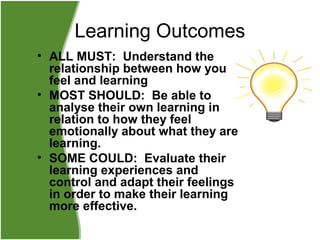
Learning Outcomes
• ALL MUST: Understand the
relationship between how you
feel and learning
• MOST SHOULD: Be able to
analyse their own learning in
relation to how they feel
emotionally about what they are
learning.
• SOME COULD: Evaluate their
learning experiences and
control and adapt their feelings
in order to make their learning
more effective.
GROUND RULES
Using post-its and Think Bubble boards, come up with some ground
rules about:
• How you wish to be treated in these
lessons
• How you would not like to be treated in
these lessons
Learning Is Linked to Emotions!
• Emotion is attached to everything we do
and therefore, to everything that we learn.
• How do you feel now? (on your emotional
thermometers.)
Ice-Breaking Task!
On a post-it, write down:
YOUR FAVOURITE FOOD
YOUR FAVOURITE FILM
YOUR FAVOURITE BOOK
SOMEONE (LIVING OR DEAD) WHO YOU
WOULD LIKE TO HAVE DINNER WITH
A COUNTRY OR PLACE WHERE YOU
WOULD LIKE TO GO
Now…
• Share your answers with at least 5 people
in the room. Make sure that they are
people that you do not usually speak to.
• Your teacher may wish to direct you to
people that they want you to talk to!
Group Discussion
• Did you meet anyone with similar answers
to you?
• How did you feel about sharing some of
this information?
• Did the task make you feel comfortable or
uncomfortable? Why?
How do you feel in different Learning Situations?
CHALLENGE, COMFORTABLE,
UNCOMFORTABLE
• Using the hoops, stand in the correct hoop
when your teacher displays the following
scenario on the board. Be prepared to
justify your decision!
1
• Singing solo in public
2
• Performing a piece of speaking and
listening in an English lesson
3
• Doing a mental arithmetic test in Maths
4
• Discussing homophobic bullying in a
Citizenship lesson
Take Responsibility for how you
choose to react
• You need to learn how to take
responsibility for how you feel emotionally
when you are in a learning situation.
• Here is a short activity that will help you do
this:
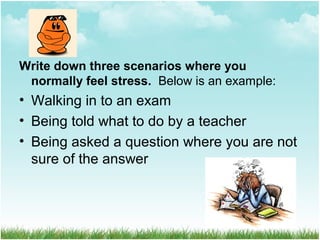
Write down three scenarios where you
normally feel stress. Below is an example:
• Walking in to an exam
• Being told what to do by a teacher
• Being asked a question where you are not
sure of the answer
With a partner…
• Spend two minutes discussing how these
situations feel. Your partner should then
think of things you can do to stop yourself
from feeling stressed.
• Now, in your pairs, come up with two
effective strategies you may use to stop
yourself from feeling stressed. Write them
on a post-it and put them on the bubble
board.
DISCUSSION
• With your group, discuss the most
effective ways responding positively to
stressful learning situations.
• Come up with a list of strategies that you
all agree on.
LEARNING LOG
• A Learning Log encourages us to be reflective
learners.
• When we are reflective learners, we can learn
how we respond emotionally to learning
situations.
• When we learn how we respond emotionally to
learning situations, we learn more effectively
because we can think / discuss strategies on
how to deal with these situations.
TASK
• Using the learning log (or find it on the school
network: - M:CitizenshipYear 10Learning To
Learn):
• Fill in and reflect on a learning experience that
you have had. You may wish to do this during
the next fortnight or you may wish to start
thinking about it now. You will be given time at
the beginning of next lesson to discuss what you
have found about your own learning.
Plenary
• Where are you now on your emotional
thermometers? Why?
• What have you learned about the most
effective way to feel positive (and not
stressed) by different learning situations?

Learning to Learn – year 10

  • 1.
    Learning To Learn– Year 10 Emotional Learning
  • 2.
    Learning Outcomes • ALLMUST: Understand the relationship between how you feel and learning • MOST SHOULD: Be able to analyse their own learning in relation to how they feel emotionally about what they are learning. • SOME COULD: Evaluate their learning experiences and control and adapt their feelings in order to make their learning more effective.
  • 3.
    GROUND RULES Using post-itsand Think Bubble boards, come up with some ground rules about: • How you wish to be treated in these lessons • How you would not like to be treated in these lessons
  • 4.
    Learning Is Linkedto Emotions! • Emotion is attached to everything we do and therefore, to everything that we learn. • How do you feel now? (on your emotional thermometers.)
  • 5.
    Ice-Breaking Task! On apost-it, write down:
  • 6.
  • 7.
  • 8.
  • 9.
    SOMEONE (LIVING ORDEAD) WHO YOU WOULD LIKE TO HAVE DINNER WITH
  • 10.
    A COUNTRY ORPLACE WHERE YOU WOULD LIKE TO GO
  • 11.
    Now… • Share youranswers with at least 5 people in the room. Make sure that they are people that you do not usually speak to. • Your teacher may wish to direct you to people that they want you to talk to!
  • 12.
    Group Discussion • Didyou meet anyone with similar answers to you? • How did you feel about sharing some of this information? • Did the task make you feel comfortable or uncomfortable? Why?
  • 13.
    How do youfeel in different Learning Situations? CHALLENGE, COMFORTABLE, UNCOMFORTABLE • Using the hoops, stand in the correct hoop when your teacher displays the following scenario on the board. Be prepared to justify your decision!
  • 14.
  • 15.
    2 • Performing apiece of speaking and listening in an English lesson
  • 16.
    3 • Doing amental arithmetic test in Maths
  • 17.
    4 • Discussing homophobicbullying in a Citizenship lesson
  • 18.
    Take Responsibility forhow you choose to react • You need to learn how to take responsibility for how you feel emotionally when you are in a learning situation. • Here is a short activity that will help you do this:
  • 19.
    Write down threescenarios where you normally feel stress. Below is an example: • Walking in to an exam • Being told what to do by a teacher • Being asked a question where you are not sure of the answer
  • 20.
    With a partner… •Spend two minutes discussing how these situations feel. Your partner should then think of things you can do to stop yourself from feeling stressed. • Now, in your pairs, come up with two effective strategies you may use to stop yourself from feeling stressed. Write them on a post-it and put them on the bubble board.
  • 21.
    DISCUSSION • With yourgroup, discuss the most effective ways responding positively to stressful learning situations. • Come up with a list of strategies that you all agree on.
  • 22.
    LEARNING LOG • ALearning Log encourages us to be reflective learners. • When we are reflective learners, we can learn how we respond emotionally to learning situations. • When we learn how we respond emotionally to learning situations, we learn more effectively because we can think / discuss strategies on how to deal with these situations.
  • 23.
    TASK • Using thelearning log (or find it on the school network: - M:CitizenshipYear 10Learning To Learn): • Fill in and reflect on a learning experience that you have had. You may wish to do this during the next fortnight or you may wish to start thinking about it now. You will be given time at the beginning of next lesson to discuss what you have found about your own learning.
  • 24.
    Plenary • Where areyou now on your emotional thermometers? Why? • What have you learned about the most effective way to feel positive (and not stressed) by different learning situations?