Emotions
Get ready for an exciting learning SEL journey! We will be using videos
to explore important social-emotional learning (SEL) topics. But this is
not just about watching - it is about watching, reflecting and growing!
This worksheet provides a fast and engaging way to learn a new SEL skill
or lesson. After watching a video, children can test their understanding
by answering questions. Then let them go deeper with some hands-on
activities to help them practice what they have learned. These
activities will allow them to apply their knowledge in a real-world
context.
Number of pages: 7
Recommend for ages: 6 years old & above (For Levels 2 & 3)
Recommended Duration : 20 minutes & above
Introduction
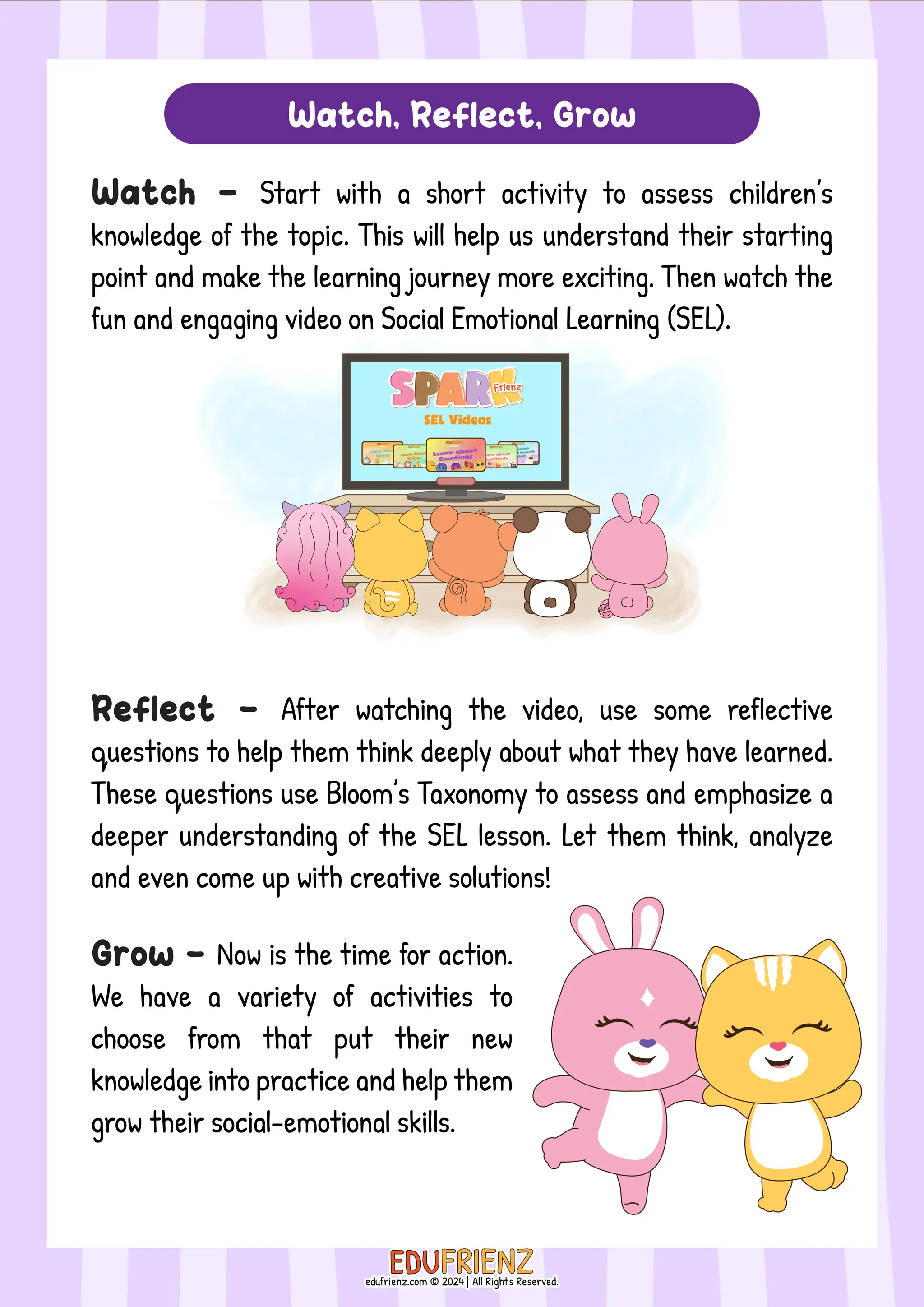
Watch - Start with a short activity to assess children's
knowledge of the topic. This will help us understand their starting
point and make the learning journey more exciting. Then watch the
fun and engaging video on Social Emotional Learning (SEL).
Reflect - After watching the video, use some reflective
questions to help them think deeply about what they have learned.
These questions use Bloom's Taxonomy to assess and emphasize a
deeper understanding of the SEL lesson. Let them think, analyze
and even come up with creative solutions!
Grow - Now is the time for action.
We have a variety of activities to
choose from that put their new
knowledge into practice and help them
grow their social-emotional skills.
Watch, Reflect, Grow
Watch: (5 minutes)
• Begin by asking, "Can you think of a time when you felt a strong
emotion?". Let them share that experience.
• Briefly introduce the video, "How Social Emotional Learning Help
Express Feelings Effectively".
• Play the Video.
https://www.youtube.com/watch?v=isitt7nyqfI
Reflect: (7 minutes)
Reflection Questions:
Remembering: What are the five basic emotions?
Understanding: Identify situations where the characters
experienced different emotions.
Applying: Imagine you see a friend feeling scared or sad.
What could you do to help them feel better?
Analyzing: How might our emotions affect our behavior
towards others?
Evaluating: Why is it important to understand our own
emotions?
Creating: Can you relate to any of the
emotions Shine and their
friends felt in the story?
Grow: (8 minutes)
Choose any of the activities that fit your student's interests, needs,
and resources:
Activity 1: My Emotions
Practice recognising and expressing different emotions by
answering the "All About Me" on the next page.
How do you feel when someone
helps you or does something
nice for you?
My Favorite Food:
Who are you scared
or afraid of?
Can you give an example of when
you felt loved and cared for?
Who do you tell when you
are worried or afraid?
What has made you feel
proud of yourself?
What do you do when you are bored?
Can you give an example of a
time when you were really happy
with your parents?
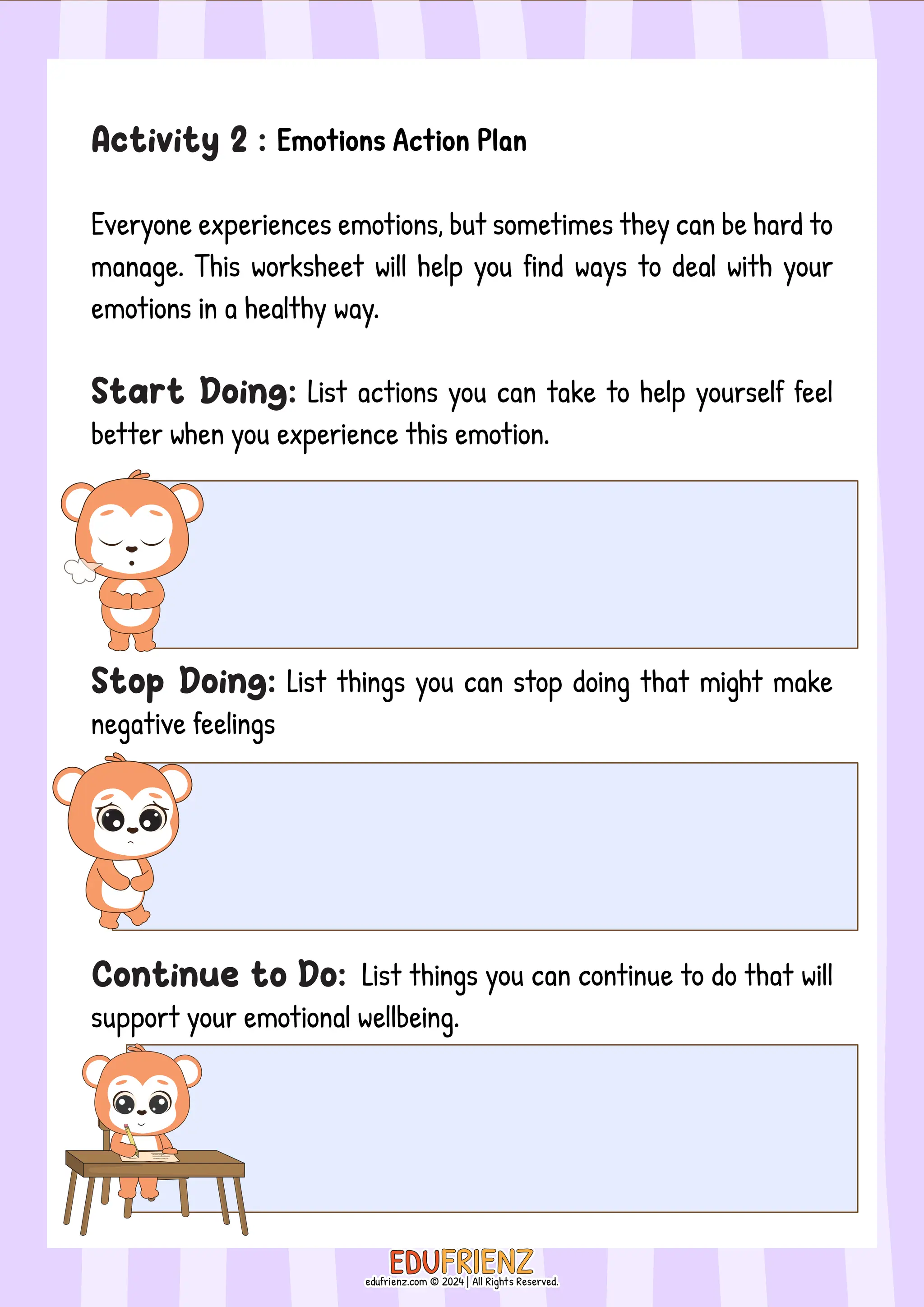
Activity 2 : Emotions Action Plan
Everyone experiences emotions, but sometimes they can be hard to
manage. This worksheet will help you find ways to deal with your
emotions in a healthy way.
Start Doing: List actions you can take to help yourself feel
better when you experience this emotion.
Stop Doing: List things you can stop doing that might make
negative feelings
Continue to Do: List things you can continue to do that will
support your emotional wellbeing.
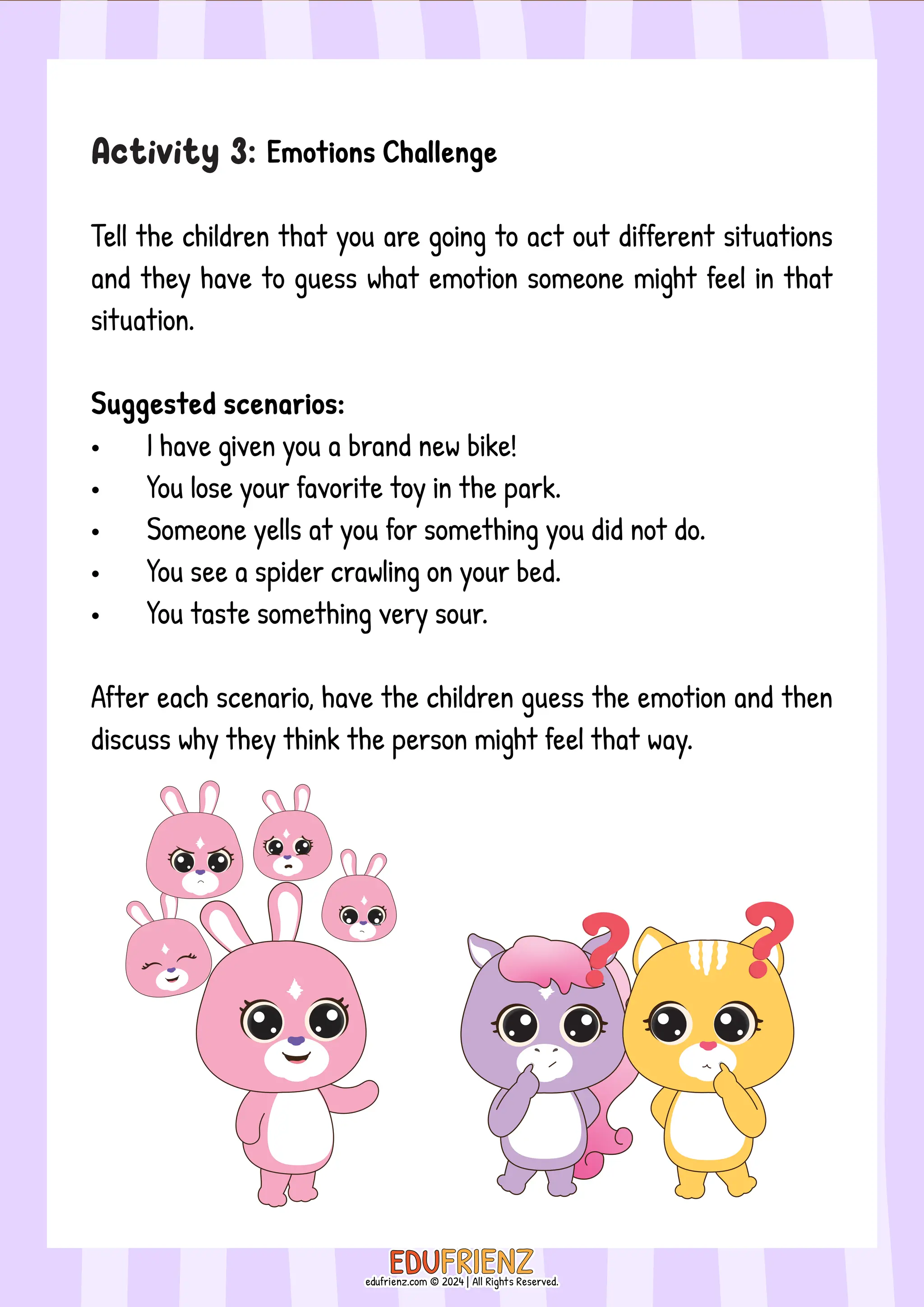
Activity 3: Emotions Challenge
Tell the children that you are going to act out different situations
and they have to guess what emotion someone might feel in that
situation.
Suggested scenarios:
• I have given you a brand new bike!
• You lose your favorite toy in the park.
• Someone yells at you for something you did not do.
• You see a spider crawling on your bed.
• You taste something very sour.
After each scenario, have the children guess the emotion and then
discuss why they think the person might feel that way.
EDUFRIENZ
Published and Distributed by:
Edufrienz 99 Pte. Ltd.
edufrienz.com © 2024 | All Rights Reserved
No part of this book may be reproduced or used in any matter,
stored in any retrieval system, or transmitted in any form by any
means - Electronic, Mechanical, Photocopy, Recording, or
otherwise without written permission of the copyright owner
except for the use of quotation in a book review.
www.edufrienz.com
Edufrienz and all related trademarks and characters TM & © 2024
Edufrienz 99 Pte. Ltd.
All Rights Reserved. Used with Permission.

SEL Learn About Emotions – Video Activity

  • 1.
  • 2.
    Get ready foran exciting learning SEL journey! We will be using videos to explore important social-emotional learning (SEL) topics. But this is not just about watching - it is about watching, reflecting and growing! This worksheet provides a fast and engaging way to learn a new SEL skill or lesson. After watching a video, children can test their understanding by answering questions. Then let them go deeper with some hands-on activities to help them practice what they have learned. These activities will allow them to apply their knowledge in a real-world context. Number of pages: 7 Recommend for ages: 6 years old & above (For Levels 2 & 3) Recommended Duration : 20 minutes & above Introduction
  • 3.
    Watch - Startwith a short activity to assess children's knowledge of the topic. This will help us understand their starting point and make the learning journey more exciting. Then watch the fun and engaging video on Social Emotional Learning (SEL). Reflect - After watching the video, use some reflective questions to help them think deeply about what they have learned. These questions use Bloom's Taxonomy to assess and emphasize a deeper understanding of the SEL lesson. Let them think, analyze and even come up with creative solutions! Grow - Now is the time for action. We have a variety of activities to choose from that put their new knowledge into practice and help them grow their social-emotional skills. Watch, Reflect, Grow
  • 4.
    Watch: (5 minutes) •Begin by asking, "Can you think of a time when you felt a strong emotion?". Let them share that experience. • Briefly introduce the video, "How Social Emotional Learning Help Express Feelings Effectively". • Play the Video. https://www.youtube.com/watch?v=isitt7nyqfI
  • 5.
    Reflect: (7 minutes) ReflectionQuestions: Remembering: What are the five basic emotions? Understanding: Identify situations where the characters experienced different emotions. Applying: Imagine you see a friend feeling scared or sad. What could you do to help them feel better? Analyzing: How might our emotions affect our behavior towards others? Evaluating: Why is it important to understand our own emotions? Creating: Can you relate to any of the emotions Shine and their friends felt in the story?
  • 6.
    Grow: (8 minutes) Chooseany of the activities that fit your student's interests, needs, and resources: Activity 1: My Emotions Practice recognising and expressing different emotions by answering the "All About Me" on the next page.
  • 7.
    How do youfeel when someone helps you or does something nice for you? My Favorite Food: Who are you scared or afraid of? Can you give an example of when you felt loved and cared for? Who do you tell when you are worried or afraid? What has made you feel proud of yourself? What do you do when you are bored? Can you give an example of a time when you were really happy with your parents?
  • 8.
    Activity 2 :Emotions Action Plan Everyone experiences emotions, but sometimes they can be hard to manage. This worksheet will help you find ways to deal with your emotions in a healthy way. Start Doing: List actions you can take to help yourself feel better when you experience this emotion. Stop Doing: List things you can stop doing that might make negative feelings Continue to Do: List things you can continue to do that will support your emotional wellbeing.
  • 9.
    Activity 3: EmotionsChallenge Tell the children that you are going to act out different situations and they have to guess what emotion someone might feel in that situation. Suggested scenarios: • I have given you a brand new bike! • You lose your favorite toy in the park. • Someone yells at you for something you did not do. • You see a spider crawling on your bed. • You taste something very sour. After each scenario, have the children guess the emotion and then discuss why they think the person might feel that way.
  • 10.
    EDUFRIENZ Published and Distributedby: Edufrienz 99 Pte. Ltd. edufrienz.com © 2024 | All Rights Reserved No part of this book may be reproduced or used in any matter, stored in any retrieval system, or transmitted in any form by any means - Electronic, Mechanical, Photocopy, Recording, or otherwise without written permission of the copyright owner except for the use of quotation in a book review. www.edufrienz.com Edufrienz and all related trademarks and characters TM & © 2024 Edufrienz 99 Pte. Ltd. All Rights Reserved. Used with Permission.