by Andrea Day, Justin Lee Hawkins, Malcolm
                  Stapleton, Paul Rawlinson
                  Wednesday, 18 July 2012
   Students 15-16 yo. male/female

   Employers / community organisations

   Educators (VETIS)

   Parents/guardians
   Student engagement

   LL&N Development

   Employment / education pathways

   Negotiate strategies for improved school
    attendance

   Develop long term goals through strategic
    relationship (employers/students and leadership)
   Uniform support from employer, educator
    and peers.

   Contextualised and meaningful to student
    specific needs, leading to improved engaged
    and attendance.
Core
 SIRXCOM101A Communicate in the workplace to
  support team & customer outcomes
 SIRXIND101A Work effectively in a customer service
  environment
 SIRXWHS101A Apply safe work practices


Electives
 SIRXICT001A Operate Retail Technology

 SIRXIND102A Plan a Career in Retail
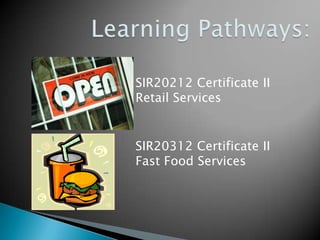
SIR20212 Certificate II
Retail Services


SIR20312 Certificate II
Fast Food Services
   10 weeks (Term 3 - 2012)

   Employer 1day per week

   School 3 days per week
    (Situational flexibility negotiable between
    stakeholders)
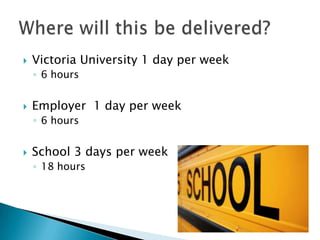
   Victoria University 1 day per week
    ◦ 6 hours


   Employer 1 day per week
    ◦ 6 hours


   School 3 days per week
    ◦ 18 hours
   Online (e-learning)

   Workplace outcomes

   Interviews with students, employers and
    peers

   Observation

   Rubrics
   Consult between all stakeholders to ensure
    collaborative strategies are identified and made
    relevant to students.

   Communicate with parents or guardians to
    promote involvement and engagement for
    mentoring and coaching that support long term
    results.

   Engage in receiving feedback from all
    stakeholders throughout the delivery and after
    completion.
Create achievable outcomes for students at
risk

Create relevance to real world situations in the
workplace

Empower students and their support network
through developing there ongoing skills

Using industry relationships to foster working
outcomes
Each of you have your information packs
    detailing this strategy, and now

we would like to listen to your feedback
               and your
              Questions.
Learning strategy for at risk teenagers

Learning strategy for at risk teenagers

  • 1.
    by Andrea Day,Justin Lee Hawkins, Malcolm Stapleton, Paul Rawlinson Wednesday, 18 July 2012
  • 2.
    Students 15-16 yo. male/female  Employers / community organisations  Educators (VETIS)  Parents/guardians
  • 3.
    Student engagement  LL&N Development  Employment / education pathways  Negotiate strategies for improved school attendance  Develop long term goals through strategic relationship (employers/students and leadership)
  • 4.
    Uniform support from employer, educator and peers.  Contextualised and meaningful to student specific needs, leading to improved engaged and attendance.
  • 6.
    Core  SIRXCOM101A Communicatein the workplace to support team & customer outcomes  SIRXIND101A Work effectively in a customer service environment  SIRXWHS101A Apply safe work practices Electives  SIRXICT001A Operate Retail Technology  SIRXIND102A Plan a Career in Retail
  • 7.
    SIR20212 Certificate II RetailServices SIR20312 Certificate II Fast Food Services
  • 8.
    10 weeks (Term 3 - 2012)  Employer 1day per week  School 3 days per week (Situational flexibility negotiable between stakeholders)
  • 9.
    Victoria University 1 day per week ◦ 6 hours  Employer 1 day per week ◦ 6 hours  School 3 days per week ◦ 18 hours
  • 10.
    Online (e-learning)  Workplace outcomes  Interviews with students, employers and peers  Observation  Rubrics
  • 11.
    Consult between all stakeholders to ensure collaborative strategies are identified and made relevant to students.  Communicate with parents or guardians to promote involvement and engagement for mentoring and coaching that support long term results.  Engage in receiving feedback from all stakeholders throughout the delivery and after completion.
  • 12.
    Create achievable outcomesfor students at risk Create relevance to real world situations in the workplace Empower students and their support network through developing there ongoing skills Using industry relationships to foster working outcomes
  • 13.
    Each of youhave your information packs detailing this strategy, and now we would like to listen to your feedback and your Questions.