LEARNING disability and
disorder
Presented by sabin karki
WHAT IS
LEARNING
DISABILITY?
 Learning Disability is a
condition giving rise to
difficulties in acquiring
knowledge and skills to
the level expected of
those of the same age,
especially when not
associated with a
physical handicap.
WHEN IT
COMES TO
LEARNING
DISABILITY,
LOOK AT THE
BIG PICTURE
 RECOGNIZING THE LEARNING DISORDER
BY RECOGNIZING THE DIFFERENT TYPES OF
LEARNING DISORDER AND THEIR SIGNS,
YOU CAN POINT THE SPECIFIC CHALLENGES
YOUR CHILD FACES AND FIND THE
TREATMENT PROGRAM THAT WORKS
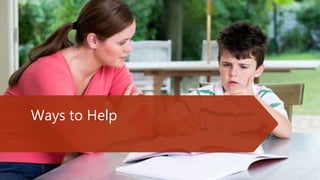
Ways to Help
FOCUS ON STRENGTH NOT WEAKNESS
IDENTIFY HOW CHILD LEARNS BEST
VISUAL LEARNER LEARN BEST BY VISUALIZING THE
THINGS THROUGH THE VISUAL AID SUCH AS
VIDEO, FLASH CARD, PICTURES, DRAWING ETC.
AUDITORY LEARNER LEARN BEST THROUGH THEIR
EAR, FROM SPEECH, PRESENTATION OR AUDIO
BOOK.
KINESTHETIC LEARNER ARE ALSO A PHYSICAL
LEARNER WHO LEARN BEST WHEN THEY
DEMONSTRATE, TOUCH, EXPERIMENT OR BY USING
HANDS-ON-APPROACH.
Positive Reinforcement
 Praise and encouragement are the building blocks of
emotional and social development for all children,
regardless of their special need or disability. A child with
special needs might often exhibit signs of intentional
misbehavior or a disrespectful attitude, or have a
physical setback that prevents them from learning in a
traditional manner. Positive reinforcement has a proven
record of improved results towards an end goal, so
finding the right combination is essential to your child’s
education. Examples of Positive Reinforcement
Examples
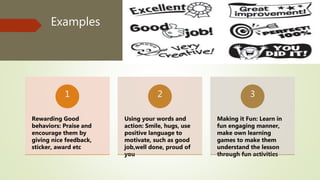
Rewarding Good
behaviors: Praise and
encourage them by
giving nice feedback,
sticker, award etc
1
Using your words and
action: Smile, hugs, use
positive language to
motivate, such as good
job,well done, proud of
you
2
Making it Fun: Learn in
fun engaging manner,
make own learning
games to make them
understand the lesson
through fun activities
3
Learning disability and disorder

Learning disability and disorder

  • 1.
  • 2.
    WHAT IS LEARNING DISABILITY?  LearningDisability is a condition giving rise to difficulties in acquiring knowledge and skills to the level expected of those of the same age, especially when not associated with a physical handicap.
  • 3.
    WHEN IT COMES TO LEARNING DISABILITY, LOOKAT THE BIG PICTURE  RECOGNIZING THE LEARNING DISORDER BY RECOGNIZING THE DIFFERENT TYPES OF LEARNING DISORDER AND THEIR SIGNS, YOU CAN POINT THE SPECIFIC CHALLENGES YOUR CHILD FACES AND FIND THE TREATMENT PROGRAM THAT WORKS
  • 4.
  • 5.
    FOCUS ON STRENGTHNOT WEAKNESS
  • 6.
    IDENTIFY HOW CHILDLEARNS BEST
  • 7.
    VISUAL LEARNER LEARNBEST BY VISUALIZING THE THINGS THROUGH THE VISUAL AID SUCH AS VIDEO, FLASH CARD, PICTURES, DRAWING ETC. AUDITORY LEARNER LEARN BEST THROUGH THEIR EAR, FROM SPEECH, PRESENTATION OR AUDIO BOOK. KINESTHETIC LEARNER ARE ALSO A PHYSICAL LEARNER WHO LEARN BEST WHEN THEY DEMONSTRATE, TOUCH, EXPERIMENT OR BY USING HANDS-ON-APPROACH.
  • 8.
    Positive Reinforcement  Praiseand encouragement are the building blocks of emotional and social development for all children, regardless of their special need or disability. A child with special needs might often exhibit signs of intentional misbehavior or a disrespectful attitude, or have a physical setback that prevents them from learning in a traditional manner. Positive reinforcement has a proven record of improved results towards an end goal, so finding the right combination is essential to your child’s education. Examples of Positive Reinforcement
  • 9.
    Examples Rewarding Good behaviors: Praiseand encourage them by giving nice feedback, sticker, award etc 1 Using your words and action: Smile, hugs, use positive language to motivate, such as good job,well done, proud of you 2 Making it Fun: Learn in fun engaging manner, make own learning games to make them understand the lesson through fun activities 3