


Welcome to 
Lean & Agile – Empower your 
teams and increase your 
collaboration through digital 
technologies 
Presented by Paul Bamforth
Lean & Agile – Empower your teams and 
increase your collaboration through digital 
technologies 
Paul Bamforth| UK Country Manager| paul.bamforth@projectplace.com
Agenda 
Introduction 
Lean & Agile 
Collaboration 
Kanban – a collaboration trend 
Management – Shaping of human behaviour 
Summary
Lean & Agile
Lean & Agile 
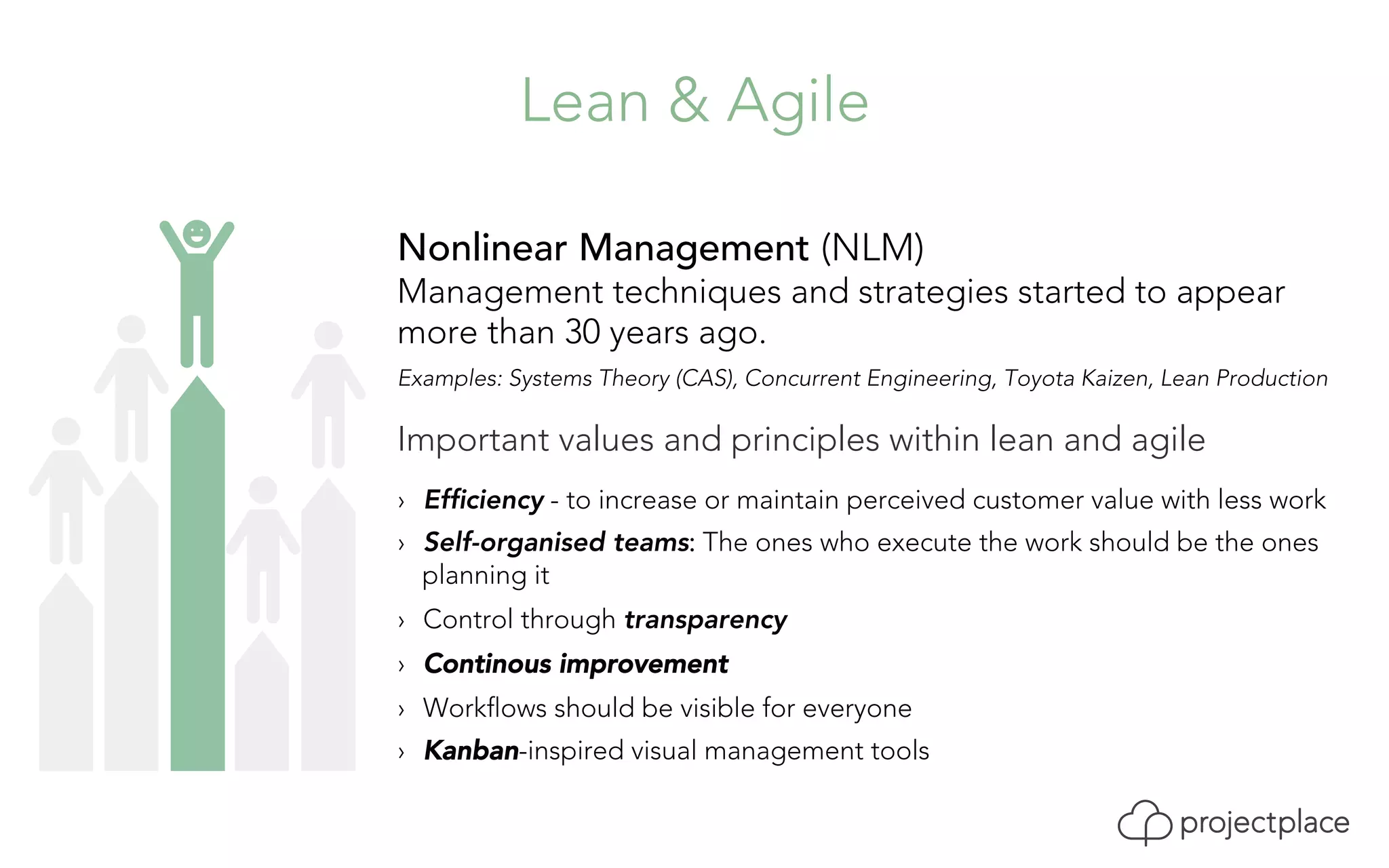
Nonlinear Management (NLM) 
Management techniques and strategies started to appear 
more than 30 years ago. 
Examples: Systems Theory (CAS), Concurrent Engineering, Toyota Kaizen, Lean Production 
Important values and principles within lean and agile 
› Efficiency - to increase or maintain perceived customer value with less work 
› Self-organised teams: The ones who execute the work should be the ones 
planning it 
› Control through transparency 
› Continous improvement 
› Workflows should be visible for everyone 
› Kanban-inspired visual management tools
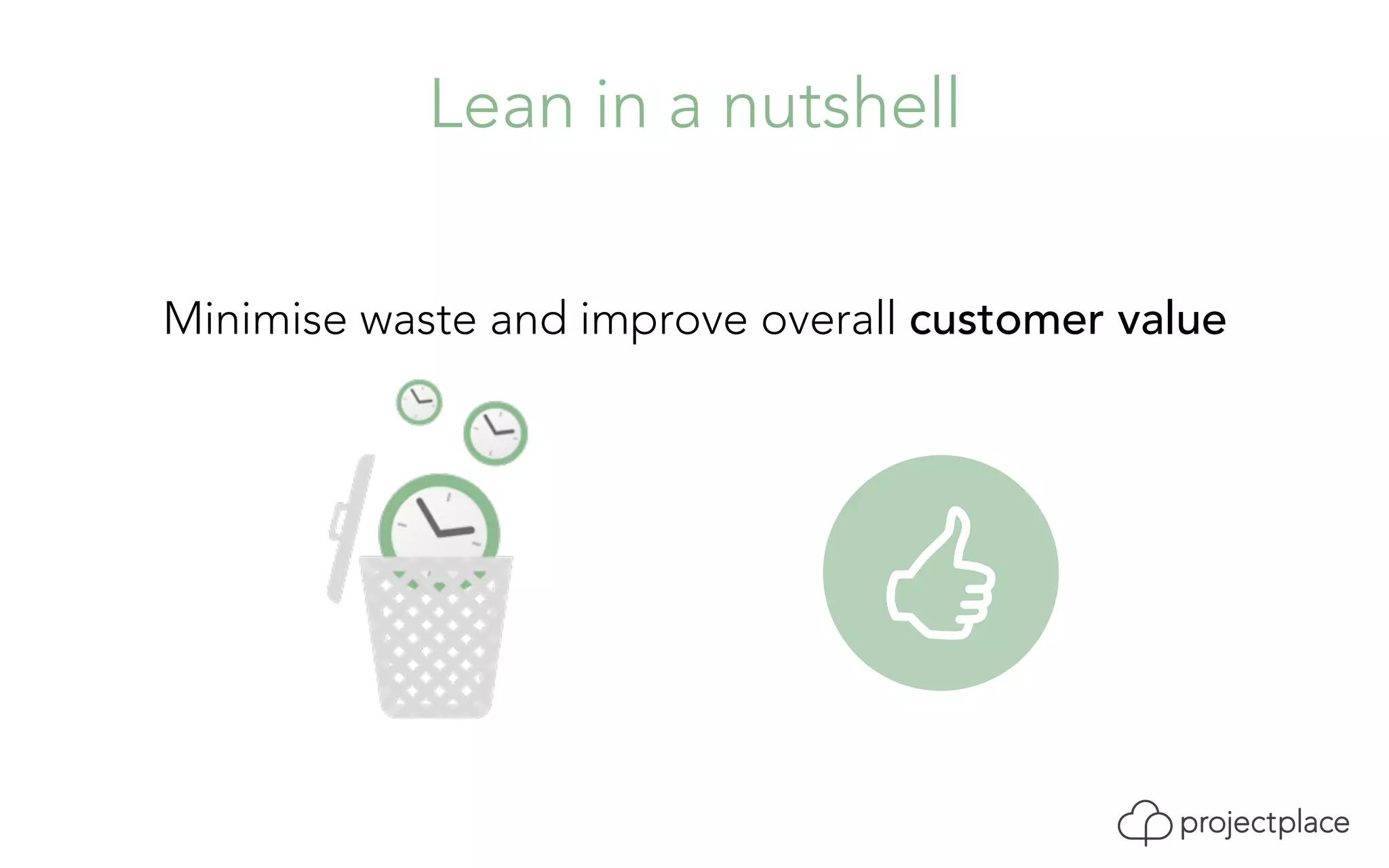
Lean in a nutshell 
Minimise waste and improve overall customer value
Lean 
in Projectplace 
› Working lean is all about reducing waste 
and adding value 
› Communication 
› Visual management tools 
› Standardization 
› Kaizen - Continous improvement
Common Values for Agile Methods 
› Individuals and interactions over processes and tools 
› Working software /solution over comprehensive documentation 
› Customer collaboration over contract negotiation 
› Responding to change over following a plan 
That is, while there is value in the items on 
the right, we value the items on the left more.
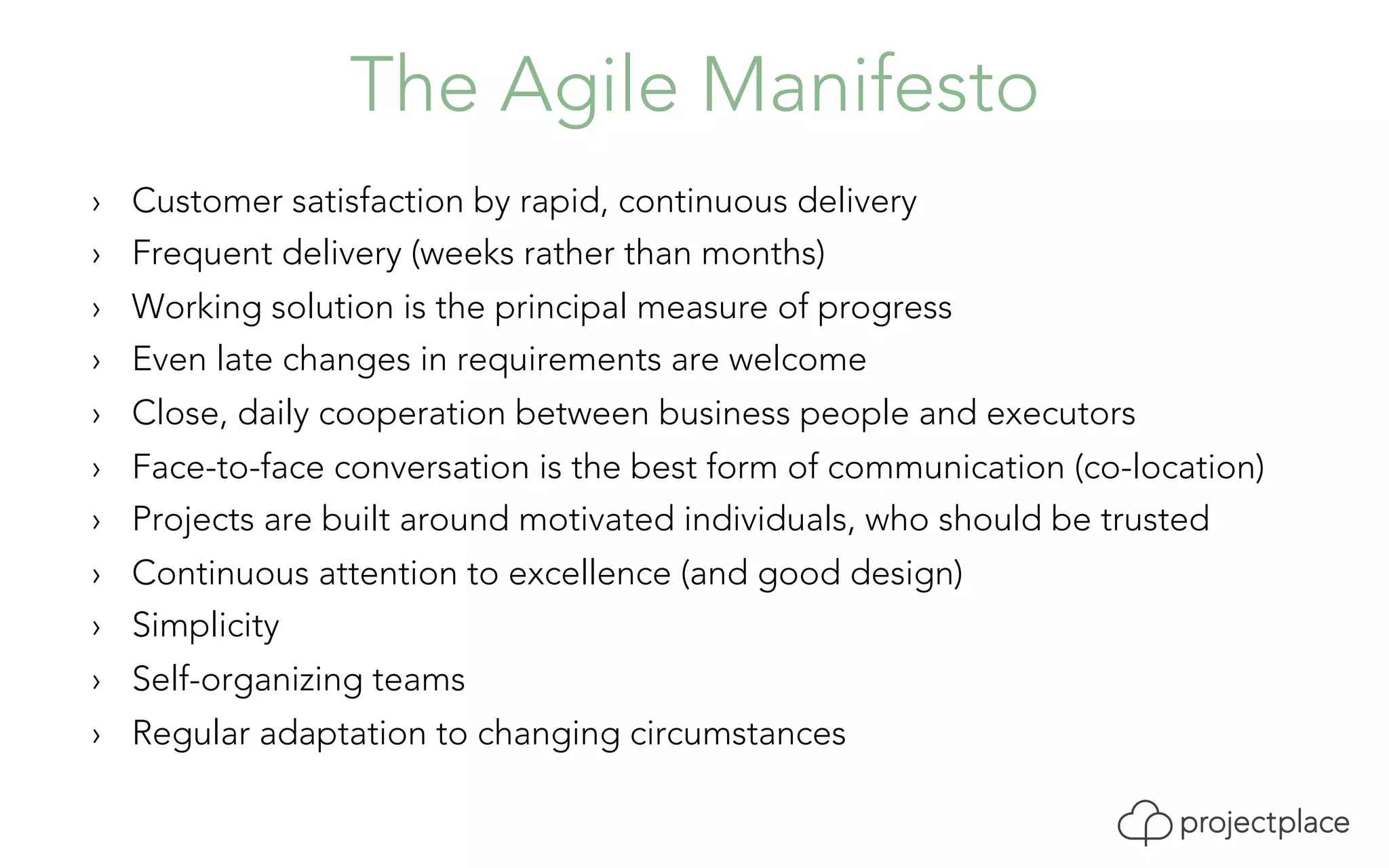
The Agile Manifesto 
› Customer satisfaction by rapid, continuous delivery 
› Frequent delivery (weeks rather than months) 
› Working solution is the principal measure of progress 
› Even late changes in requirements are welcome 
› Close, daily cooperation between business people and executors 
› Face-to-face conversation is the best form of communication (co-location) 
› Projects are built around motivated individuals, who should be trusted 
› Continuous attention to excellence (and good design) 
› Simplicity 
› Self-organizing teams 
› Regular adaptation to changing circumstances
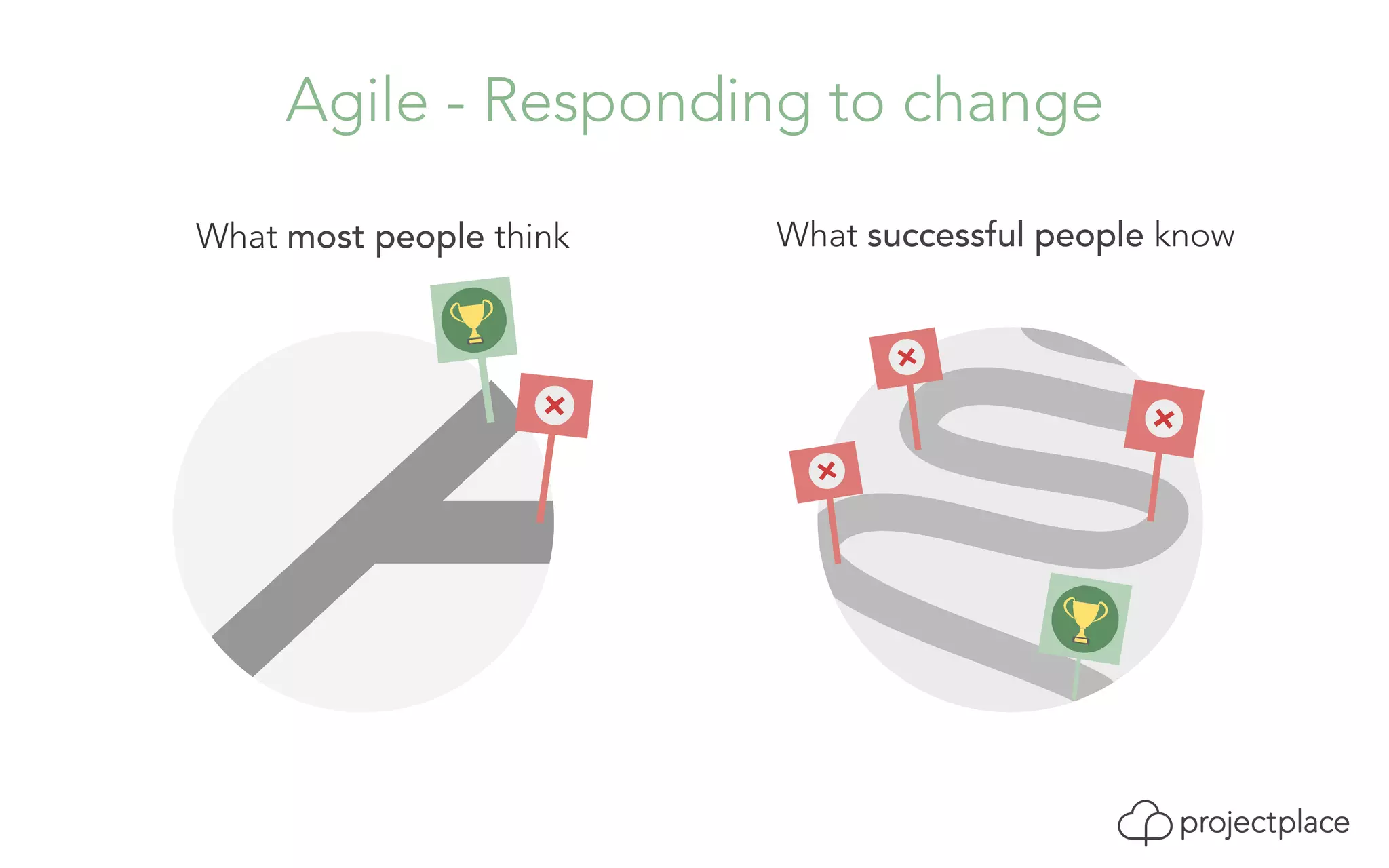
Agile - Responding to change 
What most people think What successful people know
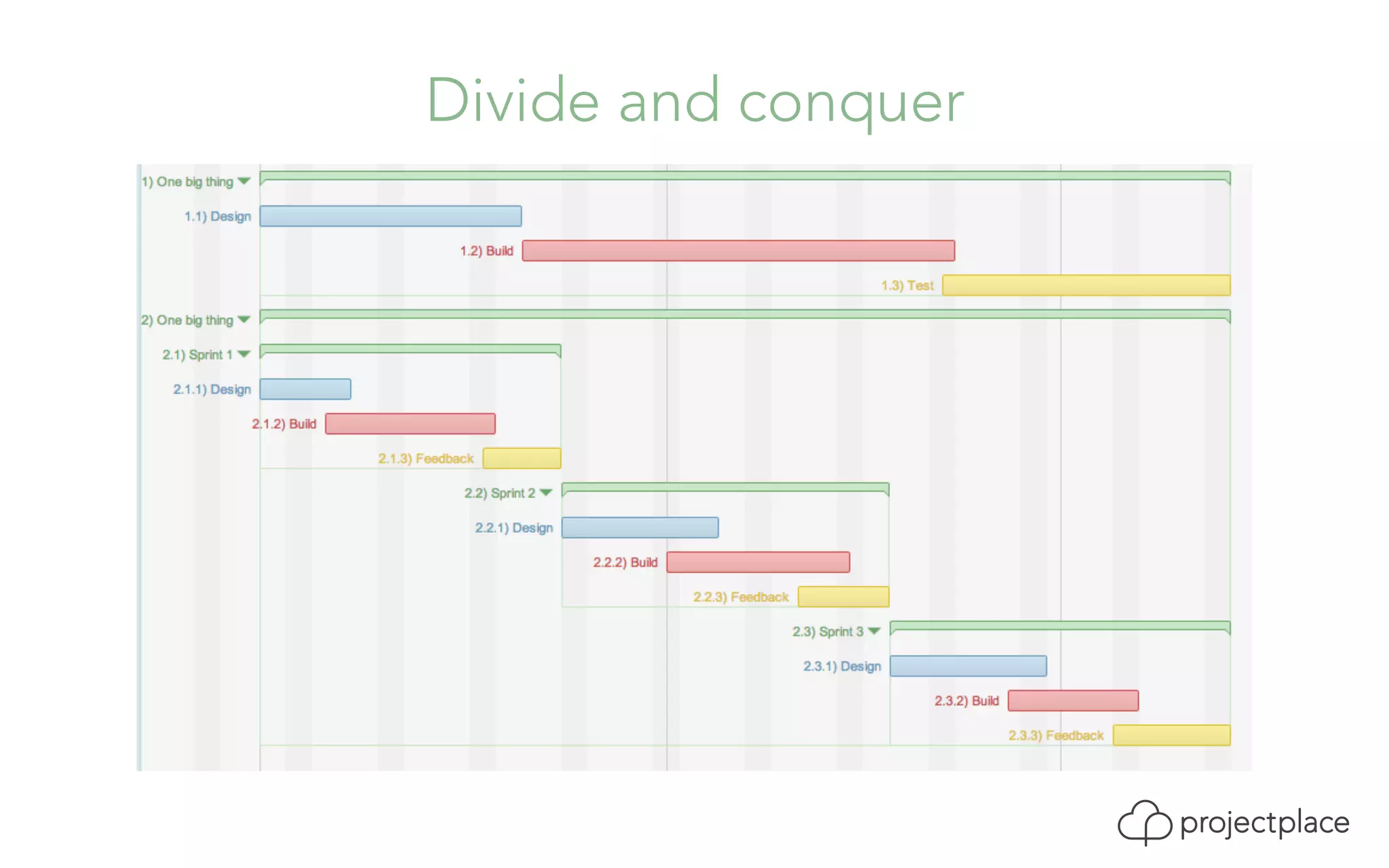
Divide and conquer
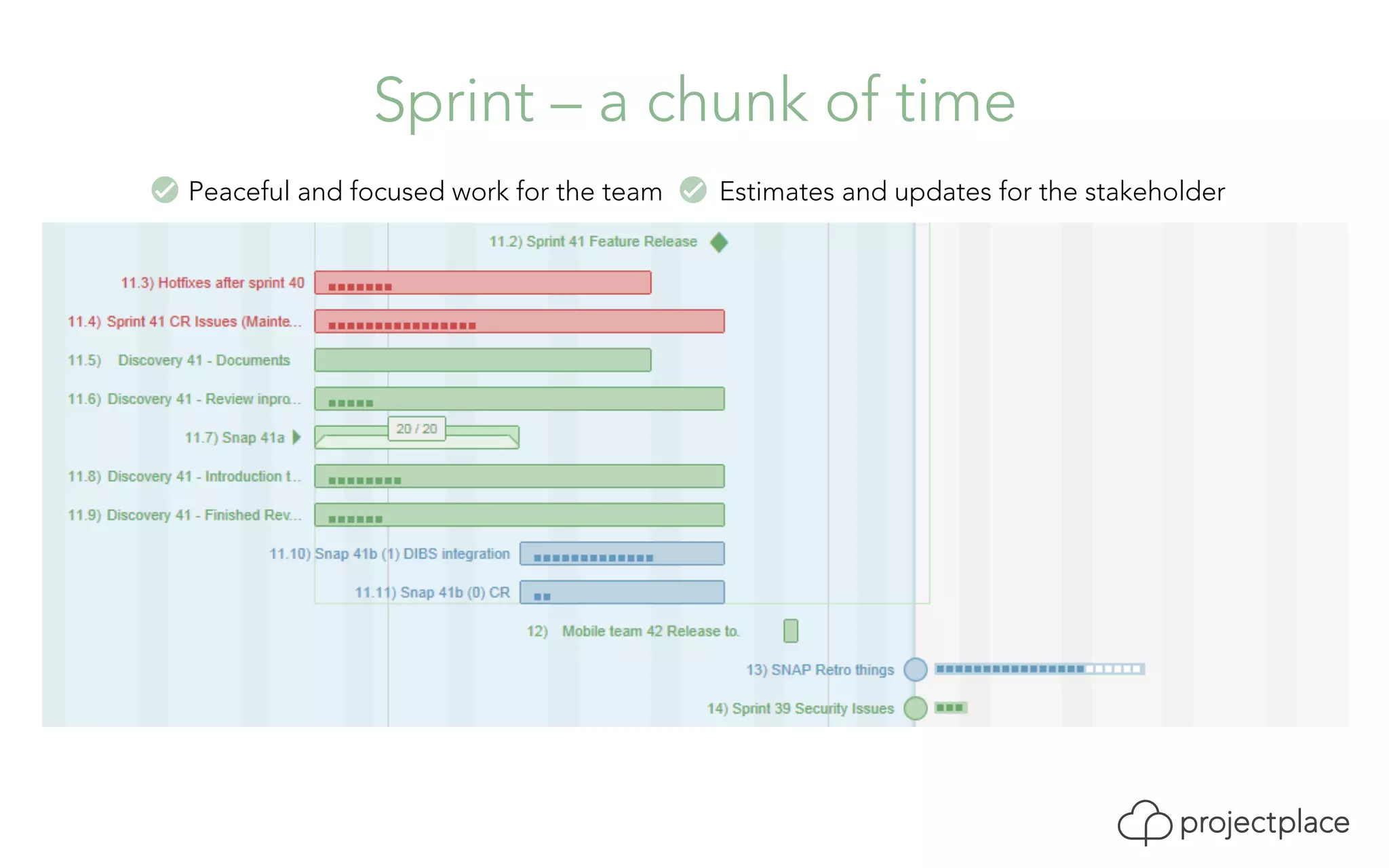
Sprint – a chunk of time 
Peaceful and focused work for the team Estimates and updates for the stakeholder
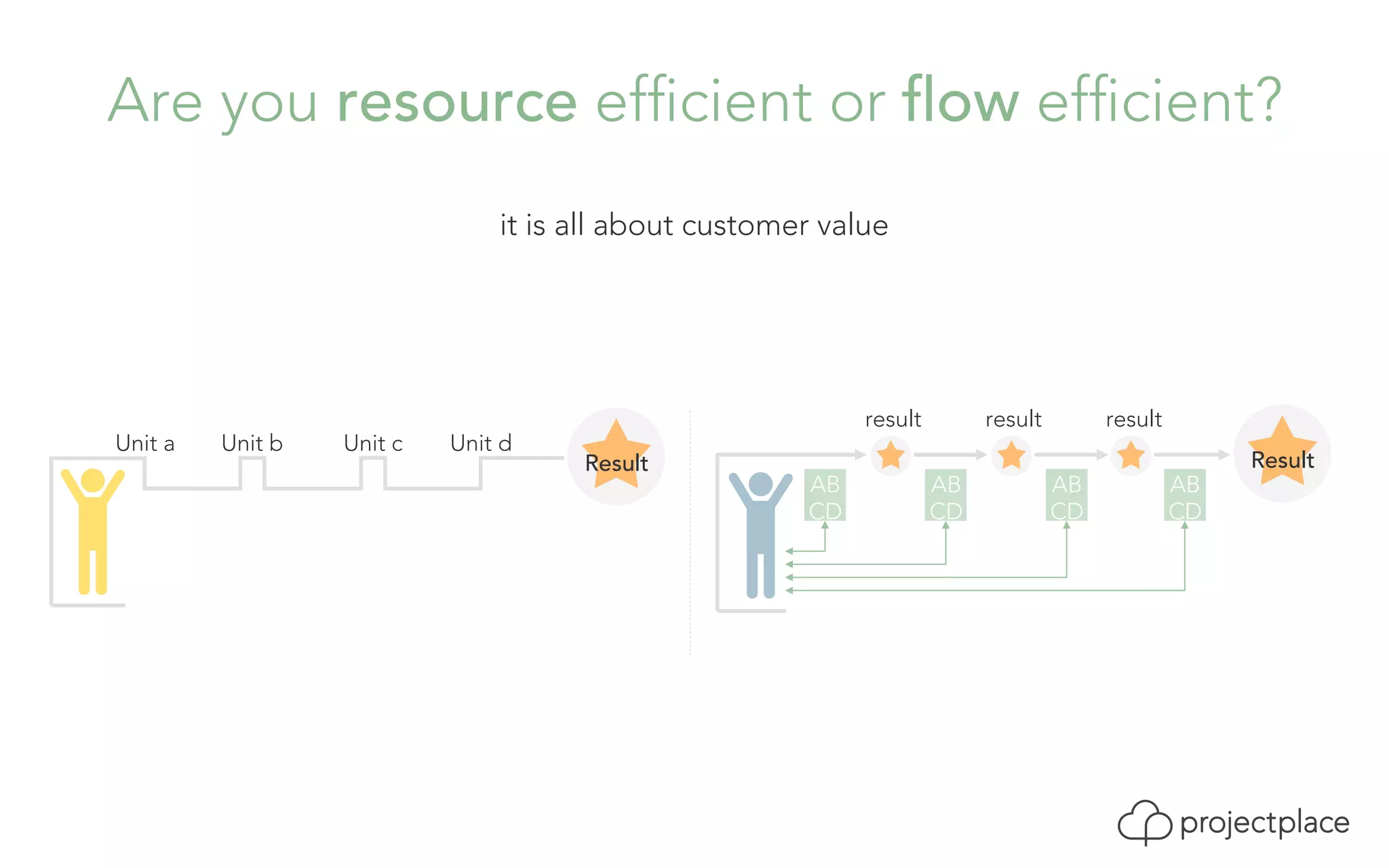
Are you resource efficient or flow efficient? 
it is all about customer value 
Result 
AB 
CD 
AB 
CD 
AB 
CD 
AB 
CD 
result result result 
Unit a Unit b Unit c Unit d 
Result
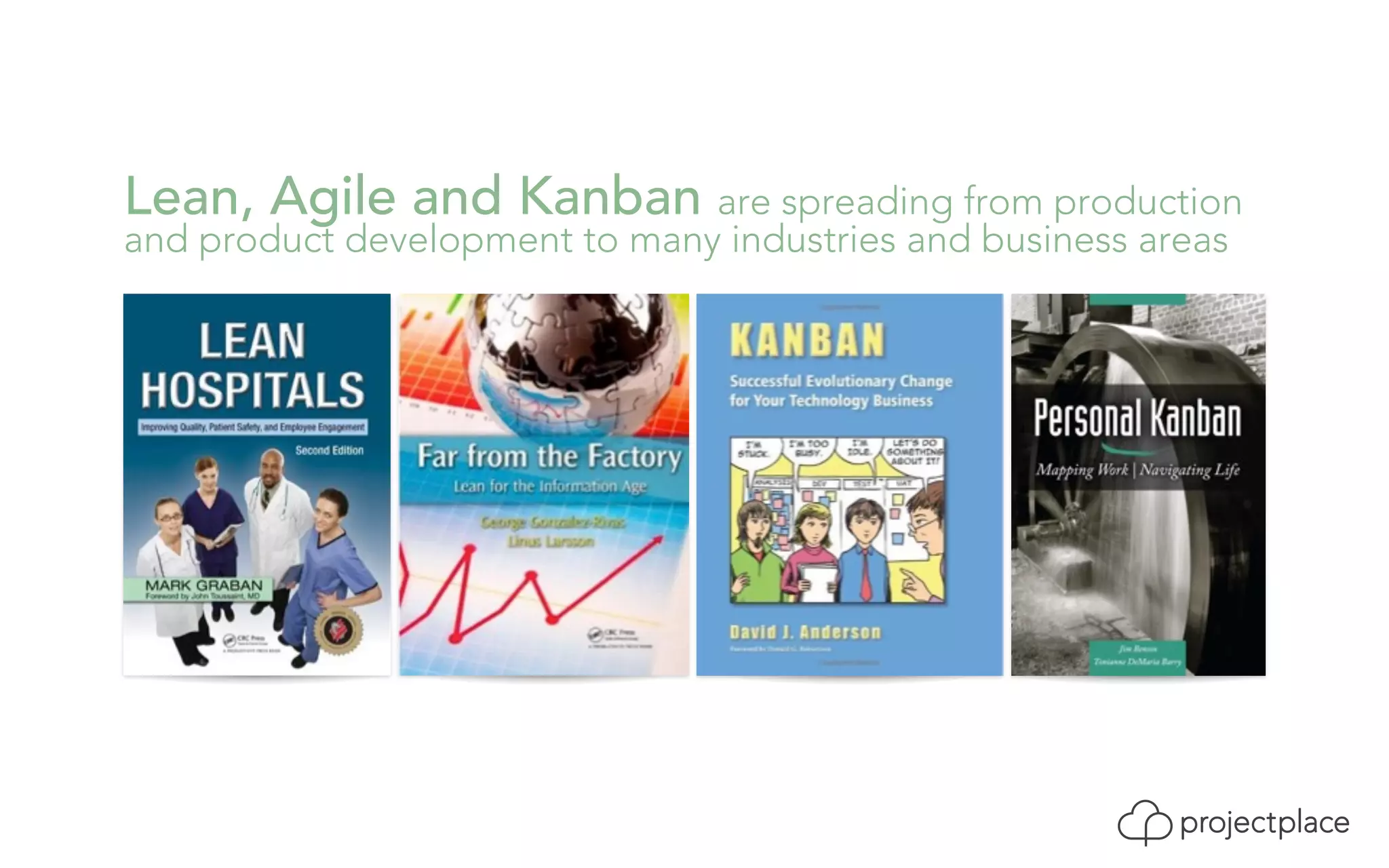
Lean, Agile and Kanban are spreading from production 
and product development to many industries and business areas
How agile are you? 69% or 45%? 
Source: PMI’s Pulse of the Profession: The High Cost of Low Performance February 2014
Collaboration
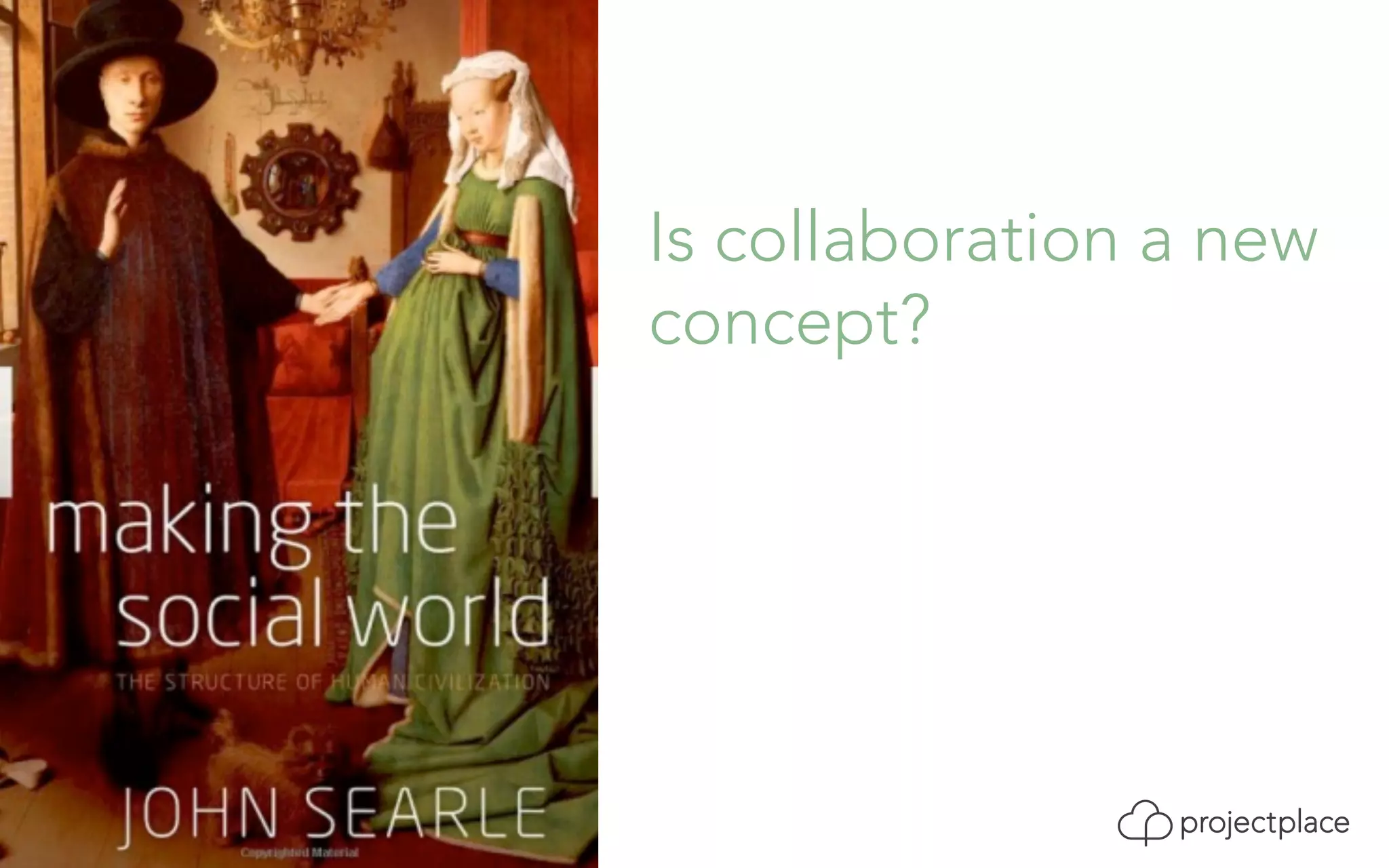
Is collaboration a new 
concept?
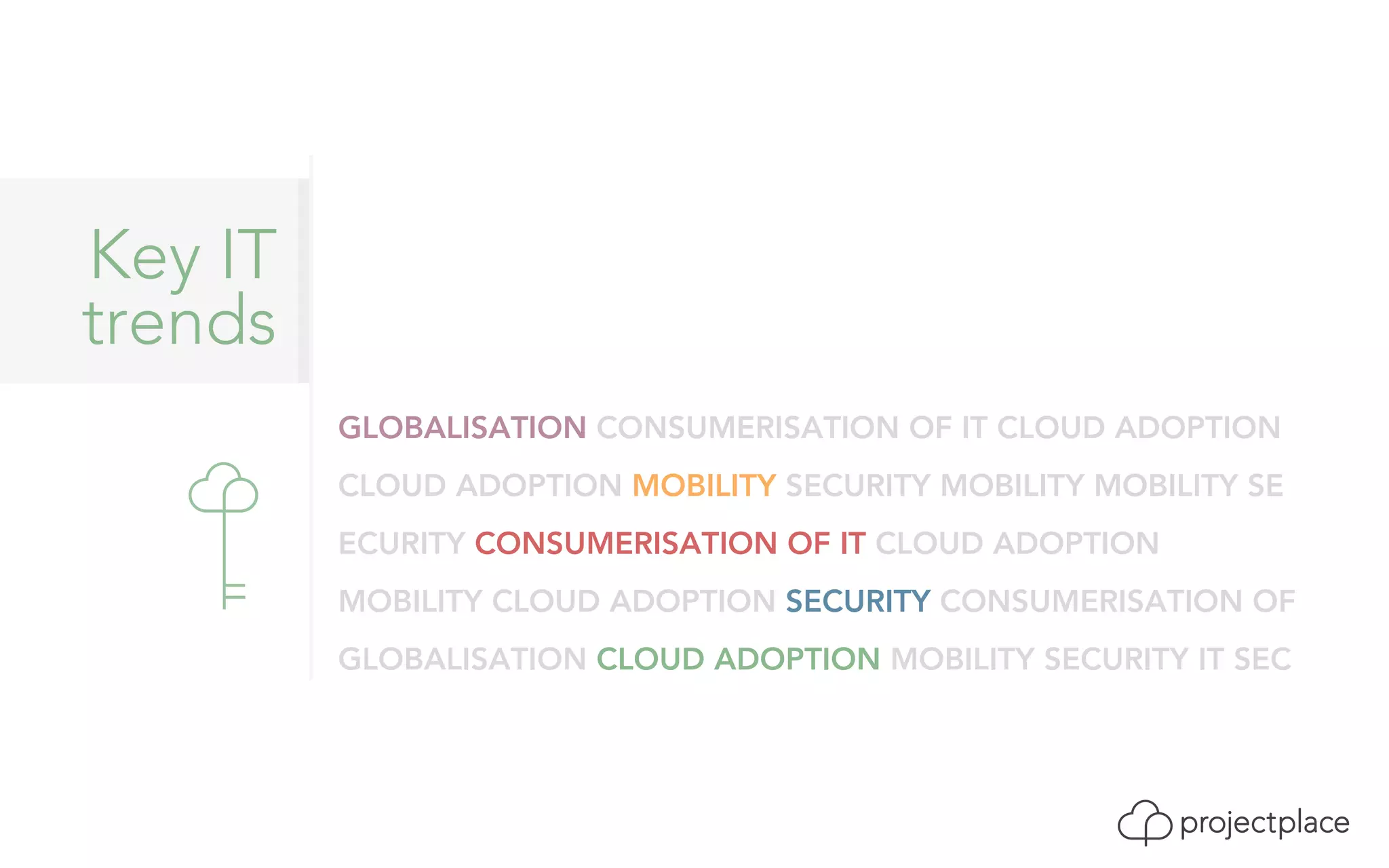
GLOBALISATION CONSUMERISATION OF IT CLOUD ADOPTION 
CLOUD ADOPTION MOBILITY SECURITY MOBILITY MOBILITY SE 
ECURITY CONSUMERISATION OF IT CLOUD ADOPTION 
MOBILITY CLOUD ADOPTION SECURITY CONSUMERISATION OF 
GLOBALISATION CLOUD ADOPTION MOBILITY SECURITY IT SEC 
Key IT 
trends
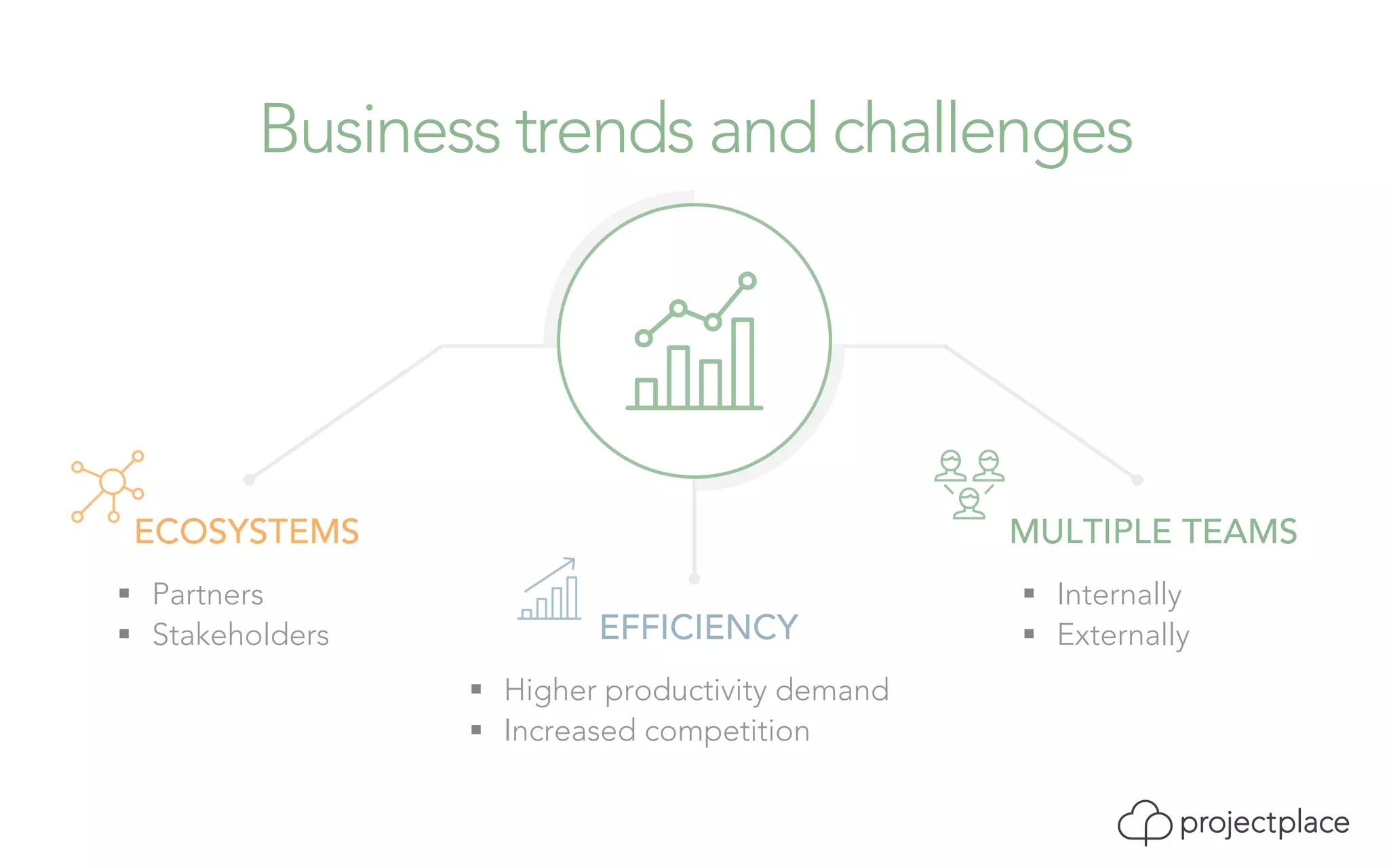
Business trends and challenges 
§ Internally 
§ Externally 
§ Higher productivity demand 
§ Increased competition 
ECOSYSTEMS 
§ Partners 
§ Stakeholders 
EFFICIENCY 
MULTIPLE TEAMS
Kanban boards, 
The next big collaboration trend 
How come?
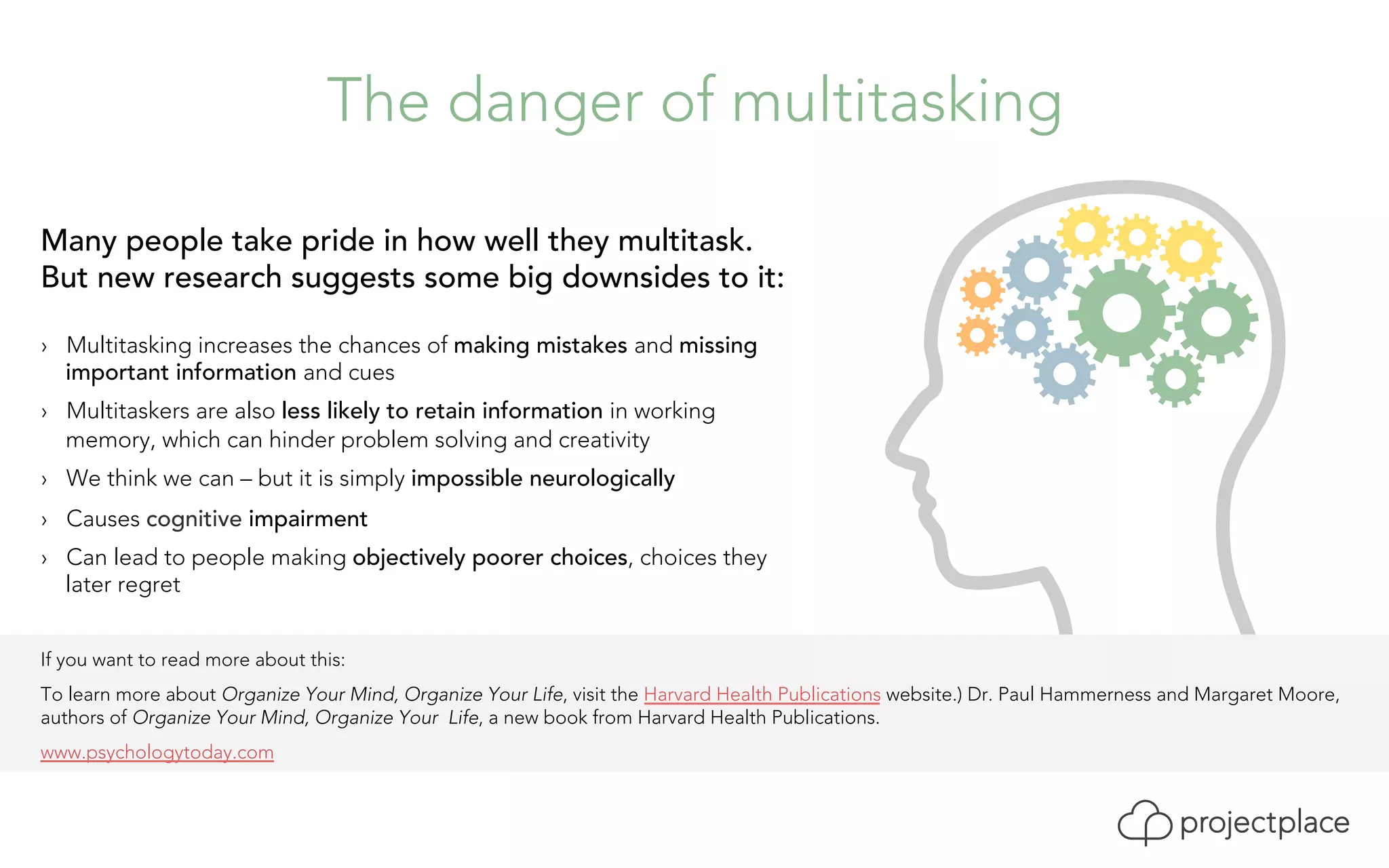
The danger of multitasking 
Many people take pride in how well they multitask. 
But new research suggests some big downsides to it: 
› Multitasking increases the chances of making mistakes and missing 
important information and cues 
› Multitaskers are also less likely to retain information in working 
memory, which can hinder problem solving and creativity 
› We think we can – but it is simply impossible neurologically 
› Causes cognitive impairment 
› Can lead to people making objectively poorer choices, choices they 
later regret 
If you want to read more about this: 
To learn more about Organize Your Mind, Organize Your Life, visit the Harvard Health Publications website.) Dr. Paul Hammerness and Margaret Moore, 
authors of Organize Your Mind, Organize Your Life, a new book from Harvard Health Publications. 
www.psychologytoday.com
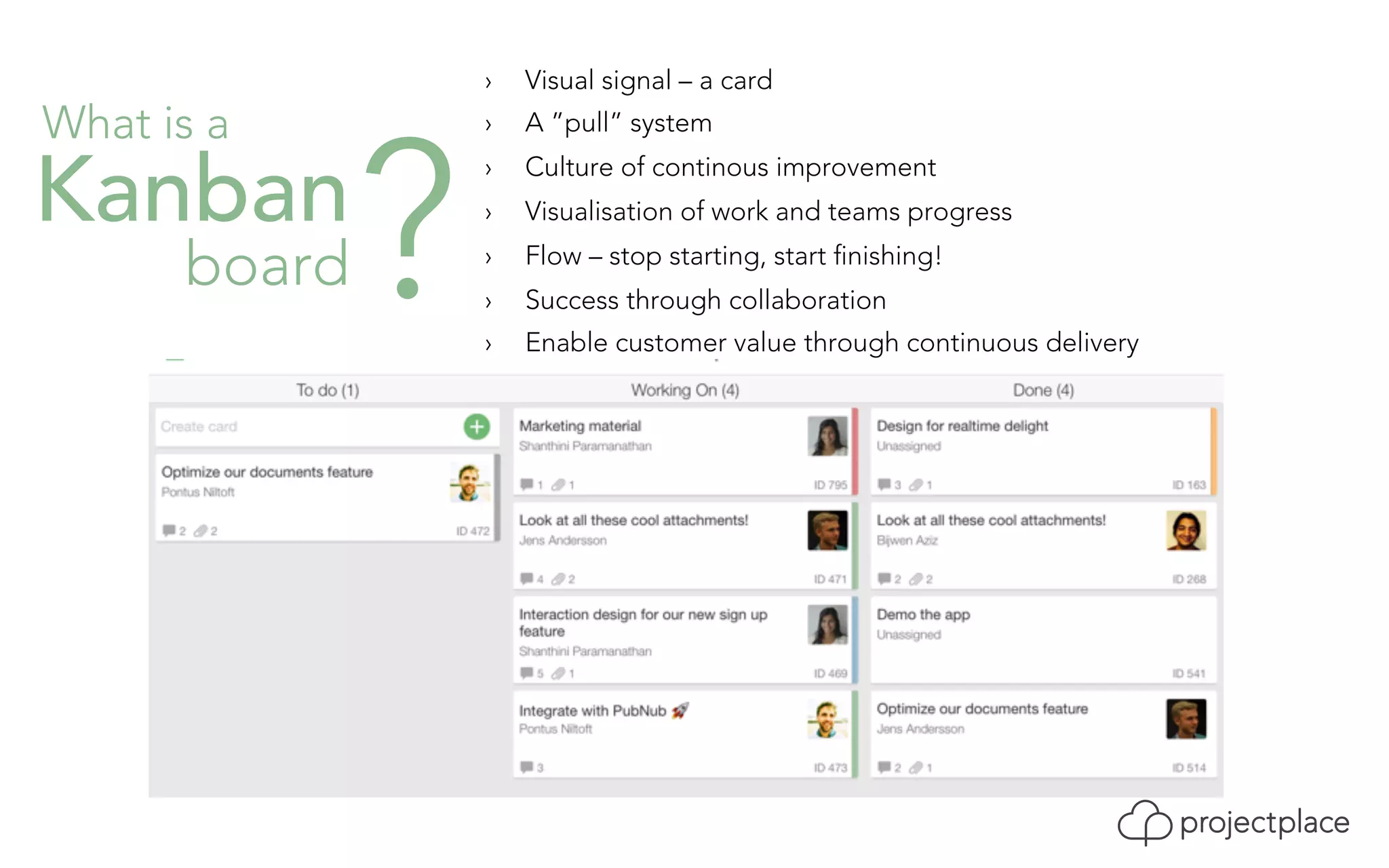
Kanban 
board 
› Visual signal – a card 
› A ”pull” system 
› Culture of continous improvement 
› Visualisation of work and teams progress 
› Flow – stop starting, start finishing! 
› Success through collaboration 
› Enable customer value through continuous delivery 
What is a ?
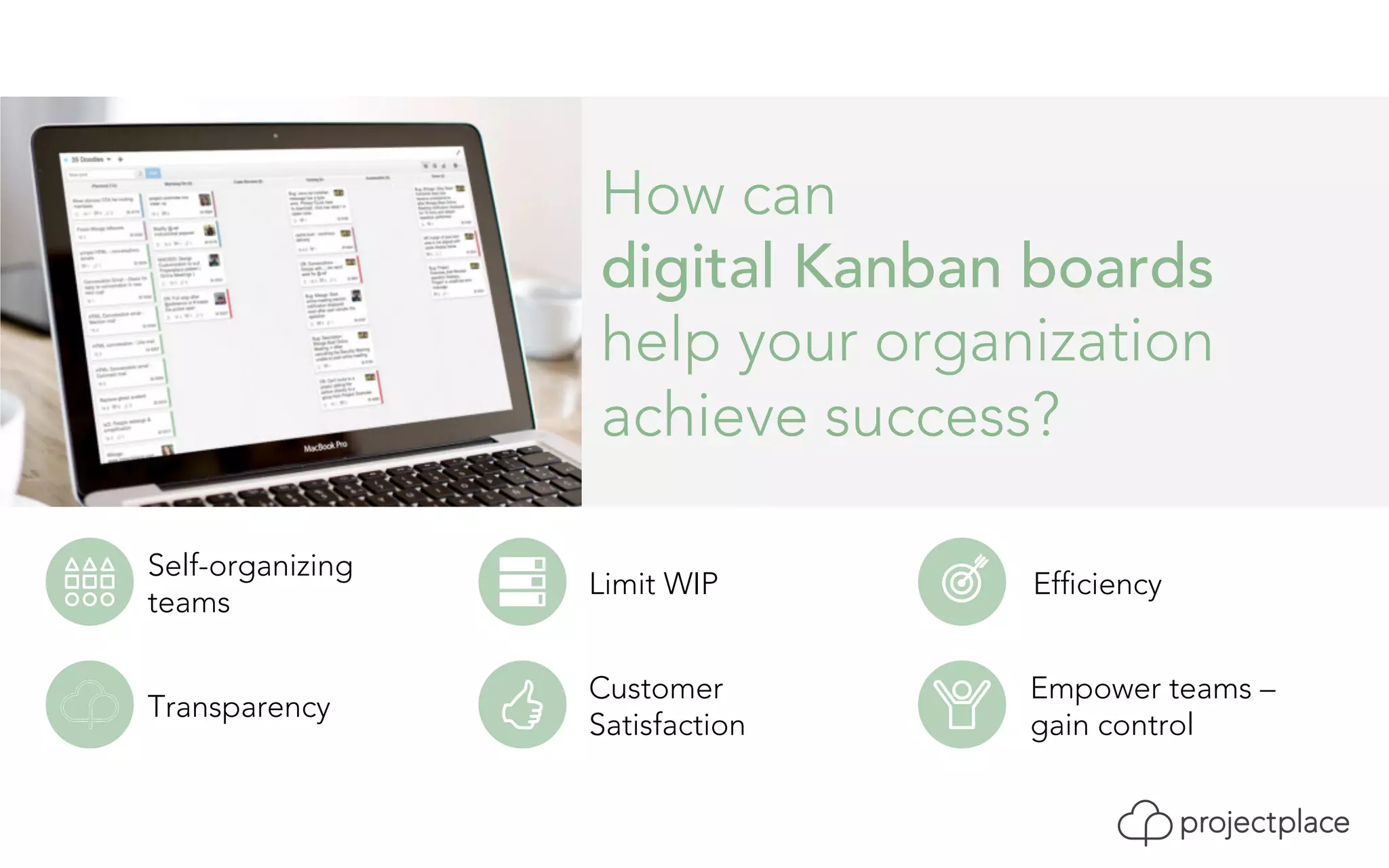
How can 
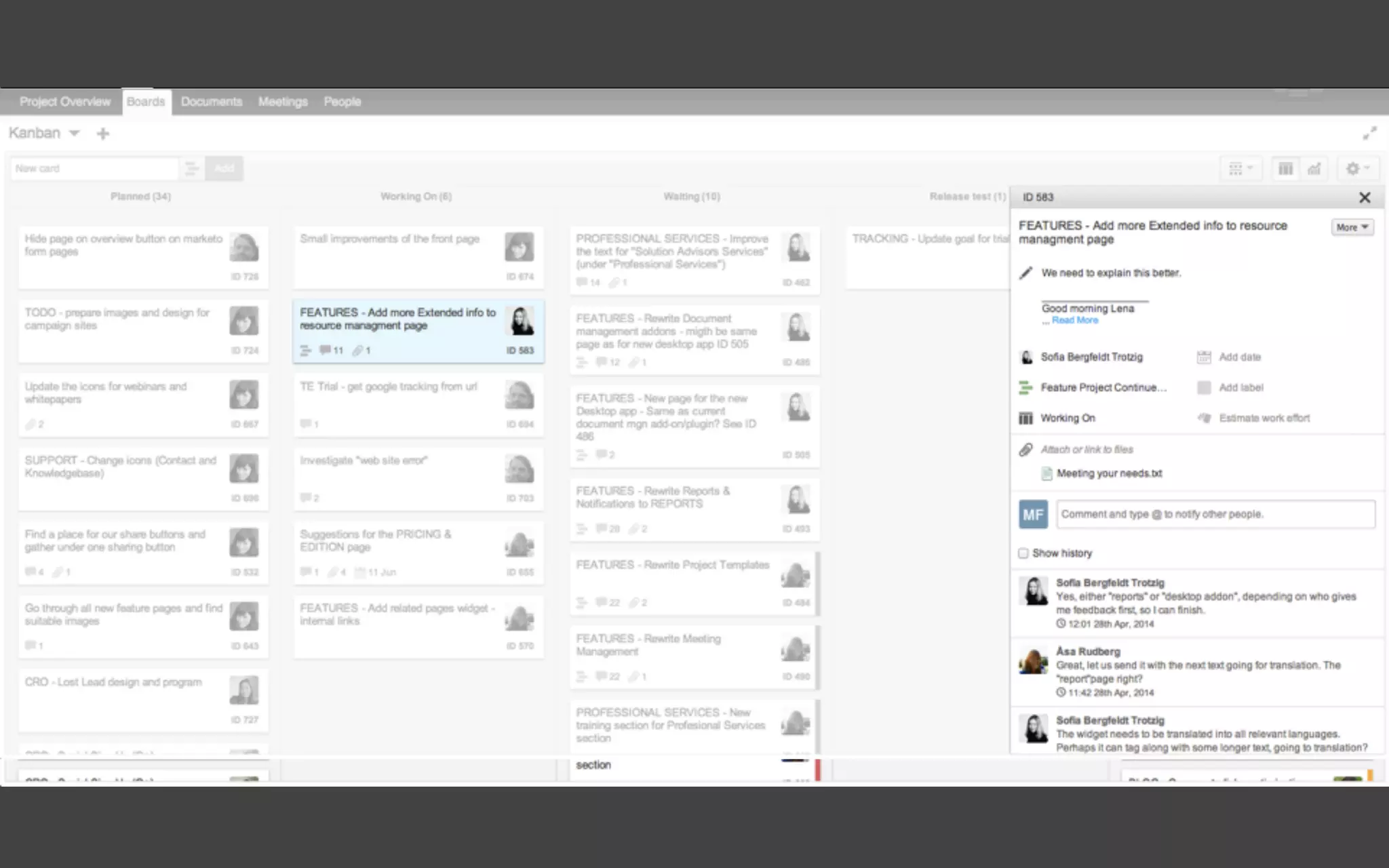
digital Kanban boards 
help your organization 
achieve success? 
Efficiency 
Empower teams – 
gain control 
Self-organizing 
teams 
Transparency 
Limit WIP 
Customer 
Satisfaction
Visualisation & Transparency
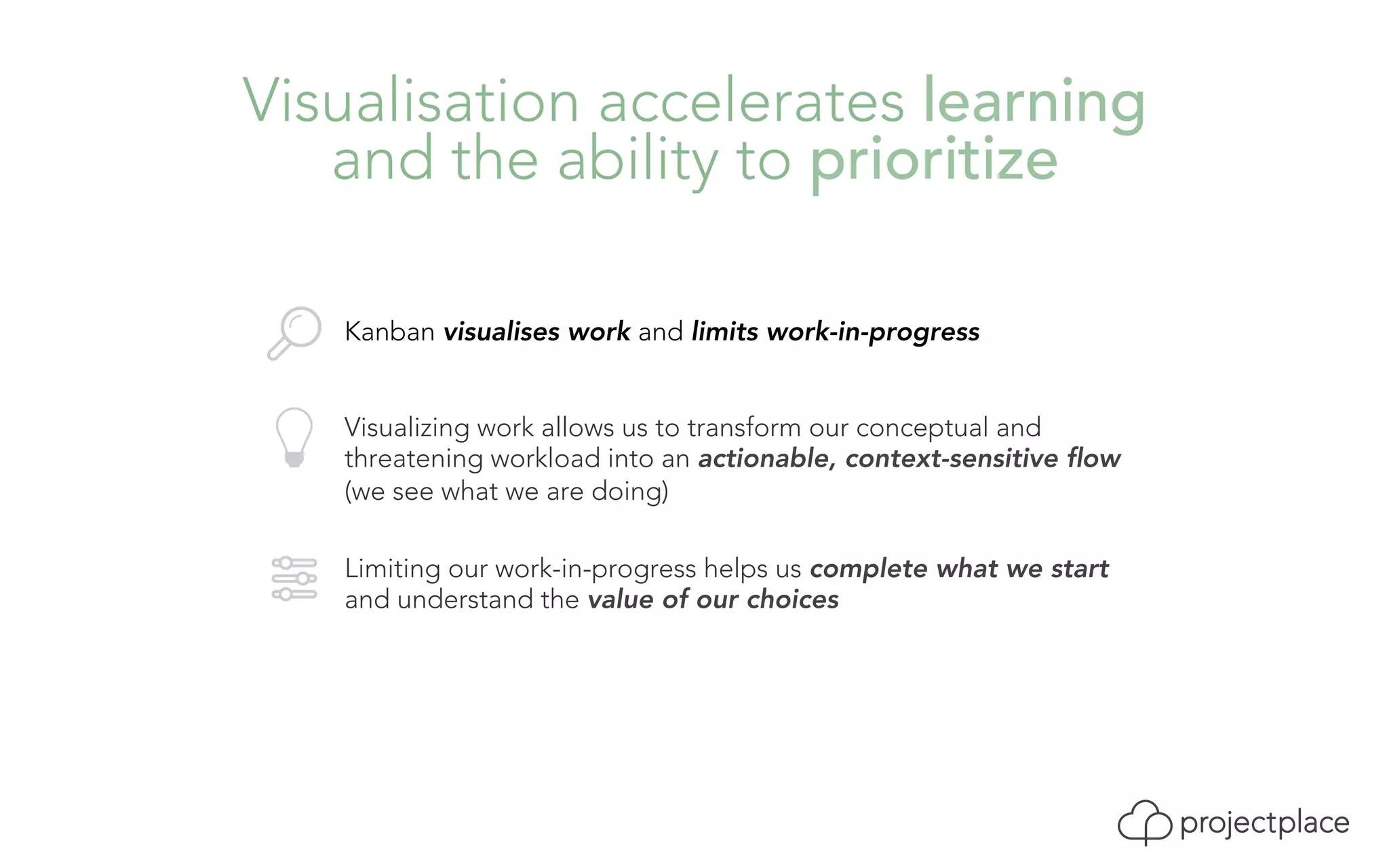
Visualisation accelerates learning 
and the ability to prioritize 
Kanban visualises work and limits work-in-progress 
Visualizing work allows us to transform our conceptual and 
threatening workload into an actionable, context-sensitive flow 
(we see what we are doing) 
Limiting our work-in-progress helps us complete what we start 
and understand the value of our choices
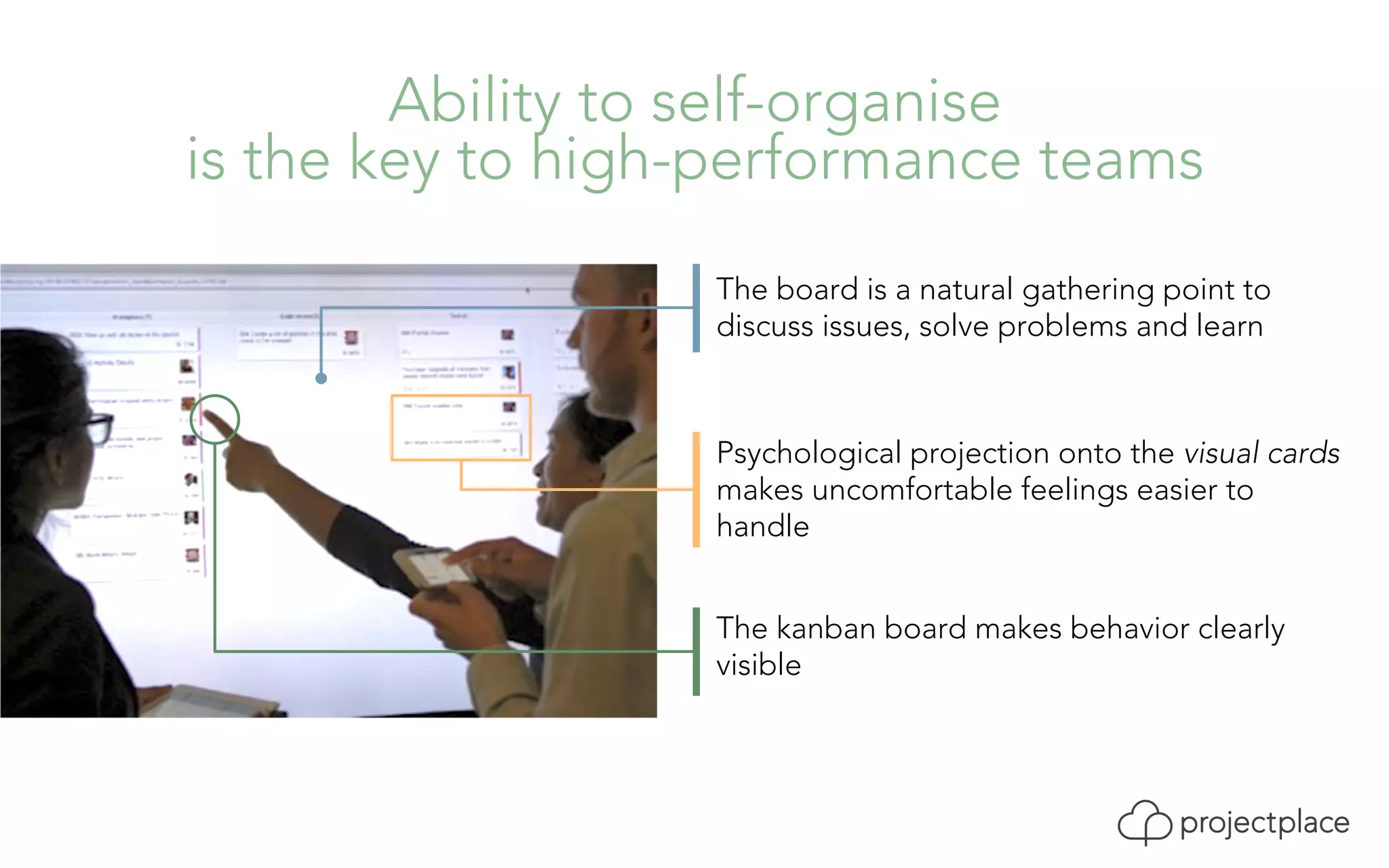
Ability to self-organise 
is the key to high-performance teams 
The board is a natural gathering point to 
discuss issues, solve problems and learn 
Psychological projection onto the visual cards 
makes uncomfortable feelings easier to 
handle 
The kanban board makes behavior clearly 
visible
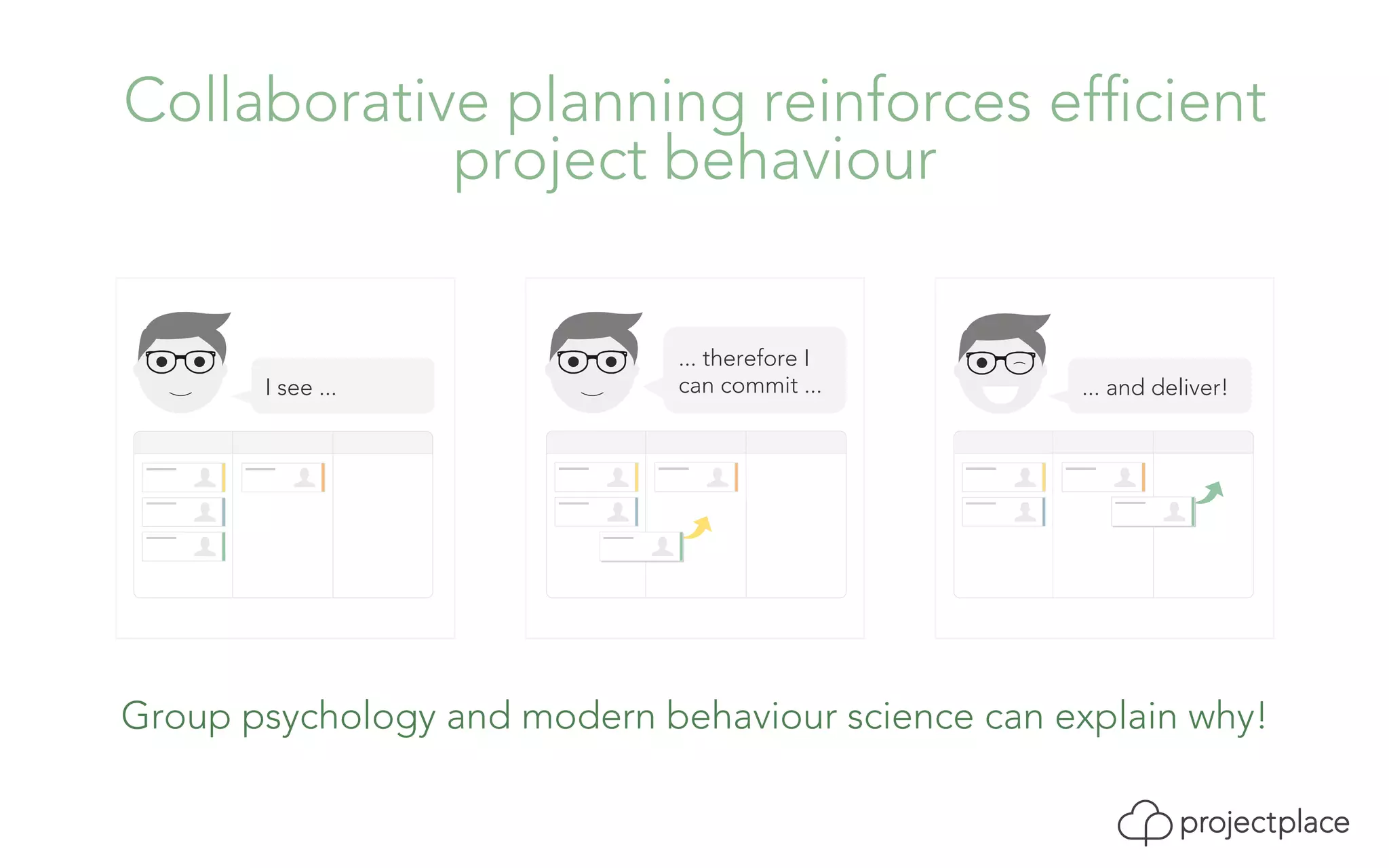
Collaborative planning reinforces efficient 
project behaviour 
I see ... 
... therefore I 
can commit ... ... and deliver! 
Group psychology and modern behaviour science can explain why!
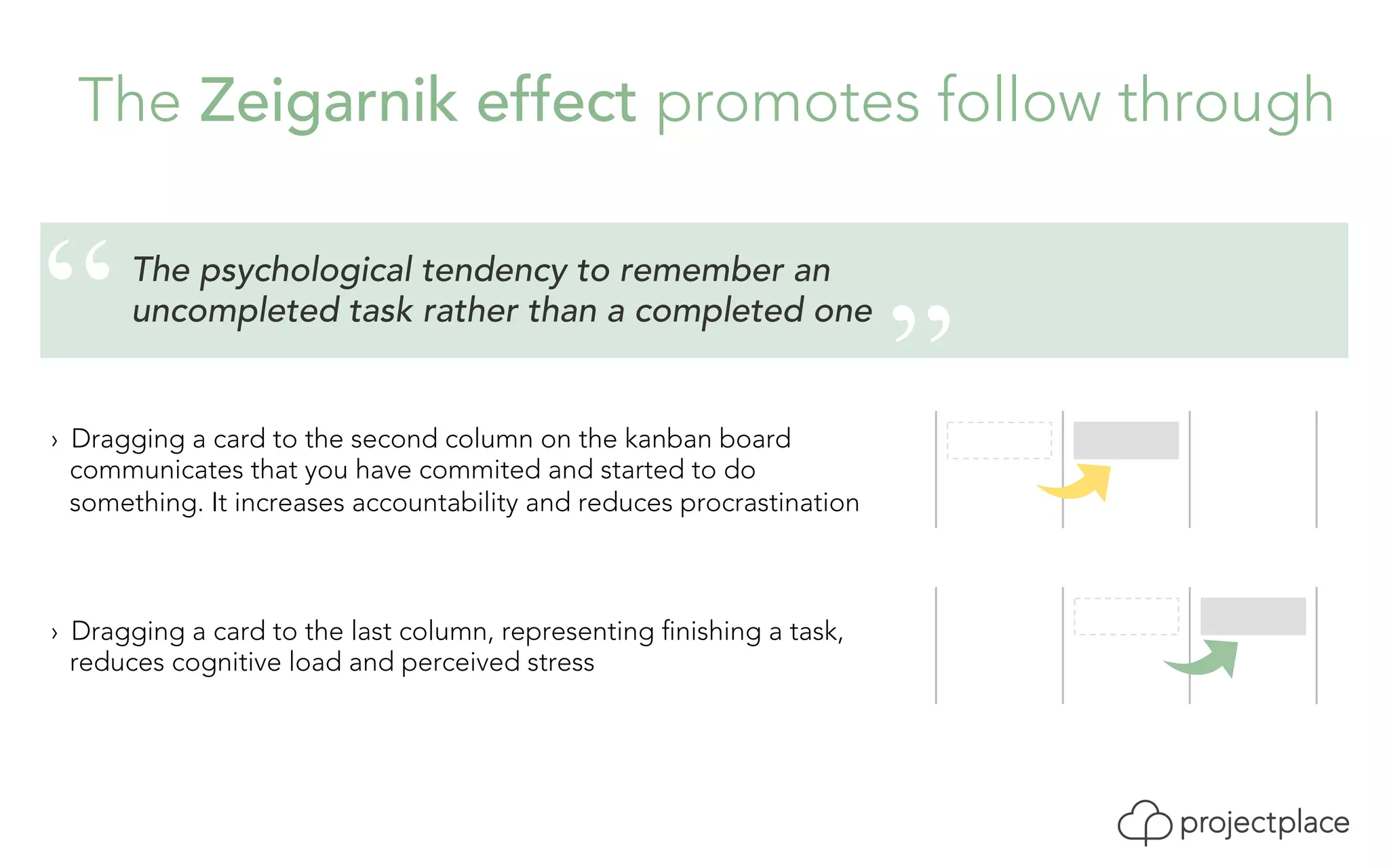
The Zeigarnik effect promotes follow through 
The psychological tendency to remember an 
uncompleted task rather than a completed one 
› Dragging a card to the second column on the kanban board 
communicates that you have commited and started to do 
something. It increases accountability and reduces procrastination 
› Dragging a card to the last column, representing finishing a task, 
reduces cognitive load and perceived stress
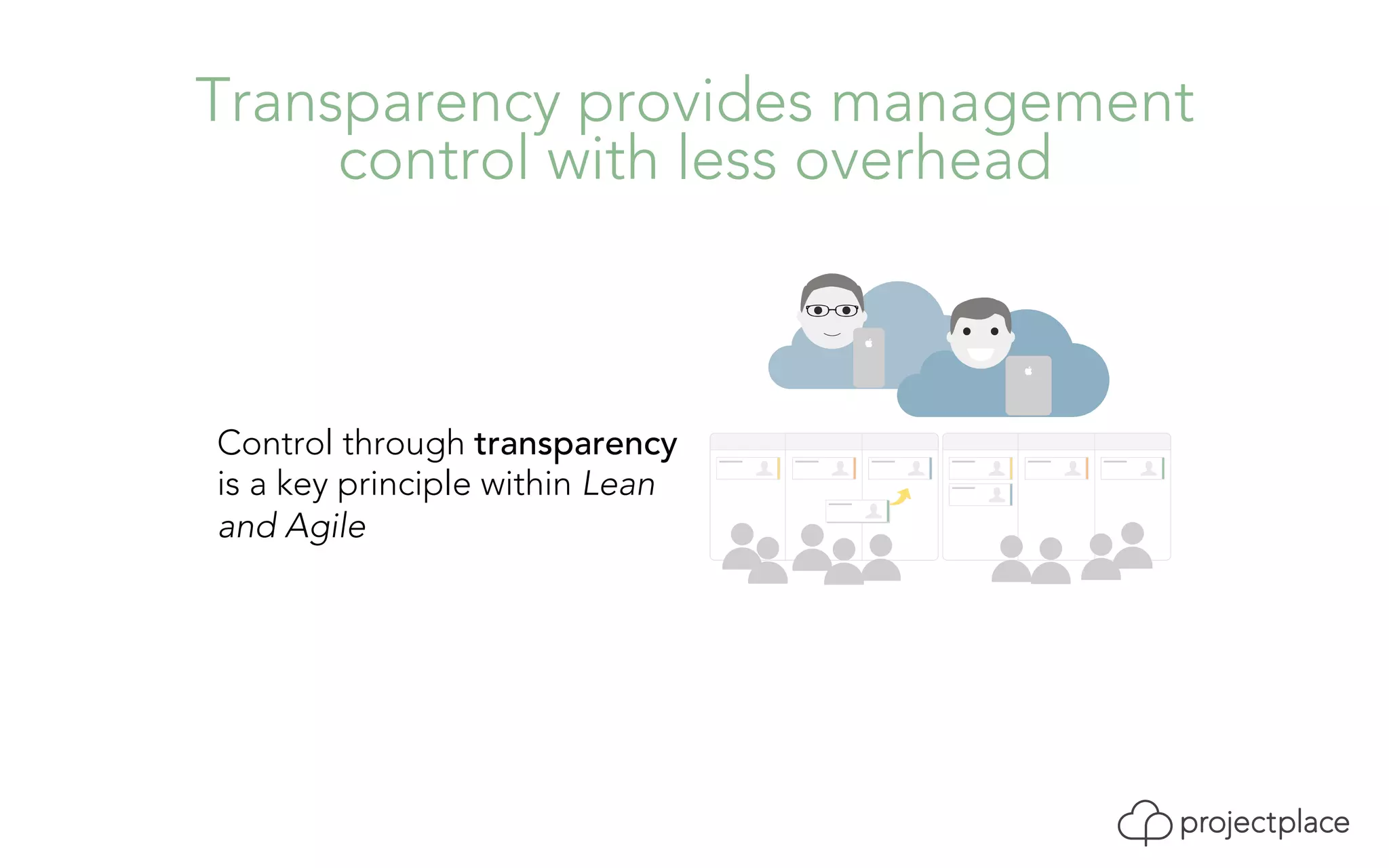
Transparency provides management 
control with less overhead 
Control through transparency 
is a key principle within Lean 
and Agile
Management – shaping behaviours
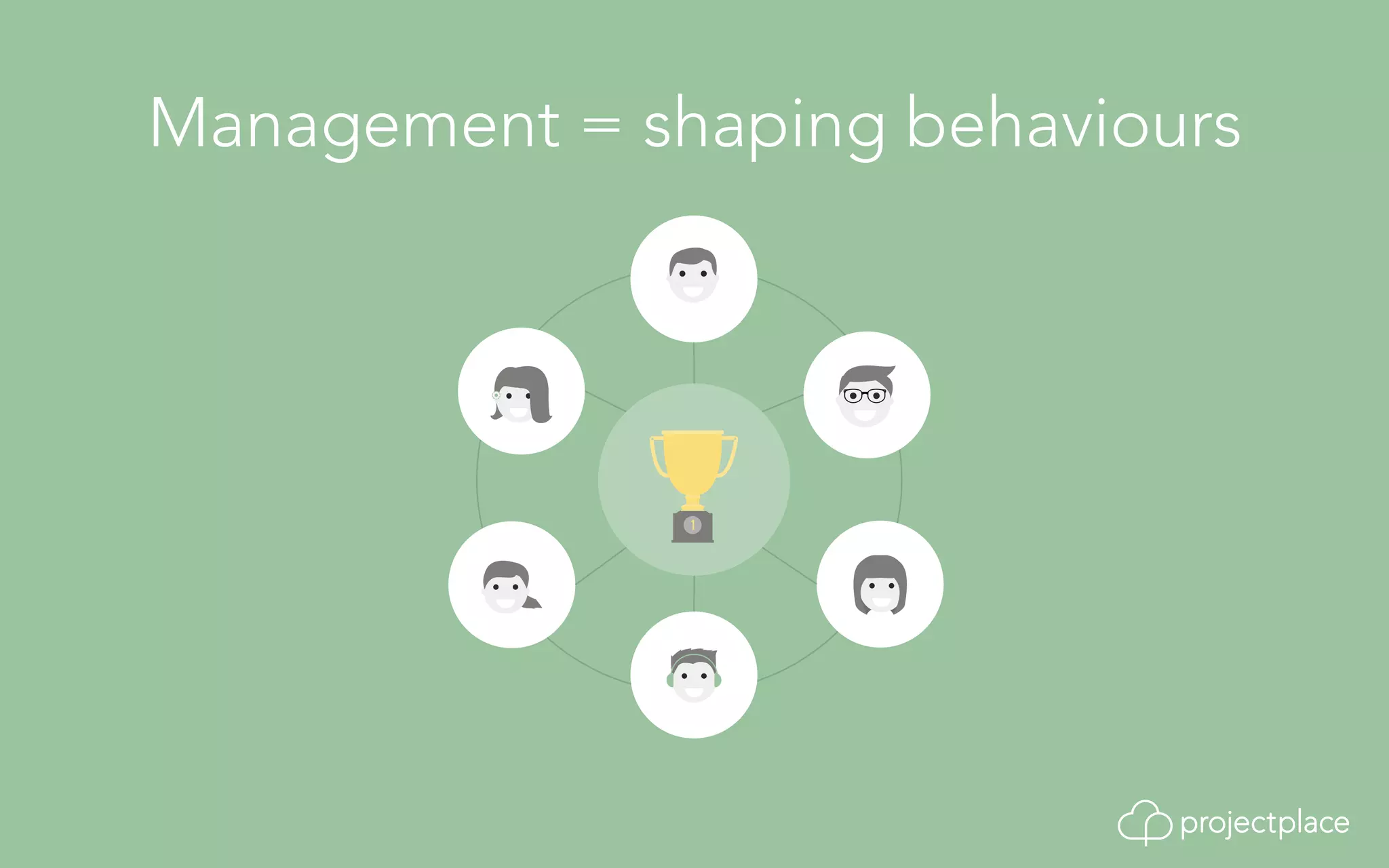
Management = shaping behaviours
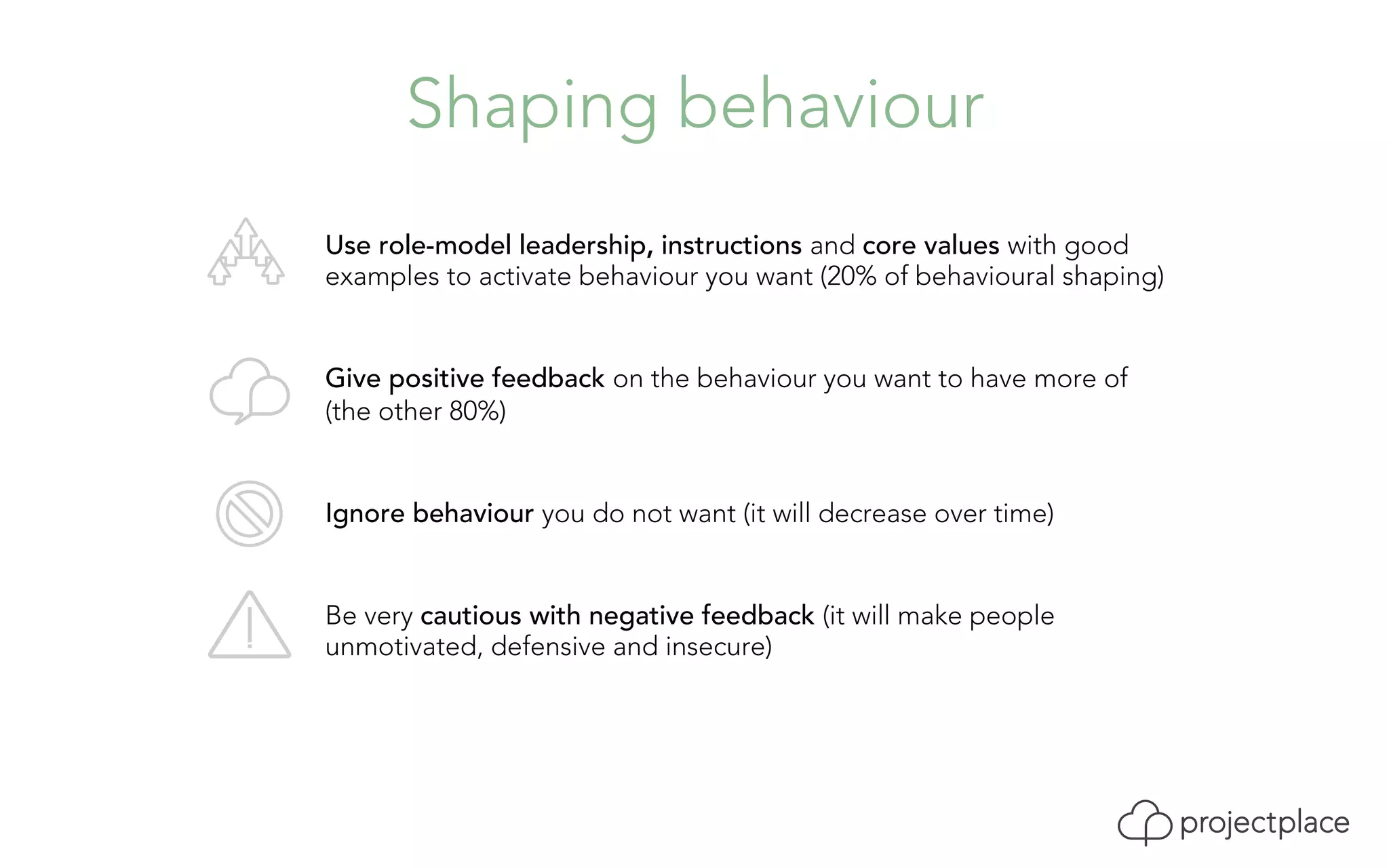
Shaping behaviour 
Use role-model leadership, instructions and core values with good 
examples to activate behaviour you want (20% of behavioural shaping) 
Give positive feedback on the behaviour you want to have more of 
(the other 80%) 
Ignore behaviour you do not want (it will decrease over time) 
Be very cautious with negative feedback (it will make people 
unmotivated, defensive and insecure)
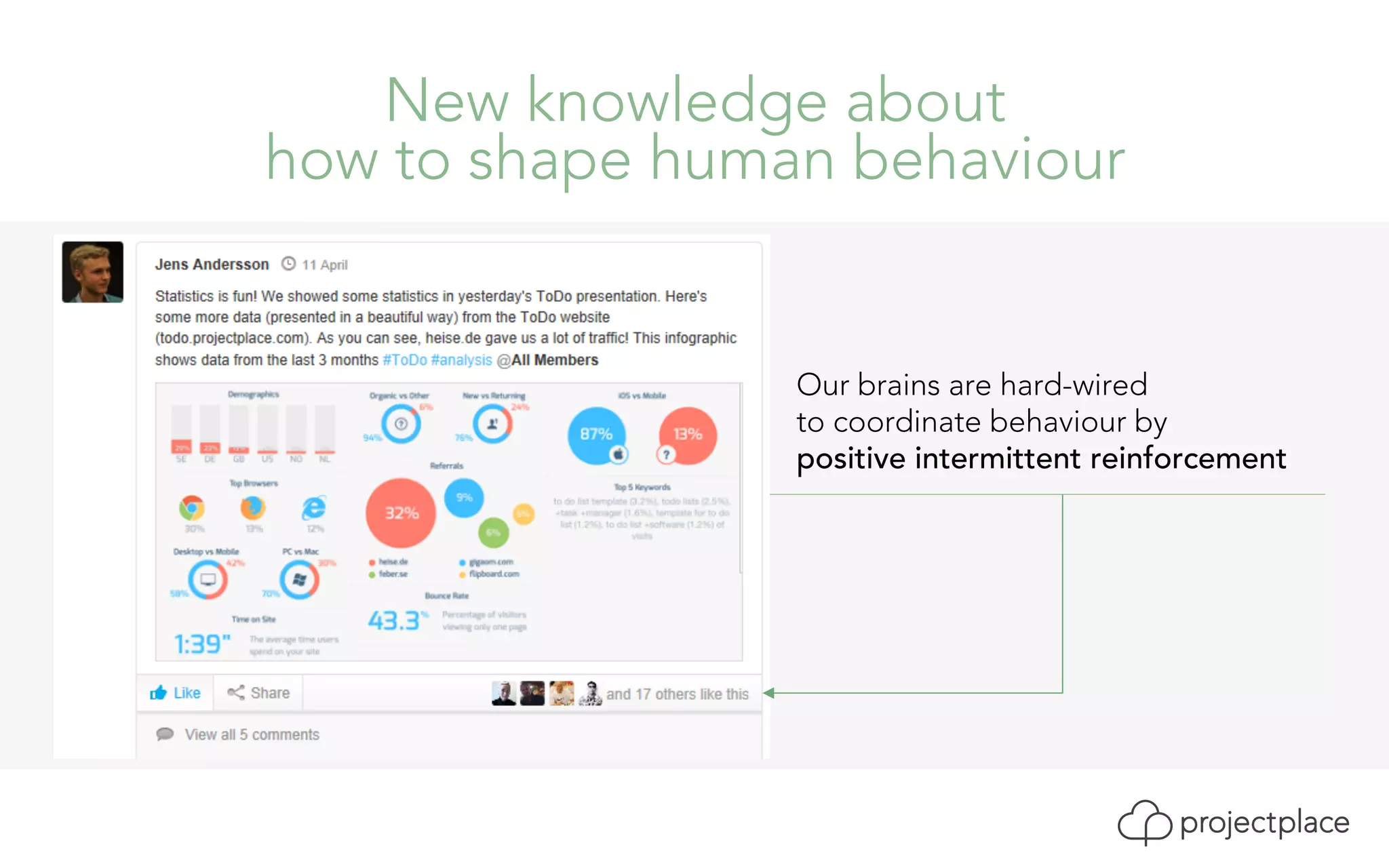
New knowledge about 
how to shape human behaviour 
Our brains are hard-wired 
to coordinate behaviour by 
positive intermittent reinforcement
Projects 
An essential key to success
5 new project buzzwords 
1. Rolling-Wave Planning 
JIT, eliminate waste, adapt, plan to learn 
2. Lean, Agile & Kanban 
Visualize Workflows, Control through Transparency, Kanban-inspired visual management tools 
3. Customer-Centric 
Stakeholder involvement increases perceived project value 
4. Activity Streams 
New social technology can be used to shape effective behaviour. Why is this working? We are 
made for collaboration! 
5. Social 
There is no turning back, PM best practice and theory will be based on behaviour science + 
new collaborative technology. It may not be labeled social, but it will be more social than ever.
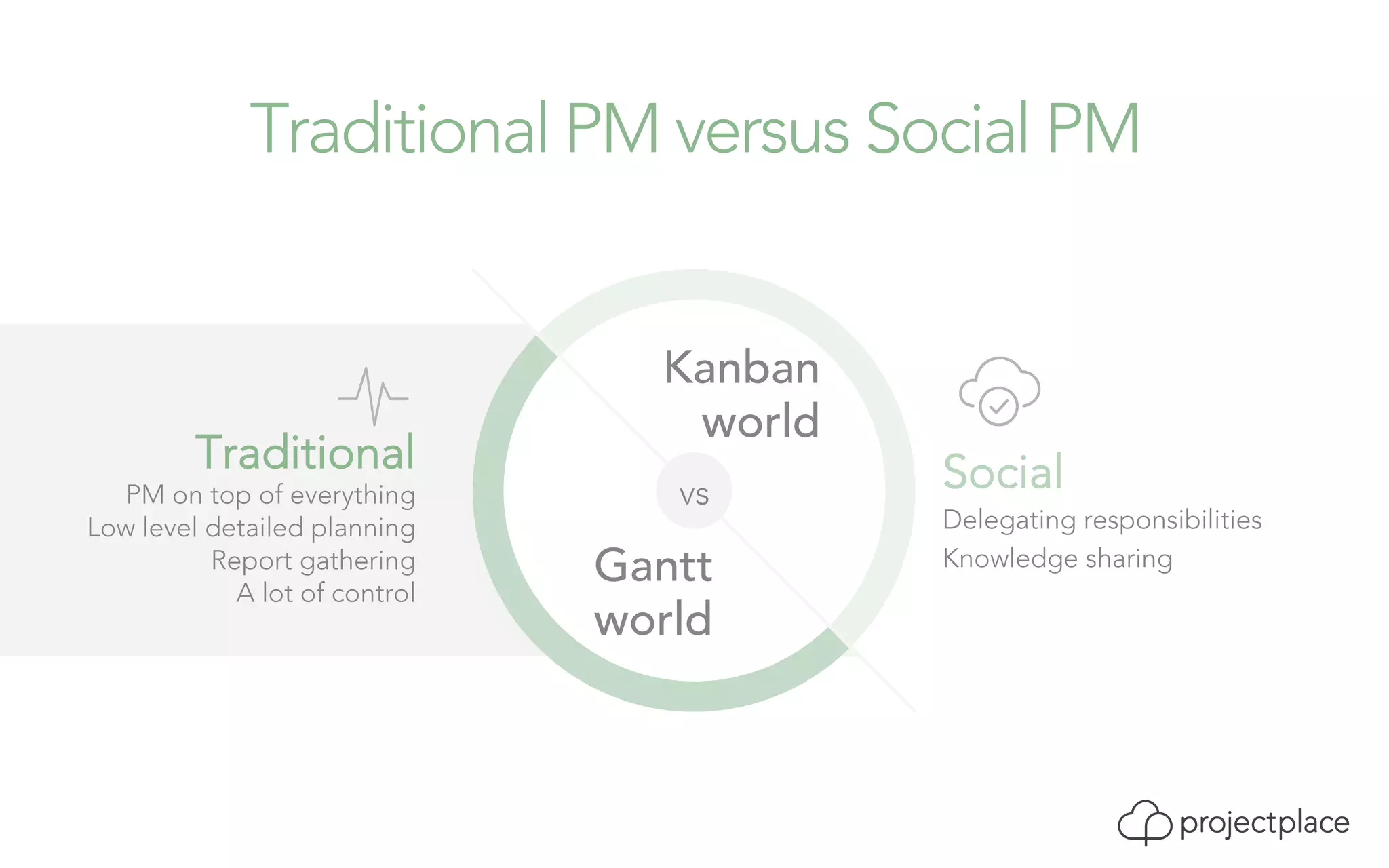
Traditional PM versus Social PM 
Traditional 
PM on top of everything 
Low level detailed planning 
Report gathering 
A lot of control 
Social 
Delegating responsibilities 
Kanban 
world 
vs 
Gantt Knowledge sharing 
world
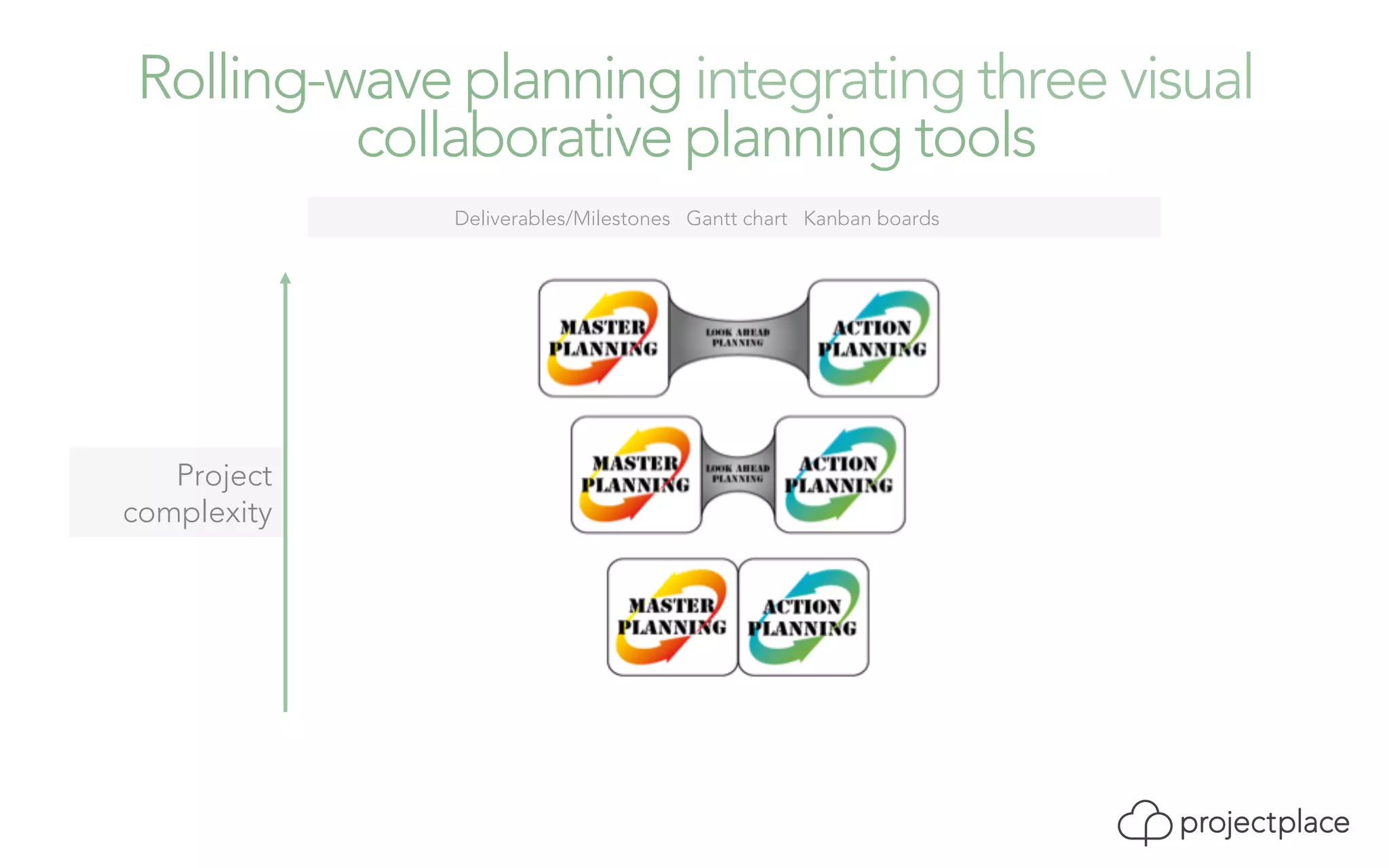
Rolling-wave planning integrating three visual 
collaborative planning tools 
Project 
complexity 
Deliverables/Milestones Gantt chart Kanban boards
Gantt. But not just any Gantt. 
Agile Gantt.
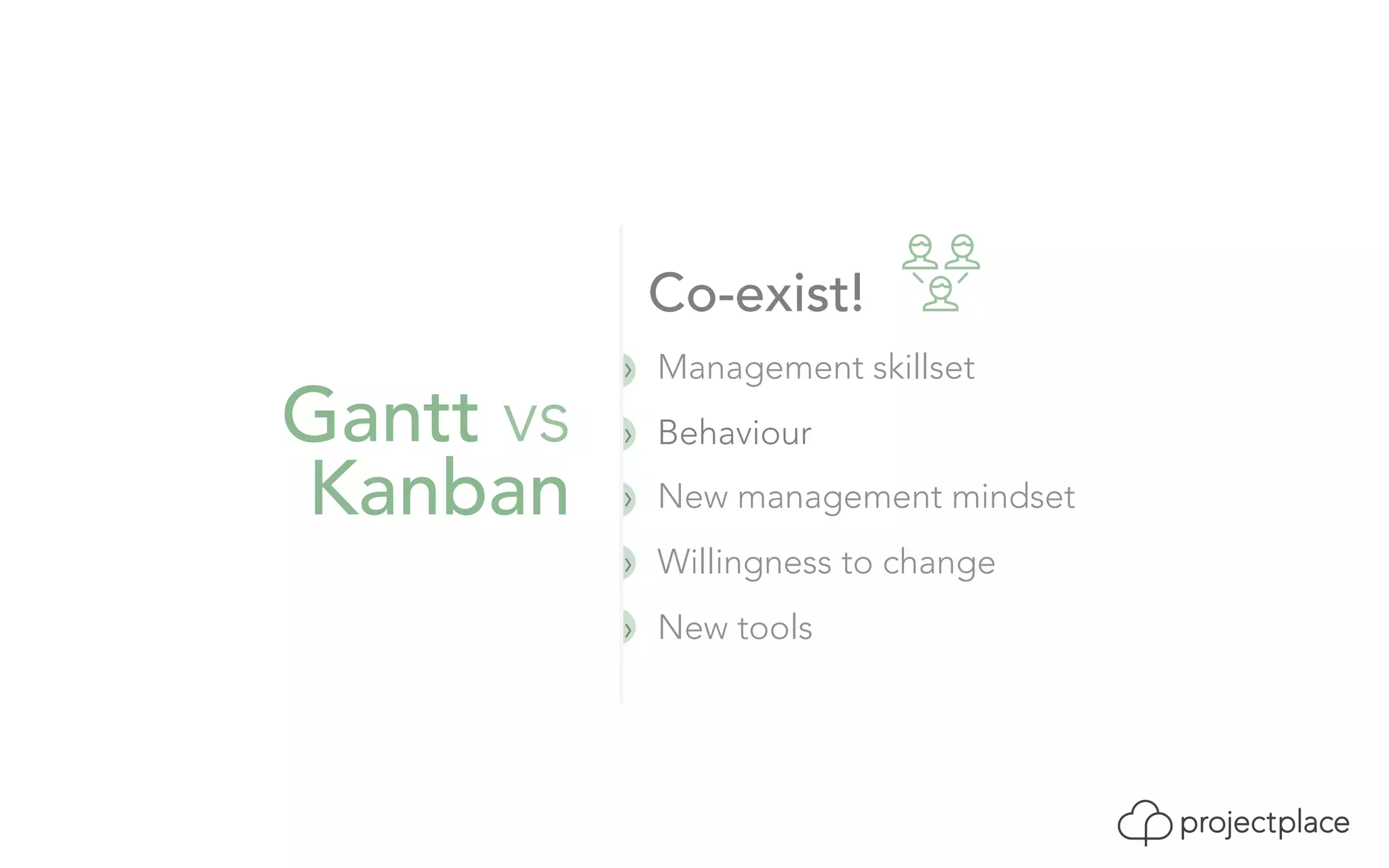
Gantt vs 
Kanban 
Co-exist! 
› Management skillset 
› Behaviour 
› New management mindset 
› Willingness to change 
› New tools
What kind of collboration tool 
should you choose? 
Well it depends on... 
› Start out with a simple solution 
› Make sure it can grow with you
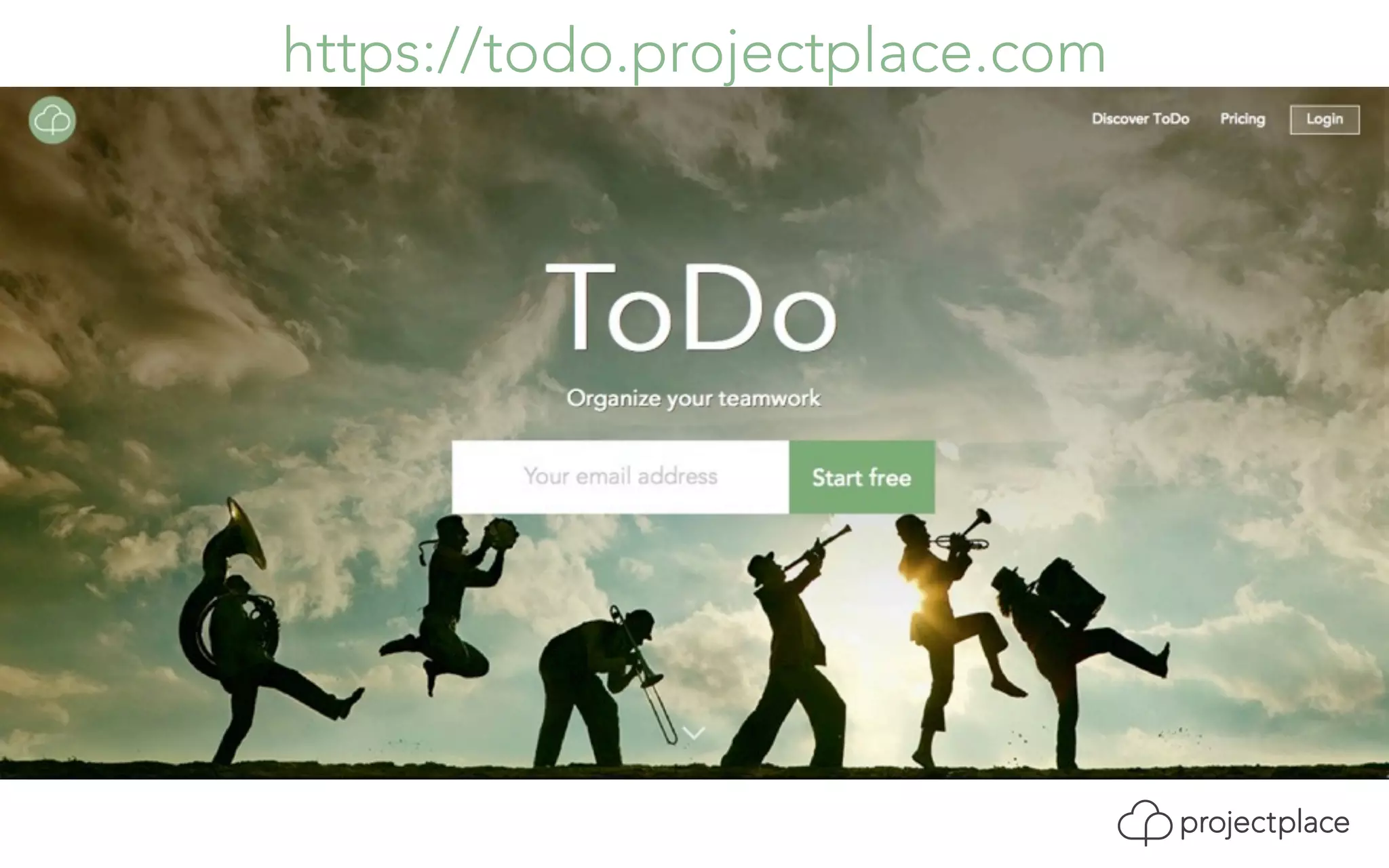
https://todo.projectplace.com
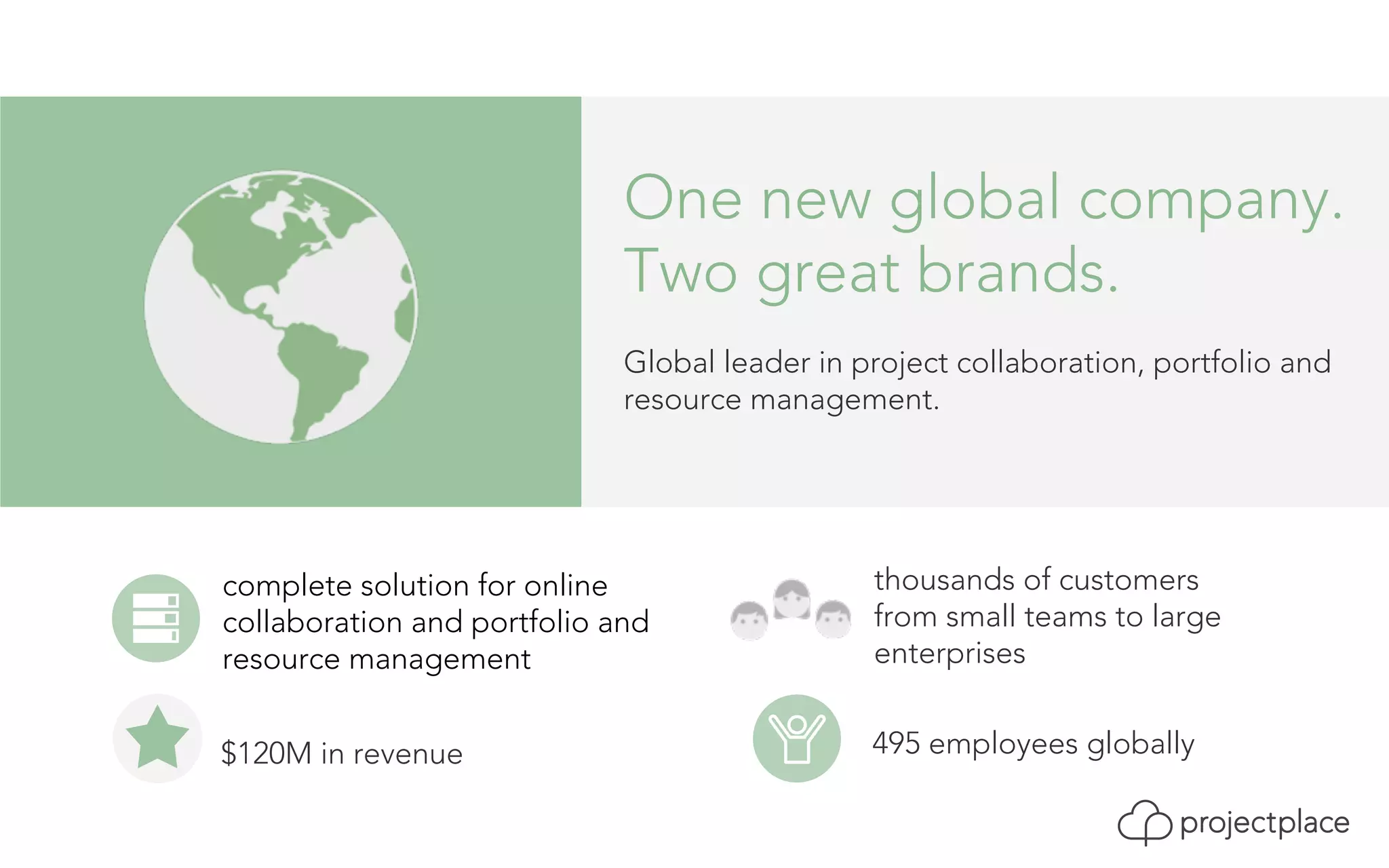
thousands of customers 
from small teams to large 
enterprises 
495 employees globally 
complete solution for online 
collaboration and portfolio and 
resource management 
$120M in revenue 
One new global company. 
Two great brands. 
Global leader in project collaboration, portfolio and 
resource management.
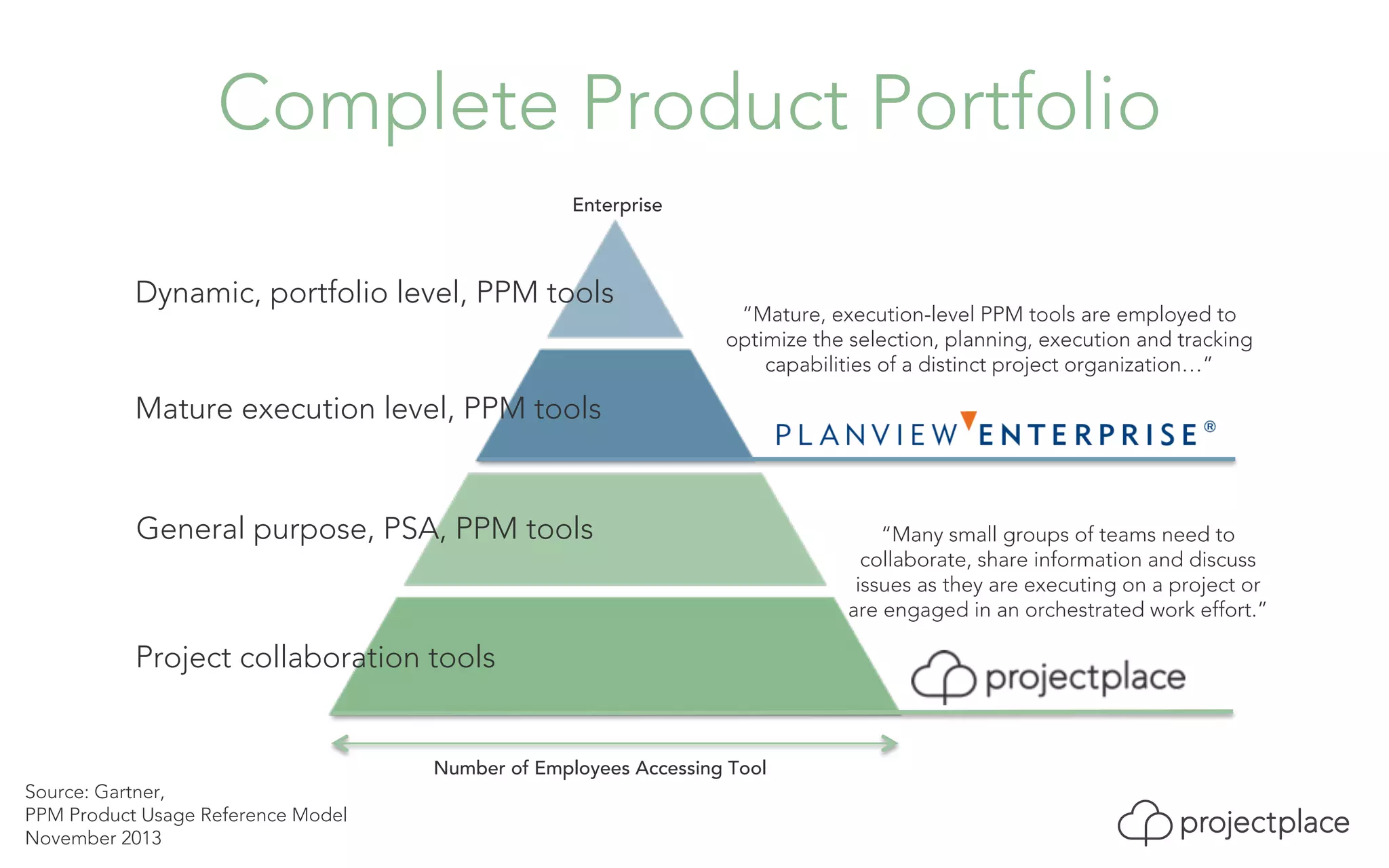
Complete Product Portfolio 
Enterprise 
Dynamic, portfolio level, PPM tools 
Mature execution level, PPM tools 
General purpose, PSA, PPM tools 
Project collaboration tools 
“Mature, execution-level PPM tools are employed to 
optimize the selection, planning, execution and tracking 
capabilities of a distinct project organization…” 
Number of Employees Accessing Tool 
Source: Gartner, 
PPM Product Usage Reference Model 
November 2013 
“Many small groups of teams need to 
collaborate, share information and discuss 
issues as they are executing on a project or 
are engaged in an orchestrated work effort.”
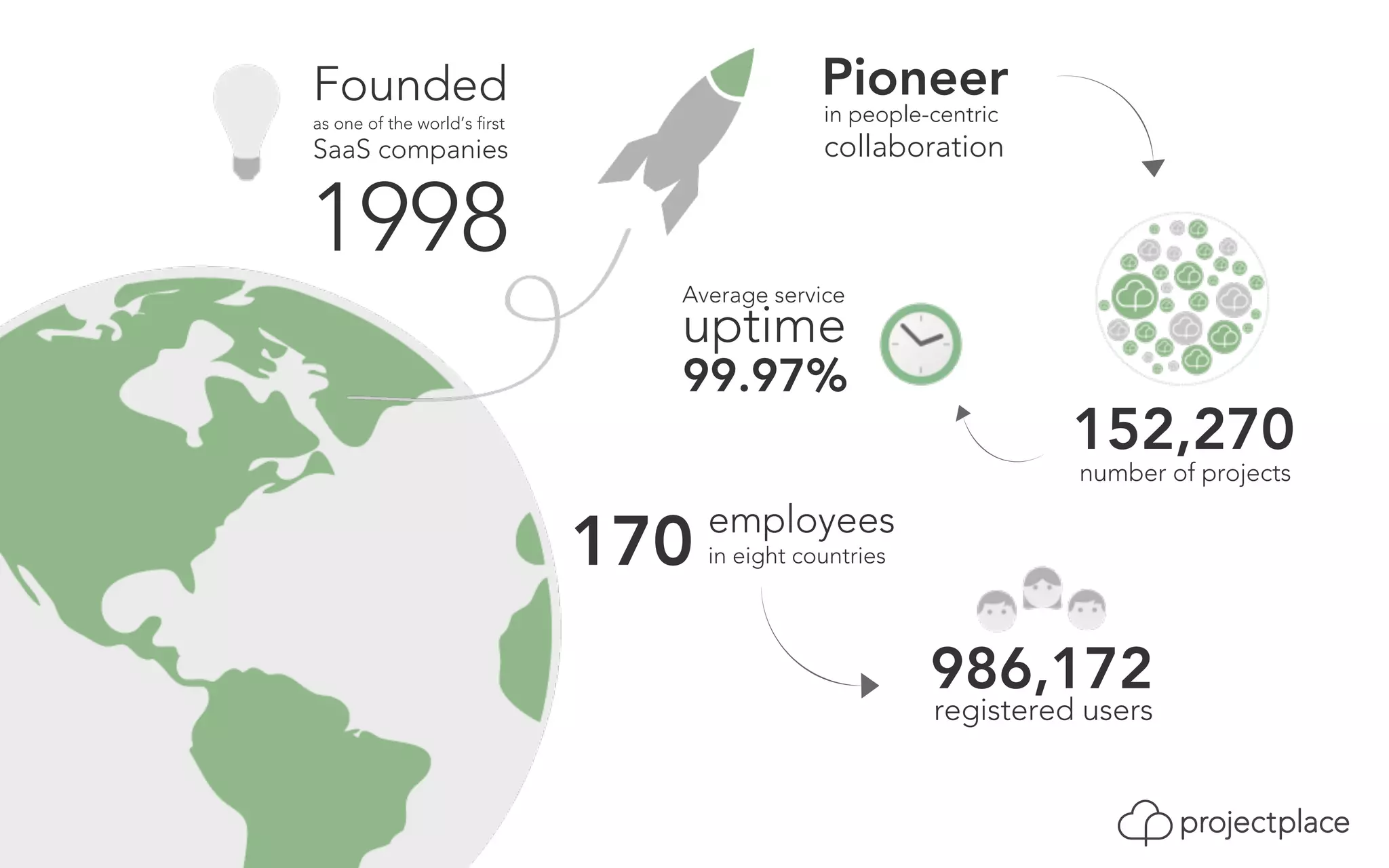
152,270 
Pioneer 
986,172 
registered users 
Founded 
as one of the world’s first 
SaaS companies 
1998 
Average service 
uptime 
99.97% 
170 
number of projects 
in people-centric 
collaboration 
employees 
in eight countries
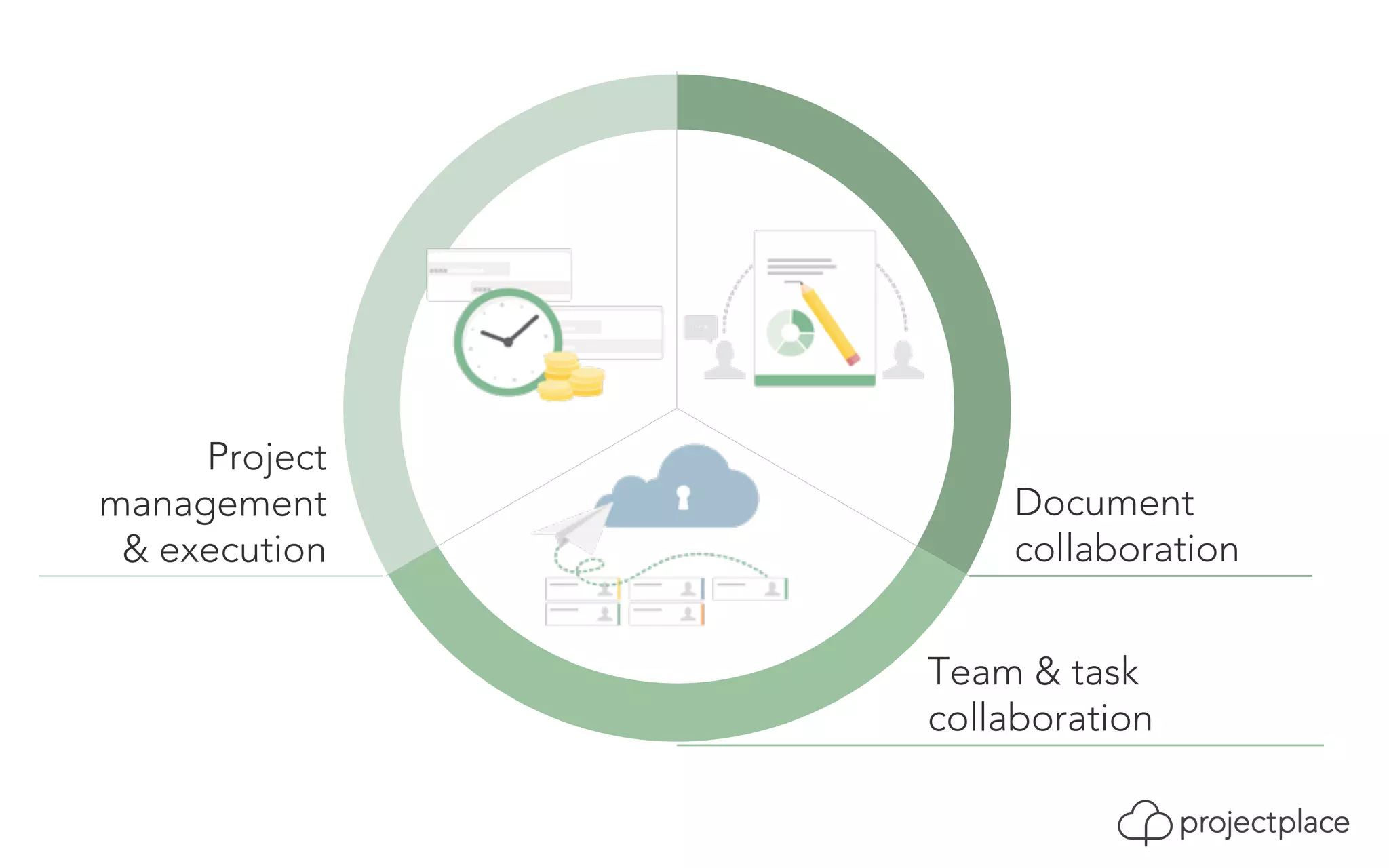
Project 
management 
& execution 
Document 
collaboration 
Team & task 
collaboration
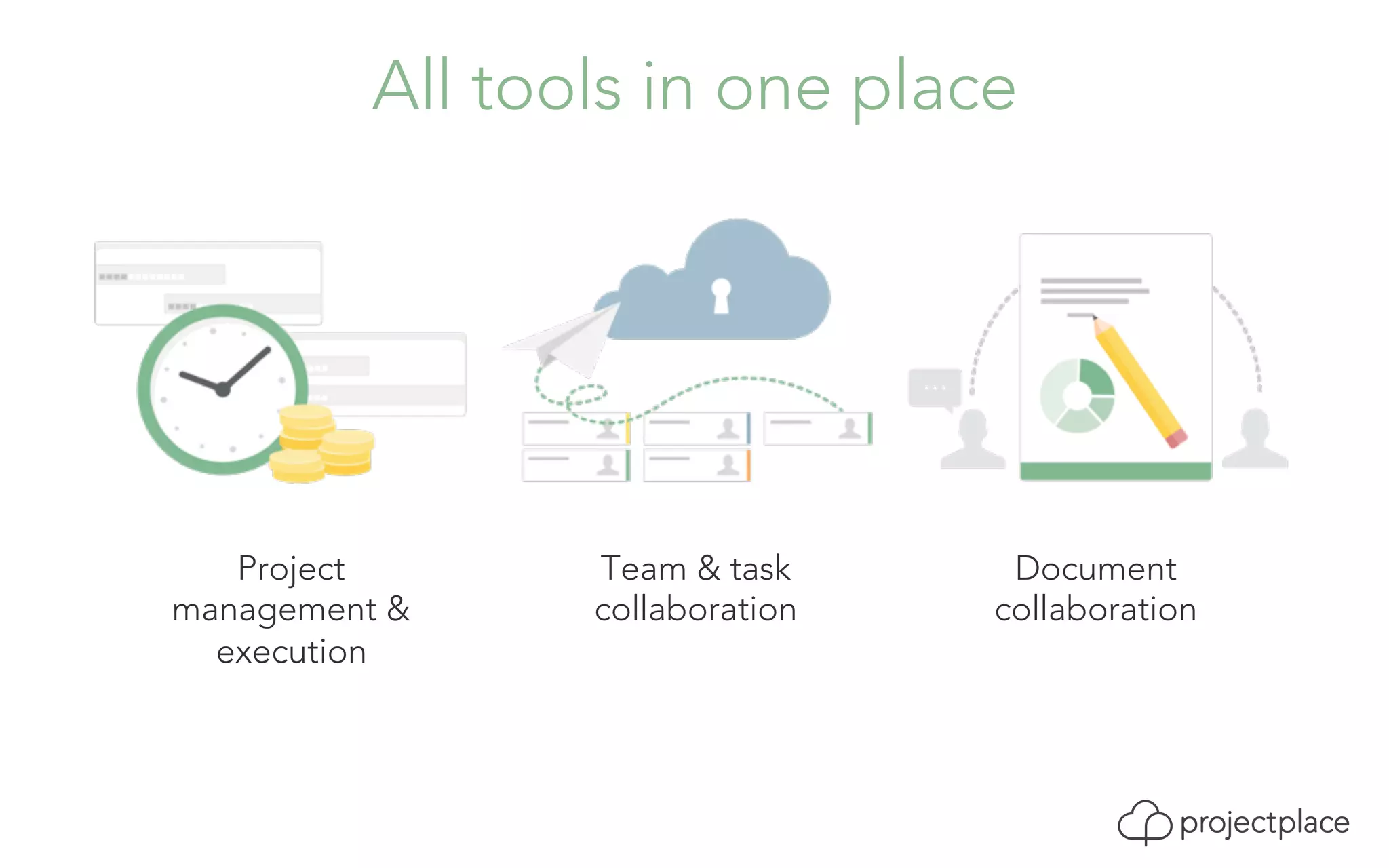
Project 
All tools in one place 
management & 
execution 
Team & task 
collaboration 
Document 
collaboration
Time for a 
change? 
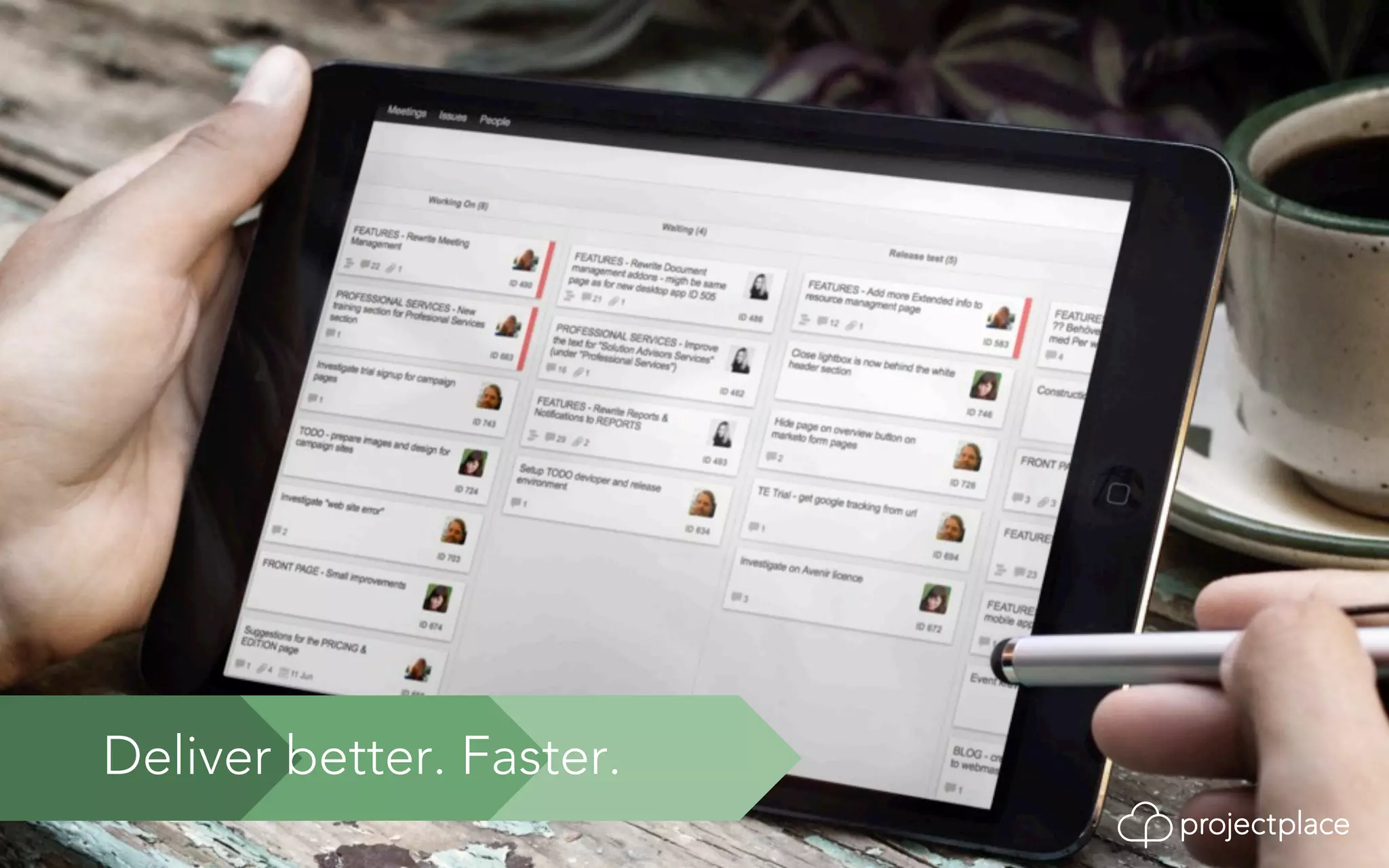
Deliver better. Faster. 
Deliver better. Faster.
Thank you 
Paul Bamforth 
e: paul.bamforth@projectplace.com 
m: +44 7713 788047 
Paul Bamforth| UK Country Manager | paul.bamforth@projectplace.com
excellence in collaboration

Lean and Agile - empower your teams and increase collaboration through digital technologies

  • 1.
    Welcome to Lean& Agile – Empower your teams and increase your collaboration through digital technologies Presented by Paul Bamforth
  • 2.
    Lean & Agile– Empower your teams and increase your collaboration through digital technologies Paul Bamforth| UK Country Manager| paul.bamforth@projectplace.com
  • 3.
    Agenda Introduction Lean& Agile Collaboration Kanban – a collaboration trend Management – Shaping of human behaviour Summary
  • 4.
  • 5.
    Lean & Agile Nonlinear Management (NLM) Management techniques and strategies started to appear more than 30 years ago. Examples: Systems Theory (CAS), Concurrent Engineering, Toyota Kaizen, Lean Production Important values and principles within lean and agile › Efficiency - to increase or maintain perceived customer value with less work › Self-organised teams: The ones who execute the work should be the ones planning it › Control through transparency › Continous improvement › Workflows should be visible for everyone › Kanban-inspired visual management tools
  • 6.
    Lean in anutshell Minimise waste and improve overall customer value
  • 7.
    Lean in Projectplace › Working lean is all about reducing waste and adding value › Communication › Visual management tools › Standardization › Kaizen - Continous improvement
  • 8.
    Common Values forAgile Methods › Individuals and interactions over processes and tools › Working software /solution over comprehensive documentation › Customer collaboration over contract negotiation › Responding to change over following a plan That is, while there is value in the items on the right, we value the items on the left more.
  • 9.
    The Agile Manifesto › Customer satisfaction by rapid, continuous delivery › Frequent delivery (weeks rather than months) › Working solution is the principal measure of progress › Even late changes in requirements are welcome › Close, daily cooperation between business people and executors › Face-to-face conversation is the best form of communication (co-location) › Projects are built around motivated individuals, who should be trusted › Continuous attention to excellence (and good design) › Simplicity › Self-organizing teams › Regular adaptation to changing circumstances
  • 10.
    Agile - Respondingto change What most people think What successful people know
  • 11.
  • 12.
    Sprint – achunk of time Peaceful and focused work for the team Estimates and updates for the stakeholder
  • 13.
    Are you resourceefficient or flow efficient? it is all about customer value Result AB CD AB CD AB CD AB CD result result result Unit a Unit b Unit c Unit d Result
  • 14.
    Lean, Agile andKanban are spreading from production and product development to many industries and business areas
  • 15.
    How agile areyou? 69% or 45%? Source: PMI’s Pulse of the Profession: The High Cost of Low Performance February 2014
  • 16.
  • 17.
    Is collaboration anew concept?
  • 18.
    GLOBALISATION CONSUMERISATION OFIT CLOUD ADOPTION CLOUD ADOPTION MOBILITY SECURITY MOBILITY MOBILITY SE ECURITY CONSUMERISATION OF IT CLOUD ADOPTION MOBILITY CLOUD ADOPTION SECURITY CONSUMERISATION OF GLOBALISATION CLOUD ADOPTION MOBILITY SECURITY IT SEC Key IT trends
  • 19.
    Business trends andchallenges § Internally § Externally § Higher productivity demand § Increased competition ECOSYSTEMS § Partners § Stakeholders EFFICIENCY MULTIPLE TEAMS
  • 21.
    Kanban boards, Thenext big collaboration trend How come?
  • 22.
    The danger ofmultitasking Many people take pride in how well they multitask. But new research suggests some big downsides to it: › Multitasking increases the chances of making mistakes and missing important information and cues › Multitaskers are also less likely to retain information in working memory, which can hinder problem solving and creativity › We think we can – but it is simply impossible neurologically › Causes cognitive impairment › Can lead to people making objectively poorer choices, choices they later regret If you want to read more about this: To learn more about Organize Your Mind, Organize Your Life, visit the Harvard Health Publications website.) Dr. Paul Hammerness and Margaret Moore, authors of Organize Your Mind, Organize Your Life, a new book from Harvard Health Publications. www.psychologytoday.com
  • 23.
    Kanban board ›Visual signal – a card › A ”pull” system › Culture of continous improvement › Visualisation of work and teams progress › Flow – stop starting, start finishing! › Success through collaboration › Enable customer value through continuous delivery What is a ?
  • 25.
    How can digitalKanban boards help your organization achieve success? Efficiency Empower teams – gain control Self-organizing teams Transparency Limit WIP Customer Satisfaction
  • 26.
  • 27.
    Visualisation accelerates learning and the ability to prioritize Kanban visualises work and limits work-in-progress Visualizing work allows us to transform our conceptual and threatening workload into an actionable, context-sensitive flow (we see what we are doing) Limiting our work-in-progress helps us complete what we start and understand the value of our choices
  • 28.
    Ability to self-organise is the key to high-performance teams The board is a natural gathering point to discuss issues, solve problems and learn Psychological projection onto the visual cards makes uncomfortable feelings easier to handle The kanban board makes behavior clearly visible
  • 29.
    Collaborative planning reinforcesefficient project behaviour I see ... ... therefore I can commit ... ... and deliver! Group psychology and modern behaviour science can explain why!
  • 30.
    The Zeigarnik effectpromotes follow through The psychological tendency to remember an uncompleted task rather than a completed one › Dragging a card to the second column on the kanban board communicates that you have commited and started to do something. It increases accountability and reduces procrastination › Dragging a card to the last column, representing finishing a task, reduces cognitive load and perceived stress
  • 31.
    Transparency provides management control with less overhead Control through transparency is a key principle within Lean and Agile
  • 32.
  • 33.
  • 34.
    Shaping behaviour Userole-model leadership, instructions and core values with good examples to activate behaviour you want (20% of behavioural shaping) Give positive feedback on the behaviour you want to have more of (the other 80%) Ignore behaviour you do not want (it will decrease over time) Be very cautious with negative feedback (it will make people unmotivated, defensive and insecure)
  • 35.
    New knowledge about how to shape human behaviour Our brains are hard-wired to coordinate behaviour by positive intermittent reinforcement
  • 36.
    Projects An essentialkey to success
  • 37.
    5 new projectbuzzwords 1. Rolling-Wave Planning JIT, eliminate waste, adapt, plan to learn 2. Lean, Agile & Kanban Visualize Workflows, Control through Transparency, Kanban-inspired visual management tools 3. Customer-Centric Stakeholder involvement increases perceived project value 4. Activity Streams New social technology can be used to shape effective behaviour. Why is this working? We are made for collaboration! 5. Social There is no turning back, PM best practice and theory will be based on behaviour science + new collaborative technology. It may not be labeled social, but it will be more social than ever.
  • 38.
    Traditional PM versusSocial PM Traditional PM on top of everything Low level detailed planning Report gathering A lot of control Social Delegating responsibilities Kanban world vs Gantt Knowledge sharing world
  • 39.
    Rolling-wave planning integratingthree visual collaborative planning tools Project complexity Deliverables/Milestones Gantt chart Kanban boards
  • 40.
    Gantt. But notjust any Gantt. Agile Gantt.
  • 42.
    Gantt vs Kanban Co-exist! › Management skillset › Behaviour › New management mindset › Willingness to change › New tools
  • 43.
    What kind ofcollboration tool should you choose? Well it depends on... › Start out with a simple solution › Make sure it can grow with you
  • 44.
  • 46.
    thousands of customers from small teams to large enterprises 495 employees globally complete solution for online collaboration and portfolio and resource management $120M in revenue One new global company. Two great brands. Global leader in project collaboration, portfolio and resource management.
  • 47.
    Complete Product Portfolio Enterprise Dynamic, portfolio level, PPM tools Mature execution level, PPM tools General purpose, PSA, PPM tools Project collaboration tools “Mature, execution-level PPM tools are employed to optimize the selection, planning, execution and tracking capabilities of a distinct project organization…” Number of Employees Accessing Tool Source: Gartner, PPM Product Usage Reference Model November 2013 “Many small groups of teams need to collaborate, share information and discuss issues as they are executing on a project or are engaged in an orchestrated work effort.”
  • 48.
    152,270 Pioneer 986,172 registered users Founded as one of the world’s first SaaS companies 1998 Average service uptime 99.97% 170 number of projects in people-centric collaboration employees in eight countries
  • 49.
    Project management &execution Document collaboration Team & task collaboration
  • 50.
    Project All toolsin one place management & execution Team & task collaboration Document collaboration
  • 52.
    Time for a change? Deliver better. Faster. Deliver better. Faster.
  • 53.
    Thank you PaulBamforth e: paul.bamforth@projectplace.com m: +44 7713 788047 Paul Bamforth| UK Country Manager | paul.bamforth@projectplace.com
  • 54.