Downloaded 28 times











![Group Exercise #3 – 5 mins
• LIST 3 SOLUTIONS
– For your Group [Practice-Challenge]
– Write your Sticky Note
• Group Discussion
– Summary Vote
• Group Summary on FLIPCHART](https://image.slidesharecdn.com/agilegovernanceworkshop-agileindia2012-asheeshm-120227035447-phpapp02/85/Agile-Governance-Workshop-Agile-India-2012-32-320.jpg)
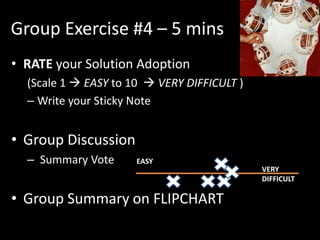
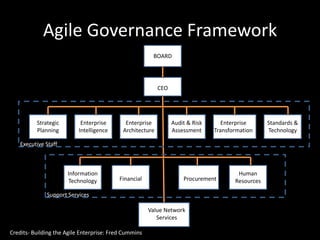


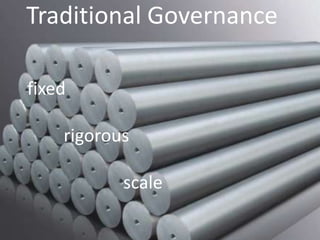
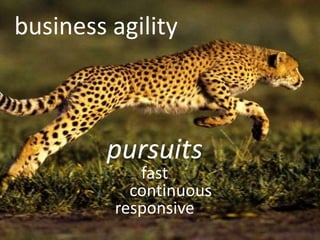
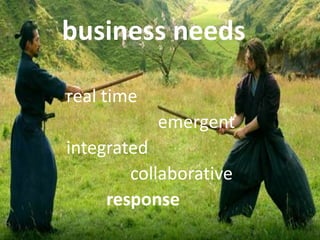
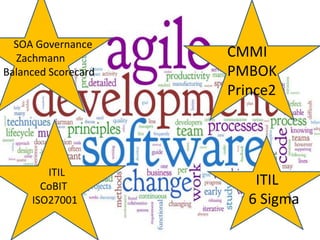
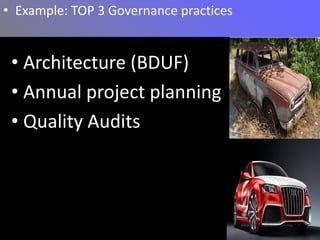
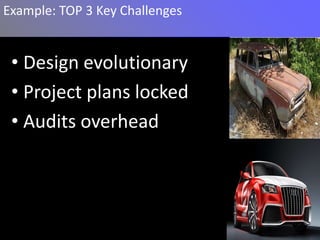
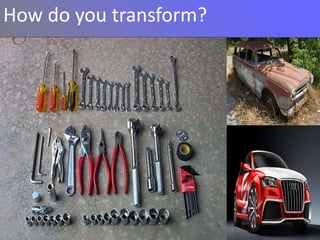
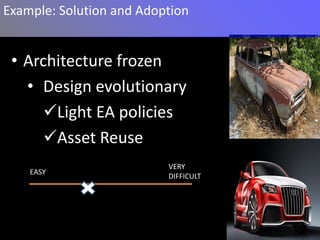
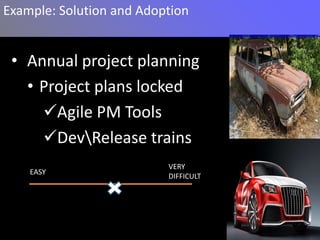
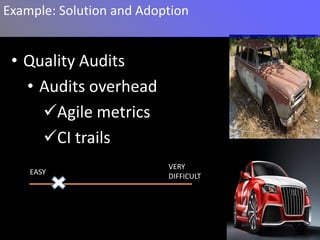
The document discusses agile governance and provides examples of traditional governance practices, key challenges, and potential solutions when transitioning to agile. Specifically, it notes that traditional governance is often rigid and sequential while agile governance aims to be lightweight, flexible, and empowering. It then gives examples of how architectural design, project planning, and quality audits could transition from traditional to more agile approaches. Groups are tasked with discussing their roles and perspectives on these examples. The overall message is that agile requires transforming traditional top-down governance to embrace more dynamic and collaborative approaches.


