Lean Agile Mindset
POOJA CHAWLA
Lack of etiquette and manners is a huge turn off.
KnolX Etiquettes
 Punctuality
Join the session 5 minutes prior to the session start time. We start on
time and conclude on time!
 Feedback
Make sure to submit a constructive feedback for all sessions as it is very
helpful for the presenter.
 Silent Mode
Keep your mobile devices in silent mode, feel free to move out of session
in case you need to attend an urgent call.
 Avoid Disturbance
Avoid unwanted chit chat during the session.
1. Who is Lean?
2. Who is Agile?
3. Who has a better Mindset?
4. Lean Agile Mindset
5. Business Agility
6. SAFE 6.0 Configuration
7. Lean Thinking
8. Agile Manifesto
9. Lean Agile Leadership
10. Applying Lean and Agile
11. Benefits of Lean
12. Types of Wastes in Lean
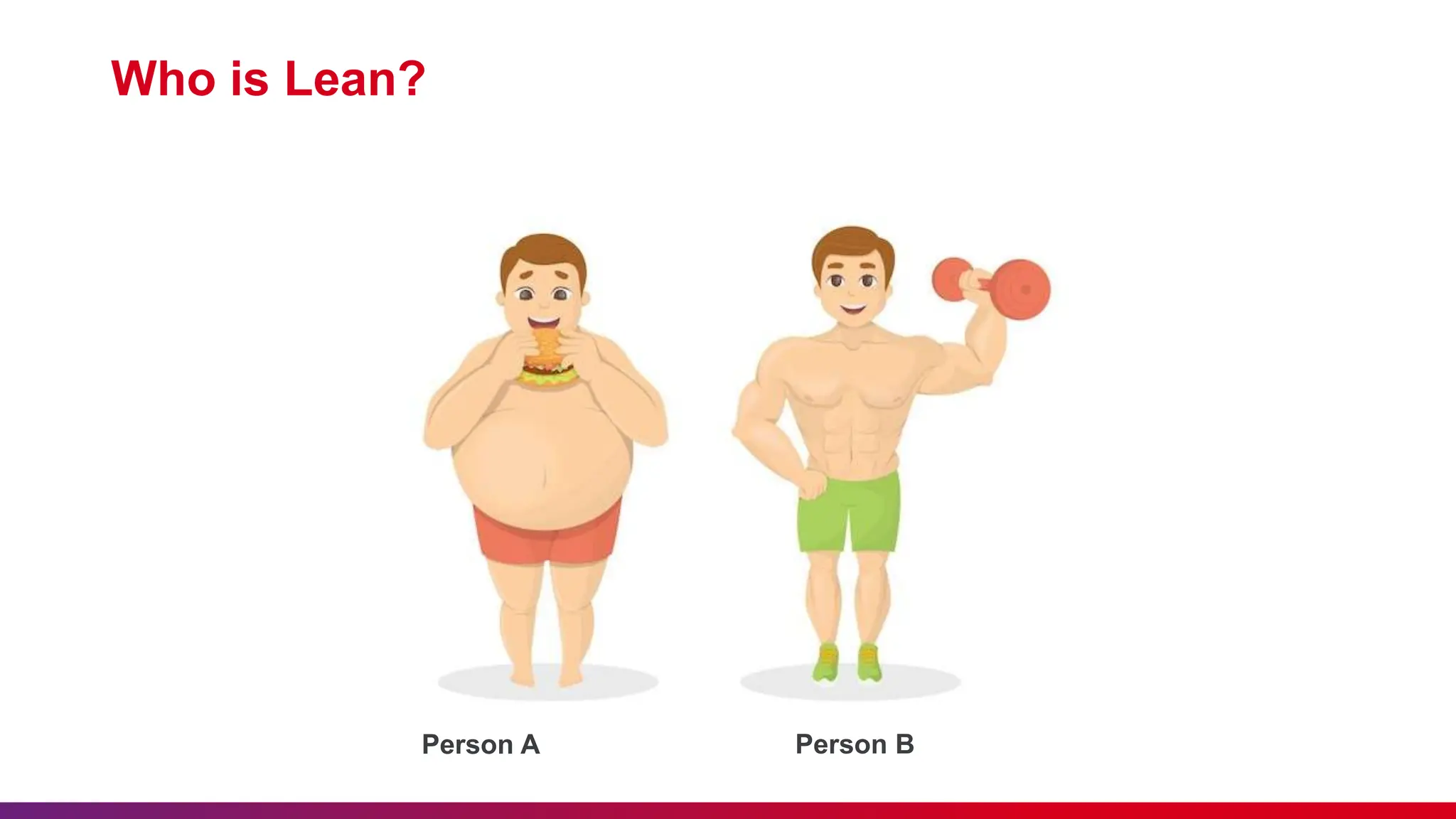
Who is Lean?
Person A Person B
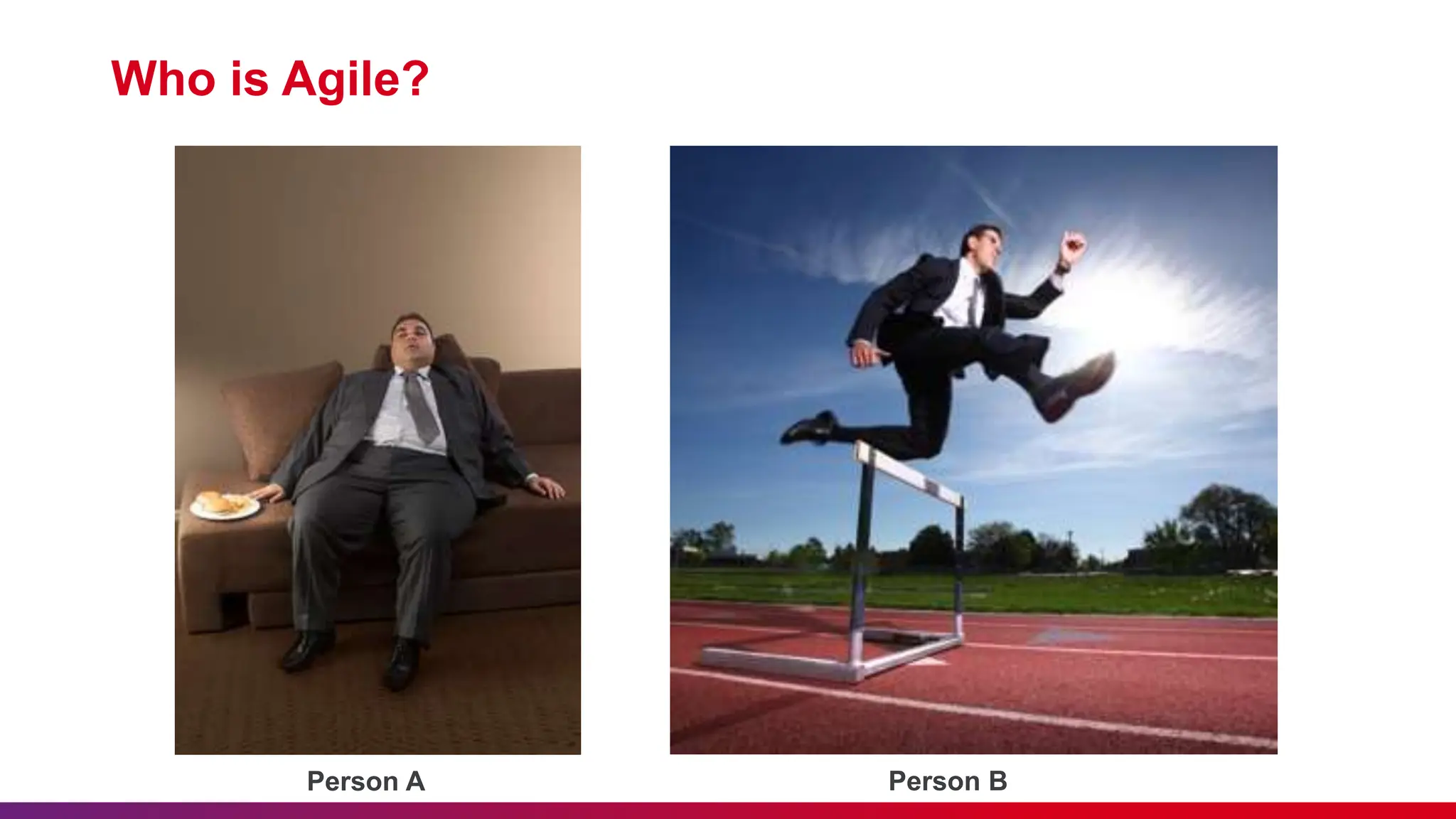
Who is Agile?
Person A Person B
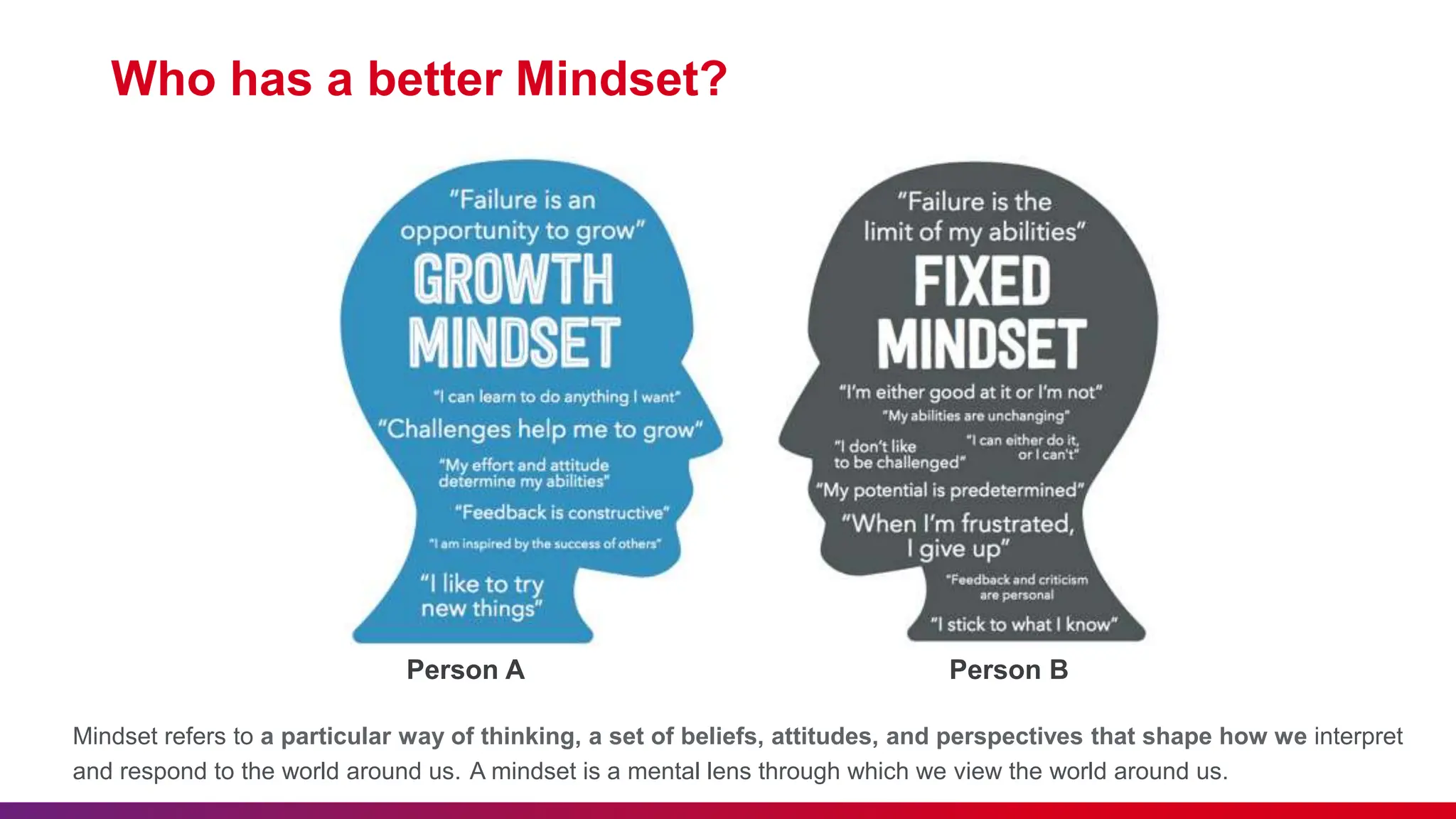
Who has a better Mindset?
Mindset refers to a particular way of thinking, a set of beliefs, attitudes, and perspectives that shape how we interpret
and respond to the world around us. A mindset is a mental lens through which we view the world around us.
Person A Person B
Lean Agile Mindset
 What is it? Lean Agile Mindset is a combination of beliefs, attitudes, actions,
and assumptions that are inspired by the agile manifesto and lean thinking.
 Who uses it? It's foundation of SAFe (Scaled Agile Framework) and is
embraced by SAFe leaders and practitioners.
 Why it's used? Lean-Agile mindset forms the cornerstone of a new way of
working and an enhanced company culture that enables Business Agility.
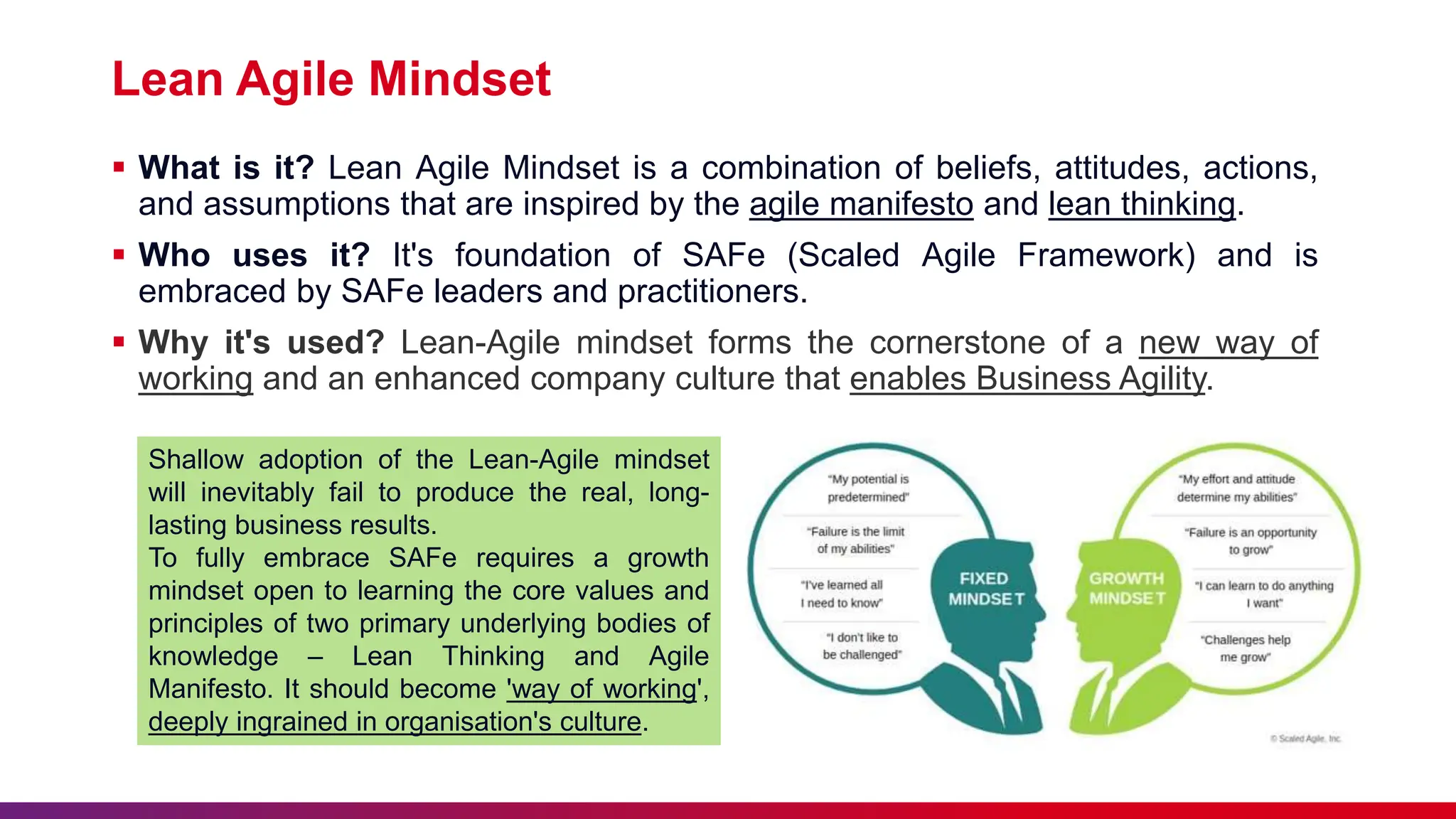
Shallow adoption of the Lean-Agile mindset
will inevitably fail to produce the real, long-
lasting business results.
To fully embrace SAFe requires a growth
mindset open to learning the core values and
principles of two primary underlying bodies of
knowledge – Lean Thinking and Agile
Manifesto. It should become 'way of working',
deeply ingrained in organisation's culture.
Business Agility
 Business Agility is the ability to compete and thrive in the digital age by quickly
responding to market changes and emerging opportunities with innovative, digitally-
enabled business solutions. Everything moves fast in the digital age. Customer desires,
competitive threats, technology choices, business expectations, revenue opportunities,
and workforce demands now happen at blistering speeds.
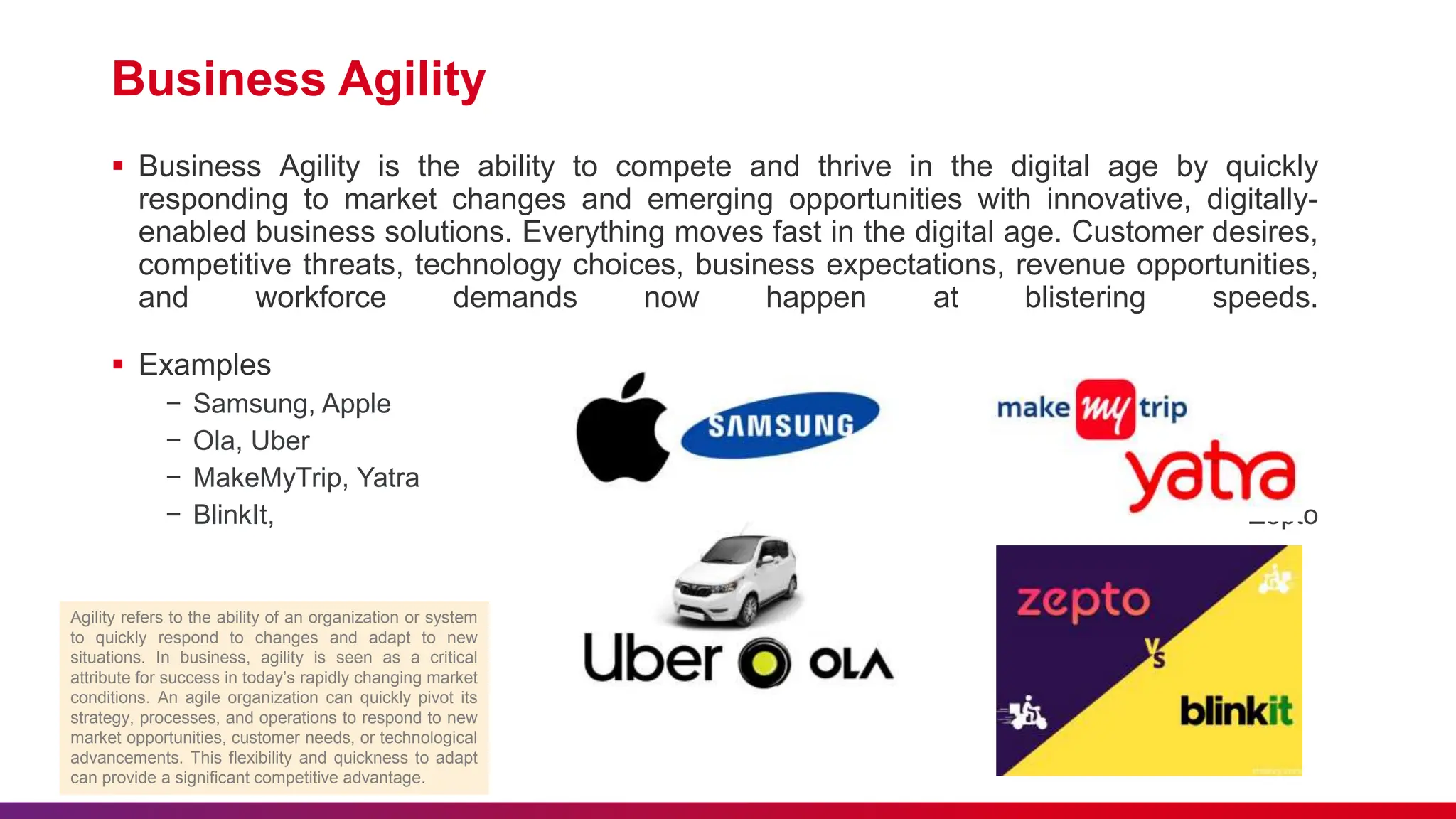
 Examples
− Samsung, Apple
− Ola, Uber
− MakeMyTrip, Yatra
− BlinkIt, Zepto
Agility refers to the ability of an organization or system
to quickly respond to changes and adapt to new
situations. In business, agility is seen as a critical
attribute for success in today’s rapidly changing market
conditions. An agile organization can quickly pivot its
strategy, processes, and operations to respond to new
market opportunities, customer needs, or technological
advancements. This flexibility and quickness to adapt
can provide a significant competitive advantage.
Business Agility during COVID
 Businesses reorganised operations e.g. Garment Manufactures who had supply-chain
in place, used it to manufacture protective equipment, masks.
 Businesses scaled up their operations to cope-up with increased unprecedented
demand.
 Business turned to digitally enabled solutions to help people in lockdown/isolation e.g.
online groceries, medicine order facility etc.
 Businesses started humanitarian efforts during crisis time e.g. Free Coffee by Starbucks
for Front-line health care workers.
SAFe 6.0 Configuration
Lean Agile Mindset = Lean Thinking + Agile Values
Lean Thinking
 Initially derived from Lean manufacturing, the principles and practices of Lean thinking
as applied to software, product, and systems development are now deep and extensive.

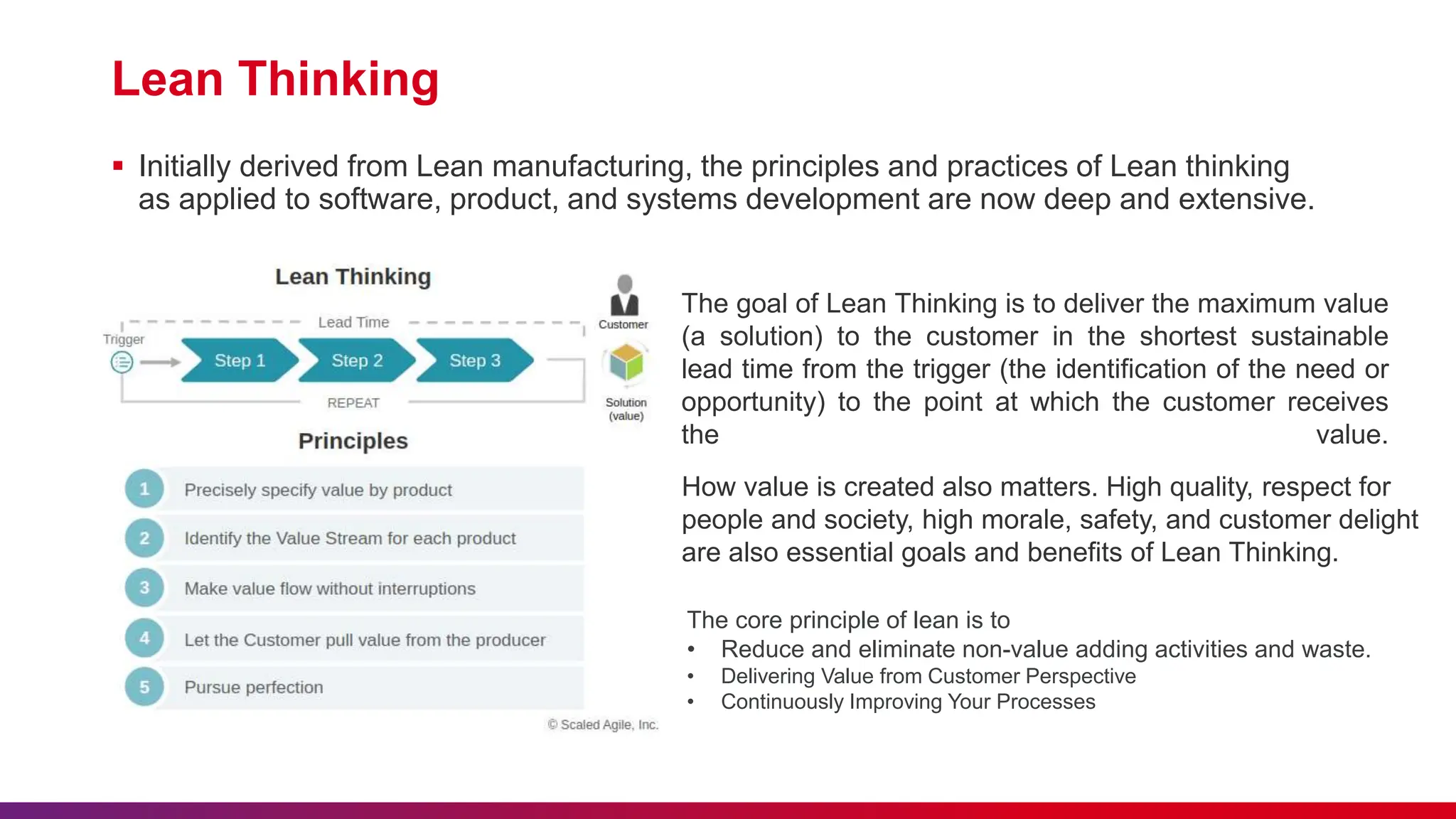
The goal of Lean Thinking is to deliver the maximum value
(a solution) to the customer in the shortest sustainable
lead time from the trigger (the identification of the need or
opportunity) to the point at which the customer receives
the value.
How value is created also matters. High quality, respect for
people and society, high morale, safety, and customer delight
are also essential goals and benefits of Lean Thinking.
The core principle of lean is to
• Reduce and eliminate non-value adding activities and waste.
• Delivering Value from Customer Perspective​
• Continuously Improving Your Processes​
Agile Values & Manifesto
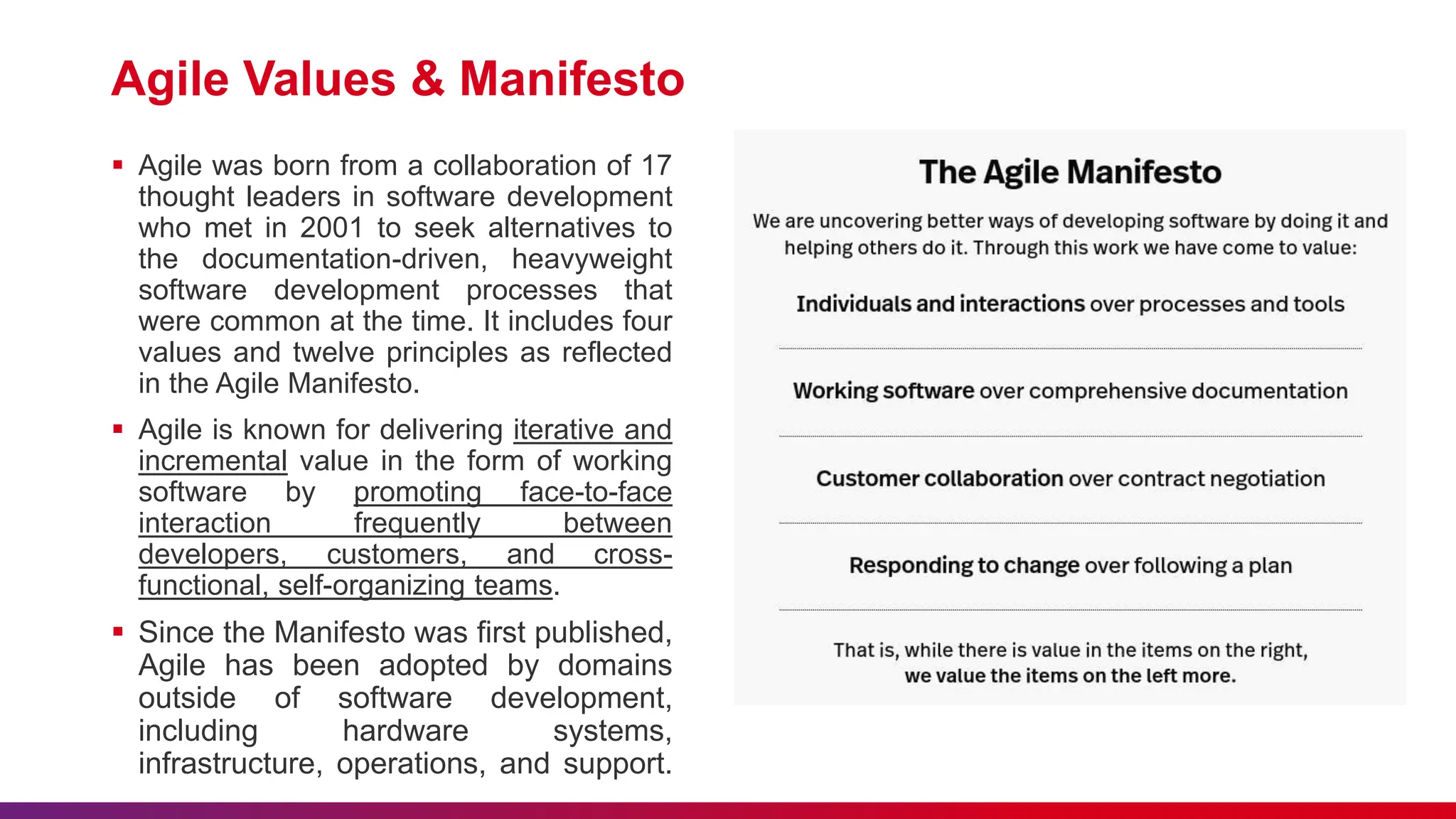
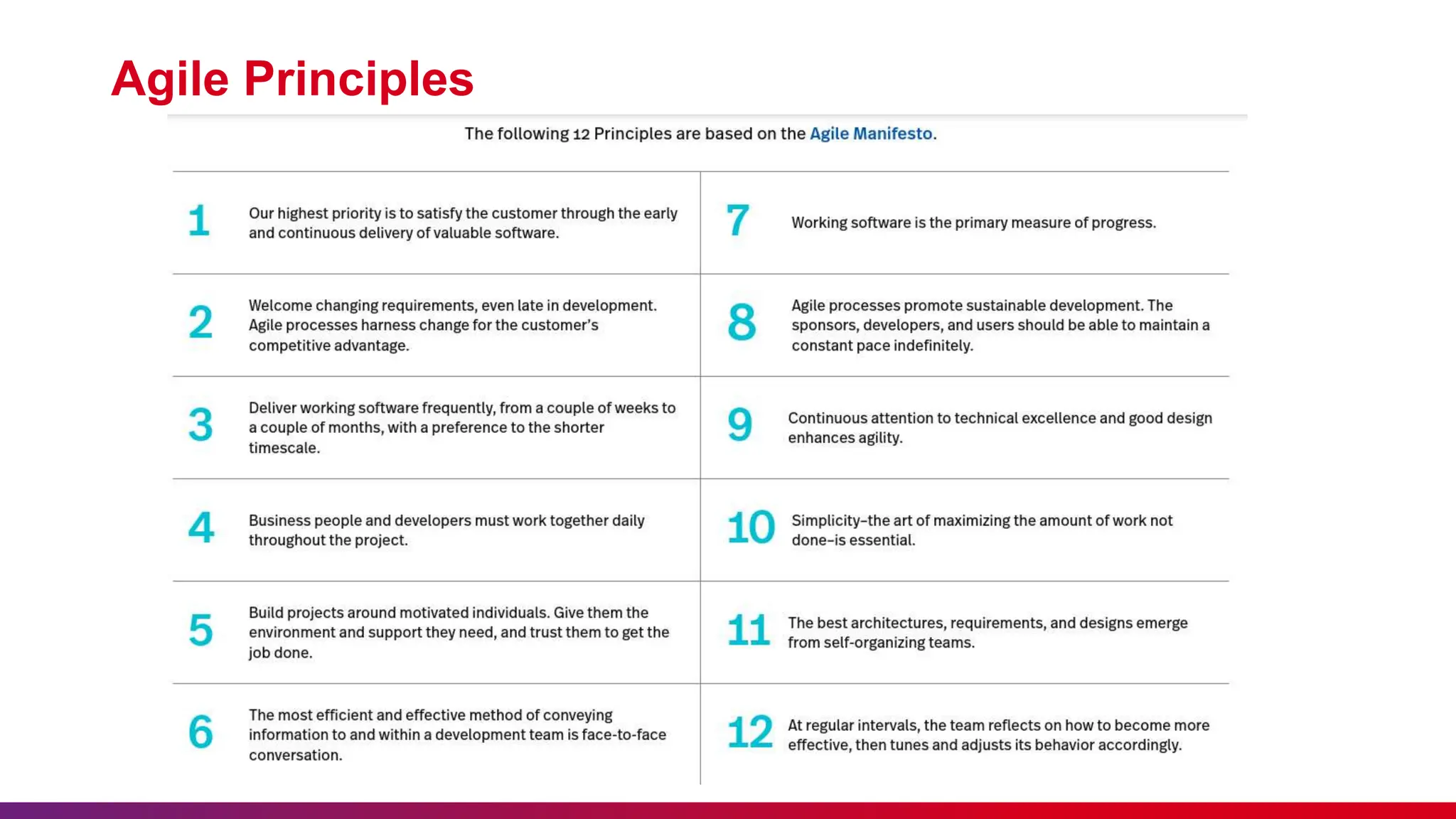
 Agile was born from a collaboration of 17
thought leaders in software development
who met in 2001 to seek alternatives to
the documentation-driven, heavyweight
software development processes that
were common at the time. It includes four
values and twelve principles as reflected
in the Agile Manifesto.
 Agile is known for delivering iterative and
incremental value in the form of working
software by promoting face-to-face
interaction frequently between
developers, customers, and cross-
functional, self-organizing teams.
 Since the Manifesto was first published,
Agile has been adopted by domains
outside of software development,
including hardware systems,
infrastructure, operations, and support.
Agile Principles
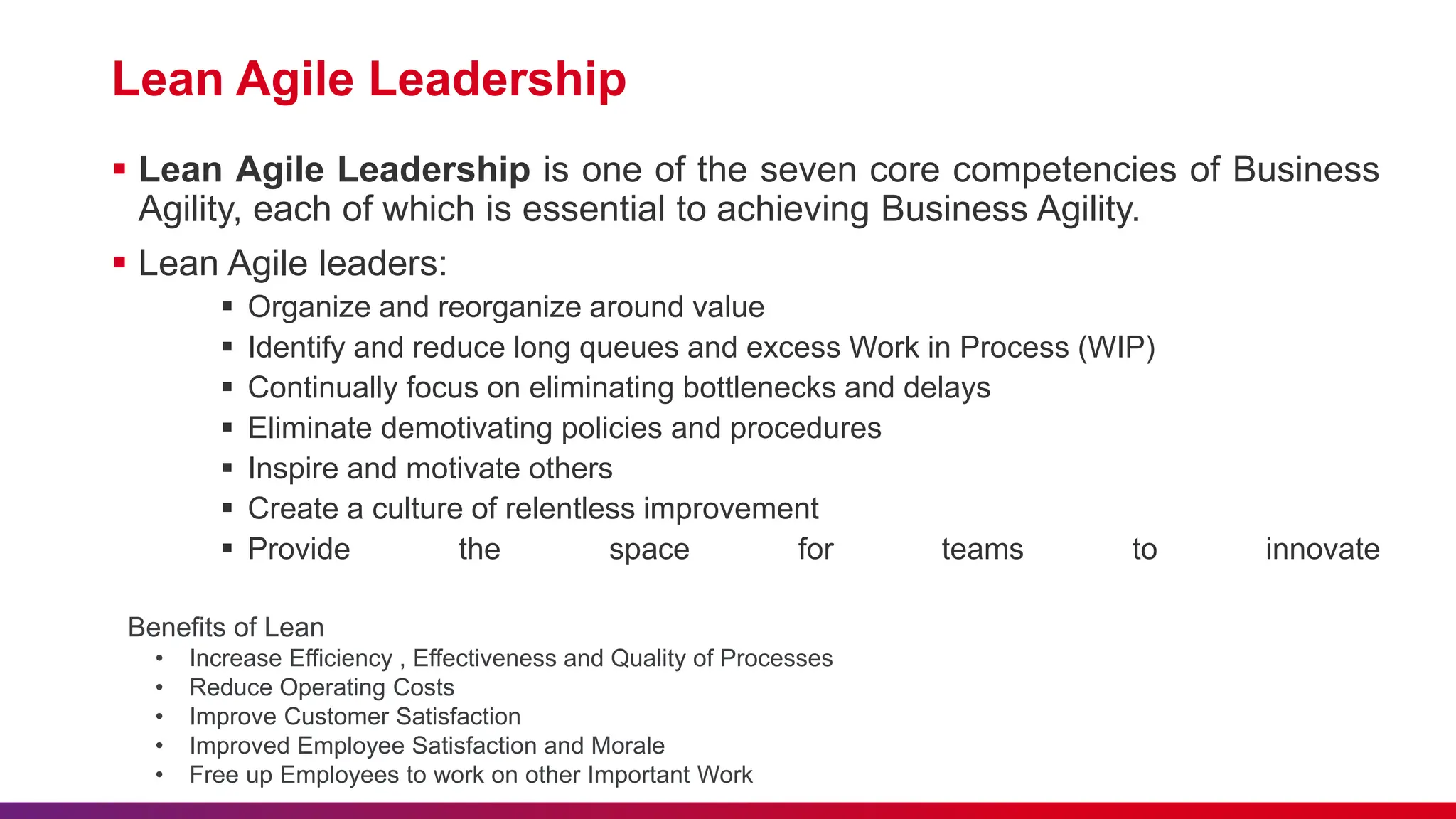
Lean Agile Leadership
 Lean Agile Leadership is one of the seven core competencies of Business
Agility, each of which is essential to achieving Business Agility.
 Lean Agile leaders:
 Organize and reorganize around value
 Identify and reduce long queues and excess Work in Process (WIP)
 Continually focus on eliminating bottlenecks and delays
 Eliminate demotivating policies and procedures
 Inspire and motivate others
 Create a culture of relentless improvement
 Provide the space for teams to innovate
Benefits of Lean​
• Increase Efficiency , Effectiveness and Quality of Processes​
• Reduce Operating Costs​
• Improve Customer Satisfaction​
• Improved Employee Satisfaction and Morale​
• Free up Employees to work on other Important Work
Lean Agile Leadership
Business agility requires a new
approach to leadership.
It starts with leaders exemplifying
behaviors that will inspire and motivate
the organization to pursue a better way
of working.
They set the example by coaching,
empowering, and engaging individuals
and teams to reach their highest
potential through Lean and Agile
principles and practices.
Leaders lead (rather than support) the
transformation by creating the
environment, preparing the people, and
providing the necessary resources to
realize the desired outcomes.
Applying Lean and Agile
 Collectively, the values and principles of Lean Thinking and Agile form
the DNA of everything contained within SAFe.
 All the roles, practices, events, and artifacts in SAFe are designed to
provide practical guidance for adopting the combination of these two
bodies of knowledge as the new way of working throughout the
enterprise.
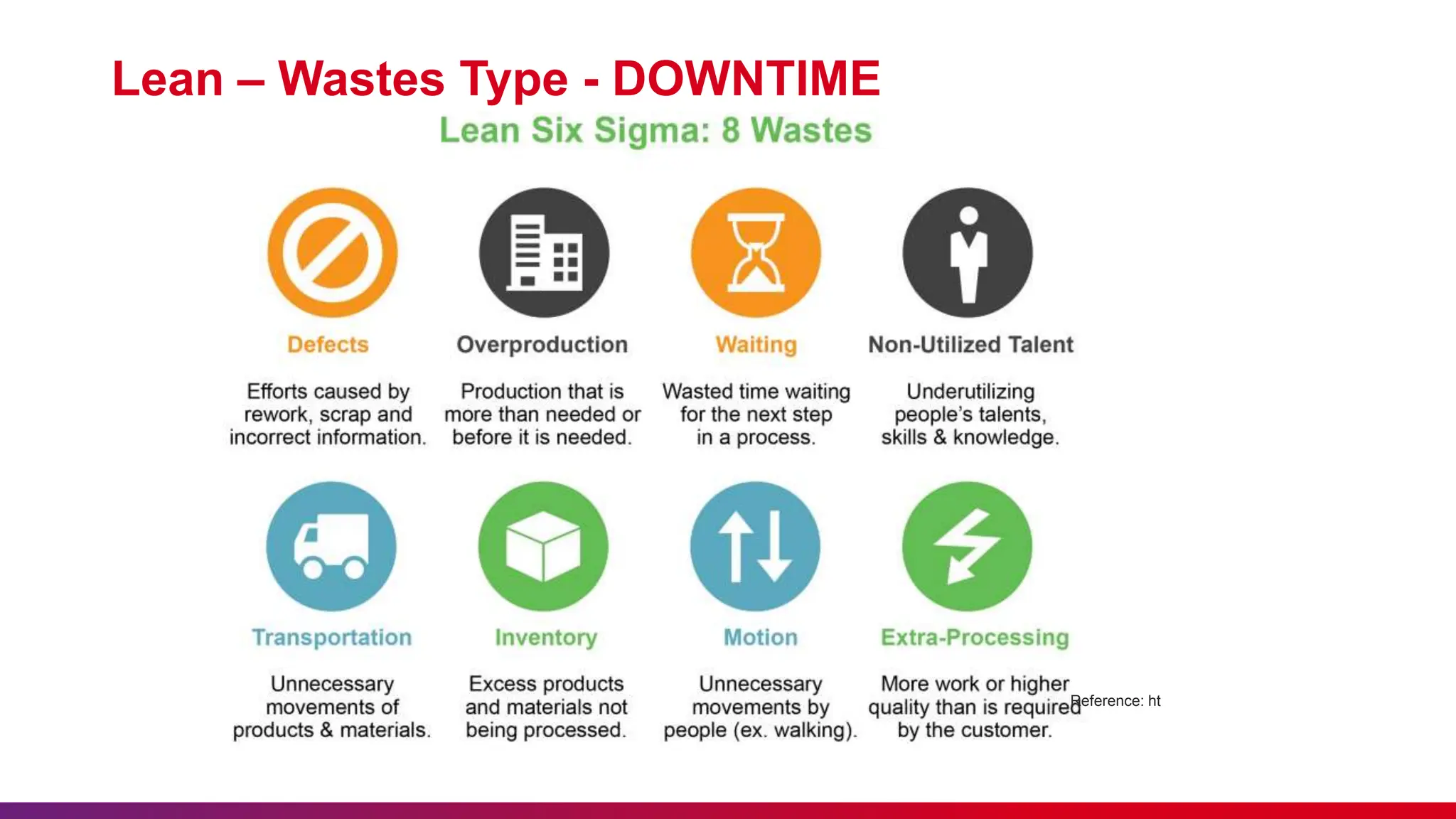
Lean – Wastes Type - DOWNTIME
Reference: ht
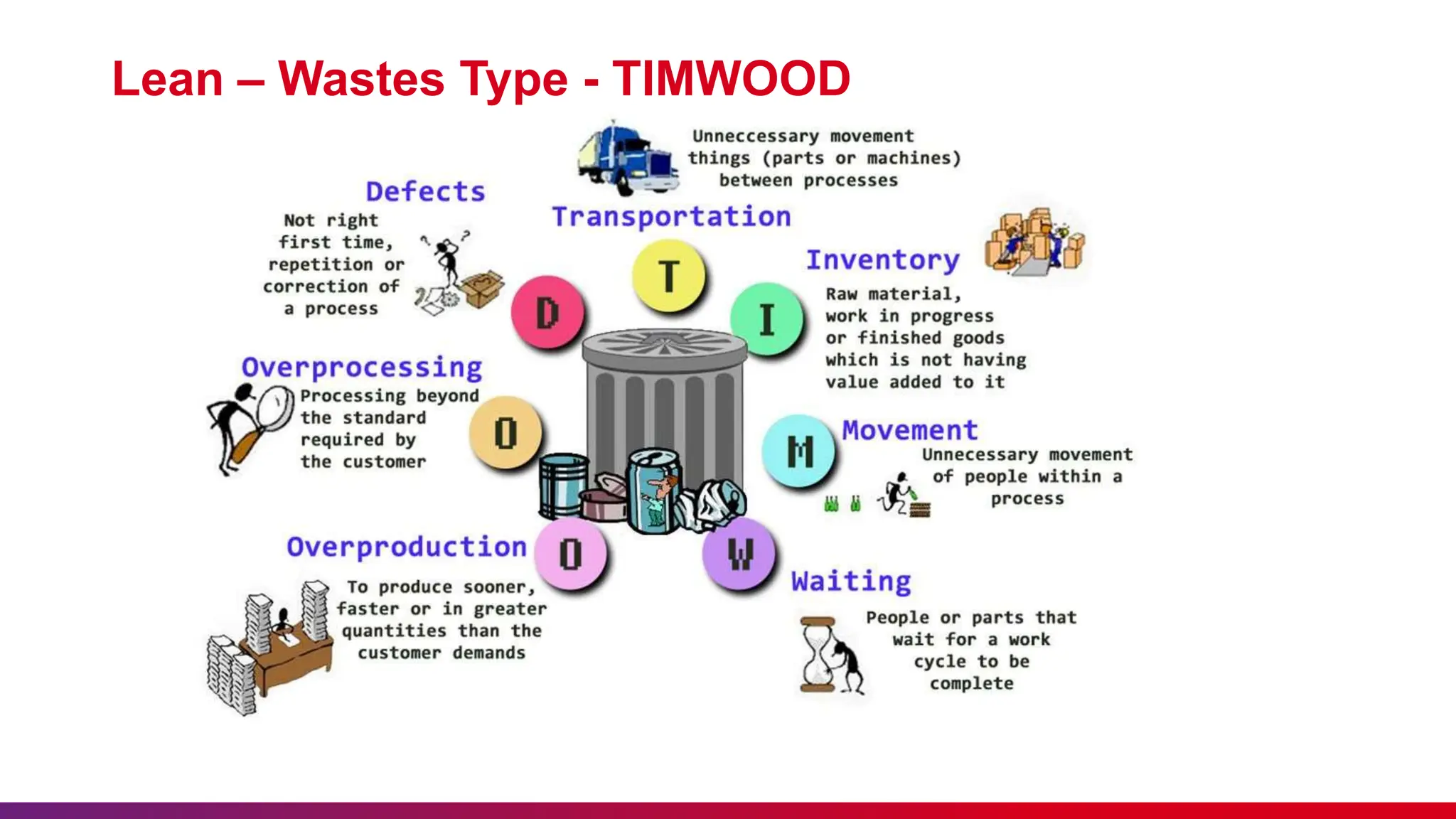
Lean – Wastes Type - TIMWOOD
References
 https://scaledagileframework.com/lean-agile-mindset
 https://scaledagileframework.com/lean-agile-leadership/
 https://www.automationmag.com/7872-seven-wastes-of-lean-and-how-to-eliminate-them/
 https://www.latestquality.com/7-wastes-of-lean/
Lean Agile Mindset (Project Managment).pptx

Lean Agile Mindset (Project Managment).pptx

  • 1.
  • 2.
    Lack of etiquetteand manners is a huge turn off. KnolX Etiquettes  Punctuality Join the session 5 minutes prior to the session start time. We start on time and conclude on time!  Feedback Make sure to submit a constructive feedback for all sessions as it is very helpful for the presenter.  Silent Mode Keep your mobile devices in silent mode, feel free to move out of session in case you need to attend an urgent call.  Avoid Disturbance Avoid unwanted chit chat during the session.
  • 3.
    1. Who isLean? 2. Who is Agile? 3. Who has a better Mindset? 4. Lean Agile Mindset 5. Business Agility 6. SAFE 6.0 Configuration 7. Lean Thinking 8. Agile Manifesto 9. Lean Agile Leadership 10. Applying Lean and Agile 11. Benefits of Lean 12. Types of Wastes in Lean
  • 4.
  • 5.
  • 6.
    Who has abetter Mindset? Mindset refers to a particular way of thinking, a set of beliefs, attitudes, and perspectives that shape how we interpret and respond to the world around us. A mindset is a mental lens through which we view the world around us. Person A Person B
  • 7.
    Lean Agile Mindset What is it? Lean Agile Mindset is a combination of beliefs, attitudes, actions, and assumptions that are inspired by the agile manifesto and lean thinking.  Who uses it? It's foundation of SAFe (Scaled Agile Framework) and is embraced by SAFe leaders and practitioners.  Why it's used? Lean-Agile mindset forms the cornerstone of a new way of working and an enhanced company culture that enables Business Agility. Shallow adoption of the Lean-Agile mindset will inevitably fail to produce the real, long- lasting business results. To fully embrace SAFe requires a growth mindset open to learning the core values and principles of two primary underlying bodies of knowledge – Lean Thinking and Agile Manifesto. It should become 'way of working', deeply ingrained in organisation's culture.
  • 8.
    Business Agility  BusinessAgility is the ability to compete and thrive in the digital age by quickly responding to market changes and emerging opportunities with innovative, digitally- enabled business solutions. Everything moves fast in the digital age. Customer desires, competitive threats, technology choices, business expectations, revenue opportunities, and workforce demands now happen at blistering speeds.  Examples − Samsung, Apple − Ola, Uber − MakeMyTrip, Yatra − BlinkIt, Zepto Agility refers to the ability of an organization or system to quickly respond to changes and adapt to new situations. In business, agility is seen as a critical attribute for success in today’s rapidly changing market conditions. An agile organization can quickly pivot its strategy, processes, and operations to respond to new market opportunities, customer needs, or technological advancements. This flexibility and quickness to adapt can provide a significant competitive advantage.
  • 9.
    Business Agility duringCOVID  Businesses reorganised operations e.g. Garment Manufactures who had supply-chain in place, used it to manufacture protective equipment, masks.  Businesses scaled up their operations to cope-up with increased unprecedented demand.  Business turned to digitally enabled solutions to help people in lockdown/isolation e.g. online groceries, medicine order facility etc.  Businesses started humanitarian efforts during crisis time e.g. Free Coffee by Starbucks for Front-line health care workers.
  • 10.
  • 11.
    Lean Agile Mindset= Lean Thinking + Agile Values
  • 12.
    Lean Thinking  Initiallyderived from Lean manufacturing, the principles and practices of Lean thinking as applied to software, product, and systems development are now deep and extensive.  The goal of Lean Thinking is to deliver the maximum value (a solution) to the customer in the shortest sustainable lead time from the trigger (the identification of the need or opportunity) to the point at which the customer receives the value. How value is created also matters. High quality, respect for people and society, high morale, safety, and customer delight are also essential goals and benefits of Lean Thinking. The core principle of lean is to • Reduce and eliminate non-value adding activities and waste. • Delivering Value from Customer Perspective​ • Continuously Improving Your Processes​
  • 13.
    Agile Values &Manifesto  Agile was born from a collaboration of 17 thought leaders in software development who met in 2001 to seek alternatives to the documentation-driven, heavyweight software development processes that were common at the time. It includes four values and twelve principles as reflected in the Agile Manifesto.  Agile is known for delivering iterative and incremental value in the form of working software by promoting face-to-face interaction frequently between developers, customers, and cross- functional, self-organizing teams.  Since the Manifesto was first published, Agile has been adopted by domains outside of software development, including hardware systems, infrastructure, operations, and support.
  • 14.
  • 15.
    Lean Agile Leadership Lean Agile Leadership is one of the seven core competencies of Business Agility, each of which is essential to achieving Business Agility.  Lean Agile leaders:  Organize and reorganize around value  Identify and reduce long queues and excess Work in Process (WIP)  Continually focus on eliminating bottlenecks and delays  Eliminate demotivating policies and procedures  Inspire and motivate others  Create a culture of relentless improvement  Provide the space for teams to innovate Benefits of Lean​ • Increase Efficiency , Effectiveness and Quality of Processes​ • Reduce Operating Costs​ • Improve Customer Satisfaction​ • Improved Employee Satisfaction and Morale​ • Free up Employees to work on other Important Work
  • 16.
    Lean Agile Leadership Businessagility requires a new approach to leadership. It starts with leaders exemplifying behaviors that will inspire and motivate the organization to pursue a better way of working. They set the example by coaching, empowering, and engaging individuals and teams to reach their highest potential through Lean and Agile principles and practices. Leaders lead (rather than support) the transformation by creating the environment, preparing the people, and providing the necessary resources to realize the desired outcomes.
  • 17.
    Applying Lean andAgile  Collectively, the values and principles of Lean Thinking and Agile form the DNA of everything contained within SAFe.  All the roles, practices, events, and artifacts in SAFe are designed to provide practical guidance for adopting the combination of these two bodies of knowledge as the new way of working throughout the enterprise.
  • 18.
    Lean – WastesType - DOWNTIME Reference: ht
  • 19.
    Lean – WastesType - TIMWOOD
  • 20.
    References  https://scaledagileframework.com/lean-agile-mindset  https://scaledagileframework.com/lean-agile-leadership/ https://www.automationmag.com/7872-seven-wastes-of-lean-and-how-to-eliminate-them/  https://www.latestquality.com/7-wastes-of-lean/